
Indus Valley Civilization Built along the banks of
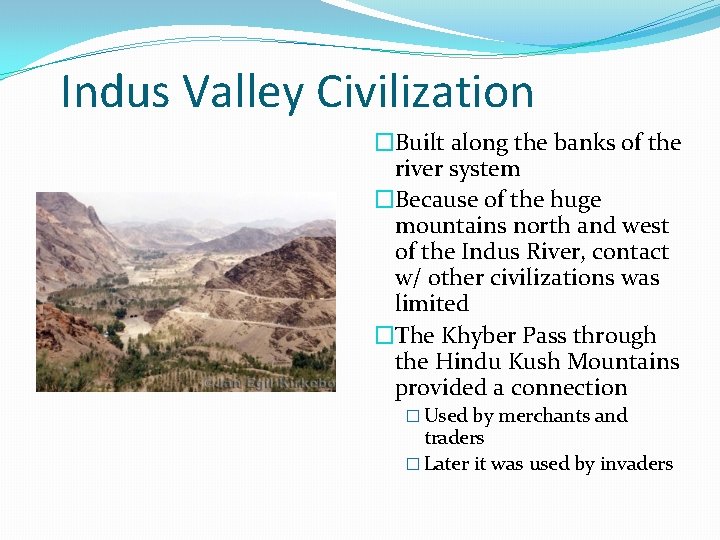
Indus Valley Civilization �Built along the banks of the river system �Because of the huge mountains north and west of the Indus River, contact w/ other civilizations was limited �The Khyber Pass through the Hindu Kush Mountains provided a connection � Used by merchants and traders � Later it was used by invaders
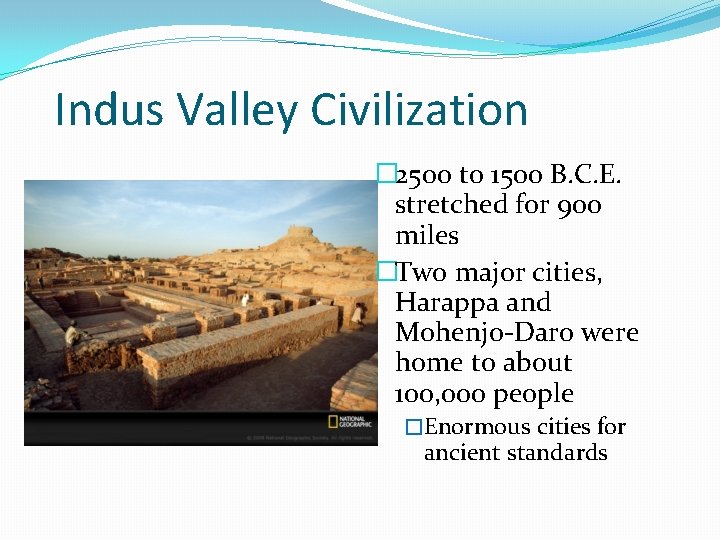
Indus Valley Civilization � 2500 to 1500 B. C. E. stretched for 900 miles �Two major cities, Harappa and Mohenjo-Daro were home to about 100, 000 people �Enormous cities for ancient standards
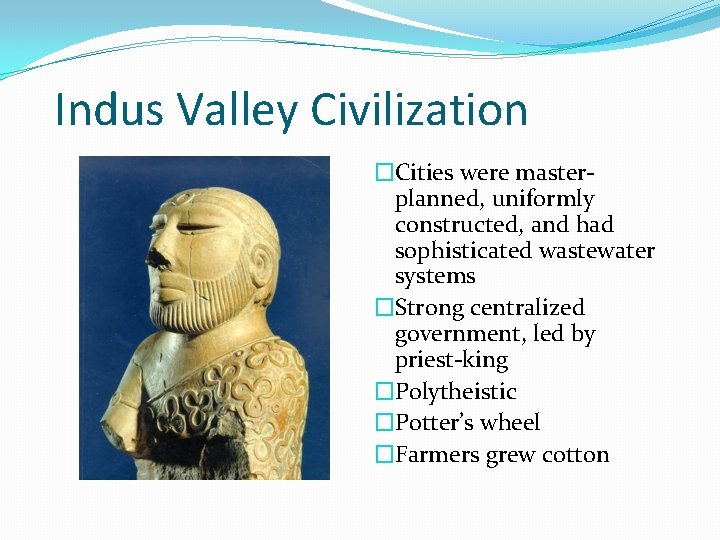
Indus Valley Civilization �Cities were masterplanned, uniformly constructed, and had sophisticated wastewater systems �Strong centralized government, led by priest-king �Polytheistic �Potter’s wheel �Farmers grew cotton
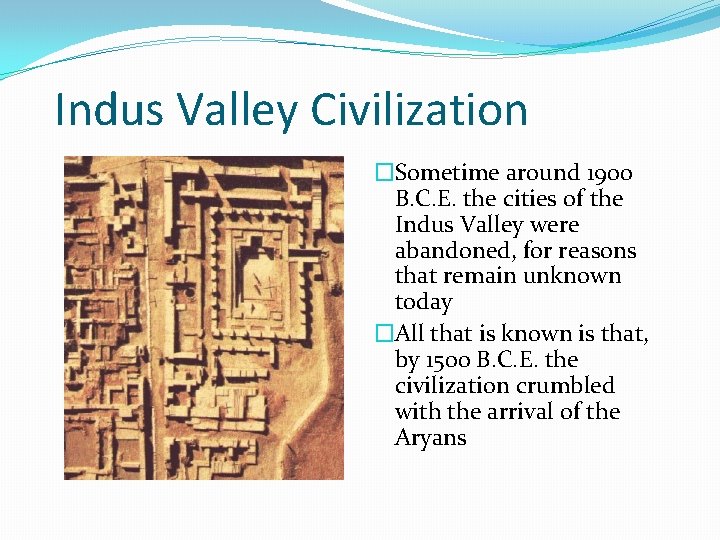
Indus Valley Civilization �Sometime around 1900 B. C. E. the cities of the Indus Valley were abandoned, for reasons that remain unknown today �All that is known is that, by 1500 B. C. E. the civilization crumbled with the arrival of the Aryans

The Arrival of Aryans �The Aryans were a nomadic tribe from north of the Caucasus Mountains �Used horses and advance weapons to easily defeat the populations of the Indus Valley �They gave up their nomadic lifestyle and settled in the Indus Valley
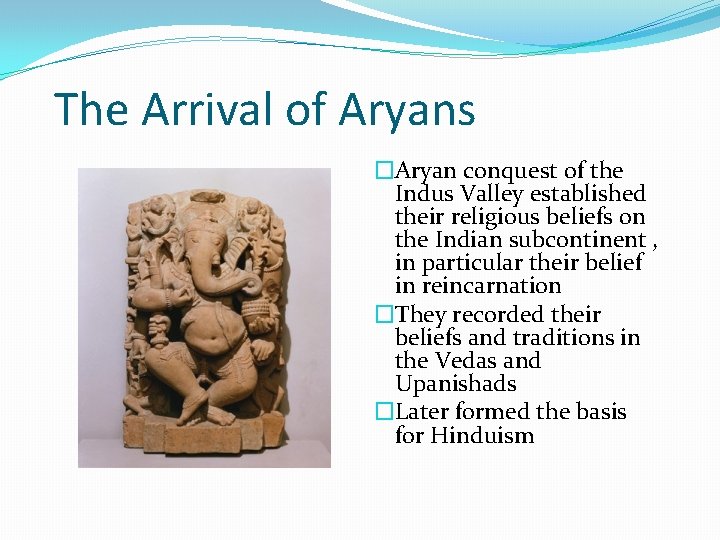
The Arrival of Aryans �Aryan conquest of the Indus Valley established their religious beliefs on the Indian subcontinent , in particular their belief in reincarnation �They recorded their beliefs and traditions in the Vedas and Upanishads �Later formed the basis for Hinduism
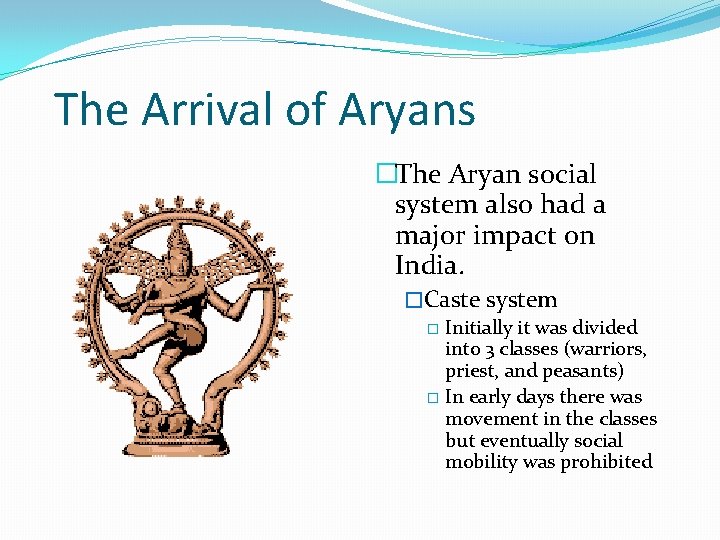
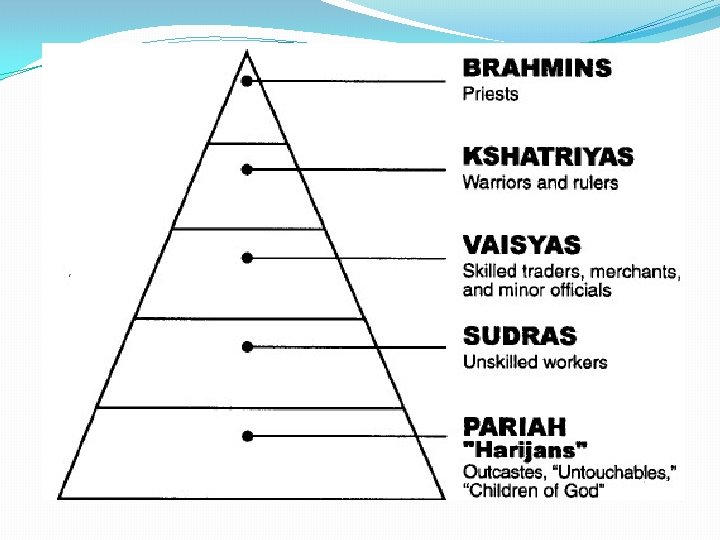
The Arrival of Aryans �The Aryan social system also had a major impact on India. �Caste system � Initially it was divided into 3 classes (warriors, priest, and peasants) � In early days there was movement in the classes but eventually social mobility was prohibited
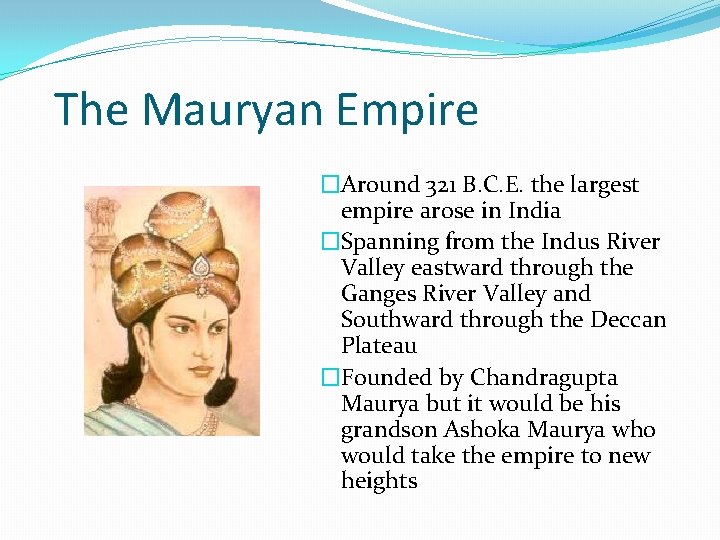
The Mauryan Empire �Around 321 B. C. E. the largest empire arose in India �Spanning from the Indus River Valley eastward through the Ganges River Valley and Southward through the Deccan Plateau �Founded by Chandragupta Maurya but it would be his grandson Ashoka Maurya who would take the empire to new heights
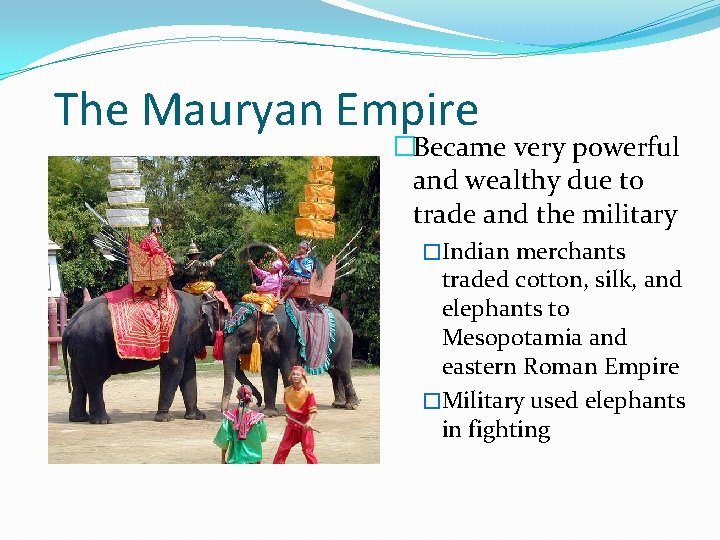
The Mauryan Empire �Became very powerful and wealthy due to trade and the military �Indian merchants traded cotton, silk, and elephants to Mesopotamia and eastern Roman Empire �Military used elephants in fighting
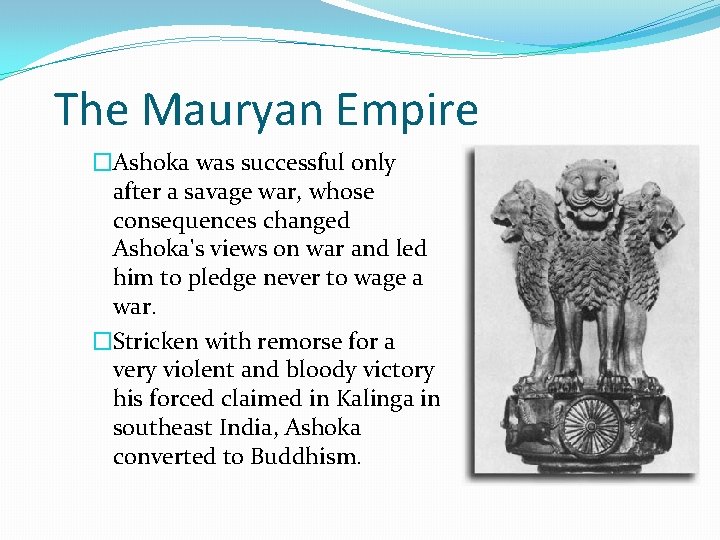
The Mauryan Empire �Ashoka was successful only after a savage war, whose consequences changed Ashoka's views on war and led him to pledge never to wage a war. �Stricken with remorse for a very violent and bloody victory his forced claimed in Kalinga in southeast India, Ashoka converted to Buddhism.
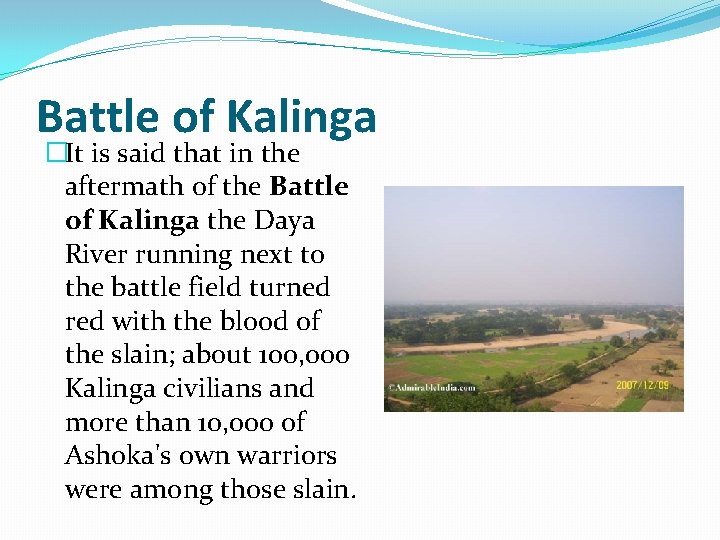
Battle of Kalinga �It is said that in the aftermath of the Battle of Kalinga the Daya River running next to the battle field turned red with the blood of the slain; about 100, 000 Kalinga civilians and more than 10, 000 of Ashoka's own warriors were among those slain.
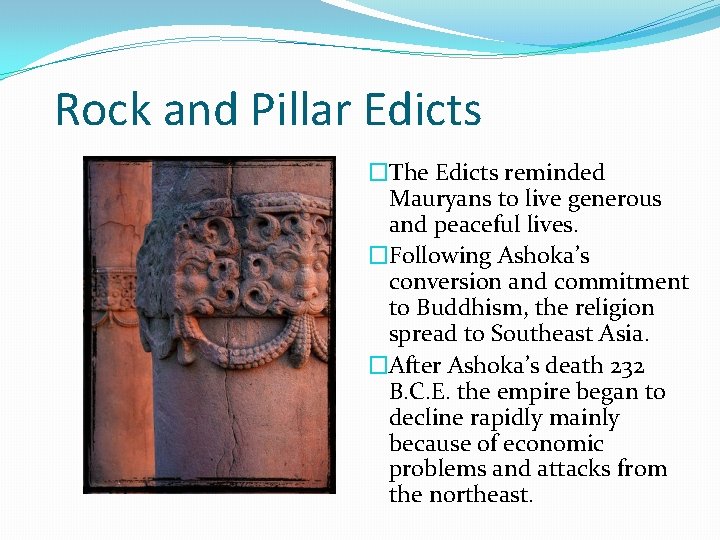
Rock and Pillar Edicts �The Edicts reminded Mauryans to live generous and peaceful lives. �Following Ashoka’s conversion and commitment to Buddhism, the religion spread to Southeast Asia. �After Ashoka’s death 232 B. C. E. the empire began to decline rapidly mainly because of economic problems and attacks from the northeast.
- Slides: 13