
Indus Valley Civilization Ancient India 3000 BC1500 BC
Indus Valley Civilization (Ancient India) 3000 BC-1500 BC

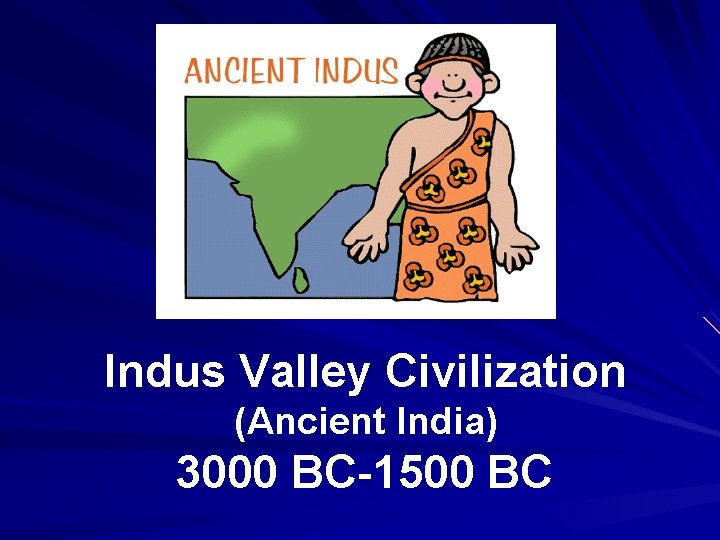
The Indus Valley Civilization was located in the western part of South Asia. Similar to Ancient China, the people settled around a river. The Indus River provided fertile land for this civilization.

What do we know about the Indus Civilization? Today, we know very little about the Indus Valley Civilization. What we do know has been revealed by archeologist. These archeologist began their study by finding the remains of 2 major cities: Harappa and Mohenjo-Daro. Remains of Harappa were found in 1927. Four hundred miles away the city of Mohenjo-Daro was found.
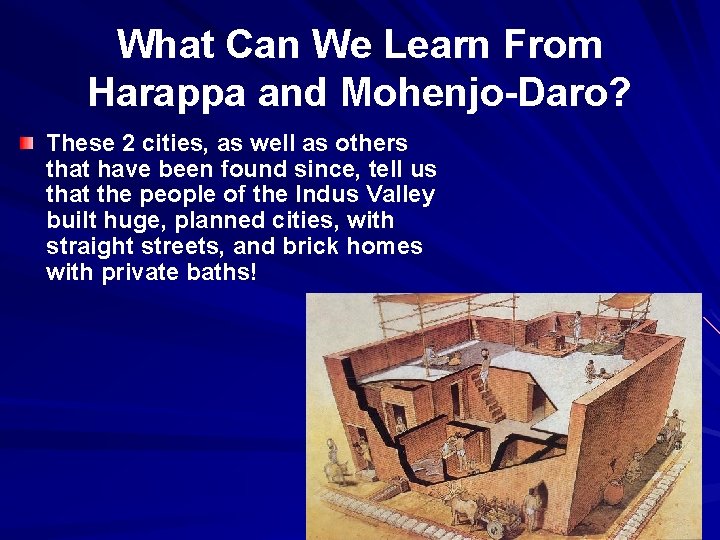
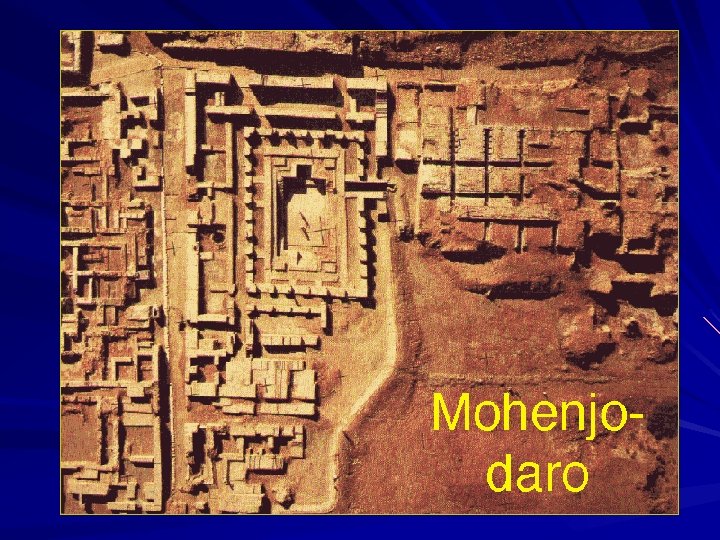
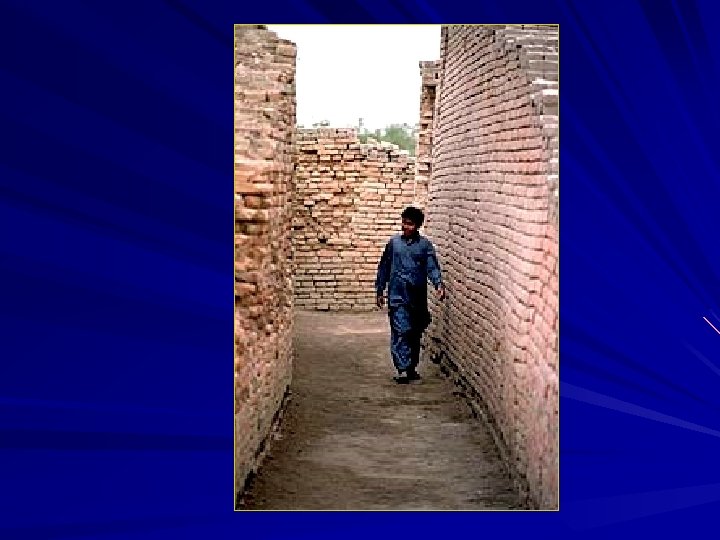
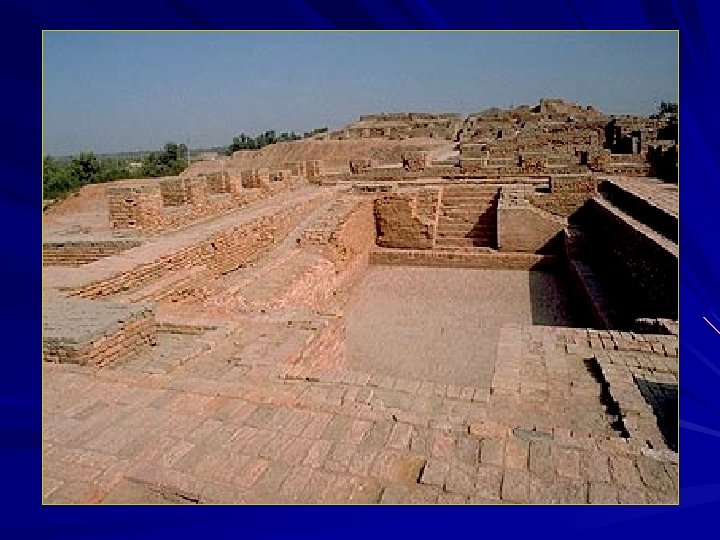
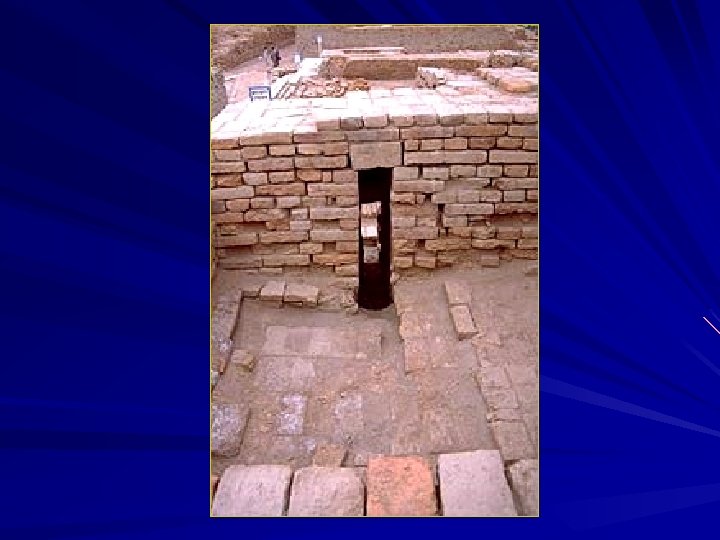
What Can We Learn From Harappa and Mohenjo-Daro? These 2 cities, as well as others that have been found since, tell us that the people of the Indus Valley built huge, planned cities, with straight streets, and brick homes with private baths!


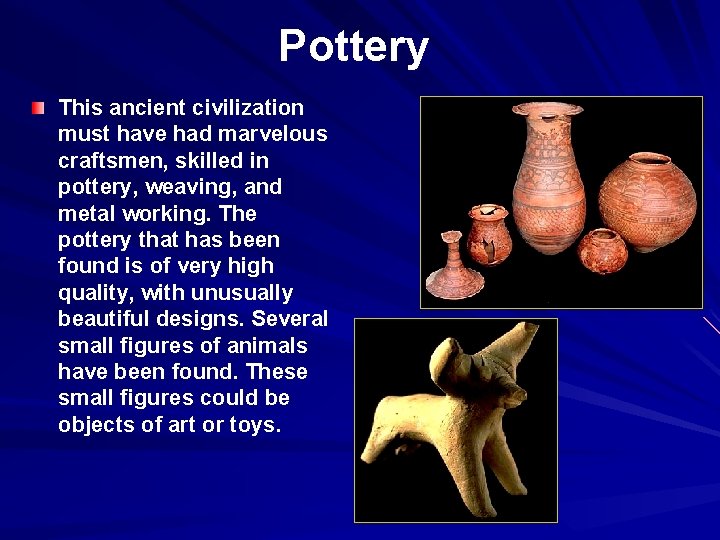
Pottery This ancient civilization must have had marvelous craftsmen, skilled in pottery, weaving, and metal working. The pottery that has been found is of very high quality, with unusually beautiful designs. Several small figures of animals have been found. These small figures could be objects of art or toys.
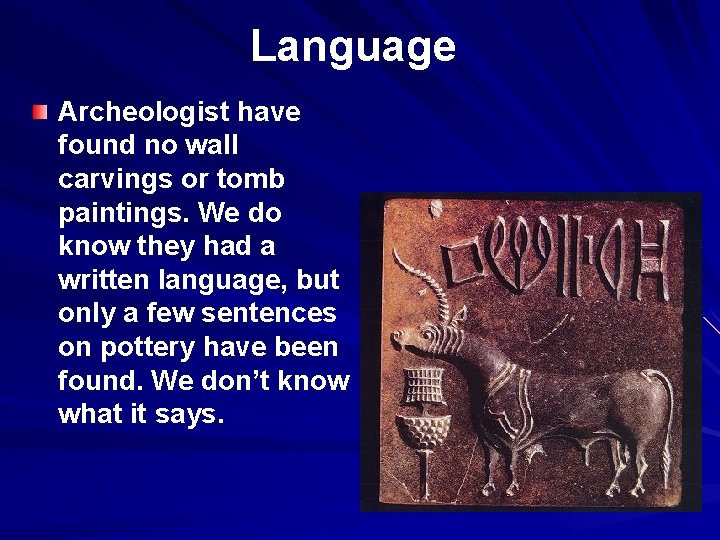
Language Archeologist have found no wall carvings or tomb paintings. We do know they had a written language, but only a few sentences on pottery have been found. We don’t know what it says.

Religion Based on the written language of the Indus people, as well as the sculptures, archeologist believe that they worshipped the god Shiva and cattle.
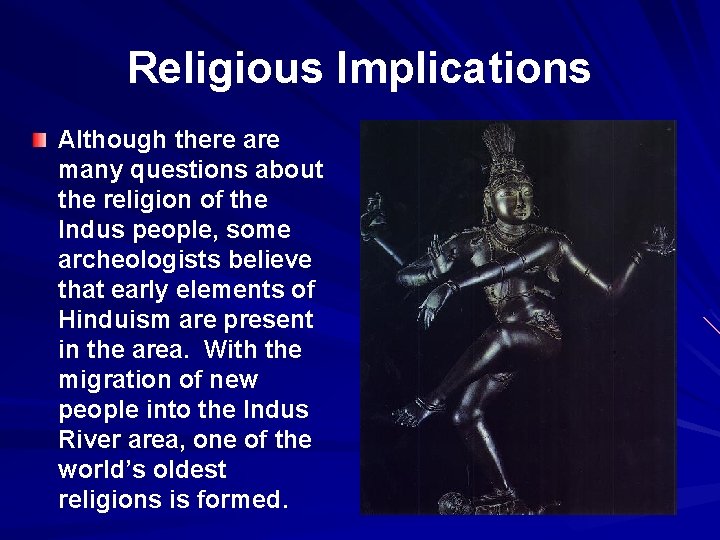
Religious Implications Although there are many questions about the religion of the Indus people, some archeologists believe that early elements of Hinduism are present in the area. With the migration of new people into the Indus River area, one of the world’s oldest religions is formed.
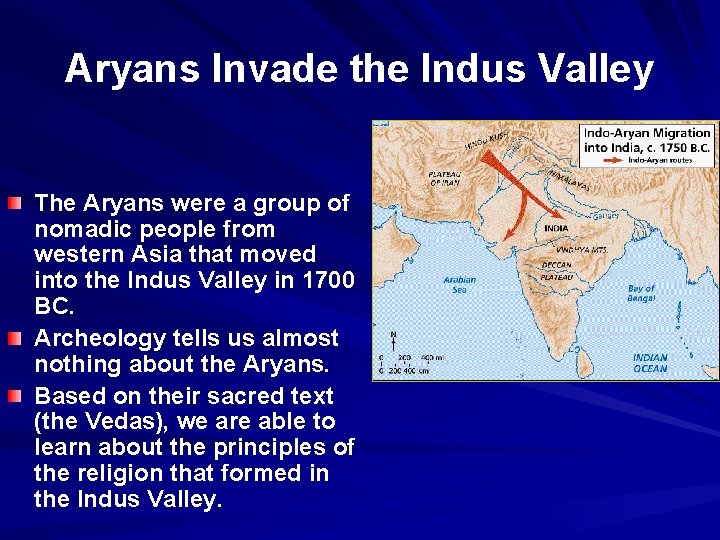
Aryans Invade the Indus Valley The Aryans were a group of nomadic people from western Asia that moved into the Indus Valley in 1700 BC. Archeology tells us almost nothing about the Aryans. Based on their sacred text (the Vedas), we are able to learn about the principles of the religion that formed in the Indus Valley.
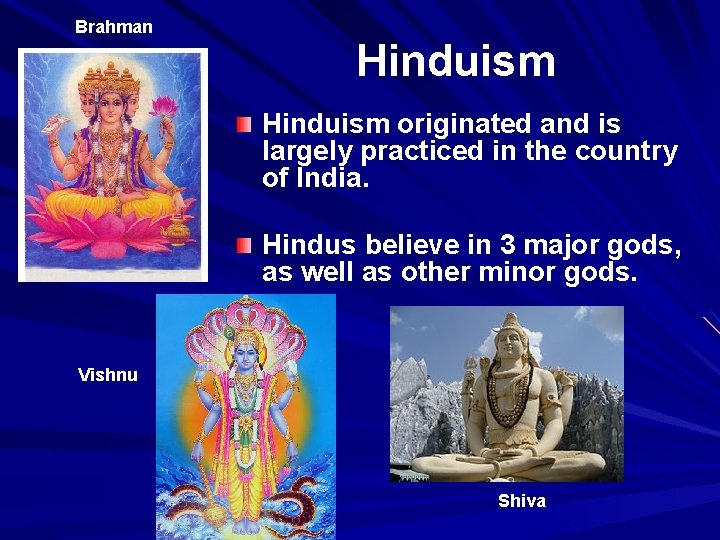
Brahman Hinduism originated and is largely practiced in the country of India. Hindus believe in 3 major gods, as well as other minor gods. Vishnu Shiva
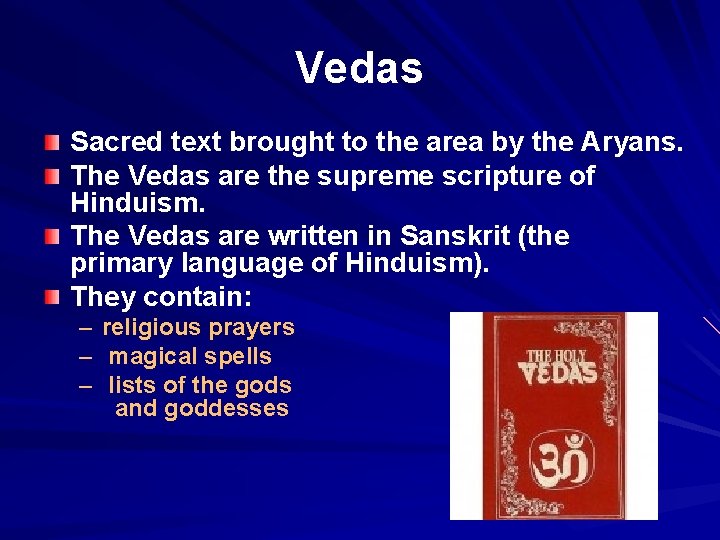
Vedas Sacred text brought to the area by the Aryans. The Vedas are the supreme scripture of Hinduism. The Vedas are written in Sanskrit (the primary language of Hinduism). They contain: – religious prayers – magical spells – lists of the gods and goddesses
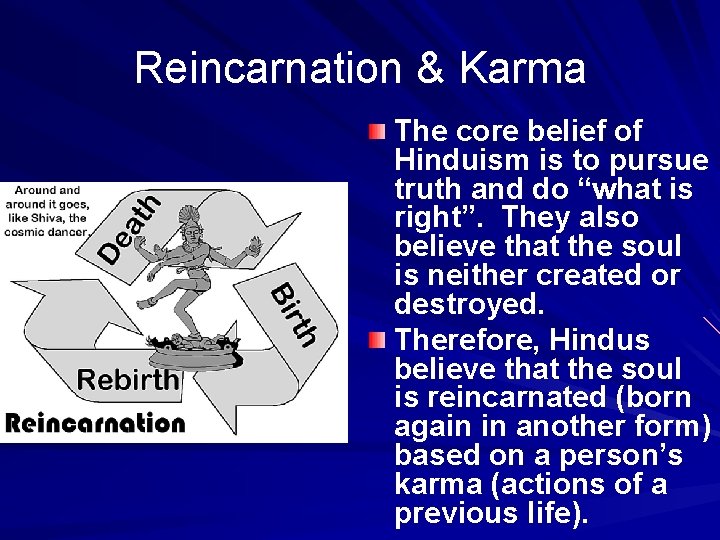
Reincarnation & Karma The core belief of Hinduism is to pursue truth and do “what is right”. They also believe that the soul is neither created or destroyed. Therefore, Hindus believe that the soul is reincarnated (born again in another form) based on a person’s karma (actions of a previous life).

The Aryan Caste System & Hinduism When the Aryans arrived in the Indus Valley, they were divided into classes of people. Over time, strict rules were put in place as to how these caste, or classes, could interact with each other. Originally, a person’s caste was determined by his or her skin color. The Aryans, who were light -skinned, made up the higher classes. The original people of the Indus Valley made up the lowest caste. With the idea of reincarnation and karma, the caste system became a major part of Hinduism and affected India for many years.
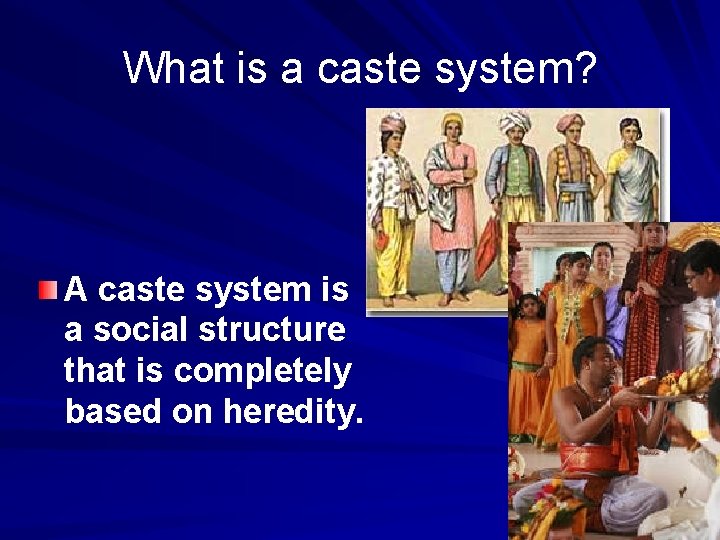
What is a caste system? A caste system is a social structure that is completely based on heredity.

Caste System (Social Structure) Brahmins Kshatriyas Vaishyas Shudras Untouchables
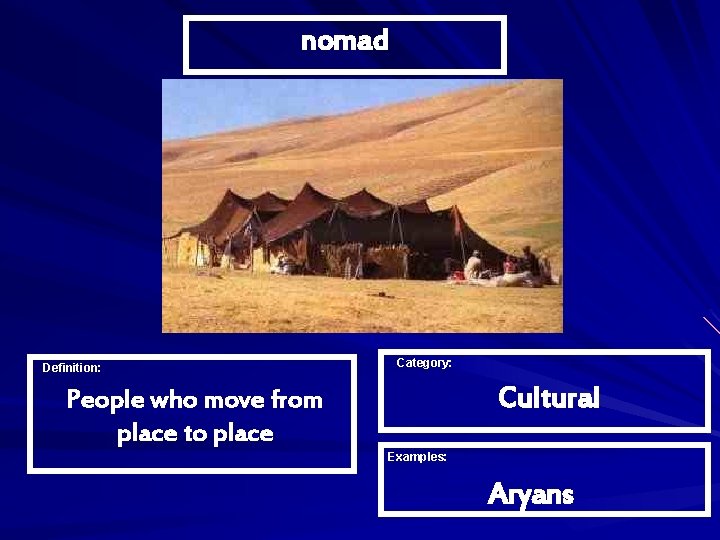
nomad Definition: Category: Cultural People who move from place to place Examples: Aryans
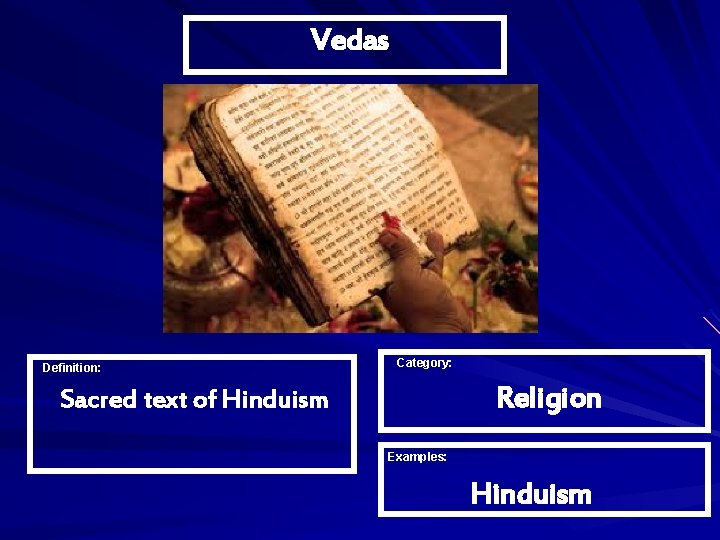
Vedas Definition: Category: Religion Sacred text of Hinduism Examples: Hinduism
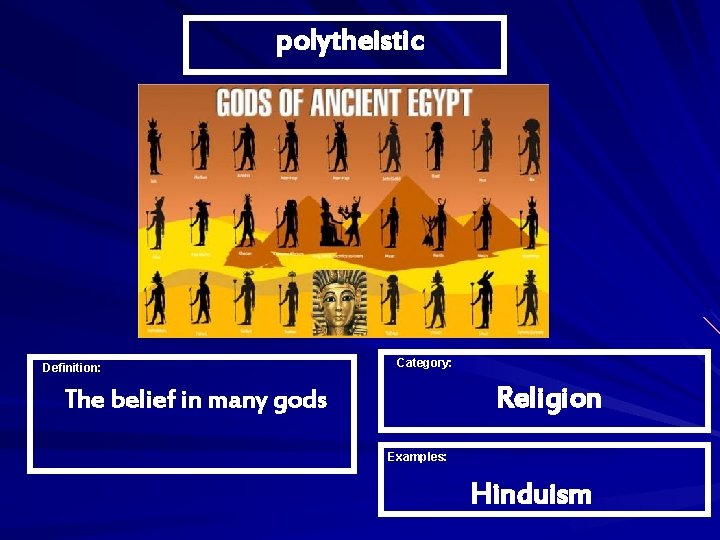
polytheistic Definition: Category: Religion The belief in many gods Examples: Hinduism

caste system Definition: Category: Cultural Social structure based on heredity Examples: India
- Slides: 25