
Inductance and Capacitance Topic 4 Inductance and Capacitance
- Slides: 41
Inductance and Capacitance Topic 4
Inductance and Capacitance Inductor n Relationship between voltage, current, power and energy n Capacitor n Relationship between voltage, current, power and energy n Series-parallel combinations for inductance and capacitance n
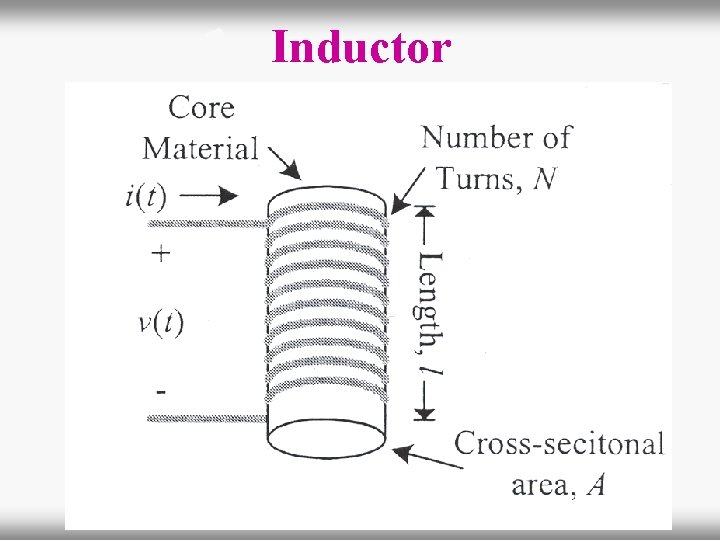
Inductor
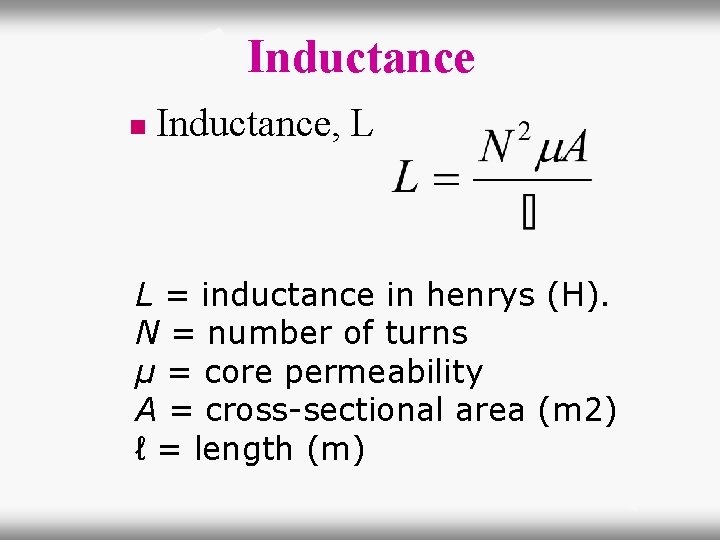
Inductor concept n n An inductor consists of a coil of conducting wire. Inductance, L is the property whereby an inductor exhibits opposition to the change of current flowing through it, measured in henrys (H).
Inductance n Inductance, L L = inductance in henrys (H). N = number of turns µ = core permeability A = cross-sectional area (m 2) ℓ = length (m)
Inductance and Capacitance Inductor n Relationship between voltage, current, power and energy n Capacitor n Relationship between voltage, current, power and energy n Series-parallel combinations for inductance and capacitance n
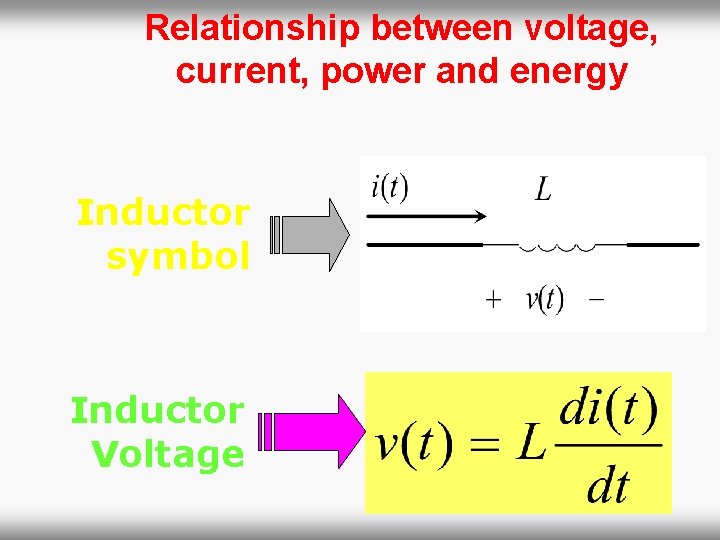
Relationship between voltage, current, power and energy Inductor symbol Inductor Voltage
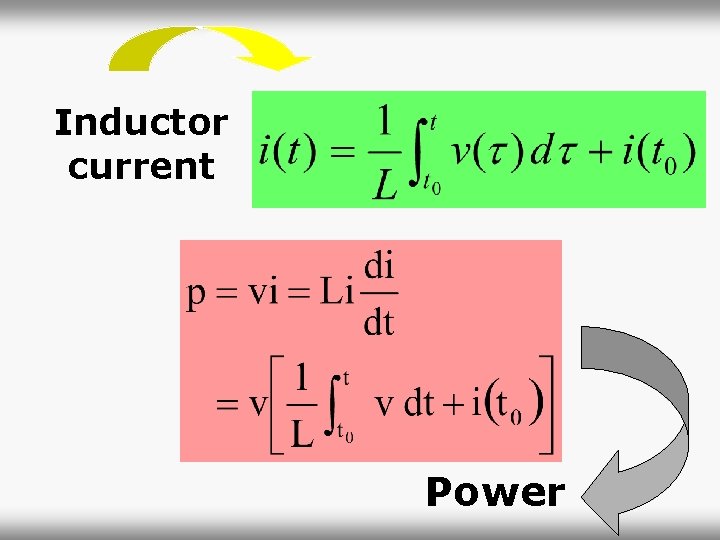
Inductor current Power
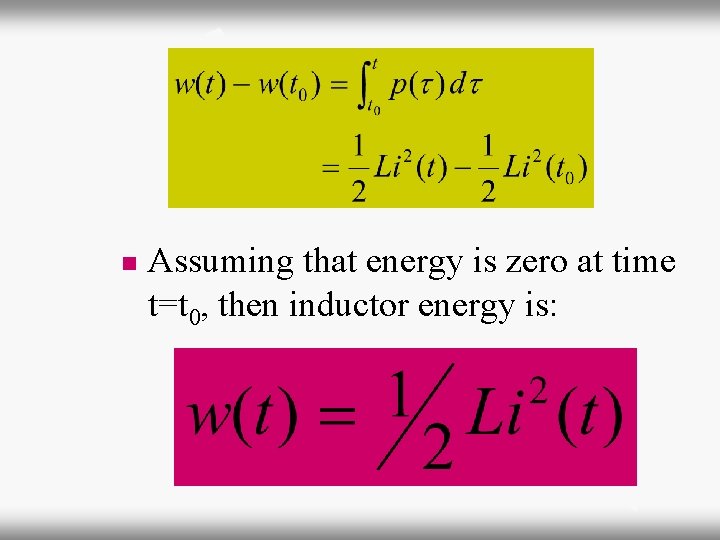
n Assuming that energy is zero at time t=t 0, then inductor energy is:
Inductance and Capacitance Inductor n Relationship between voltage, current, power and energy n Capacitor n Relationship between voltage, current, power and energy n Series-parallel combinations for inductance and capacitance n
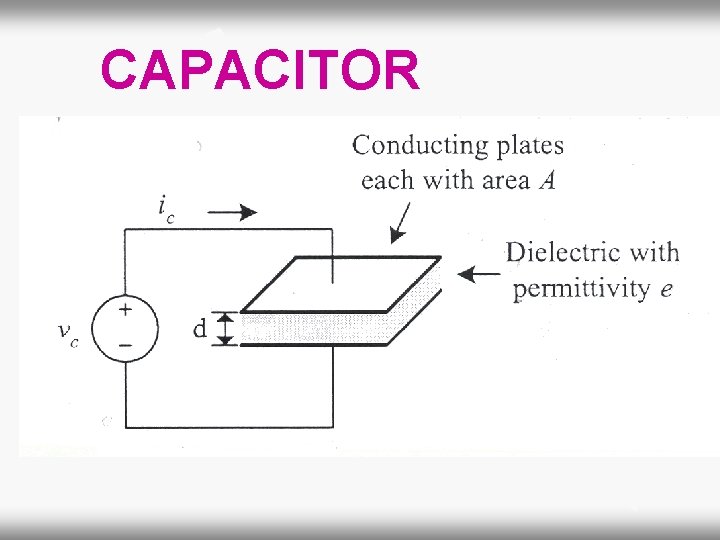
CAPACITOR
Capacitor physical concept: A capacitor consists of two conducting plates separated by an insulator (or dielectric). n Capacitance, C is the ratio of the charge on one plate of a capacitor to the voltage difference between the two plates, measured in farads (F). n
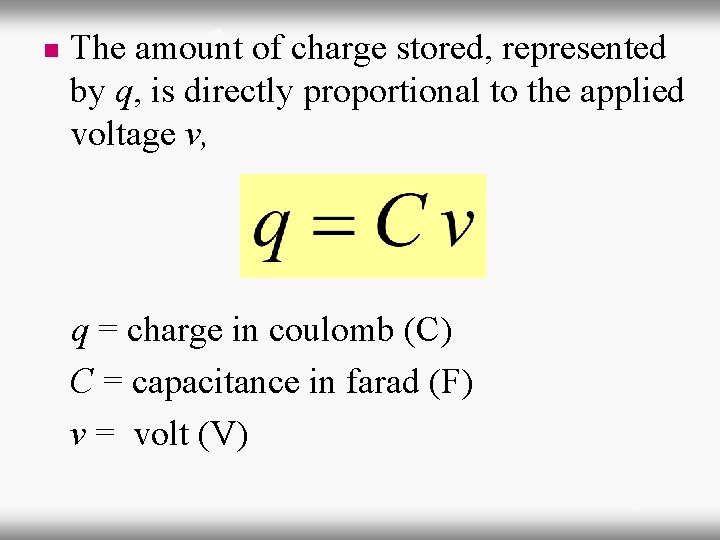
n The amount of charge stored, represented by q, is directly proportional to the applied voltage v, q = charge in coulomb (C) C = capacitance in farad (F) v = volt (V)
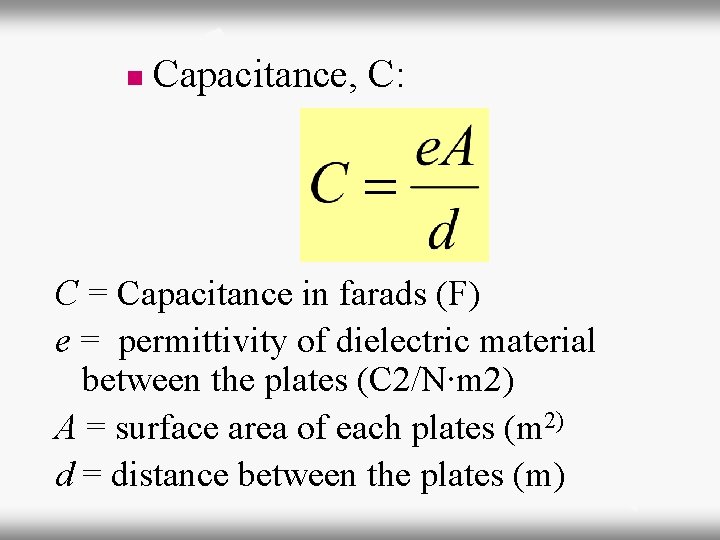
n Capacitance, C: C = Capacitance in farads (F) e = permittivity of dielectric material between the plates (C 2/N∙m 2) A = surface area of each plates (m 2) d = distance between the plates (m)
Inductance and Capacitance Inductor n Relationship between voltage, current, power and energy n Capacitor n Relationship between voltage, current, power and energy n Series-parallel combinations for inductance and capacitance n
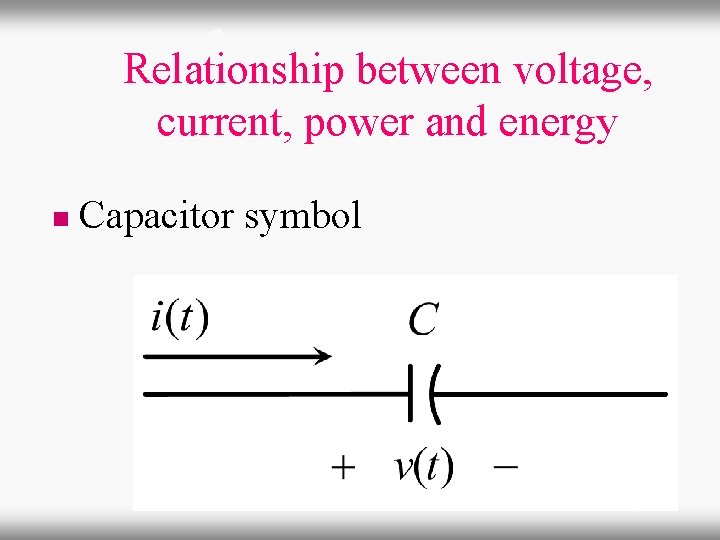
Relationship between voltage, current, power and energy n Capacitor symbol
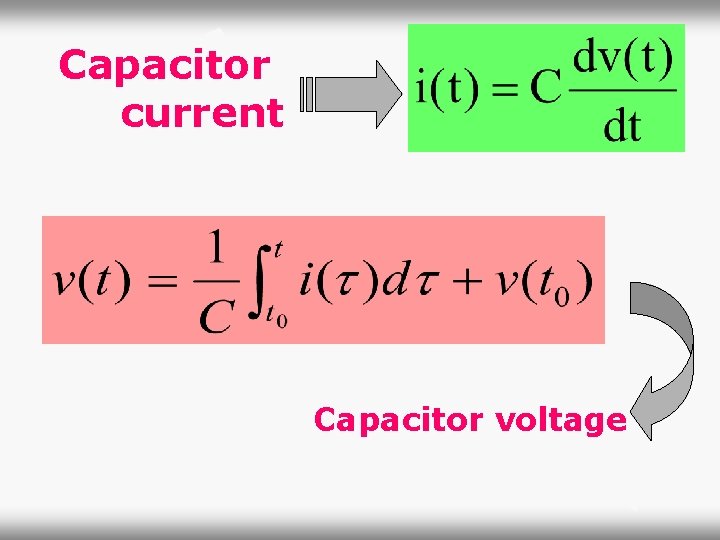
Capacitor current Capacitor voltage
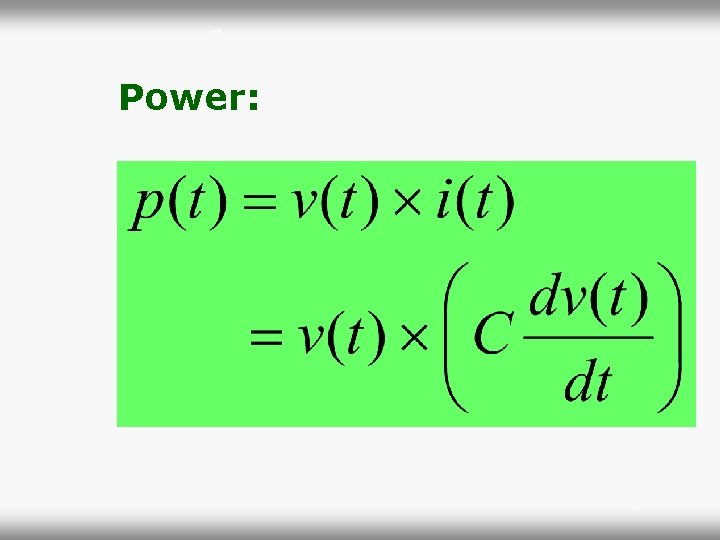
Power:
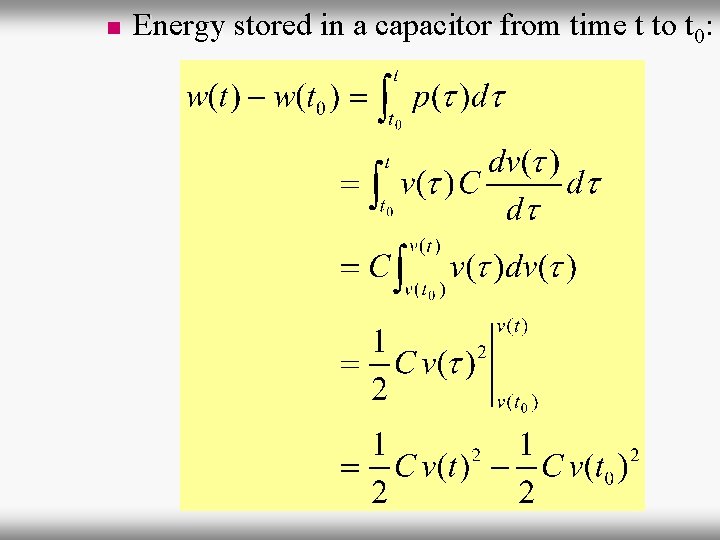
n Energy stored in a capacitor from time t to t 0:
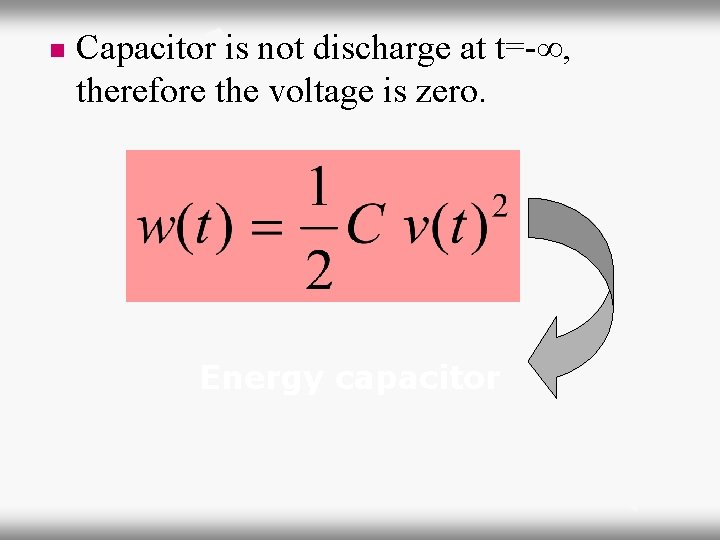
n Capacitor is not discharge at t=-∞, therefore the voltage is zero. Energy capacitor
Inductance and Capacitance Inductor n Relationship between voltage, current, power and energy n Capacitor n Relationship between voltage, current, power and energy n Series-parallel combinations for inductance and capacitance n
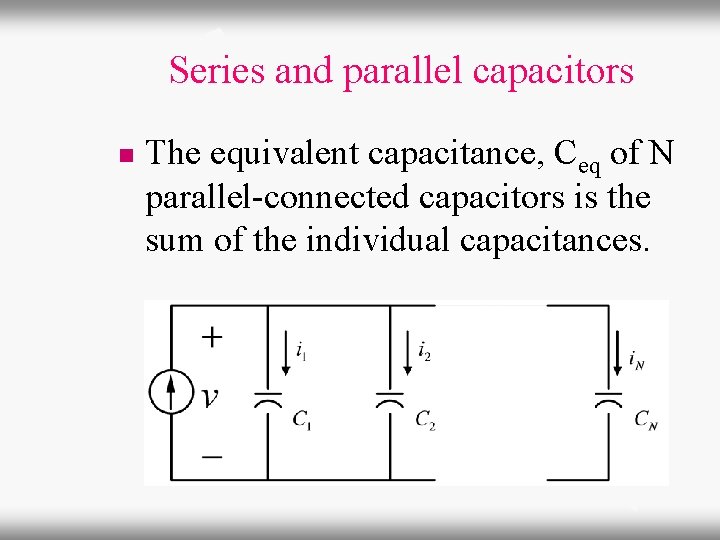
Series and parallel capacitors n The equivalent capacitance, Ceq of N parallel-connected capacitors is the sum of the individual capacitances.
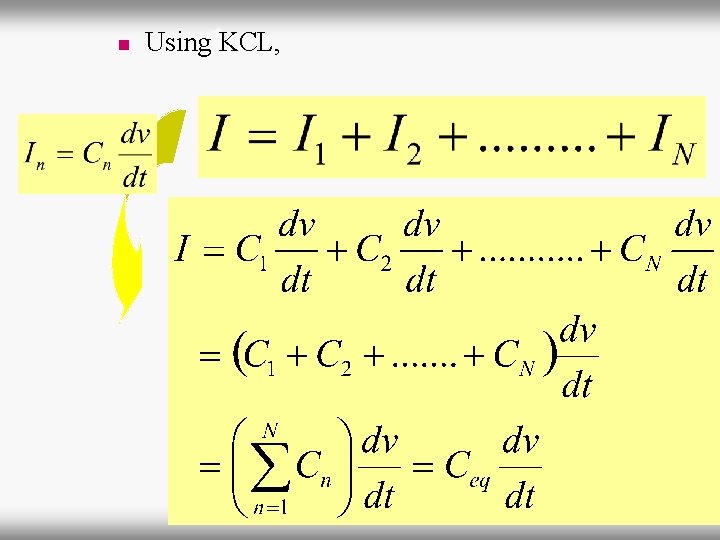
n Using KCL,
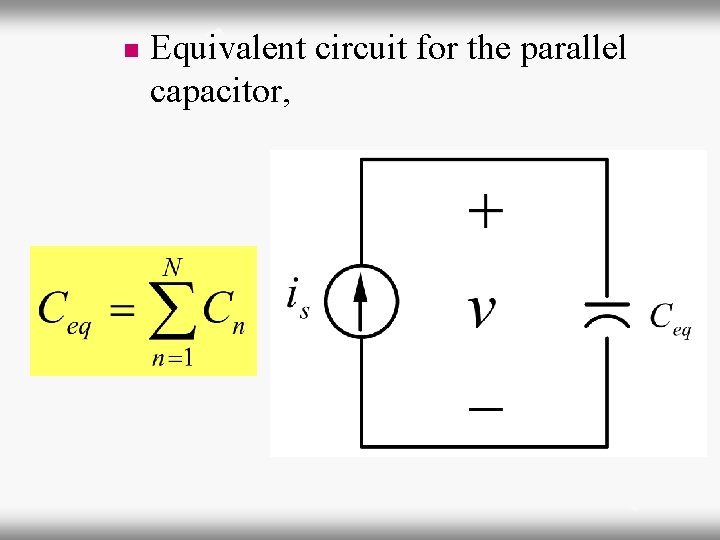
n Equivalent circuit for the parallel capacitor,
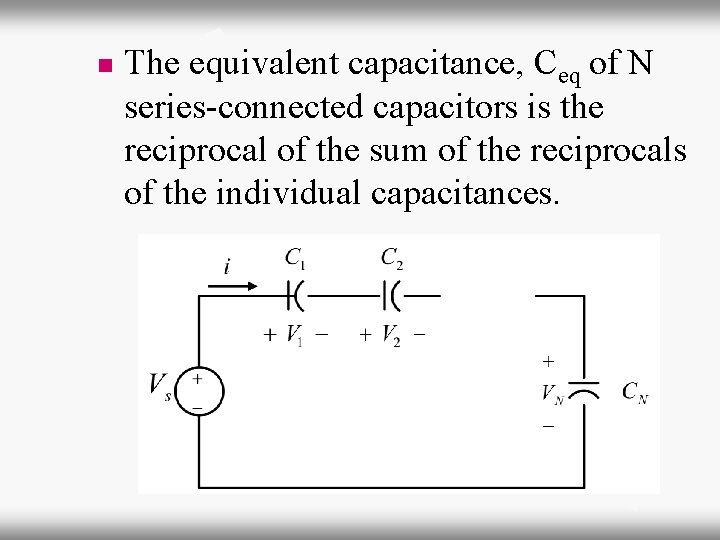
n The equivalent capacitance, Ceq of N series-connected capacitors is the reciprocal of the sum of the reciprocals of the individual capacitances.
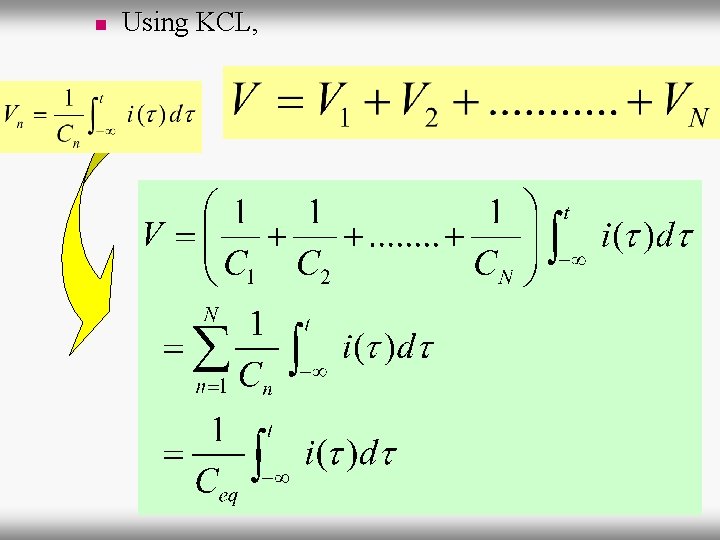
n Using KCL,
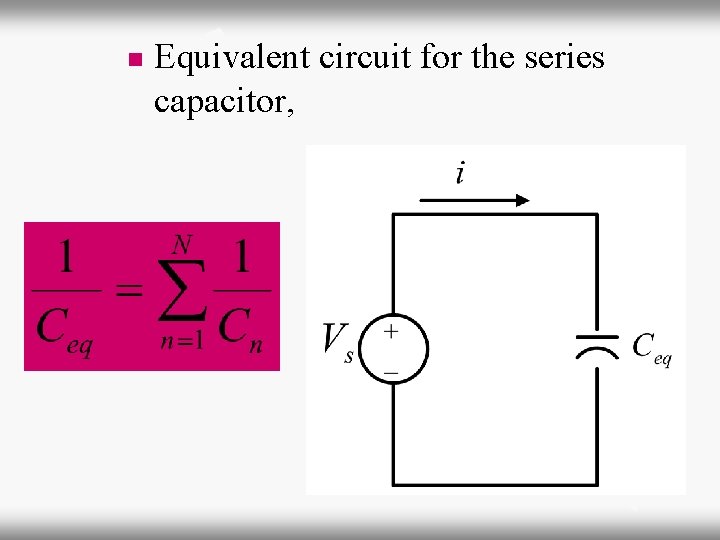
n Equivalent circuit for the series capacitor,
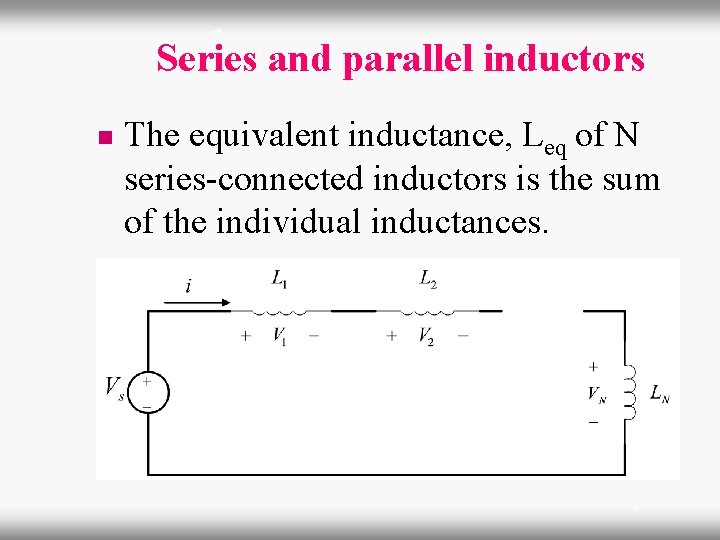
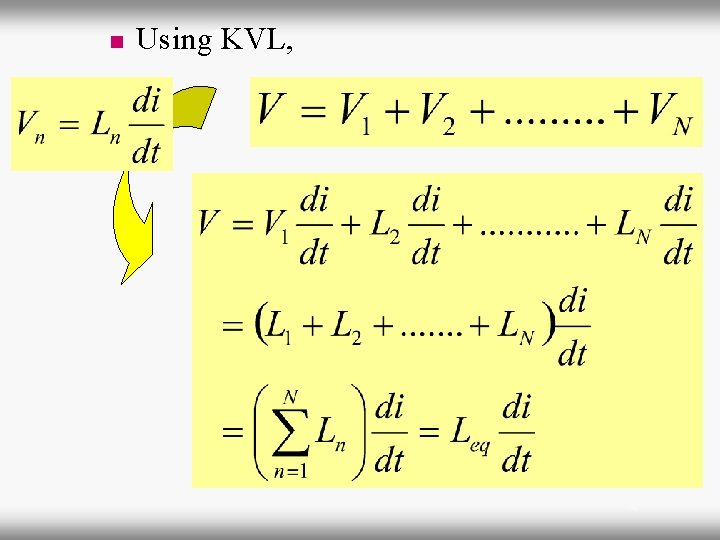
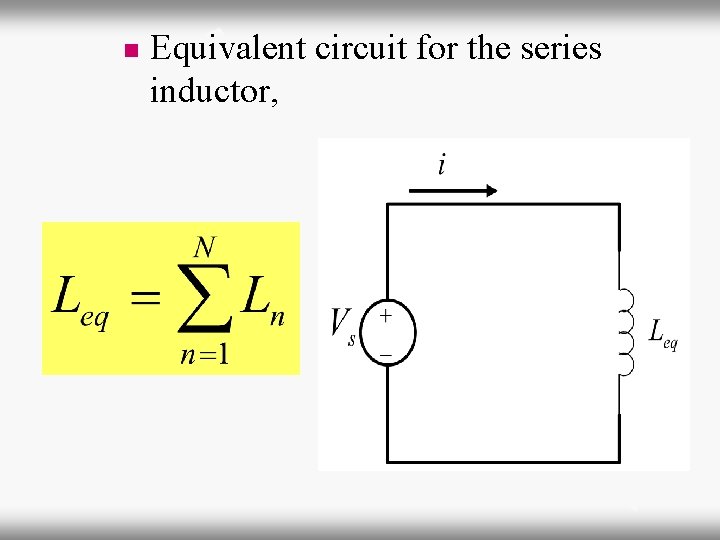
Series and parallel inductors n The equivalent inductance, Leq of N series-connected inductors is the sum of the individual inductances.
n Using KVL,
n Equivalent circuit for the series inductor,
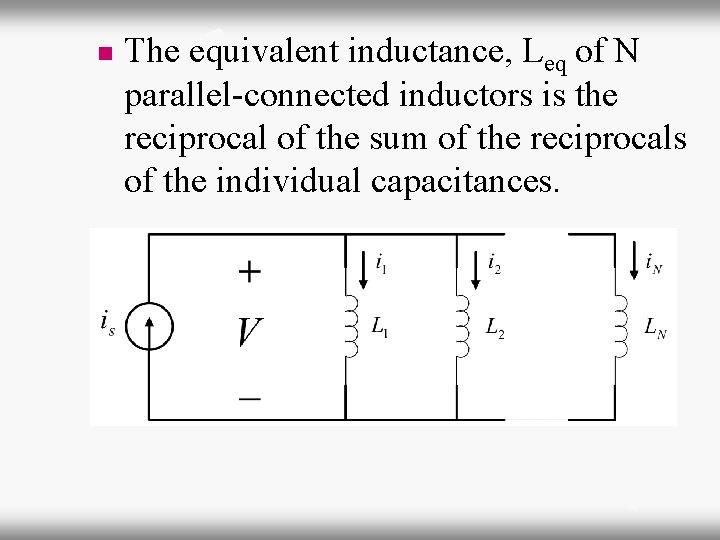
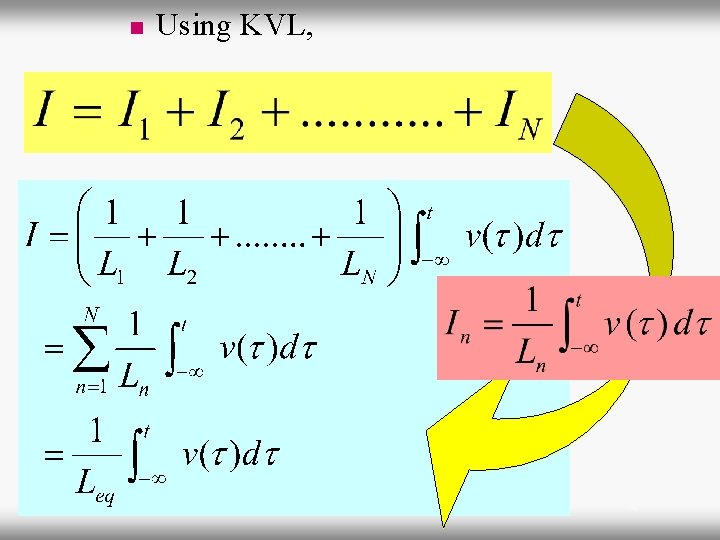
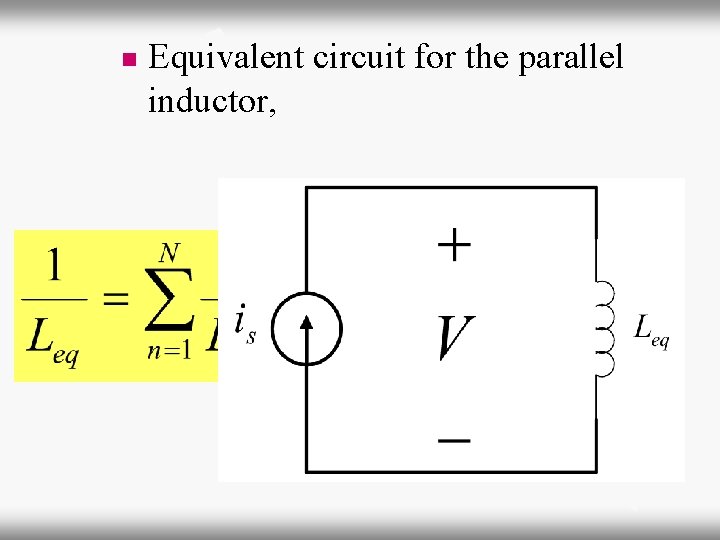
n The equivalent inductance, Leq of N parallel-connected inductors is the reciprocal of the sum of the reciprocals of the individual capacitances.
n Using KVL,
n Equivalent circuit for the parallel inductor,
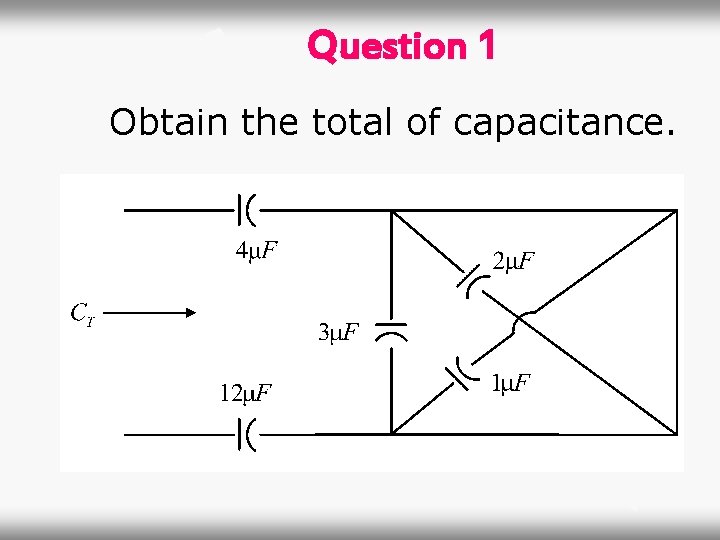
Question 1 Obtain the total of capacitance.
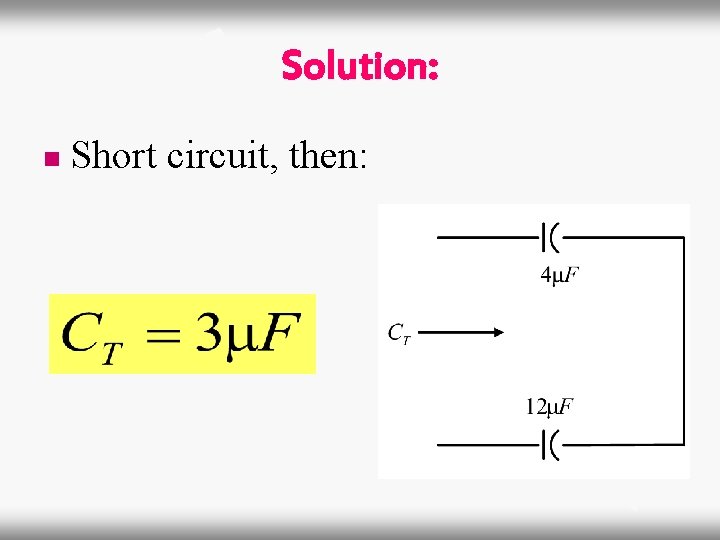
Solution: n Short circuit, then:
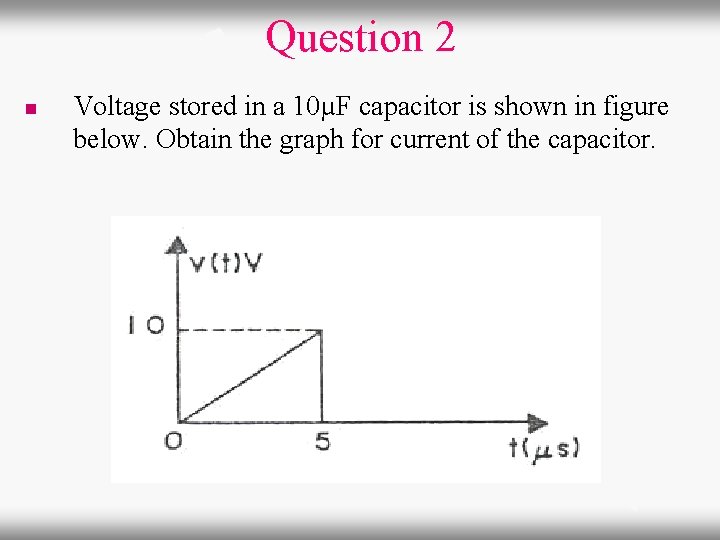
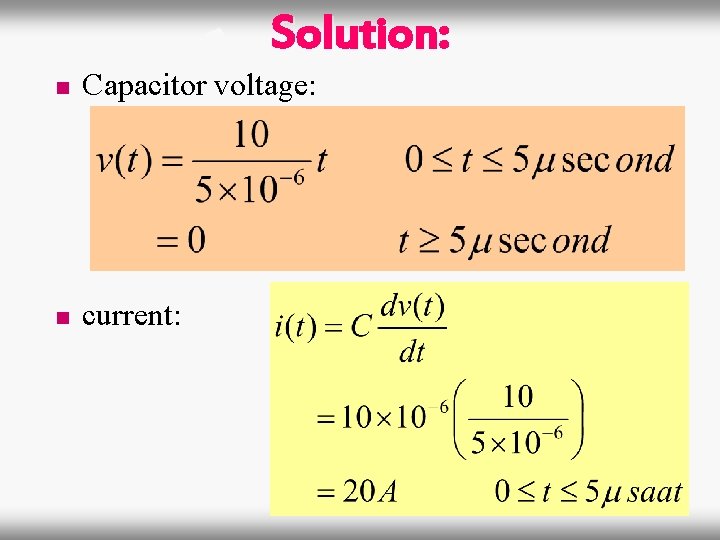
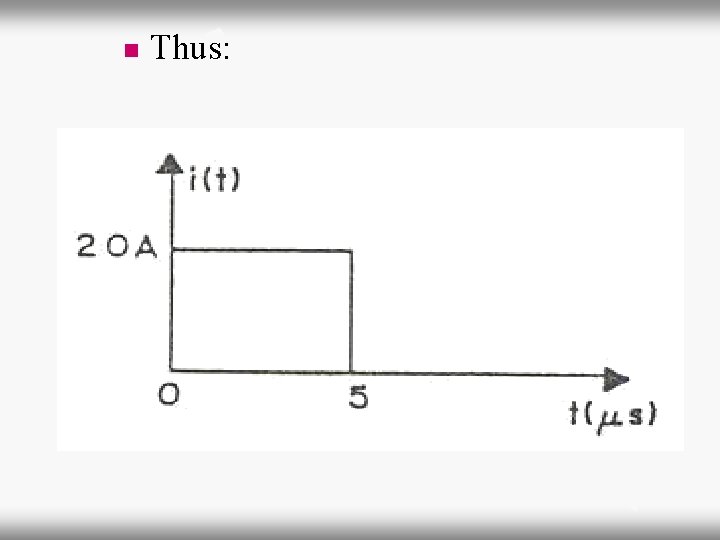
Question 2 n Voltage stored in a 10µF capacitor is shown in figure below. Obtain the graph for current of the capacitor.
Solution: n Capacitor voltage: n current:
n Thus:
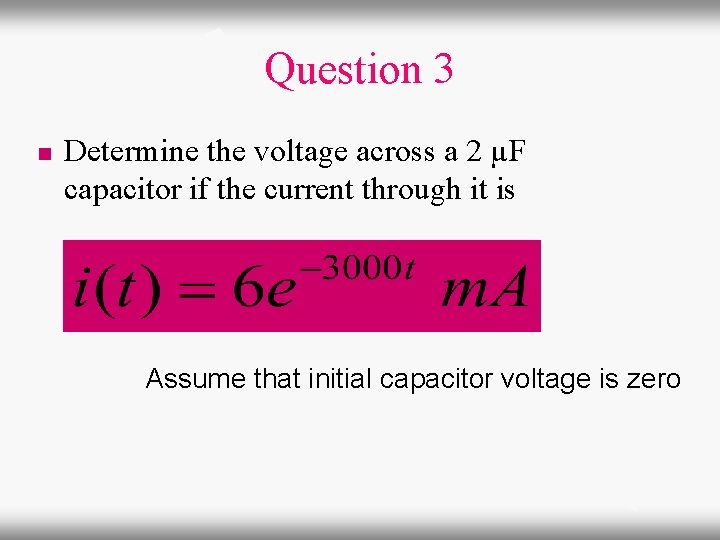
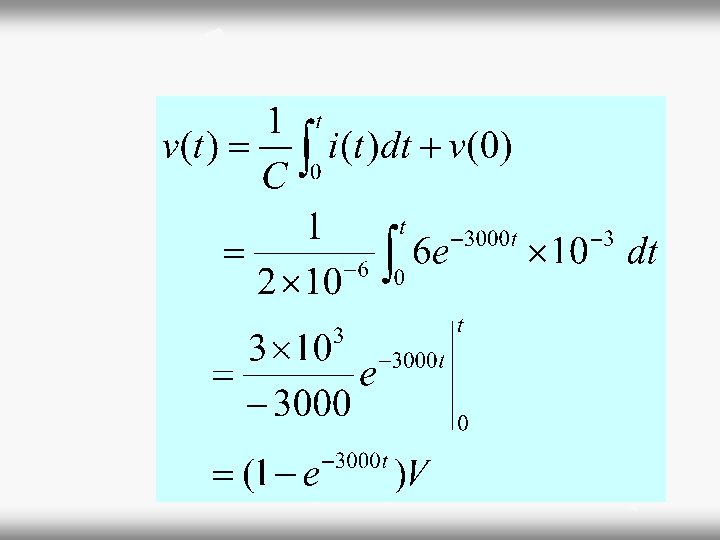
Question 3 n Determine the voltage across a 2 µF capacitor if the current through it is Assume that initial capacitor voltage is zero
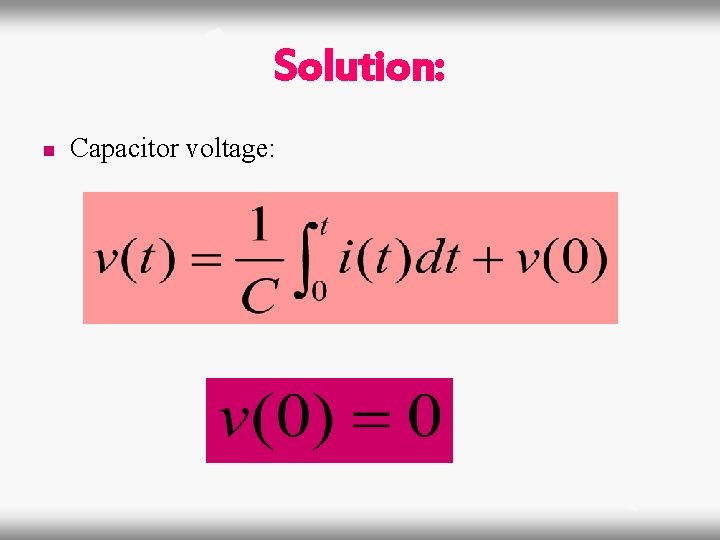
Solution: n Capacitor voltage: