
Individualbased models of social evolution in biofilms Sara
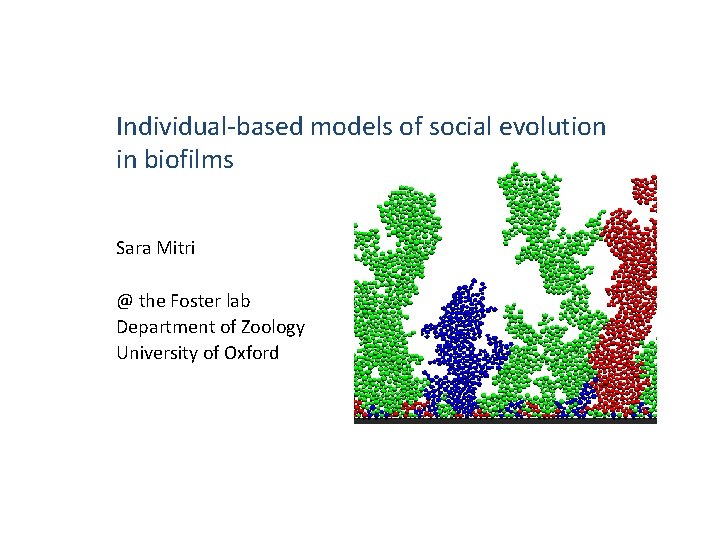
Individual-based models of social evolution in biofilms Sara Mitri @ the Foster lab Department of Zoology University of Oxford
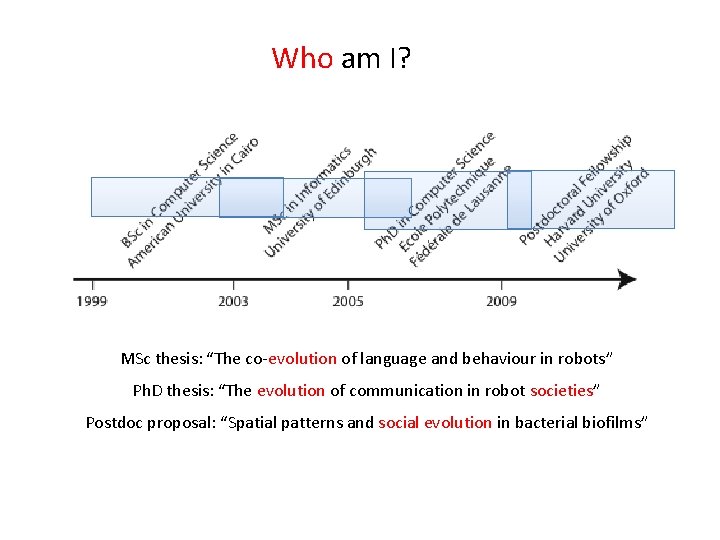
Who am I? MSc thesis: “The co-evolution of language and behaviour in robots” Ph. D thesis: “The evolution of communication in robot societies” Postdoc proposal: “Spatial patterns and social evolution in bacterial biofilms”
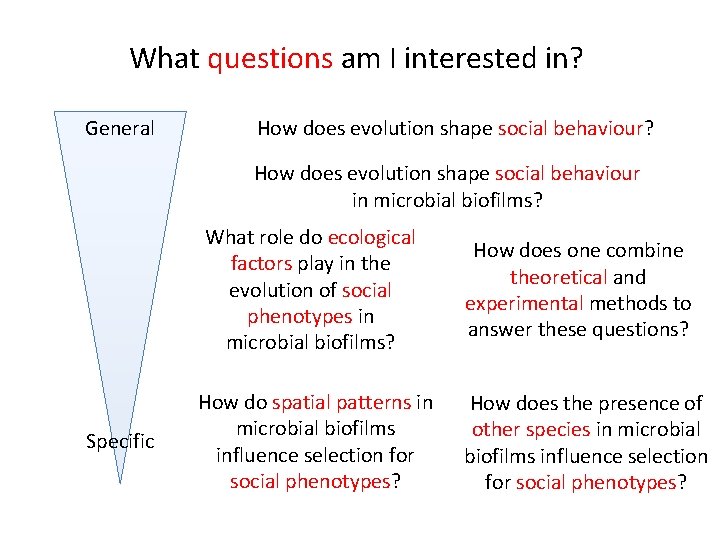
What questions am I interested in? General How does evolution shape social behaviour? How does evolution shape social behaviour in microbial biofilms? What role do ecological factors play in the evolution of social phenotypes in microbial biofilms? Specific How do spatial patterns in microbial biofilms influence selection for social phenotypes? How does one combine theoretical and experimental methods to answer these questions? How does the presence of other species in microbial biofilms influence selection for social phenotypes?
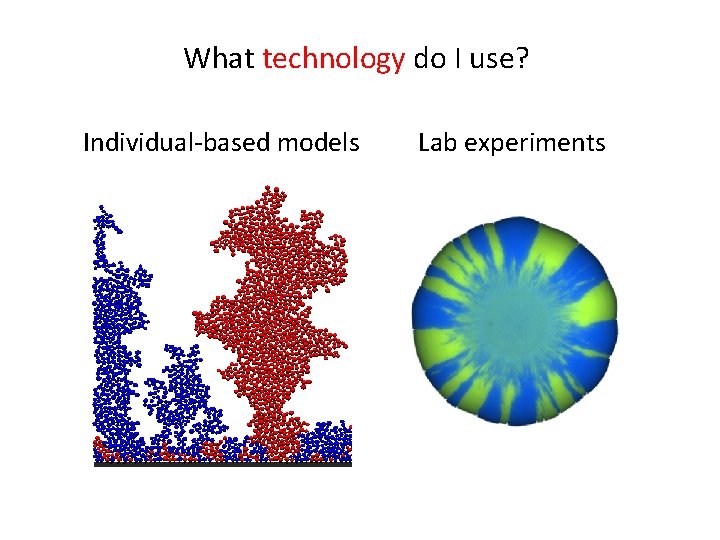
What technology do I use? Individual-based models Lab experiments
How do spatial patterns in microbial biofilms influence selection for social phenotypes?

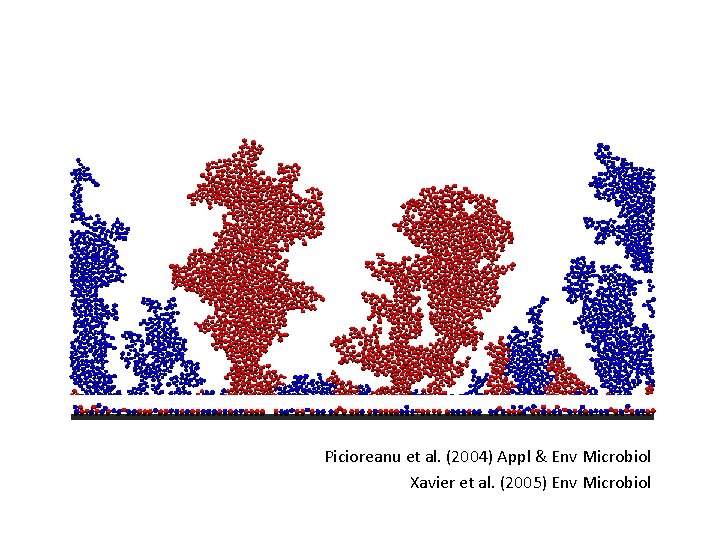
Picioreanu et al. (2004) Appl & Env Microbiol Xavier et al. (2005) Env Microbiol
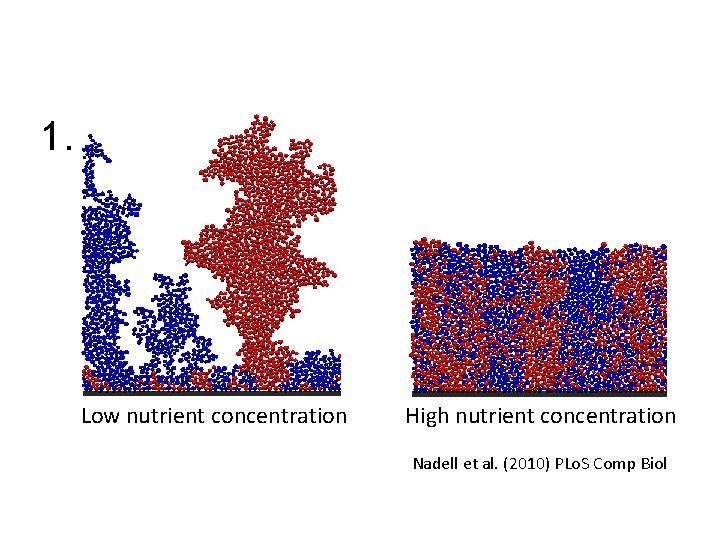
1. Low nutrient concentration High nutrient concentration Nadell et al. (2010) PLo. S Comp Biol
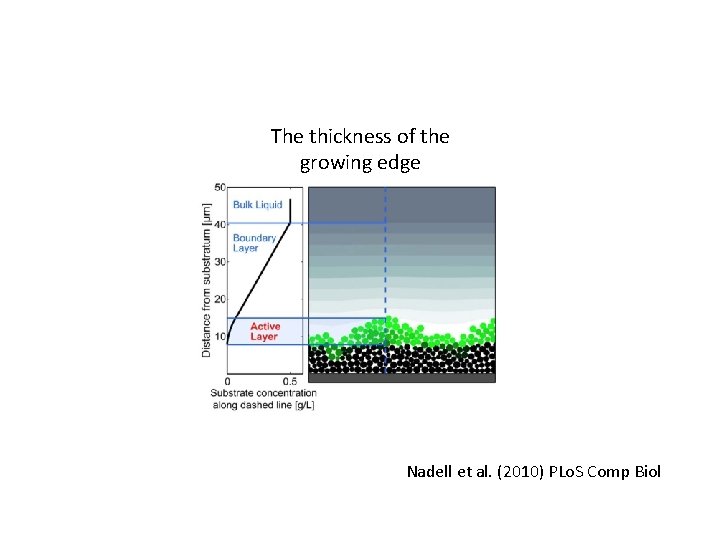
The thickness of the growing edge Nadell et al. (2010) PLo. S Comp Biol
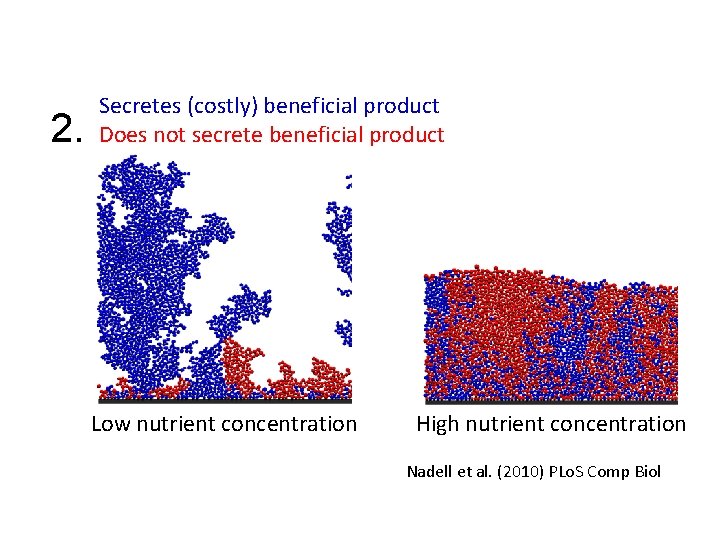
2. Secretes (costly) beneficial product Does not secrete beneficial product Low nutrient concentration High nutrient concentration Nadell et al. (2010) PLo. S Comp Biol
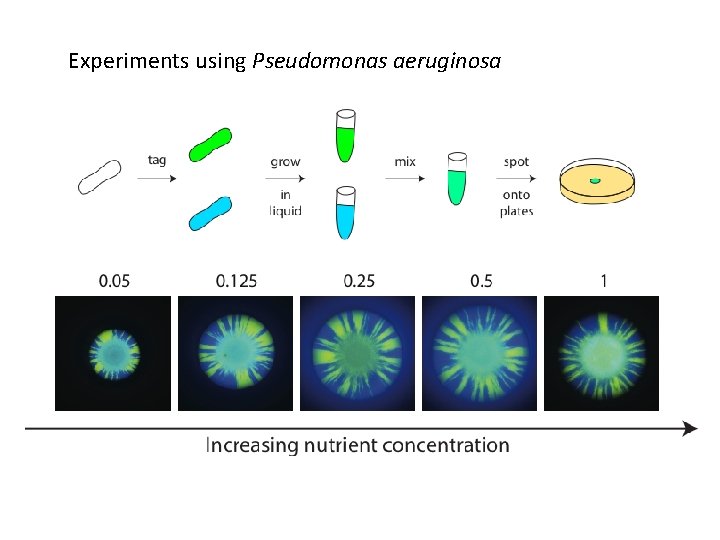
Experiments using Pseudomonas aeruginosa
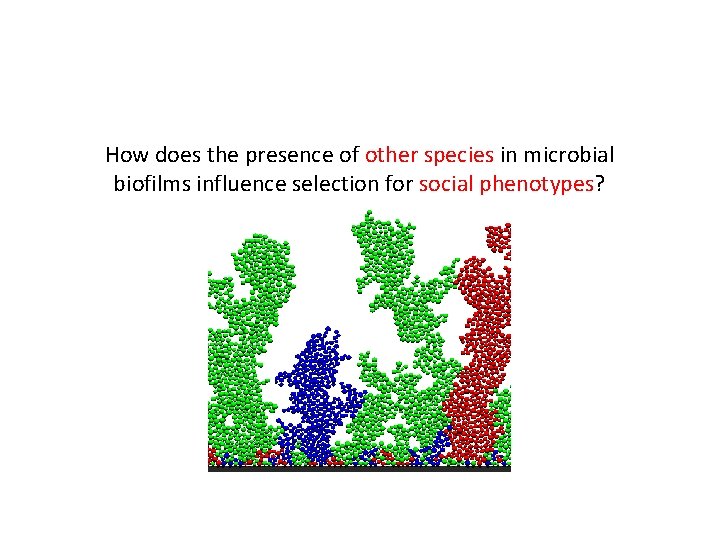
How does the presence of other species in microbial biofilms influence selection for social phenotypes?
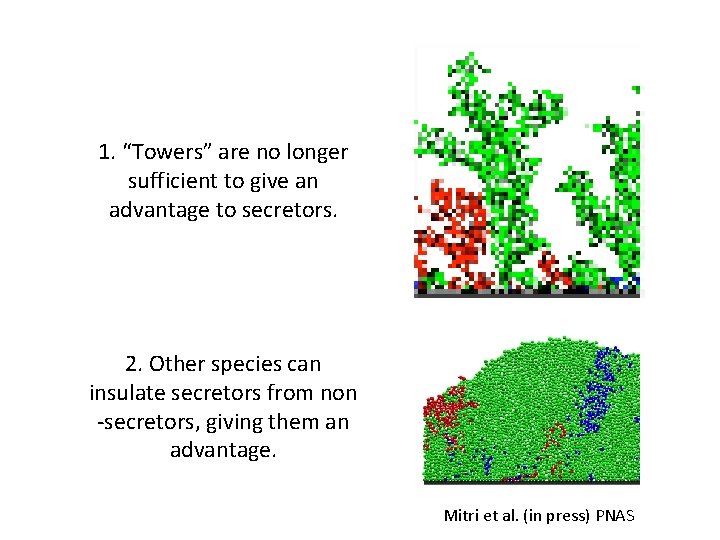
1. “Towers” are no longer sufficient to give an advantage to secretors. 2. Other species can insulate secretors from non -secretors, giving them an advantage. Mitri et al. (in press) PNAS
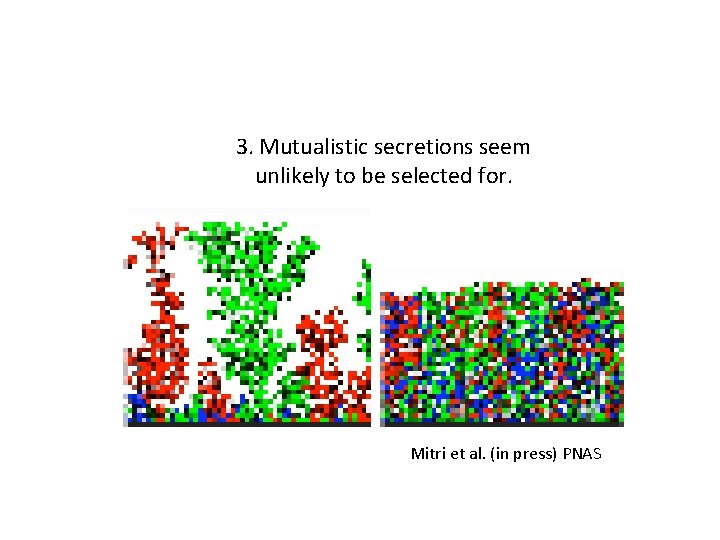
3. Mutualistic secretions seem unlikely to be selected for. Mitri et al. (in press) PNAS

Motivation Challenges Opportunities
Thanks go to… Carey Nadell Nuno Oliveira Jonas Schluter Marina Caldara Kevin Foster João Xavier Wook Kim
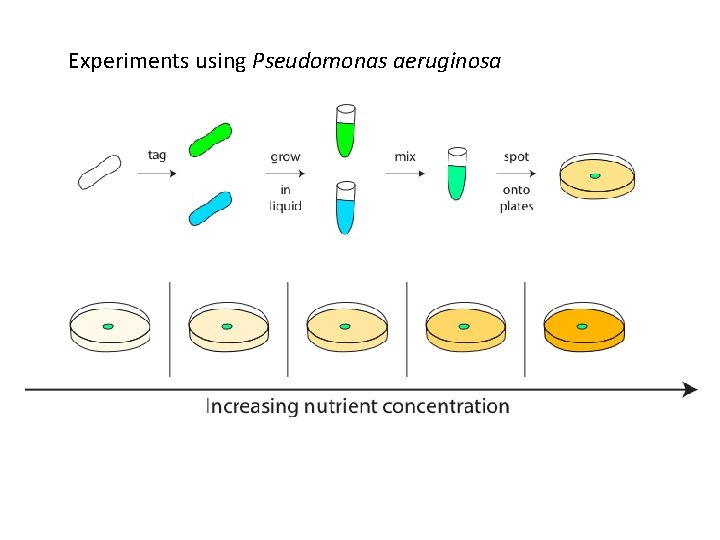
Experiments using Pseudomonas aeruginosa
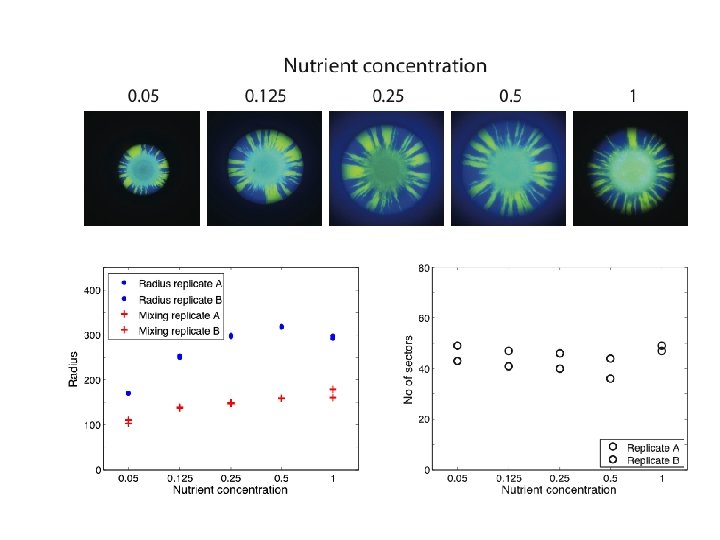
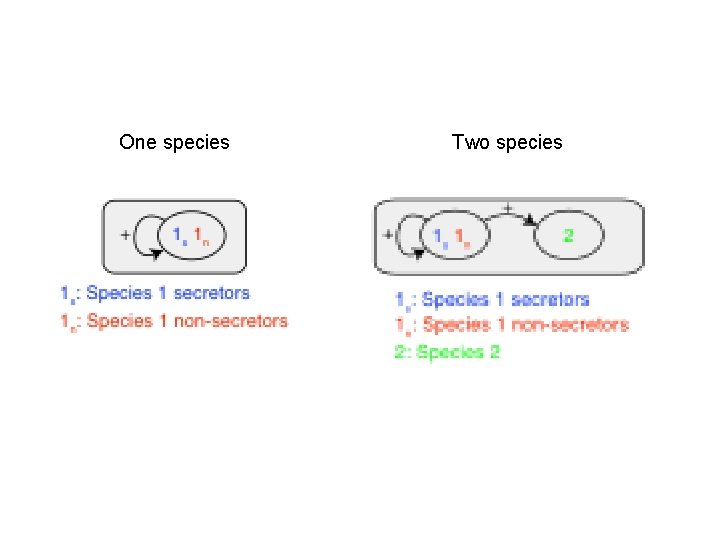
One species Two species
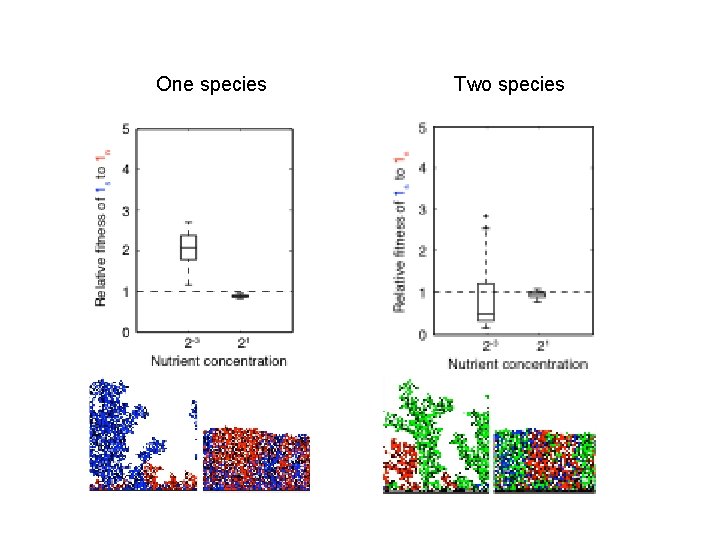
One species Two species
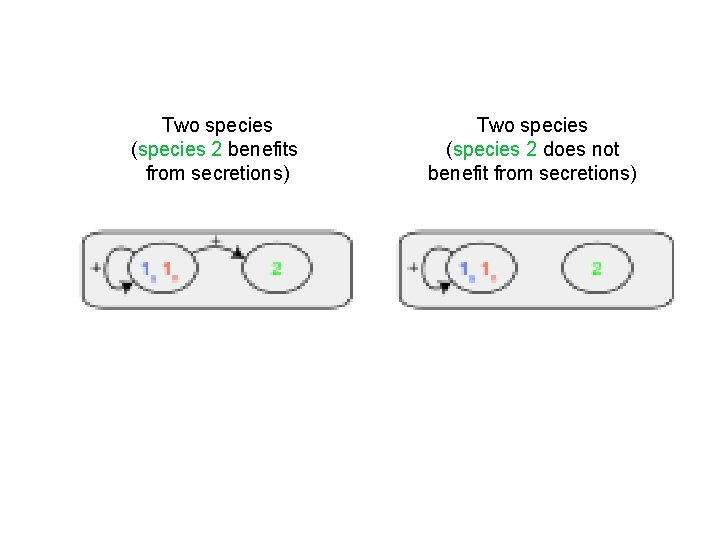
Two species (species 2 benefits from secretions) Two species (species 2 does not benefit from secretions)
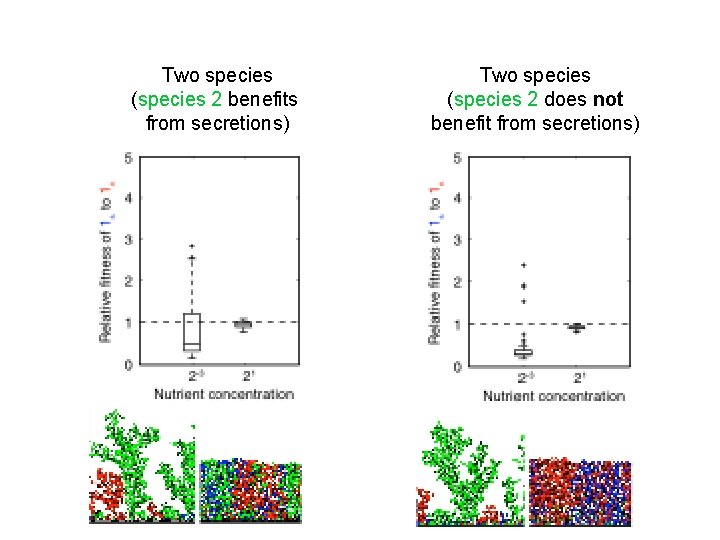
Two species (species 2 benefits from secretions) Two species (species 2 does not benefit from secretions)
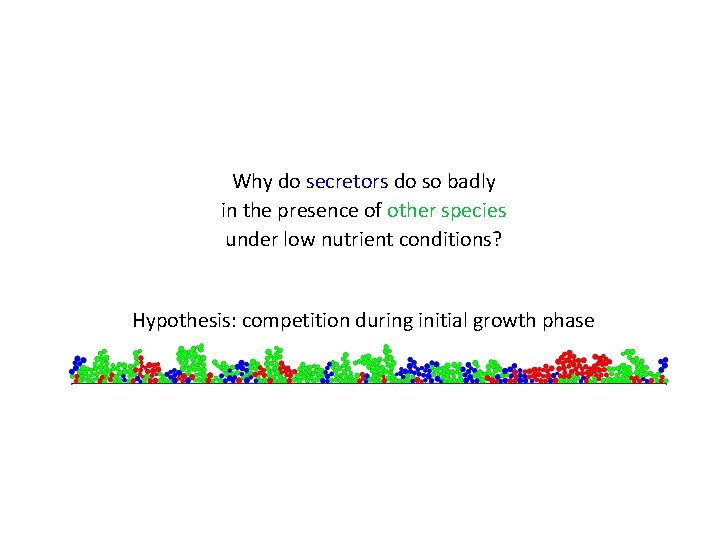
Why do secretors do so badly in the presence of other species under low nutrient conditions? Hypothesis: competition during initial growth phase
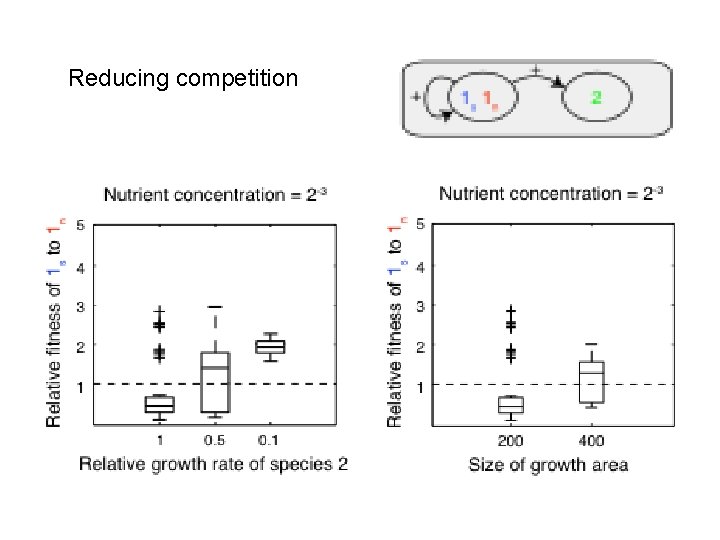
Reducing competition

Reducing competition
3 questions 1. How do secretors and non-secretors fare in the presence of other species? Secretors can be outcompeted by non-secretors due to increased initial competition.
3 questions 2. How do secretors and non-secretors fare in the presence of many other species?

Equal proportions of species 1 and 2 Species 2 is initially 9 times more abundant than species 1
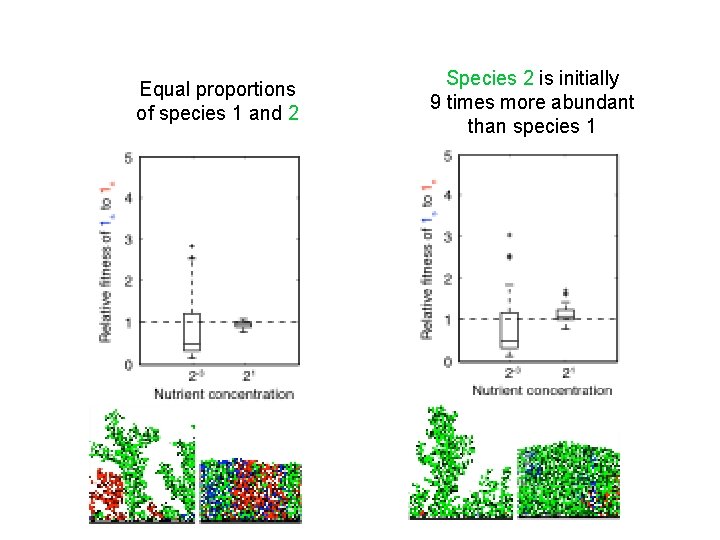
Equal proportions of species 1 and 2 Species 2 is initially 9 times more abundant than species 1
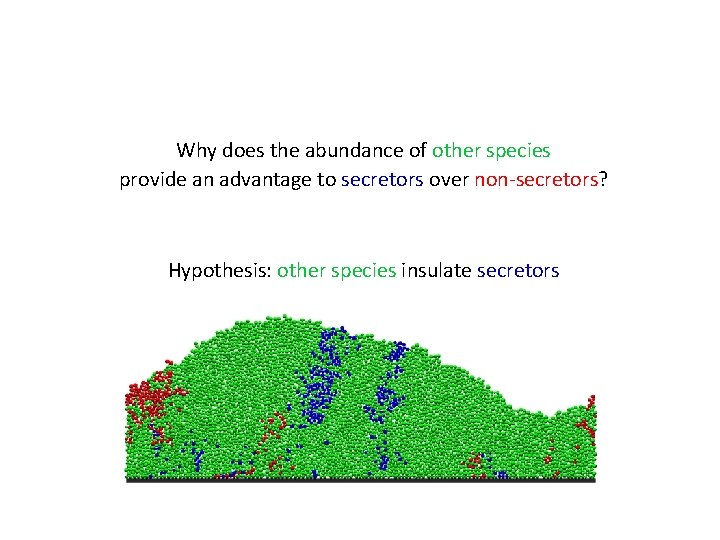
Why does the abundance of other species provide an advantage to secretors over non-secretors? Hypothesis: other species insulate secretors
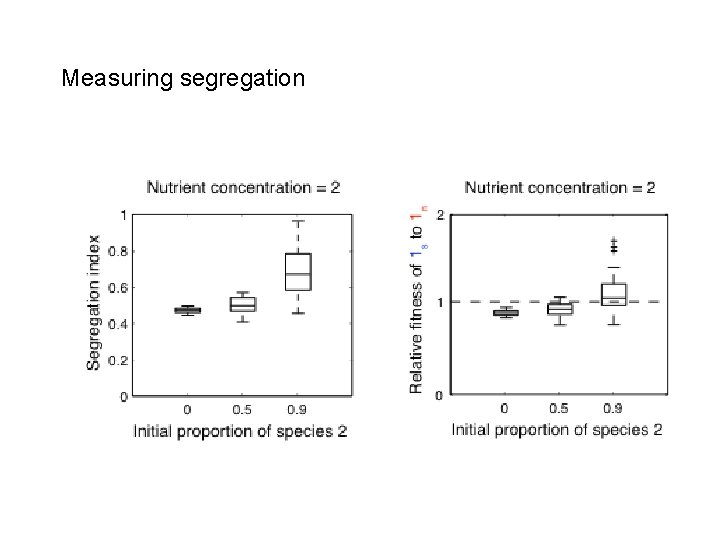
Measuring segregation
3 questions 2. How do secretors and non-secretors fare in the presence of many other species? Secretors can outcompete non-secretors when competition is low (e. g. , high nutrients) because other species can separate the two phenotypes.
3 questions 3. How do secretors and non-secretors fare if other species are mutualistic partners?
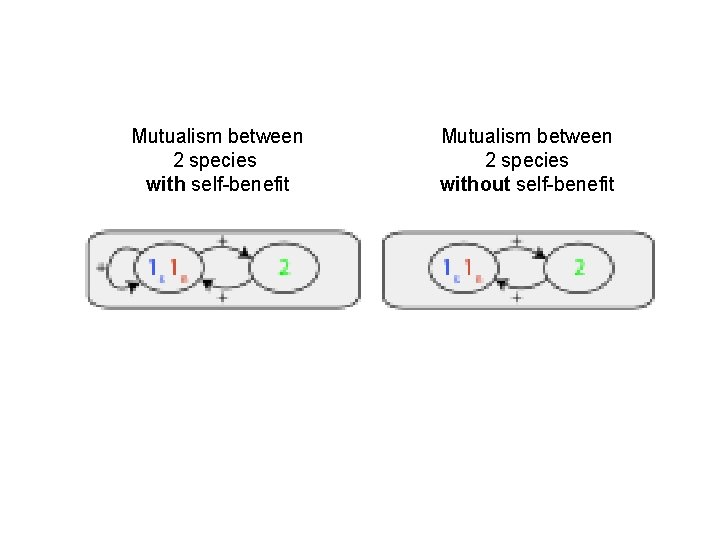
Mutualism between 2 species with self-benefit Mutualism between 2 species without self-benefit
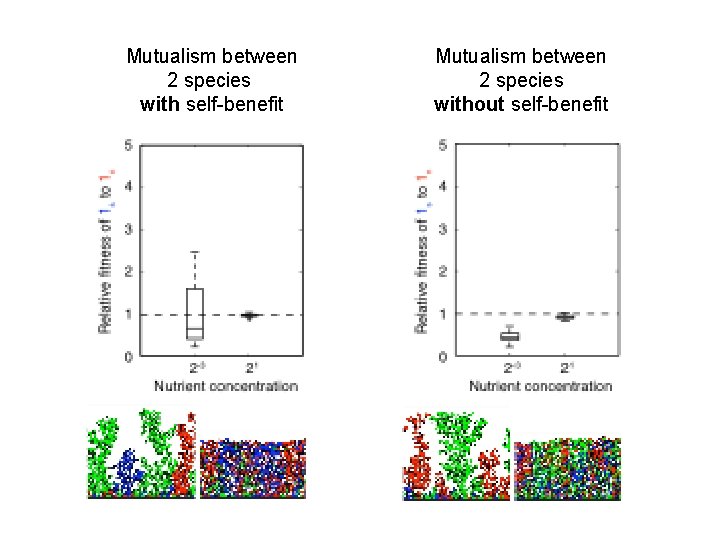
Mutualism between 2 species with self-benefit Mutualism between 2 species without self-benefit
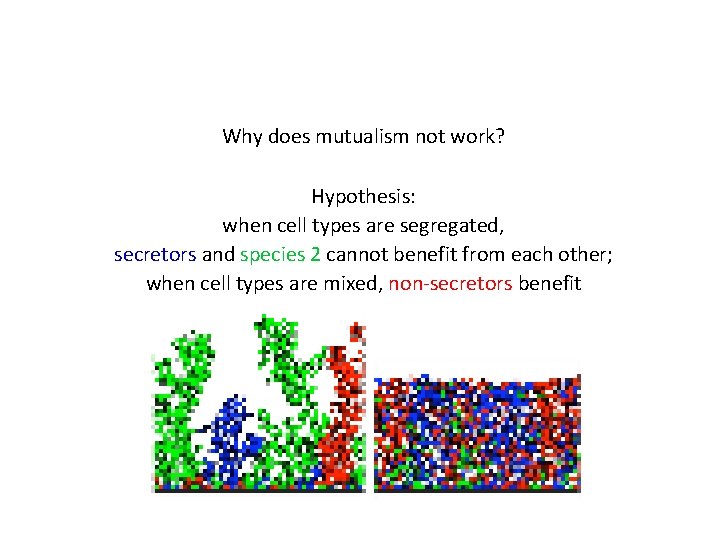
Why does mutualism not work? Hypothesis: when cell types are segregated, secretors and species 2 cannot benefit from each other; when cell types are mixed, non-secretors benefit
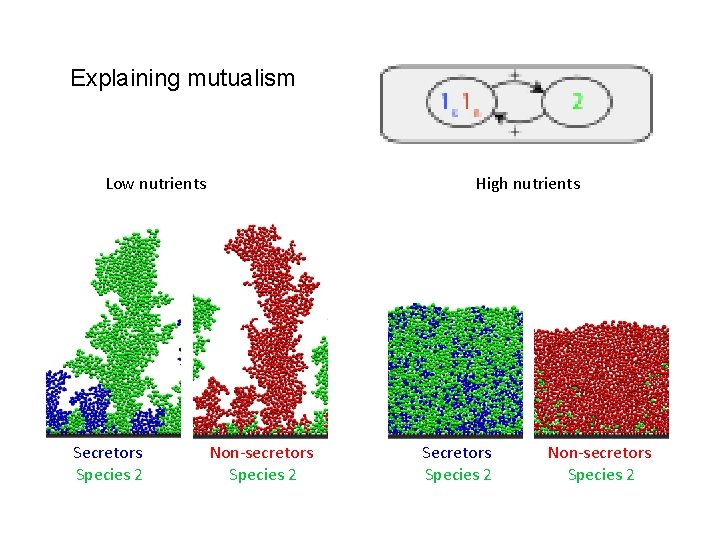
Explaining mutualism Low nutrients Secretors Species 2 High nutrients Non-secretors Species 2 Secretors Species 2 Non-secretors Species 2
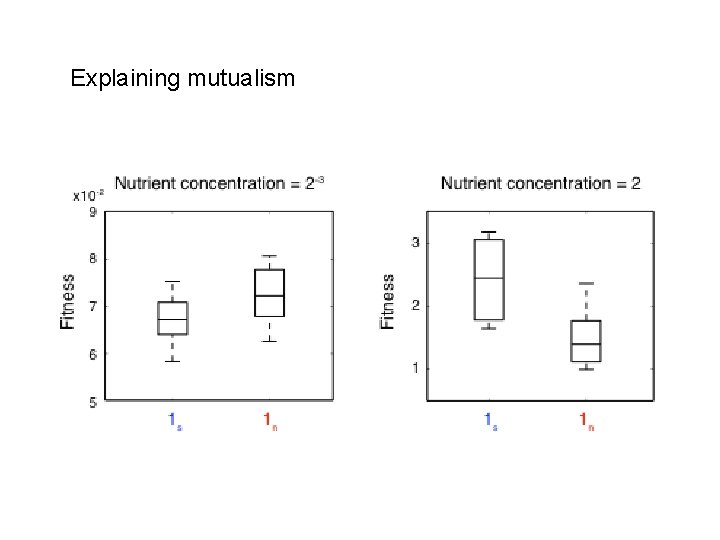
Explaining mutualism

3 questions 3. How do secretors and non-secretors fare if other species are mutualistic partners? Secretors do not do well compared to non-secretors because conditions that favour mutualistic interactions also maximize benefits of non-secretors.
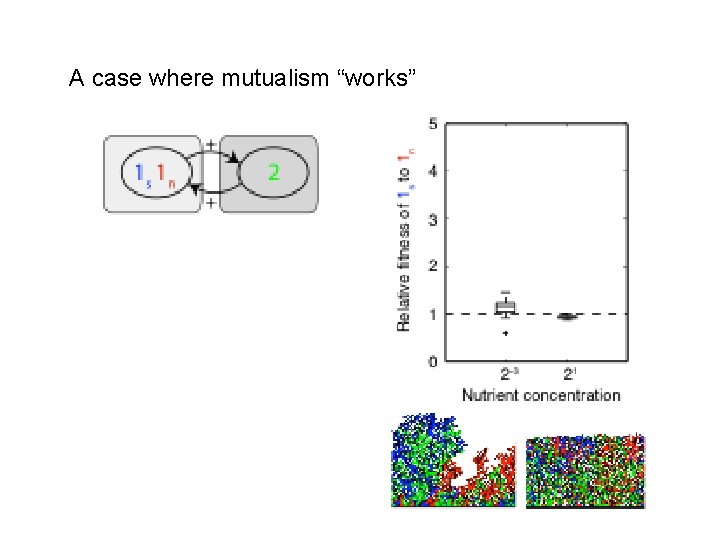
A case where mutualism “works”
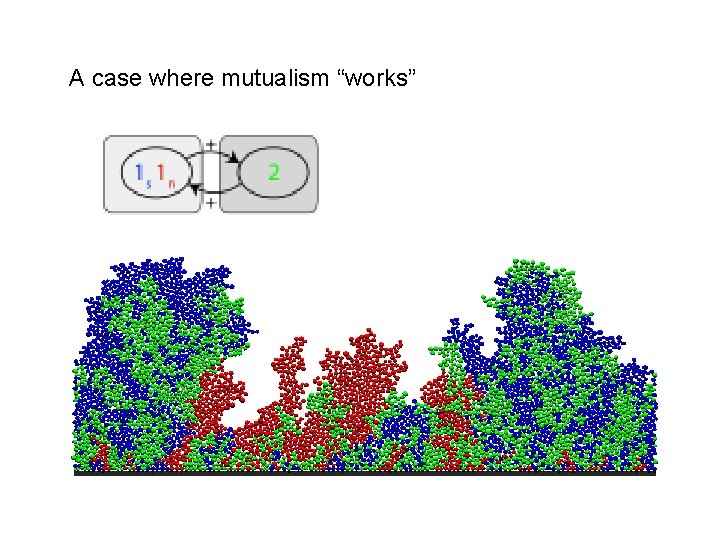
A case where mutualism “works”
3 questions 1. How do secretors and non-secretors fare in the presence of other species? 2. How do secretors and non-secretors fare in the presence of many other species? 3. How do secretors and non-secretors fare if other species are mutualistic partners?
3 answers Secretors can be outcompeted by non-secretors due to increased initial competition. Secretors can outcompete non-secretors when competition is low (e. g. , high nutrients) because other species can separate the two phenotypes. Secretors do not do well compared to non-secretors because conditions that favour mutualistic interactions also maximize benefits of non-secretors.
Not taken into consideration (i. e. future work) By-product mutualisms Competition among groups Regulation of social behaviour Competition between species Niche overlap
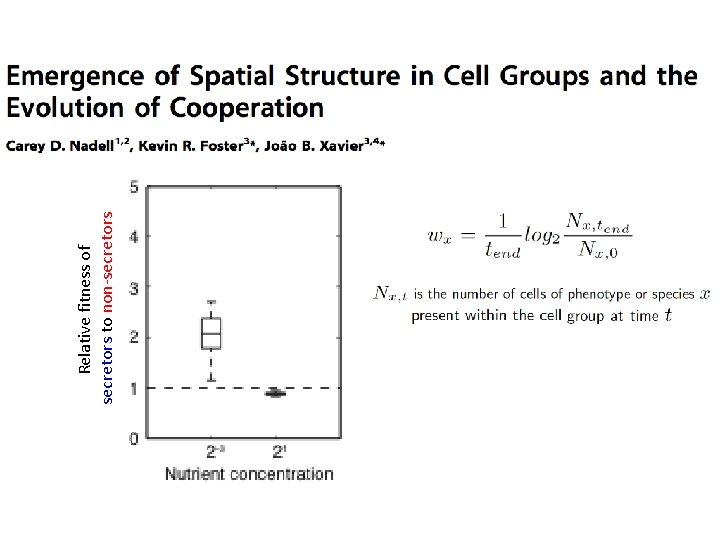
Relative fitness of secretors to non-secretors
- Slides: 45