
INDIVIDUAL RESEARCH REPORT IRR AP SEMINAR PERFORMANCE TASK
- Slides: 7
INDIVIDUAL RESEARCH REPORT (IRR) AP SEMINAR PERFORMANCE TASK 1
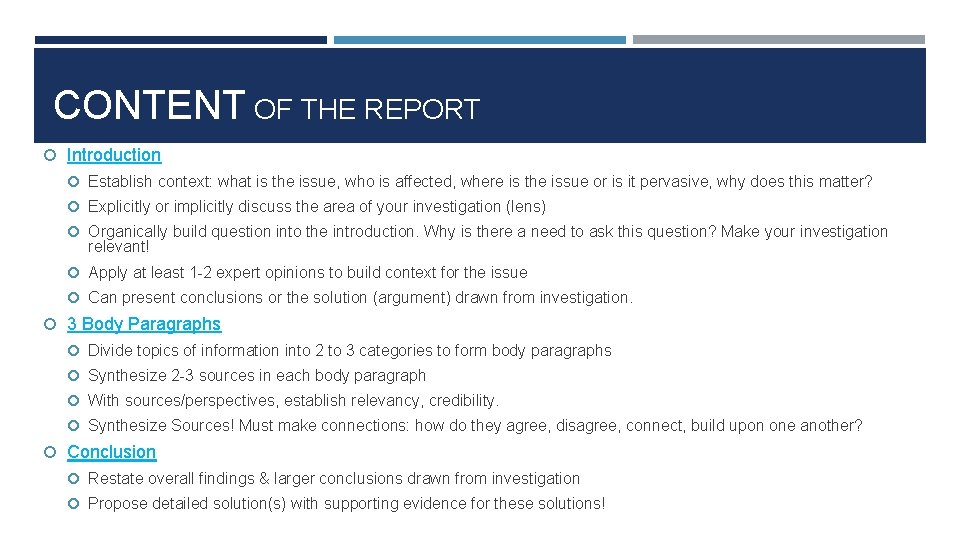
CONTENT OF THE REPORT Introduction Establish context: what is the issue, who is affected, where is the issue or is it pervasive, why does this matter? Explicitly or implicitly discuss the area of your investigation (lens) Organically build question into the introduction. Why is there a need to ask this question? Make your investigation relevant! Apply at least 1 -2 expert opinions to build context for the issue Can present conclusions or the solution (argument) drawn from investigation. 3 Body Paragraphs Divide topics of information into 2 to 3 categories to form body paragraphs Synthesize 2 -3 sources in each body paragraph With sources/perspectives, establish relevancy, credibility. Synthesize Sources! Must make connections: how do they agree, disagree, connect, build upon one another? Conclusion Restate overall findings & larger conclusions drawn from investigation Propose detailed solution(s) with supporting evidence for these solutions!
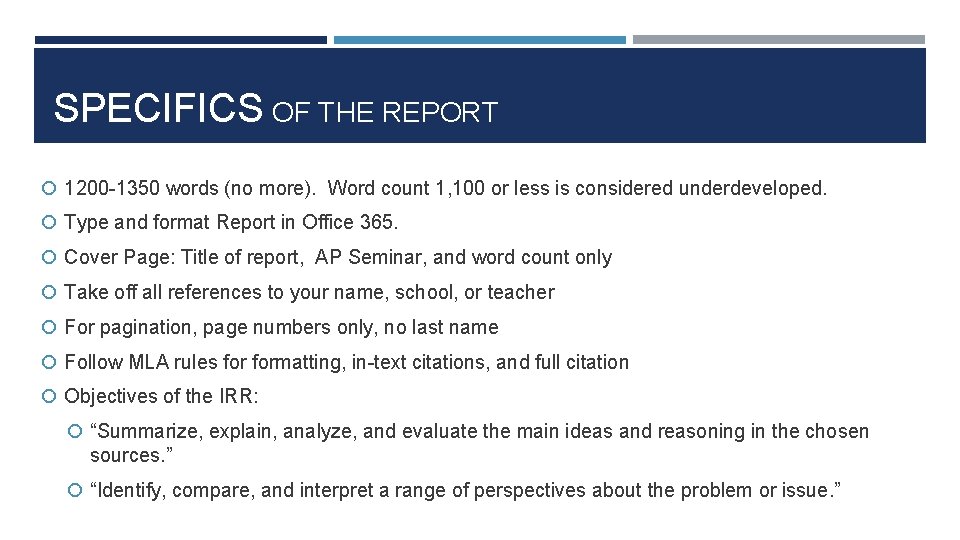
SPECIFICS OF THE REPORT 1200 -1350 words (no more). Word count 1, 100 or less is considered underdeveloped. Type and format Report in Office 365. Cover Page: Title of report, AP Seminar, and word count only Take off all references to your name, school, or teacher For pagination, page numbers only, no last name Follow MLA rules formatting, in-text citations, and full citation Objectives of the IRR: “Summarize, explain, analyze, and evaluate the main ideas and reasoning in the chosen sources. ” “Identify, compare, and interpret a range of perspectives about the problem or issue. ”
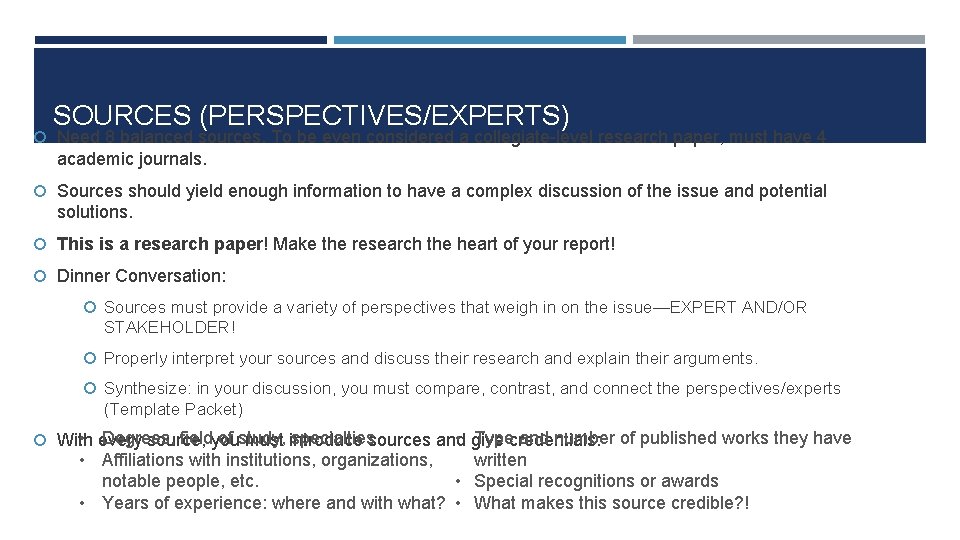
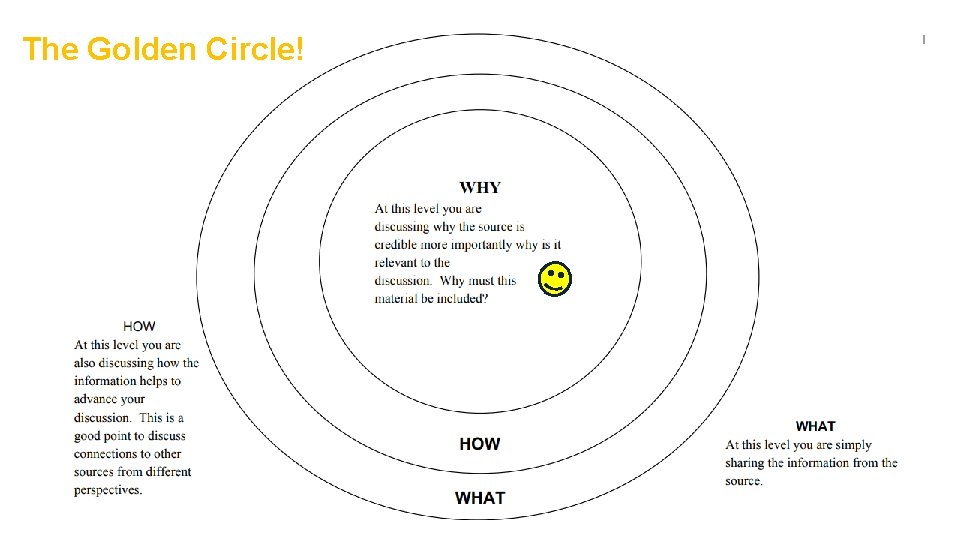
SOURCES (PERSPECTIVES/EXPERTS) Need 8 balanced sources. To be even considered a collegiate-level research paper, must have 4 academic journals. Sources should yield enough information to have a complex discussion of the issue and potential solutions. This is a research paper! Make the research the heart of your report! Dinner Conversation: Sources must provide a variety of perspectives that weigh in on the issue—EXPERT AND/OR STAKEHOLDER! Properly interpret your sources and discuss their research and explain their arguments. Synthesize: in your discussion, you must compare, contrast, and connect the perspectives/experts (Template Packet) • give Typecredentials: and number of published works they have • every Degrees, fieldyou of study, specialtiessources and With source, must introduce written • Affiliations with institutions, organizations, • Special recognitions or awards notable people, etc. • Years of experience: where and with what? • What makes this source credible? !
The Golden Circle!
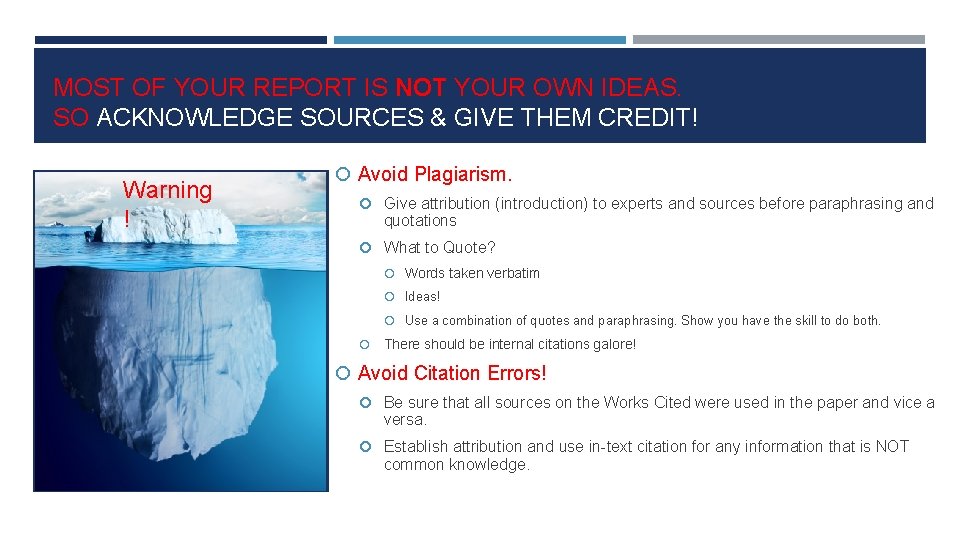
MOST OF YOUR REPORT IS NOT YOUR OWN IDEAS. SO ACKNOWLEDGE SOURCES & GIVE THEM CREDIT! Warning ! Avoid Plagiarism. Give attribution (introduction) to experts and sources before paraphrasing and quotations What to Quote? Words taken verbatim Ideas! Use a combination of quotes and paraphrasing. Show you have the skill to do both. There should be internal citations galore! Avoid Citation Errors! Be sure that all sources on the Works Cited were used in the paper and vice a versa. Establish attribution and use in-text citation for any information that is NOT common knowledge.
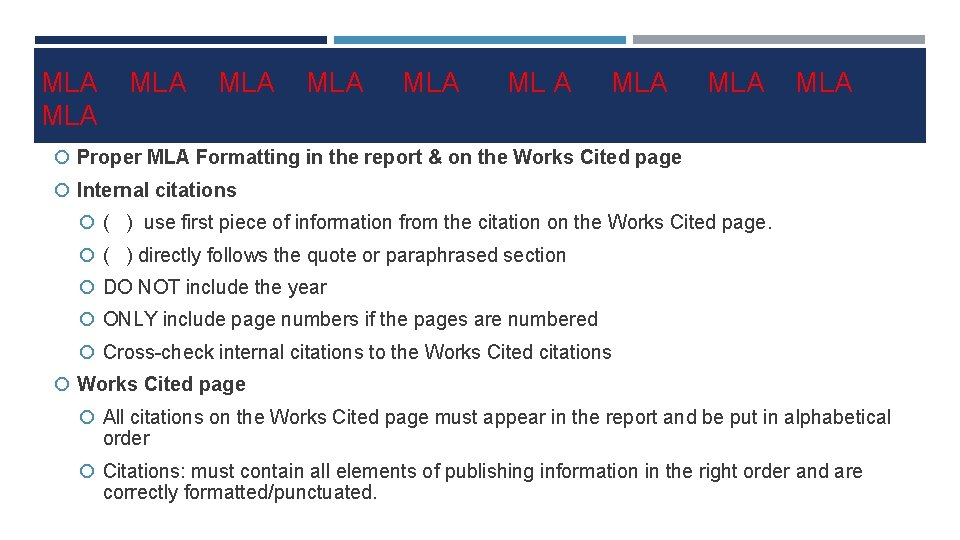
MLA MLA MLA MLA Proper MLA Formatting in the report & on the Works Cited page Internal citations ( ) use first piece of information from the citation on the Works Cited page. ( ) directly follows the quote or paraphrased section DO NOT include the year ONLY include page numbers if the pages are numbered Cross-check internal citations to the Works Cited citations Works Cited page All citations on the Works Cited page must appear in the report and be put in alphabetical order Citations: must contain all elements of publishing information in the right order and are correctly formatted/punctuated.