
Individual Reactions to acute HypoxiaSymptoms of Jet Fighter


- Slides: 57
Individual Reactions to acute Hypoxia-Symptoms of Jet Fighter Pilots and High Altitude Parachutists Colonel ret. Dr. med. Dipl. -Ing. H. Welsch former Head (1993 – 2007) of German Institute of Aviation Medicine, - Division Aviation Physiology – Königsbrück High Altitude: Physiology and Praxis, Slovenia Sep 2009 1
Source: Wissenschaftliche Prüfungsarbeit zum Ersten Staatsexamen für das Lehramt an Gymnasien Gegenüberstellende Betrachtung der subjektiven Wahrnehmung von Sauerstoffmangel-Symptomen bei Freifallspringern und Jet-Piloten “Comparison of acute Oxygen-Deficiency-Symptoms between High Altitude Parachutists and Jet Fighter Pilots” Nina Alexandra Gleber im So. Se 2008 Referenten: 1. Prof. Dr. med. H. -V. Ulmer 2. Prof. Dr. M. Macsenaere 2
Hypothesis and Aim of the Study • High altitude training in a low pressure chamber is a mandatory task in NATO for each military person who takes part in high altitude air traffic. • It was presumed that fast jet fighter pilots, all of them full ranked officers, might react more sensitively on hypoxia symptoms than high altitude parachutists, most of them enlisted soldiers with quite a different education in military behaviour. • The aim of the study was to compare reaction times from both groups to verify or deny the hypothesis. 3
Hypothesis and Aim of the Study • High altitude training in a low pressure chamber is a mandatory task in NATO for each military person who takes part in high altitude air traffic. • It was presumed that fast jet fighter pilots, all of them full ranked officers, might react more sensitively on hypoxia symptoms than high altitude parachutists, most of them enlisted soldiers with quite a different education in military behaviour. • The aim of the study was to compare reaction times from both groups to verify or deny the hypothesis. 4
Hypothesis and Aim of the Study • High altitude training in a low pressure chamber is a mandatory task in NATO for each military person who takes part in high altitude air traffic. • It was presumed that fast jet fighter pilots, all of them full ranked officers, might react more sensitively on hypoxia symptoms than high altitude parachutists, most of them enlisted soldiers with quite a different education in military behaviour. • The aim of the study was to compare reaction times from both groups to verify or deny the hypothesis. 5
Hypothesis and Aim of the Study • High altitude training in a low pressure chamber is a mandatory task in NATO for each military person who takes part in high altitude air traffic. • It was presumed that fast jet fighter pilots, all of them full ranked officers, might react more sensitively on hypoxia symptoms than high altitude parachutists, most of them enlisted soldiers with quite a different education in military behaviour. • The aim of the study was to compare reaction times from both groups to verify or deny the hypothesis. 6
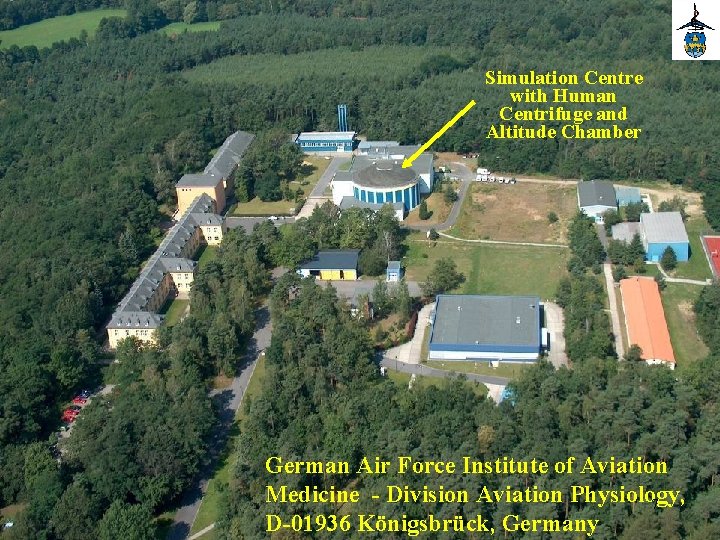
Simulation Centre with Human Centrifuge and Altitude Chamber German Air Force Institute of Aviation Medicine - Division Aviation Physiology, 7 D-01936 Königsbrück, Germany
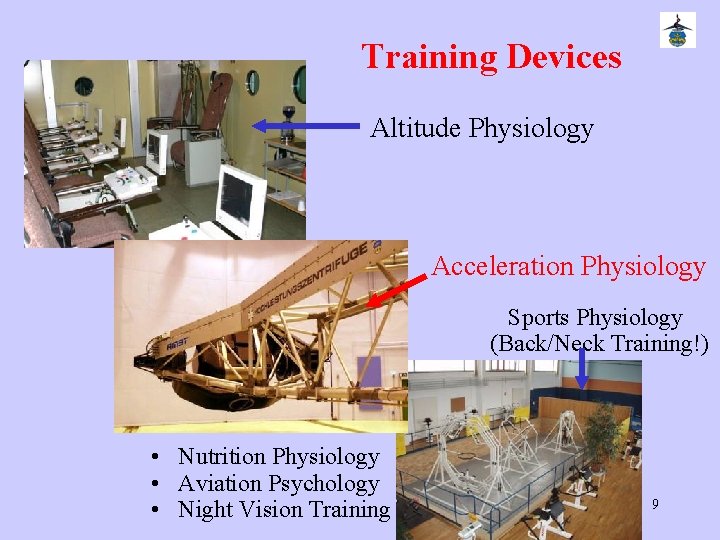
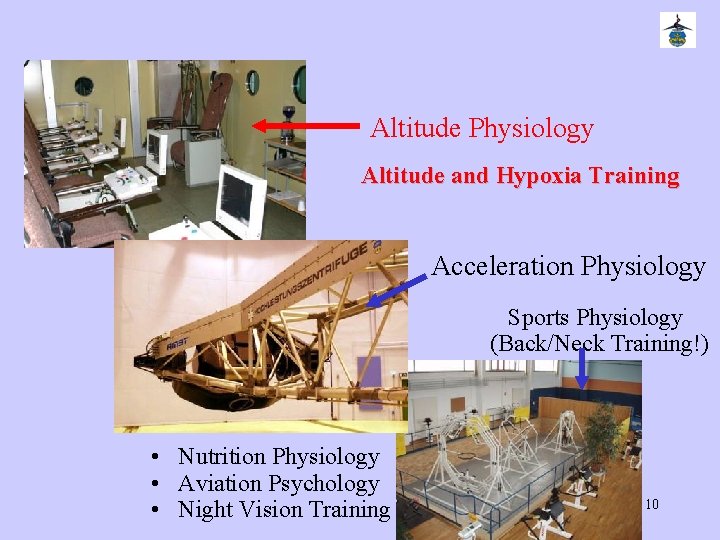
German Air Force Institute of Aviation Medicine Division Aviation Physiology – Actual Training Devices and Areas: – Human Centrifuge, Altitude Chamber, Anti-G -Trainer, Spatial Disorientation Device, Night Vision Training Device, Special Physical Training Equipment, Aviation Psychology (CRM) – Actual Tasks: – Evaluation, Training, Diagnostics, Research, Development, Test facility for industry 8
Training Devices • • Altitude Physiology • • • Nutrition Physiology • Aviation Psychology • Night Vision Training Acceleration Physiology Sports Physiology (Back/Neck Training!) 9
• • Altitude Physiology Altitude and Hypoxia Training • • • Nutrition Physiology • Aviation Psychology • Night Vision Training Acceleration Physiology Sports Physiology (Back/Neck Training!) 10
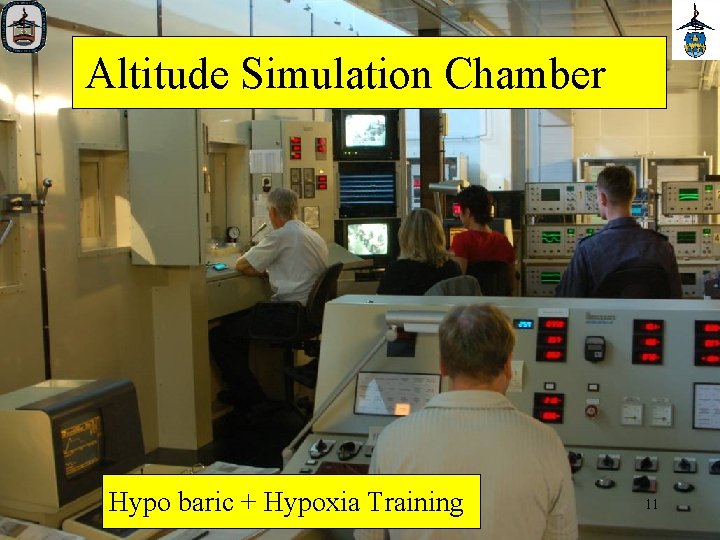
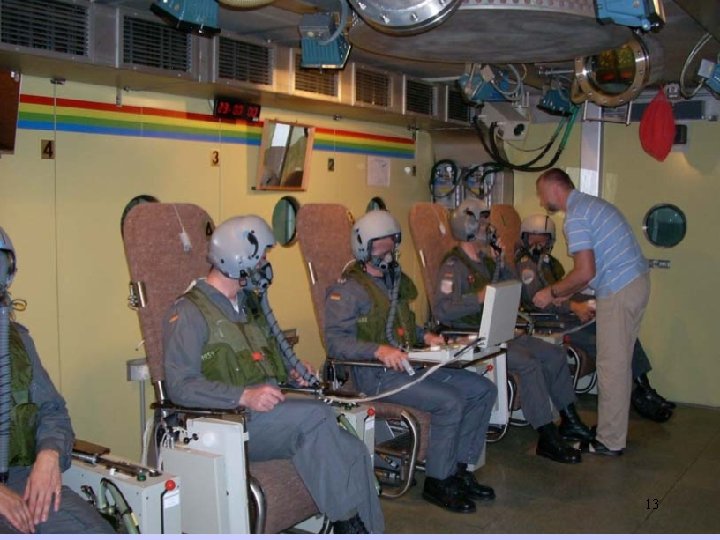
Altitude Simulation Chamber Hypo baric + Hypoxia Training 11
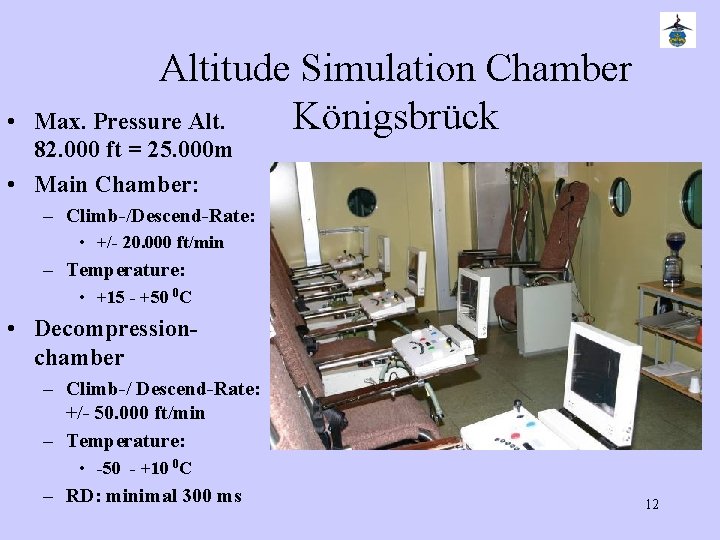
• Altitude Simulation Chamber Königsbrück Max. Pressure Alt. 82. 000 ft = 25. 000 m • Main Chamber: – Climb-/Descend-Rate: • +/- 20. 000 ft/min – Temperature: • +15 - +50 0 C • Decompressionchamber – Climb-/ Descend-Rate: +/- 50. 000 ft/min – Temperature: • -50 - +10 0 C – RD: minimal 300 ms 12
13
oxygen regulator with remote control Switch „ 100% Oxygen“ 14
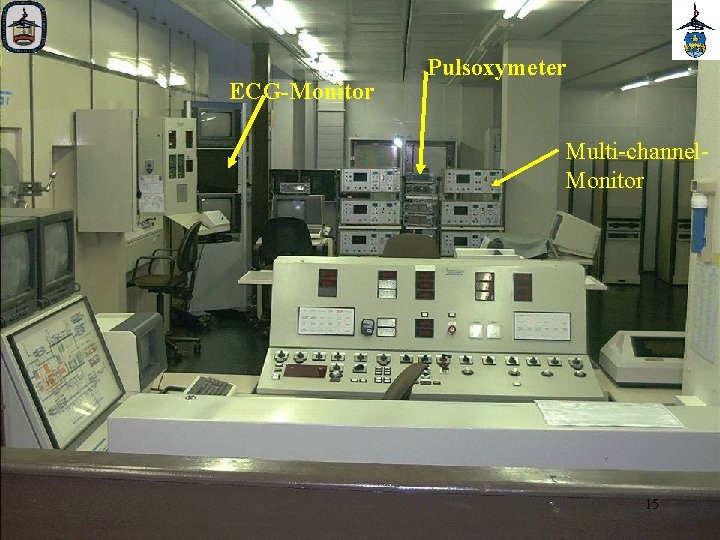
ECG-Monitor Pulsoxymeter Multi-channel. Monitor 15
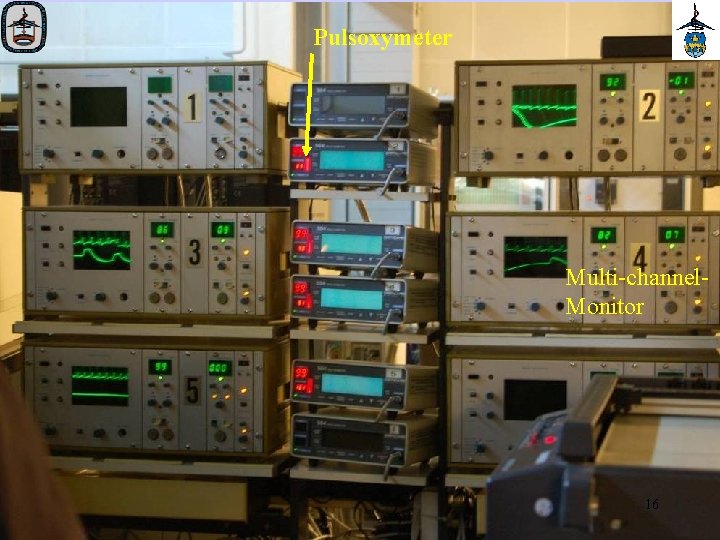
Pulsoxymeter Multi-channel. Monitor 16
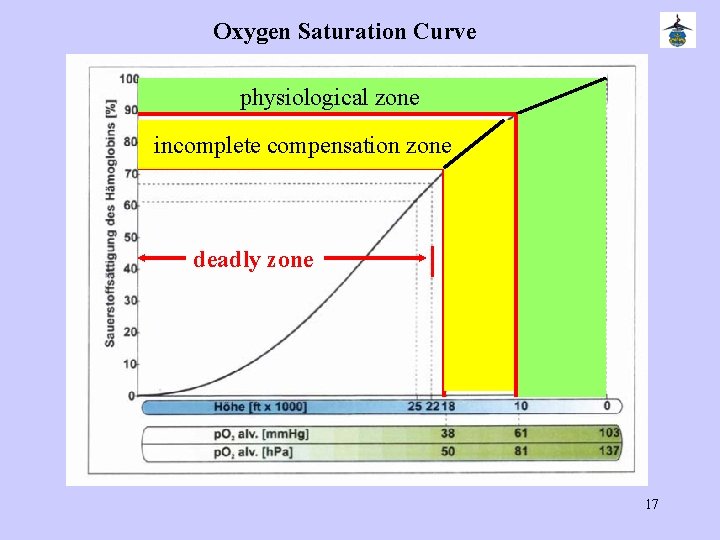
Oxygen Saturation Curve physiological zone incomplete compensation zone deadly zone 17
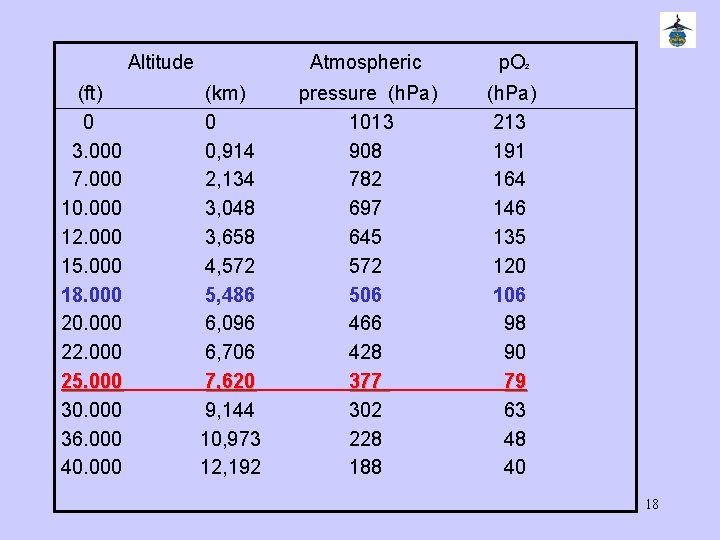
Altitude (ft) 0 3. 000 7. 000 10. 000 12. 000 15. 000 18. 000 20. 000 22. 000 25. 000 30. 000 36. 000 40. 000 (km) 0 0, 914 2, 134 3, 048 3, 658 4, 572 5, 486 6, 096 6, 706 7, 620 9, 144 10, 973 12, 192 Atmospheric p. O² pressure (h. Pa) 1013 908 782 697 645 572 506 466 428 377 302 228 188 (h. Pa) 213 191 164 146 135 120 106 98 90 79 63 48 40 18
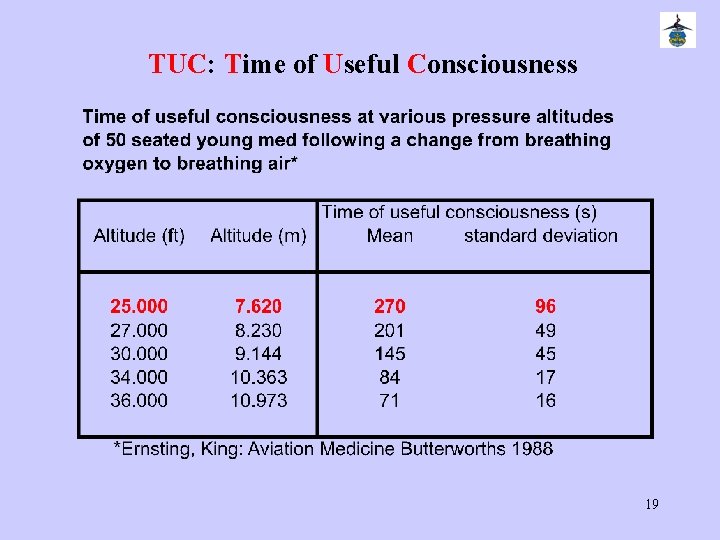
TUC: Time of Useful Consciousness 19
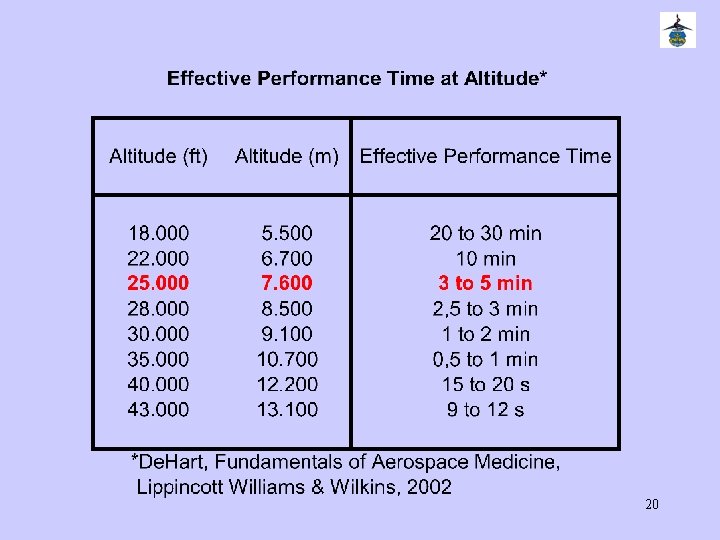
20
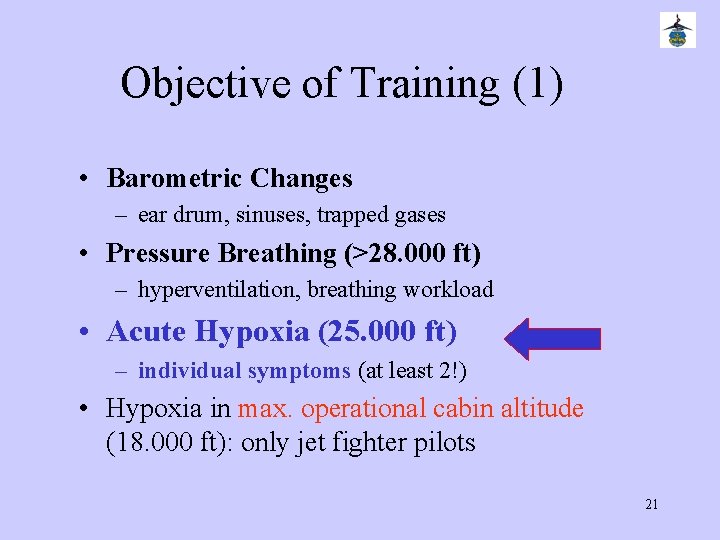
Objective of Training (1) • Barometric Changes – ear drum, sinuses, trapped gases • Pressure Breathing (>28. 000 ft) – hyperventilation, breathing workload • Acute Hypoxia (25. 000 ft) – individual symptoms (at least 2!) • Hypoxia in max. operational cabin altitude (18. 000 ft): only jet fighter pilots 21
Objective of Training (2) • Altitude Hypoxia Exposure – primarily no diagnostic/evaluation tool! – situational awareness training: • flying in high altitude • instrumental cross check including oxygen equipment; “PRICE”-check • Oxygen Equipment Safety Training • Confidence Training 22
Signs and Symptoms of Hypoxia • Because there is always a risk of equipment failure at high altitude, early recognition of hypoxic symptoms is mandatory. • The constellation of hypoxic symptoms and their sequence of appearance tend to be idiosyncratic to the individual. • As a rule, the individual‘s symptoms do not change dramatically over time, but refresher training in a chamber does reacquaint the individual with the symptoms, as well as identify any change in symptoms. 23
Signs and Symptoms of Hypoxia • Because there is always a risk of equipment failure at high altitude, early recognition of hypoxic symptoms is mandatory. • The constellation of hypoxic symptoms and their sequence of appearance tend to be idiosyncratic to the individual. • As a rule, the individual‘s symptoms do not change dramatically over time, but refresher training in a chamber does reacquaint the individual with the symptoms, as well as identify any change in symptoms. 24
Signs and Symptoms of Hypoxia • Because there is always a risk of equipment failure at high altitude, early recognition of hypoxic symptoms is mandatory. • The constellation of hypoxic symptoms and their sequence of appearance tend to be idiosyncratic to the individual. • As a rule, the individual‘s symptoms do not change dramatically over time, but refresher training in a chamber does reacquaint the individual with the symptoms, as well as identify any change in symptoms. 25
Pilots and Parachutists • Aircrew (Pilots and WSO): – above 8. 000 ft pressure altitude in the cockpit: additional oxygen in the breathing gas is required. Jet fighter aircraft aircrew is always equipped with oxygen breathing mask. • High altitude parachutists: – HAHO: High Altitude, High Opening: • Pre-breathing in the A/C, oxygen breathing in the air – HALO: High Altitude, Low Opening • Pre-breathing in the A/C, normal breathing in the air 26
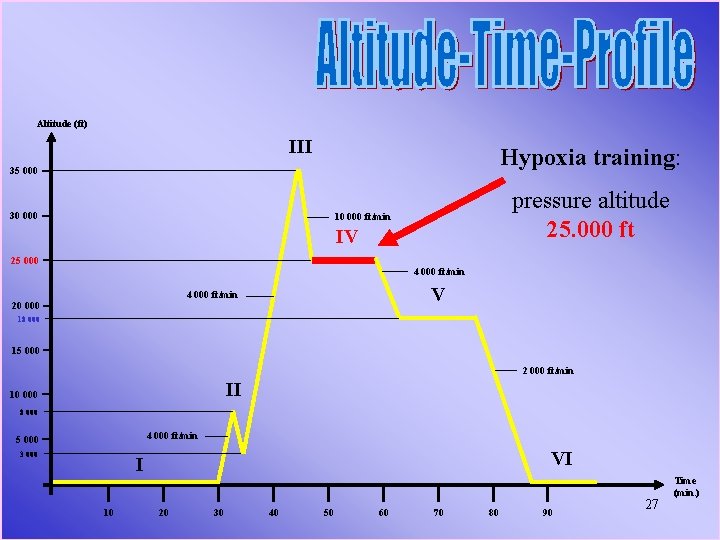
Altitude (ft) III Hypoxia training: 35 000 30 000 pressure altitude 25. 000 ft 10 000 ft/min IV 25 000 4 000 ft/min V 4 000 ft/min 20 000 18 000 15 000 2 000 ft/min II 10 000 8 000 4 000 ft/min 5 000 3 000 VI I 10 20 30 40 50 60 70 80 90 27 Time (min. )
Pilots and Parachutists • Aircrew (Pilots and WSO): – above 8. 000 ft pressure altitude in the cockpit: additional oxygen in the breathing gas required. Jet fighter aircraft aircrew is always equipped with oxygen breathing mask. • High altitude parachutists: – HAHO: High Altitude, High Opening: • Pre-breathing in the A/C, oxygen breathing in the air – HALO: High Altitude, Low Opening • Pre-breathing in the A/C, normal breathing in the air 28
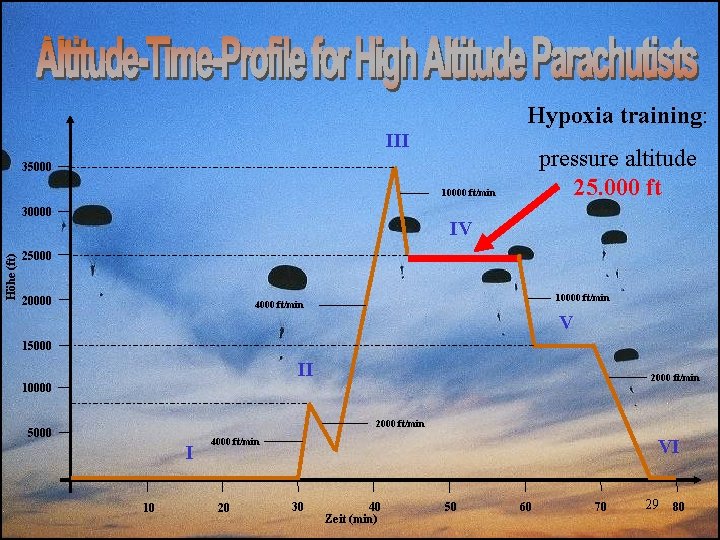
Hypoxia training: III pressure altitude 25. 000 ft 35000 10000 ft/min Höhe (ft) 30000 IV 25000 20000 10000 ft/min 4000 ft/min V 15000 II 2000 ft/min 10000 2000 ft/min 5000 I 10 VI 4000 ft/min 20 30 40 Zeit (min) 50 60 70 29 80
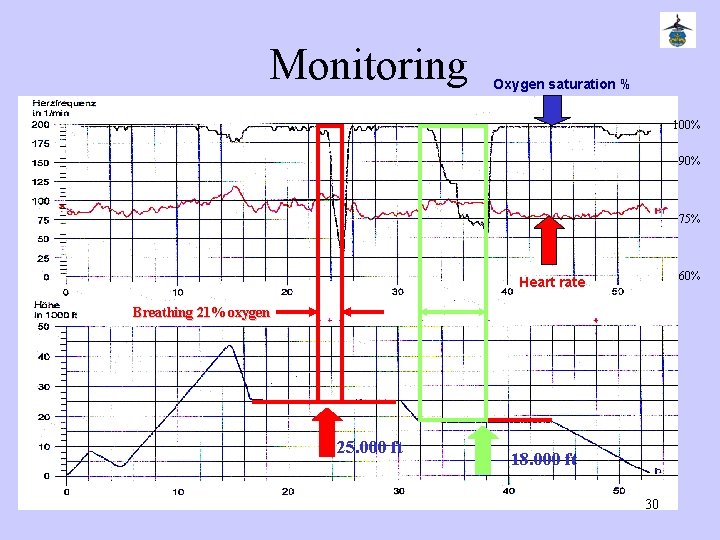
Monitoring Oxygen saturation % 100% 90% 75% 60% Heart rate Breathing 21% oxygen 25. 000 ft 18. 000 ft 30
31
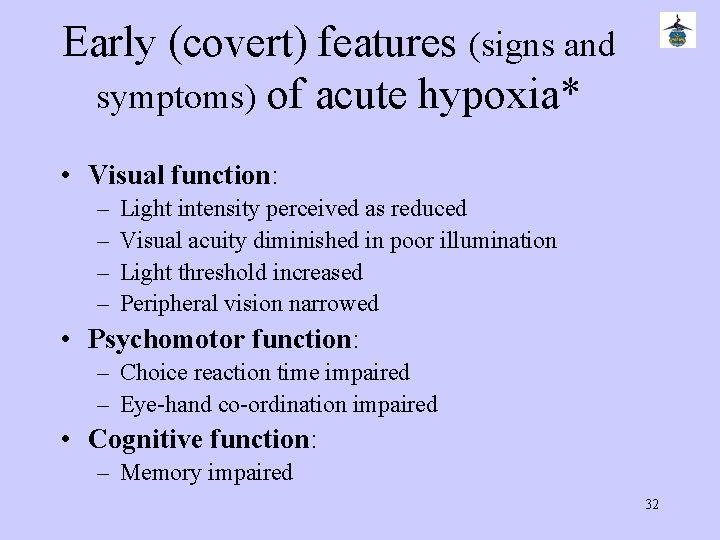
Early (covert) features (signs and symptoms) of acute hypoxia* • Visual function: – – Light intensity perceived as reduced Visual acuity diminished in poor illumination Light threshold increased Peripheral vision narrowed • Psychomotor function: – Choice reaction time impaired – Eye-hand co-ordination impaired • Cognitive function: – Memory impaired 32
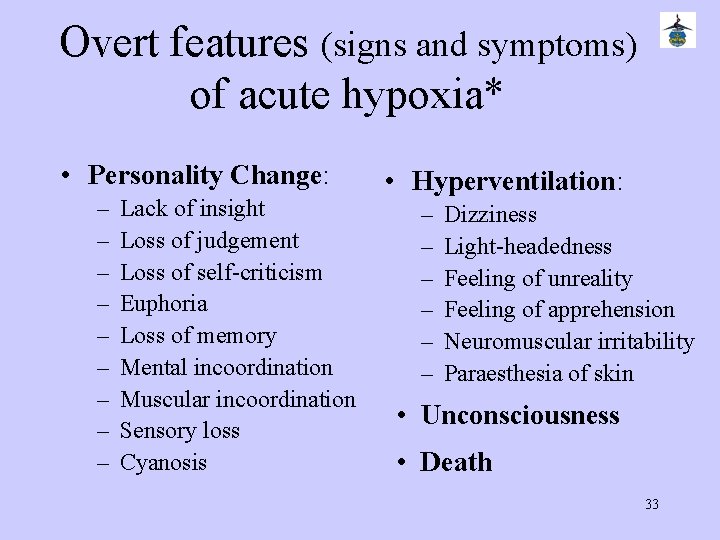
Overt features (signs and symptoms) of acute hypoxia* • Personality Change: – – – – – Lack of insight Loss of judgement Loss of self-criticism Euphoria Loss of memory Mental incoordination Muscular incoordination Sensory loss Cyanosis • Hyperventilation: – – – Dizziness Light-headedness Feeling of unreality Feeling of apprehension Neuromuscular irritability Paraesthesia of skin • Unconsciousness • Death 33
Results: Pressure Altitude 25. 000 ft Questions and Answers 1. Statistic Data of Trainees 2. First Hypoxia Symptoms (Time and Sa. O 2) 3. Duration of Breathing 21% Oxygen until Re-connection to 100% Oxygen Breathing Gas (Time and Sa. O 2) 4. Time between first Hypoxia Symptom and Re-connection to 100% Oxygen 34
Results Pressure Altitude 25. 000 ft 1. Statistic Data of Trainees 2. First Hypoxia Symptoms (Time and Sa. O 2) 3. Duration of Breathing 21% Oxygen until Re-connection to 100% Oxygen Breathing Gas (Time and Sa. O 2) 4. Time between first Hypoxia Symptom and Re-connection to 100% Oxygen 35
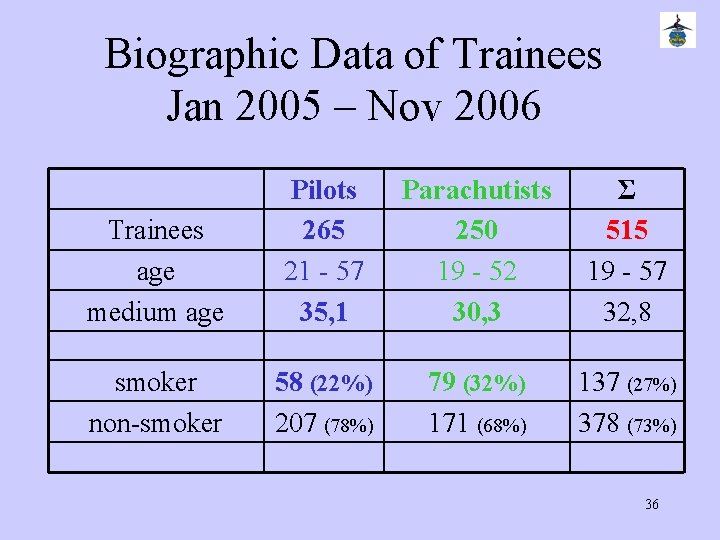
Biographic Data of Trainees Jan 2005 – Nov 2006 Trainees age medium age Pilots 265 21 - 57 35, 1 Parachutists 250 19 - 52 30, 3 Σ 515 19 - 57 32, 8 smoker non-smoker 58 (22%) 207 (78%) 79 (32%) 171 (68%) 137 (27%) 378 (73%) 36
Results Pressure Altitude 25. 000 ft 1. Statistic Data of Trainees 2. First Hypoxia Symptoms (Time and Sa. O 2) 3. Duration of Breathing 21% Oxygen until Re-connection to 100% Oxygen Breathing Gas (Time and Sa. O 2) 4. Time between first Hypoxia Symptom and Re-connection to 100% Oxygen 37
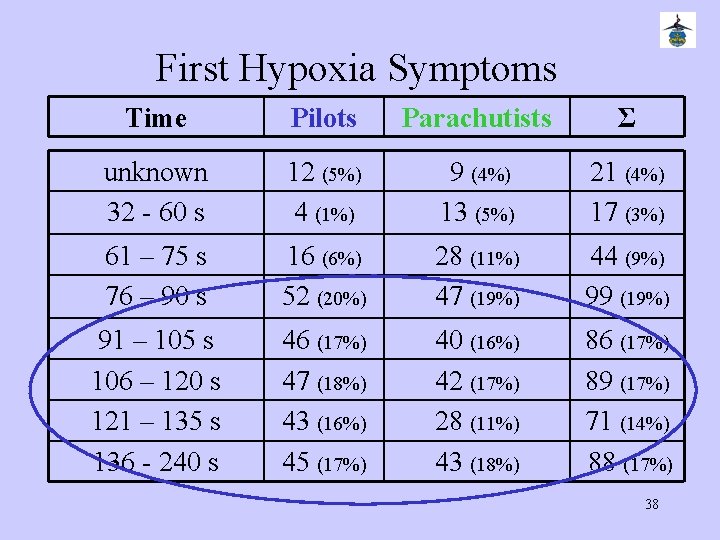
First Hypoxia Symptoms Time Pilots Parachutists Σ unknown 32 - 60 s 12 (5%) 4 (1%) 9 (4%) 13 (5%) 21 (4%) 17 (3%) 61 – 75 s 76 – 90 s 16 (6%) 52 (20%) 28 (11%) 47 (19%) 44 (9%) 99 (19%) 91 – 105 s 106 – 120 s 121 – 135 s 136 - 240 s 46 (17%) 47 (18%) 43 (16%) 45 (17%) 40 (16%) 42 (17%) 28 (11%) 43 (18%) 86 (17%) 89 (17%) 71 (14%) 88 (17%) 38
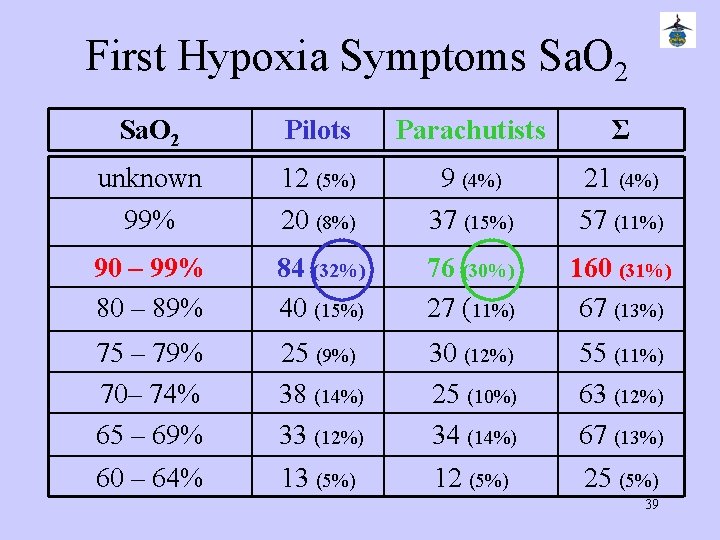
First Hypoxia Symptoms Sa. O 2 Pilots Parachutists Σ unknown 99% 12 (5%) 20 (8%) 9 (4%) 37 (15%) 21 (4%) 57 (11%) 90 – 99% 80 – 89% 84 (32%) 40 (15%) 76 (30%) 27 (11%) 160 (31%) 67 (13%) 75 – 79% 70– 74% 65 – 69% 25 (9%) 38 (14%) 33 (12%) 30 (12%) 25 (10%) 34 (14%) 55 (11%) 63 (12%) 67 (13%) 60 – 64% 13 (5%) 12 (5%) 25 (5%) 39
Results Pressure Altitude 25. 000 ft 1. Statistic Data of Trainees 2. First Hypoxia Symptoms (Time and Sa. O 2) 3. Duration of Breathing 21% Oxygen until Re-connection to 100% Oxygen Breathing Gas (Time and Sa. O 2) 4. Time between first Hypoxia Symptom and Re-connection to 100% Oxygen 40
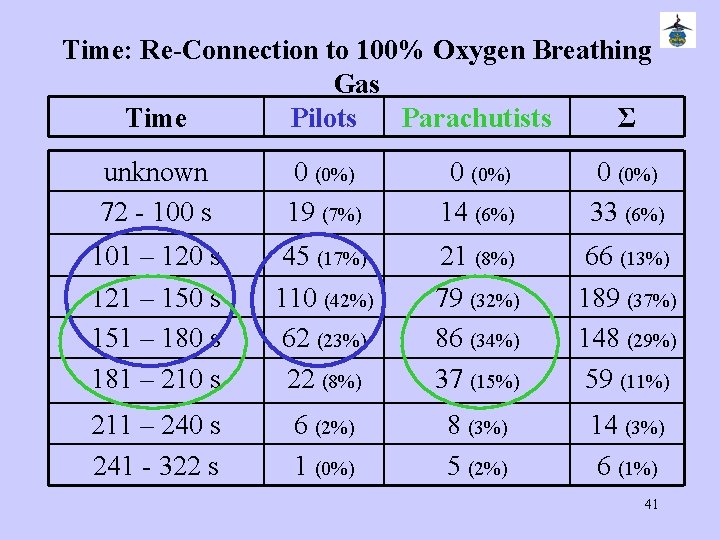
Time: Re-Connection to 100% Oxygen Breathing Gas Time Pilots Parachutists Σ unknown 72 - 100 s 0 (0%) 19 (7%) 0 (0%) 14 (6%) 0 (0%) 33 (6%) 101 – 120 s 45 (17%) 21 (8%) 66 (13%) 121 – 150 s 151 – 180 s 181 – 210 s 110 (42%) 62 (23%) 22 (8%) 79 (32%) 86 (34%) 37 (15%) 189 (37%) 148 (29%) 59 (11%) 211 – 240 s 241 - 322 s 6 (2%) 1 (0%) 8 (3%) 5 (2%) 14 (3%) 6 (1%) 41
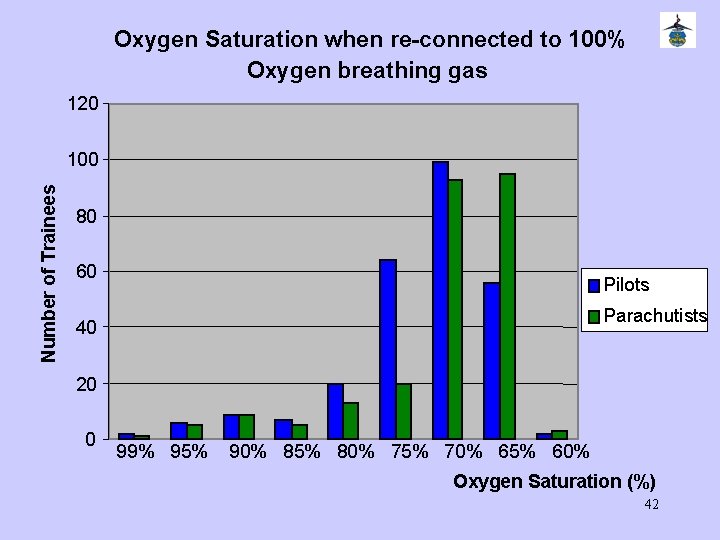
Oxygen Saturation when re-connected to 100% Oxygen breathing gas 120 Number of Trainees 100 80 60 Pilots Parachutists 40 20 0 99% 95% 90% 85% 80% 75% 70% 65% 60% Oxygen Saturation (%) 42
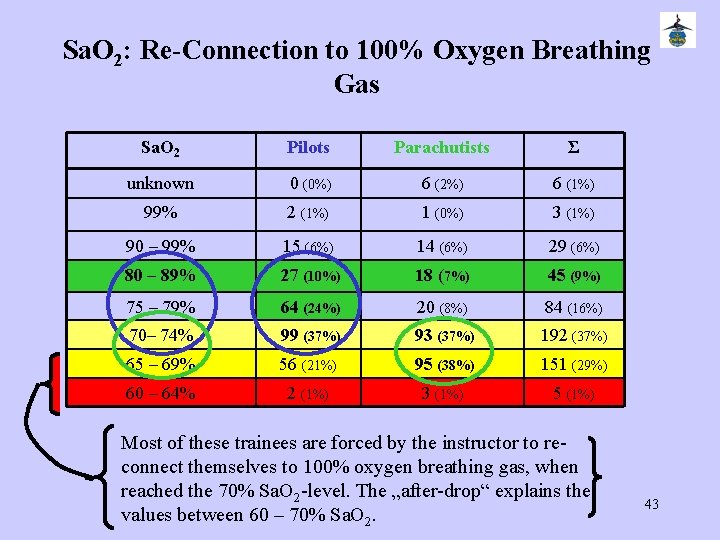
Sa. O 2: Re-Connection to 100% Oxygen Breathing Gas Sa. O 2 Pilots Parachutists Σ unknown 0 (0%) 6 (2%) 6 (1%) 99% 2 (1%) 1 (0%) 3 (1%) 90 – 99% 15 (6%) 14 (6%) 29 (6%) 80 – 89% 27 (10%) 18 (7%) 45 (9%) 75 – 79% 64 (24%) 20 (8%) 84 (16%) 70– 74% 99 (37%) 93 (37%) 192 (37%) 65 – 69% 56 (21%) 95 (38%) 151 (29%) 60 – 64% 2 (1%) 3 (1%) 5 (1%) Most of these trainees are forced by the instructor to reconnect themselves to 100% oxygen breathing gas, when reached the 70% Sa. O 2 -level. The „after-drop“ explains the values between 60 – 70% Sa. O 2. 43
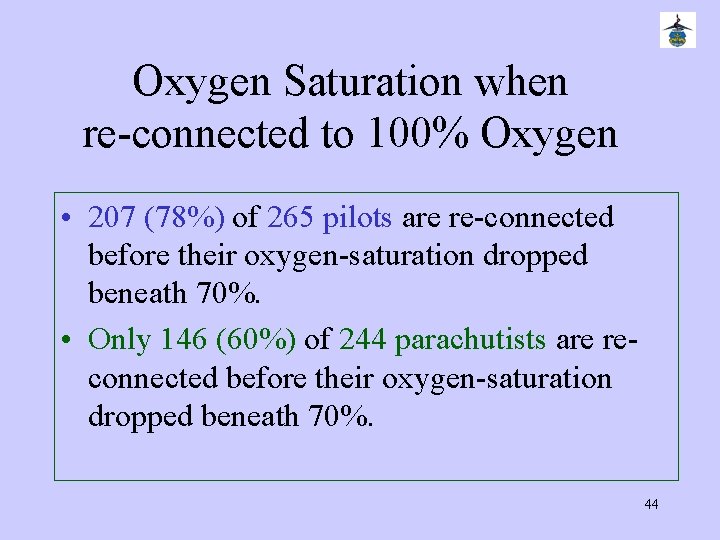
Oxygen Saturation when re-connected to 100% Oxygen • 207 (78%) of 265 pilots are re-connected before their oxygen-saturation dropped beneath 70%. • Only 146 (60%) of 244 parachutists are reconnected before their oxygen-saturation dropped beneath 70%. 44
Results Pressure Altitude 25. 000 ft 1. Statistic Data of Trainees 2. First Hypoxia Symptoms (Time and Sa. O 2) 3. Duration of Breathing 21% Oxygen until Re-connection to 100% Oxygen Breathing Gas (Time and Sa. O 2) 4. Time between first Hypoxia Symptom and Re-connection to 100% Oxygen 45
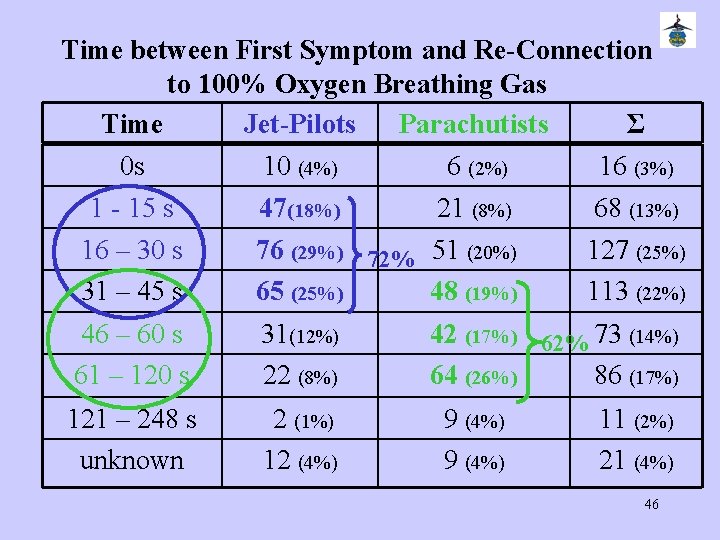
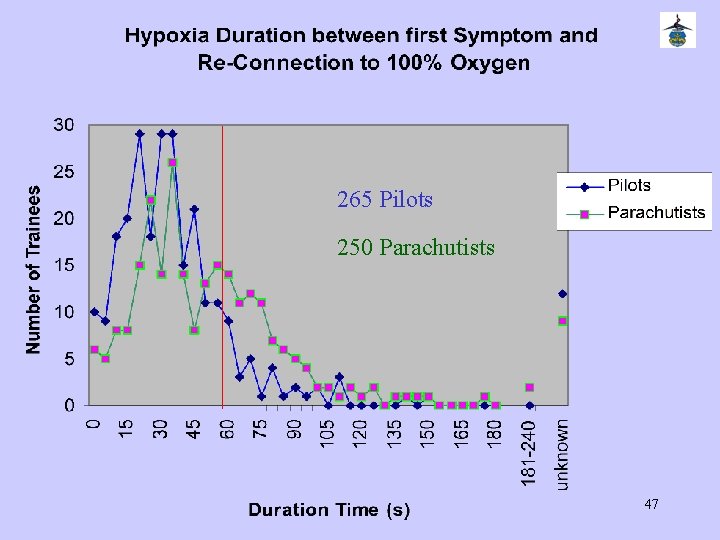
Time between First Symptom and Re-Connection to 100% Oxygen Breathing Gas Time Jet-Pilots Parachutists Σ 0 s 10 (4%) 6 (2%) 16 (3%) 1 - 15 s 47(18%) 21 (8%) 68 (13%) 16 – 30 s 76 (29%) 72% 51 (20%) 127 (25%) 31 – 45 s 65 (25%) 48 (19%) 113 (22%) 46 – 60 s 61 – 120 s 31(12%) 22 (8%) 121 – 248 s unknown 2 (1%) 12 (4%) 42 (17%) 62% 73 (14%) 64 (26%) 86 (17%) 9 (4%) 11 (2%) 21 (4%) 46
265 Pilots 250 Parachutists 47
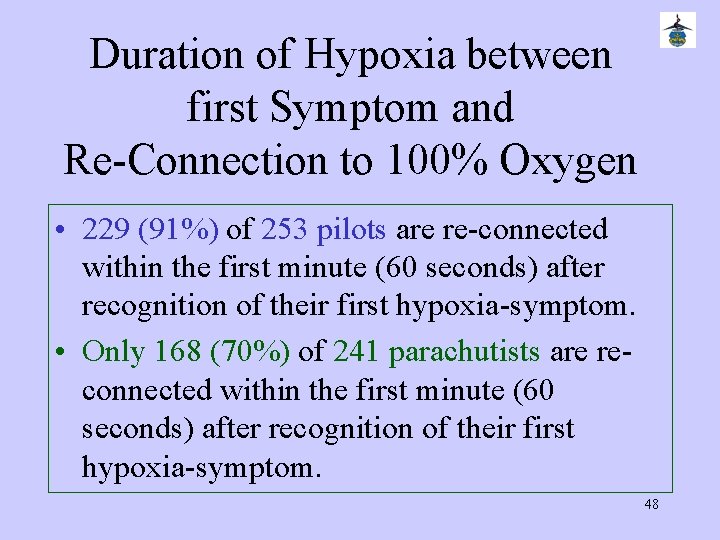
Duration of Hypoxia between first Symptom and Re-Connection to 100% Oxygen • 229 (91%) of 253 pilots are re-connected within the first minute (60 seconds) after recognition of their first hypoxia-symptom. • Only 168 (70%) of 241 parachutists are reconnected within the first minute (60 seconds) after recognition of their first hypoxia-symptom. 48
Results – Smoker/Non-Smoker 49
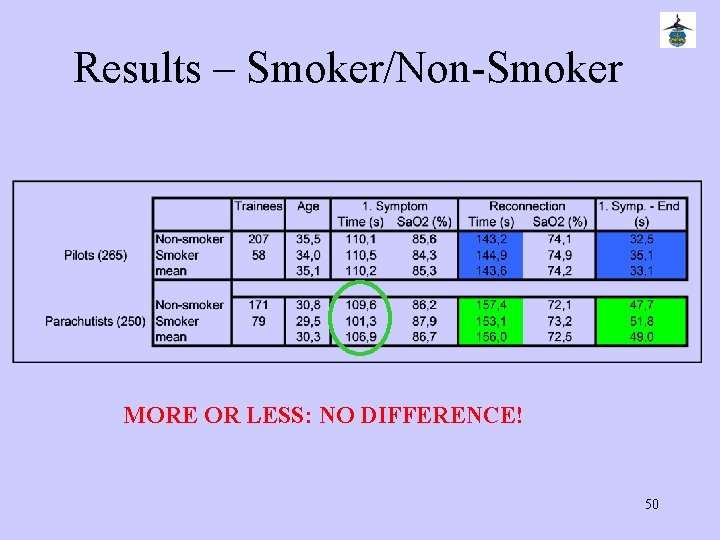
Results – Smoker/Non-Smoker MORE OR LESS: NO DIFFERENCE! 50
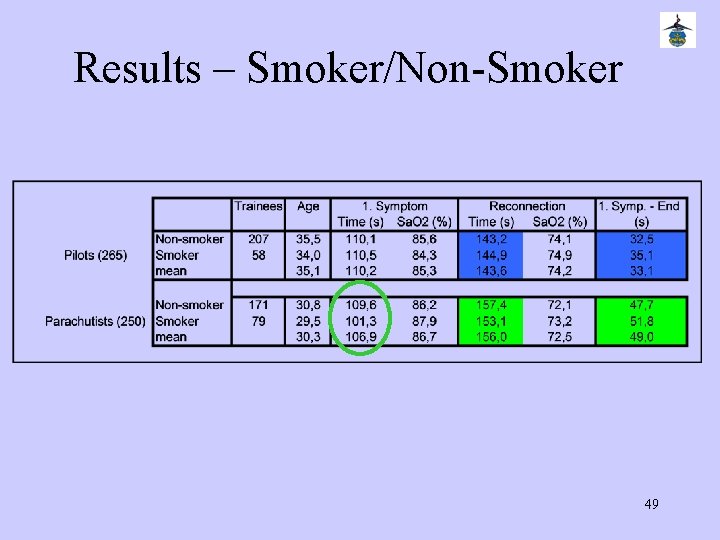
Summary Pilots - Parachutists • No Differences in Type of Hypoxia Symptoms • No Differences in Recognition of first Hypoxia Symptoms in Time and Sa. O 2 • Pilots Re-connect themselves earlier than Parachutists (Time and Sa. O 2) to 100% Breathing Gas • Parachutists wait much longer after first Experience of Hypoxia Symptoms until Re-connection to 100% Breathing Gas • There is no Difference between Smokers and Non. Smokers. 51
Summary Pilots - Parachutists • No Differences in Type of Hypoxia Symptoms • No Differences in Recognition of first Hypoxia Symptoms in Time and Sa. O 2 • Pilots Re-connect themselves earlier than Parachutists (Time and Sa. O 2) to 100% Breathing Gas • Parachutists wait much longer after first Experience of Hypoxia Symptoms until Re-connection to 100% Breathing Gas • There is no Difference between Smokers and Non. Smokers. 52
Summary Pilots - Parachutists • No Differences in Type of Hypoxia Symptoms • No Differences in Recognition of first Hypoxia Symptoms in Time and Sa. O 2 • Pilots Re-connect themselves earlier than Parachutists (Time and Sa. O 2) to 100% Breathing Gas • Parachutists wait much longer after first Experience of Hypoxia Symptoms until Re-connection to 100% Breathing Gas • There is no Difference between Smokers and Non. Smokers. 53
Summary Pilots - Parachutists • No Differences in Type of Hypoxia Symptoms • No Differences in Recognition of first Hypoxia Symptoms in Time and Sa. O 2 • Pilots Re-connect themselves earlier than Parachutists (Time and Sa. O 2) to 100% Breathing Gas • Parachutists wait much longer after first Experience of Hypoxia Symptoms until Re-connection to 100% Breathing Gas • There is no Difference between Smokers and Non. Smokers. 54
Summary Pilots - Parachutists • No Differences in Type of Hypoxia Symptoms • No Differences in Recognition of first Hypoxia Symptoms in Time and Sa. O 2 • Pilots Re-connect earlier than Parachutists (Time and Sa. O 2) to 100% Oxygen Breathing Gas • Parachutists wait much longer after first Experience of Hypoxia Symptoms until Re-connection to 100% Oxygen Breathing Gas • There is no Difference between Smokers and Non. Smokers. 55
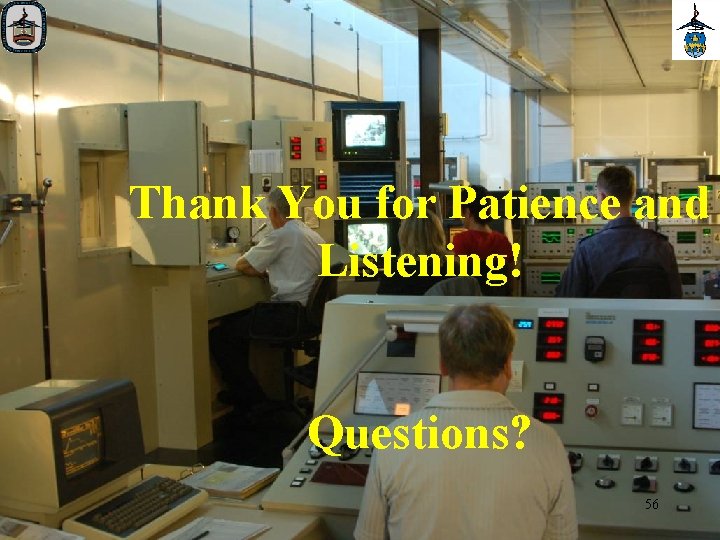
Thank You for Patience and Listening! Questions? 56
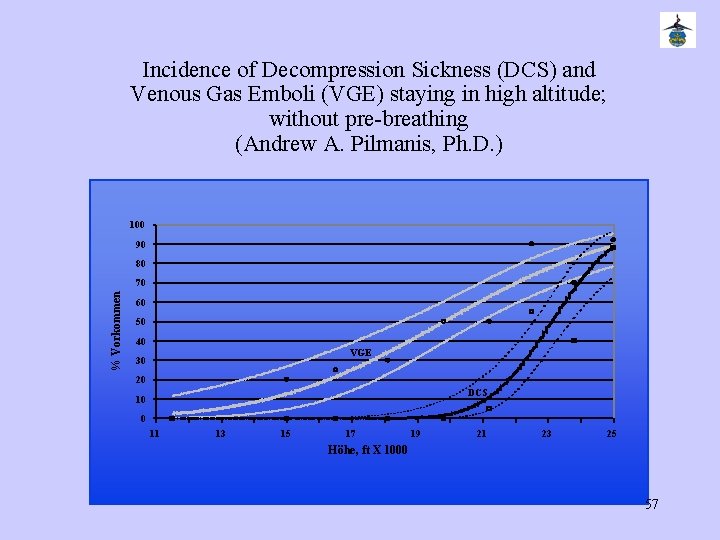
Incidence of Decompression Sickness (DCS) and Venous Gas Emboli (VGE) staying in high altitude; without pre-breathing (Andrew A. Pilmanis, Ph. D. ) 100 90 80 % Vorkommen 70 60 50 40 VGE 30 20 DCS 10 0 11 13 15 17 19 21 23 25 Höhe, ft X 1000 57