
Individual Housing and Support Pathway Plan for people

- Slides: 16
Individual Housing and Support Pathway Plan for people with a learning disability in Westminster. 2012 - 2015 November 2011 1
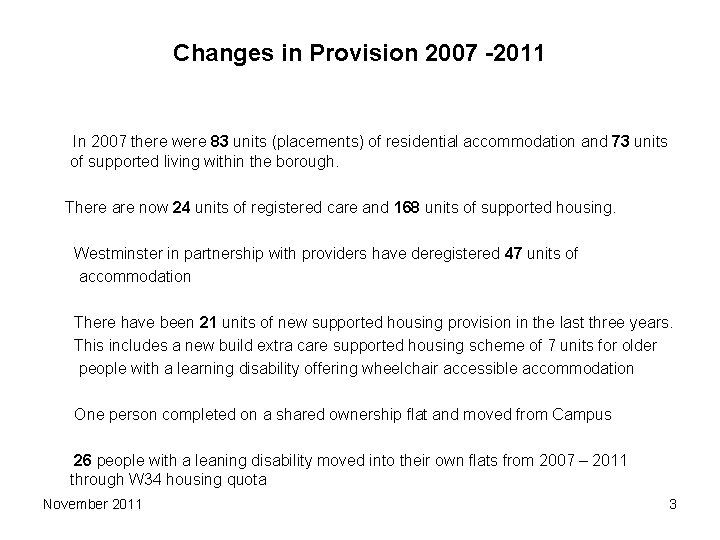
Introduction Westminster Learning Disability Partnership and the Westminster City Council Housing Department are in the process of drafting the new Learning Disability Housing and Support Pathway Plan 2012 – 2015 to be published April 2012 This plan will continue to deliver better models of housing and support in Westminster for people who have learning disabilities This plan will be developed with the input of service users, family and carers, providers and care professionals. Westminster will also work with the Tri-borough partners to identify shared needs and look to commission high quality accommodation and support to meet the current and future needs of people with a learning disability. November 2011 2
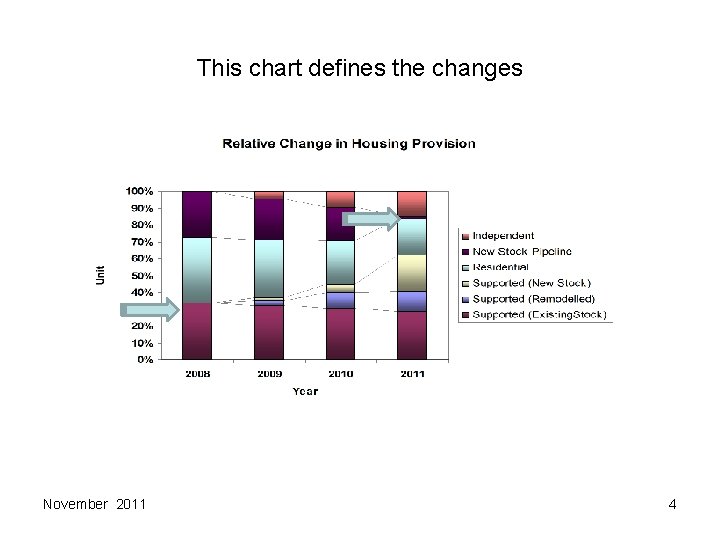
Changes in Provision 2007 -2011 In 2007 there were 83 units (placements) of residential accommodation and 73 units of supported living within the borough. There are now 24 units of registered care and 168 units of supported housing. Westminster in partnership with providers have deregistered 47 units of accommodation There have been 21 units of new supported housing provision in the last three years. This includes a new build extra care supported housing scheme of 7 units for older people with a learning disability offering wheelchair accessible accommodation One person completed on a shared ownership flat and moved from Campus 26 people with a leaning disability moved into their own flats from 2007 – 2011 through W 34 housing quota November 2011 3
This chart defines the changes November 2011 4
How this was achieved • Deregistration of in borough provision • Remodelling properties that were decommissioned from other services • Development of new build (Leonora House) • New provision from RSLs and Housing Charities (Octavia and Dolphin Square Foundation) • W 34 nominations into WCC Learning Disability Quota November 2011 5
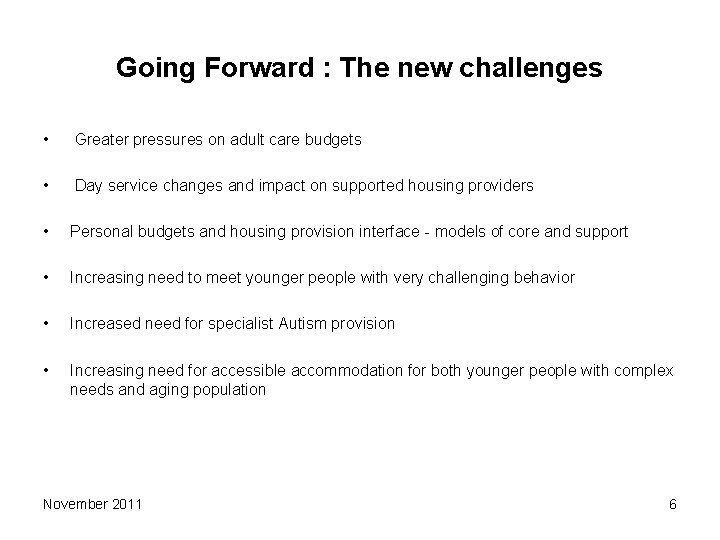
Going Forward : The new challenges • Greater pressures on adult care budgets • Day service changes and impact on supported housing providers • Personal budgets and housing provision interface - models of core and support • Increasing need to meet younger people with very challenging behavior • Increased need for specialist Autism provision • Increasing need for accessible accommodation for both younger people with complex needs and aging population November 2011 6
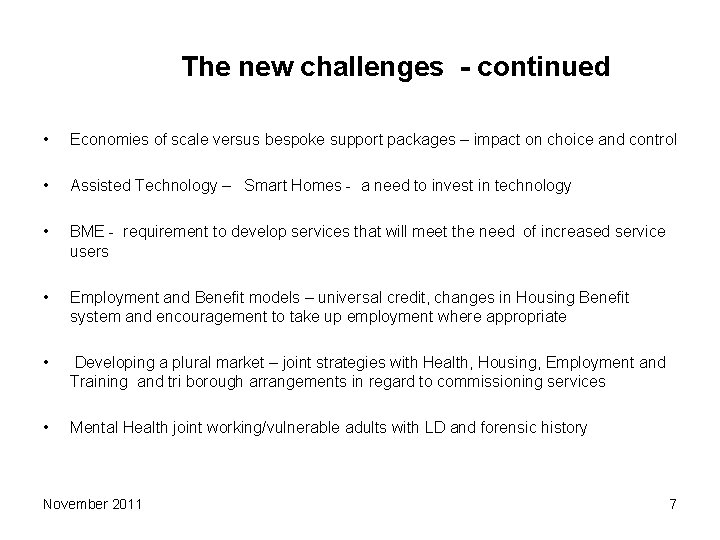
The new challenges - continued • Economies of scale versus bespoke support packages – impact on choice and control • Assisted Technology – Smart Homes - a need to invest in technology • BME - requirement to develop services that will meet the need of increased service users • Employment and Benefit models – universal credit, changes in Housing Benefit system and encouragement to take up employment where appropriate • Developing a plural market – joint strategies with Health, Housing, Employment and Training and tri borough arrangements in regard to commissioning services • Mental Health joint working/vulnerable adults with LD and forensic history November 2011 7
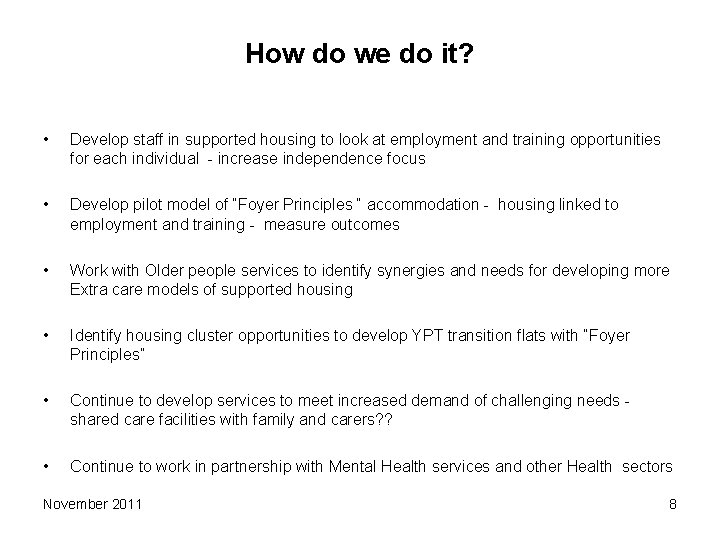
How do we do it? • Develop staff in supported housing to look at employment and training opportunities for each individual - increase independence focus • Develop pilot model of “Foyer Principles “ accommodation - housing linked to employment and training - measure outcomes • Work with Older people services to identify synergies and needs for developing more Extra care models of supported housing • Identify housing cluster opportunities to develop YPT transition flats with “Foyer Principles” • Continue to develop services to meet increased demand of challenging needs - shared care facilities with family and carers? ? • Continue to work in partnership with Mental Health services and other Health sectors November 2011 8
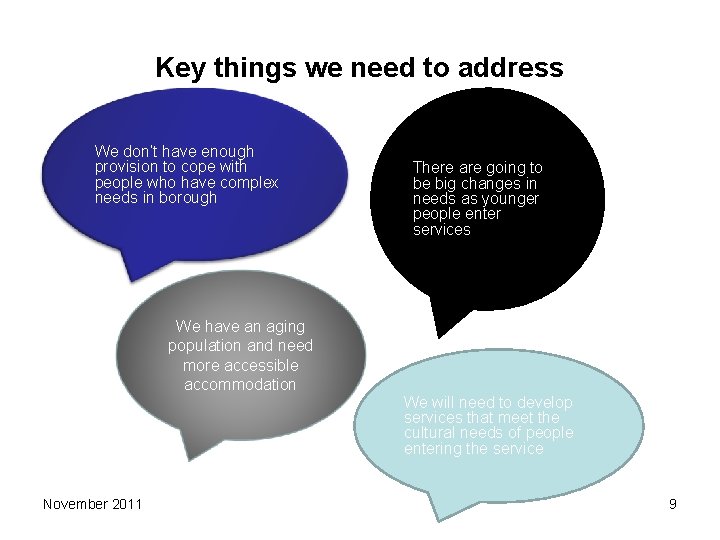
Key things we need to address We don’t have enough provision to cope with people who have complex needs in borough There are going to be big changes in needs as younger people enter services We have an aging population and need more accessible accommodation We will need to develop services that meet the cultural needs of people entering the service November 2011 9
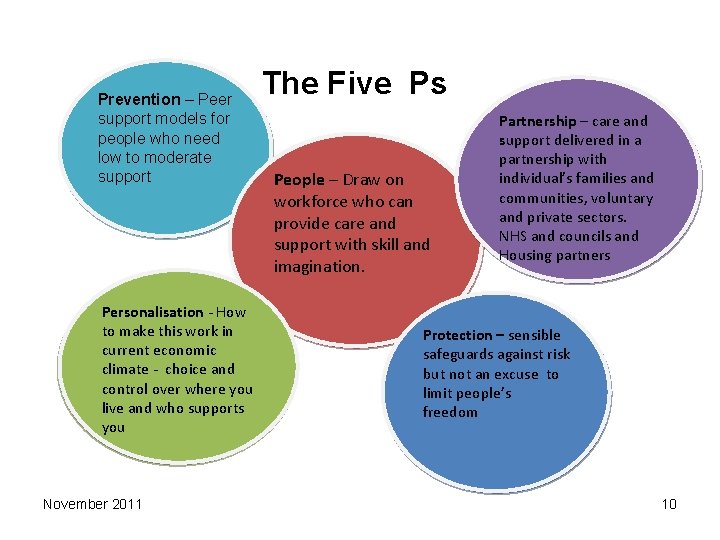
Prevention – Peer support models for people who need low to moderate support Personalisation - How to make this work in current economic climate - choice and control over where you live and who supports you November 2011 The Five Ps People – Draw on workforce who can provide care and support with skill and imagination. Partnership – care and support delivered in a partnership with individual’s families and communities, voluntary and private sectors. NHS and councils and Housing partners Protection – sensible safeguards against risk but not an excuse to limit people’s freedom 10
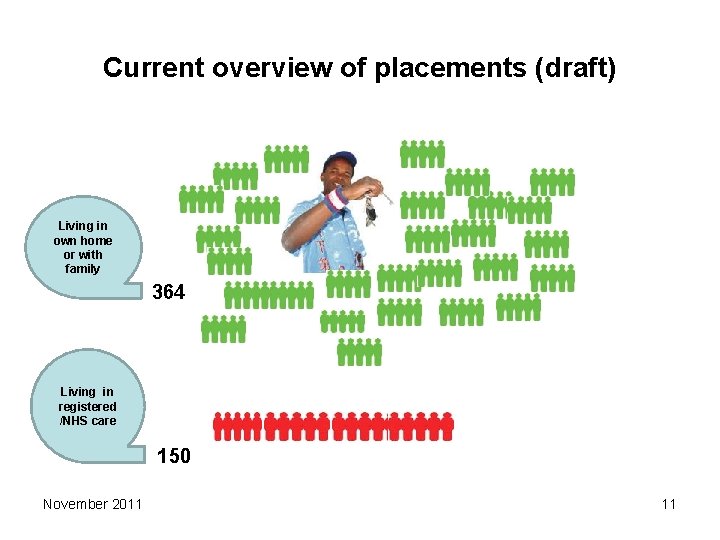
Current overview of placements (draft) Living in own home or with family 364 Living in registered /NHS care 150 November 2011 11
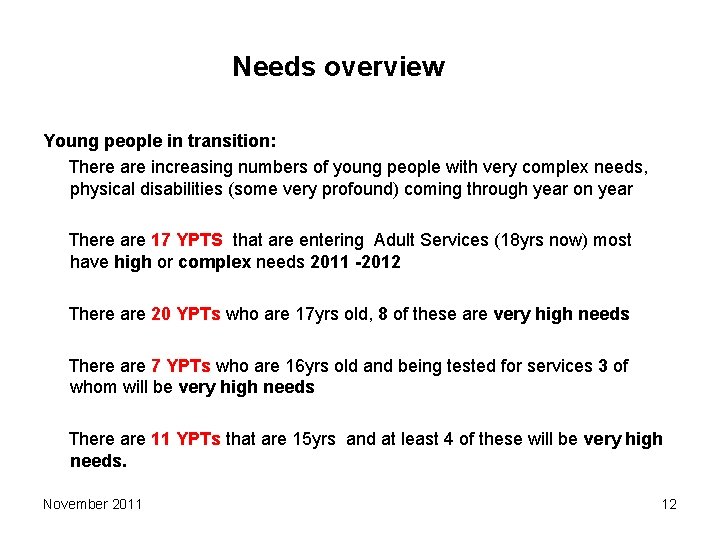
Needs overview Young people in transition: There are increasing numbers of young people with very complex needs, physical disabilities (some very profound) coming through year on year There are 17 YPTS that are entering Adult Services (18 yrs now) most have high or complex needs 2011 -2012 There are 20 YPTs who are 17 yrs old, 8 of these are very high needs There are 7 YPTs who are 16 yrs old and being tested for services 3 of whom will be very high needs There are 11 YPTs that are 15 yrs and at least 4 of these will be very high needs. November 2011 12
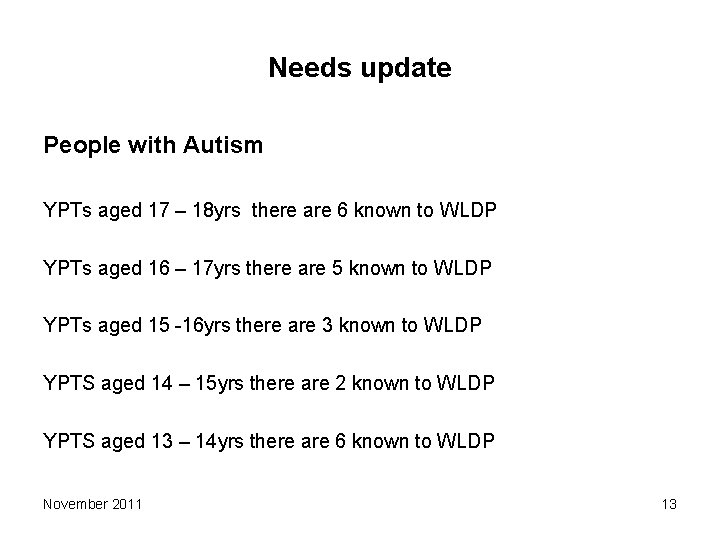
Needs update People with Autism YPTs aged 17 – 18 yrs there are 6 known to WLDP YPTs aged 16 – 17 yrs there are 5 known to WLDP YPTs aged 15 -16 yrs there are 3 known to WLDP YPTS aged 14 – 15 yrs there are 2 known to WLDP YPTS aged 13 – 14 yrs there are 6 known to WLDP November 2011 13
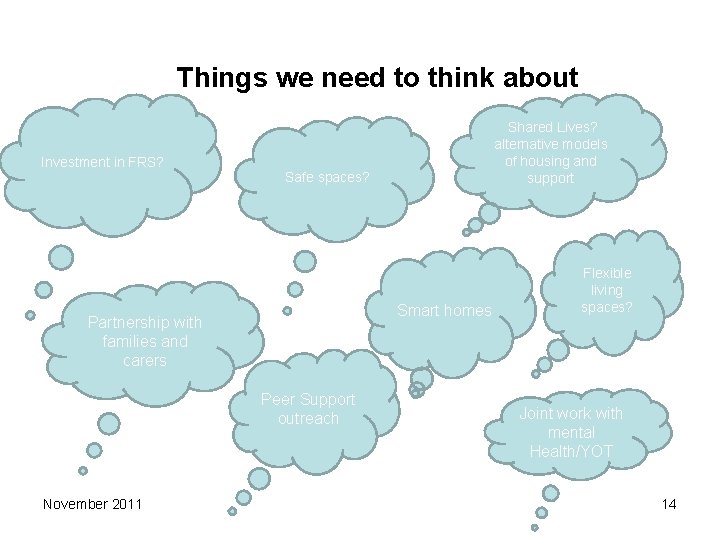
Things we need to think about Investment in FRS? Safe spaces? Smart homes Partnership with families and carers Peer Support outreach November 2011 Shared Lives? alternative models of housing and support Flexible living spaces? Joint work with mental Health/YOT 14
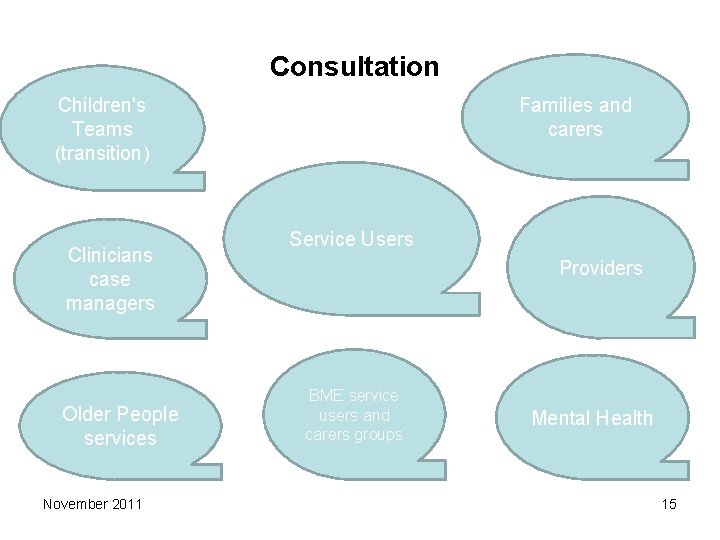
Consultation Children's Teams (transition) Clinicians case managers Older People services November 2011 Families and carers Service Users Providers BME service users and carers groups Mental Health 15
Let us know your thoughts • How do you think the current provision can be improved to meet the needs? Please send your comments to: • What models of support/housing do you think should be designed and commissioned to meet future demand? Cindy Maula, Accommodation Manager (WLDP) Housing Partnerships, 9 th Floor, City Hall, Westminster City Hall, London SW 1 E 6 QP • How can we increase opportunity for employment and social capital in the models of housing and support November 2011 16