
INDIVIDUAL COUNSELING Chapter 8 Introduction to the Profession

- Slides: 10
INDIVIDUAL COUNSELING Chapter 8 Introduction to the Profession of Counseling , 5 e © 2009 Pearson Education, Inc. All rights reserved.
THINK ABOUT: What are some client characteristics that influence how clients will respond to counseling? n What are the stage in the process of counseling? n Why is it important for counselors to establish a trusting and safe therapeutic relationship? n Introduction to the Profession of Counseling, 5 e Nugent & Jones 2 © 2009 Pearson Education, Inc. All rights reserved.
CLIENT CHARACTERISTICS What are major client characteristics that influence counseling? n What does the research say about client characteristics that contribute to effect counseling? n Introduction to the Profession of Counseling, 5 e Nugent & Jones 3 © 2009 Pearson Education, Inc. All rights reserved.
COUNSELING PROCESS Initial Stage: Developing a Relationship n n n What feelings might clients have as they arrive for counseling? What can the counselor do to help clients feel comfortable in the first sessions of the counseling relationship? How does the counselor establish trust? Introduction to the Profession of Counseling, 5 e Nugent & Jones 4 © 2009 Pearson Education, Inc. All rights reserved.
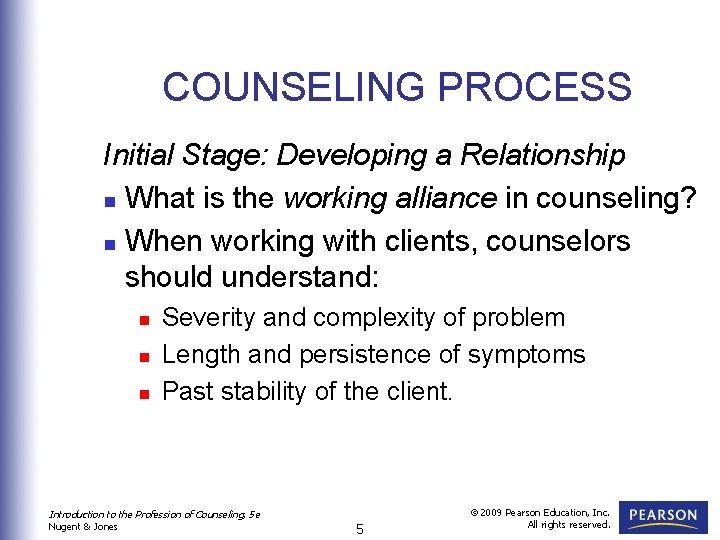
COUNSELING PROCESS Initial Stage: Developing a Relationship n What is the working alliance in counseling? n When working with clients, counselors should understand: n n n Severity and complexity of problem Length and persistence of symptoms Past stability of the client. Introduction to the Profession of Counseling, 5 e Nugent & Jones 5 © 2009 Pearson Education, Inc. All rights reserved.
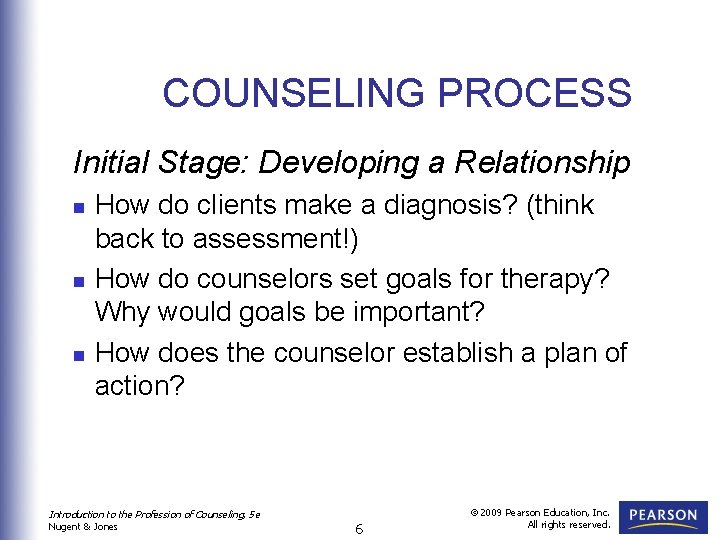
COUNSELING PROCESS Initial Stage: Developing a Relationship n n n How do clients make a diagnosis? (think back to assessment!) How do counselors set goals for therapy? Why would goals be important? How does the counselor establish a plan of action? Introduction to the Profession of Counseling, 5 e Nugent & Jones 6 © 2009 Pearson Education, Inc. All rights reserved.
COUNSELING PROCESS Middle Stage: Exploring More Deeply n How do counselors facilitate clients’ gaining of emotional insights? n What is transference? How does this construct impact the process of therapy? n What should counselors do if clients are resistant to therapy and/or the change process? Introduction to the Profession of Counseling, 5 e Nugent & Jones 7 © 2009 Pearson Education, Inc. All rights reserved.
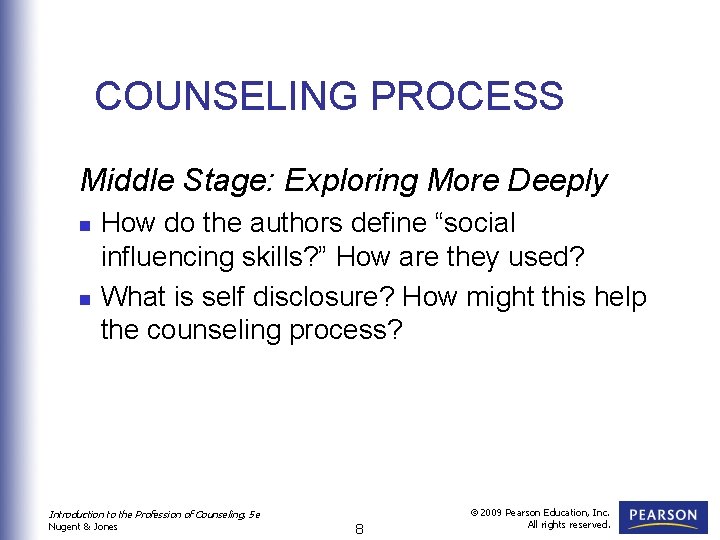
COUNSELING PROCESS Middle Stage: Exploring More Deeply n n How do the authors define “social influencing skills? ” How are they used? What is self disclosure? How might this help the counseling process? Introduction to the Profession of Counseling, 5 e Nugent & Jones 8 © 2009 Pearson Education, Inc. All rights reserved.
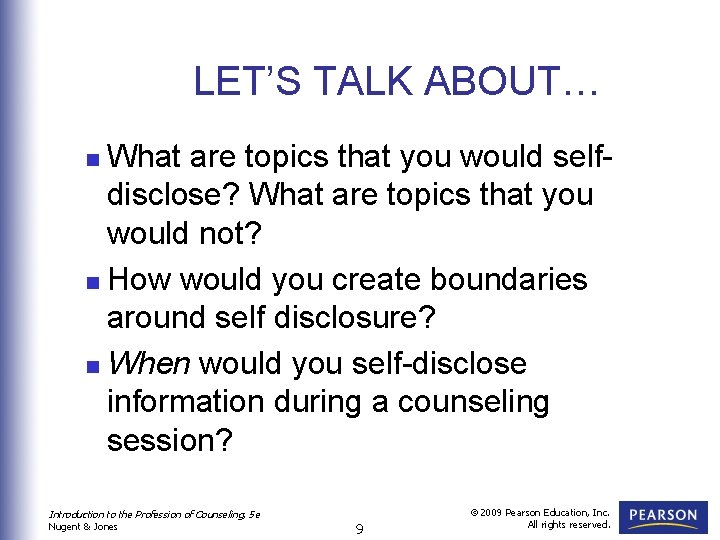
LET’S TALK ABOUT… What are topics that you would selfdisclose? What are topics that you would not? n How would you create boundaries around self disclosure? n When would you self-disclose information during a counseling session? n Introduction to the Profession of Counseling, 5 e Nugent & Jones 9 © 2009 Pearson Education, Inc. All rights reserved.
COUNSELING PROCESS Last Stage: Integrating Client Changes n n n How do clients internalize what they learned in therapy and apply it to their lives? How do counselors end the counseling relationship? Why is a healthy termination critical to the counseling process? How should counselors decide on when to terminate with a client? How can the client assist in this process? Introduction to the Profession of Counseling, 5 e Nugent & Jones 10 © 2009 Pearson Education, Inc. All rights reserved.