
INDIVIDUAL BEHAVIOUR Individual behaviour means how an employee
INDIVIDUAL BEHAVIOUR
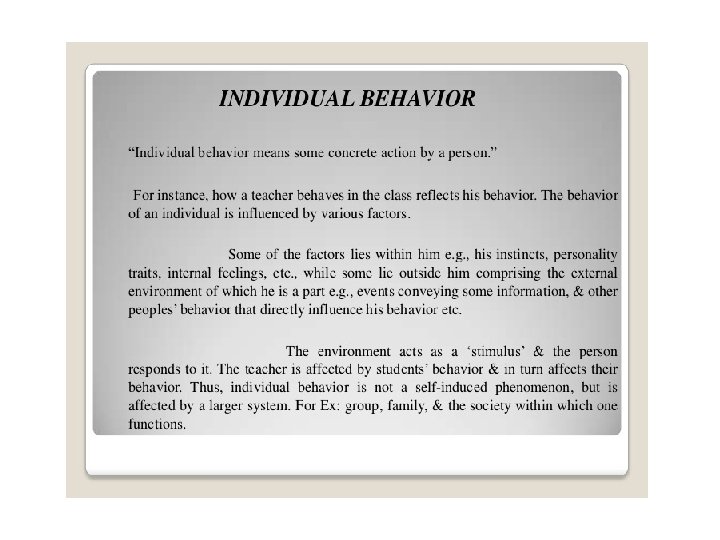
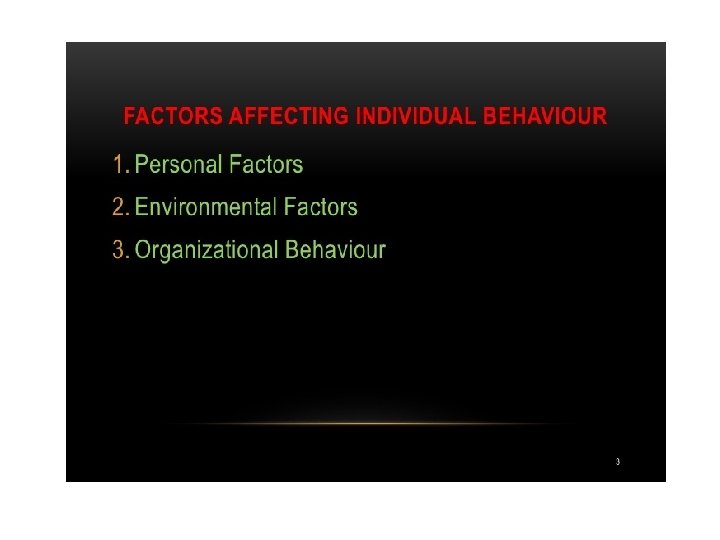
• Individual behaviour means how an employee or individual behaves, reacts or responds in a given environment. • The factors which affect the human behaviour are person, environment and the organisation itself.
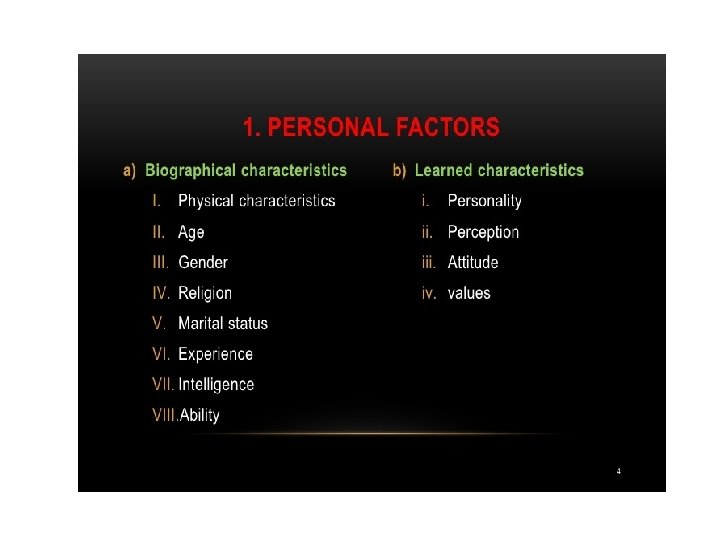
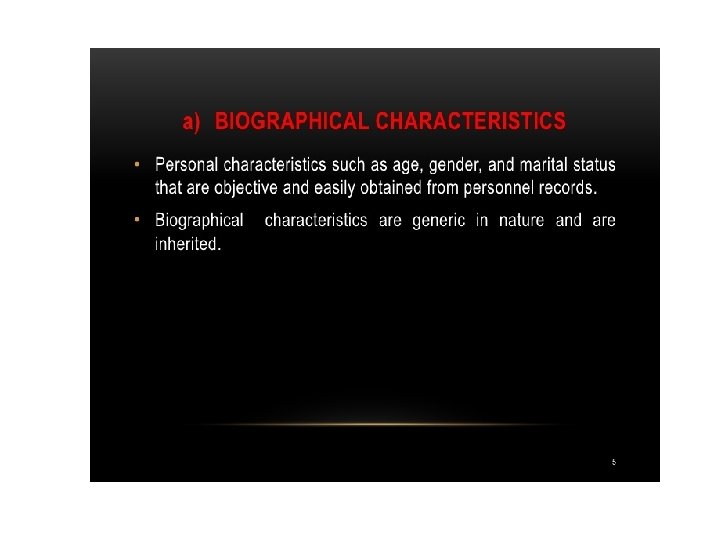
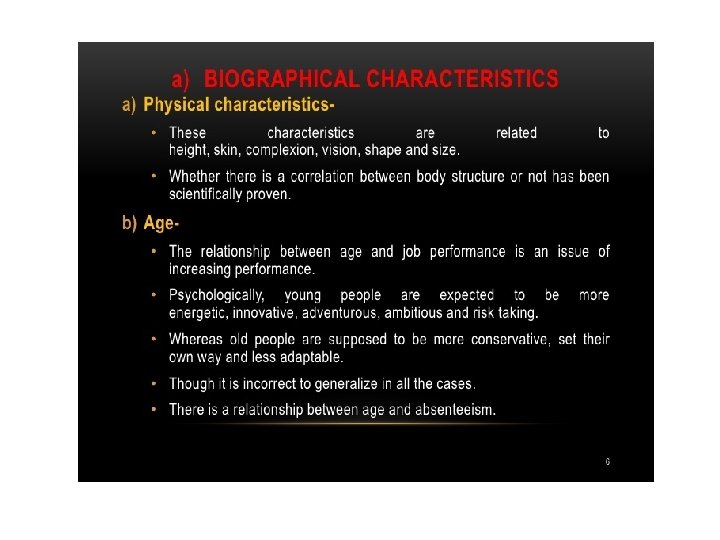
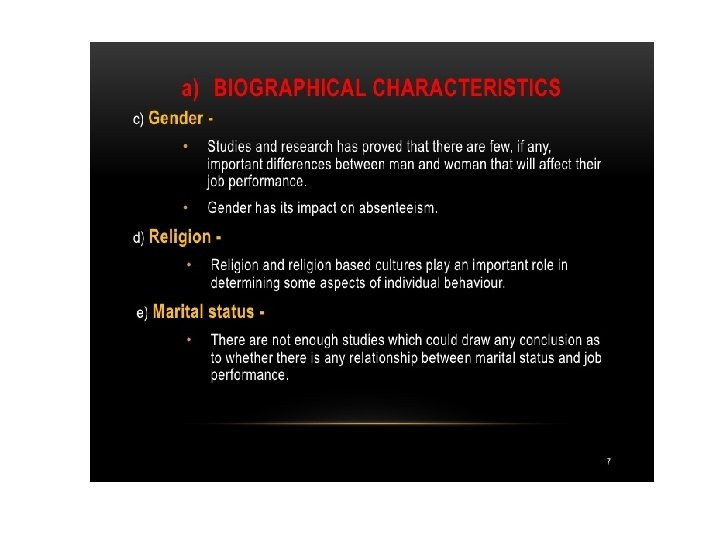
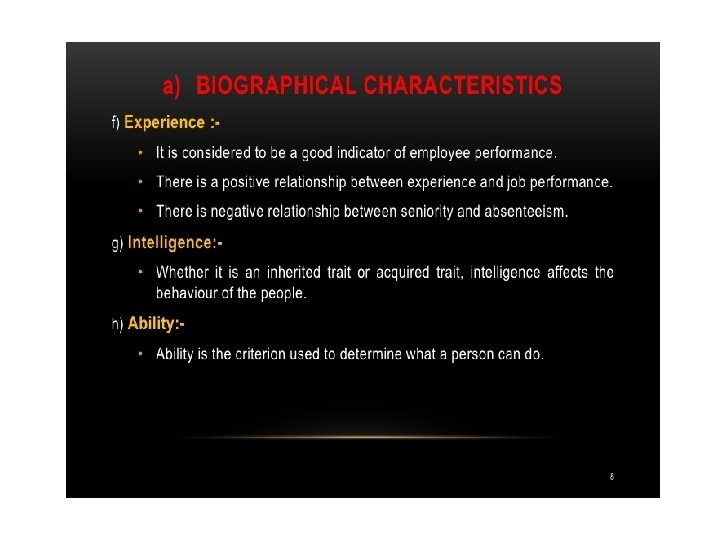
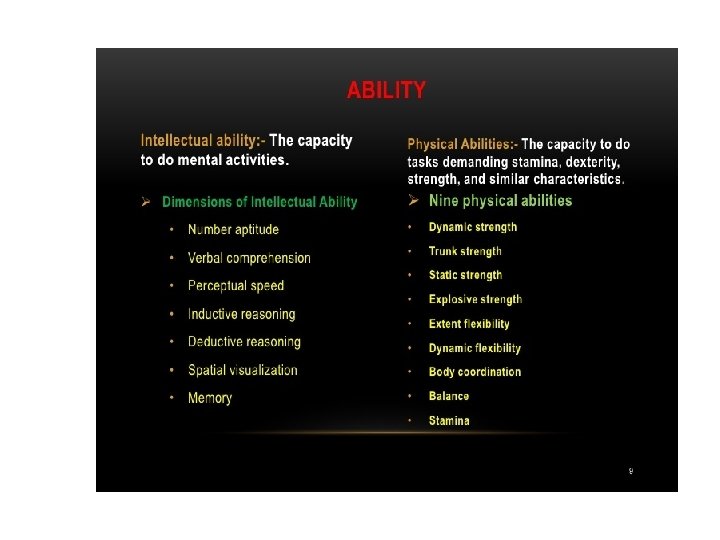
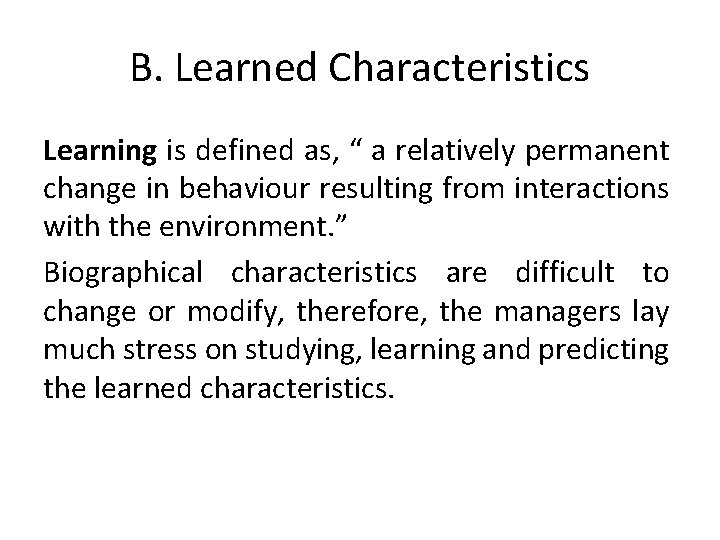
B. Learned Characteristics Learning is defined as, “ a relatively permanent change in behaviour resulting from interactions with the environment. ” Biographical characteristics are difficult to change or modify, therefore, the managers lay much stress on studying, learning and predicting the learned characteristics.

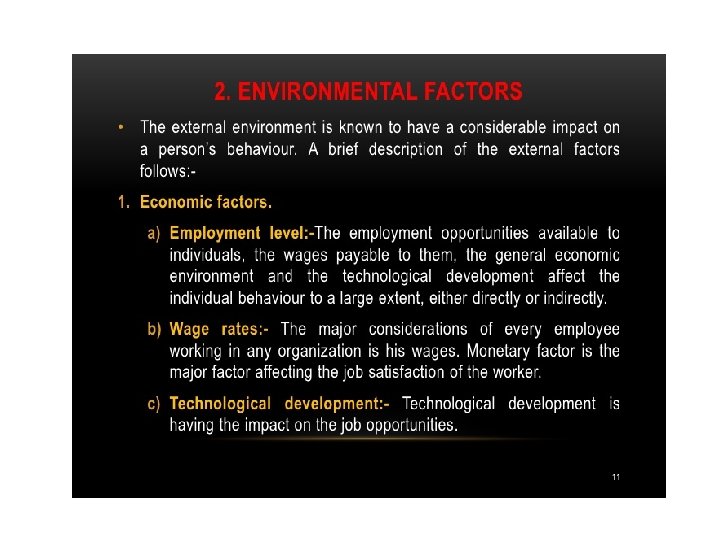
4. General Economic Environment- Employees who work in Govt. offices or public sector undertakings are not affected by economic cycles. But employees who work in the private sector are affected by economic cycles.
Behavioural Models The behavioural models are based upon managements assumptions about people. The effectiveness of these models will depend upon the extent to which the assumptions fit the actual situation. These models are developed to understand predict human behaviour.
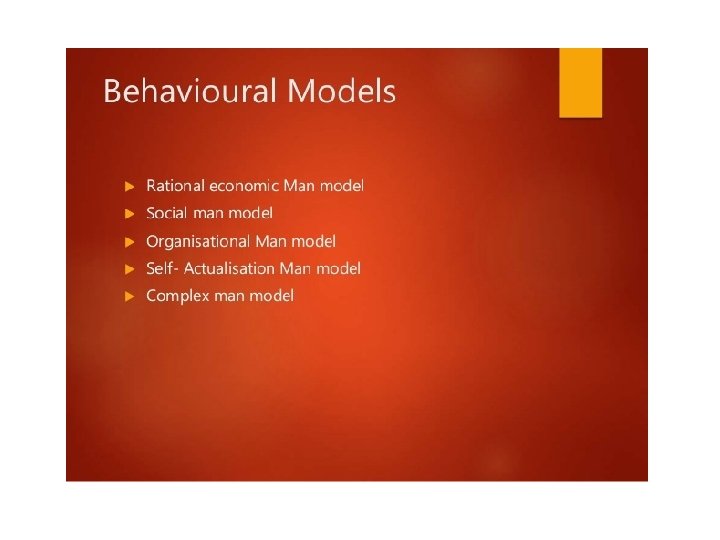
1. RATIONAL ECONOMIC MAN Organisation viewed their employees as rational being who are primarily motivated by money. The model is based on classical organisational theory. Assumptions of the model: 1. Motivated by economic incentives 2. As organisation controls economic incentives, human beings are controlled by organisations. 3. Human beings are passive agents 4. Feeling of human beings are irrational and must be controlled. 5. Organisation must be designed in such a way to neutralize their feelings. Limitations 1. Does not suit the present day organisation 2. Economic incentives can work till the man is not reasonably satisfied by the need of money. THERE IS NO ORGANISATIONAL CONFLICT.
2. SOCIAL MAN Assumptions are drawn from the reports of Hawthorne Experiments: 1. Motivated by social needs 2. More responsive to the pressure and sanctions of his social group 3. Amount of work done is guided by social norms not physical capacity. 4. Reacts as members of group not as individual 5. Influenced by informal leaders 6. Strategies of management should be such which provides more belongingness.
3. ORGANISATIONAL MAN Given by William White- Every individual should sacrifice his individuality for the sake of the organisation. Extension of Social Man Model Assumptions: 1. Individual by himself is isolated and meaningless. A group helps to produce a whole that is greater than sum of its parts. 2. The ultimate need of every individual is belongingness 3. Goal of belongingness is achieved with the help of Science. Incase of conflict between needs of society and needs of individual, an equilibrium can be achieved by applying methods of science.
4. SELF ACTUATING MAN Extension of Organisation Man. The model assumes that man’s inherent need is to use his capabilities and skills. Earlier models do not allow him to satisfy his self actuating needs. Hierarchy of Needs 1. Psychological 2. Safety 3. Belongingness 4. Esteem 5. Self actualisation
5. COMPLEX MAN This model presents the real picture of human behaviour. Earlier models assume that man will always behave according to certain set patterns which may not be true. Assumptions: 1. People are not only complex but are also variable. 2. Hierarchy of needs is not universal. 3. People are capable of learning new motives. 4. People can respond to many different kinds of management strategies.
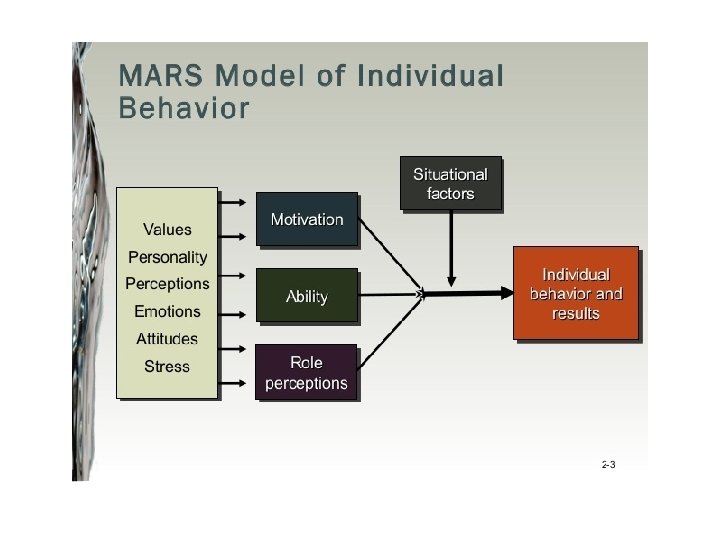
WHY DO PEOPLE BEHAVE THE WAY THEY DO? DRIVERS OF HUMAN BEHAVIOURMARS MODEL
THANK YOU
- Slides: 27