
Indirect speech StatementQuestionResquest Converting Statements When transforming statements



- Slides: 17
Indirect speech Statement-Question-Resquest
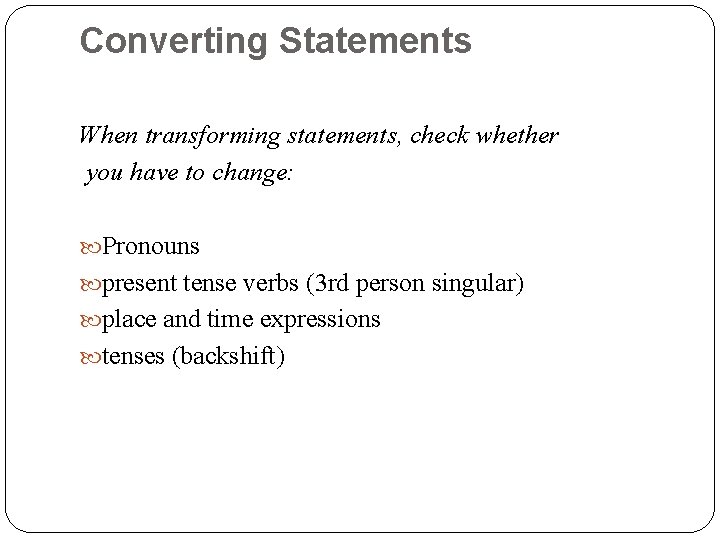
Converting Statements When transforming statements, check whether you have to change: Pronouns present tense verbs (3 rd person singular) place and time expressions tenses (backshift)
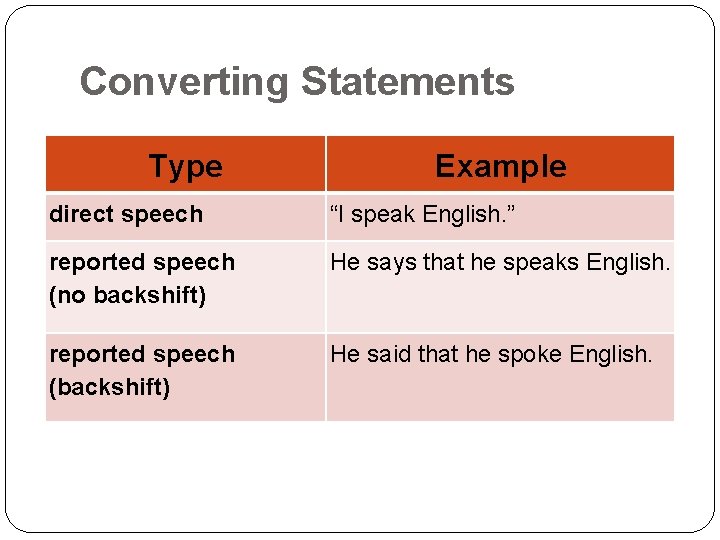
Converting Statements Type Example direct speech “I speak English. ” reported speech (no backshift) He says that he speaks English. reported speech (backshift) He said that he spoke English.
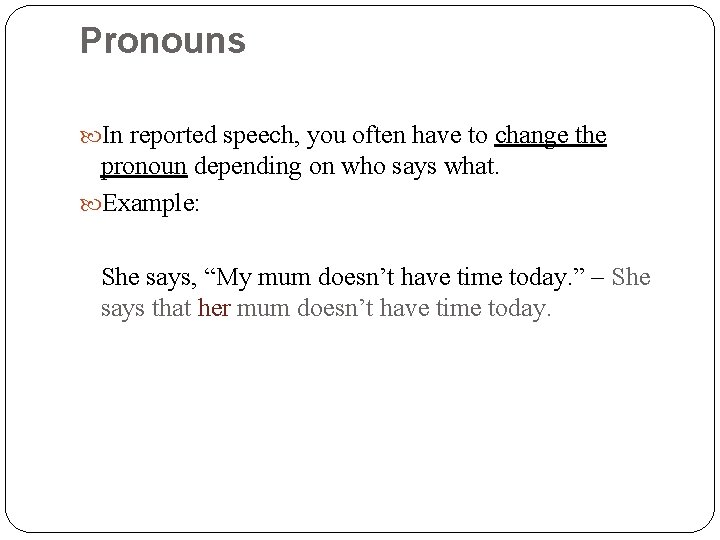
Pronouns In reported speech, you often have to change the pronoun depending on who says what. Example: She says, “My mum doesn’t have time today. ” – She says that her mum doesn’t have time today.
Tenses No backshift Do not change the tense if the introductory clause is in Simple Present (e. g. He says). Note, however, that you might have to change the form of the present tense verb (3 rd person singular). Example He says, “I speak English. ” – He says that he speaks English.
Tenses Backshift You must change the tense if the introductory clause is in Simple Past (e. g. He said). This is called backshift. Example: He said, “I am happy. ” – He said that he was happy.
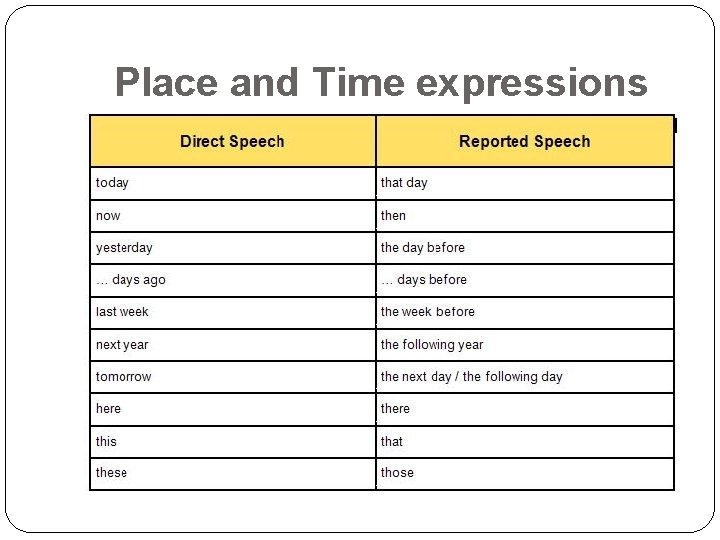
Place and Time expressions For place and time expressions you have to check whether place and time are the same in direct and reported speech or not. Check out the following example:
Place and Time expressions It is Friday and you meet James at a restaurant. James tells you that he saw Caroline in this restaurant today. (“I saw Caroline here today. ”) A few minutes later, Helen joins you and you want to report what James has told you. Place (here) and time (today) are the same and you can say: → James said that he had seen Caroline here today.
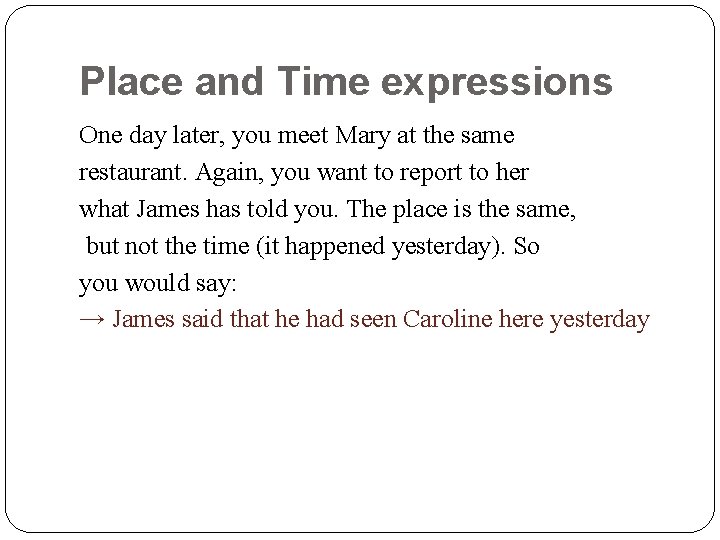
Place and Time expressions One day later, you meet Mary at the same restaurant. Again, you want to report to her what James has told you. The place is the same, but not the time (it happened yesterday). So you would say: → James said that he had seen Caroline here yesterday
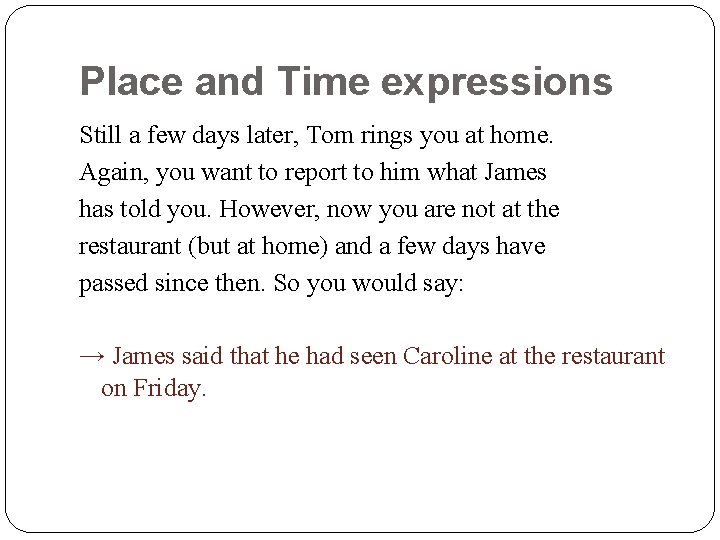
Place and Time expressions Still a few days later, Tom rings you at home. Again, you want to report to him what James has told you. However, now you are not at the restaurant (but at home) and a few days have passed since then. So you would say: → James said that he had seen Caroline at the restaurant on Friday.
Place and Time expressions
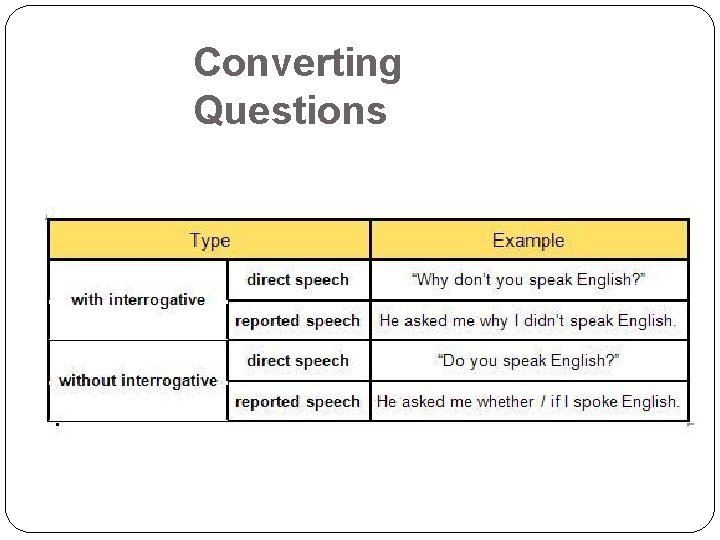
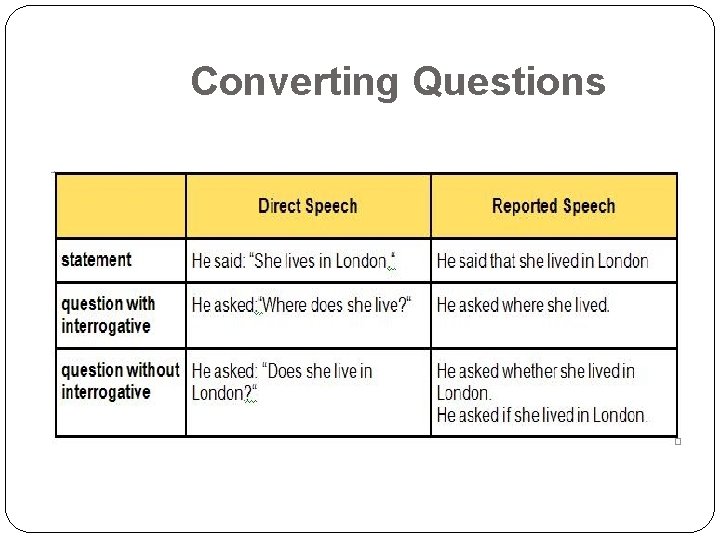
Converting Questions When transforming questions, check whether you have to change: pronouns present tense verbs (3 rd person singular) place and time expressions tenses (backshift) Also note that you have to: transform the question into an indirect question use the interrogative or if / whether
Converting Questions
Converting Questions
Converting Questions It is also important that you use an indirect question in reported speech, i. e. after the interrogative or ‚whether‘ / ‚if‘ you continue the sentence as if it were a statement (subject-verb etc. ). The auxiliary verb ‚do‘ is not used in indirect questions.
Requests When transforming questions, check whether you have to change: pronouns place and time expressions
Requests