
Indirect methods of accounting for informal sector Using

- Slides: 21
Indirect methods of accounting for informal sector: Using labor input methods by RANDRIAMBOLAMANITRA SAMUEL Economist Statistician Engineer - National Accountant 2016
PRESENTATION STRUCTURE ① Introduction ② Paper objectives ③ Definitions, Hypothesis ④ Data sources ⑤ Your key findings ⑥ Model ⑦ Implementation process ⑧ Challenges, opportunities and ⑨ Conclusion perspectives 2
INTRODUCTION • • • As everywhere in the world, the informal sector has a significant role in the Malagasy economy, not only in the contribution to the GDP but also in the creation of employments. The informal sector can play the role of support for the formal sector by providing goods or services, for example most of bricks and sands used in the construction sector are provided by the informal sector. The informal sector also plays a kind of mattress which cushioned the shock on the economy. In fact, to each time Madagascar has passed through the economic crisis, more the big formal companies closed more the informal sector developed. In consideration of the fact that there is no unemployment benefit in Madagascar, the majority of the people having lost their employment in the formal sector find recourse in the informal sector by creating its own informal enterprise. Then the unemployment rate (ILO definition) of Madagascar is very lower: 1, 3%.
PAPER OBJECTIVES • The main objective of this methodology is to cover the valuation of the economy in all, • The secondary objectives: – The informal sector accounts estimation per each activity, – Formal and informal employment estimation per each activity
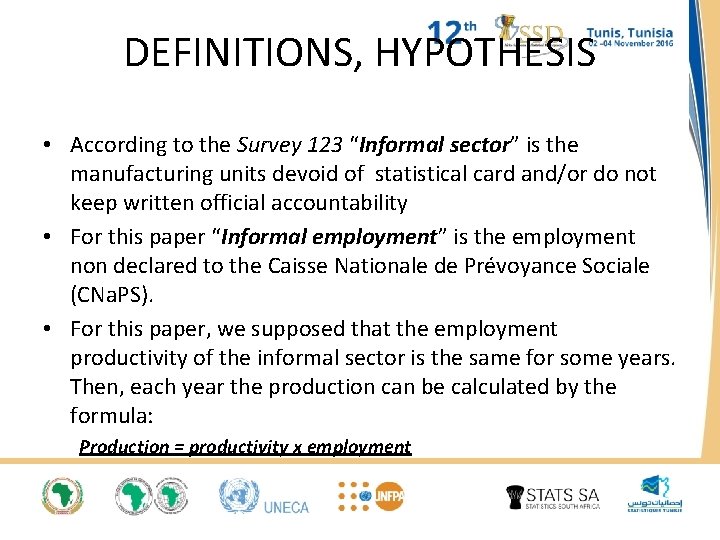
DEFINITIONS, HYPOTHESIS • According to the Survey 123 “Informal sector” is the manufacturing units devoid of statistical card and/or do not keep written official accountability • For this paper “Informal employment” is the employment non declared to the Caisse Nationale de Prévoyance Sociale (CNa. PS). • For this paper, we supposed that the employment productivity of the informal sector is the same for some years. Then, each year the production can be calculated by the formula: Production = productivity x employment
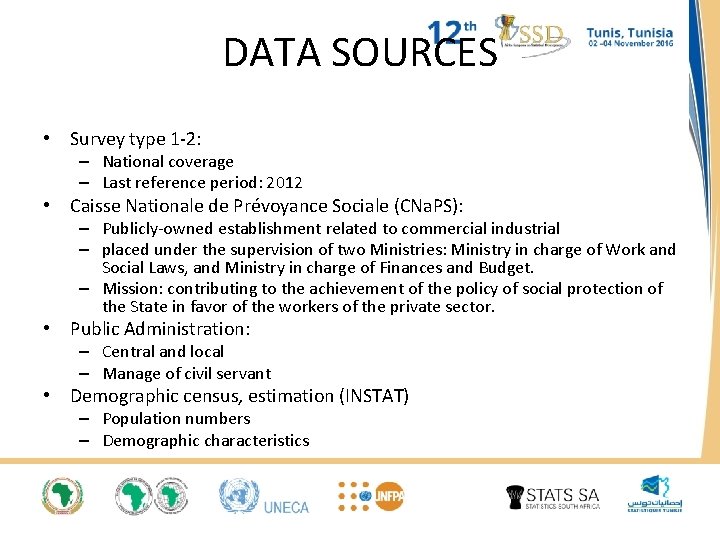
DATA SOURCES • Survey type 1 -2: – National coverage – Last reference period: 2012 • Caisse Nationale de Prévoyance Sociale (CNa. PS): – Publicly-owned establishment related to commercial industrial – placed under the supervision of two Ministries: Ministry in charge of Work and Social Laws, and Ministry in charge of Finances and Budget. – Mission: contributing to the achievement of the policy of social protection of the State in favor of the workers of the private sector. • Public Administration: – Central and local – Manage of civil servant • Demographic census, estimation (INSTAT) – Population numbers – Demographic characteristics
KEY FINDINGS This approach allows the: • Avalaibility of the annual growth of Informal employment by activity. • Avalaibility of production account and operation statement of the informal sector by activity.
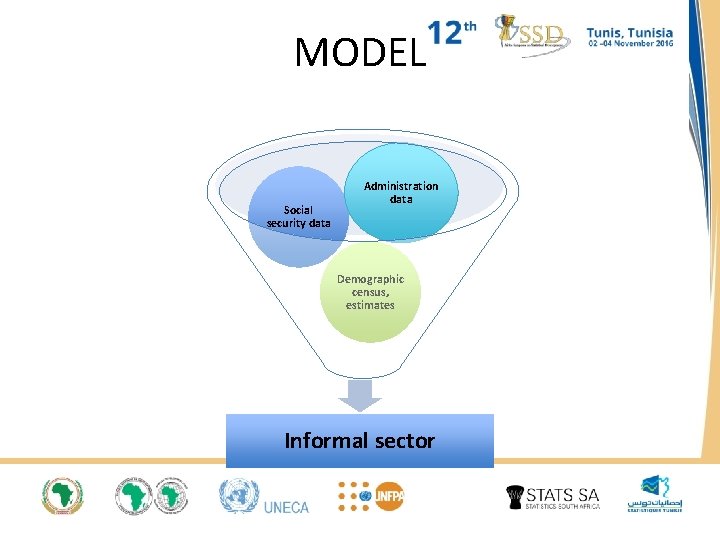
MODEL Social security data Administration data Demographic census, estimates Informal sector
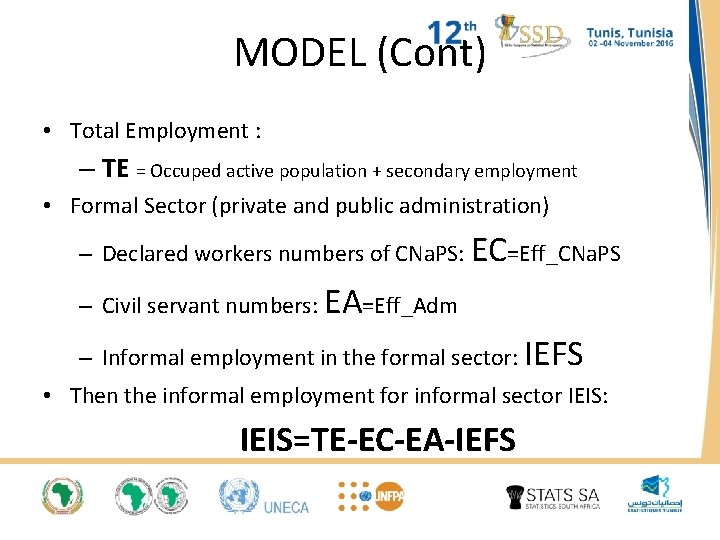
MODEL (Cont) • Total Employment : – TE = Occuped active population + secondary employment • Formal Sector (private and public administration) – Declared workers numbers of CNa. PS: EC=Eff_CNa. PS – Civil servant numbers: EA=Eff_Adm – Informal employment in the formal sector: IEFS • Then the informal employment for informal sector IEIS: IEIS=TE-EC-EA-IEFS
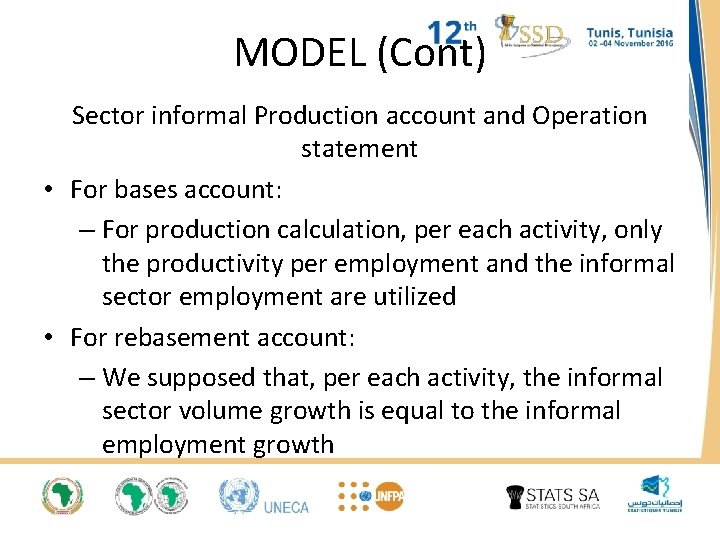
MODEL (Cont) Sector informal Production account and Operation statement • For bases account: – For production calculation, per each activity, only the productivity per employment and the informal sector employment are utilized • For rebasement account: – We supposed that, per each activity, the informal sector volume growth is equal to the informal employment growth
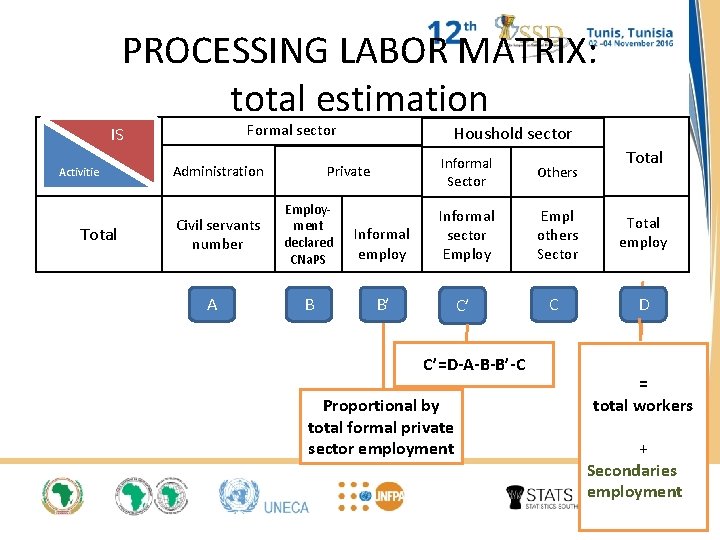
PROCESSING LABOR MATRIX: total estimation Formal sector SI Activitie Total Houshold sector Informal Sector Administration Private Prived Civil servants number Employment. Eff_CNa. PS Informal declared employ CNa. PS A B Others Informal Empl Non_formal workers Non_formal _employ sector others Employ Sector B’ C’ C’=D-A-B-B’-C Proportional by total formal private sector employment C Total_ employ Workers D = = Pop total workers * Pop_active_ rate +* (1 -unemploymt Secondaries rate) employment
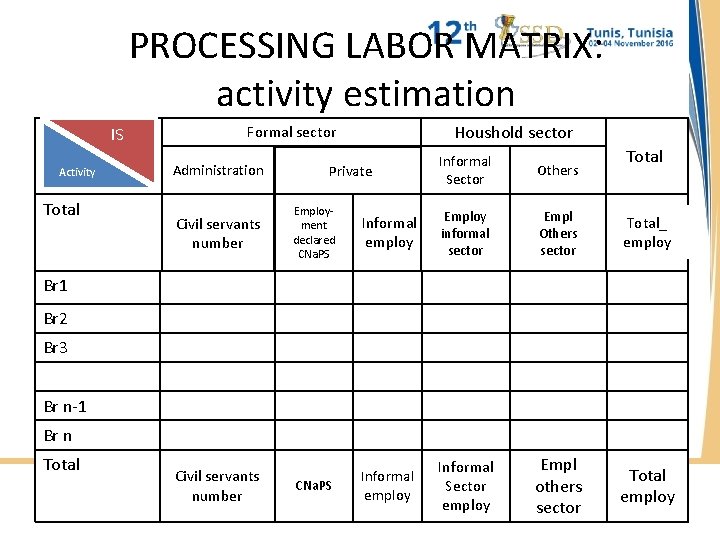
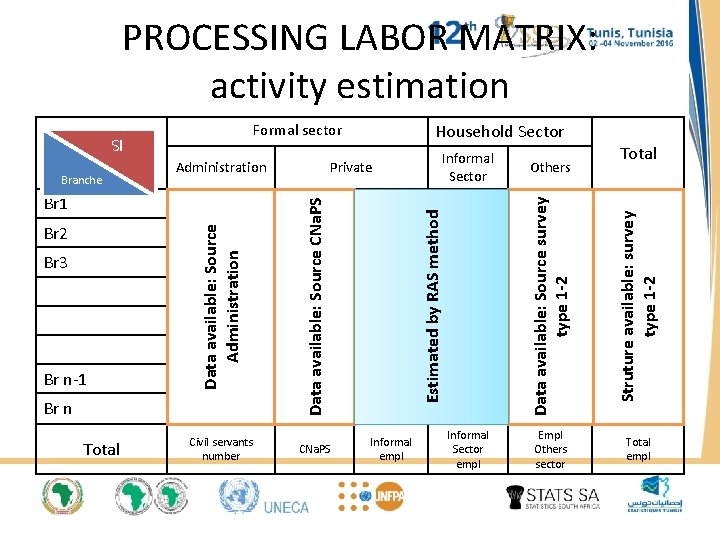
PROCESSING LABOR MATRIX: activity estimation SI Activity Total Formal sector Administration Private Prived Civil servants number Employ. Informal ment declared Eff_CNa. PS employ CNa. PS Civil servants number Informal employ Houshold sector Informal Sector Others Employ Empl sector Informal Sector employ Empl others sector Non_formal workers Non_formal _empl_ informal Others Total_ employ Workers Br 1 Br 2 Br 3 Br n-1 Br n Total CNa. PS Total employ
PROCESSING LABOR MATRIX: activity estimation Br n-1 Br n Total Civil servants number CNa. PS Informal empl Informal Sector empl Struture available: survey type 1 -2 Br 3 Others Total Data available: Source survey type 1 -2 Br 2 Data available: Source Administration Br 1 Private Data available: Source CNa. PS Administration Informal Sector Estimated by RAS method IS Branche Household Sector Formal sector Empl Others sector Total empl
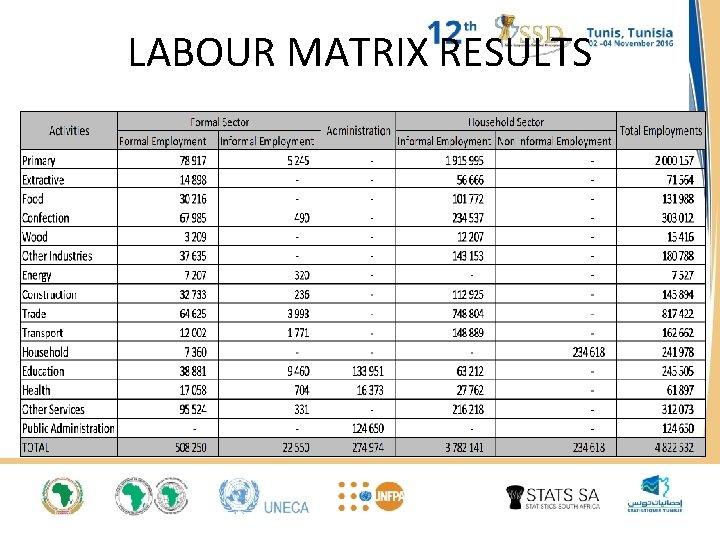
LABOUR MATRIX RESULTS
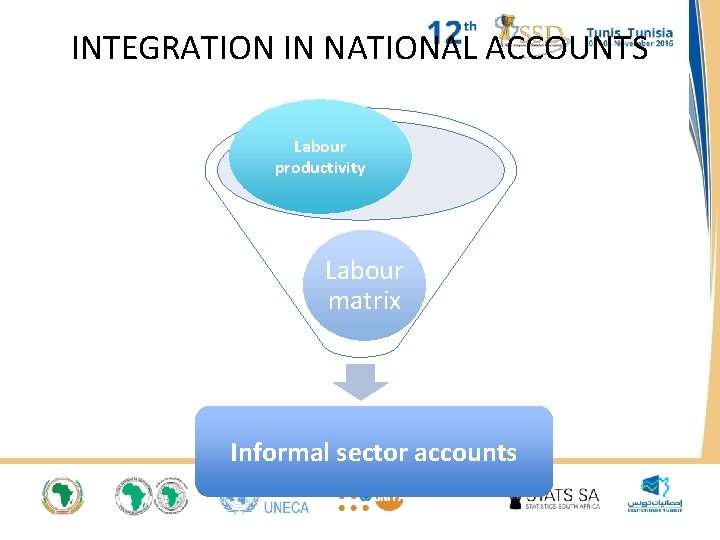
INTEGRATION IN NATIONAL ACCOUNTS Labour productivity Labour matrix Informal sector accounts
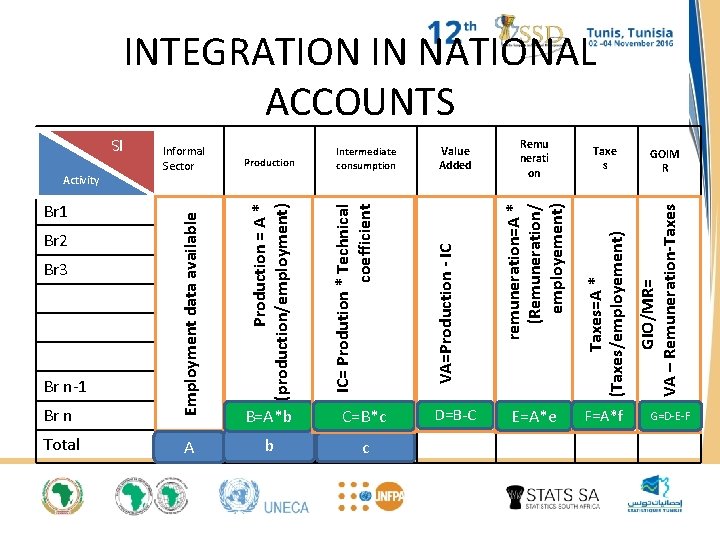
Br 1 Br 2 Br 3 Br n-1 Br n Total B=A*b C=B*c A b c D=B-C Remu nerati on E=A*e Taxe s F=A*f GIO/MR= VA – Remuneration-Taxes Value Added Taxes=A * (Taxes/employement) Intermediate Technical consumption coefficient remuneration=A * (Remuneration/ employement) Production per employ VA=Production - IC IS Informal Sector Labour productivity IC= Prodution * Technical available: Source survey coefficient type 1 -2 Labour productivity Production = A * available: Source survey type (production/employment) 1 -2 Activity Employment data available INTEGRATION IN NATIONAL ACCOUNTS GOIM R G=D-E-F
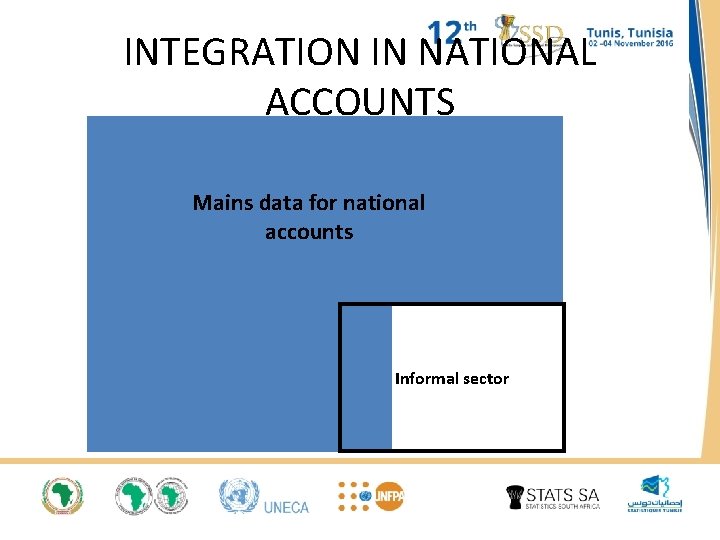
INTEGRATION IN NATIONAL ACCOUNTS Mains data for national accounts Informal sector
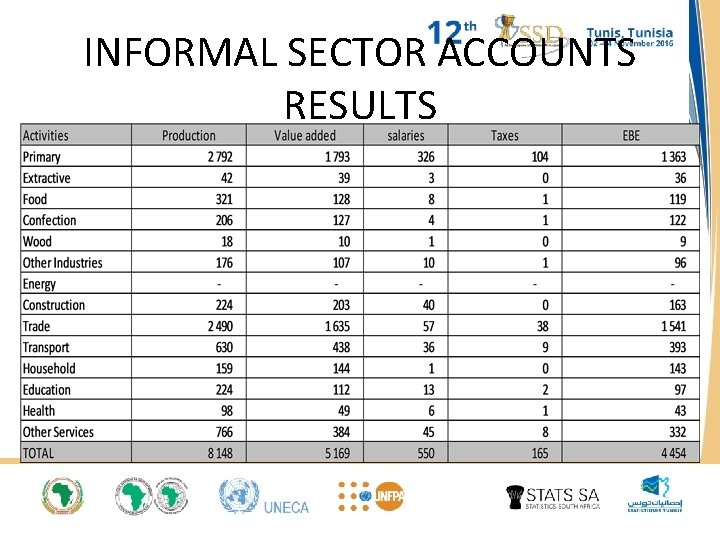
INFORMAL SECTOR ACCOUNTS RESULTS
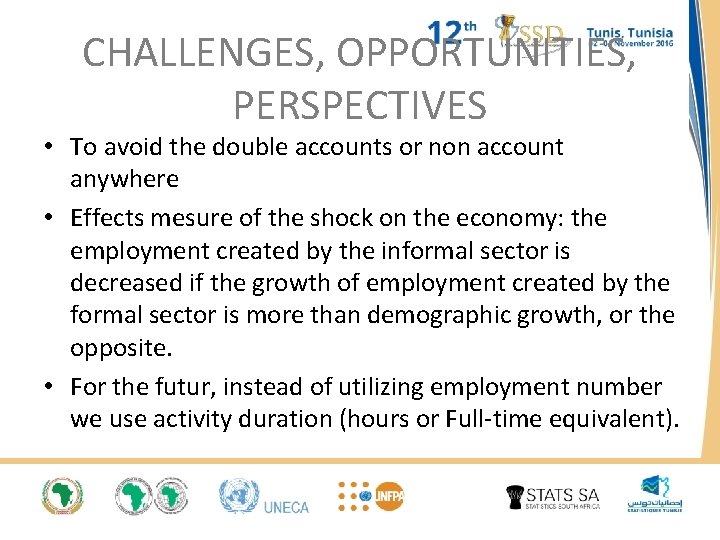
CHALLENGES, OPPORTUNITIES, PERSPECTIVES • To avoid the double accounts or non account anywhere • Effects mesure of the shock on the economy: the employment created by the informal sector is decreased if the growth of employment created by the formal sector is more than demographic growth, or the opposite. • For the futur, instead of utilizing employment number we use activity duration (hours or Full-time equivalent).
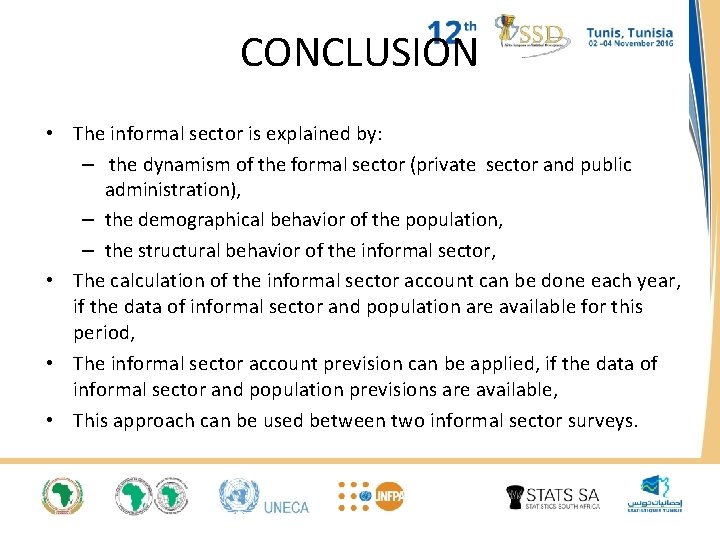
CONCLUSION • The informal sector is explained by: – the dynamism of the formal sector (private sector and public administration), – the demographical behavior of the population, – the structural behavior of the informal sector, • The calculation of the informal sector account can be done each year, if the data of informal sector and population are available for this period, • The informal sector account prevision can be applied, if the data of informal sector and population previsions are available, • This approach can be used between two informal sector surveys.
THANK YOU MERCI MISAOTRA