
Indirect Evidence for Evolution Fossil Record n Dating

- Slides: 18
Indirect Evidence for Evolution
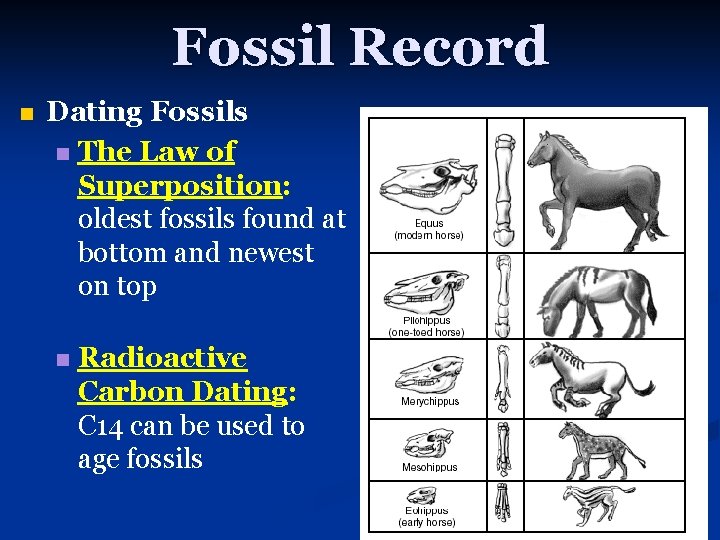
Fossil Record n Dating Fossils n The Law of Superposition: oldest fossils found at bottom and newest on top n Radioactive Carbon Dating: C 14 can be used to age fossils
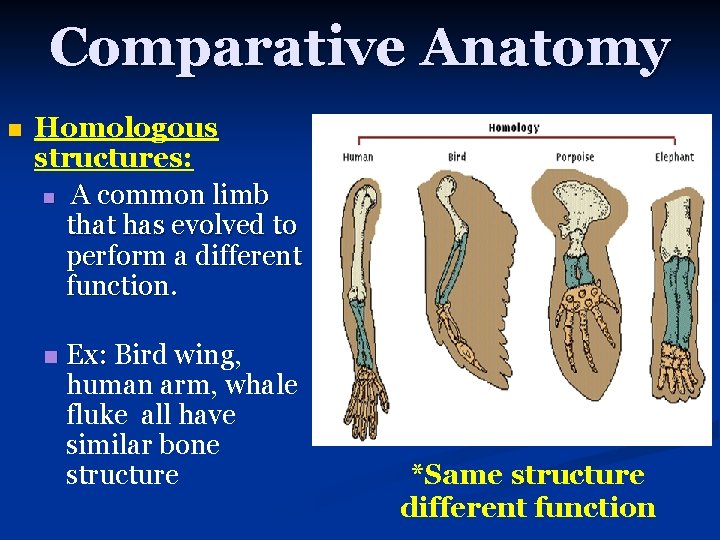
Comparative Anatomy n Homologous structures: n A common limb that has evolved to perform a different function. n Ex: Bird wing, human arm, whale fluke all have similar bone structure *Same structure different function
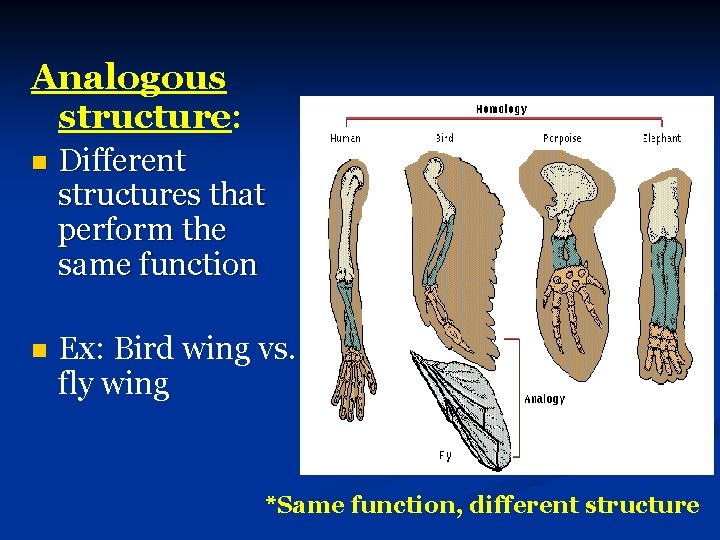
Analogous structure: n Different structures that perform the same function n Ex: Bird wing vs. fly wing *Same function, different structure
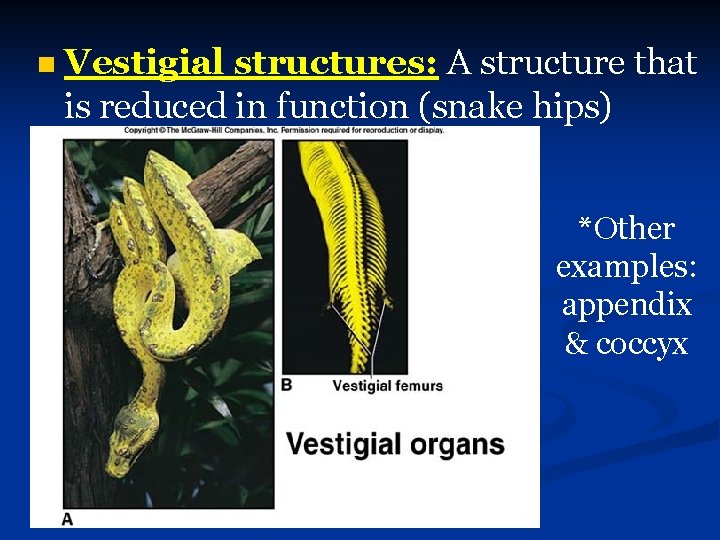
n Vestigial structures: A structure that is reduced in function (snake hips) *Other examples: appendix & coccyx
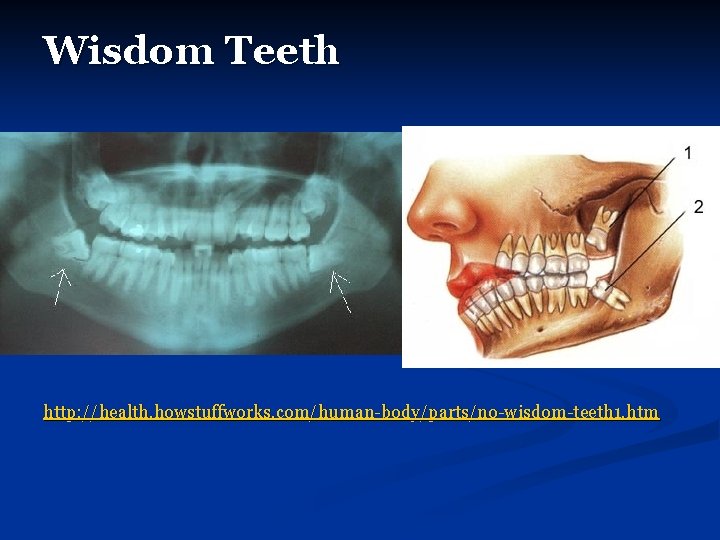
Wisdom Teeth http: //health. howstuffworks. com/human-body/parts/no-wisdom-teeth 1. htm
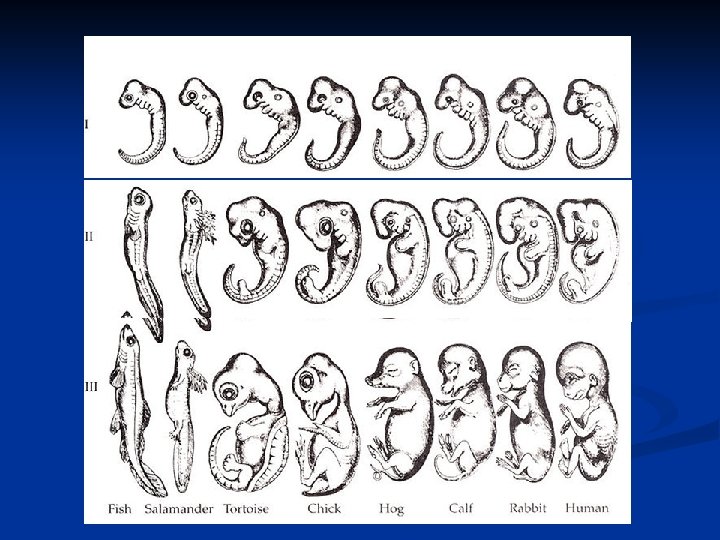
Comparative Embryology: n Comparing the embryos of different species can give clues to evolutionary relationships.
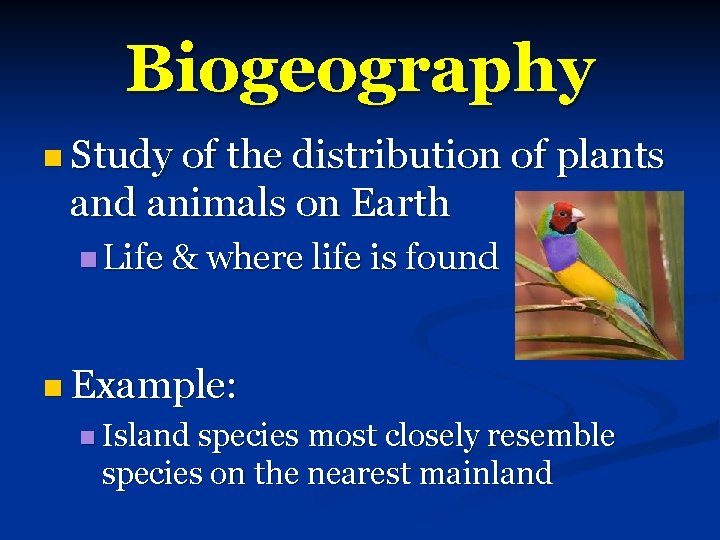
Biogeography n Study of the distribution of plants and animals on Earth n Life & where life is found n Example: n Island species most closely resemble species on the nearest mainland
Direct Evidence for Evolution Evidence of evolution that one can visually observe over time (a. k. a Microevolution)
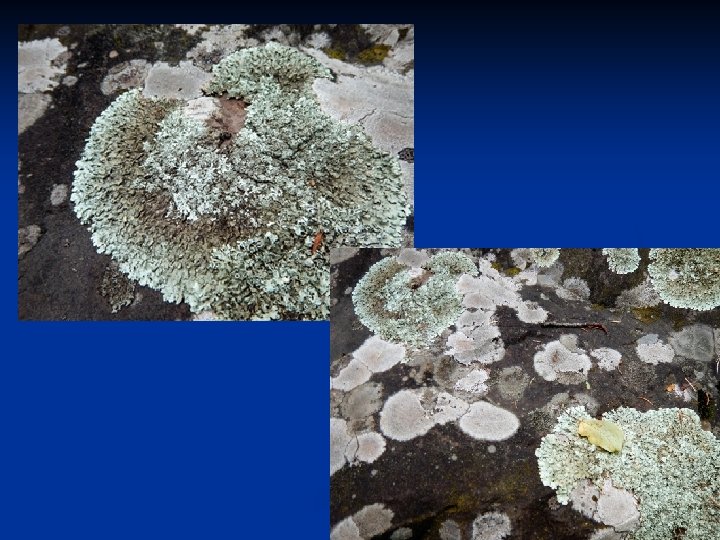
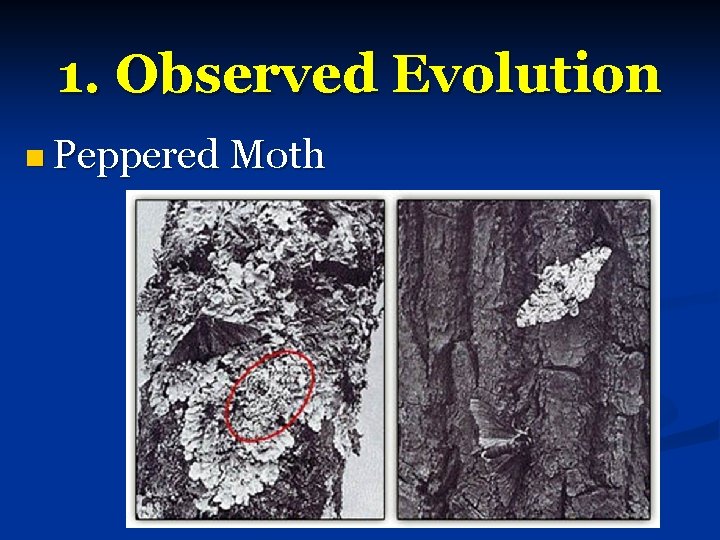
1. Observed Evolution n Peppered Moth
Adaptations n Favorable traits that make an organism more likely or “fit” to survive n Traits are controlled by genes
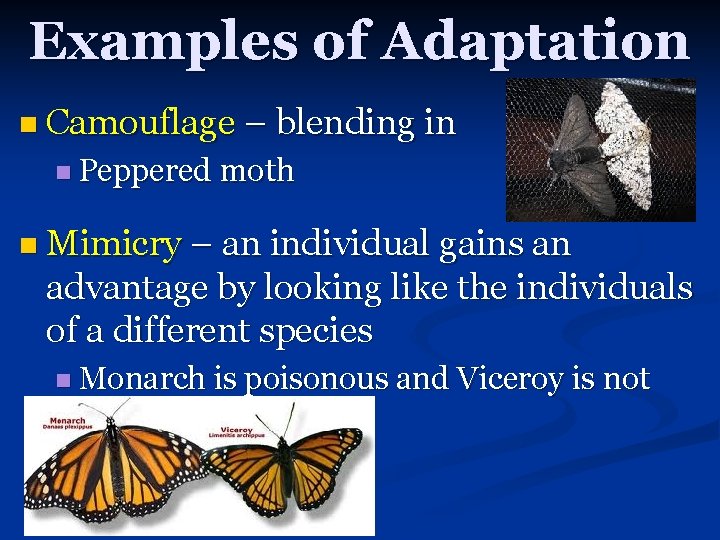
Examples of Adaptation n Camouflage – blending in n Peppered moth n Mimicry – an individual gains an advantage by looking like the individuals of a different species n Monarch is poisonous and Viceroy is not
2. Molecular Biology n The organism whose genetic make-up will aid in its survival will reproduce and pass on those traits
Example n Taking antibiotics will kill most of the bacteria causing you a problem. n If just 1 bacterium is resistant to the antibiotics (different genetic make-up), it will survive and reproduce more bacteria resistant to the antibiotic… n They have evolved!!