
Indira Gandhi National Tribal University Department of Education
Indira Gandhi National Tribal University Department of Education Topic : Earthquake Unit : IV MA: IV Semester Paper Name: Environmental Education (MAEdu. 402) Disclaimer: The Compiled Content provided is collected from various freely available online and print material. The compiler wishes to thank each and every person whose content is being taken. The content is provided for teaching/ learning purpose only. No copy right clearance is taken as it is not been used for commercial purpose. The content do not belong to the compiler, hence no originality is being claimed. No person is allowed to use this compiled content commercially.
Content 1. 2. 3. 4. 5. 6. 7. 8. 9. 10. What is an earthquake? Why does the Earth shake? Terminology Earthquake waves Propagation of earthquake waves Types & Effects of earthquake Measuring earthquake Earthquake safety plan After an earthquake History of earthquake
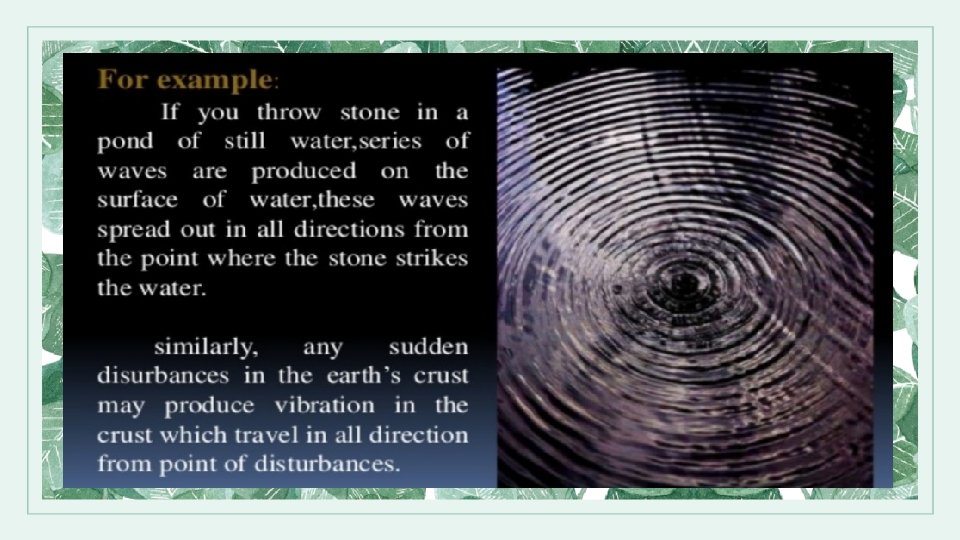
What is an Earthquake ? u An earthquake in simple words is shaking of the earth. u It is a natural event. u It is caused due to release of energy, which generates wave that travel in all directions. u An earthquake is a result of a sudden release of energy in the earth's crust that creates seismic waves.
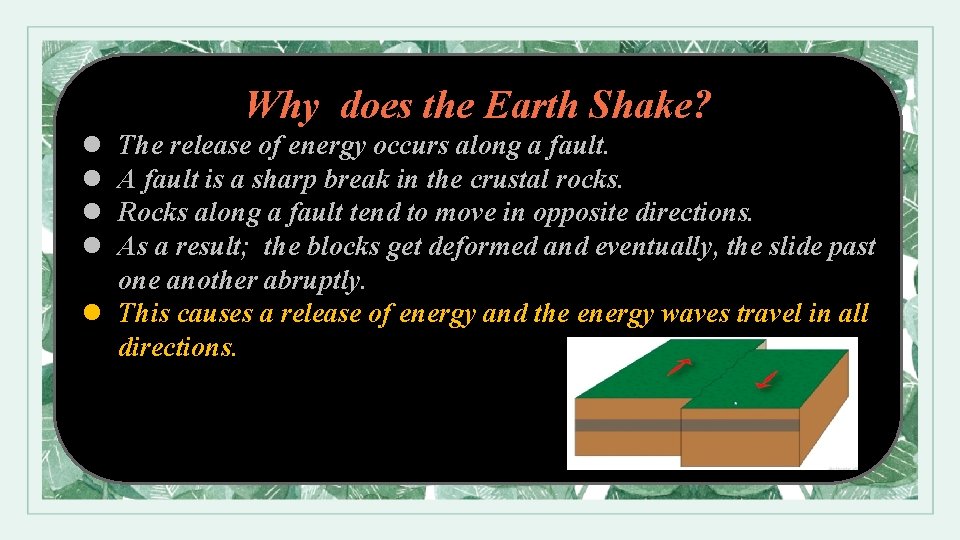
Why does the Earth Shake? l l The release of energy occurs along a fault. A fault is a sharp break in the crustal rocks. Rocks along a fault tend to move in opposite directions. As a result; the blocks get deformed and eventually, the slide past one another abruptly. l This causes a release of energy and the energy waves travel in all directions.
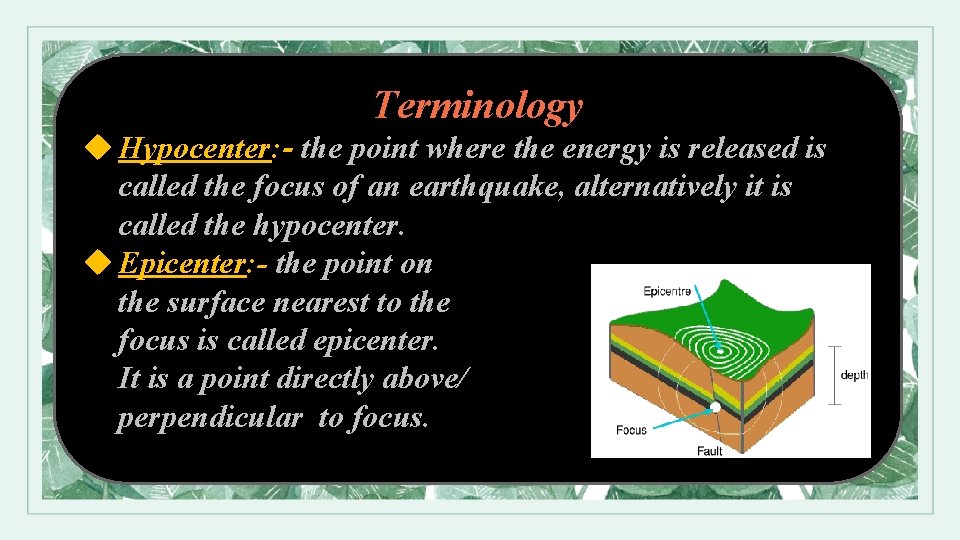
Terminology u Hypocenter: - the point where the energy is released is called the focus of an earthquake, alternatively it is called the hypocenter. u Epicenter: - the point on the surface nearest to the focus is called epicenter. It is a point directly above/ perpendicular to focus.
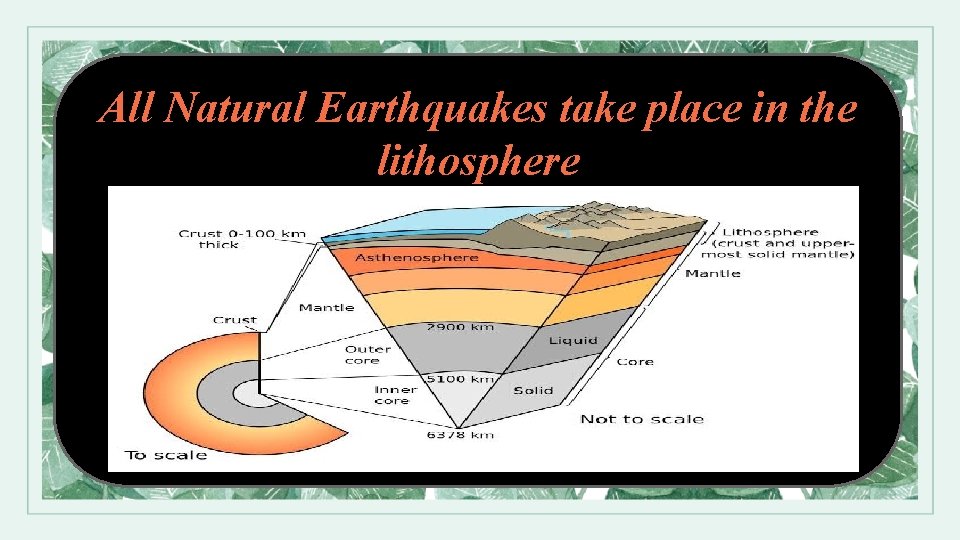
All Natural Earthquakes take place in the lithosphere
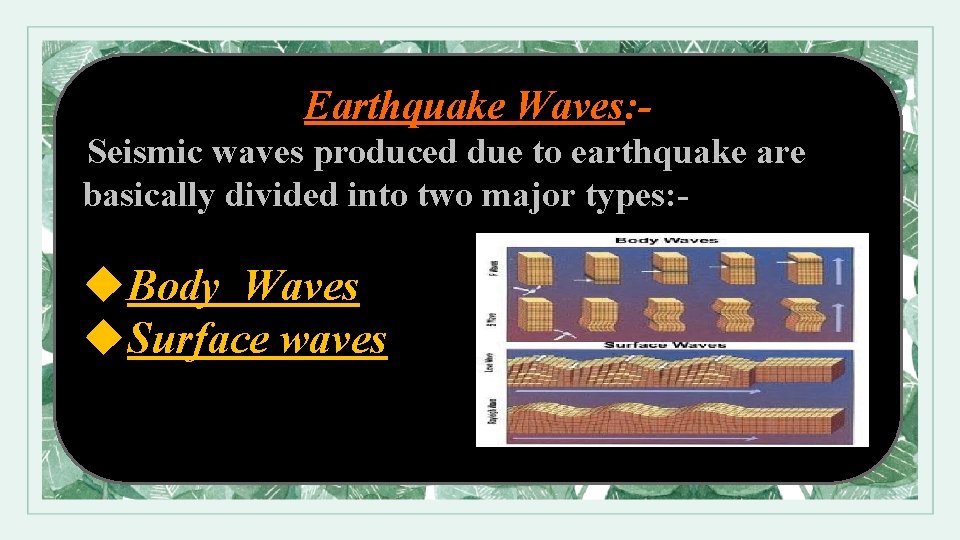
Earthquake Waves: Seismic waves produced due to earthquake are basically divided into two major types: - u. Body Waves u. Surface waves
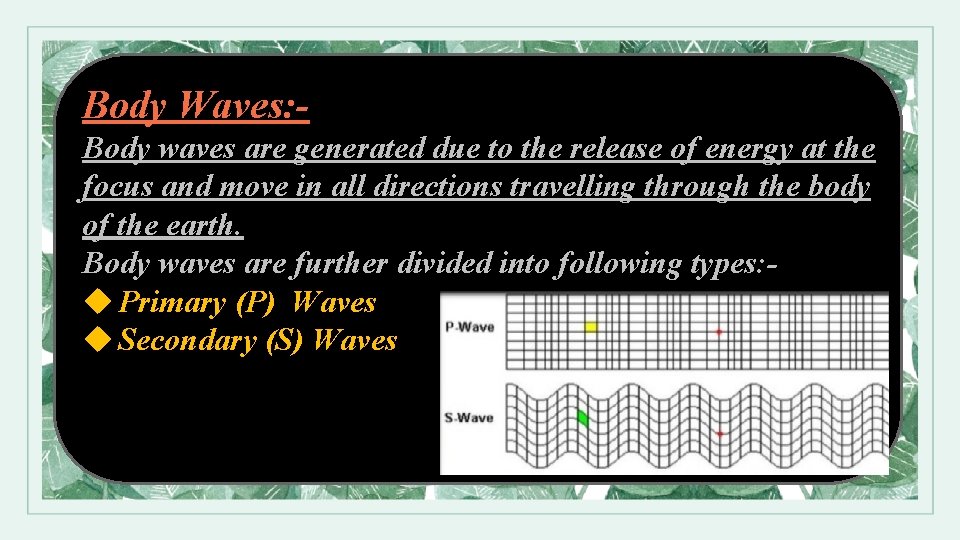
Body Waves: Body waves are generated due to the release of energy at the focus and move in all directions travelling through the body of the earth. Body waves are further divided into following types: u Primary (P) Waves u Secondary (S) Waves
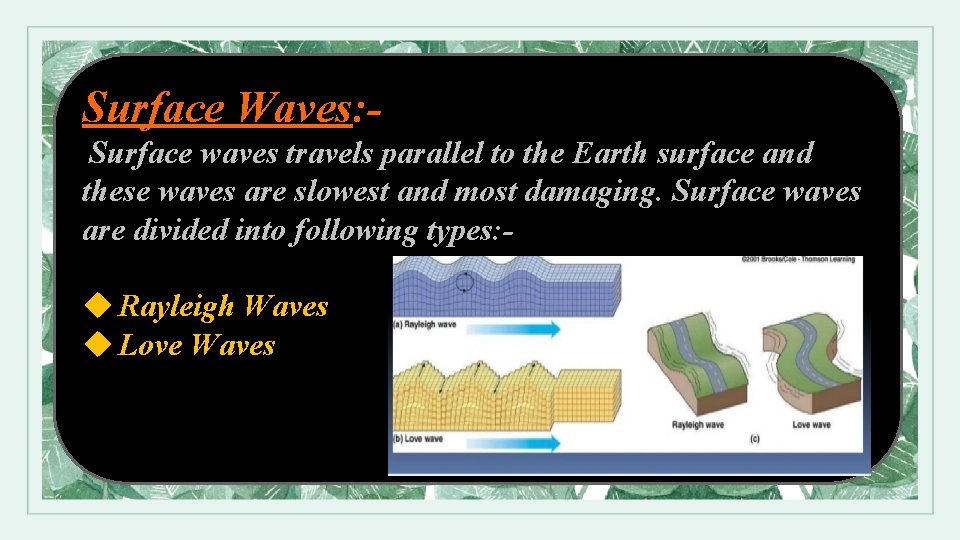
Surface Waves: Surface waves travels parallel to the Earth surface and these waves are slowest and most damaging. Surface waves are divided into following types: - u Rayleigh Waves u Love Waves
Propagation of Earthquake Waves u Different types of earthquake waves travel in different manners. u As they move or propagate, they cause vibration in the body of the rocks through which they pass. u P-Waves vibrate parallel to the direction of the wave. u This exerts pressure on the material in the direction of the propagation.

Cont. . . u other three waves vibrate perpendicular to the direction of propagation. u the direction of vibration of S-waves is perpendicular to the wave direction in the vertical plane. u They create troughs and crests in the material through which they pass. u Surface waves are considered to be the most damaging waves.
Types of Earthquakes: Tectonic Earthquakes: These are generated due to sliding of rocks along a fault plane. Volcanic earthquake: These are confined to areas of active volcanoes. Collapse earthquakes: In the areas of intense mining activity, the roofs of underground mines collapse causing minor tremors. Explosion earthquakes: ground shaking may also occur due to the explosion of chemical or nuclear devices. Reservoir induced earthquakes: earthquake that occur in the areas of large reservoirs.
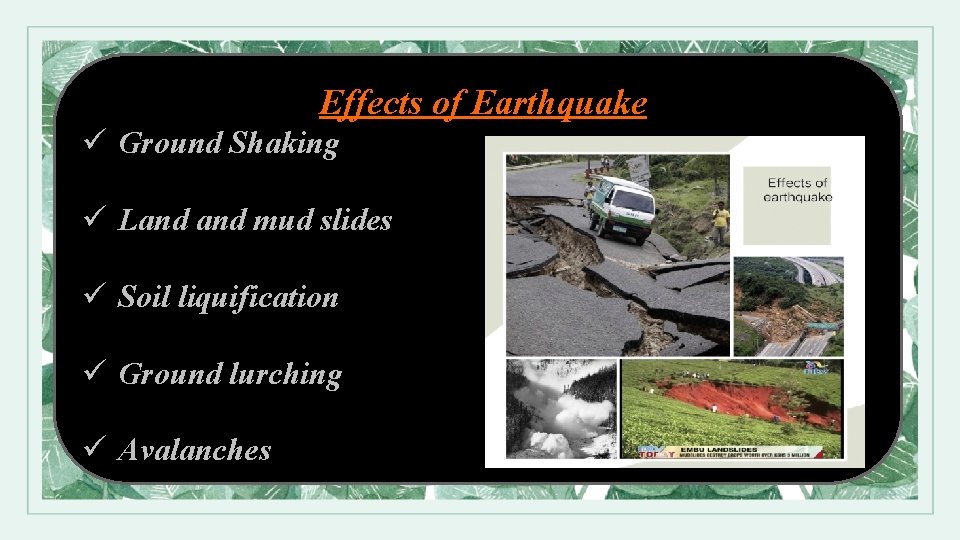
Effects of Earthquake ü Ground Shaking ü Land mud slides ü Soil liquification ü Ground lurching ü Avalanches
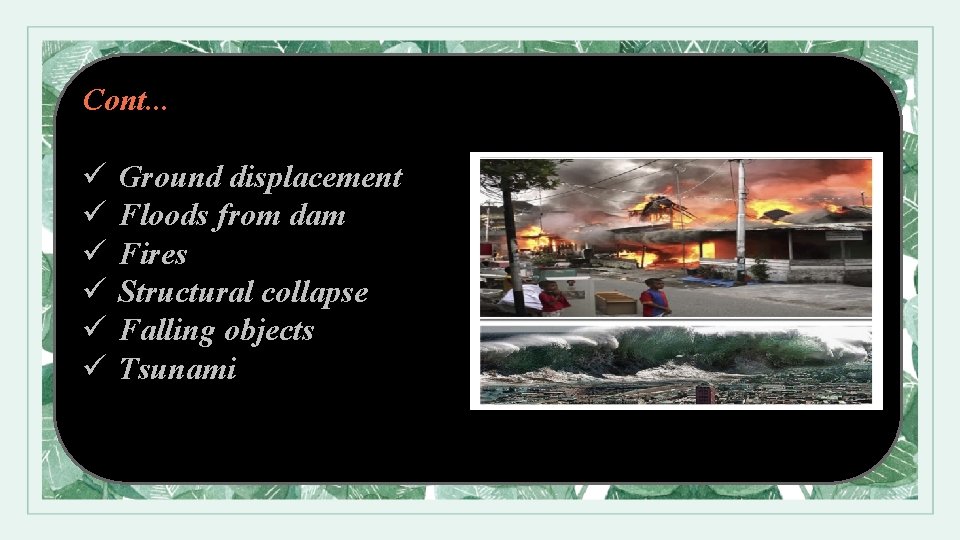
Cont. . . ü ü ü Ground displacement Floods from dam Fires Structural collapse Falling objects Tsunami
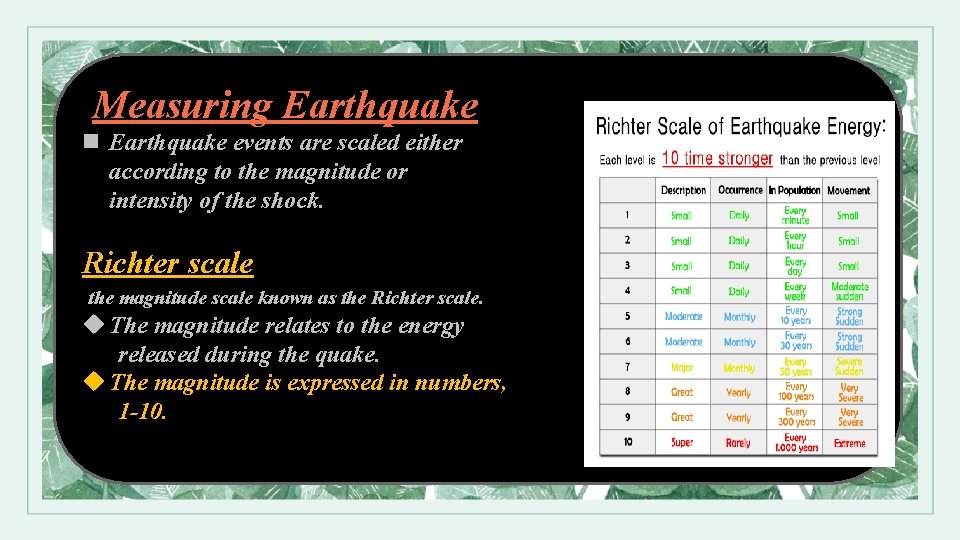
Measuring Earthquake n Earthquake events are scaled either according to the magnitude or intensity of the shock. Richter scale the magnitude scale known as the Richter scale. u The magnitude relates to the energy released during the quake. u The magnitude is expressed in numbers, 1 -10.
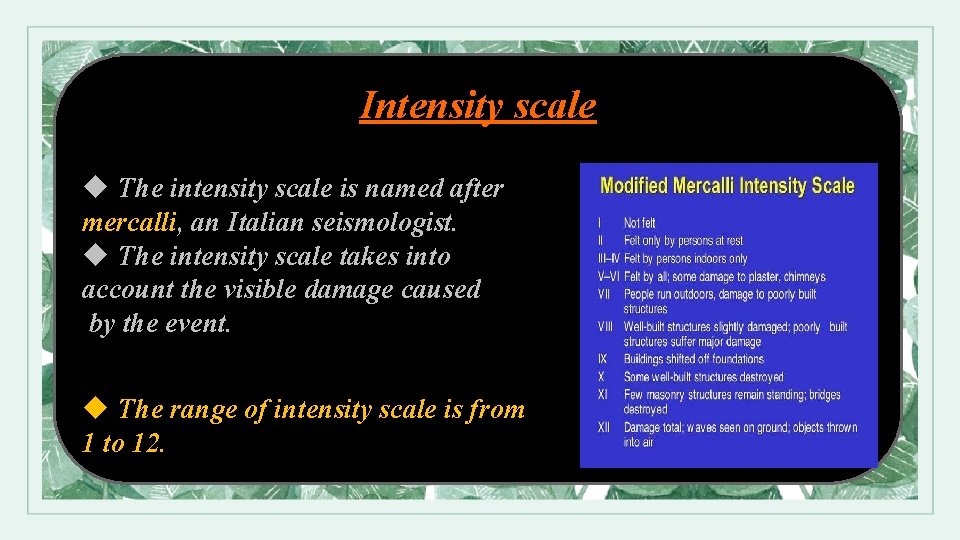
Intensity scale u The intensity scale is named after mercalli, an Italian seismologist. u The intensity scale takes into account the visible damage caused by the event. u The range of intensity scale is from 1 to 12.
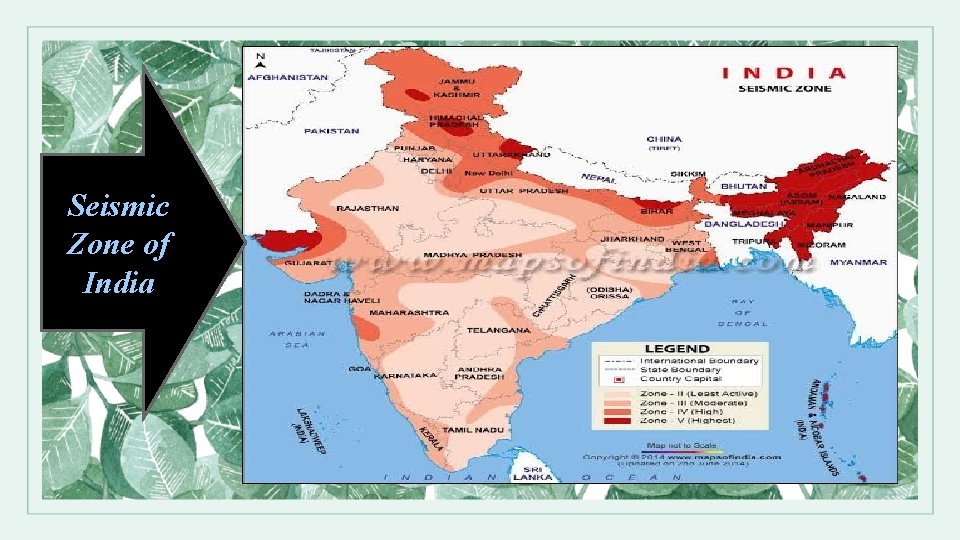
Seismic Zone of India
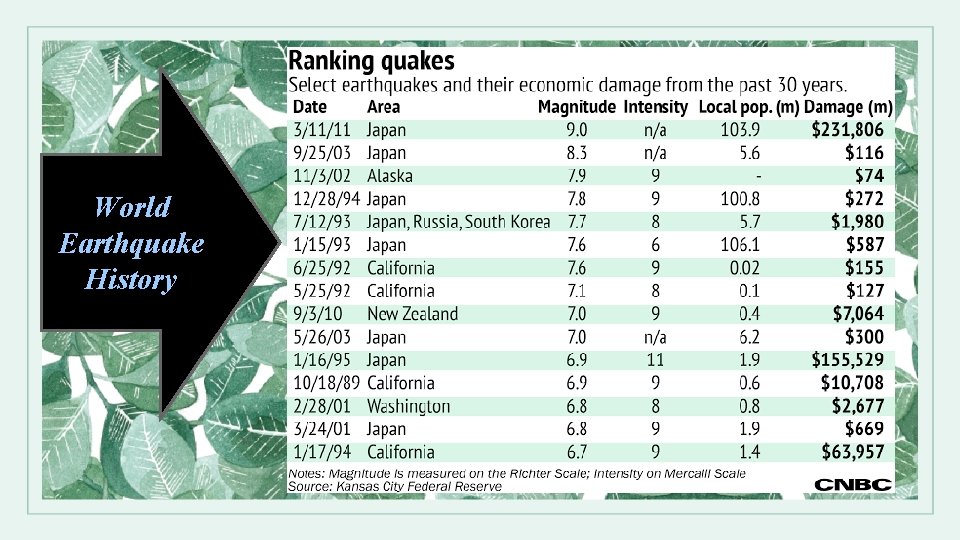
World Earthquake History
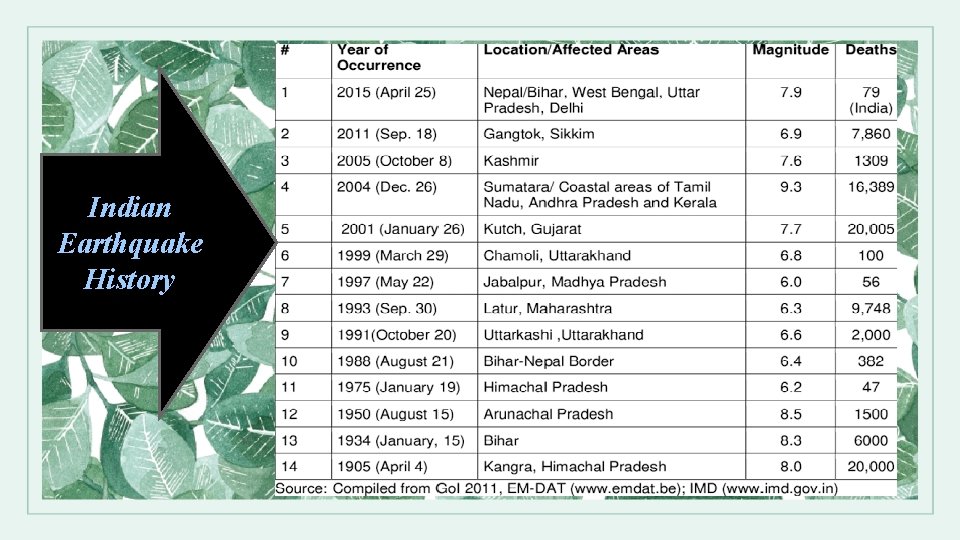
Indian Earthquake History

Thank You! Reference: Fundamentals of Physical Geography NCERT 11 th
- Slides: 25