
Indigenous Perspectives in Science 4 Strategies to weave
![[Native] children come to school with higher than average science scores…by 4 th grade](https://slidetodoc.com/presentation_image_h2/12a9a43054ee1f6b8005468e93f51faa/image-5.jpg "[Native] children come to school with higher than average science scores…by 4 th grade")
- Slides: 18
Indigenous Perspectives in Science 4 Strategies to weave Indigenous understandings into science class
Acknowledgement �We acknowledge and thank the Coast Salish nations of Squamish, Tsleil Waututh and Musqueam on whose unceded shared traditional territories we live, teach and learn.
Acknowledgement �We acknowledge and thank the Coast Salish nations of Squamish, Tsleil Waututh and Musqueam on whose unceded shared traditional territories we live, teach and learn.
What did the TRC task us with? �Closing the achievement gap between Indigenous and non-Indigenous students. �Ensuring that the truth—the history of and knowledge from Indigenous peoples—is included in all curriculum and instruction.
[Native] children come to school with higher than average science scores…by 4 th grade average by 8 th grade below average….
What is Your Commitment? �What is our call to action from the Truth and Reconciliation Commission? To find ways to integrate Indigenous culture, perspectives and principles of learning into our daily practice as science teachers.
Is This Science? �Take a carousel walk around to these five news or journal articles. �Discuss and write your questions or opinions.
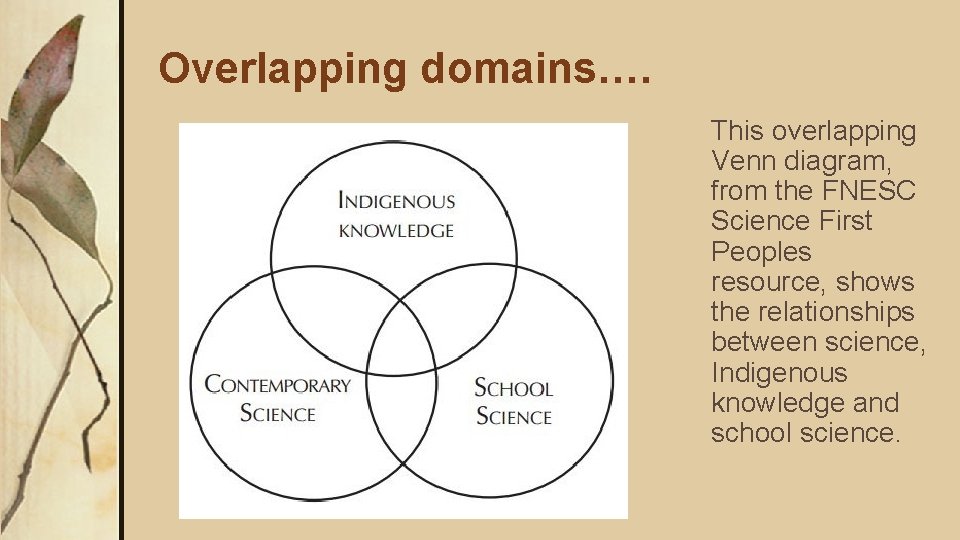
Overlapping domains…. This overlapping Venn diagram, from the FNESC Science First Peoples resource, shows the relationships between science, Indigenous knowledge and school science.
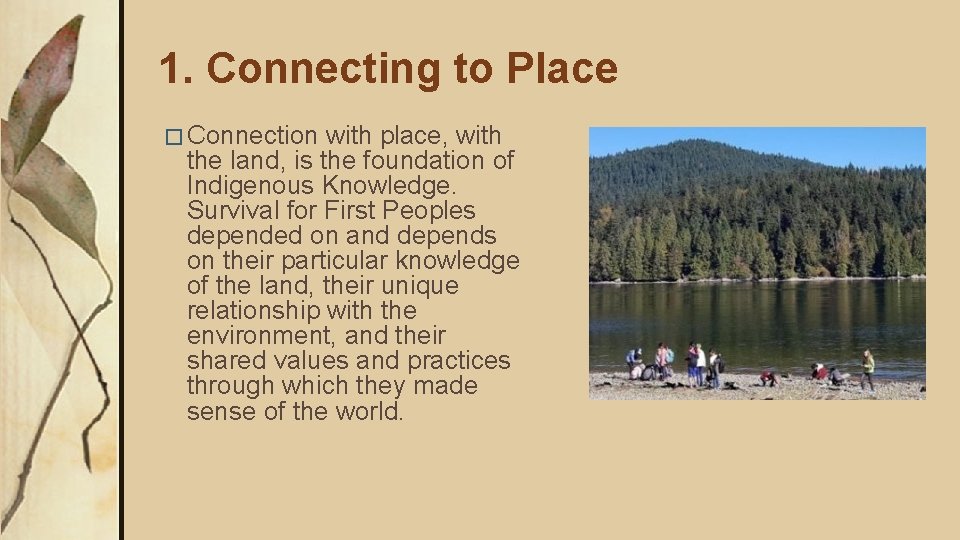
1. Connecting to Place � Connection with place, with the land, is the foundation of Indigenous Knowledge. Survival for First Peoples depended on and depends on their particular knowledge of the land, their unique relationship with the environment, and their shared values and practices through which they made sense of the world.
HOW TO CONNECT TO PLACE �Get outside! Have regular and repeated outdoor lessons. �Learn the names of local plants and animals—in English and hən q əmin əm or even in their own language (hey if they can learn them in Latin…). �Where possible, invite Elders or knowledge keepers to share understandings.
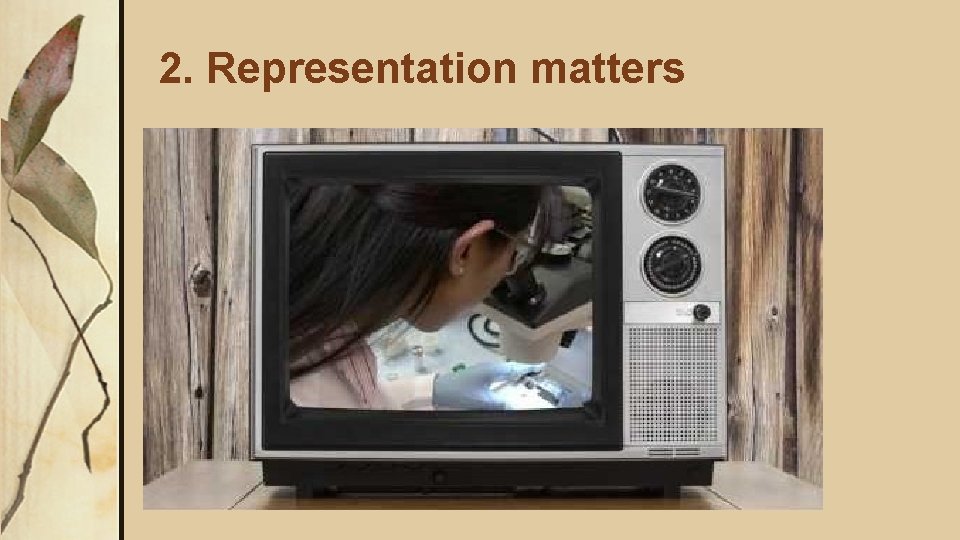
2. Representation matters
How to REPRESENT INDIGENOUS LEARNERS IN YOUR CLASSES �Have images of a variety of scientists from all cultures and genders not just DWG’s. �Include Indigenous images and art in your classroom decorations. �Include videos/posters/books with Indigenous role models.
3. Use Story �Story is one of the main methods of traditional Indigenous learning and teaching. Combining story and experience is a powerful strategy that has always been used by First Peoples, and its power can also be brought to the science classroom.
Can oral stories be “science”? � “When each Elder spoke they were conscious that other Elders would serve as ‘peer reviewer’ [and so] they did not delve into subject matter that would be questionable. They did joke with each other and they told stories, some true and some a bit exaggerated but in the end the result was a collective memory. This is the part which is exciting because when each Elder arrived they brought with them a piece of the knowledge puzzle. They had to reach back to the teachings of their parents, grandparents and even great-grandparents. These teachings were shared in the circle and these constituted a reconnaissance of collective memory and knowledge. In the end the Elders left with a knowledge that was built by the collectivity. " � Stephen J. Augustine, Hereditary Chief and Keptin of the Mi’kmaq Grand Council 1
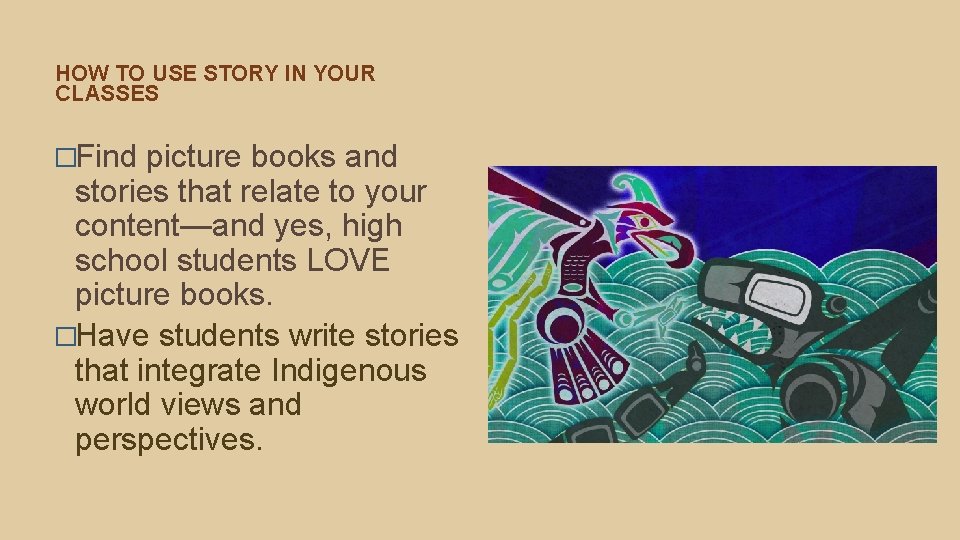
HOW TO USE STORY IN YOUR CLASSES �Find picture books and stories that relate to your content—and yes, high school students LOVE picture books. �Have students write stories that integrate Indigenous world views and perspectives.
4. Include Indigenous Content in your Course/Class �A 5 -year study with 366 public schools in British Columbia found that Indigenous students increased their achievement when Indigenous content was incorporated into the curriculum.
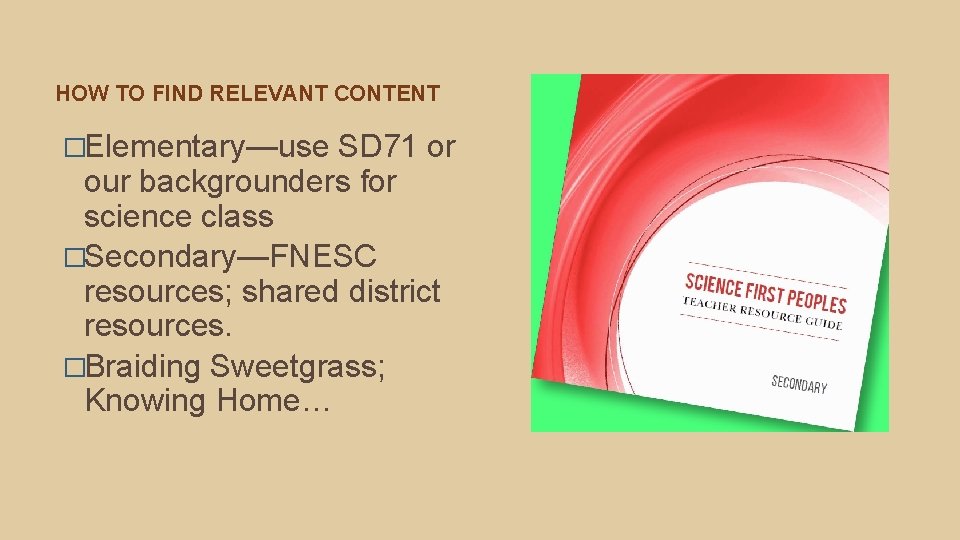
HOW TO FIND RELEVANT CONTENT �Elementary—use SD 71 or our backgrounders for science class �Secondary—FNESC resources; shared district resources. �Braiding Sweetgrass; Knowing Home…
Take a look at resources �Take a look and find the hand-outs that relate to these four strategies. �Can you make a plan today to include these 4 strategies in your next science unit? �Find a digital copy of the Resource List at