
Indigenous Peoples after Confederation CLUSTER 3 BECOMING A

Indigenous Peoples after Confederation CLUSTER 3: BECOMING A SOVEREIGN NATION
What does “We are all Treaty People” Means? We Acknowledge that we are on Treaty one territory, on the ancestral land of the Anishinaabe, Dakota, Oji-Cree and Dene Peoples, and Homeland of the Metis Nations. We acknowledge the continual effort in moving forward in partnership with indigenous communities towards reconciliation. Why is this statement important for Modern Canada?
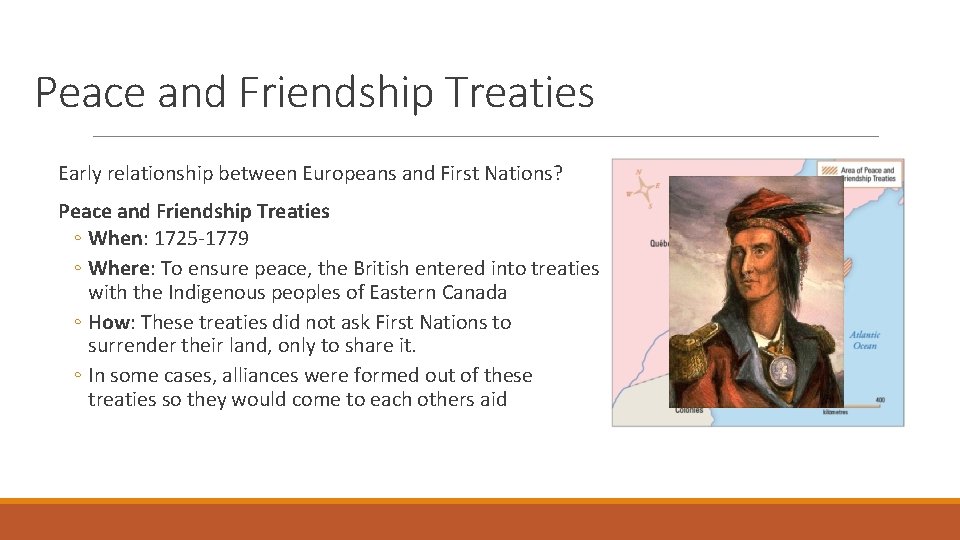
Peace and Friendship Treaties Early relationship between Europeans and First Nations? Peace and Friendship Treaties ◦ When: 1725 -1779 ◦ Where: To ensure peace, the British entered into treaties with the Indigenous peoples of Eastern Canada ◦ How: These treaties did not ask First Nations to surrender their land, only to share it. ◦ In some cases, alliances were formed out of these treaties so they would come to each others aid
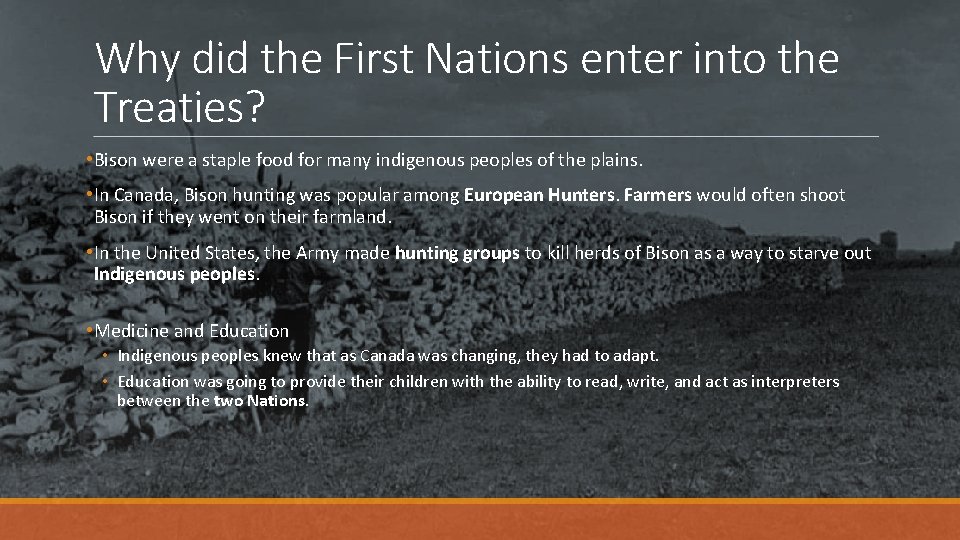
Why did the First Nations enter into the Treaties? • Bison were a staple food for many indigenous peoples of the plains. • In Canada, Bison hunting was popular among European Hunters. Farmers would often shoot Bison if they went on their farmland. • In the United States, the Army made hunting groups to kill herds of Bison as a way to starve out Indigenous peoples. • Medicine and Education • Indigenous peoples knew that as Canada was changing, they had to adapt. • Education was going to provide their children with the ability to read, write, and act as interpreters between the two Nations.

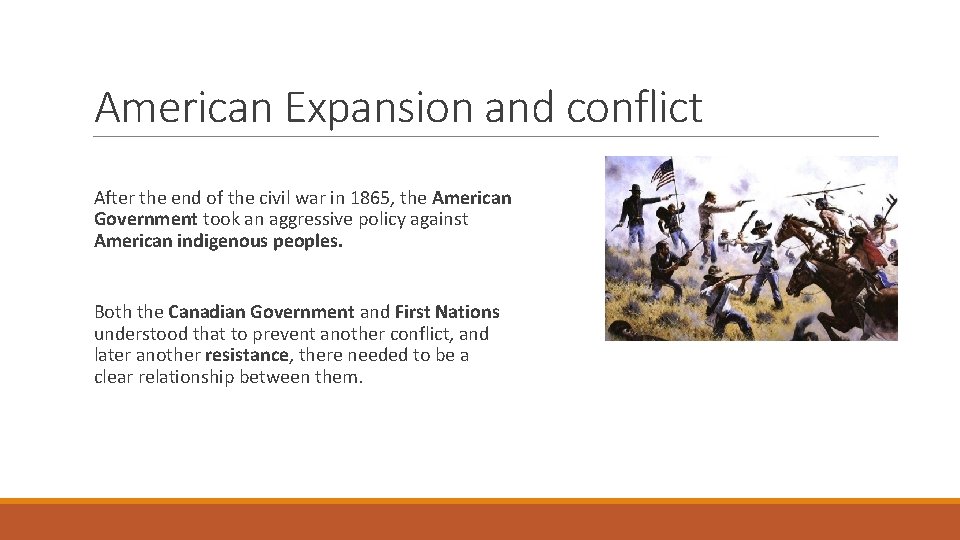
American Expansion and conflict After the end of the civil war in 1865, the American Government took an aggressive policy against American indigenous peoples. Both the Canadian Government and First Nations understood that to prevent another conflict, and later another resistance, there needed to be a clear relationship between them.
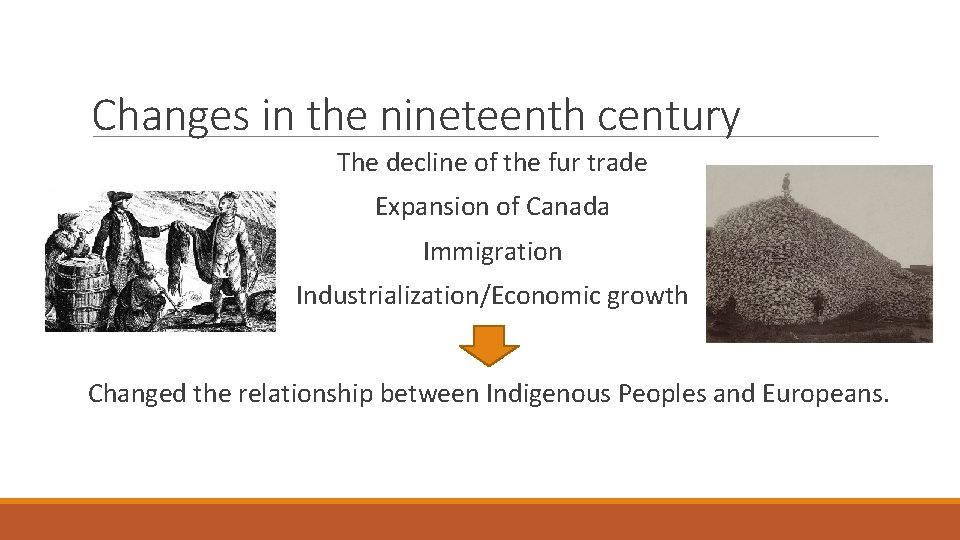
Changes in the nineteenth century The decline of the fur trade Expansion of Canada Immigration Industrialization/Economic growth Changed the relationship between Indigenous Peoples and Europeans.
Change in treaties Based on the changing relationship, treaties changed too. Peace and Friendship Treaties – living together in the same territory 19 th century treaties – Making a deal with Indigenous groups for use of the land resources. The government needed more land for farming and immigration.
Métis and Inuit Peoples Treaties were negotiated with First Nations, because they were the majority of the Indiegnous population across the West. Inuit people? Remote areas, not useful for agriculture. Inuit people were not part of the treaty process until the 1940 s. Metis people? They were treated as either assimilate into Euro-Canadian culture or join First Nations. After the Red River Resistance the government recognized the need to somehow address Metis claims to territory. However, government policies generally dealt with Metis people's claims as individuals, not as communities or as a nation.
The Numbered Treaties When: 1871 – 1921 How many: eleven treaties Who: Between the Government of Canada and various First Nations across the West Where: Western Canada northern Ontario, Manitoba, Saskatchewan, Alberta, and parts of British Columbia, Yukon, and the Northwest Territories.
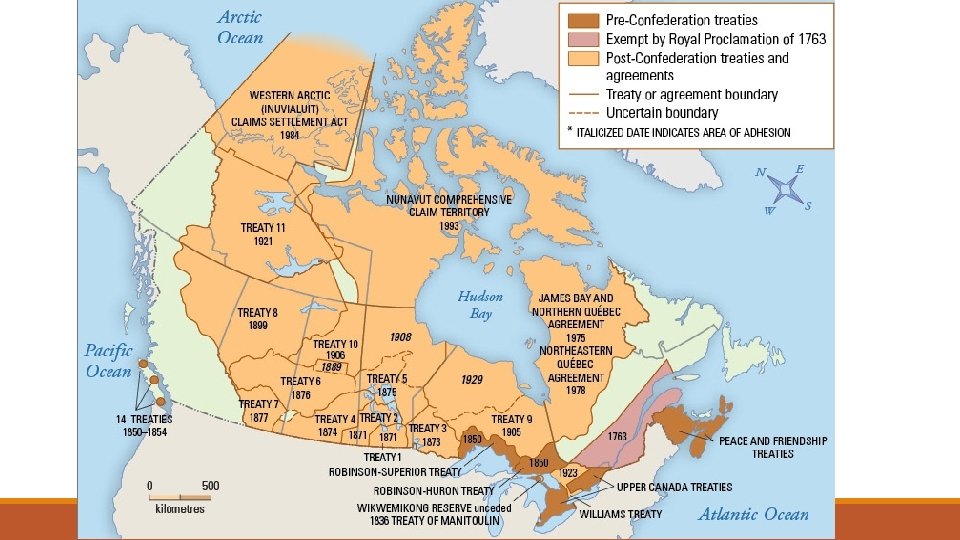
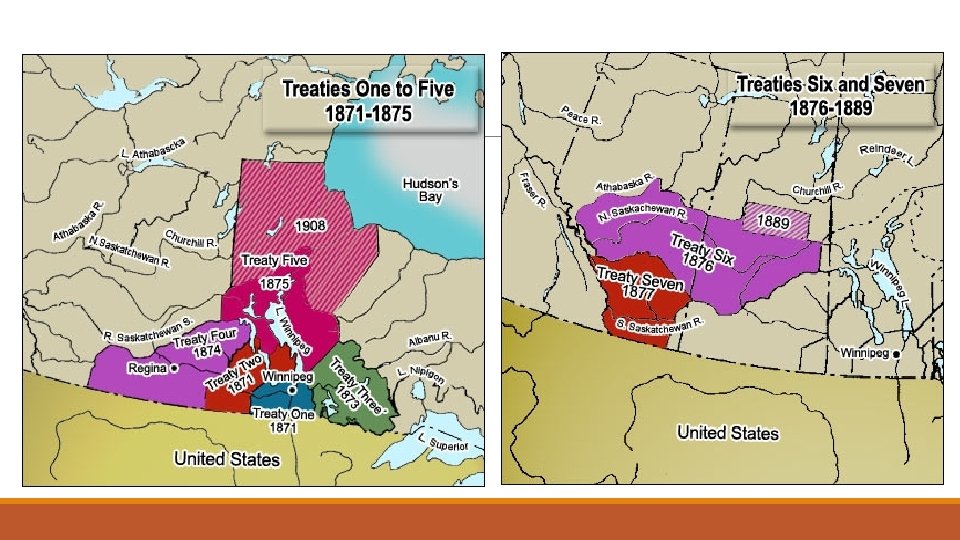
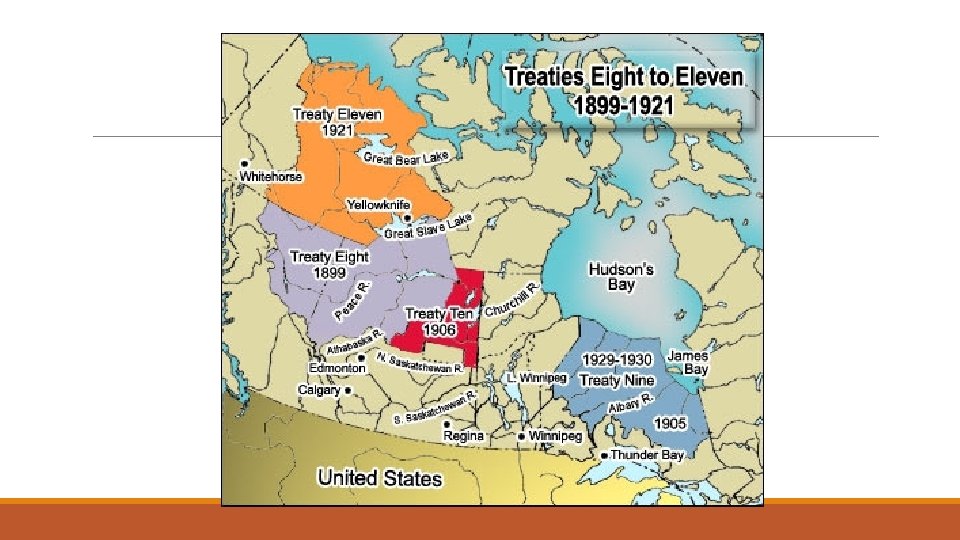
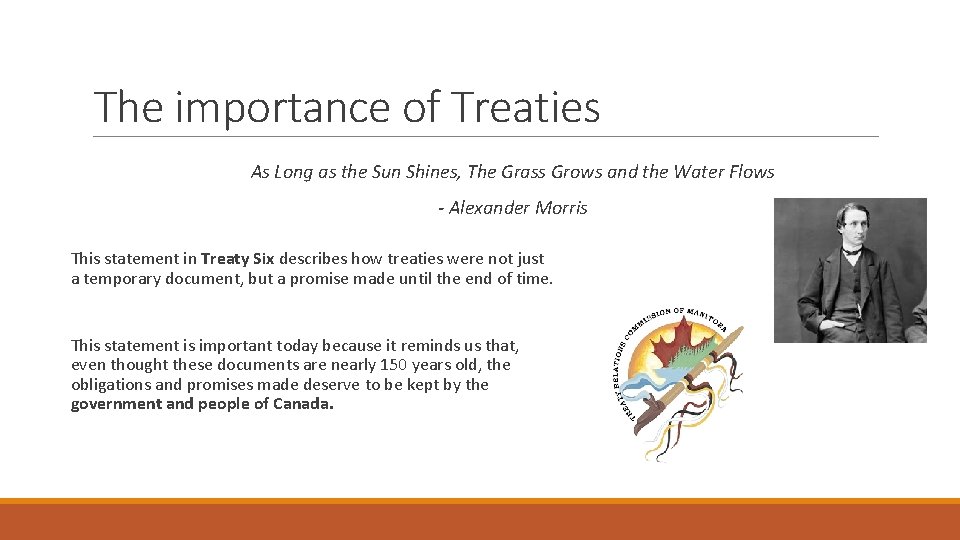
The importance of Treaties As Long as the Sun Shines, The Grass Grows and the Water Flows - Alexander Morris This statement in Treaty Six describes how treaties were not just a temporary document, but a promise made until the end of time. This statement is important today because it reminds us that, even thought these documents are nearly 150 years old, the obligations and promises made deserve to be kept by the government and people of Canada.
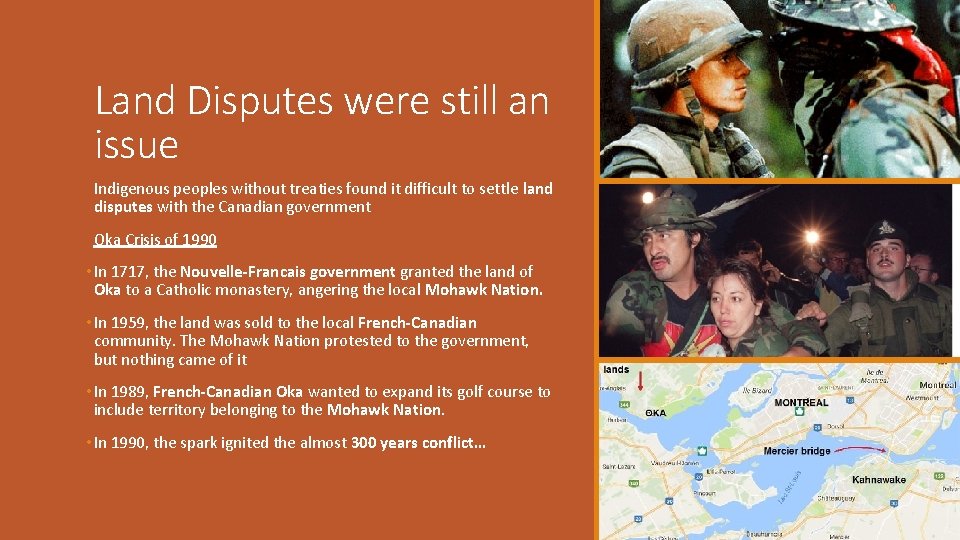
Land Disputes were still an issue Indigenous peoples without treaties found it difficult to settle land disputes with the Canadian government Oka Crisis of 1990 • In 1717, the Nouvelle-Francais government granted the land of Oka to a Catholic monastery, angering the local Mohawk Nation. • In 1959, the land was sold to the local French-Canadian community. The Mohawk Nation protested to the government, but nothing came of it • In 1989, French-Canadian Oka wanted to expand its golf course to include territory belonging to the Mohawk Nation. • In 1990, the spark ignited the almost 300 years conflict…
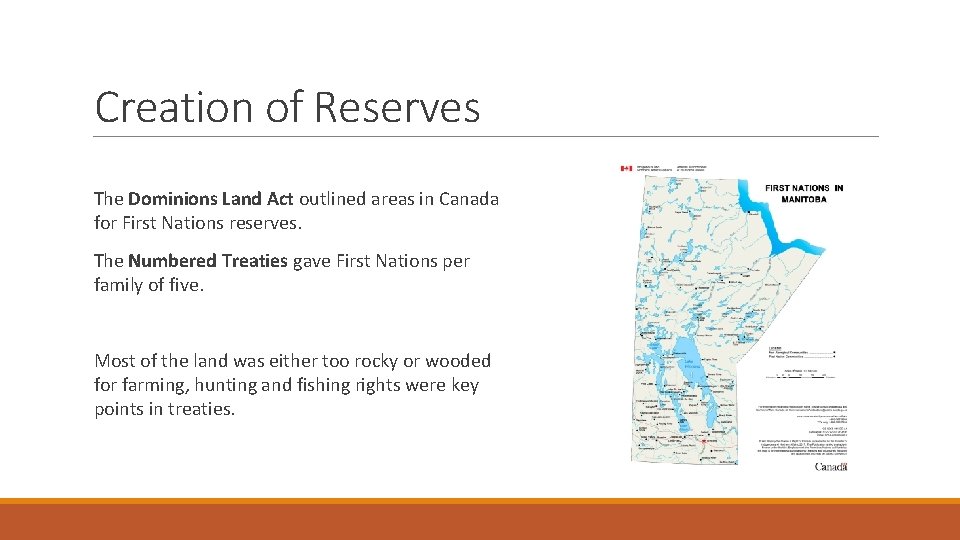
Creation of Reserves The Dominions Land Act outlined areas in Canada for First Nations reserves. The Numbered Treaties gave First Nations per family of five. Most of the land was either too rocky or wooded for farming, hunting and fishing rights were key points in treaties.
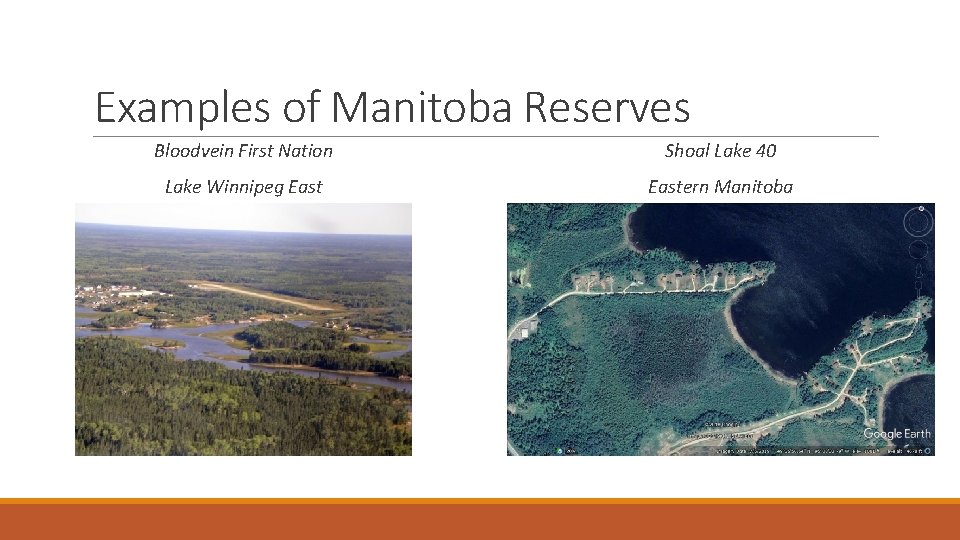
Examples of Manitoba Reserves Bloodvein First Nation Shoal Lake 40 Lake Winnipeg Eastern Manitoba
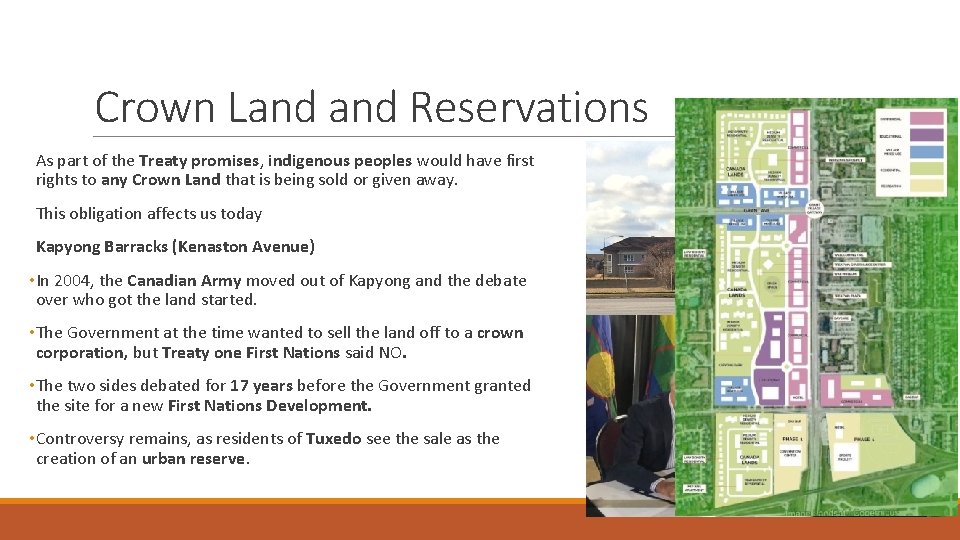
Crown Land Reservations As part of the Treaty promises, indigenous peoples would have first rights to any Crown Land that is being sold or given away. This obligation affects us today Kapyong Barracks (Kenaston Avenue) • In 2004, the Canadian Army moved out of Kapyong and the debate over who got the land started. • The Government at the time wanted to sell the land off to a crown corporation, but Treaty one First Nations said NO. • The two sides debated for 17 years before the Government granted the site for a new First Nations Development. • Controversy remains, as residents of Tuxedo see the sale as the creation of an urban reserve.
The troubles with treaty obligations While most treaties outlined clear expectations of the Government, there were issues with fulfilling these promises The three issues were: 1. Post-Confedoration, the Canadian economy slid into a recessions, causing most money obligations to fail 2. The Northwest Rebellion caused the government to focus more on assimilation than fulfilling promises 3. The Indian act changed the understanding of indigenous peoples from distinct Nations to property of the state.
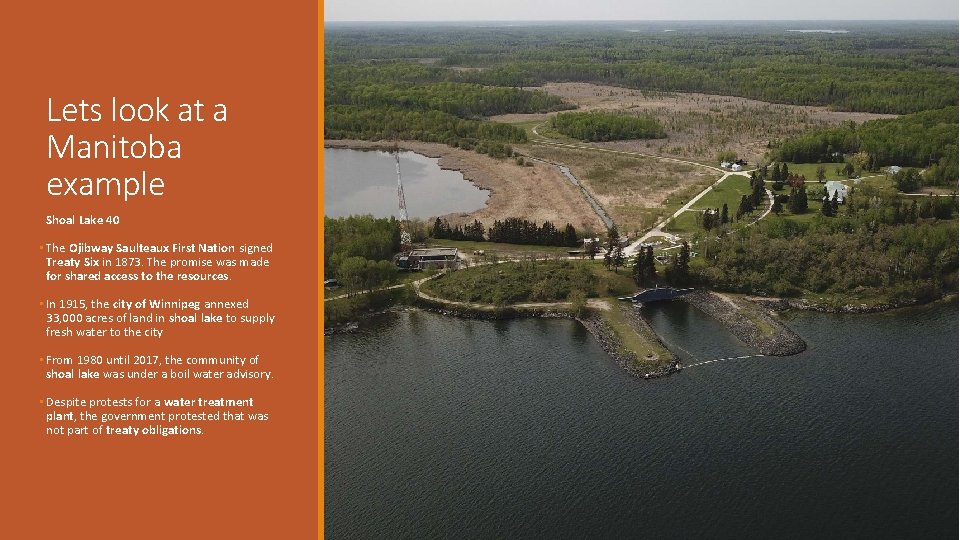
Lets look at a Manitoba example Shoal Lake 40 • The Ojibway Saulteaux First Nation signed Treaty Six in 1873. The promise was made for shared access to the resources. • In 1915, the city of Winnipeg annexed 33, 000 acres of land in shoal lake to supply fresh water to the city • From 1980 until 2017, the community of shoal lake was under a boil water advisory. • Despite protests for a water treatment plant, the government protested that was not part of treaty obligations.
- Slides: 23