
Indigenous Mexican Languages in Oregon A Preliminary Assessment



- Slides: 20
Indigenous Mexican Languages in Oregon A Preliminary Assessment for Language Maintenance Simon Peters Senior Thesis Department of Applied Linguistics Portland State University Advisor Professor Tucker Childs May 7 th 2014 1
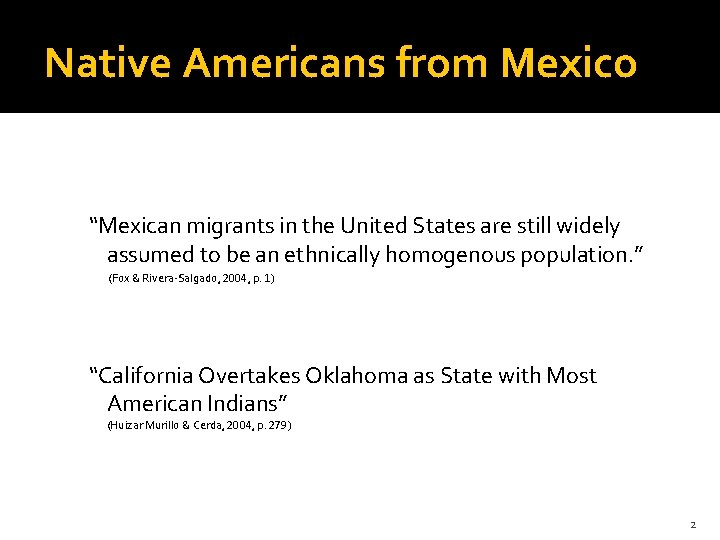
Native Americans from Mexico “Mexican migrants in the United States are still widely assumed to be an ethnically homogenous population. ” (Fox & Rivera-Salgado, 2004, p. 1) “California Overtakes Oklahoma as State with Most American Indians” (Huizar Murillo & Cerda, 2004, p. 279) 2
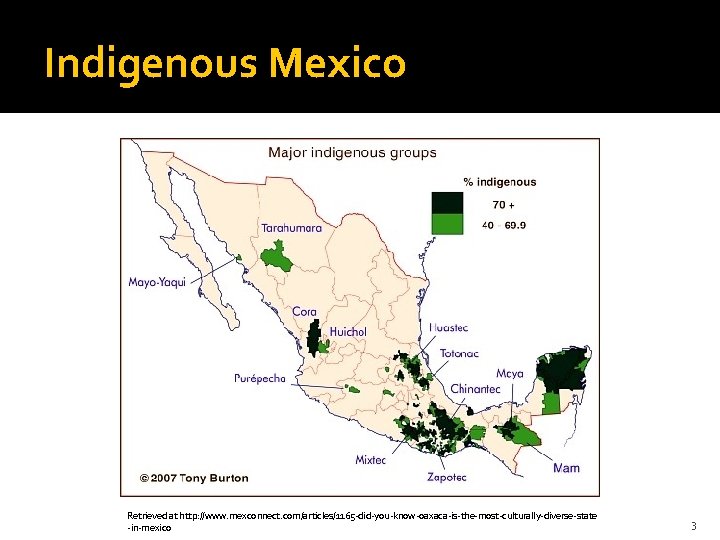
Indigenous Mexico Retrieved at http: //www. mexconnect. com/articles/1165 -did-you-know-oaxaca-is-the-most-culturally-diverse-state -in-mexico 3
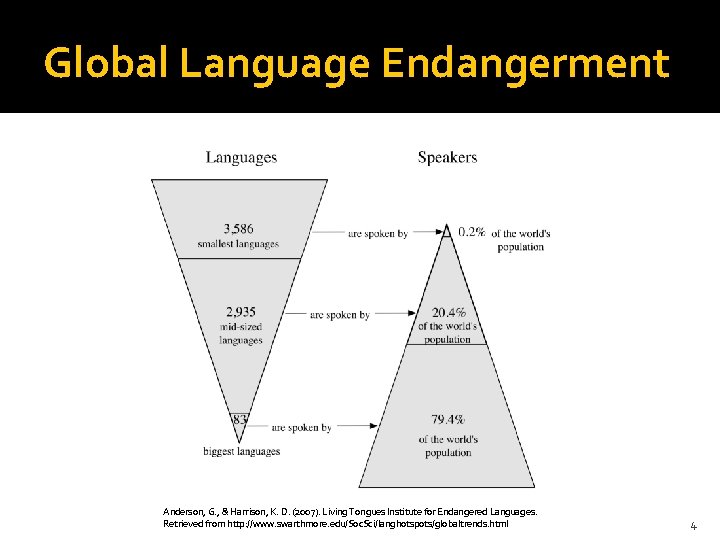
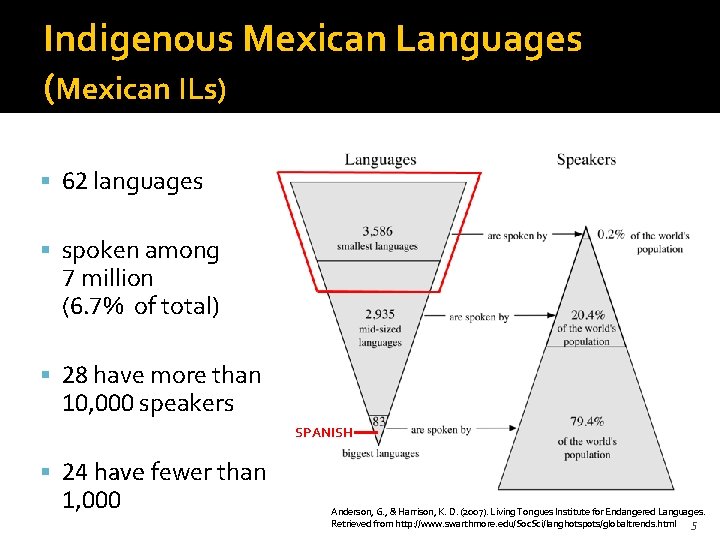
Global Language Endangerment Anderson, G. , & Harrison, K. D. (2007). Living Tongues Institute for Endangered Languages. Retrieved from http: //www. swarthmore. edu/Soc. Sci/langhotspots/globaltrends. html 4
Indigenous Mexican Languages (Mexican ILs) 62 languages spoken among 7 million (6. 7% of total) 28 have more than 10, 000 speakers SPANISH 24 have fewer than 1, 000 Anderson, G. , & Harrison, K. D. (2007). Living Tongues Institute for Endangered Languages. Retrieved from http: //www. swarthmore. edu/Soc. Sci/langhotspots/globaltrends. html 5
Language Ideology and Policy in Mexico ▪ One-Language-One-Nation Ideology ▪ Assimilation ▪ Education Quality 6
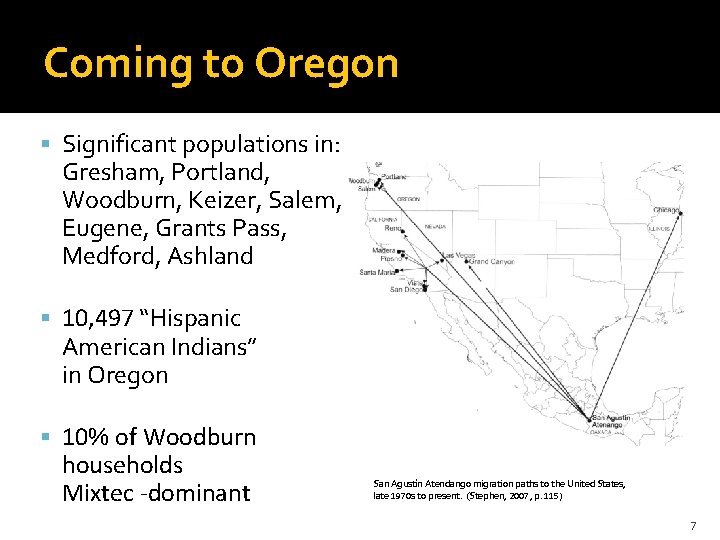
Coming to Oregon Significant populations in: Gresham, Portland, Woodburn, Keizer, Salem, Eugene, Grants Pass, Medford, Ashland 10, 497 “Hispanic American Indians” in Oregon 10% of Woodburn households Mixtec -dominant San Agustín Atendango migration paths to the United States, late 1970 s to present. (Stephen, 2007, p. 115) 7
Circumstances in Oregon Spanish-dominant immigrant community English-dominant education (sometimes bilingual English-Spanish) 8
Guiding Research Questions Why is this happening? Is there room for intervention? What is the best maintenance framework? 9
Question 1: Cause “We don’t want to be called Oaxaquitos. We speak English and Spanish. ” Mariano Junior (Stephen, 2007, p. 216) “They always talk about us like we are not worth as much as everyone else. They don’t like the people from Oaxaca. ” Dolores (Stephen, 2007, p. 214) 10
Question 2: Intervention “We should be proud of being from there and of speaking our languages. We shouldn’t be ashamed of this culture. ” Dolores (Stephen, 2007, p. 215) “It is beautiful to have this language, Mixtec. But there is going to come a time when we are going to lose this language, when we are going to forget it. ” Mariano González (Stephen, 2007, p. 216) 11
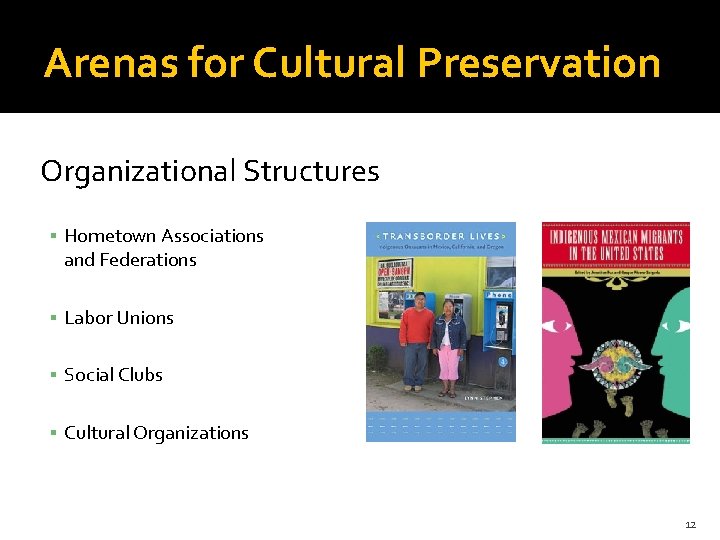
Arenas for Cultural Preservation Organizational Structures ▪ Hometown Associations and Federations ▪ Labor Unions ▪ Social Clubs ▪ Cultural Organizations 12
Cultural Groups Objectives ▪ “Self-differentiation” (Kearney, 1998) ▪ Visibility, voice, and respect ▪ Cultural maintenance “A lot of them don’t even know about their own culture, and in some cases they even deny its existence. This contributes to the discrimination that exists among mestizos toward indigenous peoples. ” Valentín Sánchez, Secretary of Organization of Oaxacan Indigenous Migrant Communities (Stephen, 2007, p. 267) 13
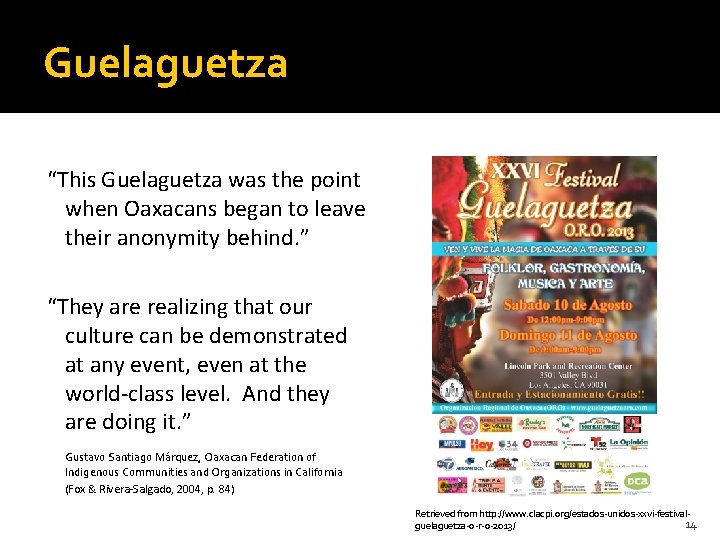
Guelaguetza “This Guelaguetza was the point when Oaxacans began to leave their anonymity behind. ” “They are realizing that our culture can be demonstrated at any event, even at the world-class level. And they are doing it. ” Gustavo Santiago Márquez, Oaxacan Federation of Indigenous Communities and Organizations in California (Fox & Rivera-Salgado, 2004, p. 84) Retrieved from http: //www. clacpi. org/estados-unidos-xxvi-festival 14 guelaguetza-o-r-o-2013/
Mixtec Codices Workshop Retrieved from http: //en. wikipedia. org/wiki/File: Codex. Zouche. Nuttall. Mixtec. British. Museum 20050108_Copyright. Kaihsu. Tai. jpg “We want to promote the idea of people in our community learning their own history and sharing it. ” Valentín Sánchez, Secretary of Organization of Oaxacan Indigenous Migrant Communities (Stephen, 2007, pp. 268 -9) 15
Indigenous Research Projects “The survival of peoples, cultures, and languages; the struggle to become self-determining, the need to take back control of our destinies. ” Linda Tuhiwai Smith (Stephen, 2007, p. 282) 16
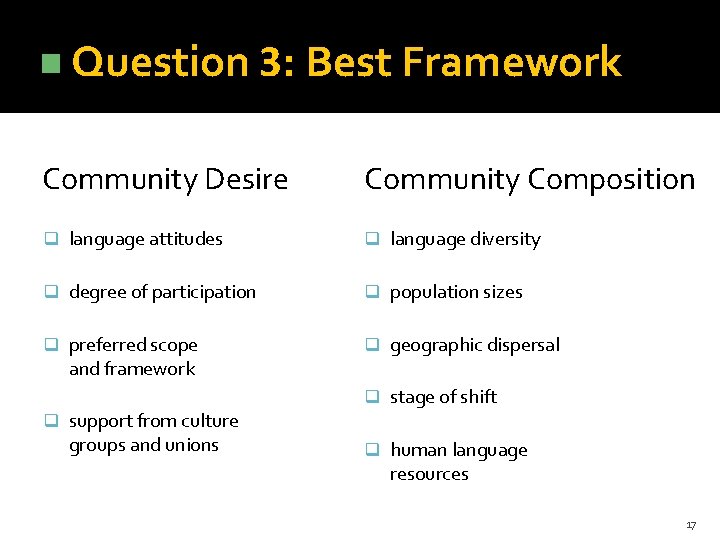
Question 3: Best Framework Community Desire Community Composition q language attitudes q language diversity q degree of participation q population sizes q preferred scope q geographic dispersal and framework q support from culture groups and unions q stage of shift q human language resources 17
Projected Frameworks Documentation and Materials ▪ existing materials from Mexico ▪ involve elders, native speakers, and learners in language and cultural materials production Community Classes ▪ language activities for children and families ▪ Master-Apprentice ▪ web classes, distance learning Public School Curriculum or Club ▪ applying language to new domains 18
THANK YOU Do you have any questions or comments? 19
References Fox, J. , & Rivera-Salgado, G. (Eds. ). (2004). Building Civil Society among Indigenous Migrants. In Indigenous Mexican Migrants in the United States (pp. 1 -68). La Jolla, CA: Center for U. S. -Mexican Studies, UCSD, & Center for Comparative Immigration Studies, UCSD. Stephen, L. (2007). Transborder Lives: Indigenous Oaxacans in Mexico, California, and Oregon. Durham: Duke University Press. Terborg, R. , Landa, L. G. , & Moore, P. (2006). The Language Situation in Mexico. Current Issues in Language Planning, 7(4), 415– 518. U. S. Census Bureau. 2010 Census. http: //factfinder 2. census. gov/faces/tableservices/jsf/pages/productview. xhtml? src=bkmk. Accessed March 8, 2014. 20