
Indigenous Language as a Human Right Kristen Carpenter
- Slides: 17
(Indigenous) Language as a Human Right Kristen Carpenter and Alexey Tsykarev Mexico City 2020
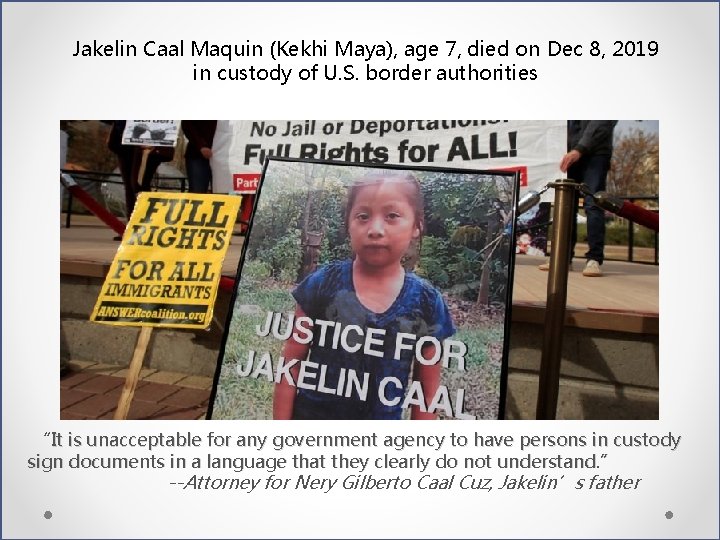
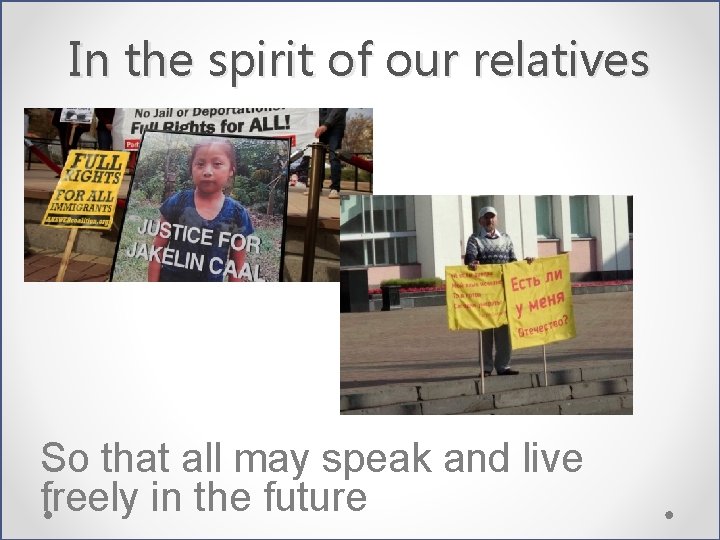
Jakelin Caal Maquin (Kekhi Maya), age 7, died on Dec 8, 2019 in custody of U. S. border authorities “It is unacceptable for any government agency to have persons in custody sign documents in a language that they clearly do not understand. ” --Attorney for Nery Gilberto Caal Cuz, Jakelin’s father
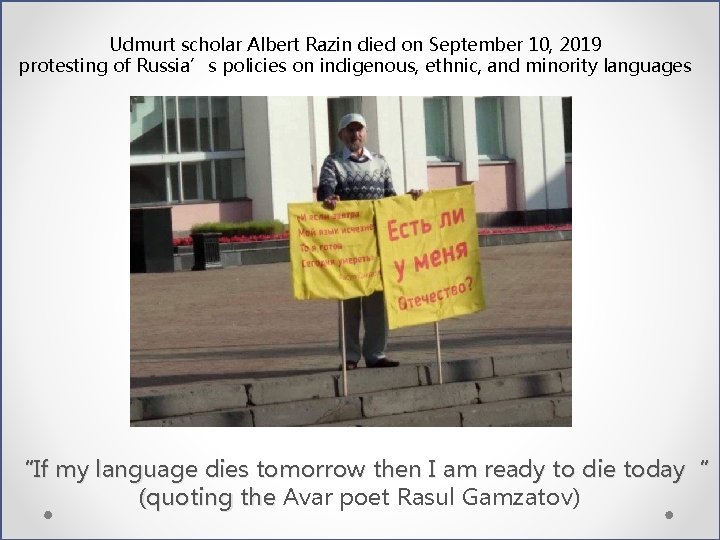
Udmurt scholar Albert Razin died on September 10, 2019 protesting of Russia’s policies on indigenous, ethnic, and minority languages “If my language dies tomorrow then I am ready to die today“ (quoting the Avar poet Rasul Gamzatov)
Indigenous languages matter for development, peace, governance and reconciliation • IYIL undertook "a human rights-based approach" to indigenous languages in which • "A person’s freedom to use one’s chosen language is a prerequisite to freedom of thought, freedom of opinion and expression, access to education and information, employment and other values enshrined in the Universal Declaration of Human Rights"
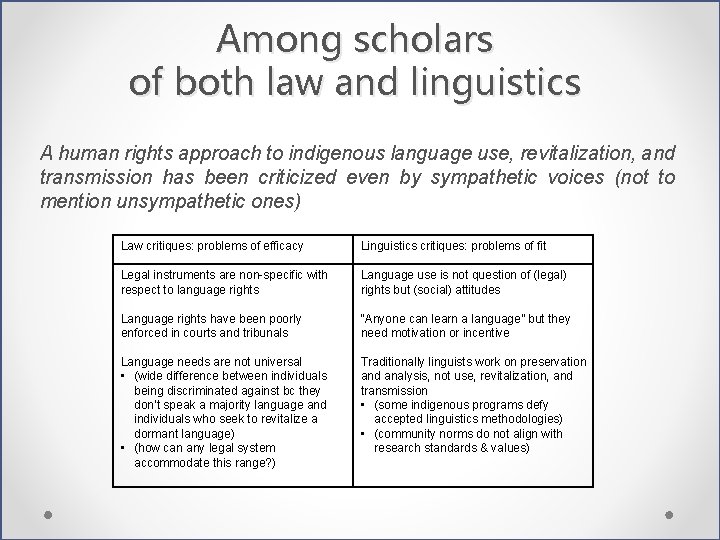
Among scholars of both law and linguistics A human rights approach to indigenous language use, revitalization, and transmission has been criticized even by sympathetic voices (not to mention unsympathetic ones) Law critiques: problems of efficacy Linguistics critiques: problems of fit Legal instruments are non-specific with respect to language rights Language use is not question of (legal) rights but (social) attitudes Language rights have been poorly enforced in courts and tribunals “Anyone can learn a language” but they need motivation or incentive Language needs are not universal • (wide difference between individuals being discriminated against bc they don’t speak a majority language and individuals who seek to revitalize a dormant language) • (how can any legal system accommodate this range? ) Traditionally linguists work on preservation and analysis, not use, revitalization, and transmission • (some indigenous programs defy accepted linguistics methodologies) • (community norms do not align with research standards & values)
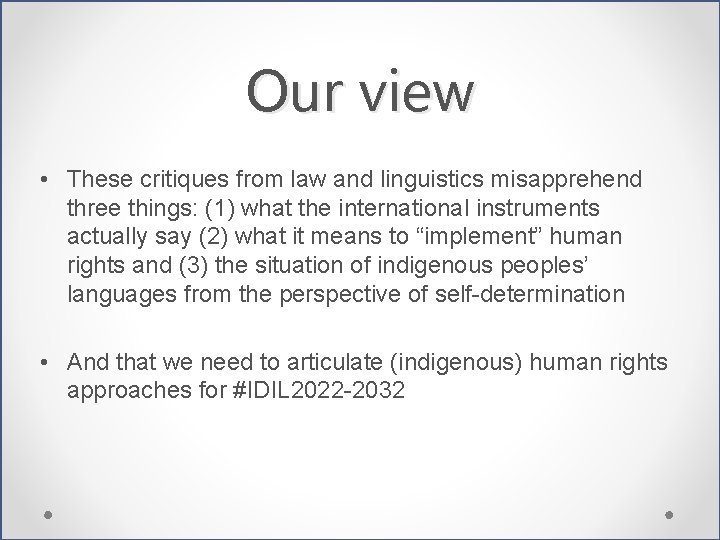
Our view • These critiques from law and linguistics misapprehend three things: (1) what the international instruments actually say (2) what it means to “implement” human rights and (3) the situation of indigenous peoples’ languages from the perspective of self-determination • And that we need to articulate (indigenous) human rights approaches for #IDIL 2022 -2032
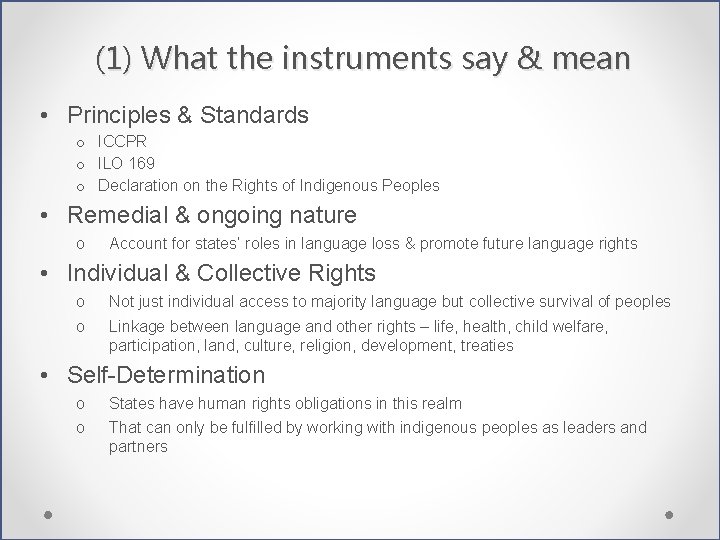
(1) What the instruments say & mean • Principles & Standards o ICCPR o ILO 169 o Declaration on the Rights of Indigenous Peoples • Remedial & ongoing nature o Account for states’ roles in language loss & promote future language rights • Individual & Collective Rights o o Not just individual access to majority language but collective survival of peoples Linkage between language and other rights – life, health, child welfare, participation, land, culture, religion, development, treaties • Self-Determination o o States have human rights obligations in this realm That can only be fulfilled by working with indigenous peoples as leaders and partners
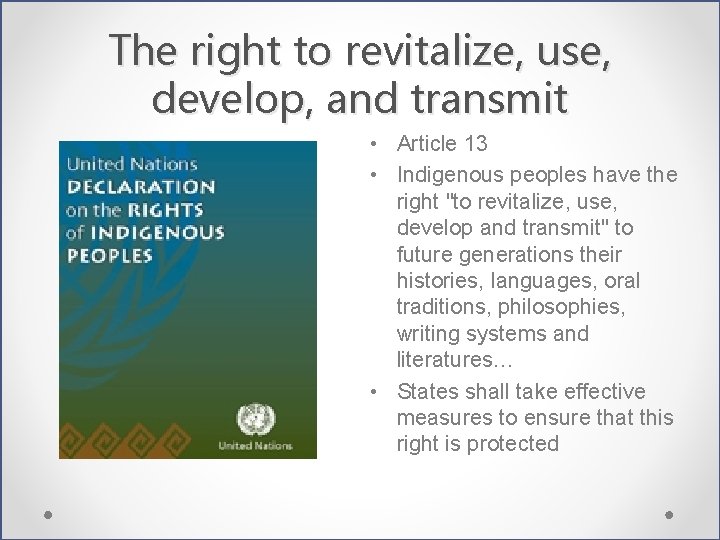
The right to revitalize, use, develop, and transmit • Article 13 • Indigenous peoples have the right "to revitalize, use, develop and transmit" to future generations their histories, languages, oral traditions, philosophies, writing systems and literatures… • States shall take effective measures to ensure that this right is protected
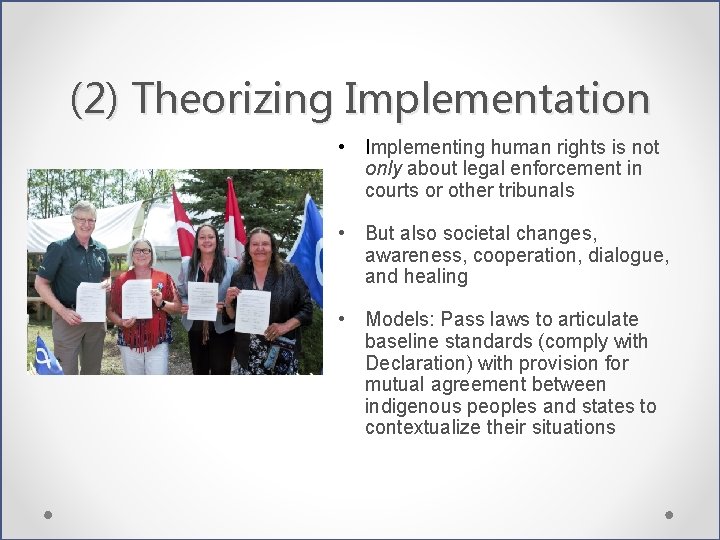
(2) Theorizing Implementation • Implementing human rights is not only about legal enforcement in courts or other tribunals • But also societal changes, awareness, cooperation, dialogue, and healing • Models: Pass laws to articulate baseline standards (comply with Declaration) with provision for mutual agreement between indigenous peoples and states to contextualize their situations
EMRIP Studies Language & Culture Recommend States • Promote all indigenous languages • Provide sufficient funding to support teaching methods, literacy materials and orthographies in the pupil’s own languages • Enact national law and policy frameworks to support traditional & formal education … with the aim of developing and implementing appropriate programmes and activities for and by indigenous peoples. • Obtain indigenous peoples’ free, prior & informed consent when developing & implementing laws and policies related to indigenous peoples languages & culture
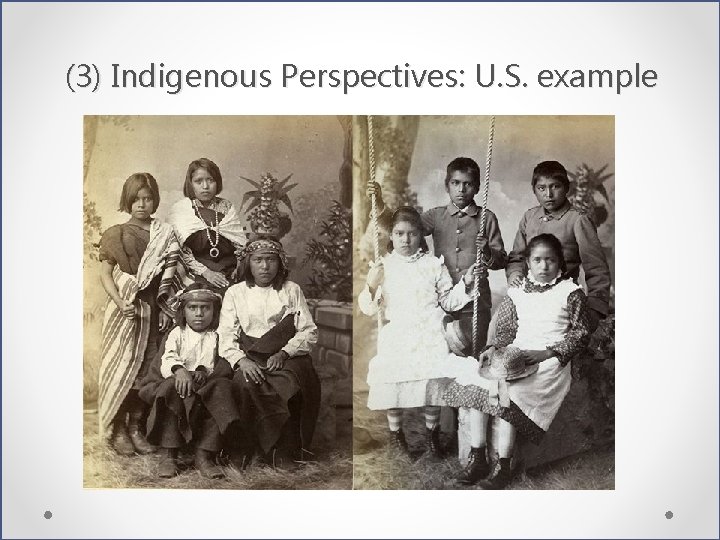
(3) Indigenous Perspectives: U. S. example
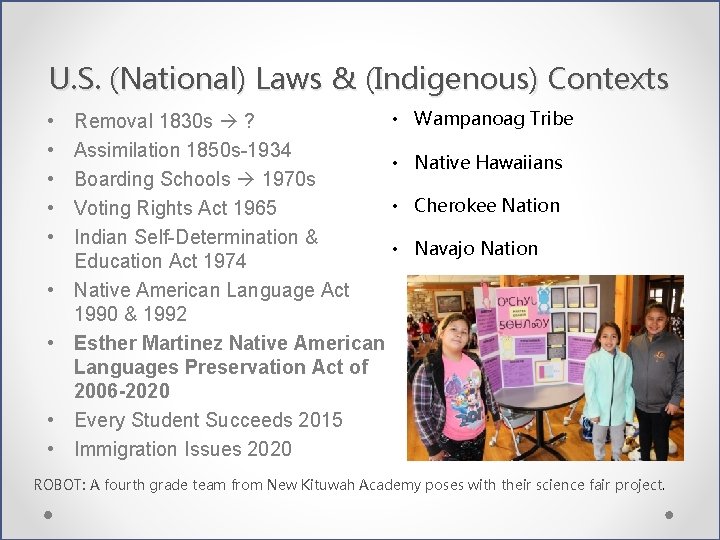
U. S. (National) Laws & (Indigenous) Contexts • • • Removal 1830 s ? Assimilation 1850 s-1934 Boarding Schools 1970 s Voting Rights Act 1965 Indian Self-Determination & Education Act 1974 Native American Language Act 1990 & 1992 Esther Martinez Native American Languages Preservation Act of 2006 -2020 Every Student Succeeds 2015 Immigration Issues 2020 • Wampanoag Tribe • Native Hawaiians • Cherokee Nation • Navajo Nation ROBOT: A fourth grade team from New Kituwah Academy poses with their science fair project.
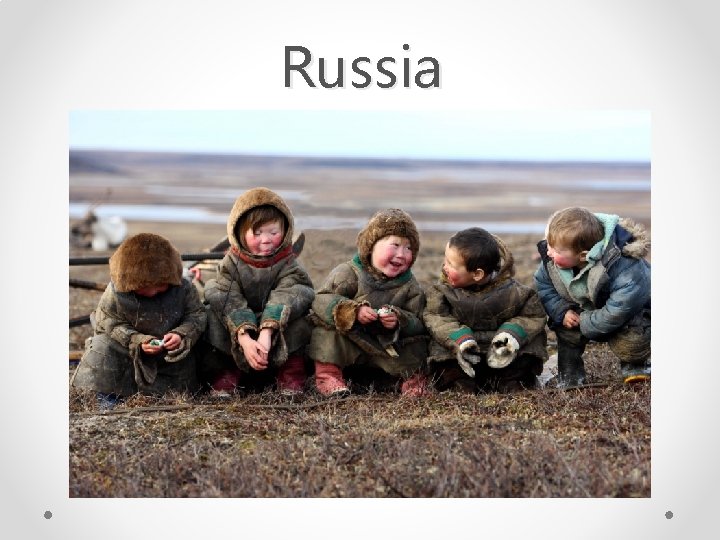
Russia
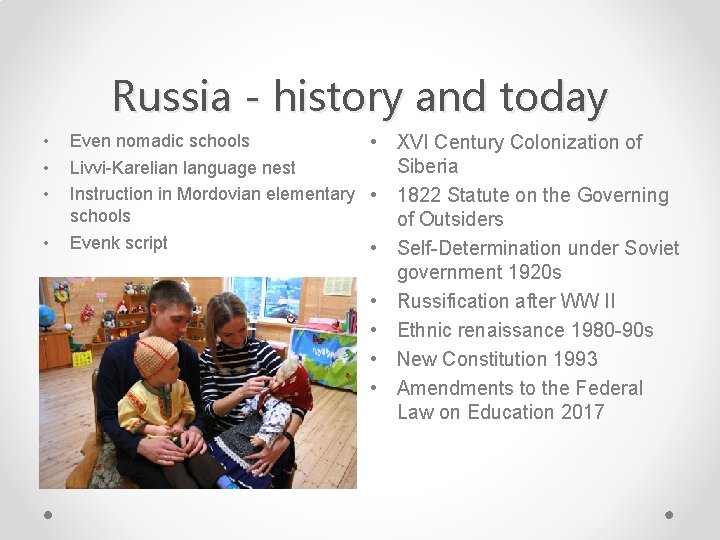
Russia - history and today • • Even nomadic schools • Livvi-Karelian language nest Instruction in Mordovian elementary • schools Evenk script • • • XVI Century Colonization of Siberia 1822 Statute on the Governing of Outsiders Self-Determination under Soviet government 1920 s Russification after WW II Ethnic renaissance 1980 -90 s New Constitution 1993 Amendments to the Federal Law on Education 2017
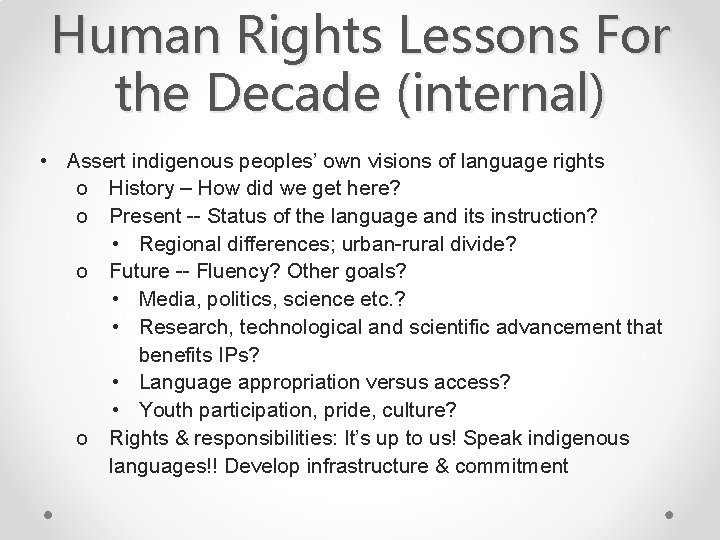
Human Rights Lessons For the Decade (internal) • Assert indigenous peoples’ own visions of language rights o History – How did we get here? o Present -- Status of the language and its instruction? • Regional differences; urban-rural divide? o Future -- Fluency? Other goals? • Media, politics, science etc. ? • Research, technological and scientific advancement that benefits IPs? • Language appropriation versus access? • Youth participation, pride, culture? o Rights & responsibilities: It’s up to us! Speak indigenous languages!! Develop infrastructure & commitment
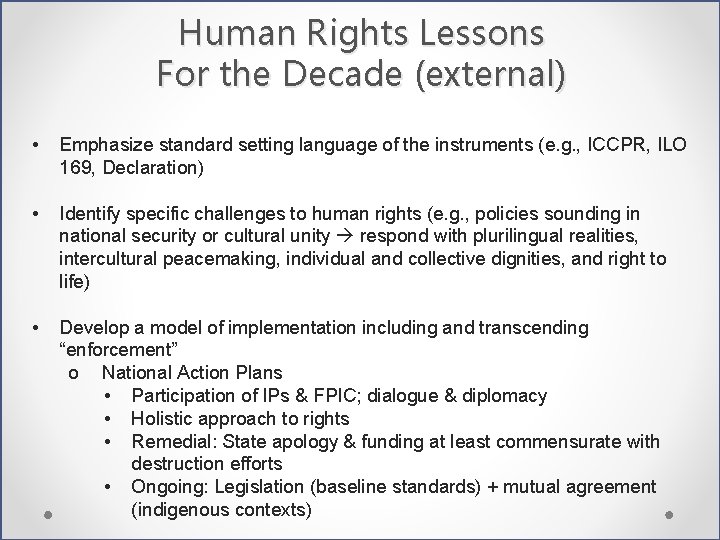
Human Rights Lessons For the Decade (external) • Emphasize standard setting language of the instruments (e. g. , ICCPR, ILO 169, Declaration) • Identify specific challenges to human rights (e. g. , policies sounding in national security or cultural unity respond with plurilingual realities, intercultural peacemaking, individual and collective dignities, and right to life) • Develop a model of implementation including and transcending “enforcement” o National Action Plans • Participation of IPs & FPIC; dialogue & diplomacy • Holistic approach to rights • Remedial: State apology & funding at least commensurate with destruction efforts • Ongoing: Legislation (baseline standards) + mutual agreement (indigenous contexts)
In the spirit of our relatives So that all may speak and live freely in the future