
INDIGENOUS AMERICAN ART Chavin Art Machu Picchu BIG
INDIGENOUS AMERICAN ART Chavin Art. Machu Picchu
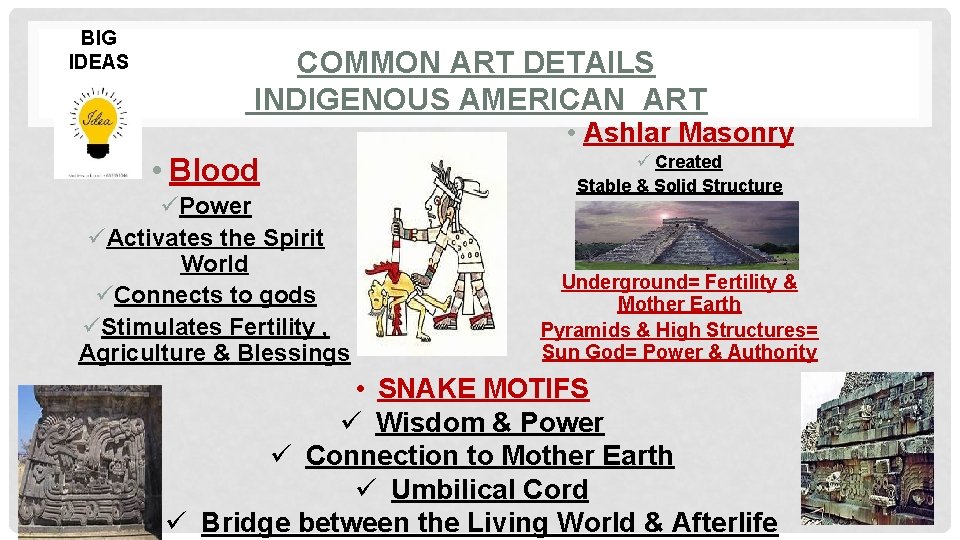
BIG IDEAS COMMON ART DETAILS INDIGENOUS AMERICAN ART • Ashlar Masonry • Blood üPower üActivates the Spirit World üConnects to gods üStimulates Fertility , Agriculture & Blessings ü Created Stable & Solid Structure Underground= Fertility & Mother Earth Pyramids & High Structures= Sun God= Power & Authority • SNAKE MOTIFS ü Wisdom & Power ü Connection to Mother Earth ü Umbilical Cord ü Bridge between the Living World & Afterlife
CHAVIN RELIGION= POWER & AUTHORITY AND FERTILITY BIG IDEAS • Staff Deity=looks like Farming Tool • Associated with agricultural fertility and usually holds a staff in each hand • FEATURES OF JAGUAR= FAND, CLAWS & FACE= POWER • SNAKE-SACRED ANIMAL =BRIDGE FROM LIVING WORLD TO AFTERLIFE • Rituals • Multi-sensory perspectives • Included blood-letting and sacrificial rituals =increase fertility • Performed in public spaces accommodating up to 1, 500 people • Cult of Shamans • Put themselves in trances with hallucinatory plants • Burning of incense and appearing atop temples via secret internal staircases, along with musical sounds added to mystery
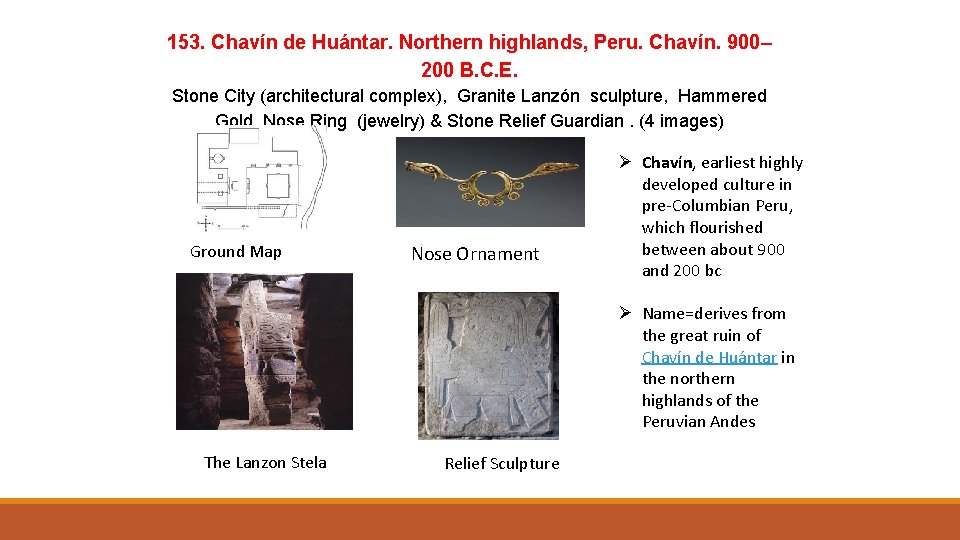
153. Chavín de Huántar. Northern highlands, Peru. Chavín. 900– 200 B. C. E. Stone City (architectural complex), Granite Lanzón sculpture, Hammered Gold Nose Ring (jewelry) & Stone Relief Guardian. (4 images) Ground Map Nose Ornament Ø Chavín, earliest highly developed culture in pre-Columbian Peru, which flourished between about 900 and 200 bc Ø Name=derives from the great ruin of Chavín de Huántar in the northern highlands of the Peruvian Andes The Lanzon Stela Relief Sculpture
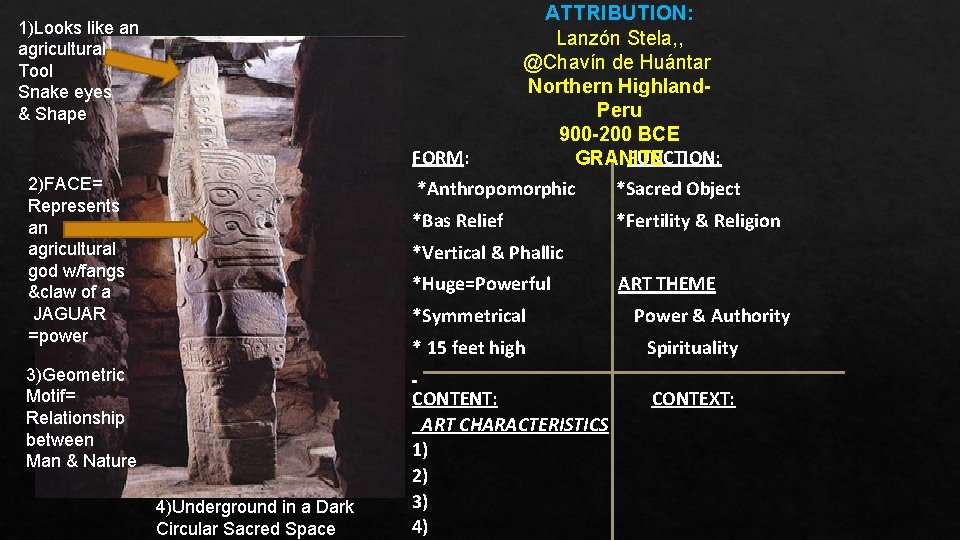
ATTRIBUTION: Lanzón Stela, , @Chavín de Huántar Northern Highland. Peru 900 -200 BCE FORM: FUNCTION: GRANITE *Anthropomorphic *Sacred Object 1)Looks like an agricultural Tool Snake eyes & Shape 2)FACE= Represents an agricultural god w/fangs &claw of a JAGUAR =power *Bas Relief *Fertility & Religion *Vertical & Phallic *Huge=Powerful *Symmetrical 3)Geometric Motif= Relationship between Man & Nature 4)Underground in a Dark Circular Sacred Space ART THEME Power & Authority * 15 feet high Spirituality CONTENT: ART CHARACTERISTICS 1) 2) 3) 4) CONTEXT:
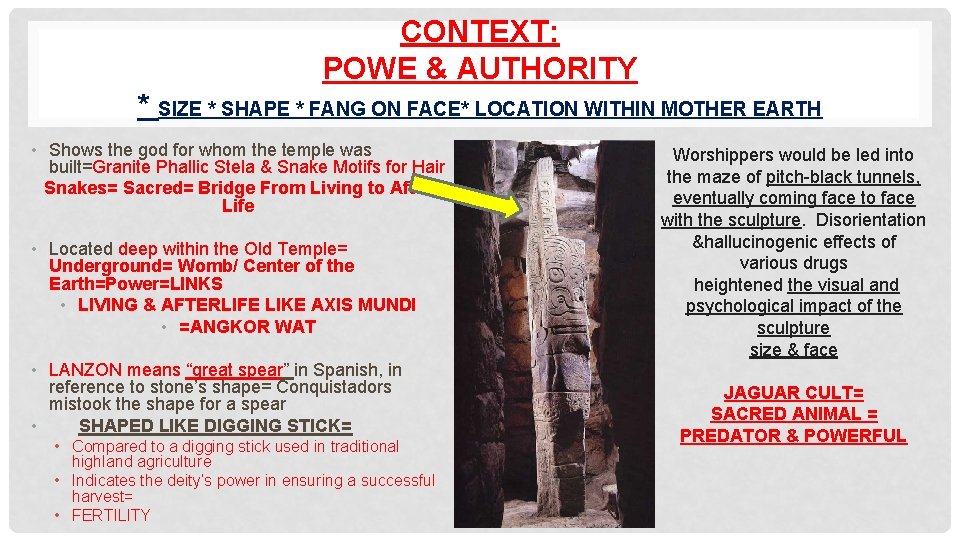
CONTEXT: POWE & AUTHORITY * SIZE * SHAPE * FANG ON FACE* LOCATION WITHIN MOTHER EARTH • Shows the god for whom the temple was built=Granite Phallic Stela & Snake Motifs for Hair Snakes= Sacred= Bridge From Living to After Life • Located deep within the Old Temple= Underground= Womb/ Center of the Earth=Power=LINKS • LIVING & AFTERLIFE LIKE AXIS MUNDI • =ANGKOR WAT • LANZON means “great spear” in Spanish, in reference to stone’s shape= Conquistadors mistook the shape for a spear • SHAPED LIKE DIGGING STICK= • Compared to a digging stick used in traditional highland agriculture • Indicates the deity’s power in ensuring a successful harvest= • FERTILITY Worshippers would be led into the maze of pitch-black tunnels, eventually coming face to face with the sculpture. Disorientation &hallucinogenic effects of various drugs heightened the visual and psychological impact of the sculpture size & face JAGUAR CULT= SACRED ANIMAL = PREDATOR & POWERFUL
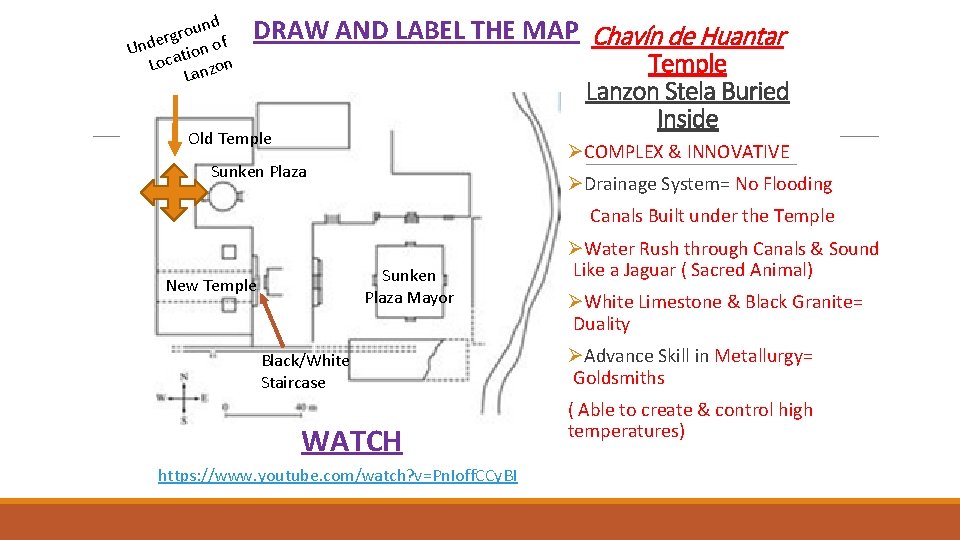
ound r g r e Und ation of Loc nzon La DRAW AND LABEL THE MAP Chavín de Huantar Temple Lanzon Stela Buried Inside Old Temple ØCOMPLEX & INNOVATIVE Sunken Plaza ØDrainage System= No Flooding Canals Built under the Temple Sunken Plaza Mayor New Temple Black/White Staircase WATCH https: //www. youtube. com/watch? v=Pn. Ioff. CCy. BI ØWater Rush through Canals & Sound Like a Jaguar ( Sacred Animal) ØWhite Limestone & Black Granite= Duality ØAdvance Skill in Metallurgy= Goldsmiths ( Able to create & control high temperatures)
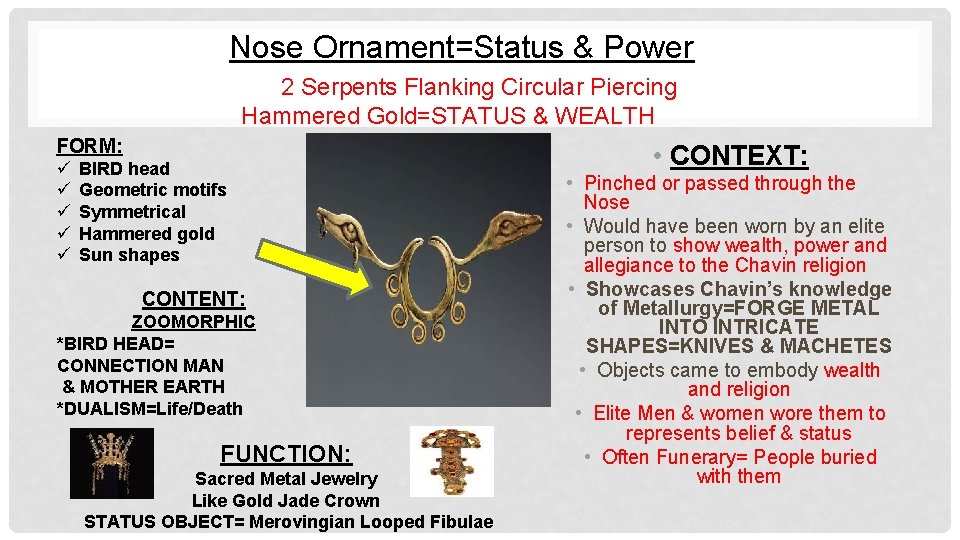
Nose Ornament=Status & Power 2 Serpents Flanking Circular Piercing Hammered Gold=STATUS & WEALTH FORM: ü ü ü BIRD head Geometric motifs Symmetrical Hammered gold Sun shapes CONTENT: ZOOMORPHIC *BIRD HEAD= CONNECTION MAN & MOTHER EARTH *DUALISM=Life/Death FUNCTION: Sacred Metal Jewelry Like Gold Jade Crown STATUS OBJECT= Merovingian Looped Fibulae • CONTEXT: • Pinched or passed through the Nose • Would have been worn by an elite person to show wealth, power and allegiance to the Chavin religion • Showcases Chavin’s knowledge of Metallurgy=FORGE METAL INTO INTRICATE SHAPES=KNIVES & MACHETES • Objects came to embody wealth and religion • Elite Men & women wore them to represents belief & status • Often Funerary= People buried with them
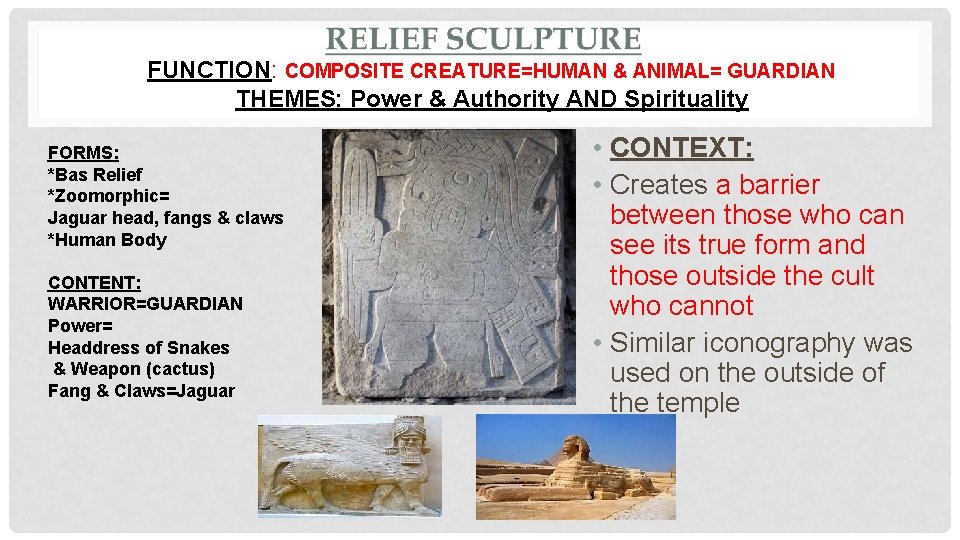
FUNCTION: COMPOSITE CREATURE=HUMAN & ANIMAL= GUARDIAN THEMES: Power & Authority AND Spirituality FORMS: *Bas Relief *Zoomorphic= Jaguar head, fangs & claws *Human Body CONTENT: WARRIOR=GUARDIAN Power= Headdress of Snakes & Weapon (cactus) Fang & Claws=Jaguar • CONTEXT: • Creates a barrier between those who can see its true form and those outside the cult who cannot • Similar iconography was used on the outside of the temple *
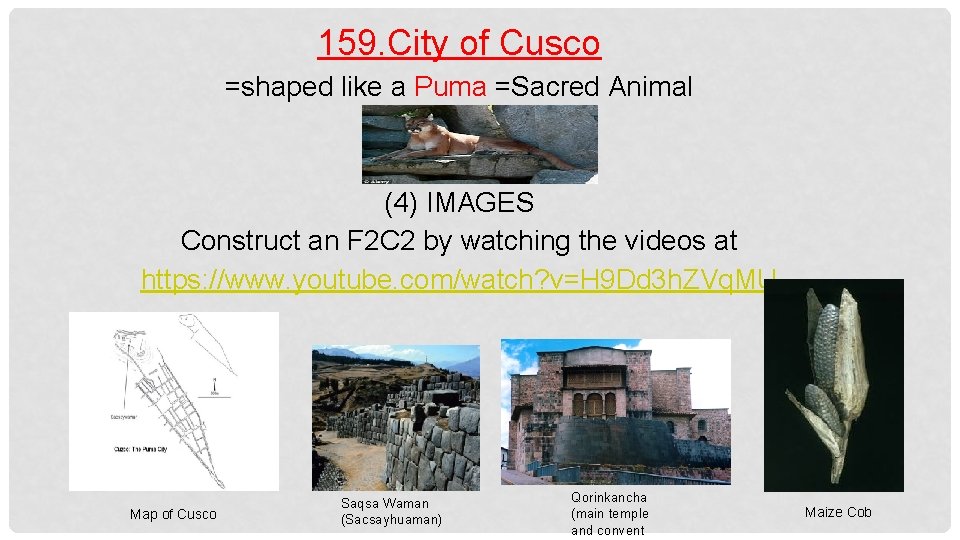
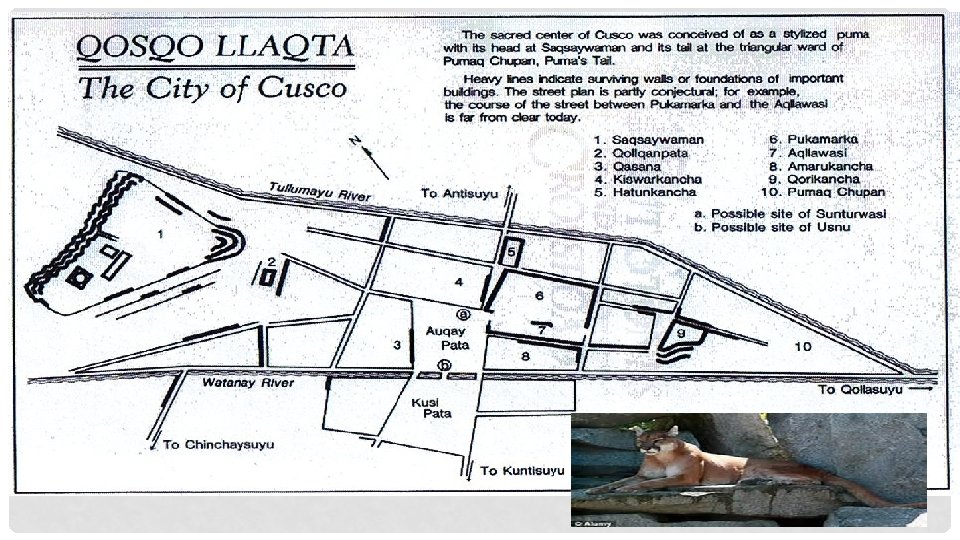
159. City of Cusco =shaped like a Puma =Sacred Animal (4) IMAGES Construct an F 2 C 2 by watching the videos at https: //www. youtube. com/watch? v=H 9 Dd 3 h. ZVq. MU Map of Cusco Saqsa Waman (Sacsayhuaman) Qorinkancha (main temple and convent Maize Cob
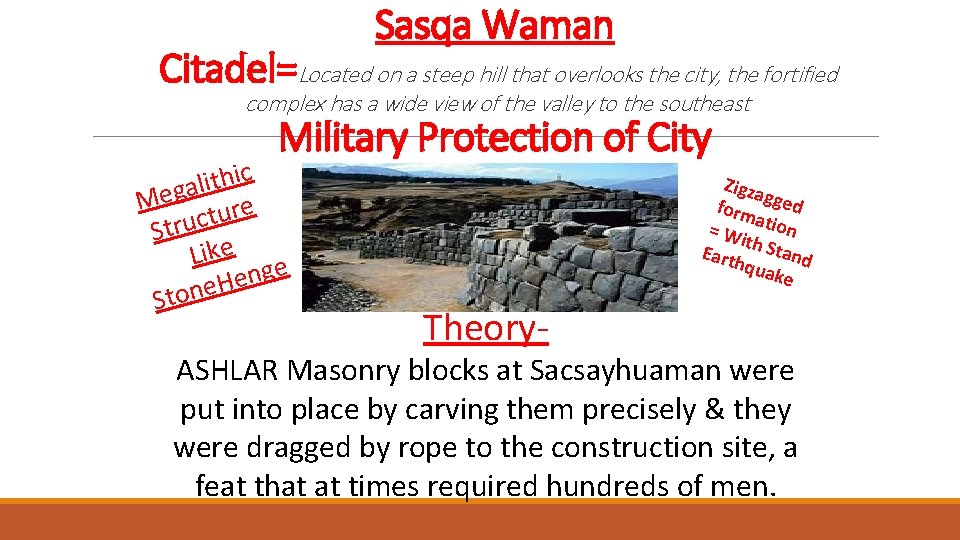
Sasqa Waman Citadel=Located on a steep hill that overlooks the city, the fortified complex has a wide view of the valley to the southeast Military Protection of City c i h t i l Mega ure t c u r t S Like e g n e H Stone Zigza g form ged a = Wi tion t Eart h Stand hqua ke Theory- ASHLAR Masonry blocks at Sacsayhuaman were put into place by carving them precisely & they were dragged by rope to the construction site, a feat that at times required hundreds of men.
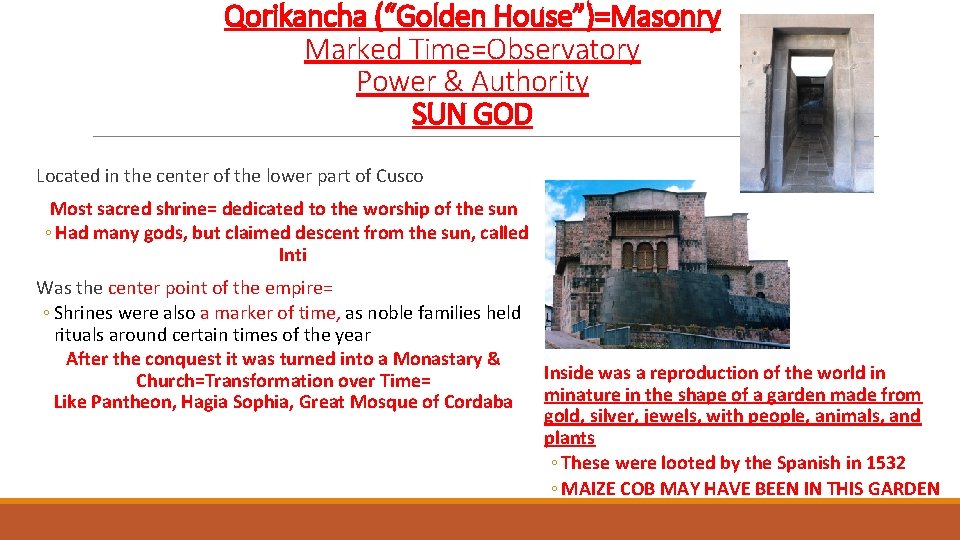
Qorikancha (“Golden House”)=Masonry Marked Time=Observatory Power & Authority SUN GOD Located in the center of the lower part of Cusco Most sacred shrine= dedicated to the worship of the sun ◦ Had many gods, but claimed descent from the sun, called Inti Was the center point of the empire= ◦ Shrines were also a marker of time, as noble families held rituals around certain times of the year After the conquest it was turned into a Monastary & Church=Transformation over Time= Like Pantheon, Hagia Sophia, Great Mosque of Cordaba Inside was a reproduction of the world in minature in the shape of a garden made from gold, silver, jewels, with people, animals, and plants ◦ These were looted by the Spanish in 1532 ◦ MAIZE COB MAY HAVE BEEN IN THIS GARDEN
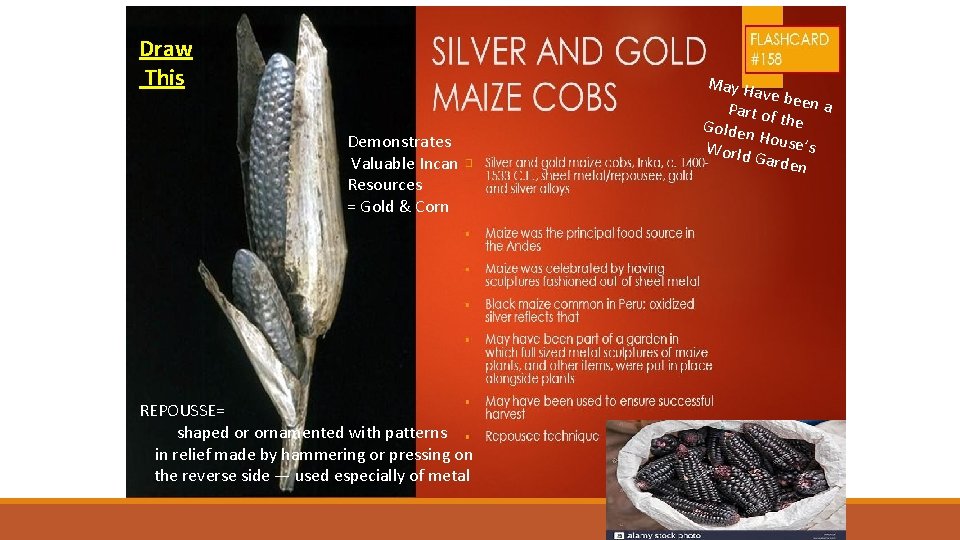
Draw This Demonstrates Valuable Incan Resources = Gold & Corn REPOUSSE= shaped or ornamented with patterns in relief made by hammering or pressing on the reverse side — used especially of metal May H ave be Part of en a Golden the House ’s World Garden
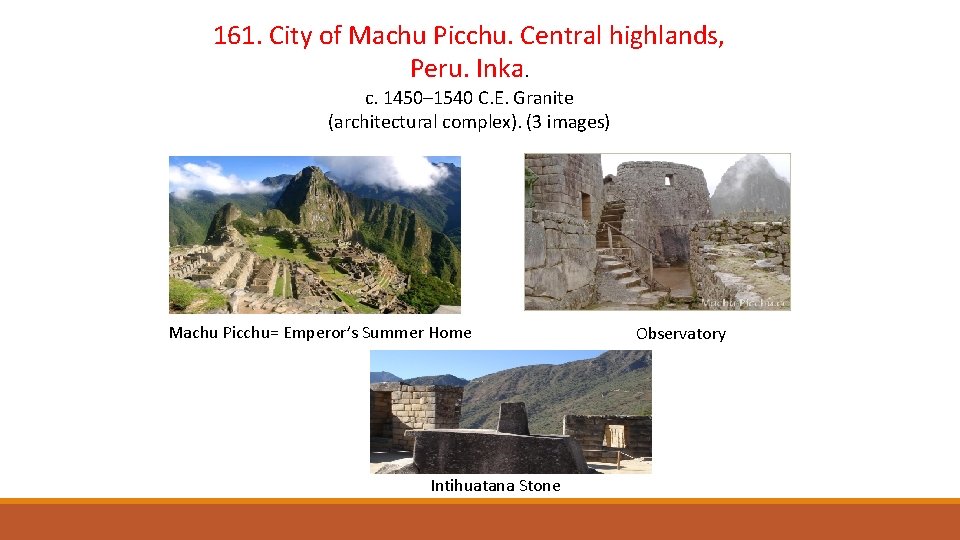
161. City of Machu Picchu. Central highlands, Peru. Inka. c. 1450– 1540 C. E. Granite (architectural complex). (3 images) Machu Picchu= Emperor’s Summer Home Intihuatana Stone Observatory
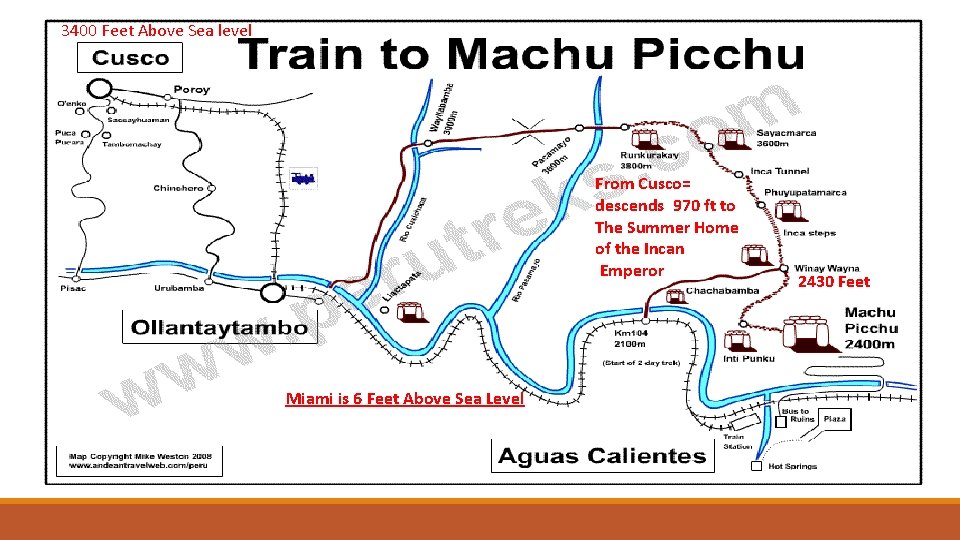
3400 Feet Above Sea level From Cusco= descends 970 ft to The Summer Home of the Incan Emperor Miami is 6 Feet Above Sea Level 2430 Feet
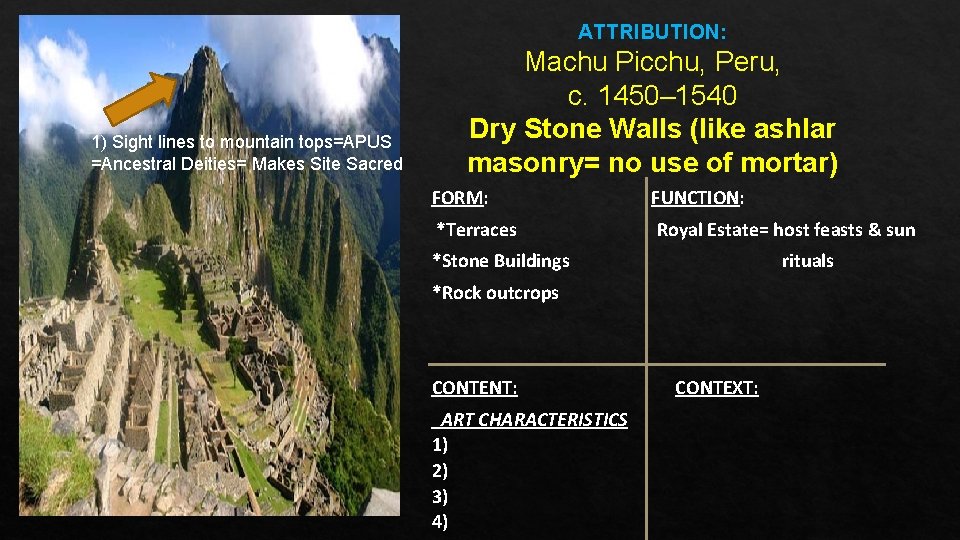
ATTRIBUTION: 1) Sight lines to mountain tops=APUS =Ancestral Deities= Makes Site Sacred Machu Picchu, Peru, c. 1450– 1540 Dry Stone Walls (like ashlar masonry= no use of mortar) FORM: FUNCTION: *Terraces Royal Estate= host feasts & sun *Stone Buildings rituals *Rock outcrops CONTENT: ART CHARACTERISTICS 1) 2) 3) 4) CONTEXT:
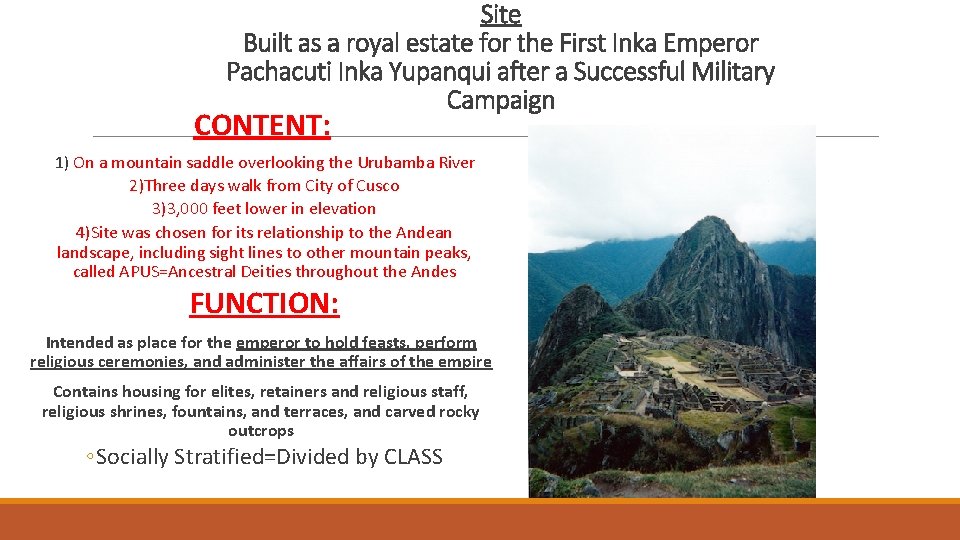
Site Built as a royal estate for the First Inka Emperor Pachacuti Inka Yupanqui after a Successful Military Campaign CONTENT: 1) On a mountain saddle overlooking the Urubamba River 2)Three days walk from City of Cusco 3)3, 000 feet lower in elevation 4)Site was chosen for its relationship to the Andean landscape, including sight lines to other mountain peaks, called APUS=Ancestral Deities throughout the Andes FUNCTION: Intended as place for the emperor to hold feasts, perform religious ceremonies, and administer the affairs of the empire Contains housing for elites, retainers and religious staff, religious shrines, fountains, and terraces, and carved rocky outcrops ◦ Socially Stratified=Divided by CLASS
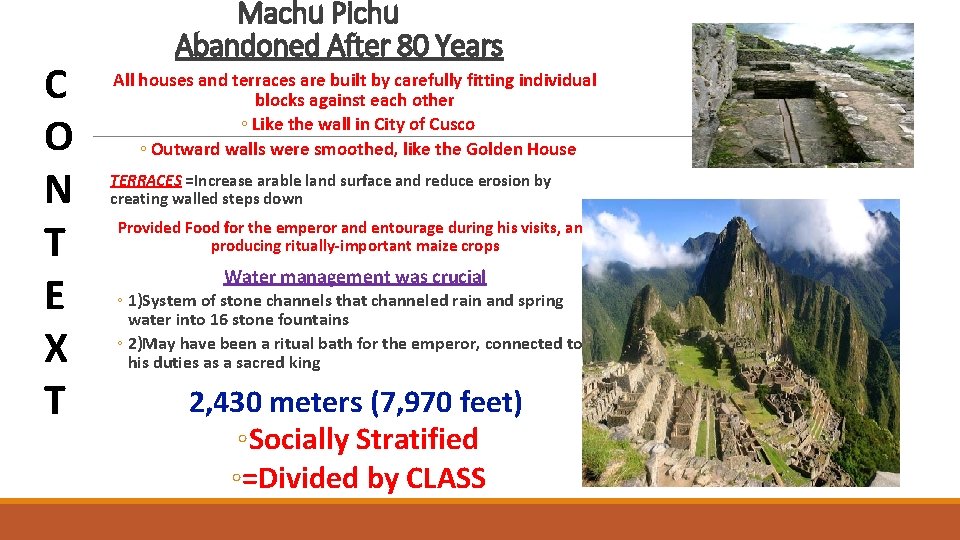
C O N T E X T Machu Pichu Abandoned After 80 Years All houses and terraces are built by carefully fitting individual blocks against each other ◦ Like the wall in City of Cusco ◦ Outward walls were smoothed, like the Golden House TERRACES =Increase arable land surface and reduce erosion by creating walled steps down Provided Food for the emperor and entourage during his visits, and producing ritually-important maize crops Water management was crucial ◦ 1)System of stone channels that channeled rain and spring water into 16 stone fountains ◦ 2)May have been a ritual bath for the emperor, connected to his duties as a sacred king 2, 430 meters (7, 970 feet) ◦Socially Stratified ◦=Divided by CLASS
REMEMBER THE TWO TYPES OF QUESTIONS ON THE 2020 EXAM KEEP THIS IN MIND AS YOU LEARN NEW ART WORKS 15 Minute Short Essay 25 -Minute Long Essay Response üFocus on Comparison of Theme üFocus on Ritual, Power & Authority Continuity & Change Gender, Depiction of Human Form, Sacred Space & Object How art reflects & deviates from Tradition? Landscape , Man’s Relationship with Nature
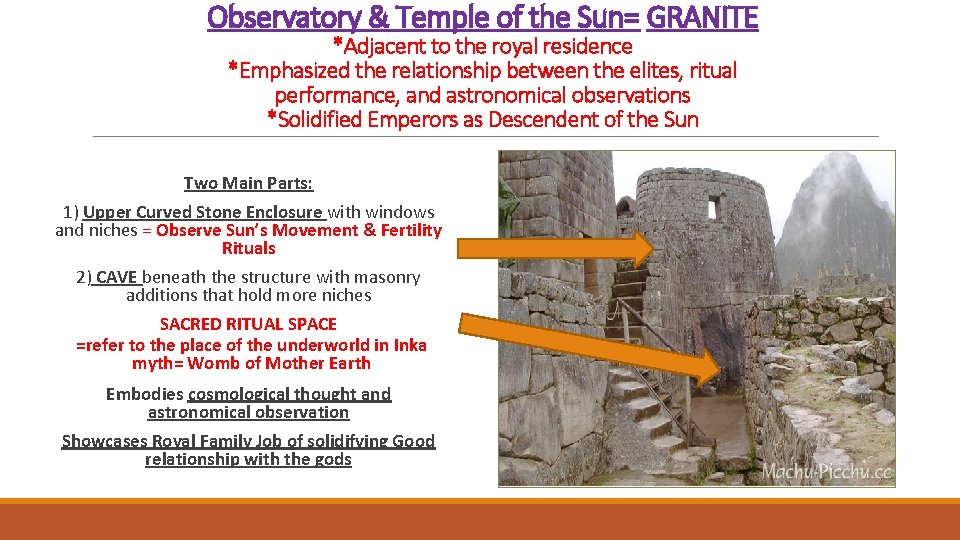
Observatory & Temple of the Sun= GRANITE *Adjacent to the royal residence *Emphasized the relationship between the elites, ritual performance, and astronomical observations *Solidified Emperors as Descendent of the Sun Two Main Parts: 1) Upper Curved Stone Enclosure with windows and niches = Observe Sun’s Movement & Fertility Rituals 2) CAVE beneath the structure with masonry additions that hold more niches SACRED RITUAL SPACE =refer to the place of the underworld in Inka myth= Womb of Mother Earth Embodies cosmological thought and astronomical observation Showcases Royal Family Job of solidifying Good relationship with the gods
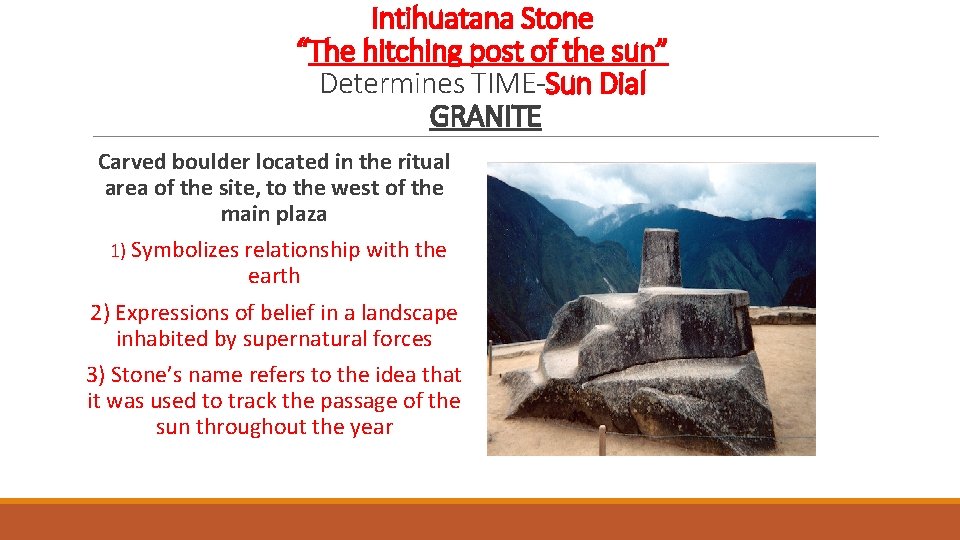
Intihuatana Stone “The hitching post of the sun” Determines TIME-Sun Dial GRANITE Carved boulder located in the ritual area of the site, to the west of the main plaza 1) Symbolizes relationship with the earth 2) Expressions of belief in a landscape inhabited by supernatural forces 3) Stone’s name refers to the idea that it was used to track the passage of the sun throughout the year
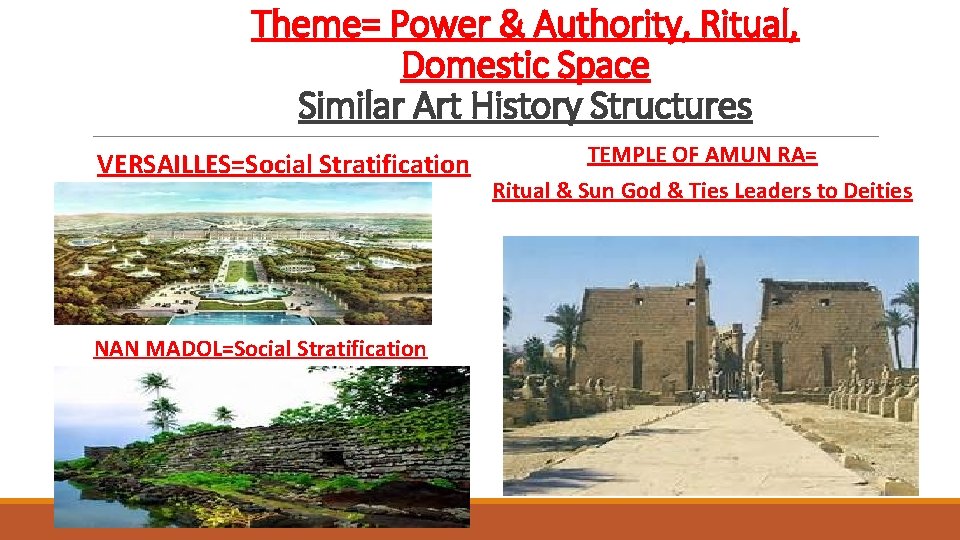
Theme= Power & Authority, Ritual, Domestic Space Similar Art History Structures TEMPLE OF AMUN RA= VERSAILLES=Social Stratification Ritual & Sun God & Ties Leaders to Deities & Sun Images NAN MADOL=Social Stratification
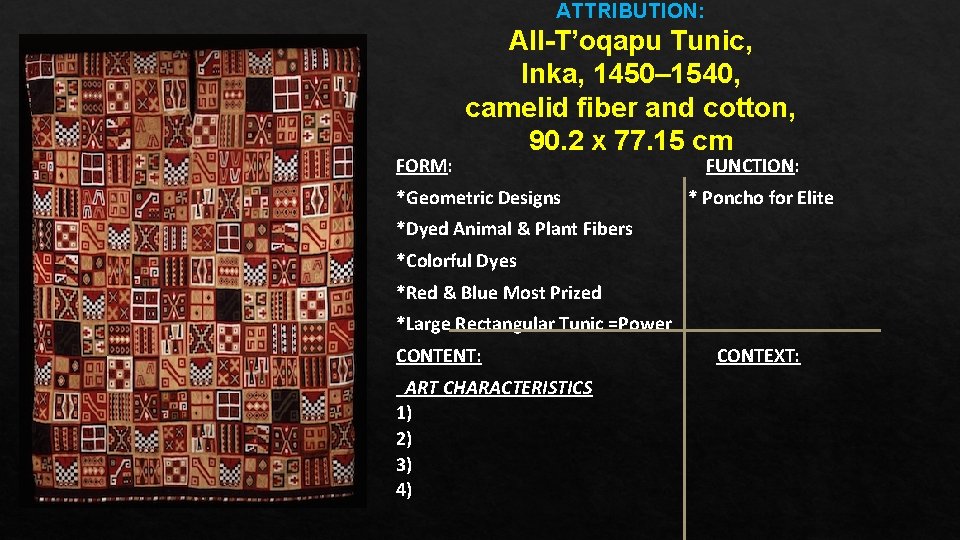
ATTRIBUTION: 2) FORM: All-T’oqapu Tunic, Inka, 1450– 1540, camelid fiber and cotton, 90. 2 x 77. 15 cm *Geometric Designs FUNCTION: * Poncho for Elite *Dyed Animal & Plant Fibers *Colorful Dyes *Red & Blue Most Prized 3) *Large Rectangular Tunic =Power CONTENT: ART CHARACTERISTICS 1) 2) 3) 4) CONTEXT:
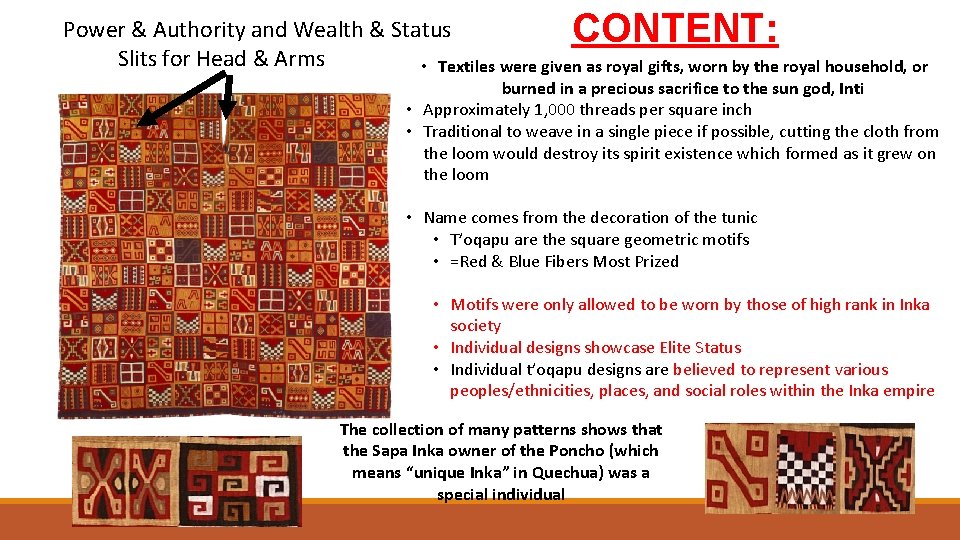
CONTENT: Power & Authority and Wealth & Status Slits for Head & Arms • Textiles were given as royal gifts, worn by the royal household, or burned in a precious sacrifice to the sun god, Inti • Approximately 1, 000 threads per square inch • Traditional to weave in a single piece if possible, cutting the cloth from the loom would destroy its spirit existence which formed as it grew on the loom • Name comes from the decoration of the tunic • T’oqapu are the square geometric motifs • =Red & Blue Fibers Most Prized • Motifs were only allowed to be worn by those of high rank in Inka society • Individual designs showcase Elite Status • Individual t’oqapu designs are believed to represent various peoples/ethnicities, places, and social roles within the Inka empire The collection of many patterns shows that the Sapa Inka owner of the Poncho (which means “unique Inka” in Quechua) was a special individual
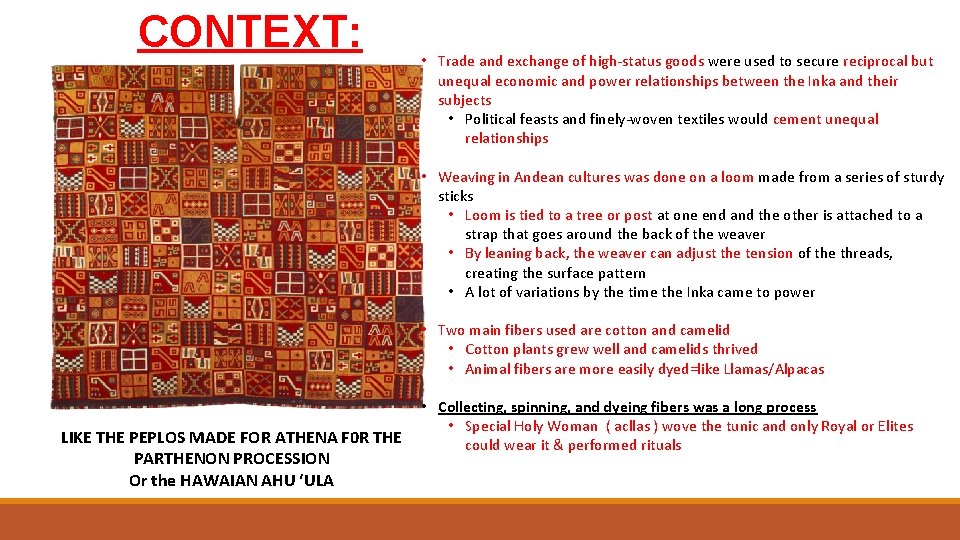
CONTEXT: • Trade and exchange of high-status goods were used to secure reciprocal but unequal economic and power relationships between the Inka and their subjects • Political feasts and finely-woven textiles would cement unequal relationships • Weaving in Andean cultures was done on a loom made from a series of sturdy sticks • Loom is tied to a tree or post at one end and the other is attached to a strap that goes around the back of the weaver • By leaning back, the weaver can adjust the tension of the threads, creating the surface pattern • A lot of variations by the time the Inka came to power • Two main fibers used are cotton and camelid • Cotton plants grew well and camelids thrived • Animal fibers are more easily dyed=like Llamas/Alpacas LIKE THE PEPLOS MADE FOR ATHENA F 0 R THE PARTHENON PROCESSION Or the HAWAIAN AHU ‘ULA • Collecting, spinning, and dyeing fibers was a long process • Special Holy Woman ( acllas ) wove the tunic and only Royal or Elites could wear it & performed rituals
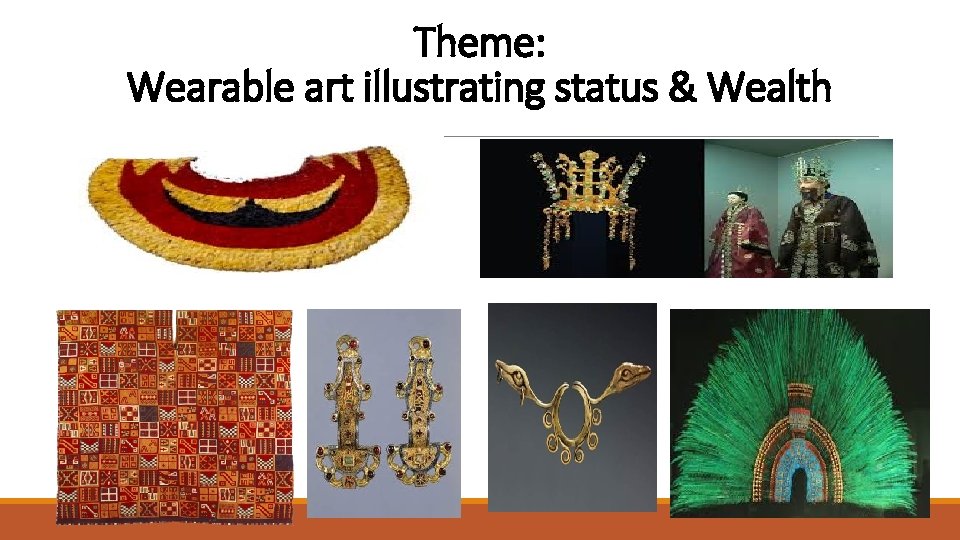
Theme: Wearable art illustrating status & Wealth
- Slides: 27