
Indias Traditional Caste System Indias castes are ancient
- Slides: 36
India’s Traditional Caste System
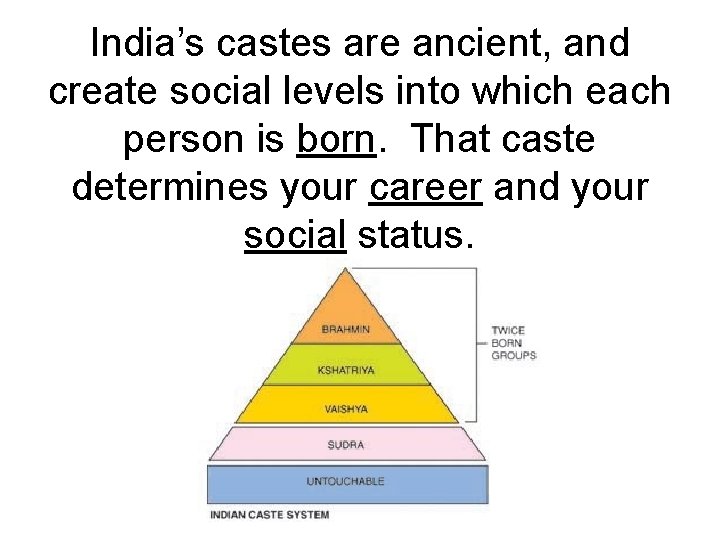
India’s castes are ancient, and create social levels into which each person is born. That caste determines your career and your social status.
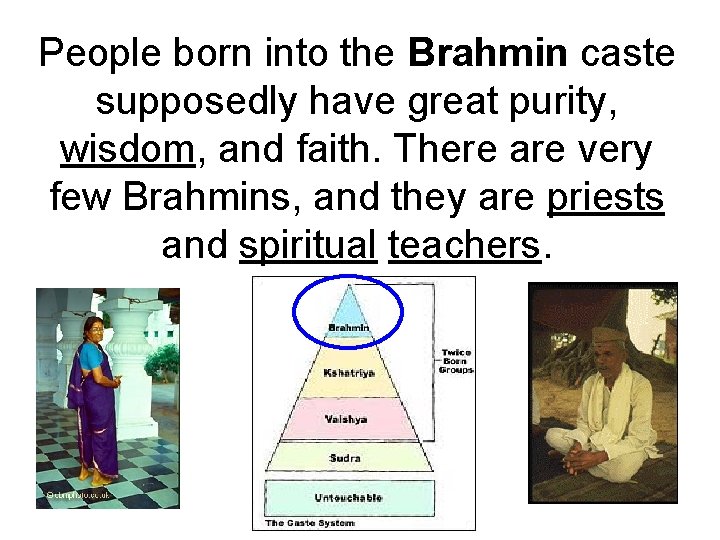
People born into the Brahmin caste supposedly have great purity, wisdom, and faith. There are very few Brahmins, and they are priests and spiritual teachers.
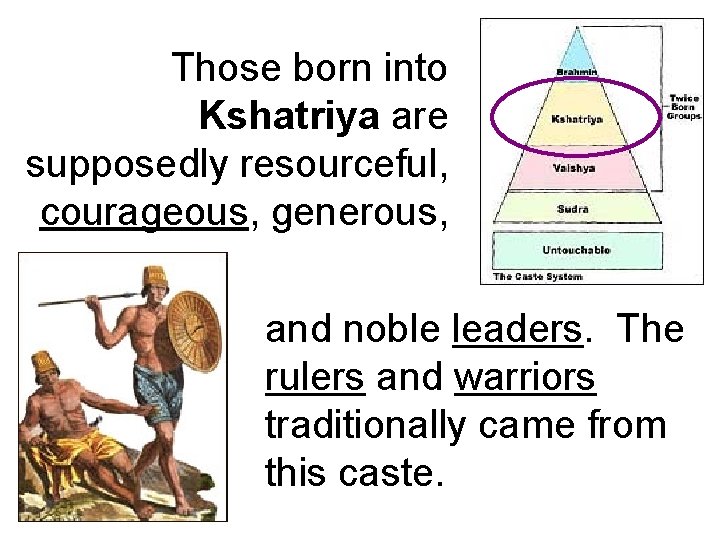
Those born into Kshatriya are supposedly resourceful, courageous, generous, and noble leaders. The rulers and warriors traditionally came from this caste.
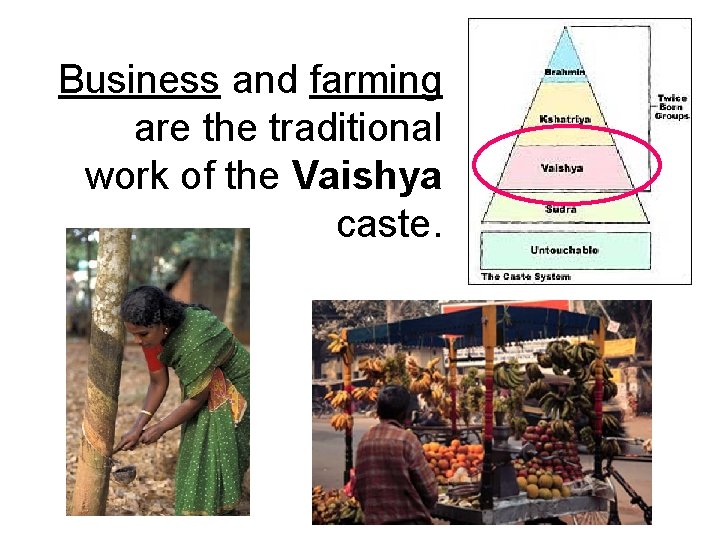
Business and farming are the traditional work of the Vaishya caste.
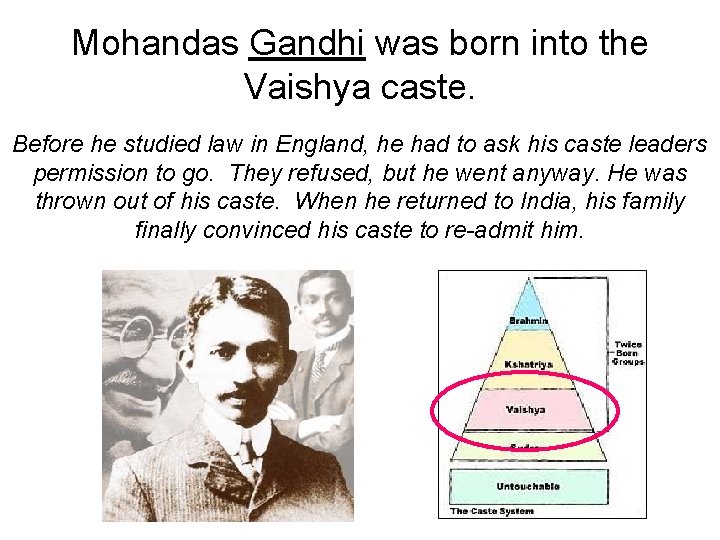
Mohandas Gandhi was born into the Vaishya caste. Before he studied law in England, he had to ask his caste leaders permission to go. They refused, but he went anyway. He was thrown out of his caste. When he returned to India, his family finally convinced his caste to re-admit him.
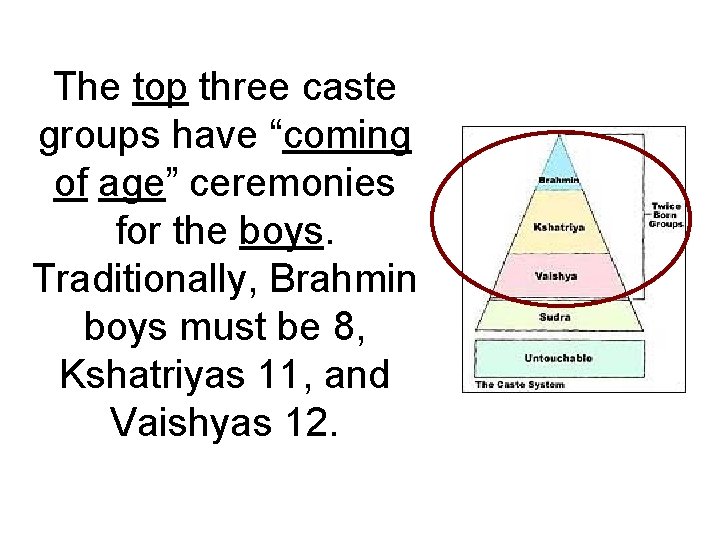
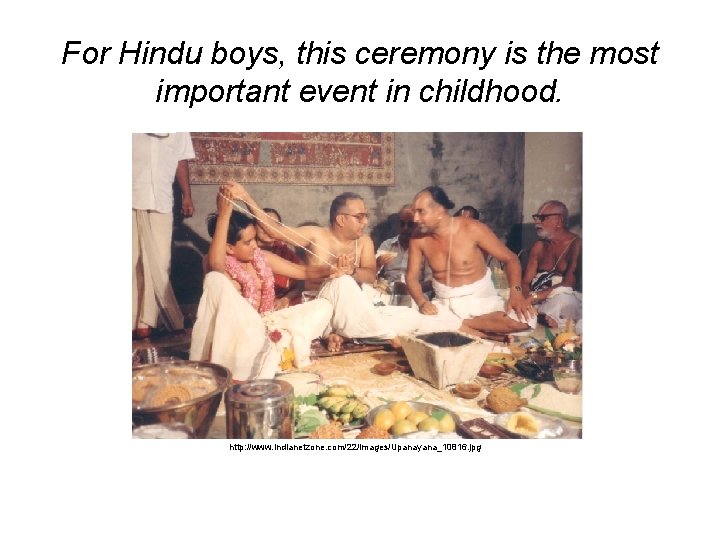
The top three caste groups have “coming of age” ceremonies for the boys. Traditionally, Brahmin boys must be 8, Kshatriyas 11, and Vaishyas 12.
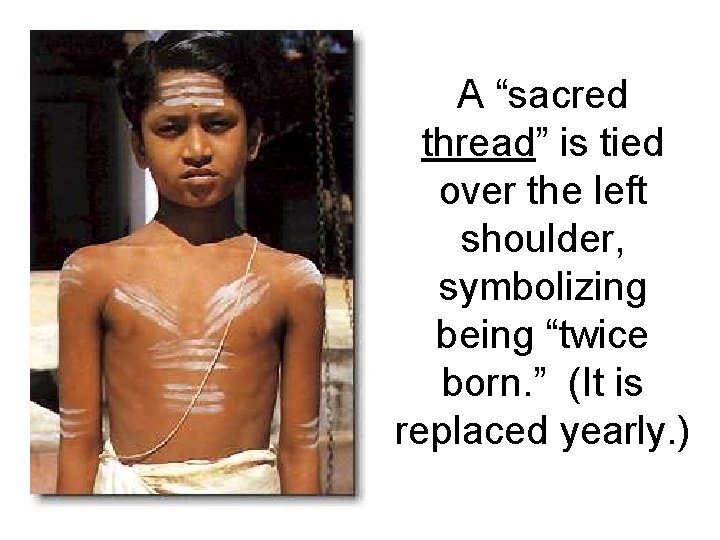
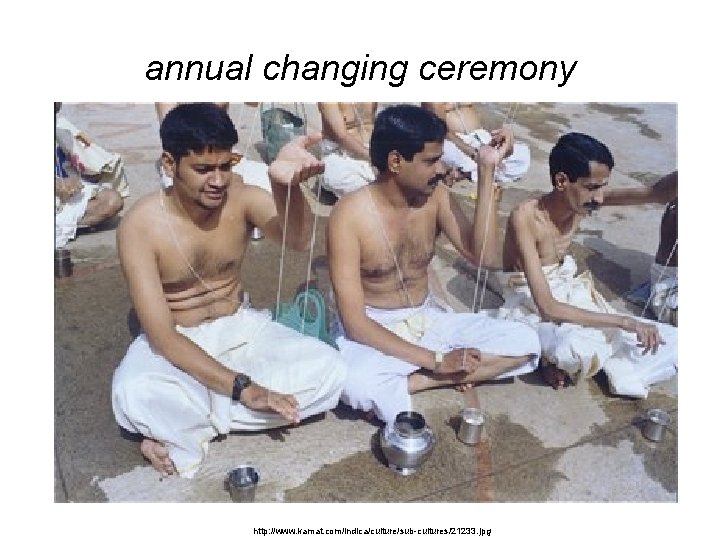
A “sacred thread” is tied over the left shoulder, symbolizing being “twice born. ” (It is replaced yearly. )
For Hindu boys, this ceremony is the most important event in childhood. http: //www. indianetzone. com/22/images/Upanayana_10816. jpg
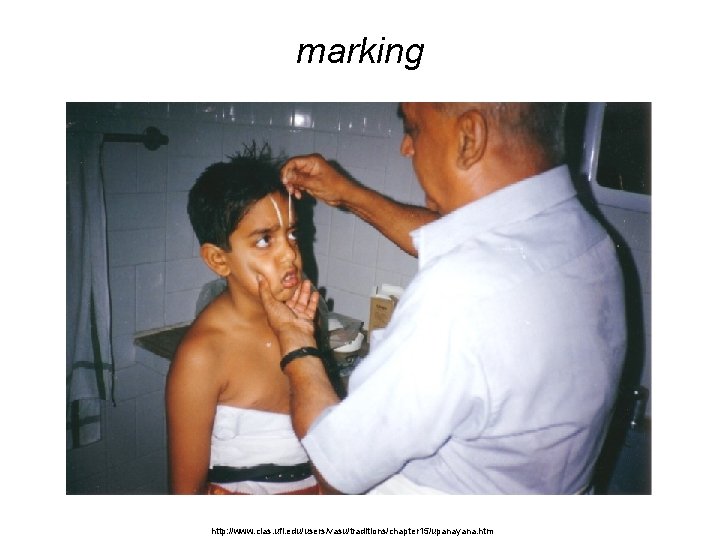
marking http: //www. clas. ufl. edu/users/vasu/traditions/chapter 15/upanayana. htm
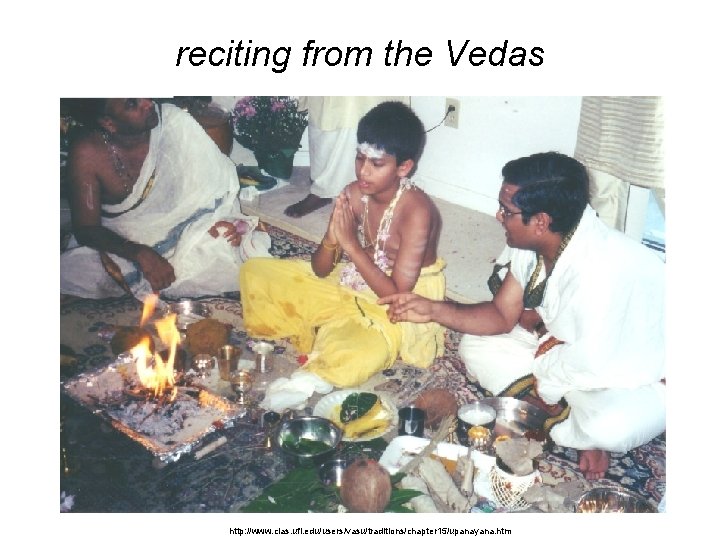
reciting from the Vedas http: //www. clas. ufl. edu/users/vasu/traditions/chapter 15/upanayana. htm
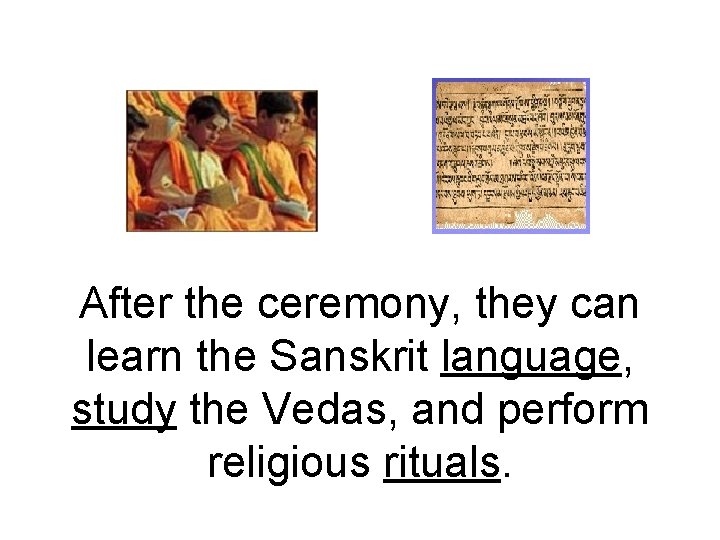
After the ceremony, they can learn the Sanskrit language, study the Vedas, and perform religious rituals.
annual changing ceremony http: //www. kamat. com/indica/culture/sub-cultures/21233. jpg
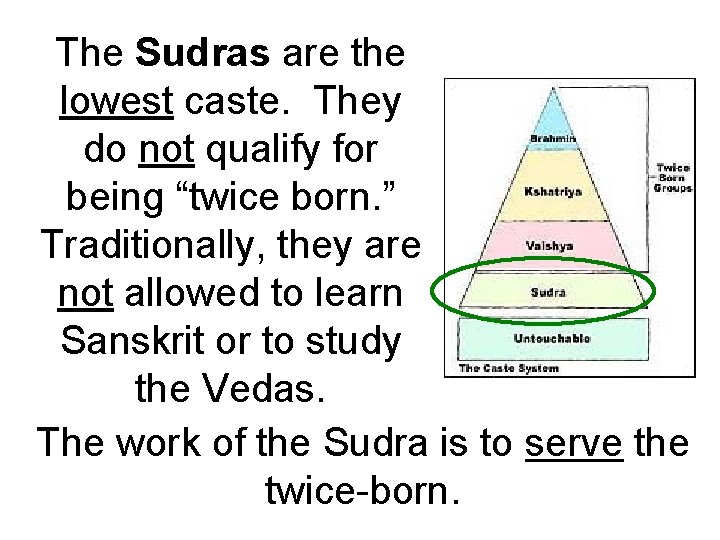
The Sudras are the lowest caste. They do not qualify for being “twice born. ” Traditionally, they are not allowed to learn Sanskrit or to study the Vedas. The work of the Sudra is to serve the twice-born.
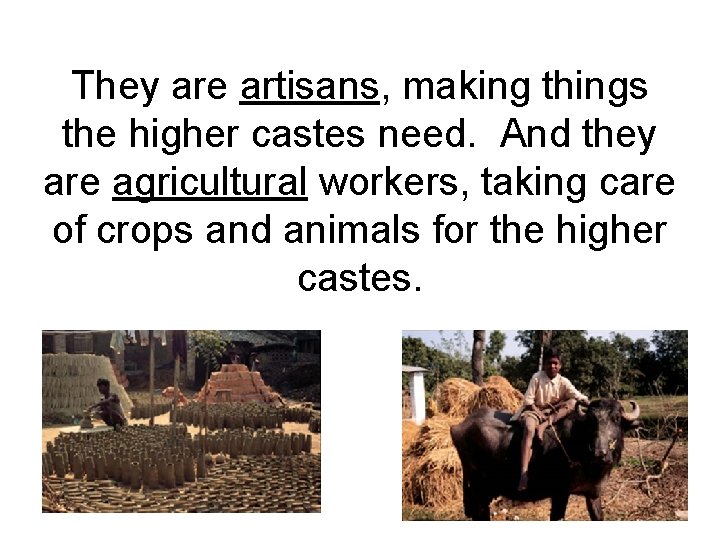
They are artisans, making things the higher castes need. And they are agricultural workers, taking care of crops and animals for the higher castes.
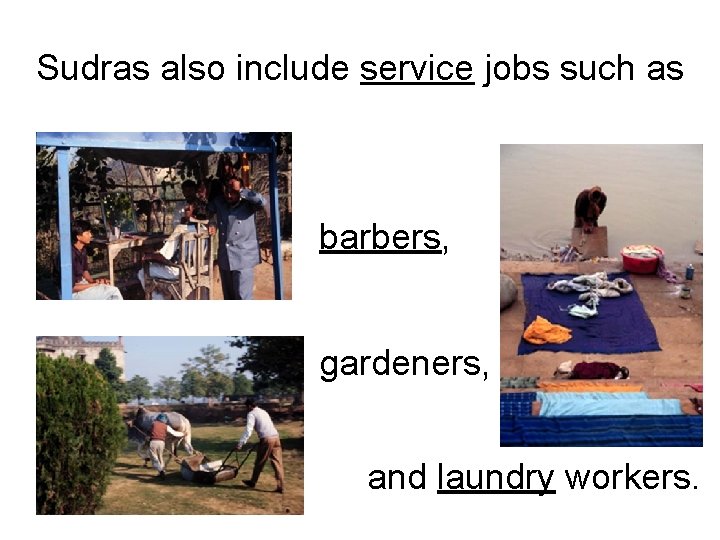
Sudras also include service jobs such as barbers, gardeners, and laundry workers.
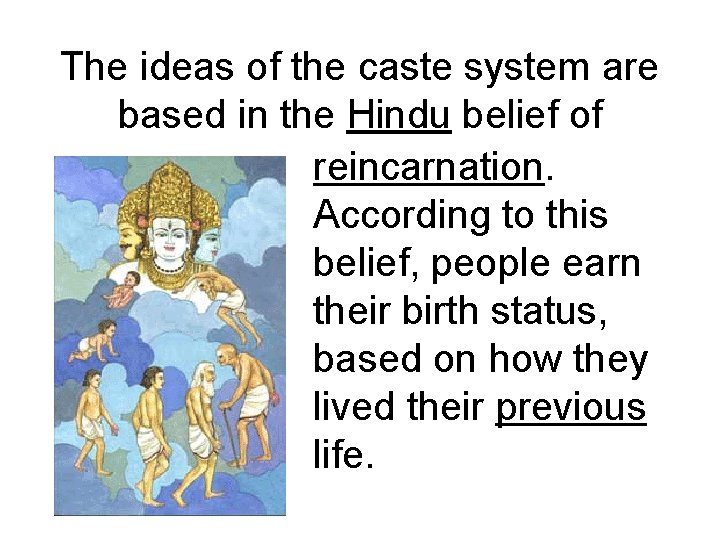
The ideas of the caste system are based in the Hindu belief of reincarnation. According to this belief, people earn their birth status, based on how they lived their previous life.
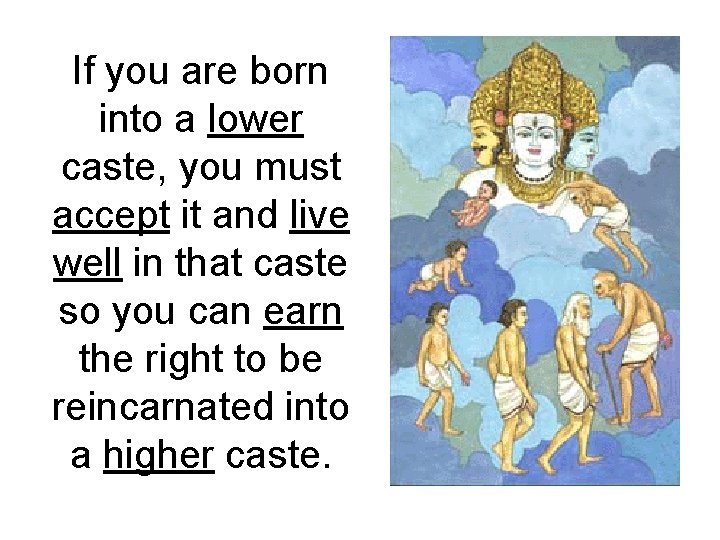
If you are born into a lower caste, you must accept it and live well in that caste so you can earn the right to be reincarnated into a higher caste.
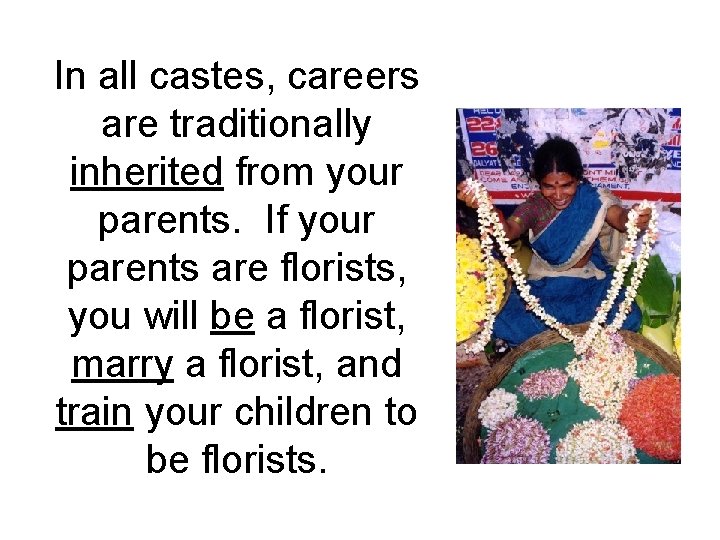
In all castes, careers are traditionally inherited from your parents. If your parents are florists, you will be a florist, marry a florist, and train your children to be florists.
That has changed in modern times. Now, many children follow their parents’ profession. But it is not required.
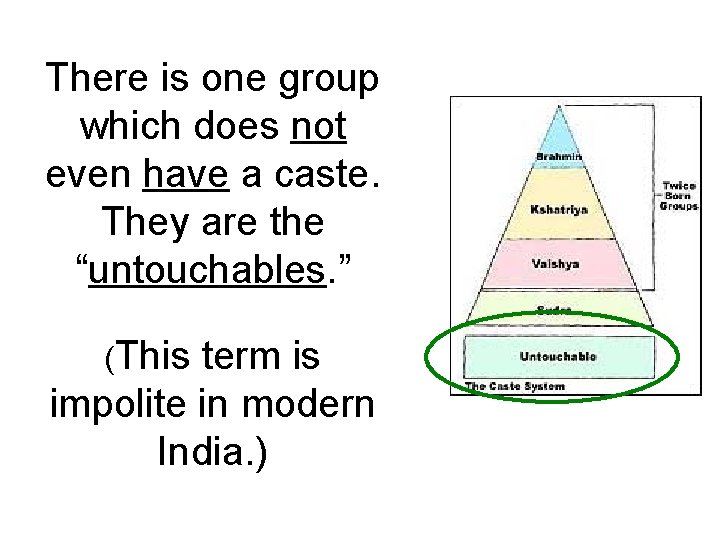
There is one group which does not even have a caste. They are the “untouchables. ” (This term is impolite in modern India. )
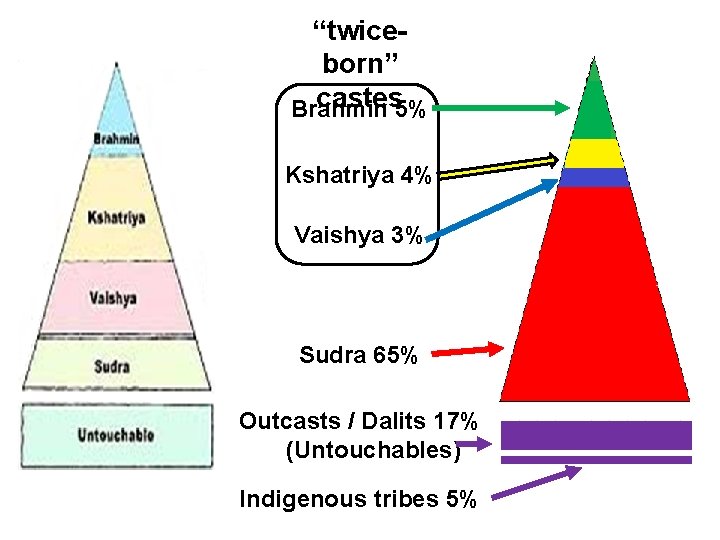
“twiceborn” castes 5% Brahmin Kshatriya 4% Vaishya 3% Sudra 65% Outcasts / Dalits 17% (Untouchables) Indigenous tribes 5%
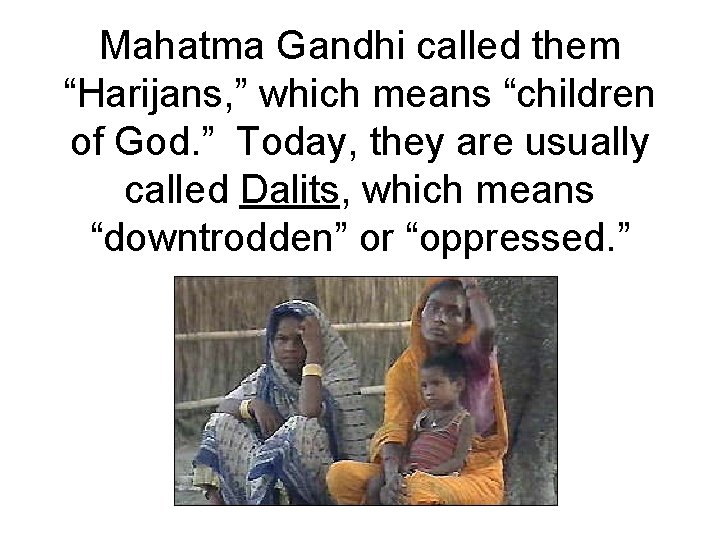
Mahatma Gandhi called them “Harijans, ” which means “children of God. ” Today, they are usually called Dalits, which means “downtrodden” or “oppressed. ”
Traditionally, Dalits do jobs that are too dirty for caste members to do, such as http: //content. clearchannel. com/Photos/television/dirty_jobs 1. jpg
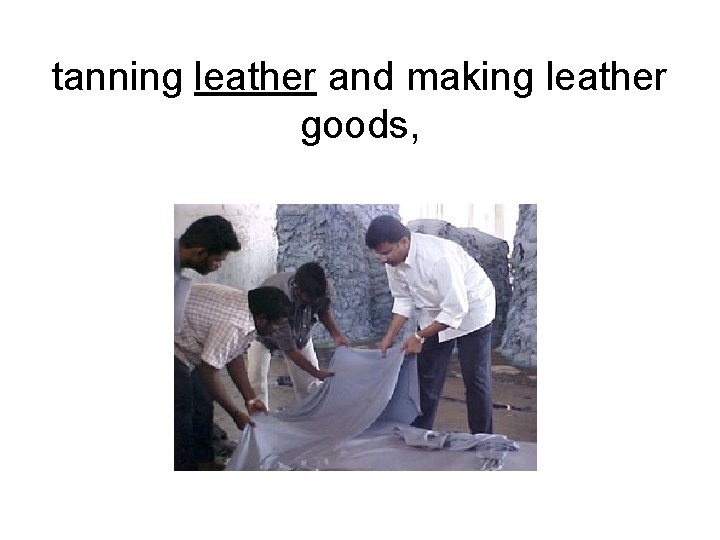
tanning leather and making leather goods,
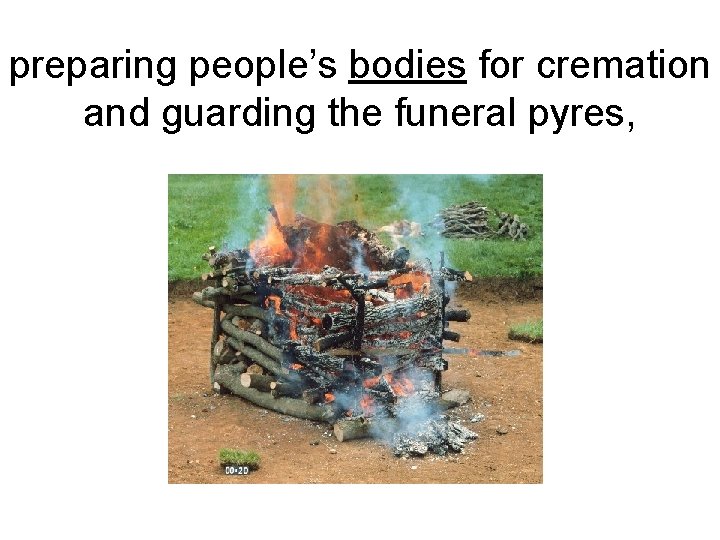
preparing people’s bodies for cremation and guarding the funeral pyres,
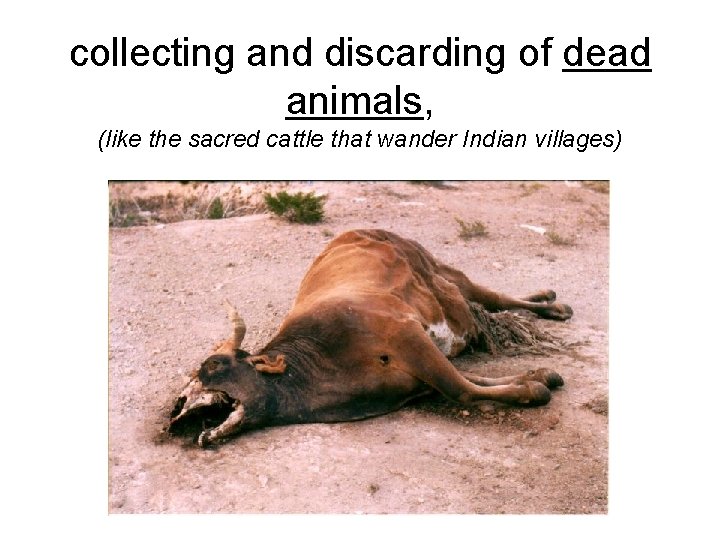
collecting and discarding of dead animals, (like the sacred cattle that wander Indian villages)
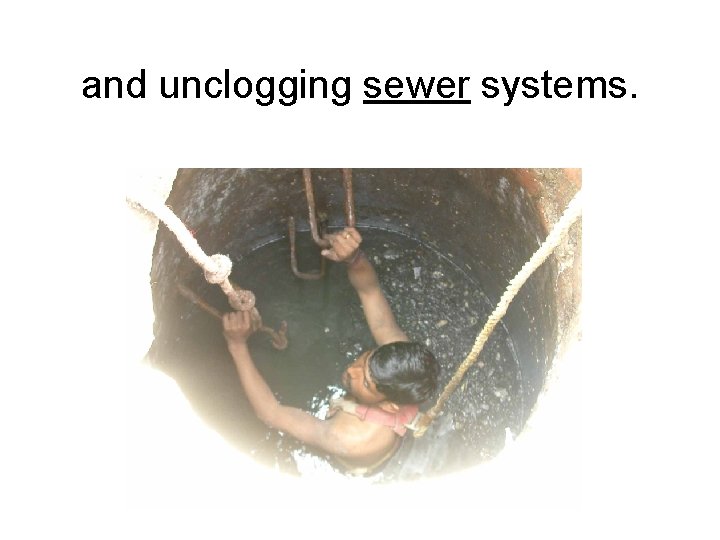
and unclogging sewer systems.
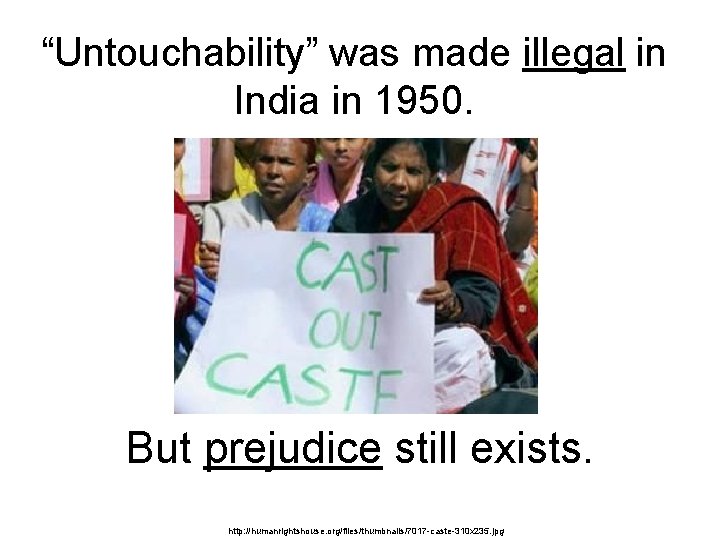
“Untouchability” was made illegal in India in 1950. But prejudice still exists. http: //humanrightshouse. org/files/thumbnails/7017 -caste-310 x 235. jpg
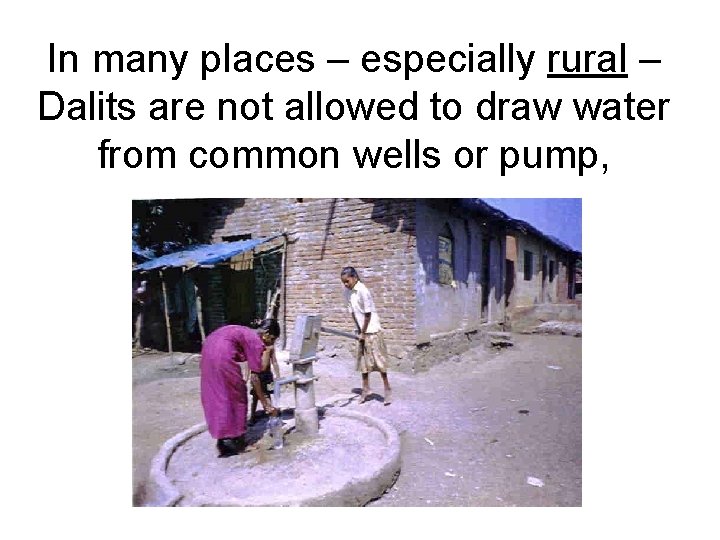
In many places – especially rural – Dalits are not allowed to draw water from common wells or pump,
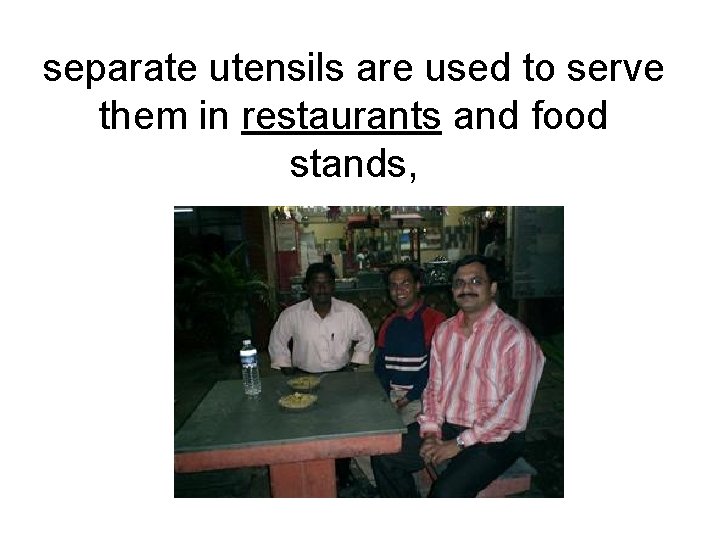
separate utensils are used to serve them in restaurants and food stands,
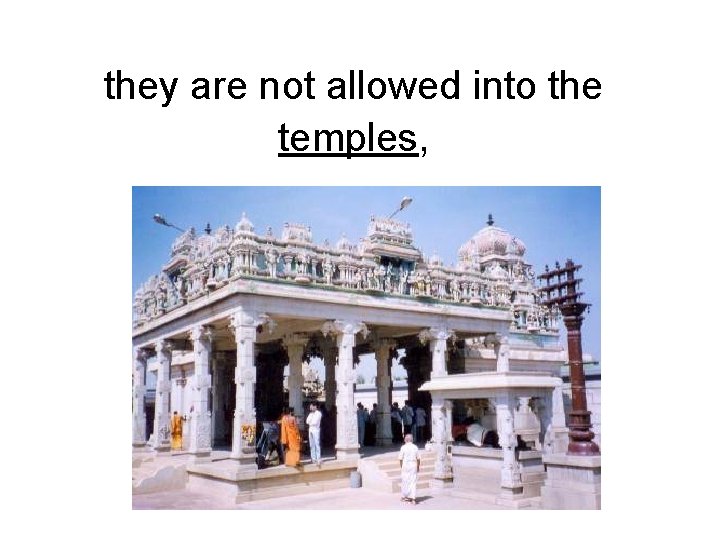
they are not allowed into the temples,
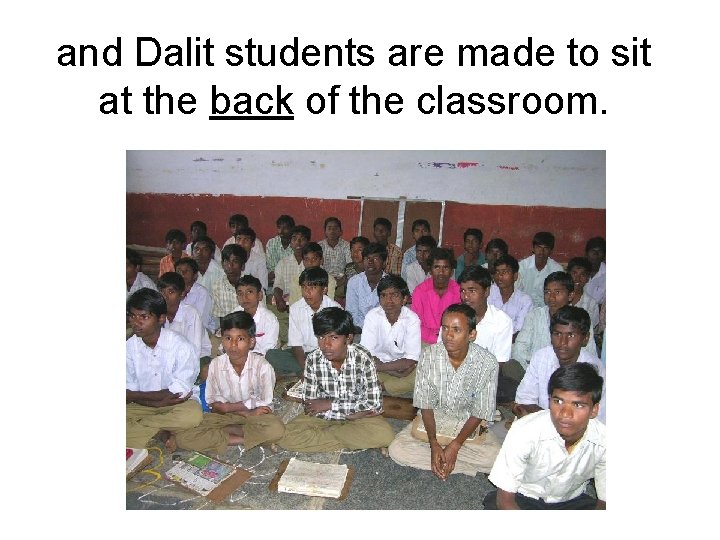
and Dalit students are made to sit at the back of the classroom.
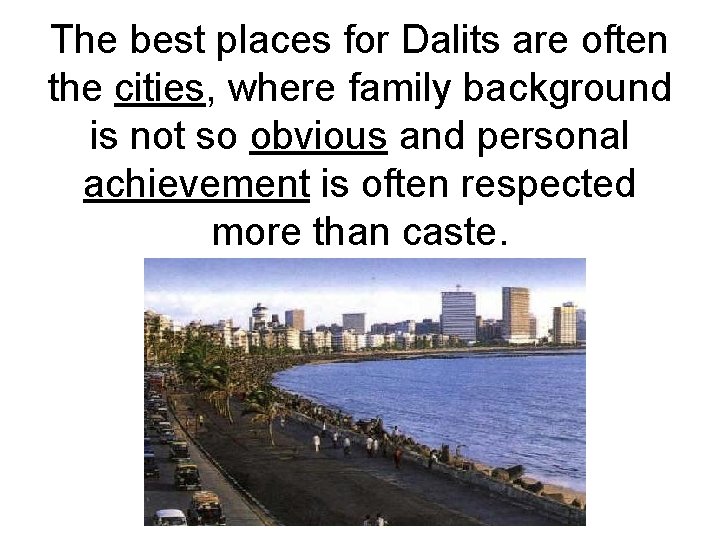
The best places for Dalits are often the cities, where family background is not so obvious and personal achievement is often respected more than caste.
But even in urban areas, there are often prejudices based on caste.
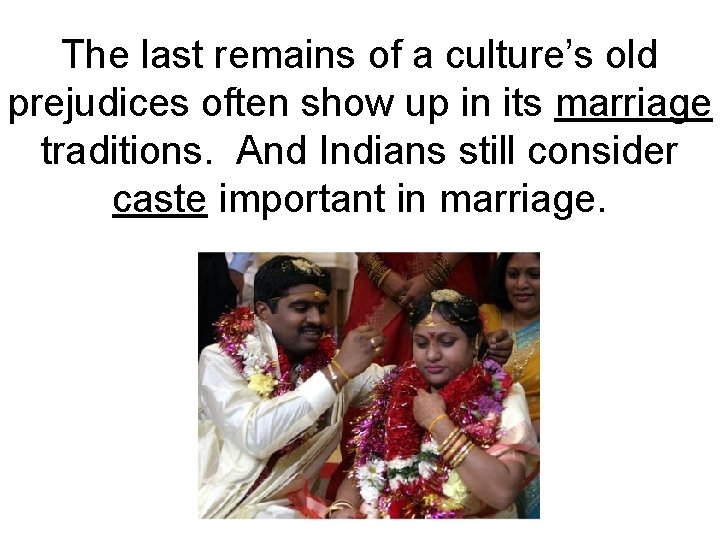
The last remains of a culture’s old prejudices often show up in its marriage traditions. And Indians still consider caste important in marriage.