
Indians Rebel n n By 1850 most Indians
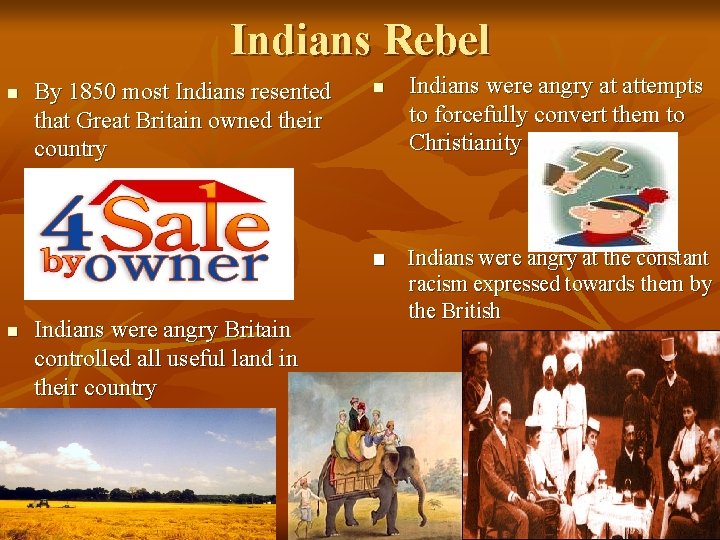
Indians Rebel n n By 1850 most Indians resented that Great Britain owned their country Indians were angry Britain controlled all useful land in their country n Indians were angry at attempts to forcefully convert them to Christianity ■ Indians were angry at the constant racism expressed towards them by the British
Sepoy Mutiny n n n 1857 gossip spread amongst Sepoys (Indian soldiers for the British) the seals of their ammunition had to be bitten off they believed the British dipped the seals of their ammunition in beef and pork (Hindus can not eat beef/ Muslims can not eat pork)
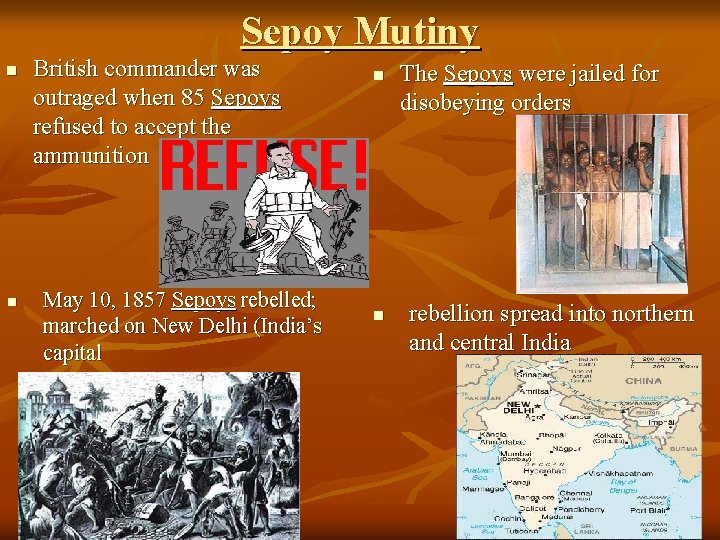
Sepoy Mutiny n n British commander was outraged when 85 Sepoys refused to accept the ammunition May 10, 1857 Sepoys rebelled; marched on New Delhi (India’s capital n n The Sepoys were jailed for disobeying orders rebellion spread into northern and central India
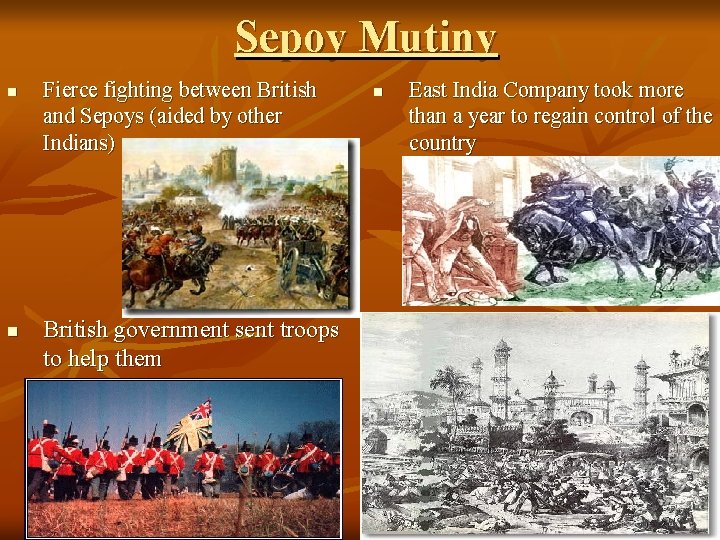
Sepoy Mutiny n n Fierce fighting between British and Sepoys (aided by other Indians) British government sent troops to help them n East India Company took more than a year to regain control of the country
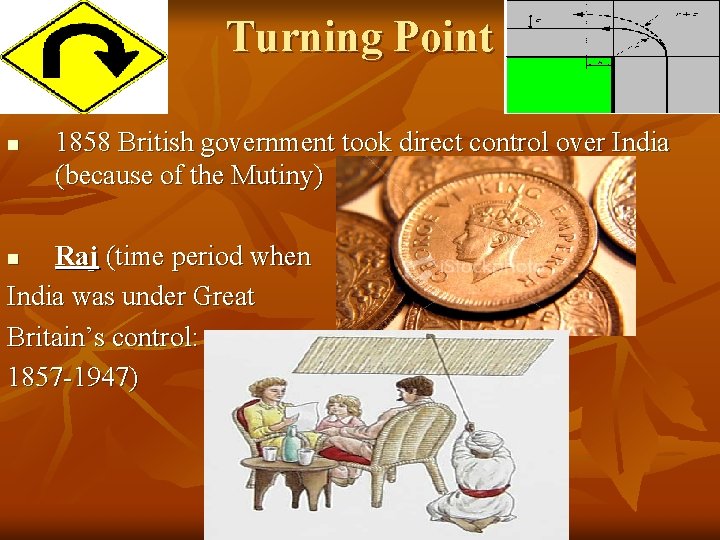
Turning Point n 1858 British government took direct control over India (because of the Mutiny) Raj (time period when India was under Great Britain’s control: 1857 -1947) n
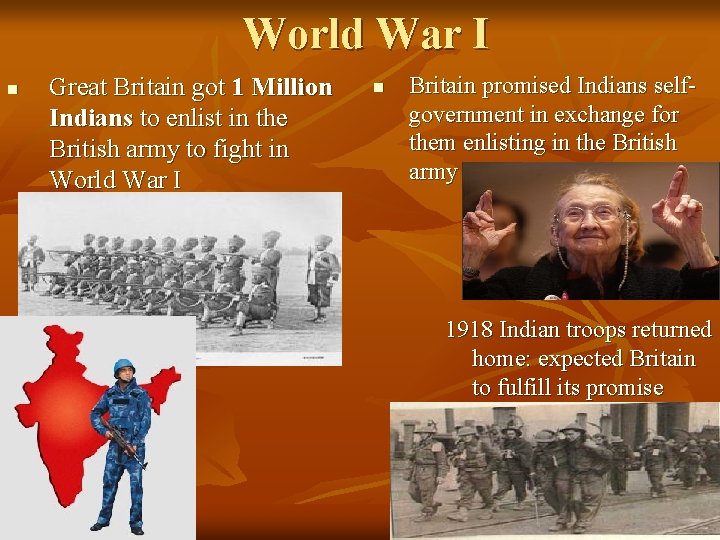
World War I n Great Britain got 1 Million Indians to enlist in the British army to fight in World War I n Britain promised Indians selfgovernment in exchange for them enlisting in the British army 1918 Indian troops returned home: expected Britain to fulfill its promise
n n instead Indian troops were treated as second class citizens again by Great Britain many Indians committed acts of violence against British in India in response
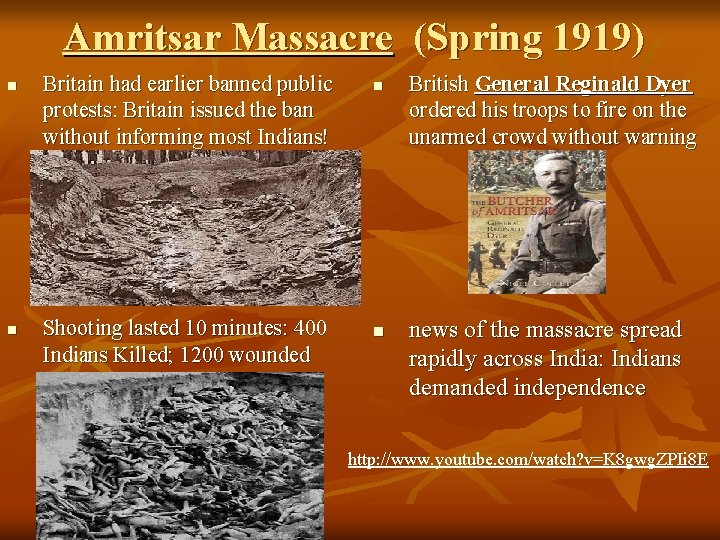
Amritsar Massacre (Spring 1919) n n Britain had earlier banned public protests: Britain issued the ban without informing most Indians! Shooting lasted 10 minutes: 400 Indians Killed; 1200 wounded n n British General Reginald Dyer ordered his troops to fire on the unarmed crowd without warning news of the massacre spread rapidly across India: Indians demanded independence http: //www. youtube. com/watch? v=K 8 gwg. ZPIi 8 E
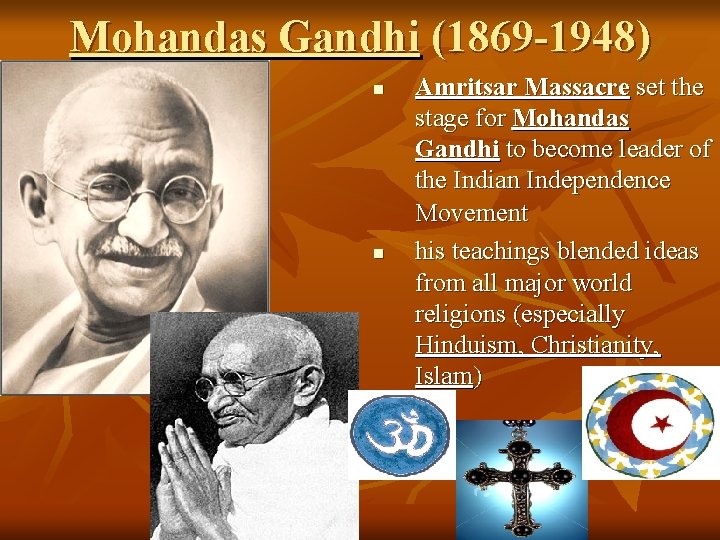
Mohandas Gandhi (1869 -1948) n n Amritsar Massacre set the stage for Mohandas Gandhi to become leader of the Indian Independence Movement his teachings blended ideas from all major world religions (especially Hinduism, Christianity, Islam)
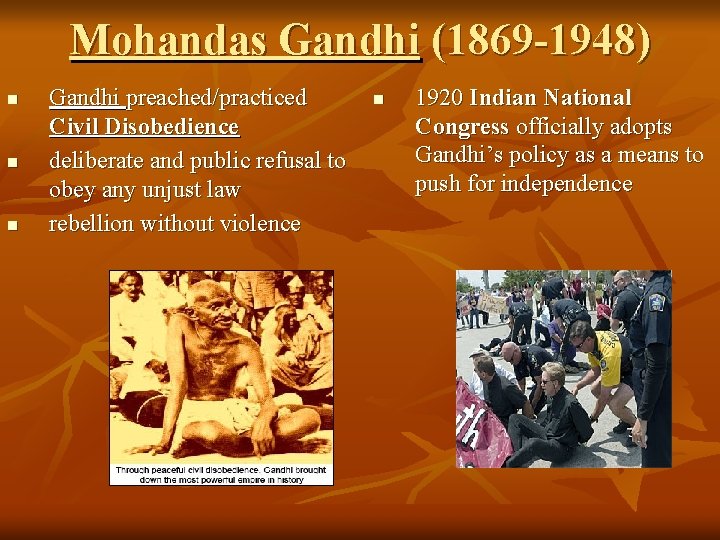
Mohandas Gandhi (1869 -1948) n n n Gandhi preached/practiced Civil Disobedience deliberate and public refusal to obey any unjust law rebellion without violence n 1920 Indian National Congress officially adopts Gandhi’s policy as a means to push for independence
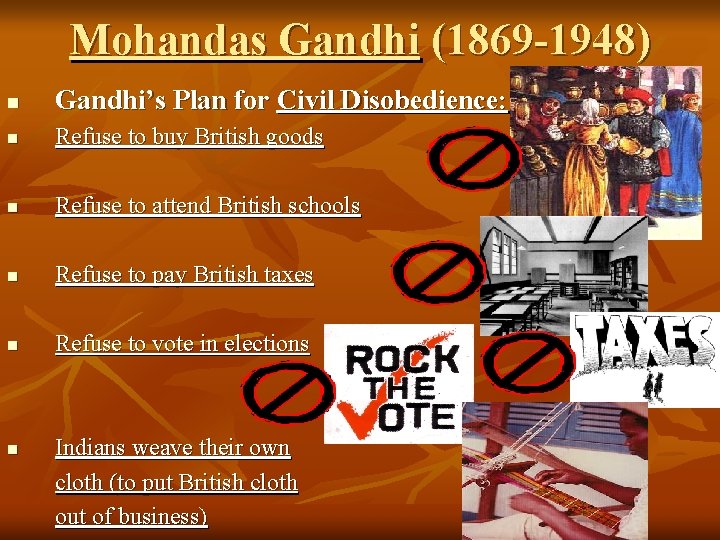
Mohandas Gandhi (1869 -1948) n Gandhi’s Plan for Civil Disobedience: n Refuse to buy British goods n Refuse to attend British schools n Refuse to pay British taxes n Refuse to vote in elections n Indians weave their own cloth (to put British cloth out of business)
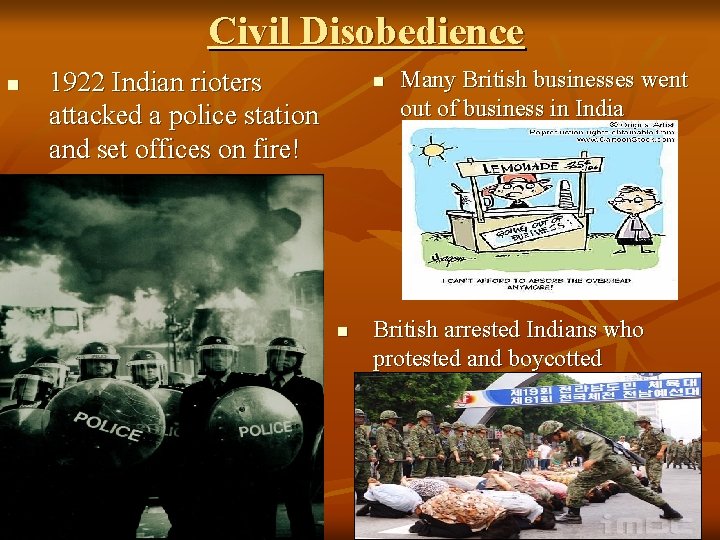
Civil Disobedience n 1922 Indian rioters attacked a police station and set offices on fire! n n Many British businesses went out of business in India British arrested Indians who protested and boycotted
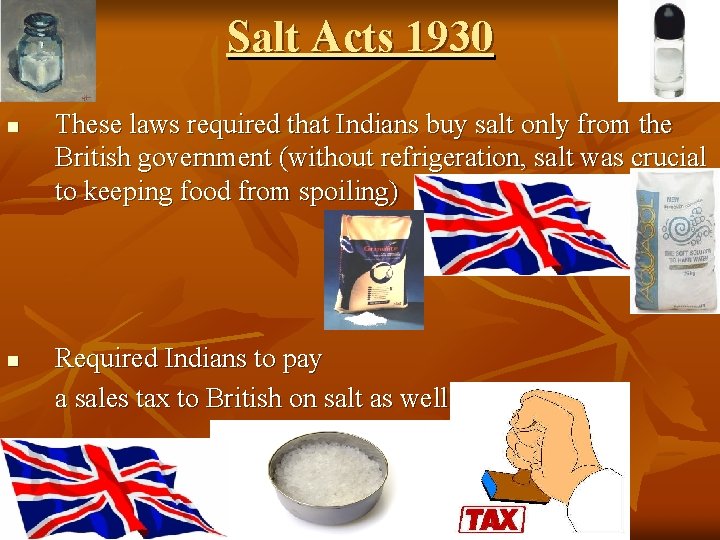
Salt Acts 1930 n n These laws required that Indians buy salt only from the British government (without refrigeration, salt was crucial to keeping food from spoiling) Required Indians to pay a sales tax to British on salt as well
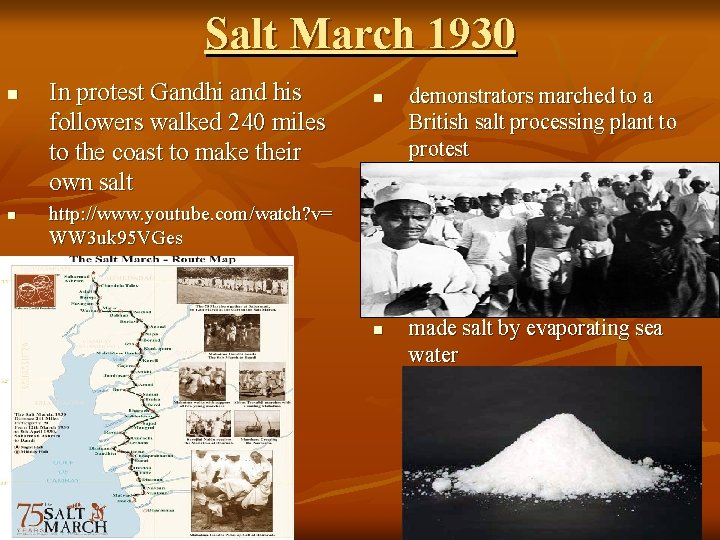
Salt March 1930 n n In protest Gandhi and his followers walked 240 miles to the coast to make their own salt n demonstrators marched to a British salt processing plant to protest http: //www. youtube. com/watch? v= WW 3 uk 95 VGes n made salt by evaporating sea water
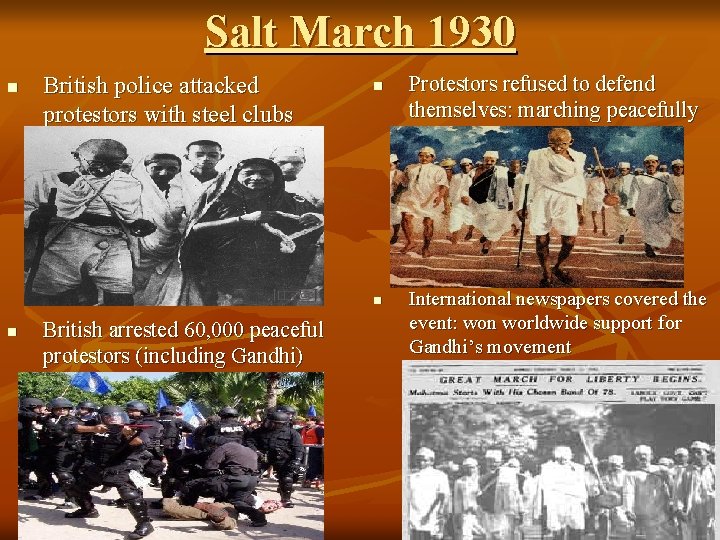
Salt March 1930 n British police attacked protestors with steel clubs n n n British arrested 60, 000 peaceful protestors (including Gandhi) Protestors refused to defend themselves: marching peacefully International newspapers covered the event: won worldwide support for Gandhi’s movement
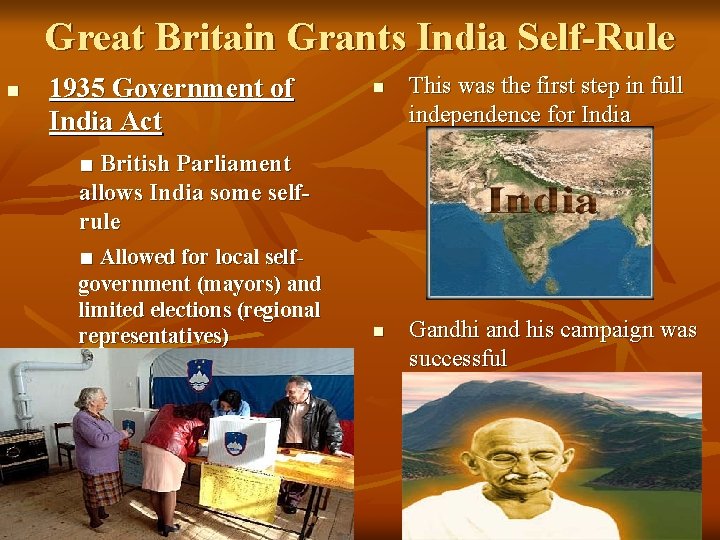
Great Britain Grants India Self-Rule n 1935 Government of India Act n This was the first step in full independence for India ■ British Parliament allows India some selfrule ■ Allowed for local selfgovernment (mayors) and limited elections (regional representatives) n Gandhi and his campaign was successful
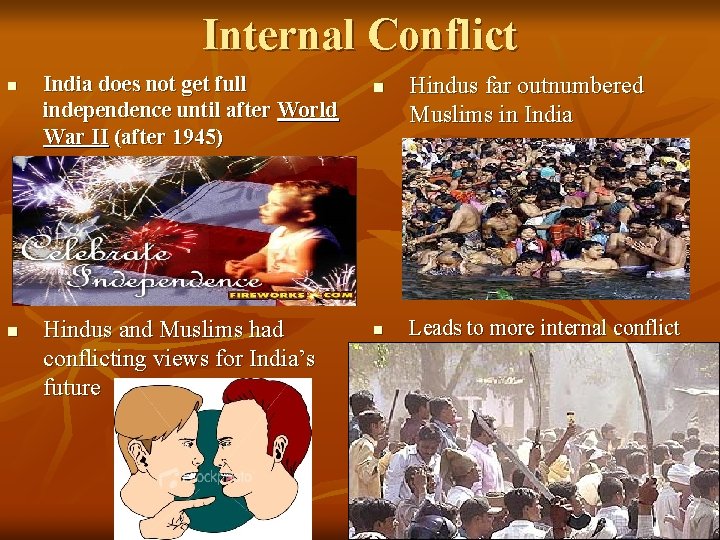
Internal Conflict n n India does not get full independence until after World War II (after 1945) Hindus and Muslims had conflicting views for India’s future n n Hindus far outnumbered Muslims in India Leads to more internal conflict
Exit Ticket I HAVE TO HAVE THIS FOR YOU TO LEAVE CLASS! 1. 2. List two similaries between imperialism in British India and another colony we have learned about (such as the American colonies, Congo, or South Africa). What were two motives that Great Britain had for imperializing India? n (Be specific and use your notes on motives for imperialism if you need to!)
- Slides: 18