
Indiana Standard 3 Integumentary System Integumentary System Skin












- Slides: 58
Indiana Standard: 3 Integumentary System
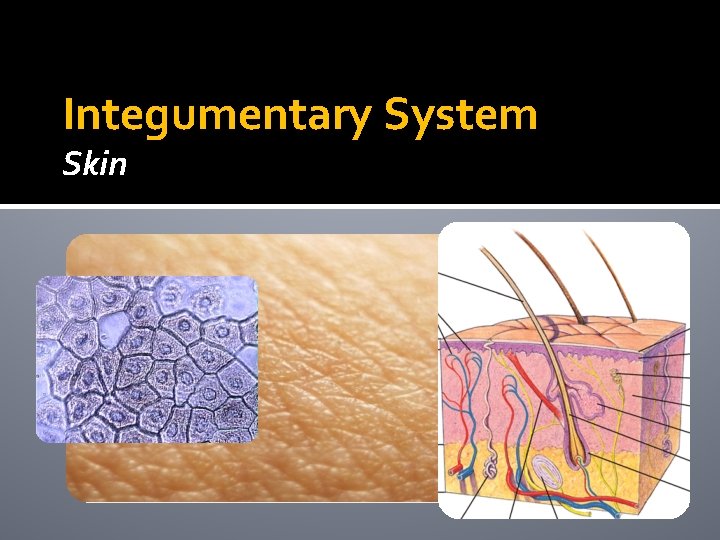
Integumentary System Skin
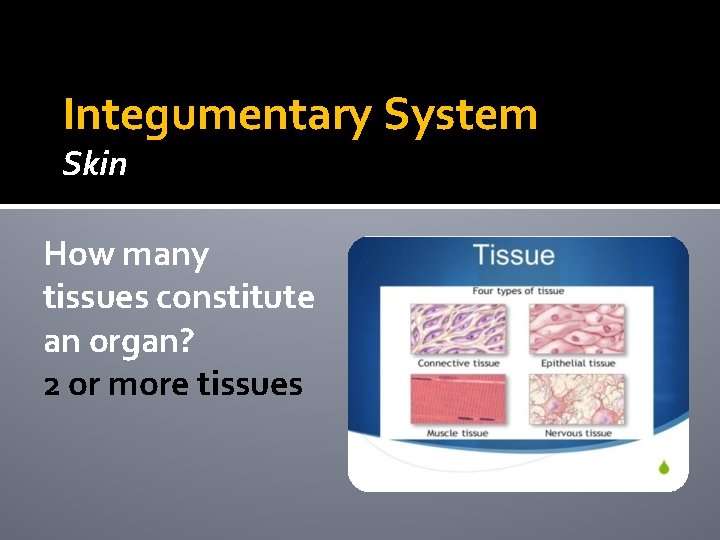
Integumentary System Skin How many tissues constitute an organ?
Integumentary System Skin How many tissues constitute an organ? 2 or more tissues
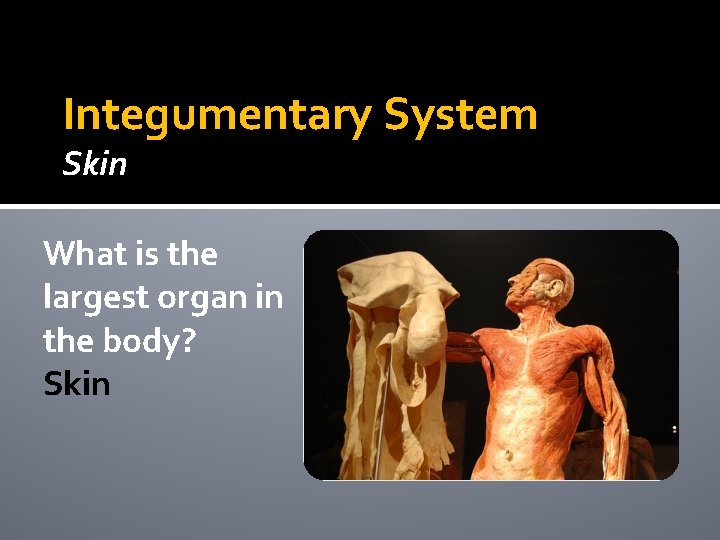
Integumentary System Skin What is the largest organ in the body?
Integumentary System Skin What is the largest organ in the body? Skin
Integumentary System Skin What are the functions of skin? • • Maintains homeostasis Provides protective covering Regulates body temperature Retards water loss Houses sensory receptors Synthesizes chemicals Excretes small amounts of waste Plays a roll in vitamin D production
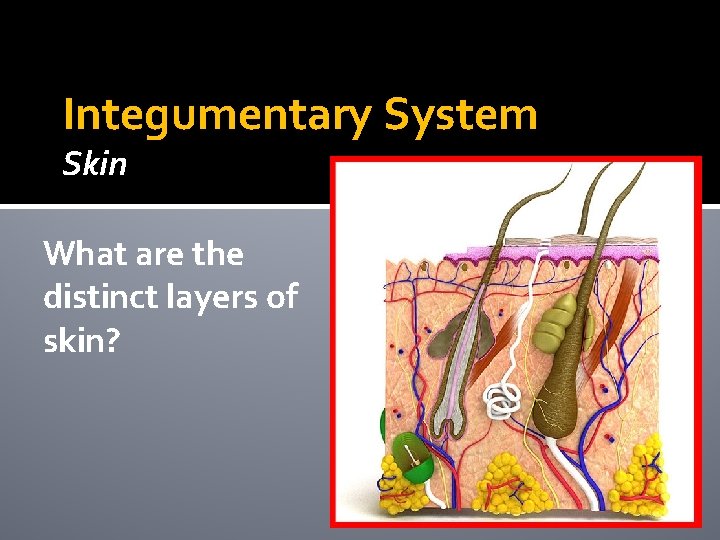
Integumentary System Skin What are the distinct layers of skin?
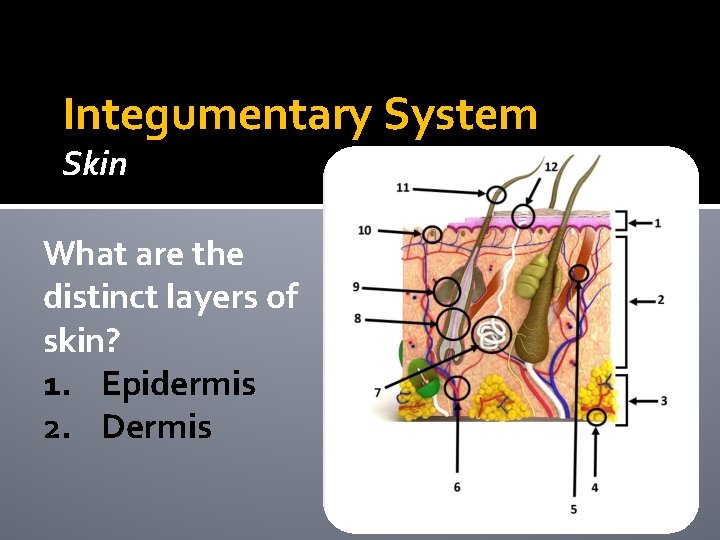
Integumentary System Skin What are the distinct layers of skin? 1. Epidermis 2. Dermis
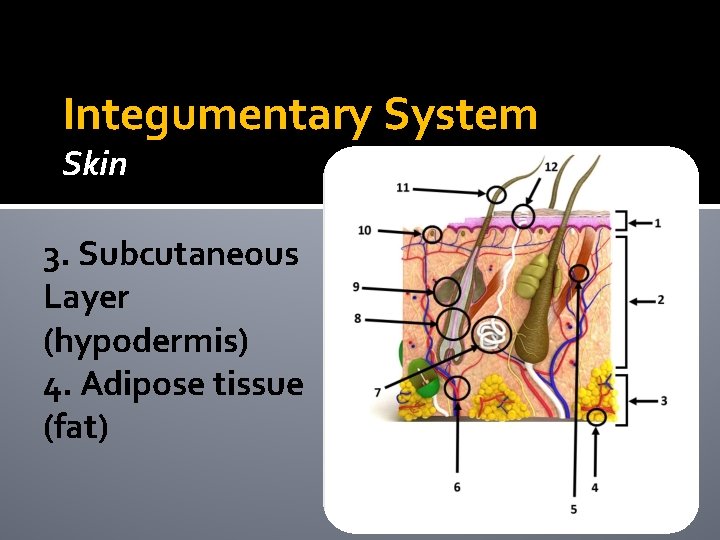
Integumentary System Skin 3. Subcutaneous Layer (hypodermis) 4. Adipose tissue (fat)
Integumentary System Skin Functions of the subcutaneous layer? • Insulation • Shock absorption • Energy storage • Anchors skin
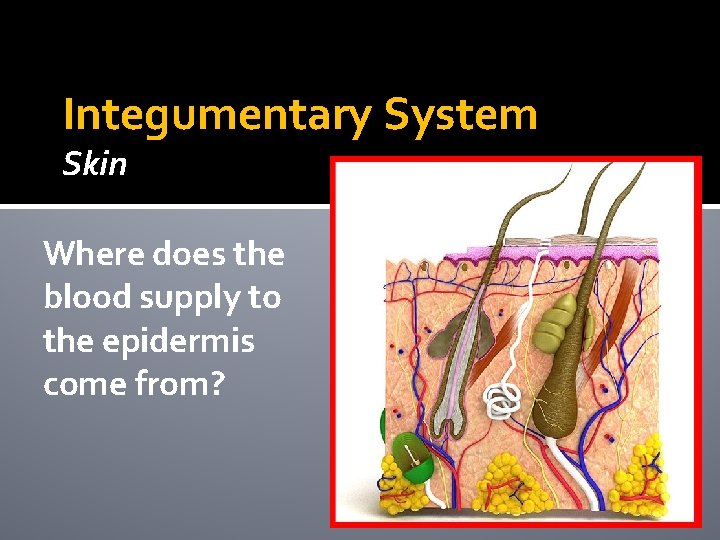
Integumentary System Skin Where does the blood supply to the epidermis come from?
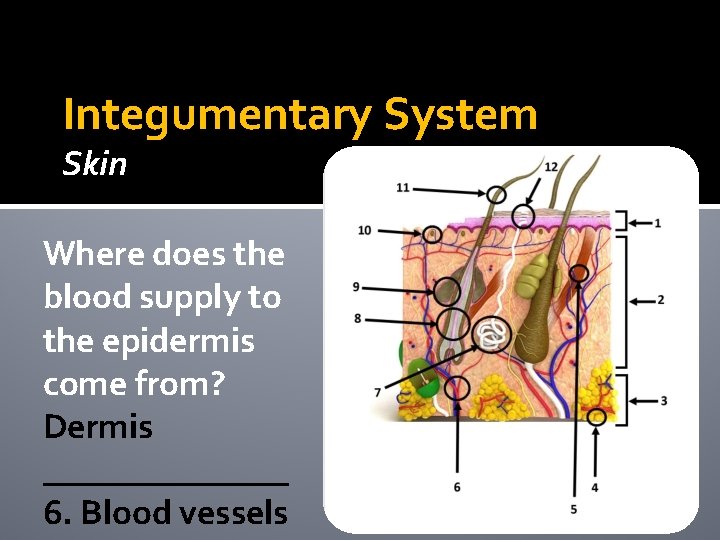
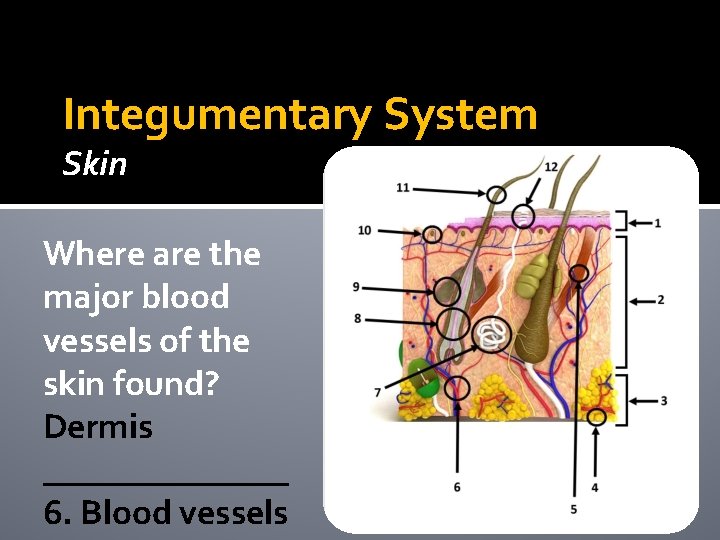
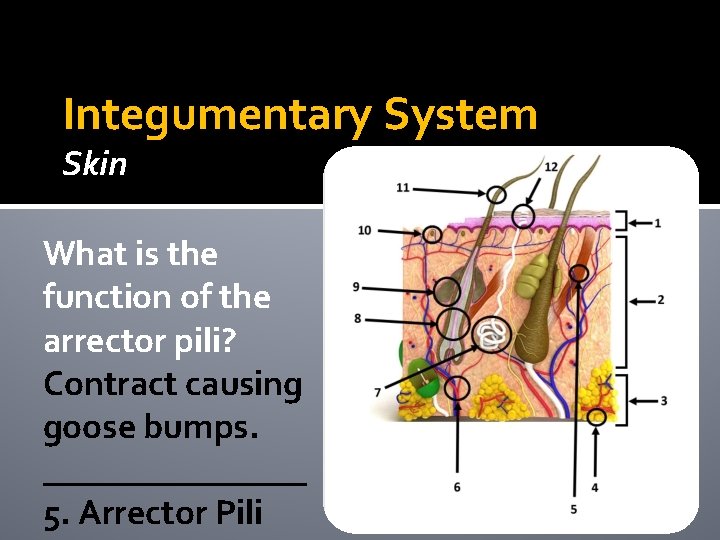
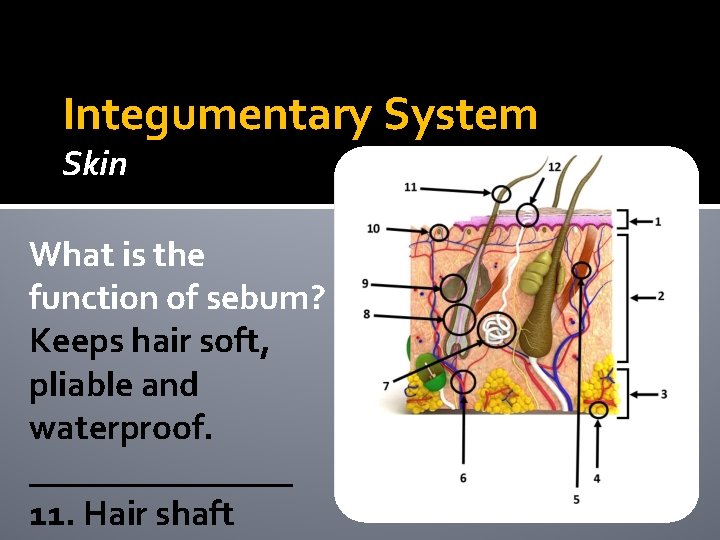
Integumentary System Skin Where does the blood supply to the epidermis come from? Dermis _______ 6. Blood vessels
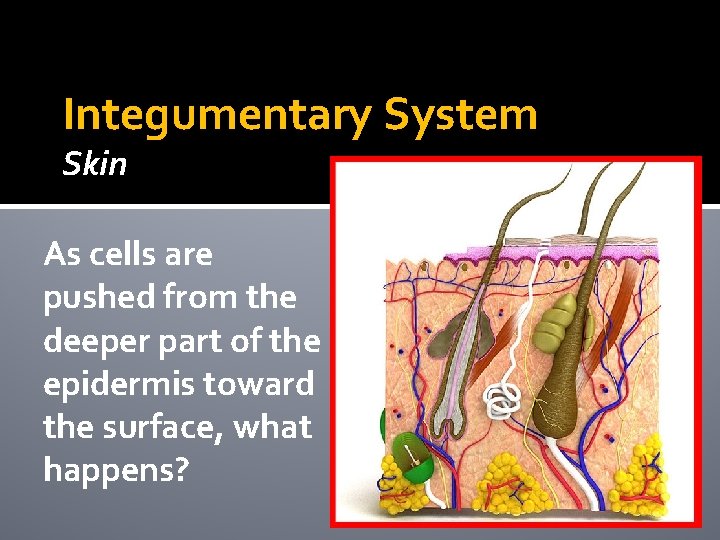
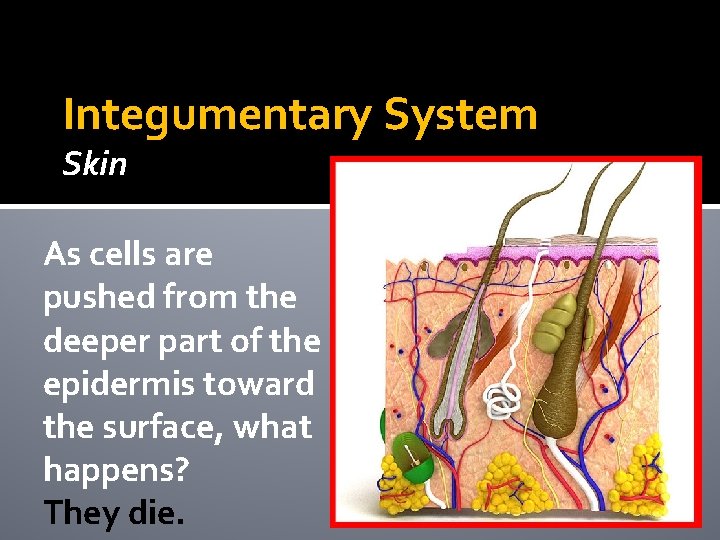
Integumentary System Skin As cells are pushed from the deeper part of the epidermis toward the surface, what happens?
Integumentary System Skin As cells are pushed from the deeper part of the epidermis toward the surface, what happens? They die.
Integumentary System Skin Fun Fact: About 70% - 80% of dust is dead skin cells.
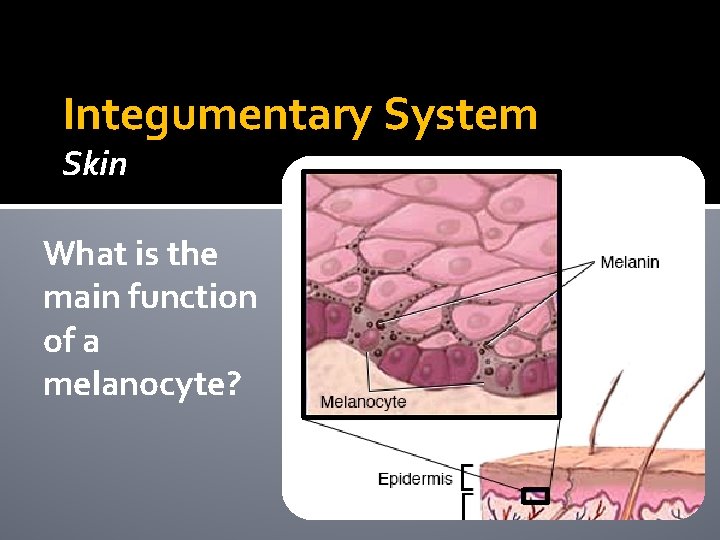
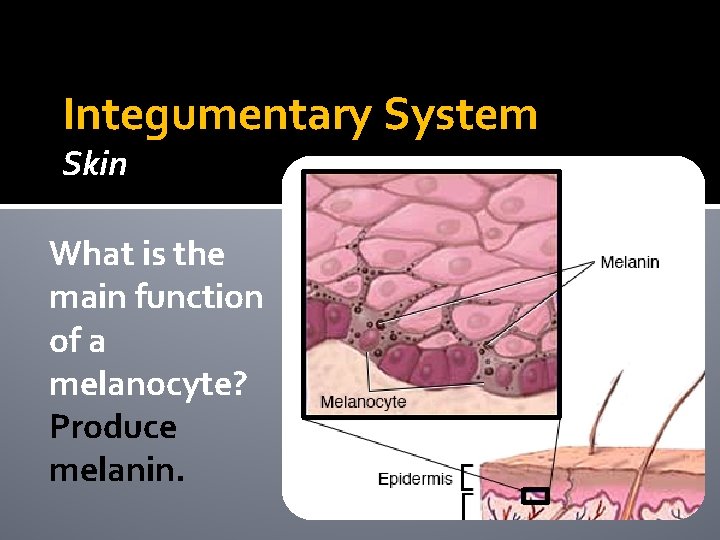
Integumentary System Skin What is the main function of a melanocyte?
Integumentary System Skin What is the main function of a melanocyte? Produce melanin.
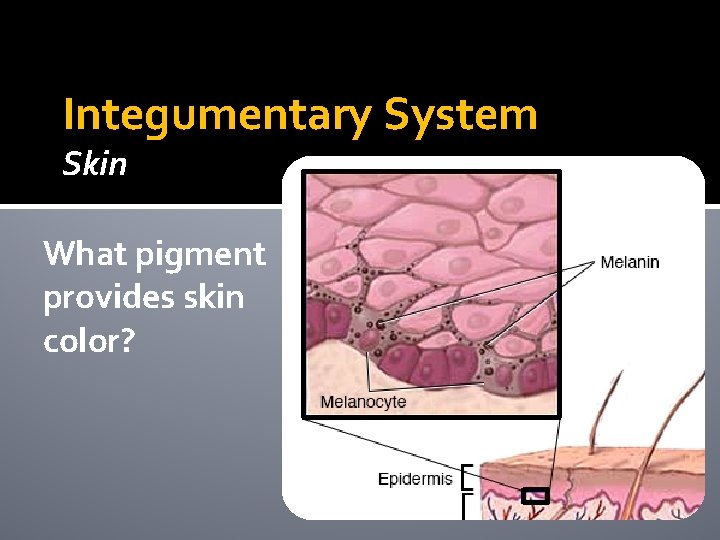
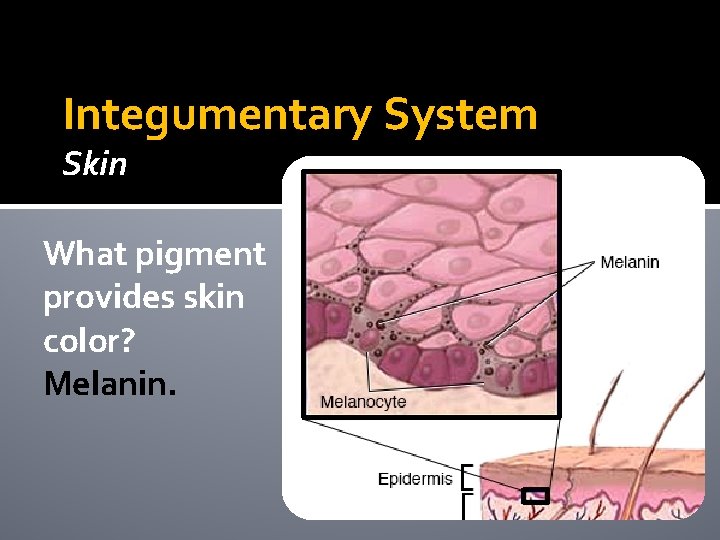
Integumentary System Skin What pigment provides skin color?
Integumentary System Skin What pigment provides skin color? Melanin.
Integumentary System Skin What is the main function of melanin (other than providing skin color)?
Integumentary System Skin What is the main function of melanin (other than providing skin color)? Protects skin from UV rays.
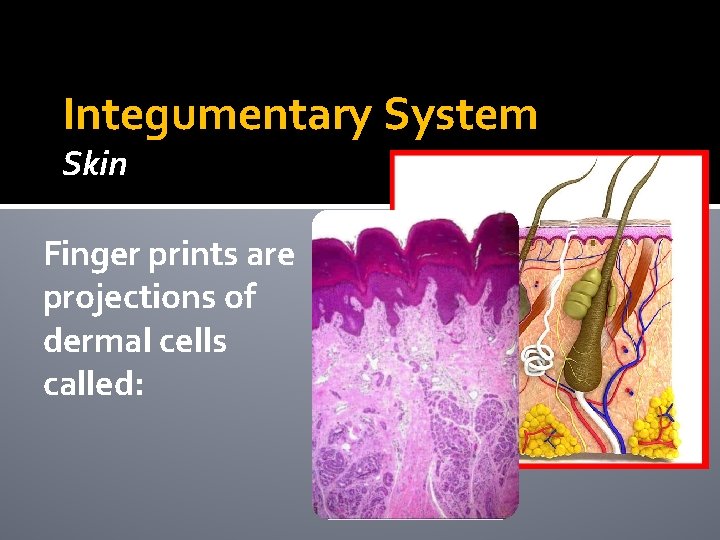
Integumentary System Skin Finger prints are projections of dermal cells called:
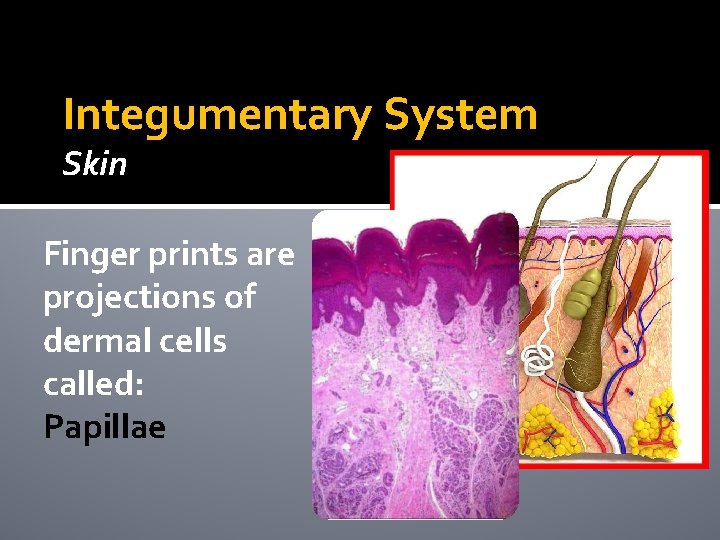
Integumentary System Skin Finger prints are projections of dermal cells called: Papillae
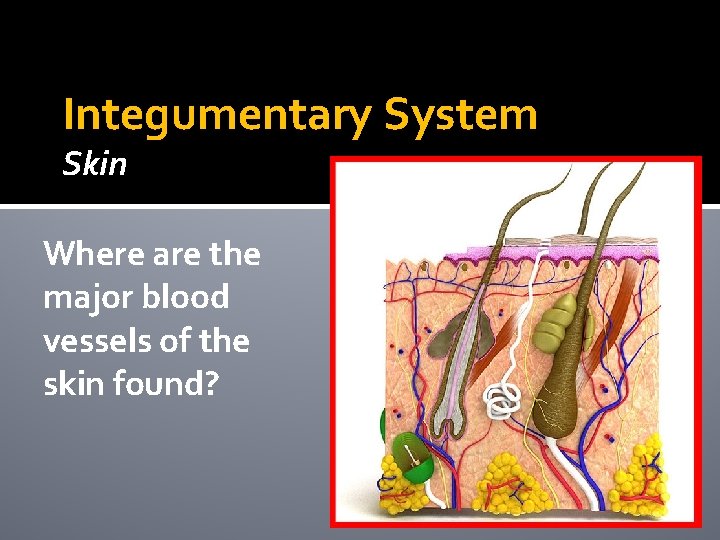
Integumentary System Skin Where are the major blood vessels of the skin found?
Integumentary System Skin Where are the major blood vessels of the skin found? Dermis _______ 6. Blood vessels
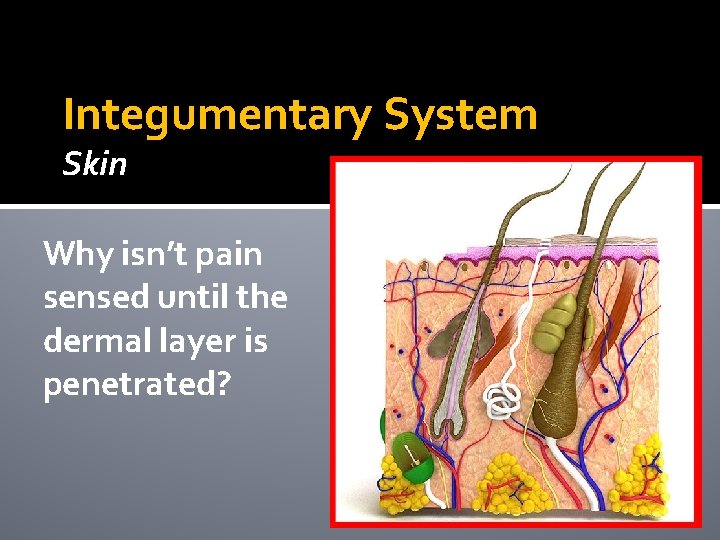
Integumentary System Skin Why isn’t pain sensed until the dermal layer is penetrated?
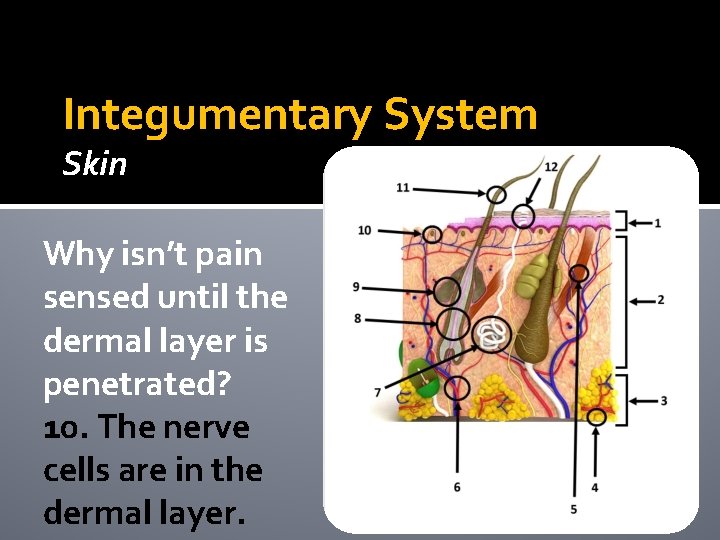
Integumentary System Skin Why isn’t pain sensed until the dermal layer is penetrated? 10. The nerve cells are in the dermal layer.
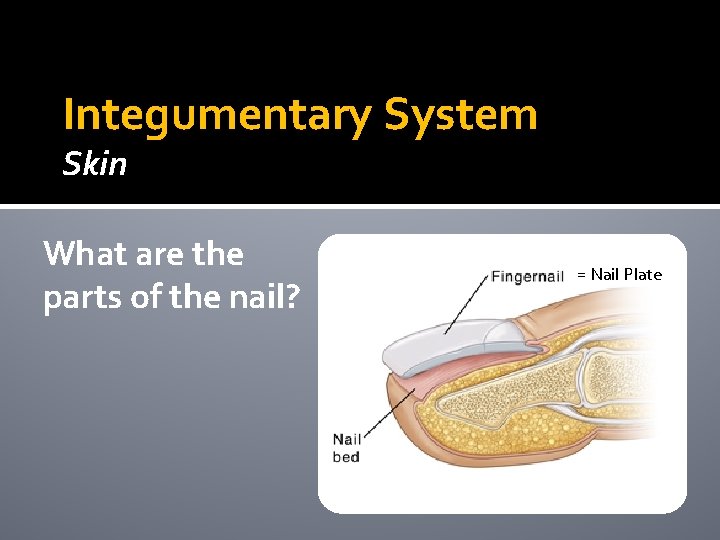
Integumentary System Skin What are the parts of the nail? = Nail Plate
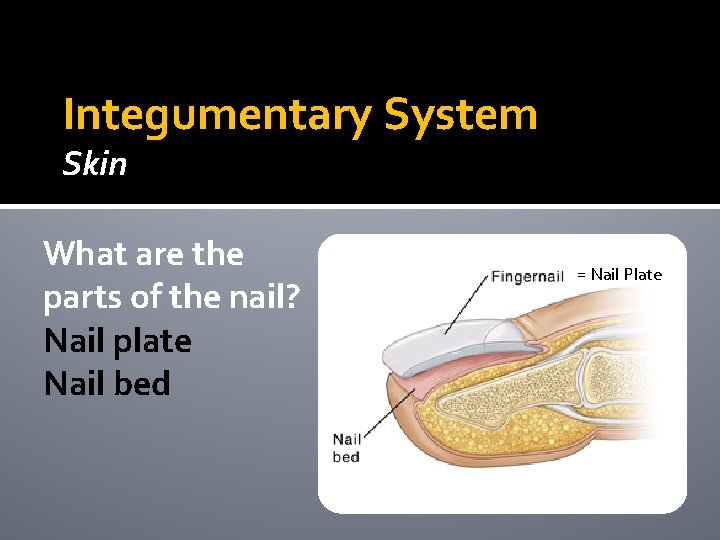
Integumentary System Skin What are the parts of the nail? Nail plate Nail bed = Nail Plate
Integumentary System Skin What do nails and hair have in common?
Integumentary System Skin What do nails and hair have in common? Both keratinize.
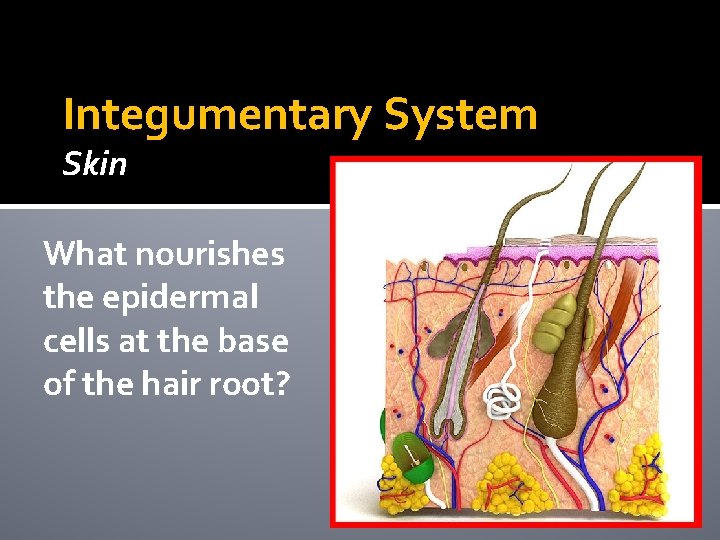
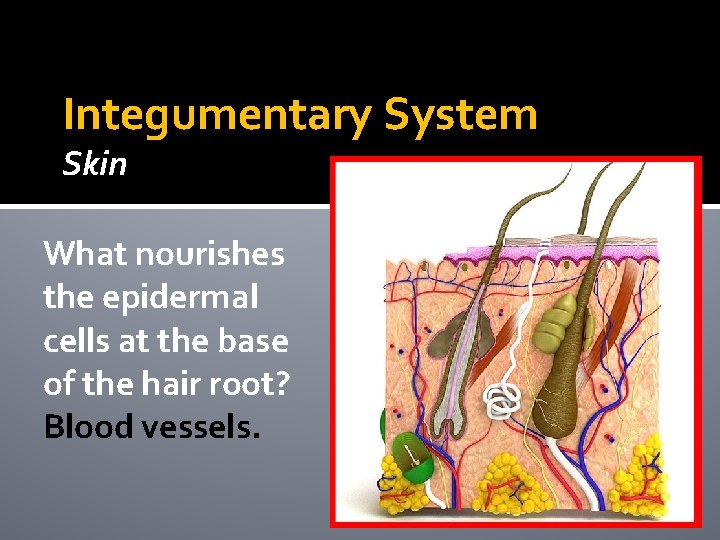
Integumentary System Skin What nourishes the epidermal cells at the base of the hair root?
Integumentary System Skin What nourishes the epidermal cells at the base of the hair root? Blood vessels.
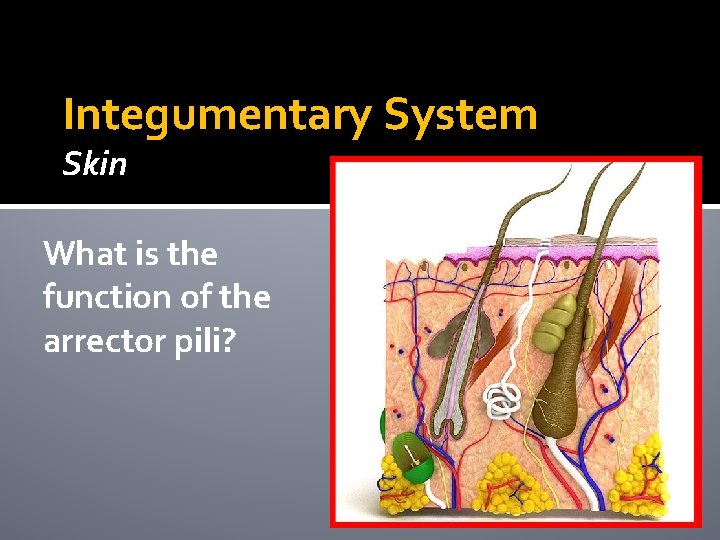
Integumentary System Skin What is the function of the arrector pili?
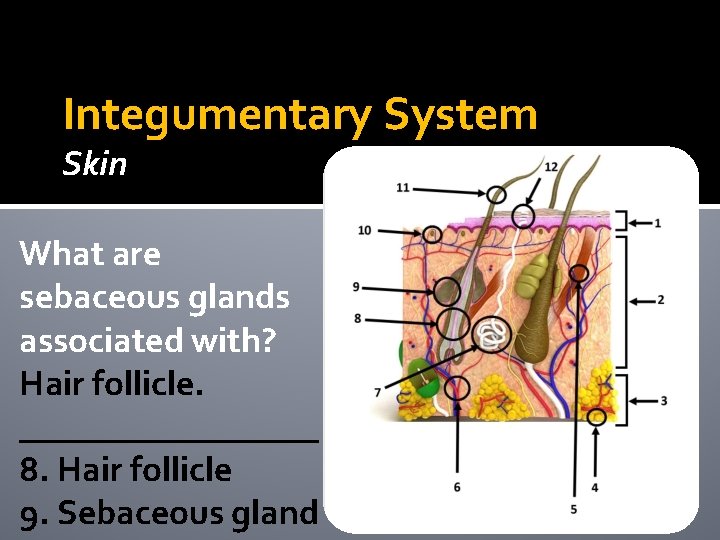
Integumentary System Skin What is the function of the arrector pili? Contract causing goose bumps. ________ 5. Arrector Pili
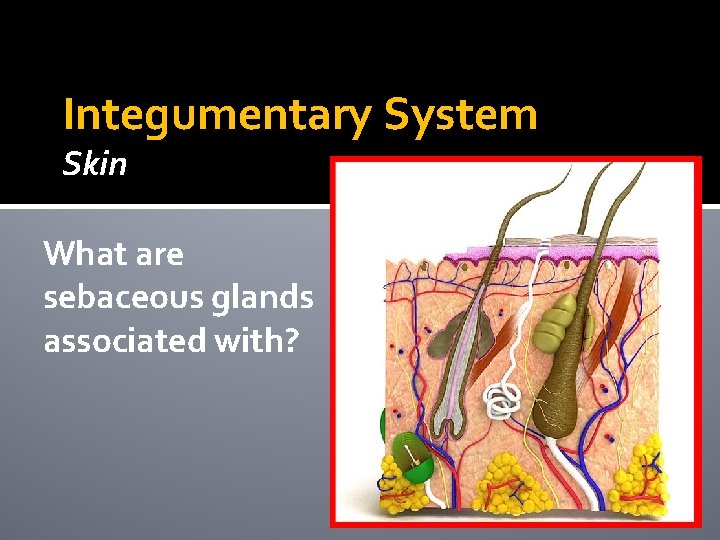
Integumentary System Skin What are sebaceous glands associated with?
Integumentary System Skin What are sebaceous glands associated with? Hair follicle. _________ 8. Hair follicle 9. Sebaceous gland
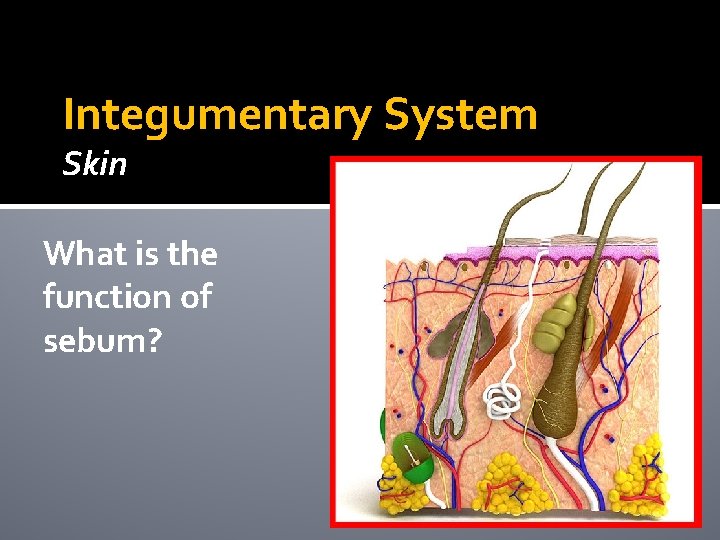
Integumentary System Skin What is the function of sebum?
Integumentary System Skin What is the function of sebum? Keeps hair soft, pliable and waterproof. ________ 11. Hair shaft
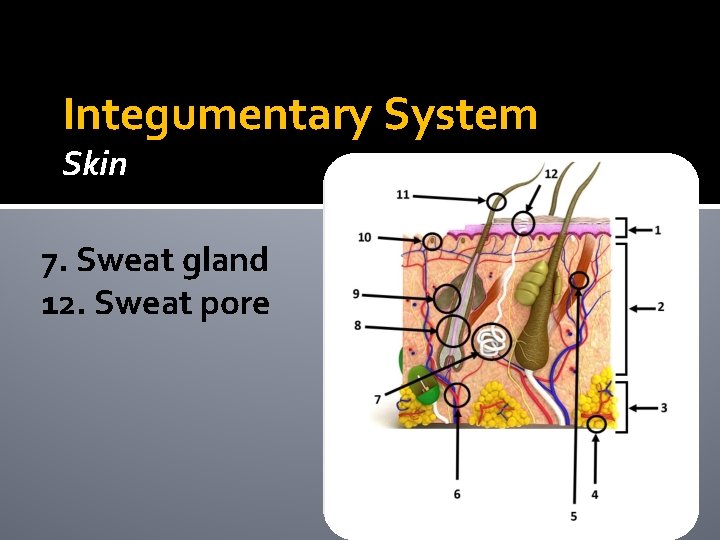
Integumentary System Skin 7. Sweat gland 12. Sweat pore
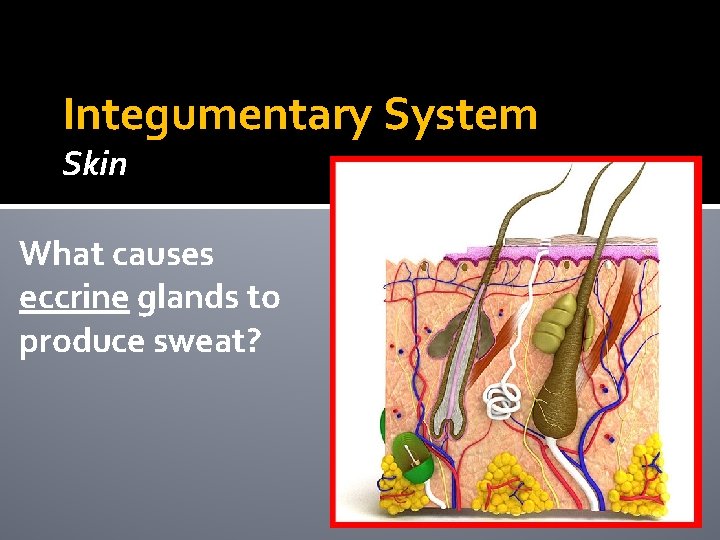
Integumentary System Skin What causes eccrine glands to produce sweat?
Integumentary System Skin What causes eccrine glands to produce sweat? • Hot temperatures • Exercise
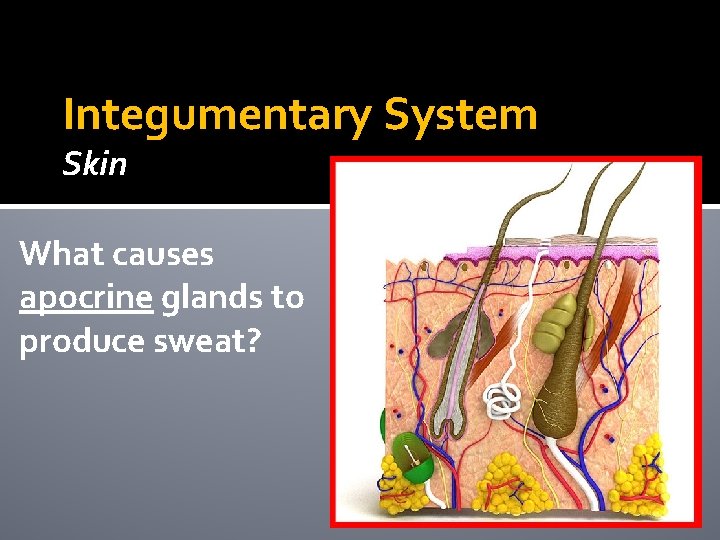
Integumentary System Skin What causes apocrine glands to produce sweat?
Integumentary System Skin What causes apocrine glands to produce sweat? • Emotions • Nerves • Fright • Pain
Integumentary System Skin Why is regulation of body temperature important?
Integumentary System Skin Why is regulation of body temperature important? Maintenance of metabolic reactions.
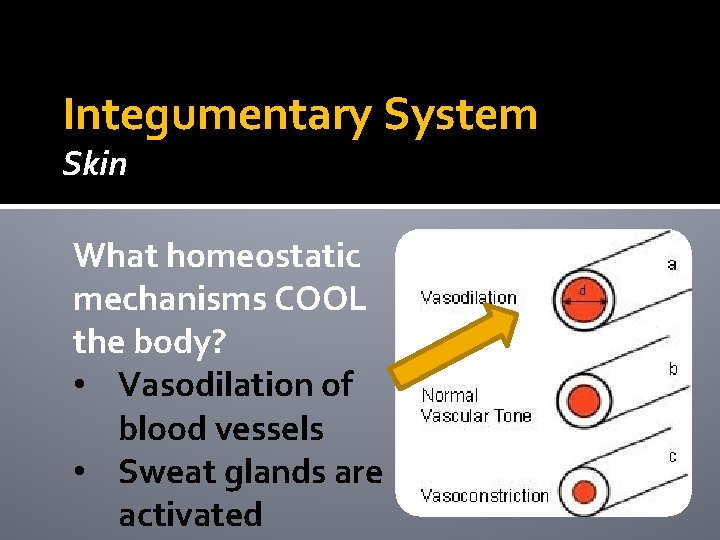
Integumentary System Skin What homeostatic mechanisms COOL the body? • Vasodilation of blood vessels • Sweat glands are activated
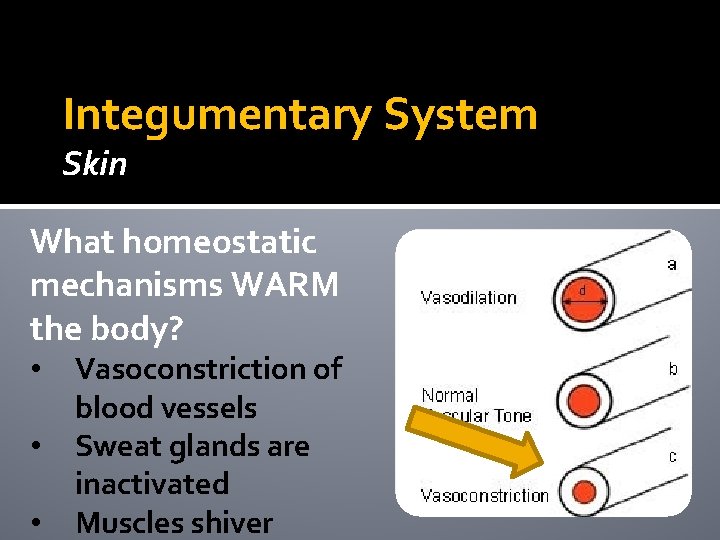
Integumentary System Skin What homeostatic mechanisms WARM the body?
Integumentary System Skin What homeostatic mechanisms WARM the body? • • • Vasoconstriction of blood vessels Sweat glands are inactivated Muscles shiver
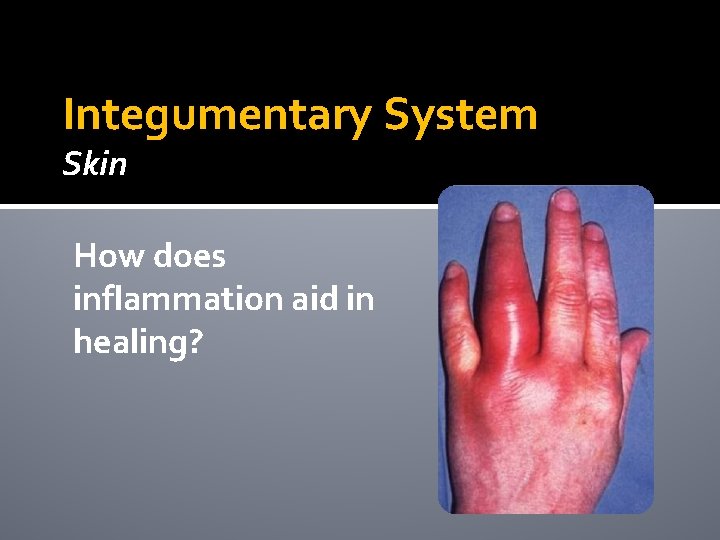
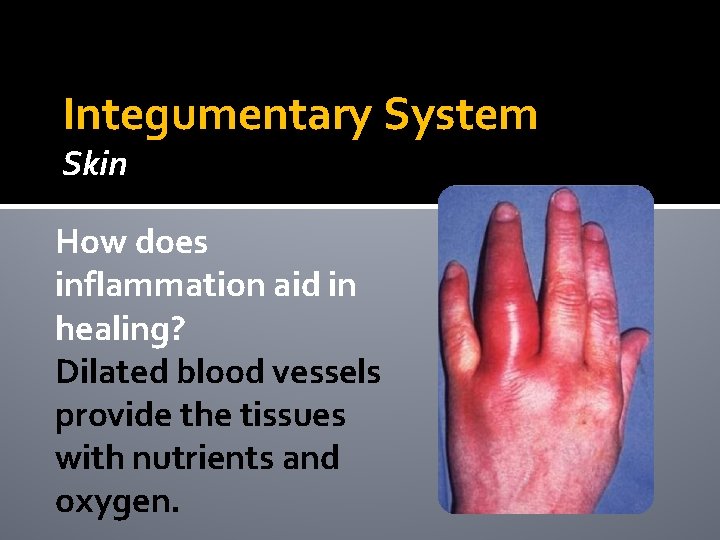
Integumentary System Skin How does inflammation aid in healing?
Integumentary System Skin How does inflammation aid in healing? Dilated blood vessels provide the tissues with nutrients and oxygen.
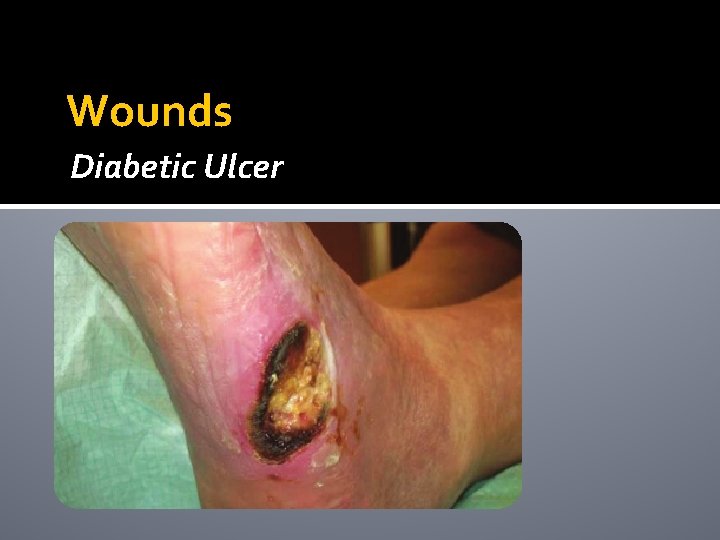
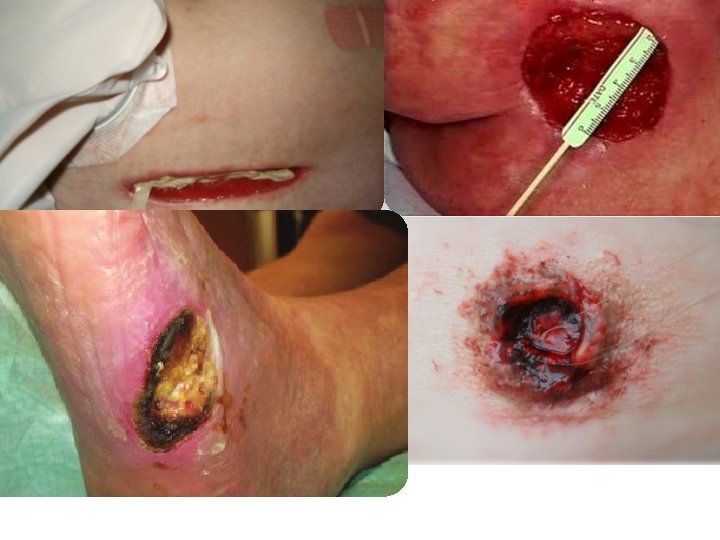
Wounds Diabetic Ulcer
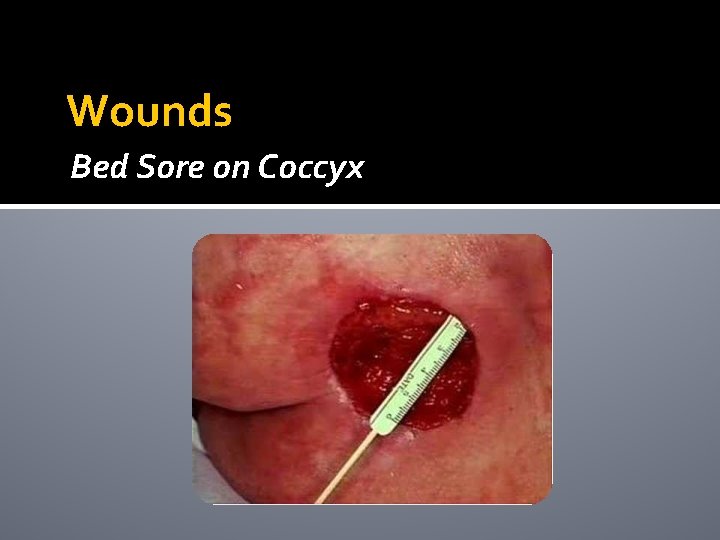
Wounds Bed Sore on Coccyx
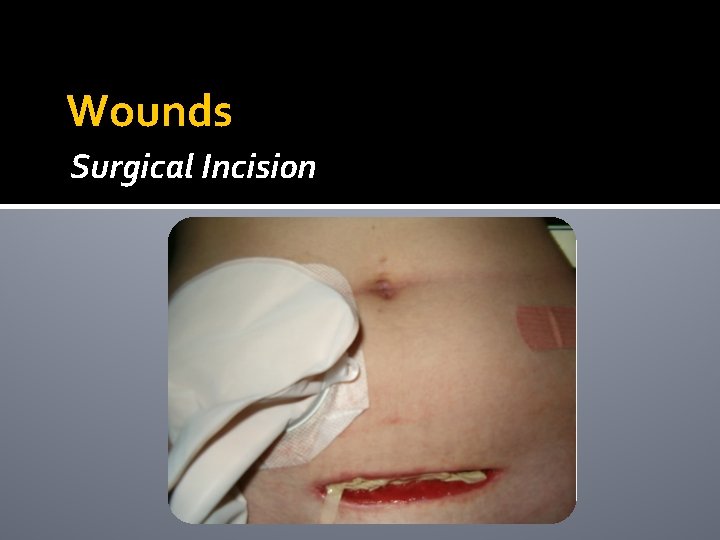
Wounds Surgical Incision
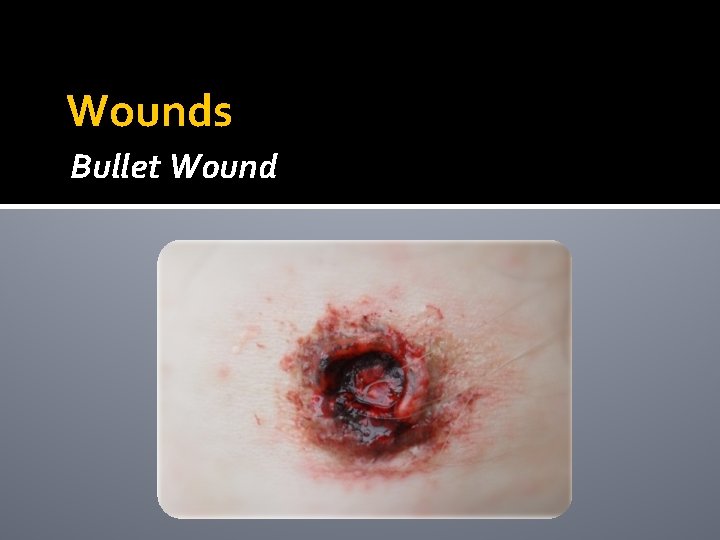
Wounds Bullet Wound
end