
Indiana Criminal Law Concepts for Victims or Essential







- Slides: 46
Indiana Criminal Law Concepts for Victims or Essential Witnesses Last Updated: September 3, 2014 Prepared by: Andre Miksha Chief Deputy Prosecuting Attorney 24 th Judicial Circuit (Hamilton County) One Hamilton County Square, Suite 134 Noblesville, Indiana 46060
Table of Contents • • • Terms The Process of a Criminal Case Punishments for Class D – A Felonies Punishments for Level 6 – 1 Felonies Plea Agreements Hamilton County Prosecuting Attorney’s Office Exit
Table of Contents: Terms • Terms discussed: – Advisory, Maximum, & Minimum – Consecutive & Concurrent – Executed & Suspended – Probation – Non-Suspendible – Placement (IDOC, WR, & HD) – Credits – Argued Open, Caps, & Stipulated
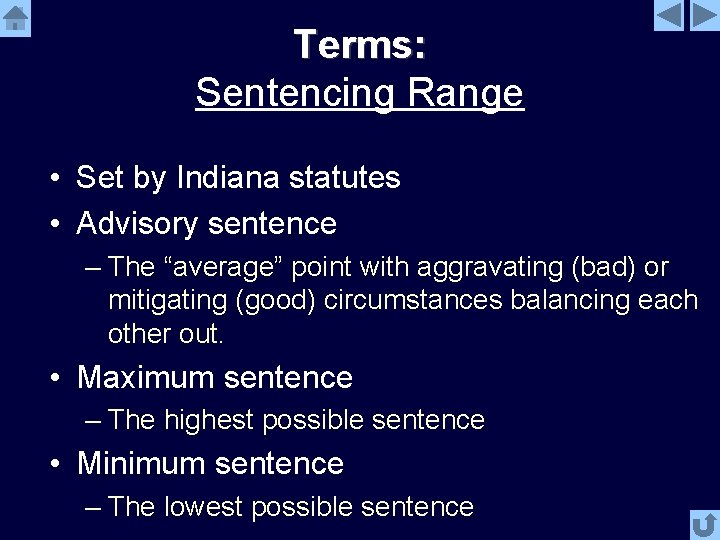
Terms: Sentencing Range • Set by Indiana statutes • Advisory sentence – The “average” point with aggravating (bad) or mitigating (good) circumstances balancing each other out. • Maximum sentence – The highest possible sentence • Minimum sentence – The lowest possible sentence
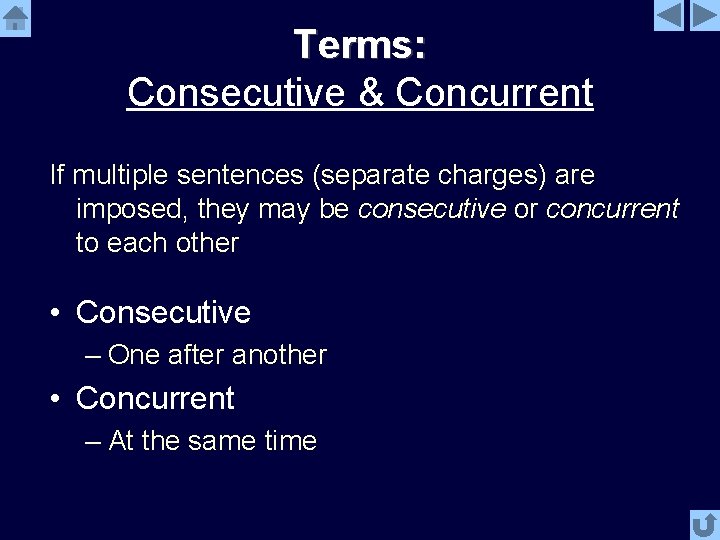
Terms: Consecutive & Concurrent If multiple sentences (separate charges) are imposed, they may be consecutive or concurrent to each other • Consecutive – One after another • Concurrent – At the same time
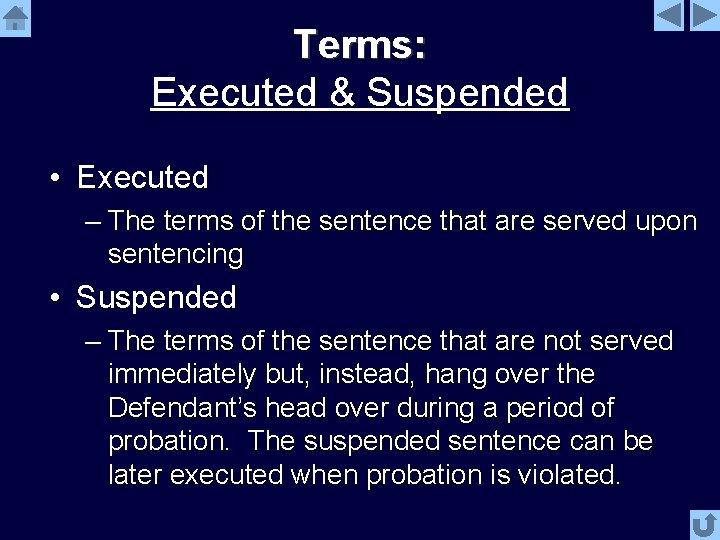
Terms: Executed & Suspended • Executed – The terms of the sentence that are served upon sentencing • Suspended – The terms of the sentence that are not served immediately but, instead, hang over the Defendant’s head over during a period of probation. The suspended sentence can be later executed when probation is violated.
Terms: Probation • Probation – The Defendant is ordered to follow certain conditions set forth by the Court, under the supervision of a probation officer, for a specific period of time. – Standard conditions of probation include: • Submission to drug testing and being clean • Not committing any additional crime – Conditions may include: • Treatment and counseling • Payment of restitution
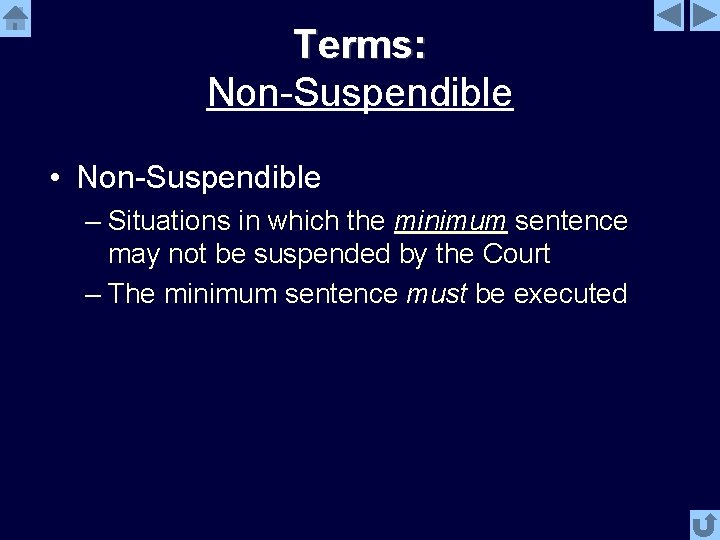
Terms: Non-Suspendible • Non-Suspendible – Situations in which the minimum sentence may not be suspended by the Court – The minimum sentence must be executed
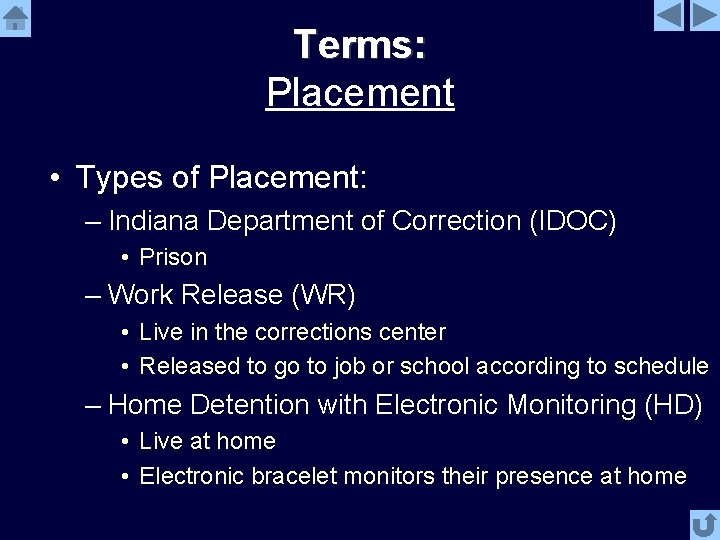
Terms: Placement • Types of Placement: – Indiana Department of Correction (IDOC) • Prison – Work Release (WR) • Live in the corrections center • Released to go to job or school according to schedule – Home Detention with Electronic Monitoring (HD) • Live at home • Electronic bracelet monitors their presence at home
Terms: Actual-Time Credit • Actual-time credit – Credit is applied against the sentence for the days served in jail while held pending trial for that offense – Also earned in IDOC (prison), WR, and HD See Good-Time Credit
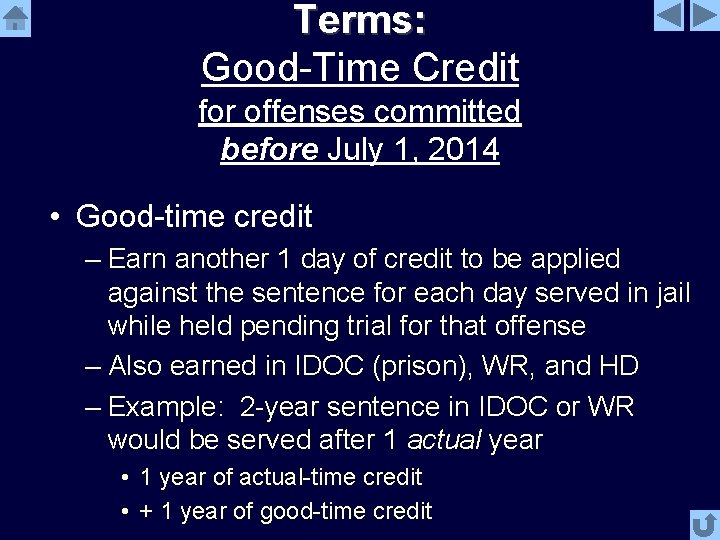
Terms: Good-Time Credit for offenses committed before July 1, 2014 • Good-time credit – Earn another 1 day of credit to be applied against the sentence for each day served in jail while held pending trial for that offense – Also earned in IDOC (prison), WR, and HD – Example: 2 -year sentence in IDOC or WR would be served after 1 actual year • 1 year of actual-time credit • + 1 year of good-time credit
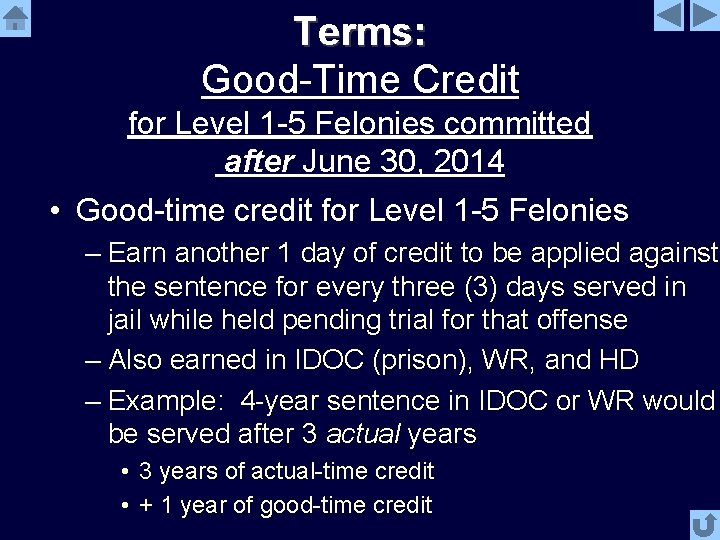
Terms: Good-Time Credit for Level 1 -5 Felonies committed after June 30, 2014 • Good-time credit for Level 1 -5 Felonies – Earn another 1 day of credit to be applied against the sentence for every three (3) days served in jail while held pending trial for that offense – Also earned in IDOC (prison), WR, and HD – Example: 4 -year sentence in IDOC or WR would be served after 3 actual years • 3 years of actual-time credit • + 1 year of good-time credit
Terms: Good-Time Credit for misdemeanors and Level 6 Felonies committed after June 30, 2014 • Good-time credit – Earn another 1 day of credit to be applied against the sentence for each day served in jail while held pending trial for that offense – Also earned in IDOC (prison), WR, and HD – Example: 2 -year sentence in IDOC or WR would be served after 1 actual year • 1 year of actual-time credit • + 1 year of good-time credit
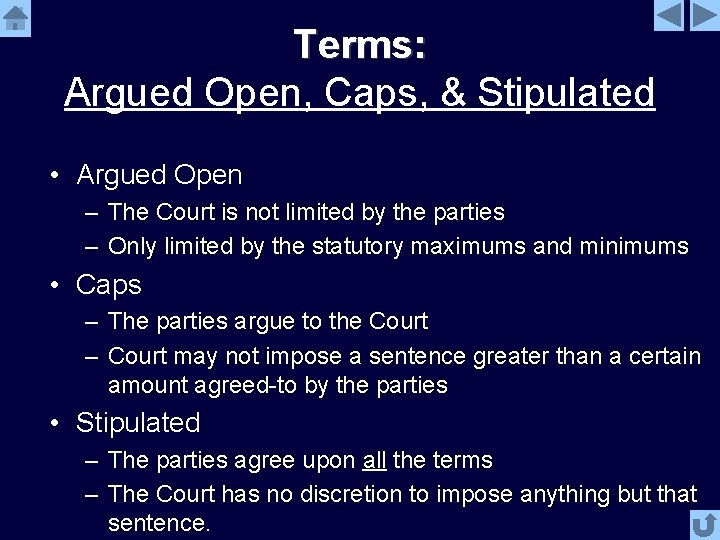
Terms: Argued Open, Caps, & Stipulated • Argued Open – The Court is not limited by the parties – Only limited by the statutory maximums and minimums • Caps – The parties argue to the Court – Court may not impose a sentence greater than a certain amount agreed-to by the parties • Stipulated – The parties agree upon all the terms – The Court has no discretion to impose anything but that sentence.
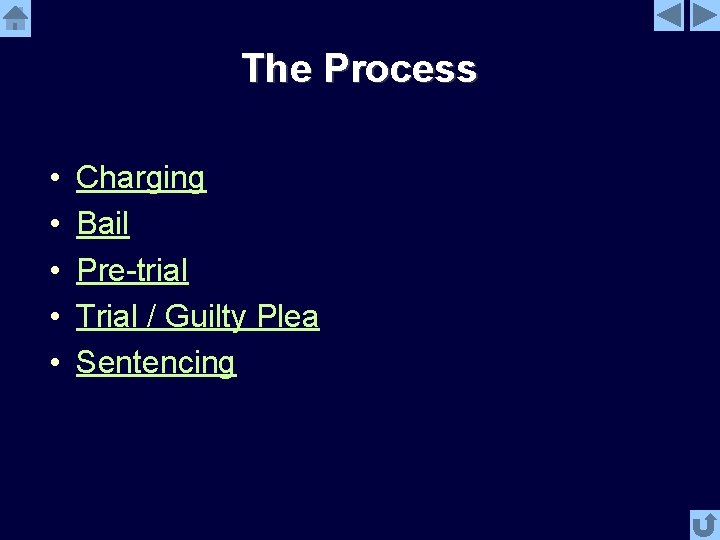
The Process • • • Charging Bail Pre-trial Trial / Guilty Plea Sentencing
The Process: Charging • The State (the Prosecuting Attorney’s Office) files documents with the Court: – Charging Information • Formally declares the charges • Establishes the elements (facts the State must prove beyond a reasonable doubt) – Probable Cause Affidavit • Details why the State believes the Defendant committed the charged offense(s) • Signed under oath by an officer • Provides a basis for the arrest
The Process: Bail / Bond • Defendants may be released from jail upon the posting of property (usually money) to ensure future appearance in Court – State makes recommendation to the Court • Ultimately controlled by the Court • Court establishes a dollar amount – Conditions may be imposed • No-contact with victims, etc. – May be “cash” or “surety” • Cash => Individual posts the full amount. Is refunded (minus certain fees) at the conclusion of the case. • Surety => Bondsman is paid 10% and posts the bail required by the Court – Example: $5, 000 bond is posted by a bondsman who is paid $500 by the Defendant. The 10% is non-refundable.
The Process: Pre-Trial • Once charges are filed and the Defendant is arrested … – Initial Hearing • Formally read the charges • Trial dates are set by the Court • Attorney may be appointed for the Defendant – Discovery • The process by which the State and the Defendant share the information gathered • May include a deposition (sworn examination) of witnesses
The Process: Pre-Trial – Pre-trial conferences • Meeting between the State and Defense – May be in front of a Judge or held informally • Discuss discovery – Determine whether the Court needs to get involved • Discuss the pending trial date. Options include: – Confirm for trial – Delay (“continue”) the trial for more discovery / negotiations – Set the case for a hearing at which the Defendant will plead guilty to some or all of the charges
The Process: Pre-Trial – Timeline – Criminal Rule 4 • Not counting delays caused by the Defendant or the Court, the Defendant have the trial within ____ days of their arrest: – 365 days if released (out on bond) – 180 days if held in jail on these charges – 70 days if held in jail on these charges and the Defendant has invoked their “Speedy Trial” right
The Process: Trial / Guilty Plea • Jury Trial – Defendant’s right to have case heard by a jury – A jury determines guilt only • Does not determine the punishment or sentence – Comprised of 12 residents of county – Unanimous decision required – Human factors often come into play • Bench Trial – A Judge hears the evidence and determines guilt
The Process: Trial / Guilty Plea • Burden of Proof – Beyond a Reasonable Doubt • Not beyond all doubt • A very high standard • Rules of Evidence control what the fact finder (jury or judge) may hear
The Process: Trial / Guilty Plea • Guilty Plea – Defendant may enter a plea of guilty to a charge • May be with an agreement with the State • Sentencing date will be set
The Process: Sentencing • The Judge sentences (not the jury) – Discretion is controlled by: • Indiana state law (statutes) • Plea agreement, if present • A pre-sentence investigation (PSI) report will be prepared by the Probation Department – A “This Is Your Life” document detailing: • Criminal history, Family, Employment • Physical health / mental health / substance abuse – Aids the Court to understand who it is sentencing
Felony Punishments for offenses committed before July 1, 2014 • • • Class D Felony Class C Felony Class B Felony Class A Felony Murder
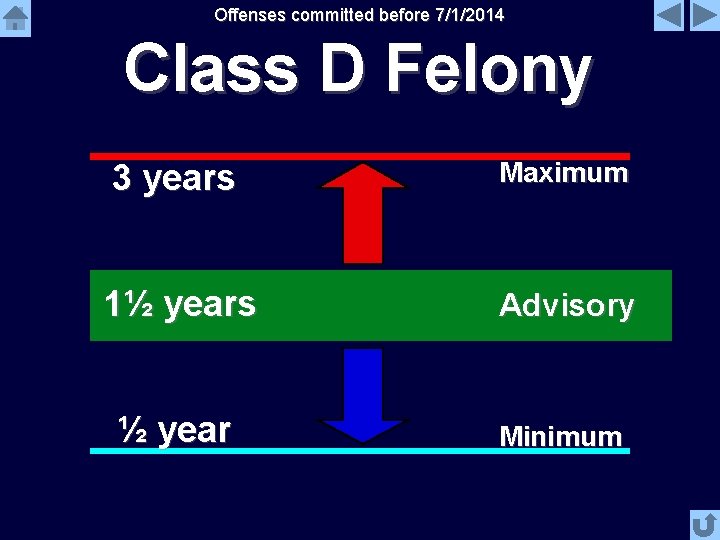
Offenses committed before 7/1/2014 Class D Felony 3 years Maximum 1½ years Advisory ½ year Minimum
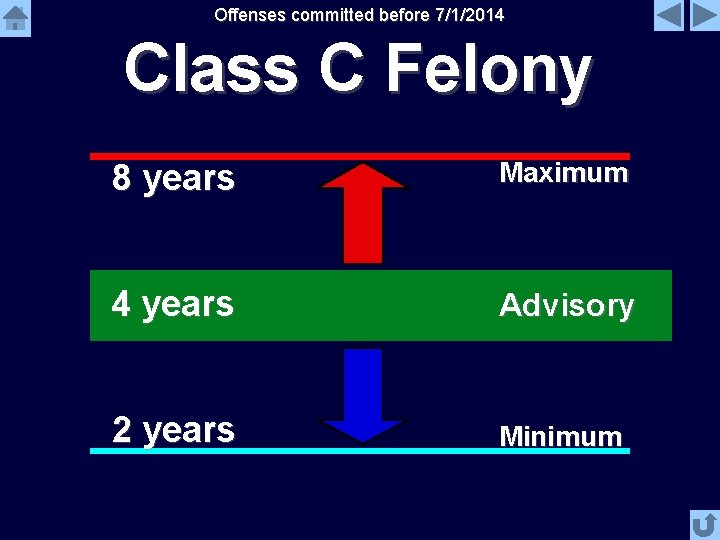
Offenses committed before 7/1/2014 Class C Felony 8 years Maximum 4 years Advisory 2 years Minimum
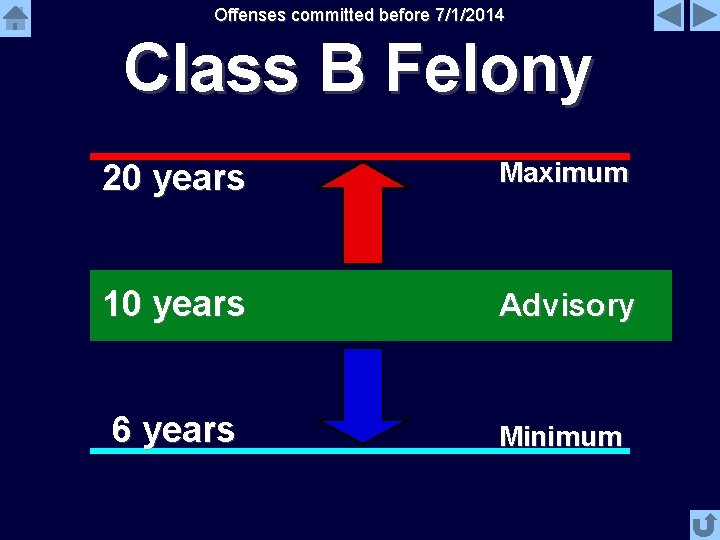
Offenses committed before 7/1/2014 Class B Felony 20 years Maximum 10 years Advisory 6 years Minimum
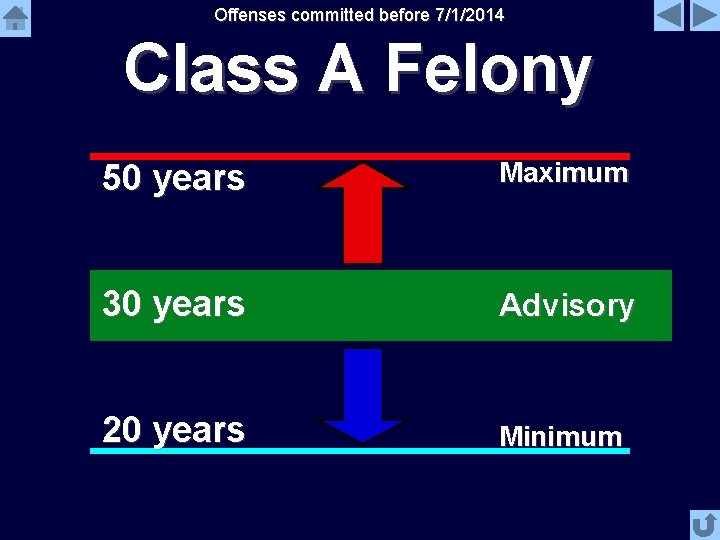
Offenses committed before 7/1/2014 Class A Felony 50 years Maximum 30 years Advisory 20 years Minimum
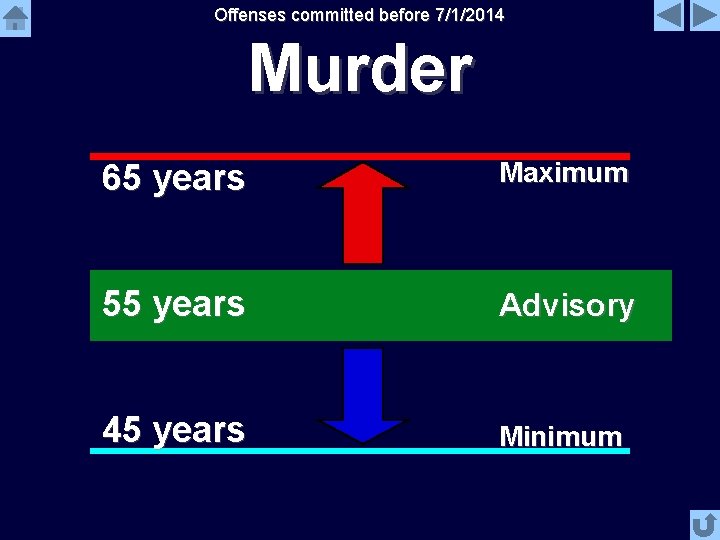
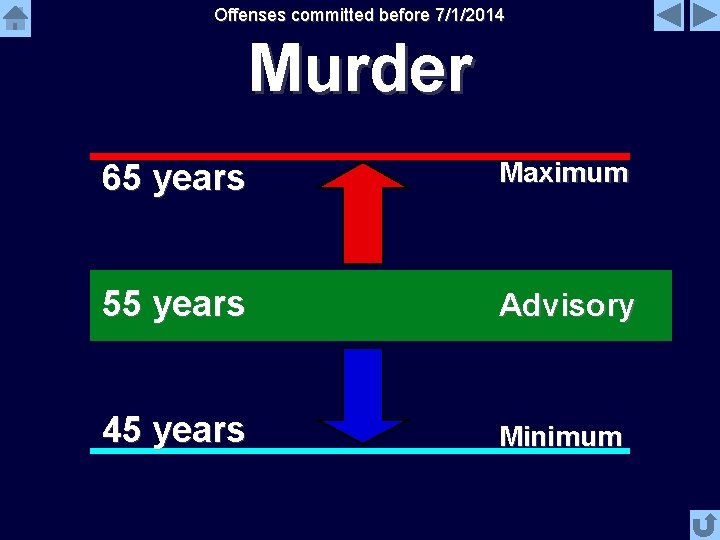
Offenses committed before 7/1/2014 Murder 65 years Maximum 55 years Advisory 45 years Minimum
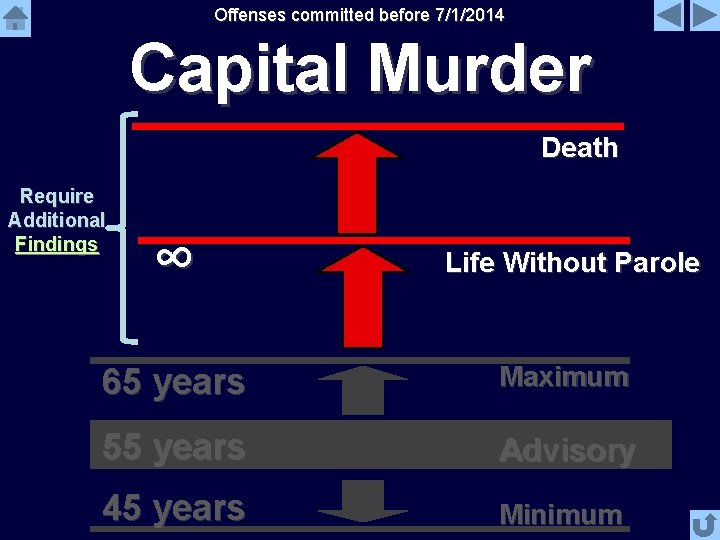
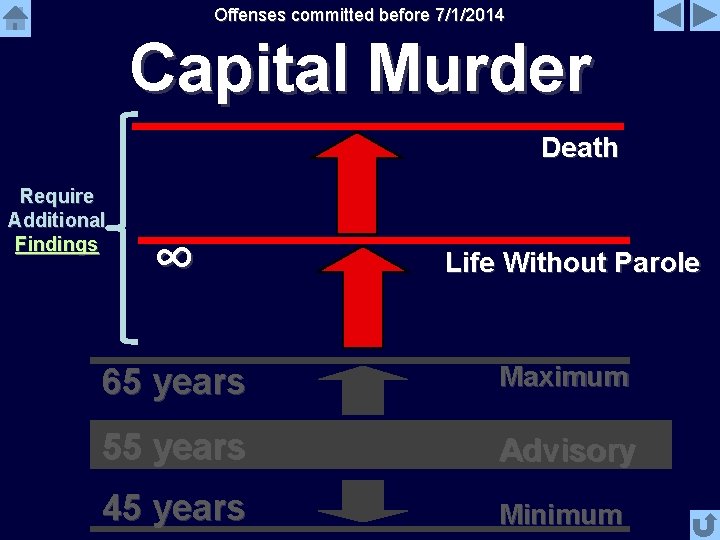
Offenses committed before 7/1/2014 Capital Murder Death Require Additional Findings ∞ Life Without Parole 65 years Maximum 55 years Advisory 45 years Minimum
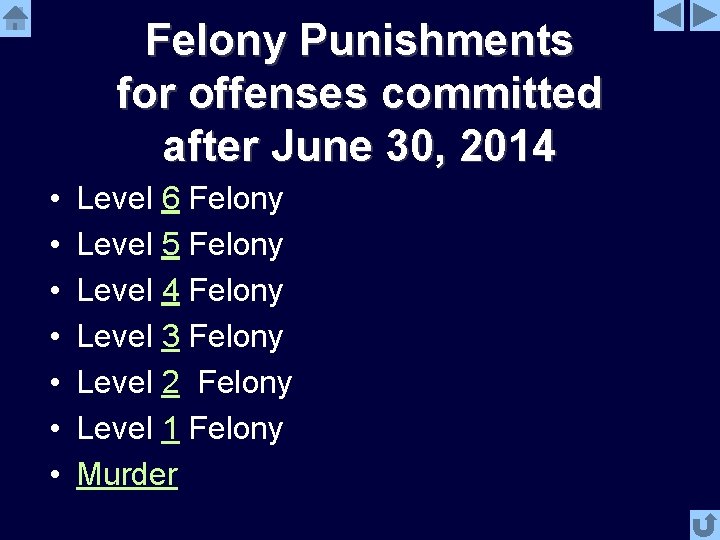
Felony Punishments for offenses committed after June 30, 2014 • • Level 6 Felony Level 5 Felony Level 4 Felony Level 3 Felony Level 2 Felony Level 1 Felony Murder
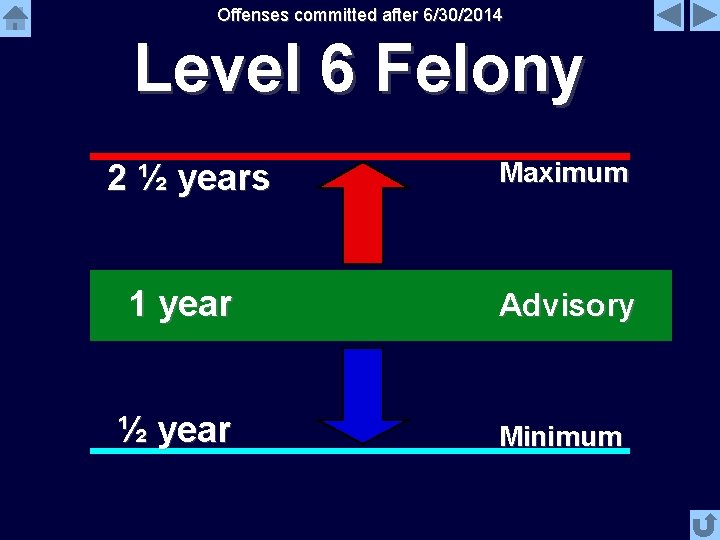
Offenses committed after 6/30/2014 Level 6 Felony 2 ½ years Maximum 1 year Advisory ½ year Minimum
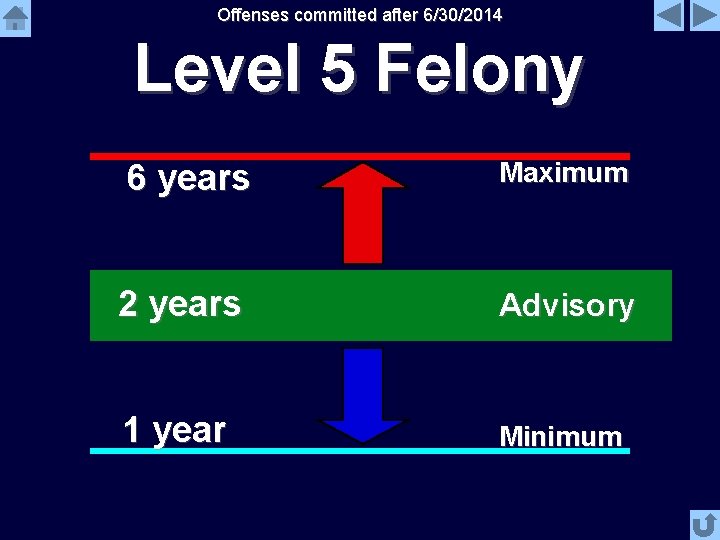
Offenses committed after 6/30/2014 Level 5 Felony 6 years Maximum 2 years Advisory 1 year Minimum
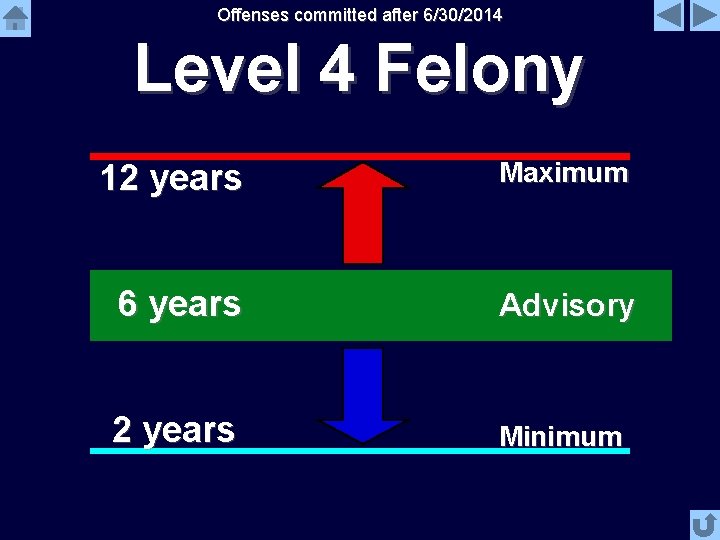
Offenses committed after 6/30/2014 Level 4 Felony 12 years Maximum 6 years Advisory 2 years Minimum
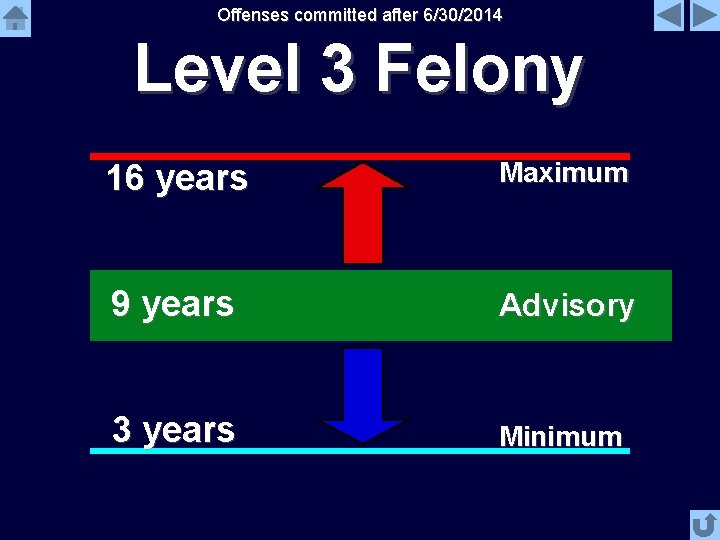
Offenses committed after 6/30/2014 Level 3 Felony 16 years Maximum 9 years Advisory 3 years Minimum
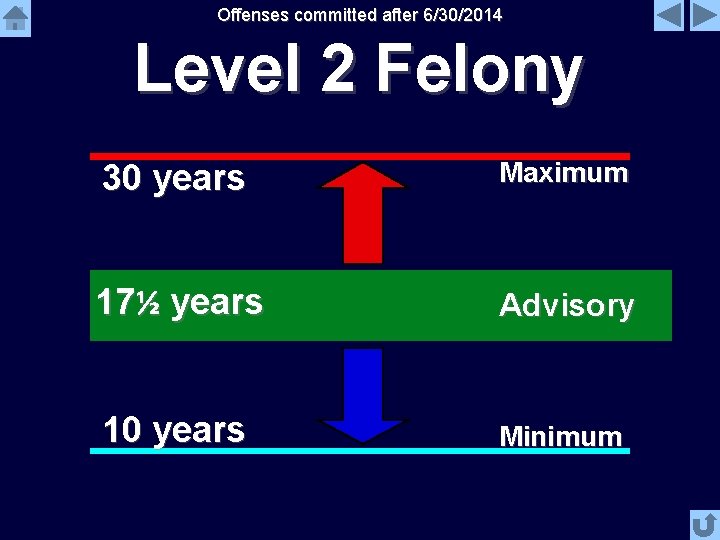
Offenses committed after 6/30/2014 Level 2 Felony 30 years Maximum 17½ years Advisory 10 years Minimum
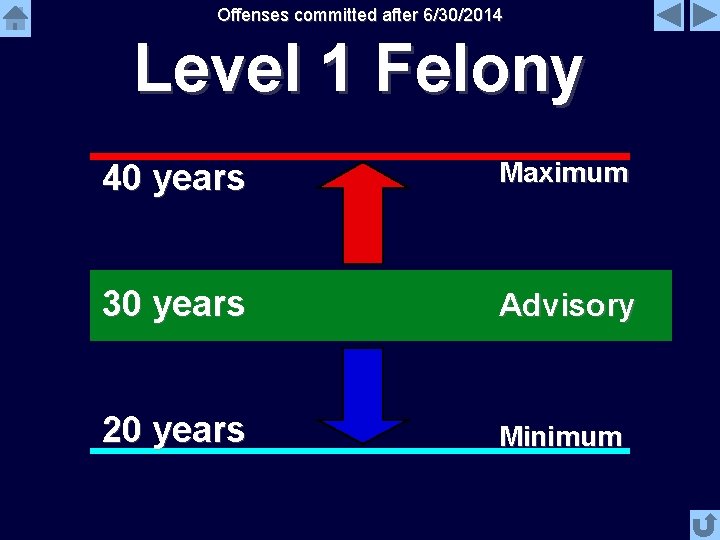
Offenses committed after 6/30/2014 Level 1 Felony 40 years Maximum 30 years Advisory 20 years Minimum
Offenses committed before 7/1/2014 Murder 65 years Maximum 55 years Advisory 45 years Minimum
Offenses committed before 7/1/2014 Capital Murder Death Require Additional Findings ∞ Life Without Parole 65 years Maximum 55 years Advisory 45 years Minimum
Death Penalty & Life Imprisonment • Must prove to the fact-finder (jury) at least one: – The defendant committed the murder by intentionally killing the victim while committing or attempting to commit any of the following: arson, burglary, child molesting, criminal deviate conduct, kidnapping, rape, robbery, carjacking, criminal gang activity, dealing in cocaine or a narcotic drug. – Detonation of an explosive with intent to injure person or damage property – Lying in wait. – Hired to kill. – Hiring another person to kill. – The victim of the murder was a corrections employee, probation officer, parole officer, community corrections worker, home detention officer, fireman, judge, or law enforcement officer, and either: (A) the victim was acting in the course of duty; or (B) the murder was motivated by an act the victim performed while acting in the course of duty. – Defendant has been convicted of another murder. – Defendant has committed another murder, at any time, regardless of whether the defendant has been convicted of that other murder. – … [continued on next page]
Death Penalty & Life Imprisonment [continued]: – Defendant was under the custody of the department of correction; under the custody of a county sheriff; on probation after receiving a sentence for the commission of a felony; or on parole at the time the murder was committed. – Defendant dismembered the victim. – Defendant burned, mutilated, or tortured the victim while the victim was alive. – Victim of the murder was less than twelve (12) years of age. – Victim was a victim of any of the following offenses for which the defendant was convicted: battery as a Class D or C felony; kidnapping; criminal confinement ; or a sex crime – Victim of the murder was listed by the state or known by the defendant to be a witness against the defendant and the defendant committed the murder with the intent to prevent the person from testifying. – Intentionally discharging a firearm into an inhabited dwelling; or from a vehicle. – Victim of the murder was pregnant and the murder resulted in the intentional killing of a fetus that has attained viability
Plea Agreements & Sentencing • An agreement between the State and Defendant – Negotiated by the Deputy Prosecutor and the Defense Counsel – Court later accepts or rejects the agreement as submitted to it • Generally discusses and determines the … – Charges to be resolved by means of: • Plea of guilty • Dismissed – Sentence to be imposed on the guilty charges
Plea Agreements & Sentencing • Many sentencing options are available for discussion: – How the sentence will be determined: • Argued open to the Court • Argued with a cap to the Court, or • Completely stipulated – How large the imposed sentence will be • Whether any or all of the sentence will be executed • Whether any or all of the sentence will be suspended – Probation: How long and any special terms – How the sentence will be served (“placement”) • Prison, work release, home detention, or some combination thereof
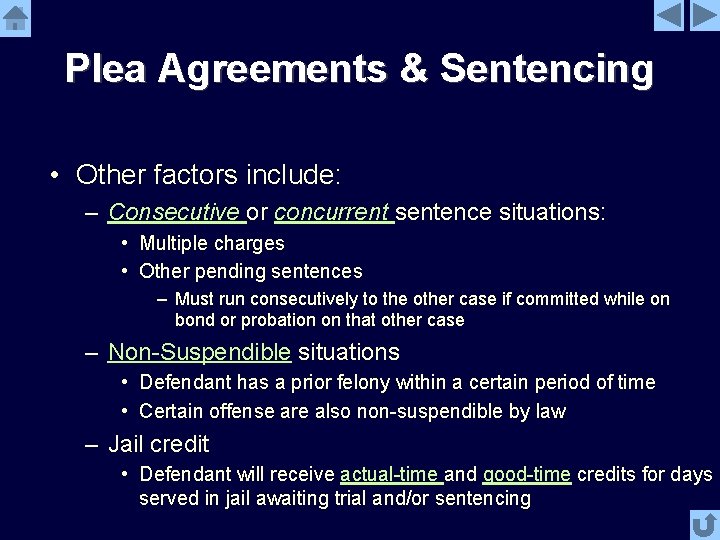
Plea Agreements & Sentencing • Other factors include: – Consecutive or concurrent sentence situations: • Multiple charges • Other pending sentences – Must run consecutively to the other case if committed while on bond or probation on that other case – Non-Suspendible situations • Defendant has a prior felony within a certain period of time • Certain offense are also non-suspendible by law – Jail credit • Defendant will receive actual-time and good-time credits for days served in jail awaiting trial and/or sentencing
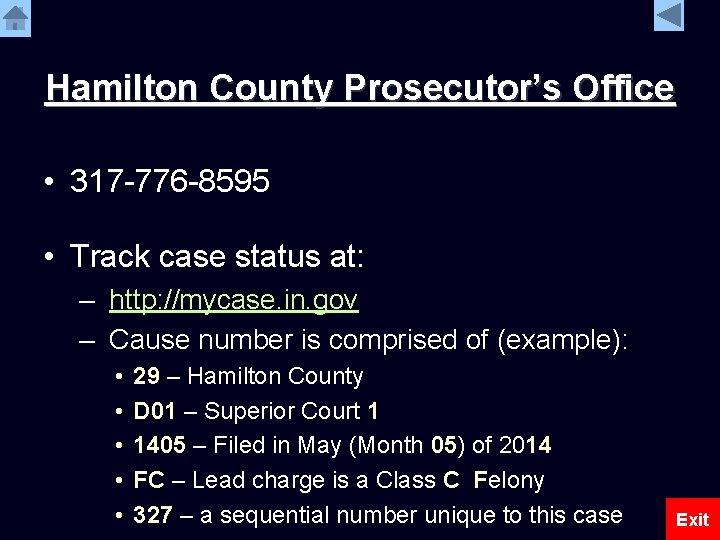
Hamilton County Prosecutor’s Office • 317 -776 -8595 • Track case status at: – http: //mycase. in. gov – Cause number is comprised of (example): • • • 29 – Hamilton County D 01 – Superior Court 1 1405 – Filed in May (Month 05) of 2014 FC – Lead charge is a Class C Felony 327 – a sequential number unique to this case Exit