
Indian Mounds Regional Park Master Plan Saint Paul
- Slides: 11
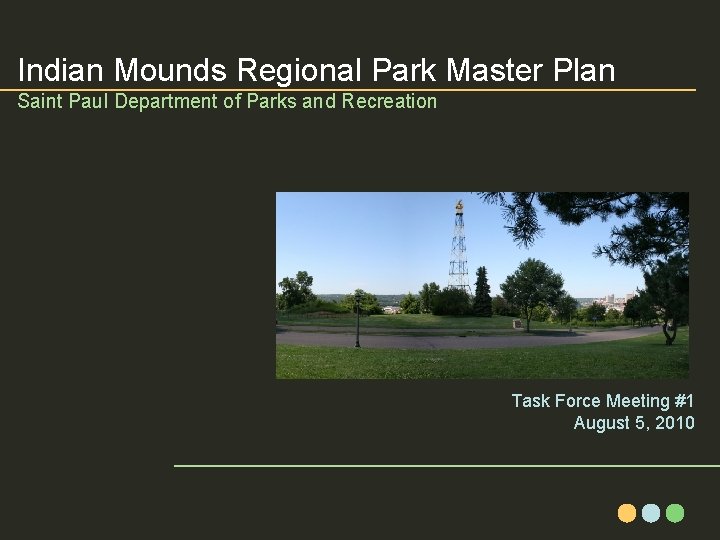
Indian Mounds Regional Park Master Plan Saint Paul Department of Parks and Recreation Task Force Meeting #1 August 5, 2010
Indian Mounds Regional Park Master Plan Task Force A 20 member citizen advisory group to Parks and Recreation Purpose: To provide community input and guidance to the Department of Parks and Recreation for the development of a framework plan for Indian Mounds Regional Park and Mounds Maintenance Facility which reflects the needs of the citizens of the greater St. Paul area. This plan will guide decisions related to preservation, restoration, and improvements to existing natural and built systems and proposed amenities and programs.
Indian Mounds Regional Park Task Force Members: 1. Julie Gugin (Chair) 12. Candy Petersen 2. John Anfinson 13. Marjorie Pitz 3. Colleen Ashton 14. Susan Richter 4. Ned Brooks 15. Jane Russo 5. Jacob Dorer 16. Steve Trimble 6. Stephanie Harr 17. Wally Waranka 7. Irene Jones 18. Leonard Wabasha 8. Jim Jones (Tom Ross) 19. Business Representative 9. Anne Kolar 20. Bicycle Representative 10. N. Scott Larsen 11. Brian Miller Staff: Kathleen Anglo and Ellen Stewart
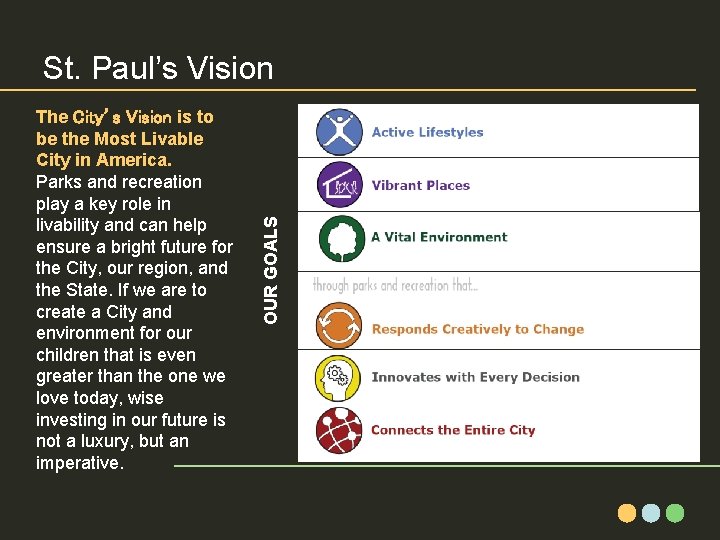
The City’s Vision is to be the Most Livable City in America. Parks and recreation play a key role in livability and can help ensure a bright future for the City, our region, and the State. If we are to create a City and environment for our children that is even greater than the one we love today, wise investing in our future is not a luxury, but an imperative. OUR GOALS St. Paul’s Vision
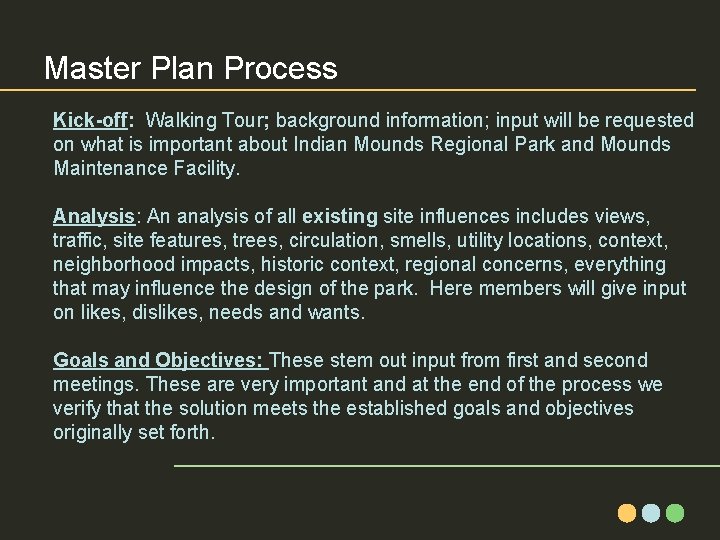
Master Plan Process Kick-off: Walking Tour; background information; input will be requested on what is important about Indian Mounds Regional Park and Mounds Maintenance Facility. Analysis: An analysis of all existing site influences includes views, traffic, site features, trees, circulation, smells, utility locations, context, neighborhood impacts, historic context, regional concerns, everything that may influence the design of the park. Here members will give input on likes, dislikes, needs and wants. Goals and Objectives: These stem out input from first and second meetings. These are very important and at the end of the process we verify that the solution meets the established goals and objectives originally set forth.
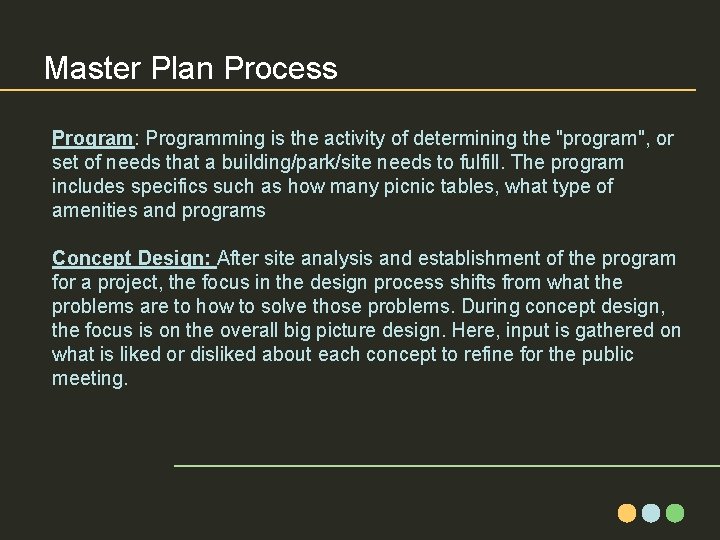
Master Plan Process Program: Programming is the activity of determining the "program", or set of needs that a building/park/site needs to fulfill. The program includes specifics such as how many picnic tables, what type of amenities and programs Concept Design: After site analysis and establishment of the program for a project, the focus in the design process shifts from what the problems are to how to solve those problems. During concept design, the focus is on the overall big picture design. Here, input is gathered on what is liked or disliked about each concept to refine for the public meeting.
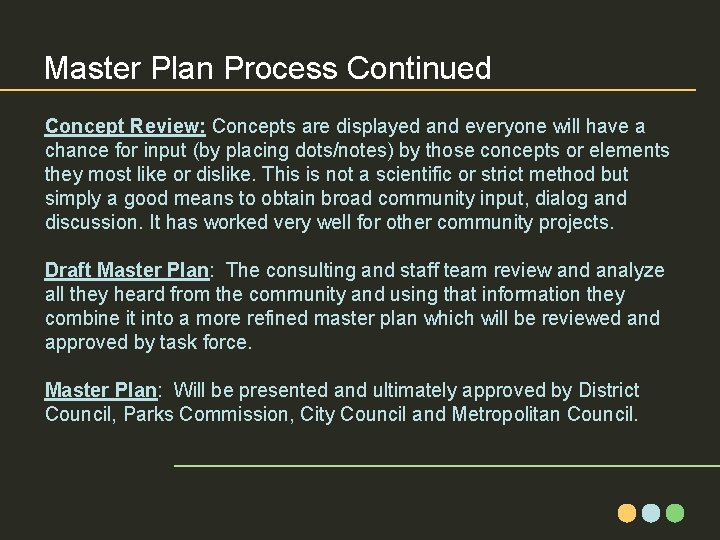
Master Plan Process Continued Concept Review: Concepts are displayed and everyone will have a chance for input (by placing dots/notes) by those concepts or elements they most like or dislike. This is not a scientific or strict method but simply a good means to obtain broad community input, dialog and discussion. It has worked very well for other community projects. Draft Master Plan: The consulting and staff team review and analyze all they heard from the community and using that information they combine it into a more refined master plan which will be reviewed and approved by task force. Master Plan: Will be presented and ultimately approved by District Council, Parks Commission, City Council and Metropolitan Council.
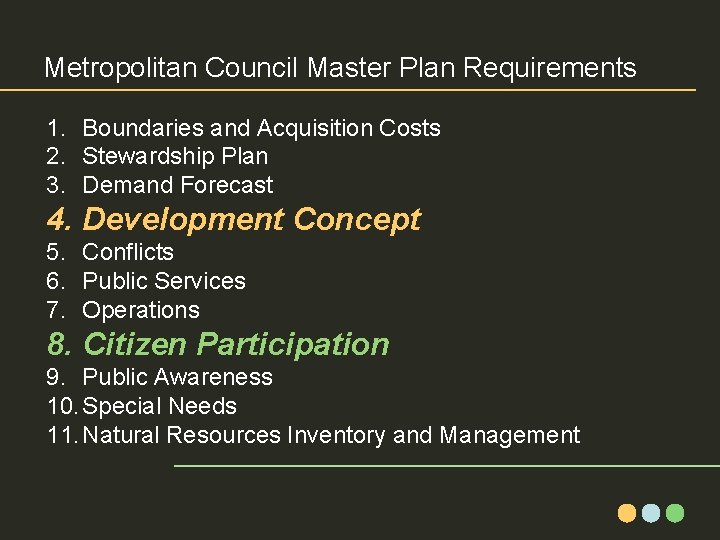
Metropolitan Council Master Plan Requirements 1. Boundaries and Acquisition Costs 2. Stewardship Plan 3. Demand Forecast 4. Development Concept 5. Conflicts 6. Public Services 7. Operations 8. Citizen Participation 9. Public Awareness 10. Special Needs 11. Natural Resources Inventory and Management
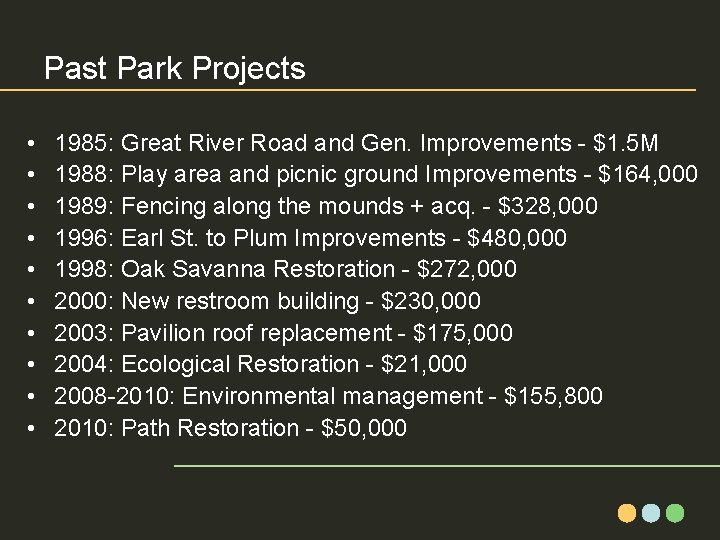
Past Park Projects • • • 1985: Great River Road and Gen. Improvements - $1. 5 M 1988: Play area and picnic ground Improvements - $164, 000 1989: Fencing along the mounds + acq. - $328, 000 1996: Earl St. to Plum Improvements - $480, 000 1998: Oak Savanna Restoration - $272, 000 2000: New restroom building - $230, 000 2003: Pavilion roof replacement - $175, 000 2004: Ecological Restoration - $21, 000 2008 -2010: Environmental management - $155, 800 2010: Path Restoration - $50, 000
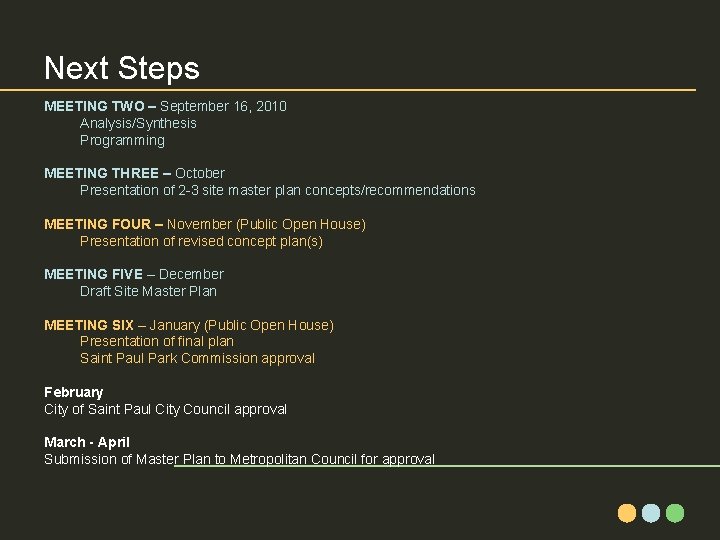
Next Steps MEETING TWO – September 16, 2010 Analysis/Synthesis Programming MEETING THREE – October Presentation of 2 -3 site master plan concepts/recommendations MEETING FOUR – November (Public Open House) Presentation of revised concept plan(s) MEETING FIVE – December Draft Site Master Plan MEETING SIX – January (Public Open House) Presentation of final plan Saint Paul Park Commission approval February City of Saint Paul City Council approval March - April Submission of Master Plan to Metropolitan Council for approval
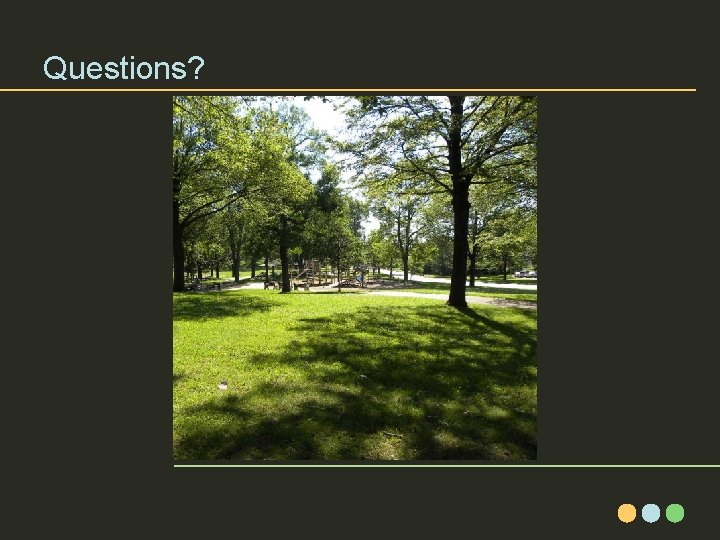
Questions?