
Indian Lore Merit Badge VinceCroninbaylor edu The Indian
Indian Lore Merit Badge Vince_Cronin@baylor. edu
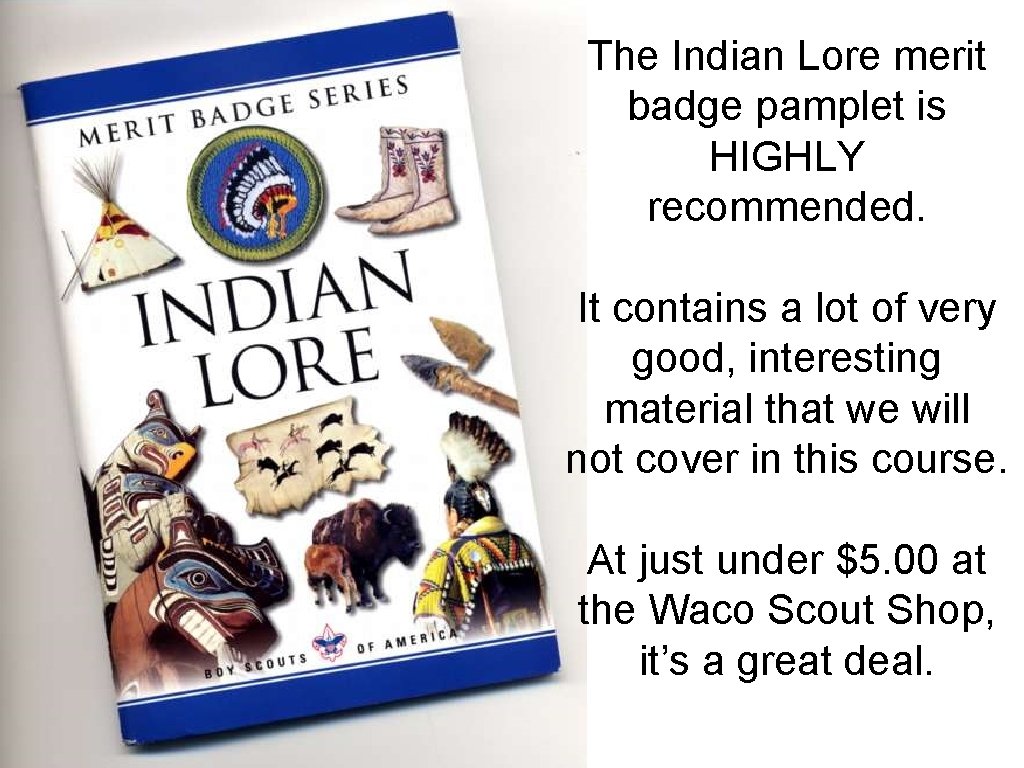
The Indian Lore merit badge pamplet is HIGHLY recommended. It contains a lot of very good, interesting material that we will not cover in this course. At just under $5. 00 at the Waco Scout Shop, it’s a great deal.

Requirements
1. Give the history of one American Indian tribe, group, or nation that lives or has lived near you. . . Tell about traditional dwellings, way of life, tribal government, religious beliefs, family and clan relationships, language, clothing styles, arts and crafts, food preparation, means of getting around, games, customs in warfare, where members of the group now live, and how they live.
2. Do TWO of the following. Focus on a specific group or tribe. a. Make an article of clothing worn by members of the tribe b. Make and decorate three items used by the tribe, as approved by your counselor. c. Make an authentic model of a dwelling used by an Indian tribe, group, or nation. d. Visit a museum to see Indian artifacts. Discuss them with your counselor. Identify at least 10 artifacts by tribe or nation, their shape, size, and use.
3. Do ONE of the following: a. Learn three games played by a group or tribe. Teach and lead one game with a Scout group. b. Learn and show a tribe traditionally cooked or prepared food. Make three food items. c. Give a demonstration showing how a specific Indian group traditionally hunted, fished, or trapped.
4. Do ONE of the following: a. Write or briefly describe how life might have been different for the European settlers if there had been no native Americans to meet when they came to this continent. b. -- c. -- d. -- e. Learn in English an Indian story of at least 250 words. Tell the story at a Scout meeting. f. -- g. -- h. -- i. --
Current best evidence is that humans reached North America around 14, 000 years ago, migrating from Siberia. Native American History in Central Texas
Current best evidence is that humans reached North America around 14, 000 years ago, migrating from Siberia. Essentially all native Americans in North, South and Central America are related to small groups of early immigrants from Asia. Native American History in Central Texas
Dating human migration using mt. DNA and Y chromosomes https: //www 3. nationalgeographic. com/genographic
Humans reached the Texas area approximately 12, 000 years ago. Archaeologists call the people who lived in North America before 8, 500 years ago Paleoindians. Native American History in Central Texas
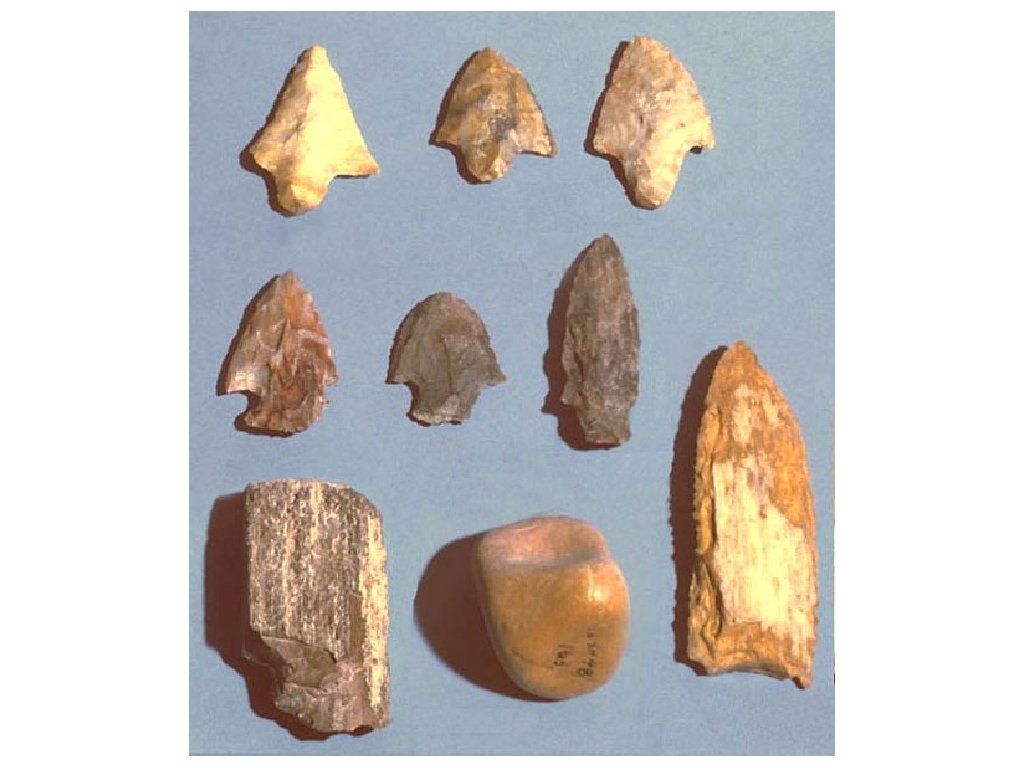
Paleoindians left Clovis points and later Folsom points made of volcanic glass (obsidian) or flint. Native American History in Central Texas
Paleoindians left Clovis points and later Folsom points made of volcanic glass (obsidian) or flint. Their stone tools included spear tips, knives, tips for the end of atlatl darts, scrapers, and metates for grinding acorns or other seeds. Native American History in Central Texas
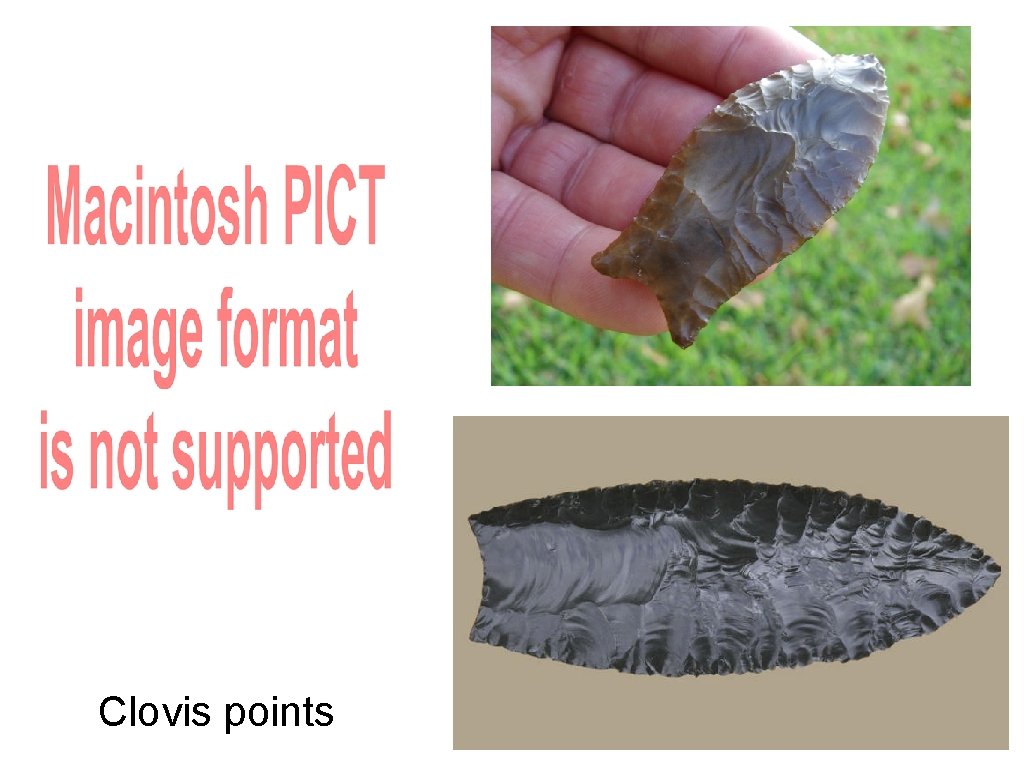
Clovis points
Paleoindians lived during the last major episode in the Ice Age, when glaciers covered much of Canada and our northern states, as well as many mountain ranges. Native American History in Central Texas
Paleoindians lived during the last major episode in the Ice Age, when glaciers covered much of Canada and our northern states, as well as many mountain ranges. They hunted primitive elephants (mastodons, mammoths), bison, elk, and a variety of other animals, some of which are now extinct. Native American History in Central Texas
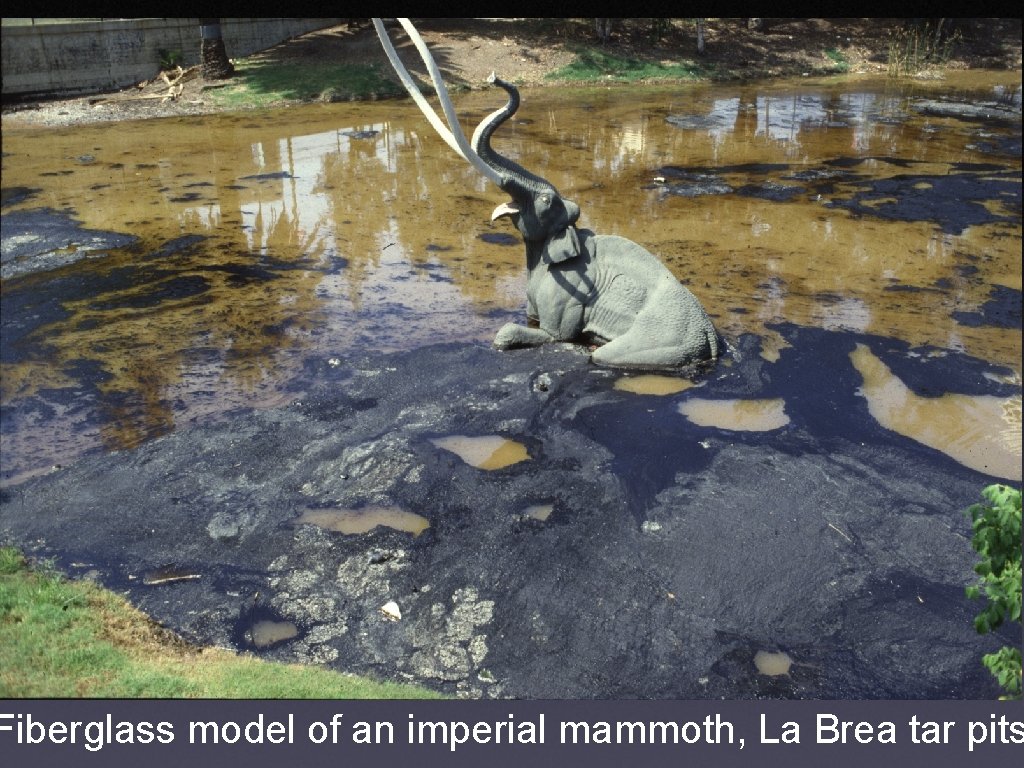
Fiberglass model of an imperial mammoth, La Brea tar pits
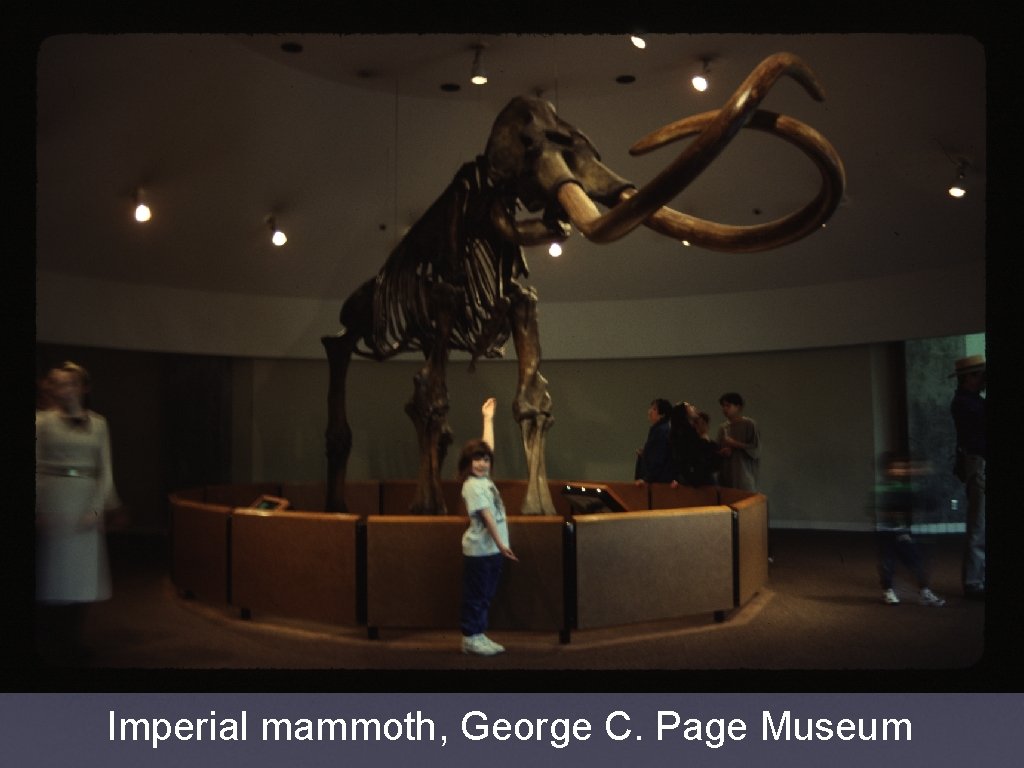
Imperial mammoth, George C. Page Museum
During the Archaic Period (8500 BP to 2500 BP), Native Americans were hunters and gatherers. Native American History in Central Texas
During the Archaic Period (8500 BP to 2500 BP), Native Americans were hunters and gatherers. Elephants and some other large Ice-Age mammals were extinct in North America, but bison were an important source of food and materials, and they were hunted Native American History in Central with the Texas atlatl.
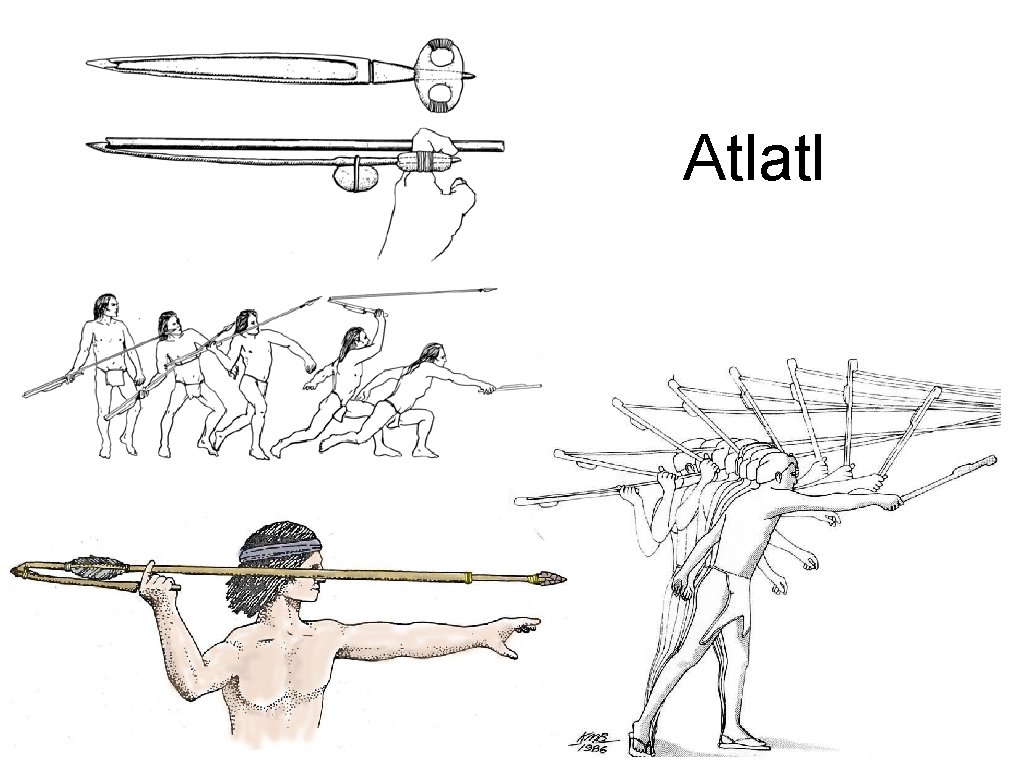
Atlatl

Much of our information about Native Americans of the Prehistoric Period (2500 -400 BP) comes from excavations in rock shelters and caves. Native American History in Central Texas
The atlatl was gradually replaced with the bow and arrow, with animal sinew used for the arrow string. Native American History in Central Texas
The atlatl was gradually replaced with the bow and arrow, with animal sinew used for the arrow string. In addition to hunting and gathering, farming developed. Native American History in Central Texas
The atlatl was gradually replaced with the bow and arrow, with animal sinew used for the arrow string. In addition to hunting and gathering, farming developed. Pottery came into use (~2500 BP), allowing food to be boiled. Native American History in Central Texas
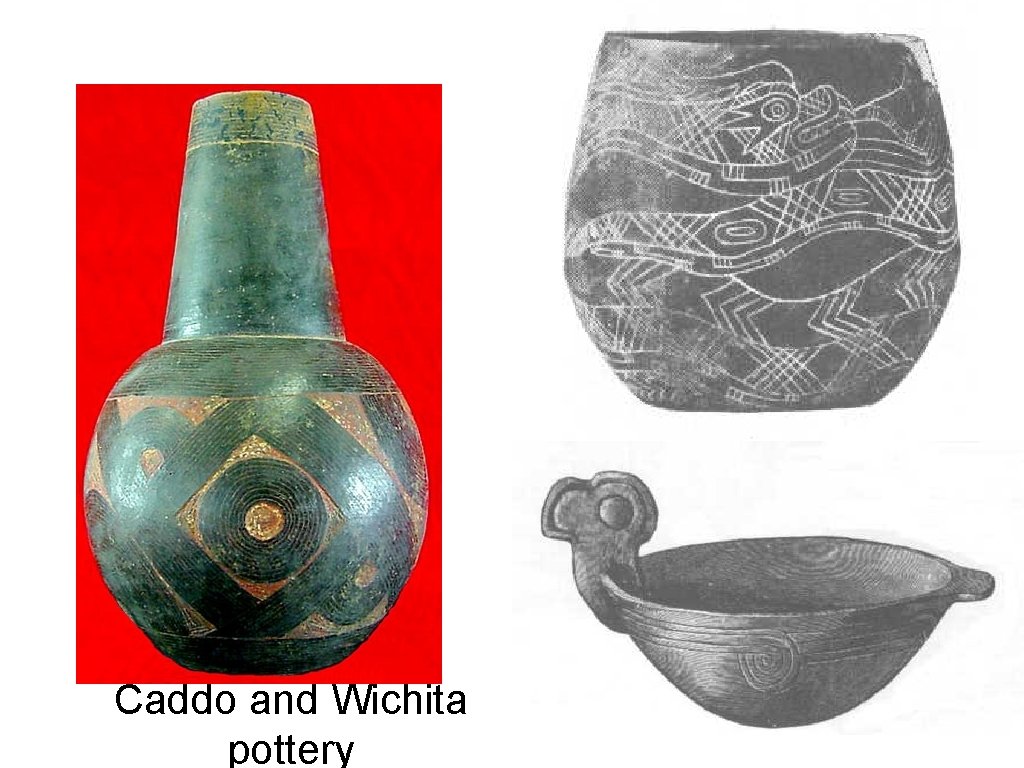
Caddo and Wichita pottery
Corn (maize) was cultivated in the southwest from ~100 AD. Other crops/foods included various beans, melons, squash, pumpkins, peaches, plums, sunflower, tobacco, acorns, seeds, berries, nuts, persimmons, goosefoot and Native American History in Central Texas sumpweed.
Before contact with Europeans in 1492, it is estimated that there were between 28 and 120 million humans living in North, Central and South America. Native American History in Central Texas
Current estimates indicate that as much as 95% of the native population of the Americas died within 200 years of initial European contact, due largely to disease. Native American History in Central Texas
Genetic markers indicate that native Americans (including North, Central and South America) are all very closely related, and display very little genetic diversity. Native American History in Central Texas
Genetic markers indicate that native Americans (including North, Central and South America) are all very closely related, and display very little genetic diversity. That is why they were so endangered by diseases brought by. American people from Europe and Native History in Central Texas
The primary diseases that decimated Native Americans were smallpox, measles, whooping cough and cholera. Native American History in Central Texas
The size of the Wichita tribe has declined dramatically since first contact with Europeans in 1541. 1780: 3, 200 1937: 385 Waco band in 1824: ~480575. . . in 1859: 171 Native American History in Central Texas
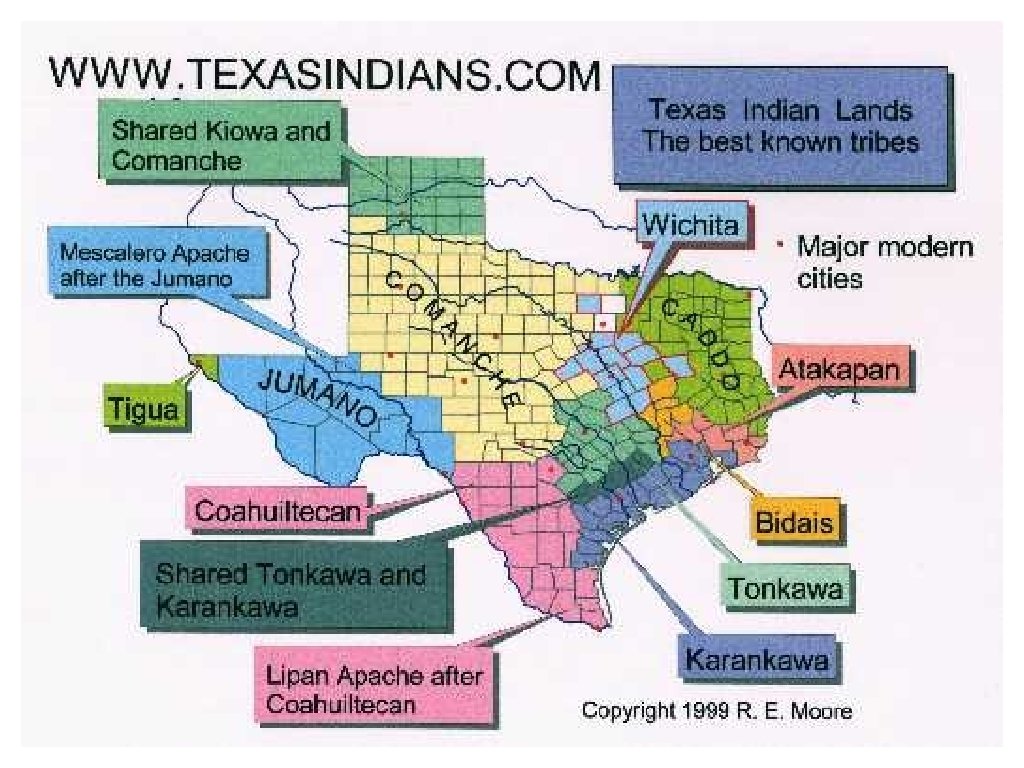
The Waco Indians were closely related to the Tawakoni. Both are subgroups (bands) of the Wichita Tribe, which in turn is part of the Caddoan Confederation (along with the Pawnee and the Caddo). Native American History in Central Texas
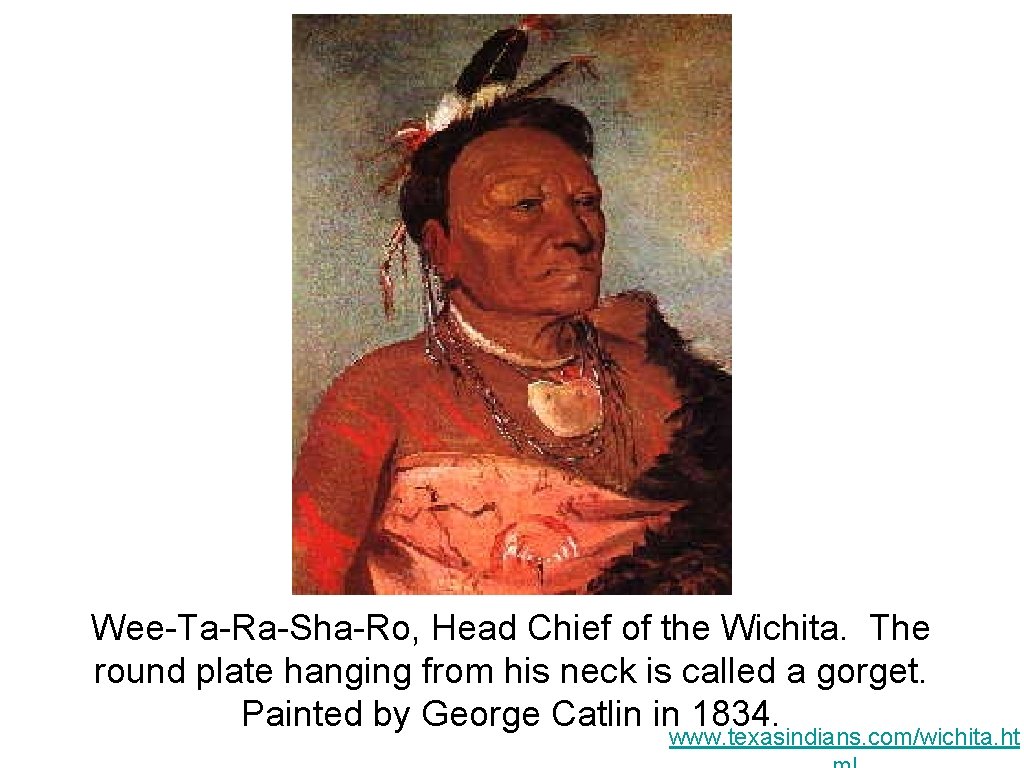
Wee-Ta-Ra-Sha-Ro, Head Chief of the Wichita. The round plate hanging from his neck is called a gorget. Painted by George Catlin in 1834. www. texasindians. com/wichita. ht
The Wichitas were among the few Plains Indians that used tatoos. They sometimes referred to themselves as “the raccoon people” because of their tatoos around their eyes. Native American History in Central Texas
The Wichitas moved into Texas after the first Europeans arrived in the 1500 s. The Wacos established their village Quiscat near present-day Waco in the early 1770 s. Native American History in Central Texas
There are several stories about the origin of the name “Waco. ” Native American History in Central Texas
There are several stories about the origin of the name “Waco. ” It is commonly said to be from Hueco, Huaco, Wacoah, or Quchaco. Native American History in Central Texas
There are several stories about the origin of the name “Waco. ” It is commonly said to be from Hueco, Huaco, Wacoah, or Quchaco. Another idea is that is from Wehiko, a corruption of Mexico, and given because the tribe was always Native American History in Central Texas
1770 s: Wacos establish two villages near Waco, with ~500 people Native American History in Central Texas
1824: Wacos sign a treaty with Stephen F. Austin, who left behind a description of their village. Native American History in Central Texas
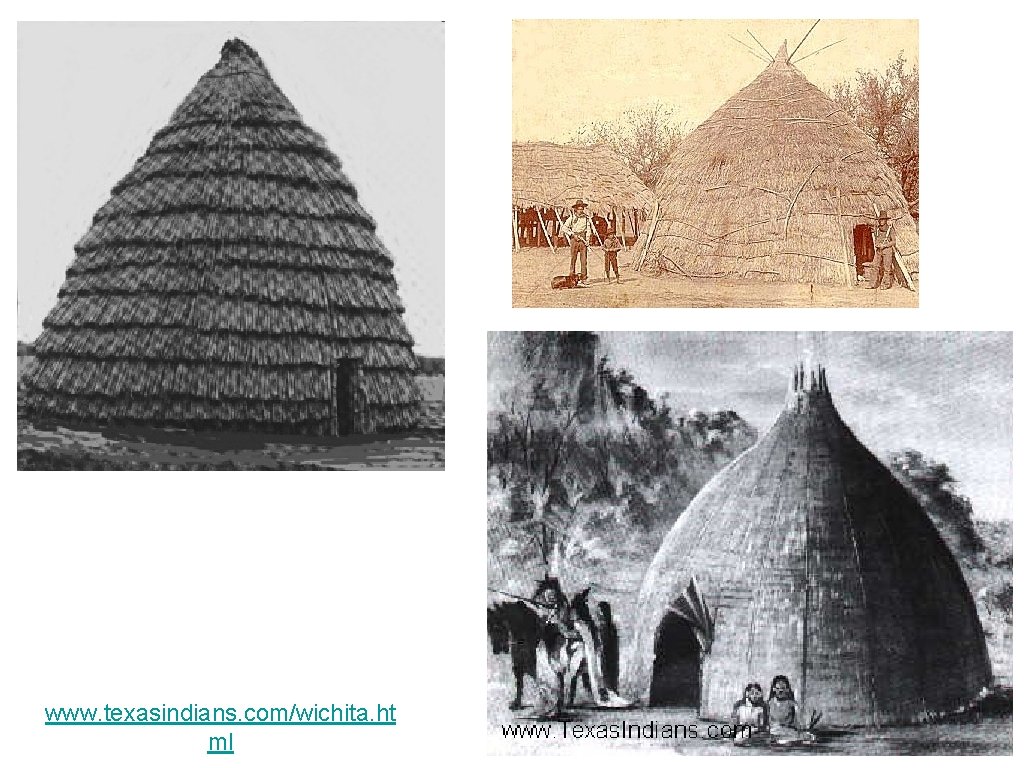
According the Stephen F. Austin, in 1824 the main Waco village had ~33 grass houses and occupied ~40 acres. They cultivated ~200 acres of corn and other crops. Another nearby village had 15 grass houses. Native American History in Central Texas
By 1830, the Waco village had ~60 grass houses, and ~400 acres under cultivation. They grew beans, squash, corn, melons and watermelon, and managed a peach orchard. In the winter, the village was vacated and the tribe left to hunt buffalo. They lived in tee-pees Native American History in Central Texas
1830: Wacos driven out of their village by Cherokees Native American History in Central Texas
1837: A major smallpox epidemic decimates the Wichita and Waco Native American History in Central Texas
1859: Wacos removed from Texas and sent to a reservation in Indian Territory (Oklahoma) Native American History in Central Texas
1907: Oklahoma becomes a state, and Wichita Indians located to a reservation at Fort Cobb near Anadarko, Oklahoma. By 1910, only 5 Waco remain. Native American History in Central Texas
Tell about traditional dwellings. . . Indian Lore Merit Badge, Requirement 1
Tell about traditional dwellings. . . From spring through fall each year, the Waco lived in grass houses that were 15 -30 feet wide and ~20 feet high. The grass was bundled and tied to a wooden framework. Each house had 10 -12 beds. Indian Lore Merit Badge, Requirement 1
www. texasindians. com/wichita. ht ml
Tell about traditional dwellings. . . From spring through fall each year, the Waco lived in grass houses that were 15 -30 feet wide and ~20 feet high. The grass was bundled and tied to a wooden framework. Each house had 10 -12 beds. In the winter, the Waco would move north to hunt bison, and would live in tee-pees made of bison hide. Indian Lore Merit Badge, Requirement 1
way of life. . . Indian Lore Merit Badge, Requirement 1
way of life. . . The Waco farmed from spring through fall, and hunted bison in the southern plains during the winter. Dried bison meat and bison hides were brought back to the main village. Indian Lore Merit Badge, Requirement 1
tribal government. . . The Waco had a head chief who met with other tribal bands, a sub-chief who was responsible for locating new village sites, and a shaman who was responsible for tribal religion, ceremonies, and healing. Men were hunters and warriors, taught their sons older than ~10 years, and obtained wood for huts. Women did everything else (that is, most of Indian Lore Merit Badge, Requirement the work). 1
religious beliefs. . . The religious beliefs of the Waco were probably based on those of other Wichita tribal groups. These make heavy use of mythical figures whose stories were told over many generations. Indian Lore Merit Badge, Requirement 1
family and clan relationships. . . For a given child, . . . the biological father and his brothers were all considered the child’s father; Indian Lore Merit Badge, Requirement 1
family and clan relationships. . . For a given child, . . . the biological father and his brothers were considered the child’s father; the biological father’s sisters and the biological mother were all considered the child’s mother; Indian Lore Merit Badge, Requirement 1
family and clan relationships. . . For a given child, . . . the biological father and his brothers were considered the child’s father; the biological father’s sisters and the biological mother were all considered the child’s mother; the biological mother’s siblings were considered aunts and uncles; Indian Lore Merit Badge, Requirement 1
family and clan relationships. . . For a given child, . . . the biological father and his brothers were considered the child’s father; the biological father’s sisters and the biological mother were all considered the child’s mother; the biological mother’s siblings were considered aunts and uncles; the children of the biological father’s siblings were considered brothers and sisters; Indian Lore Merit Badge, Requirement 1
family and clan relationships. . . For a given child, . . . the biological father and his brothers were considered the child’s father; the biological father’s sisters and the biological mother were all considered the child’s mother; the biological mother’s siblings were considered aunts and uncles; the children of the biological father’s siblings were considered brothers and sisters; the children of the biological mother’s siblings were considered cousins. Indian Lore Merit Badge, Requirement 1
family and clan relationships. . . All children below the age of ~10 were raised by their mothers. At ~10, boys were raised by their fathers. All discipline within the tribe was the responsibility of family members. Indian Lore Merit Badge, Requirement 1
language. . . The Waco band spoke the Wichita language, which is part of the Caddoan family of languages. Indian Lore Merit Badge, Requirement 1
clothing styles. . . The Waco wore mostly leather clothing. In more recent times, they traded for cotton clothing with the Caddo and White society. Indian Lore Merit Badge, Requirement 1
arts and crafts. . . The Waco were widely known for their bison cloaks/capes and blankets, which they traded. They also made decorated pottery and baskets. Indian Lore Merit Badge, Requirement 1
food preparation. . . The Waco ate simply. They ate fruits and vegetables raw or sometimes boiled. They ate meat raw, cooked over the fire, or dried/smoked. They made corn and acorns into a meal, from which they made simple bread. Indian Lore Merit Badge, Requirement 1
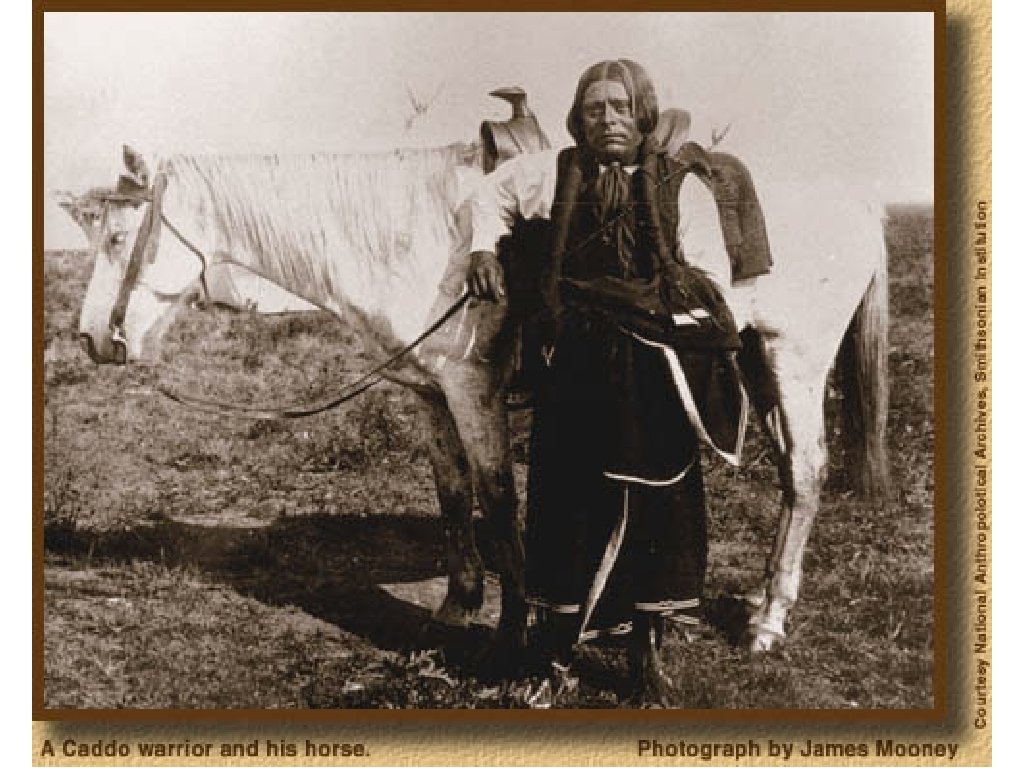
means of getting around. . . Prior to European contact, the Waco and Wichita walked from place to place. Later, they had access to horses. Heavy objects were carried on sleds/travois. Indian Lore Merit Badge, Requirement 1
games. . . (no information available) Indian Lore Merit Badge, Requirement 1
customs in warfare. . . War parties were led by whatever warrior organized the group. Indian Lore Merit Badge, Requirement 1
customs in warfare. . . War parties were led by whatever warrior organized the group. The Waco and Wichita counted coup, meaning that they tried to touch their enemy whether or not they harmed them. Indian Lore Merit Badge, Requirement 1
customs in warfare. . . War parties were led by whatever warrior organized the group. The Waco and Wichita counted coup, meaning that they tried to touch their enemy whether or not they harmed them. The most prized way to kill the enemy was to stab them with a knife, at close range. Indian Lore Merit Badge, Requirement 1
where members of the group now live. . . If any descendants of Waco Indians survive, they probably live in southern Oklahoma near their last reservation site. Indian Lore Merit Badge, Requirement 1
and how they live. . . The surviving Waco and Wichita Indians were given land US citizenship in ~1902. Indian Lore Merit Badge, Requirement 1
Requirement 2 is homework. The Mayborn Museum on the Baylor campus has exhibits on the Native Americans of the Waco area. Indian Lore Merit Badge, Requirement 2
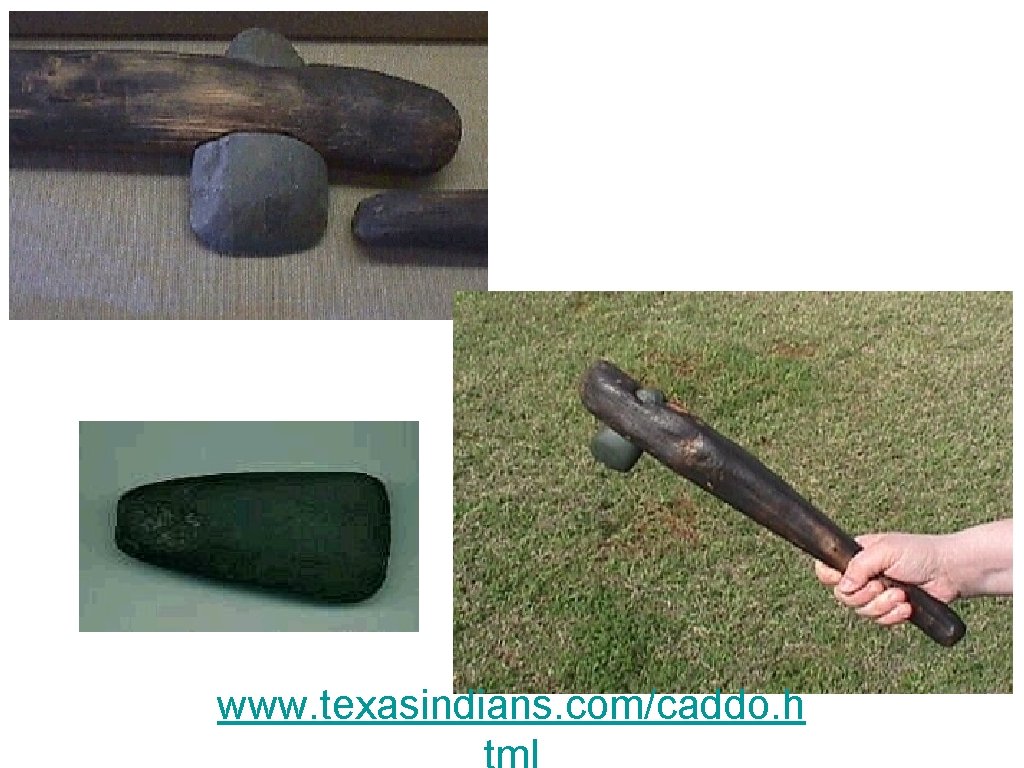
www. texasindians. com/caddo. h
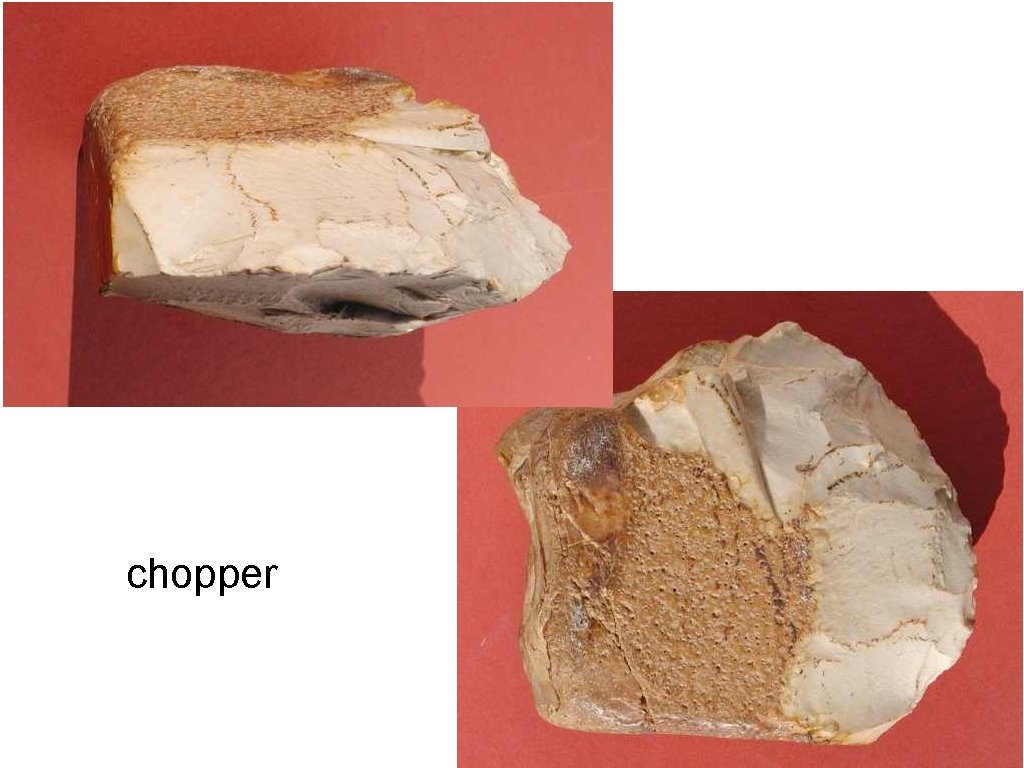
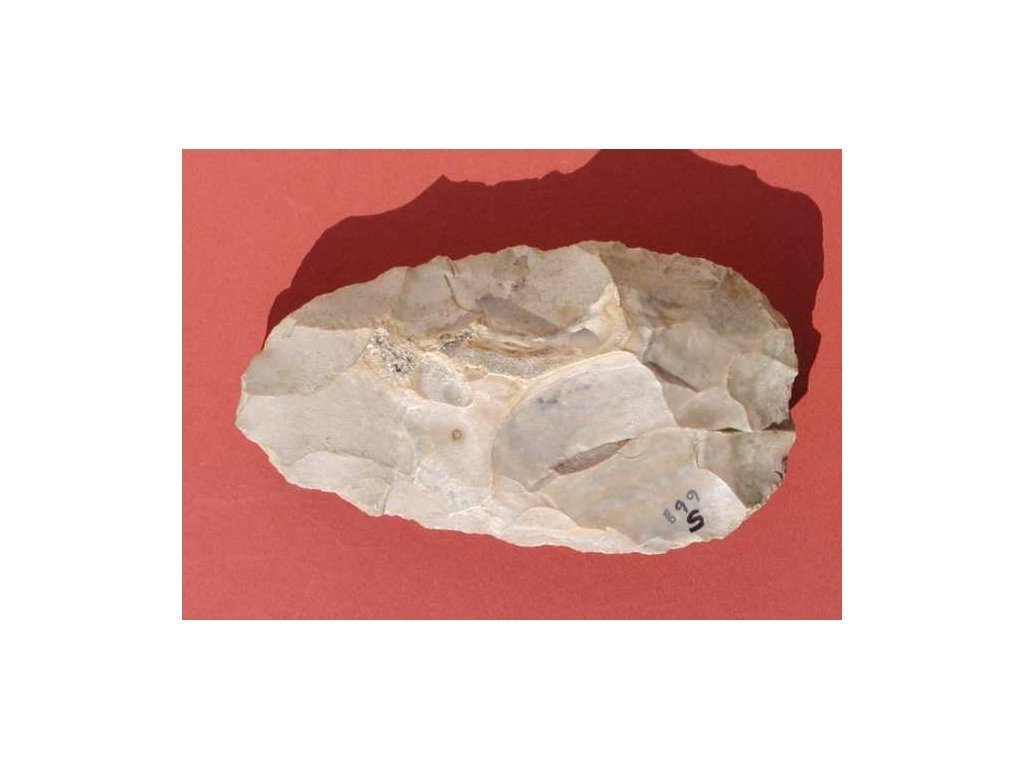
chopper
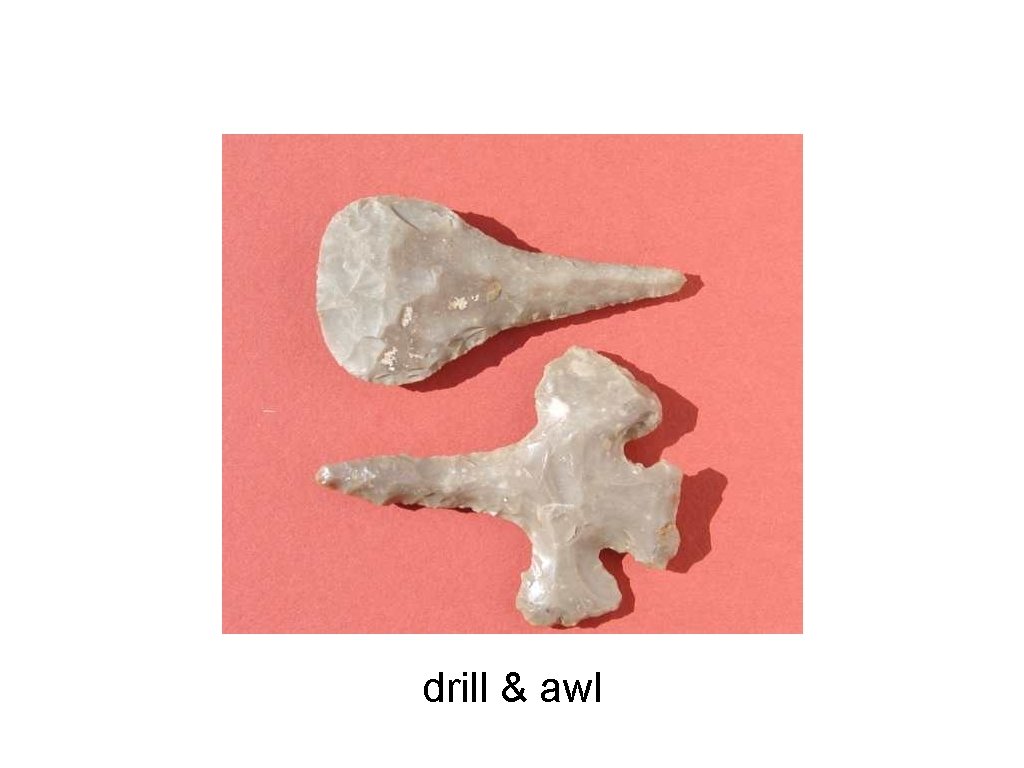
drill & awl
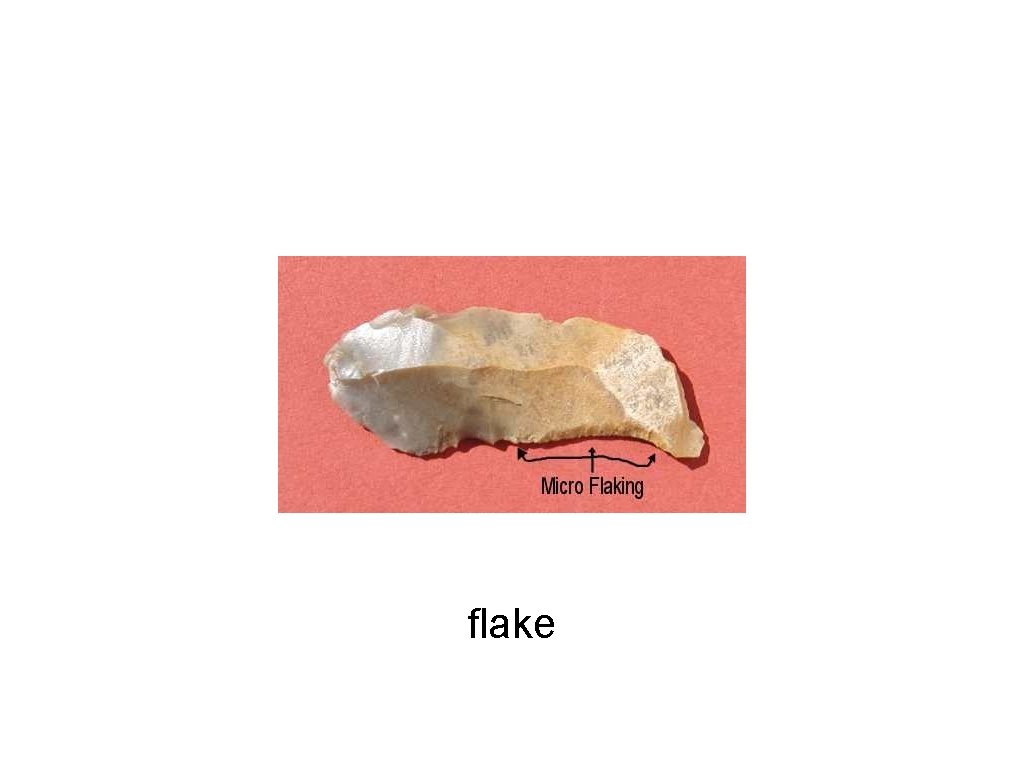
flake
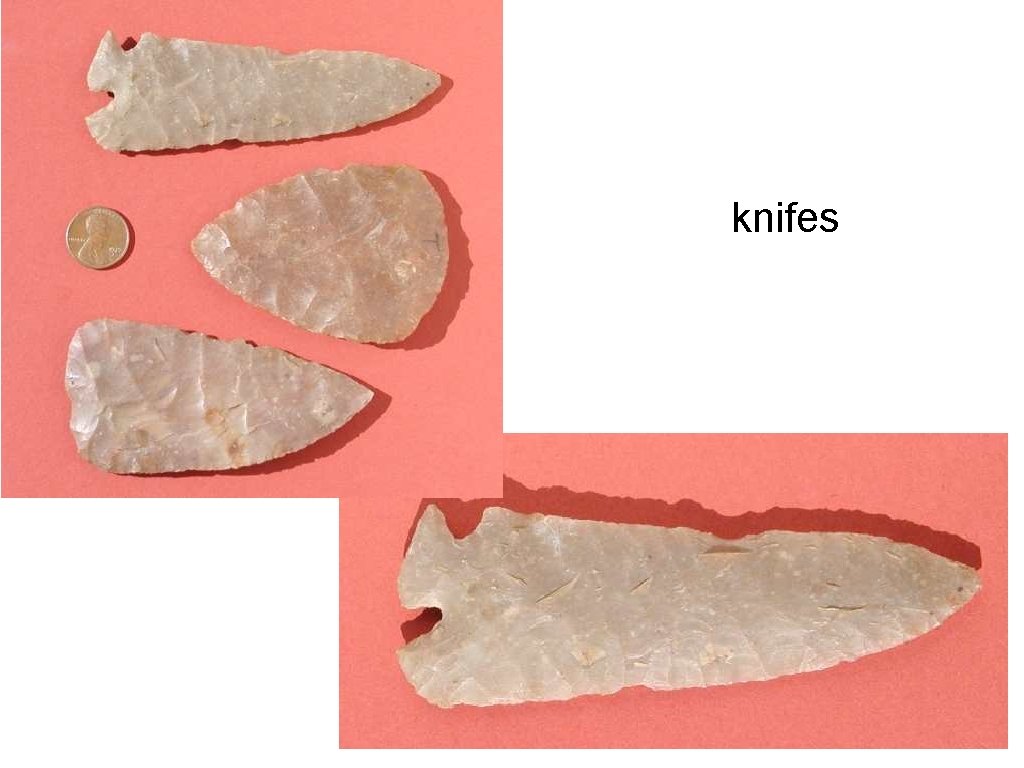
knifes
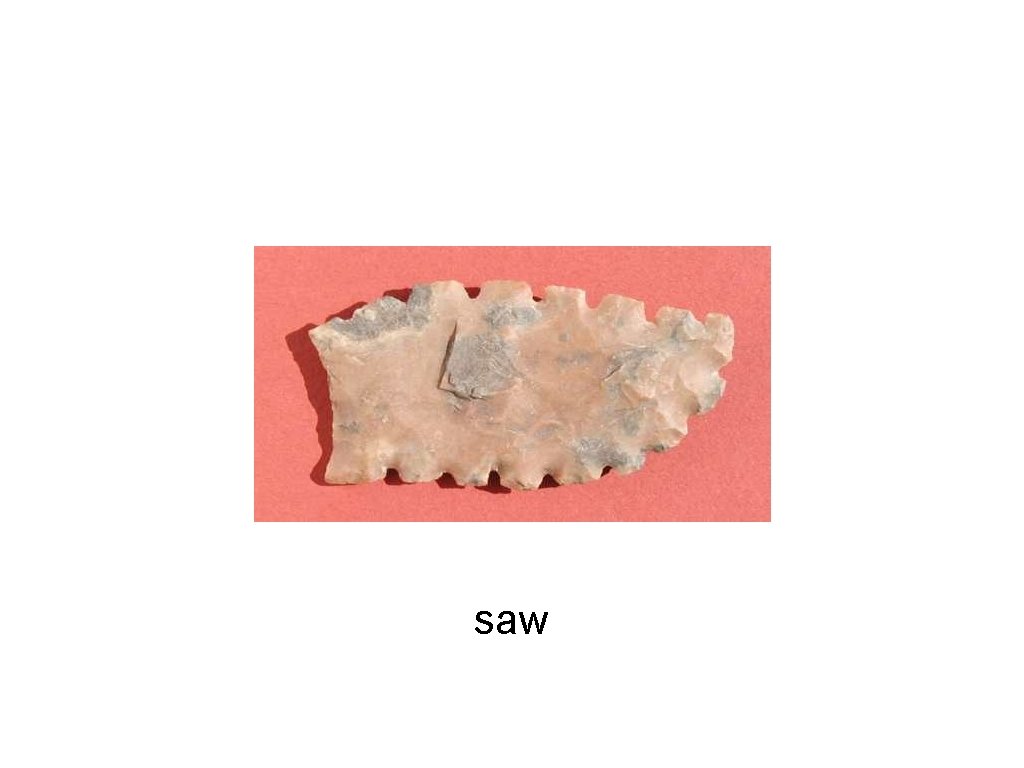
saw
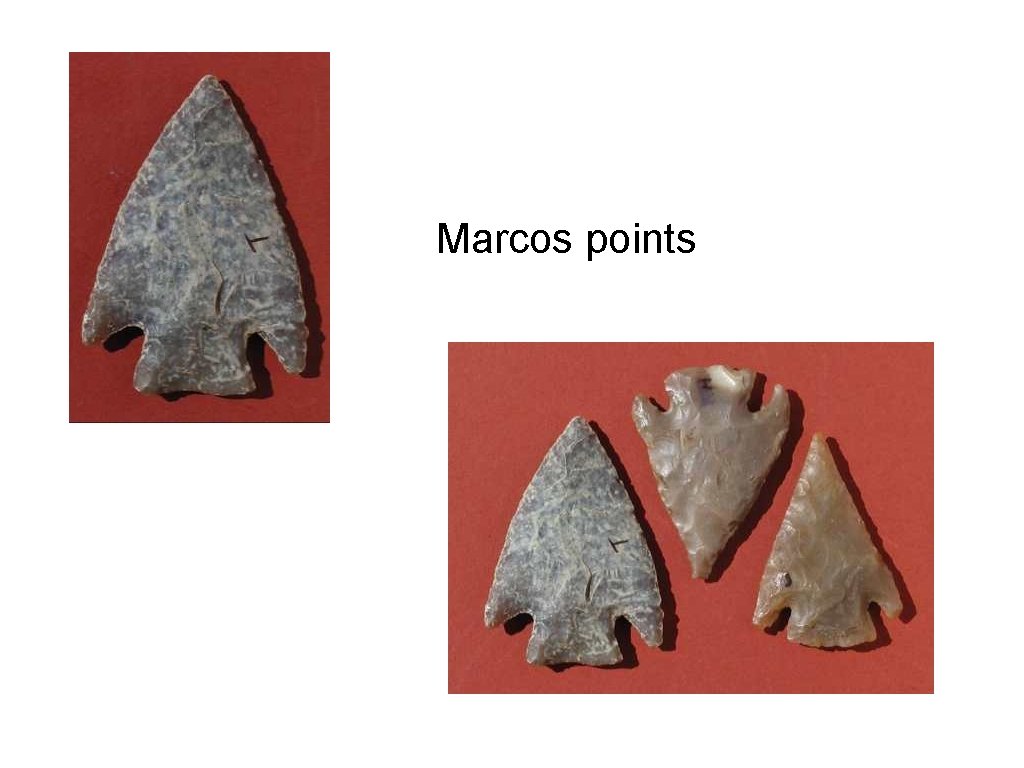
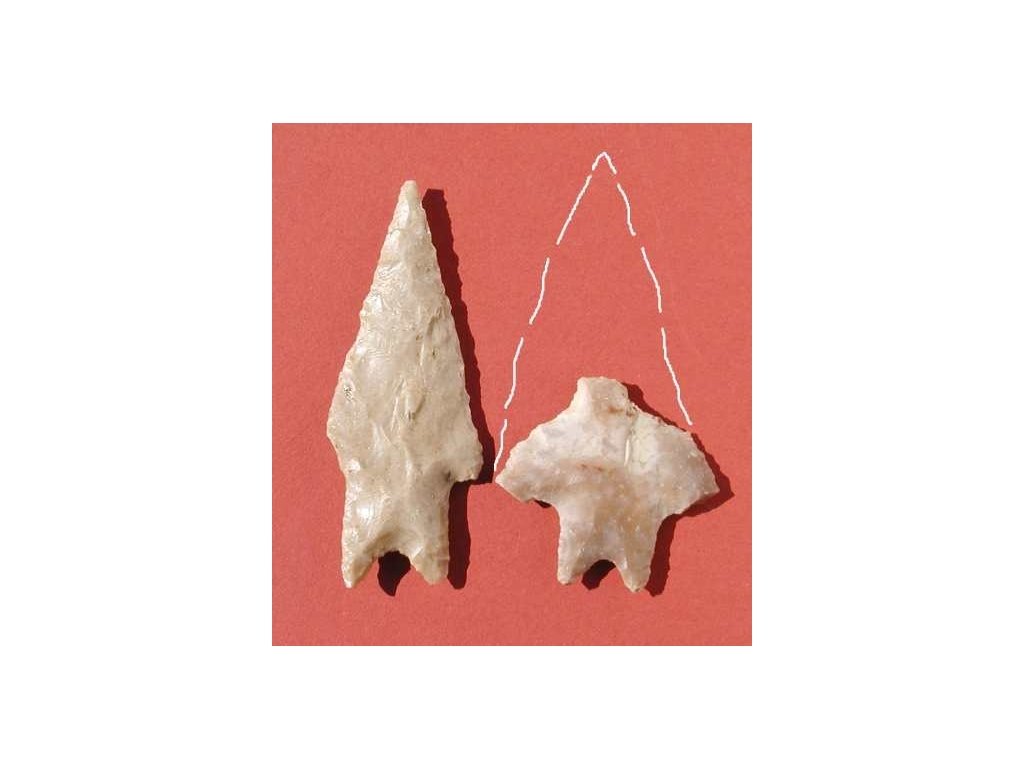
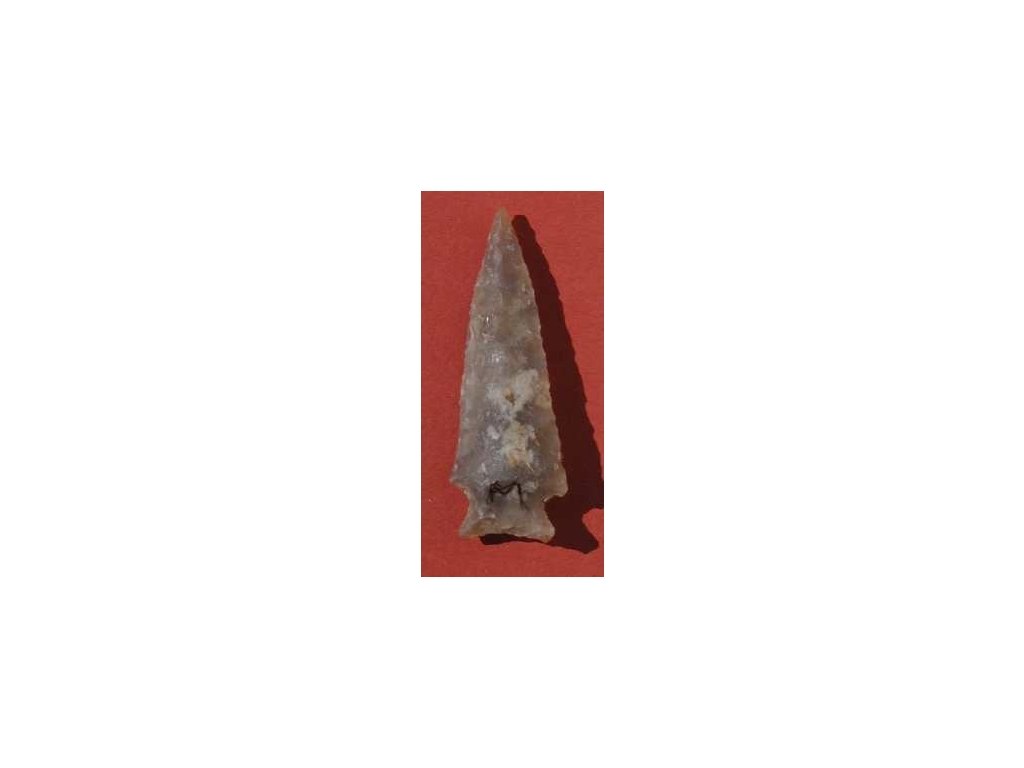
Marcos points
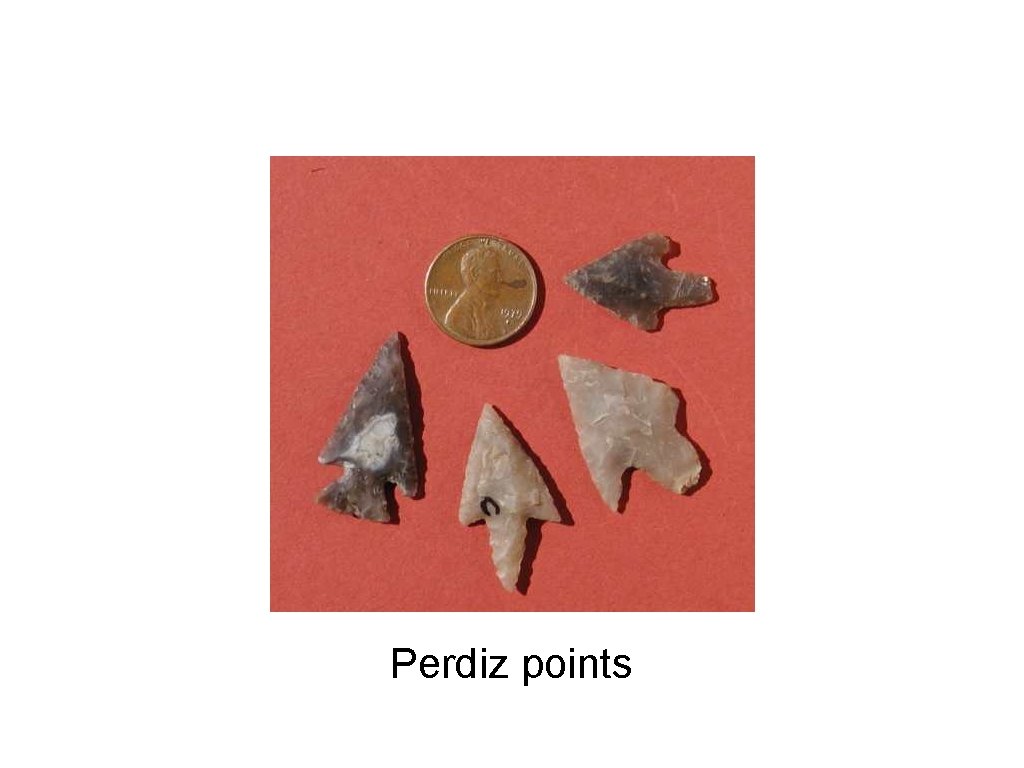
Perdiz points
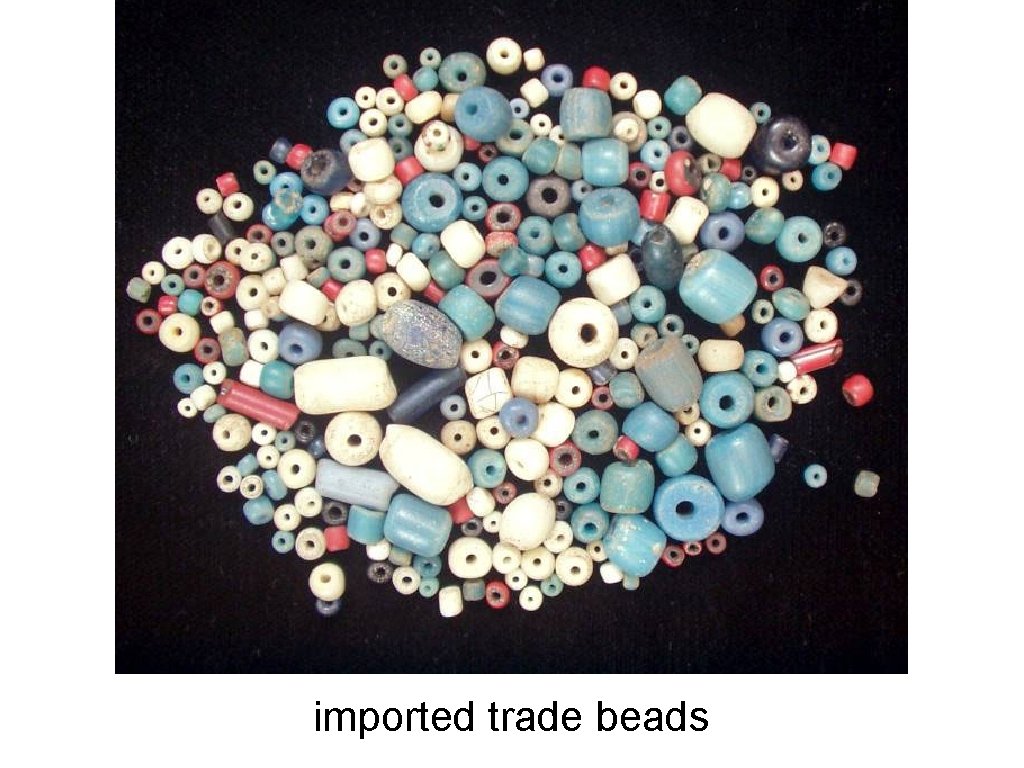
imported trade beads
Requirement 3: we will prepare and consume some “native foods” Native foods include: dried meat (jerky), beans, melons, squash, pumpkins, peaches, plums, sunflower, tobacco, acorns, seeds, berries, nuts, persimmons, goosefoot and sumpweed. Indian Lore Merit Badge, Requirement 3
Requirement 4: we will learn and exchange some native stories from Wichita and other Southern tribes. Indian Lore Merit Badge, Requirement 4
- Slides: 92