
INDIAN INDUSTRY PERSPECTIVE ON PHASE DOWN OF HFCS
- Slides: 13
INDIAN INDUSTRY PERSPECTIVE ON PHASE DOWN OF HFCS REFRIGERANT GAS MANUFACTURERS ASSOCIATION (REGMA) INDO-US WORKSHOP ON HFCs 18 th February, 2011
Contents: Industry Overview Compliance with Montreal Protocol Issues faced by Indian Industry HCFC Phase out – The Challenges HFC Phase-Down Proposal- The Concerns Conclusion & Way Forward
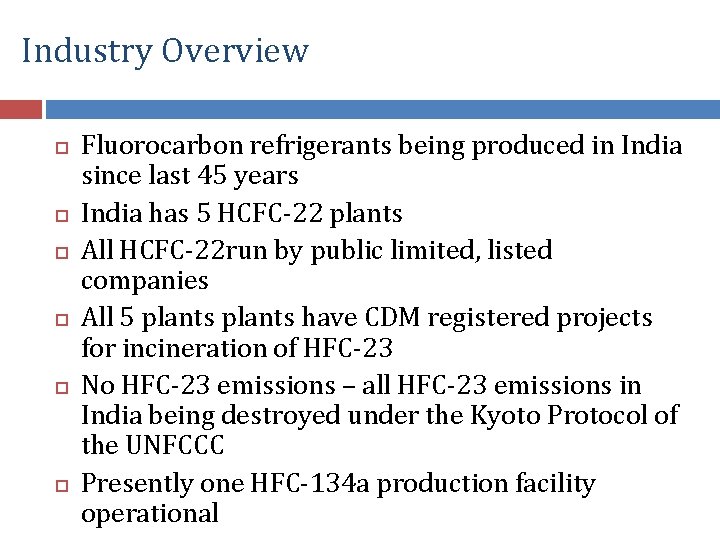
Industry Overview Fluorocarbon refrigerants being produced in India since last 45 years India has 5 HCFC-22 plants All HCFC-22 run by public limited, listed companies All 5 plants have CDM registered projects for incineration of HFC-23 No HFC-23 emissions – all HFC-23 emissions in India being destroyed under the Kyoto Protocol of the UNFCCC Presently one HFC-134 a production facility operational
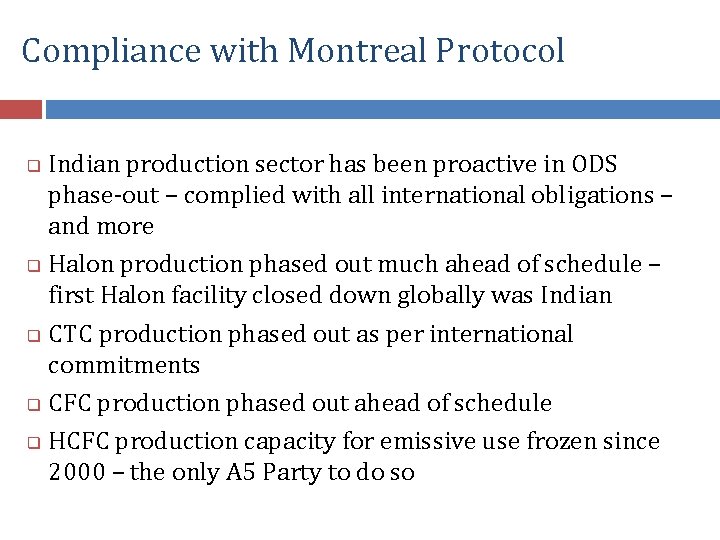
Compliance with Montreal Protocol Indian production sector has been proactive in ODS phase-out – complied with all international obligations – and more q Halon production phased out much ahead of schedule – first Halon facility closed down globally was Indian q CTC production phased out as per international commitments q CFC production phased out ahead of schedule q HCFC production capacity for emissive use frozen since 2000 – the only A 5 Party to do so q
Issues faced by Indian industry Technology transfer for production sector not available though promised under Montreal Protocol Compensation for phase-out not in accordance with economic and technical assessments – fell short of “incremental costs” Delay in receipt of compensation
HCFC phase-out – the challenges In 2007, HCFC-22 phase-out and accelerated phaseout schedule was agreed upon, based on HFCs being readily available as viable substitutes q Therefore, present proposal for HFC phase-down challenges the core assumption behind accelerated HCFC-22 phase-out q Lack of clarity on other (non-HFC) substitutes for HCFC-22 q Contd…
HCFC phase-out – the challenges Funding mechanism for accelerated phase-out of HCFC production sector still not in place – pending for more than 3 years q Concerns about funding not being based on technological and economic assessments q
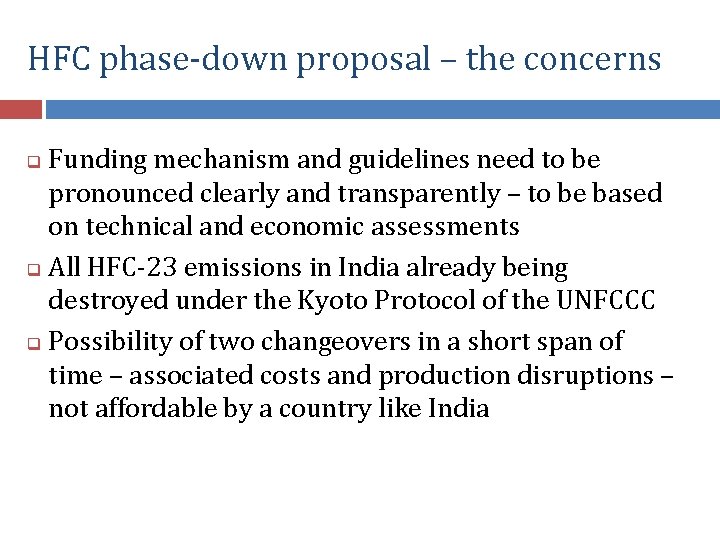
HFC phase-down proposal – the concerns HFCs are greenhouse gases, not ozone depleting substances q Low GWP substitutes not available for most applications q Some low GWP substitutes are in early developmental stage – concerns about cost, technology, long term reliability, flammability, etc q A robust and legally binding technology transfer mechanism needs to be built q Contd…
HFC phase-down proposal – the concerns Funding mechanism and guidelines need to be pronounced clearly and transparently – to be based on technical and economic assessments q All HFC-23 emissions in India already being destroyed under the Kyoto Protocol of the UNFCCC q Possibility of two changeovers in a short span of time – associated costs and production disruptions – not affordable by a country like India q
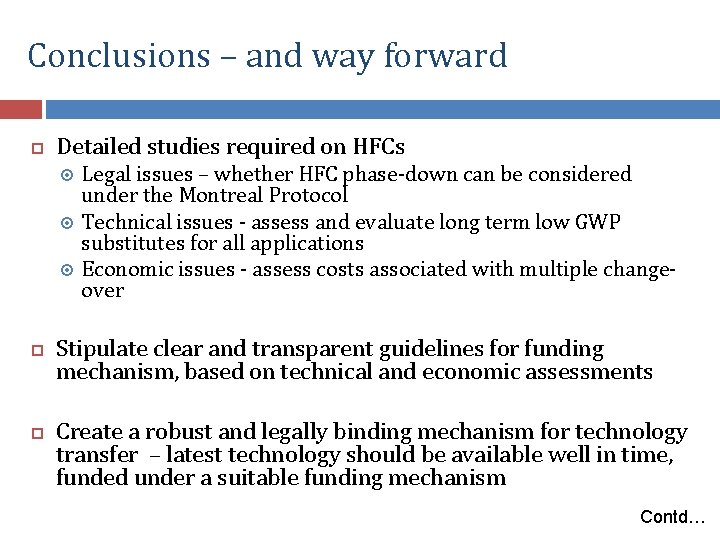
Conclusions – and way forward Detailed studies required on HFCs Legal issues – whether HFC phase-down can be considered under the Montreal Protocol Technical issues - assess and evaluate long term low GWP substitutes for all applications Economic issues - assess costs associated with multiple changeover Stipulate clear and transparent guidelines for funding mechanism, based on technical and economic assessments Create a robust and legally binding mechanism for technology transfer – latest technology should be available well in time, funded under a suitable funding mechanism Contd…
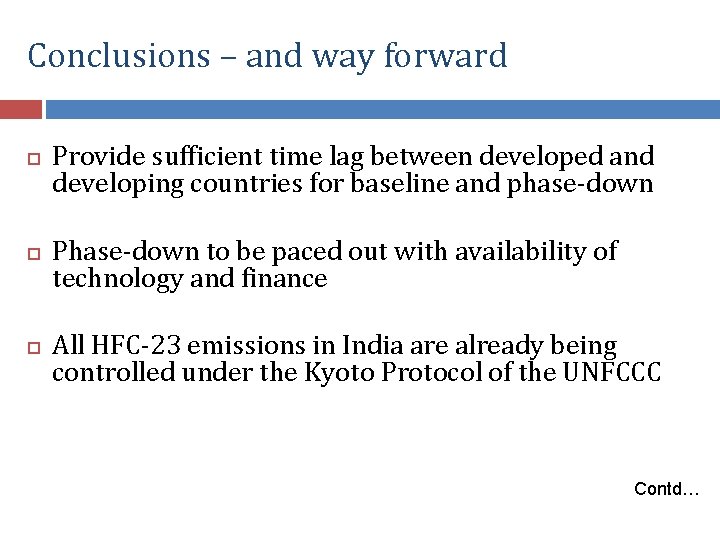
Conclusions – and way forward Provide sufficient time lag between developed and developing countries for baseline and phase-down Phase-down to be paced out with availability of technology and finance All HFC-23 emissions in India are already being controlled under the Kyoto Protocol of the UNFCCC Contd…
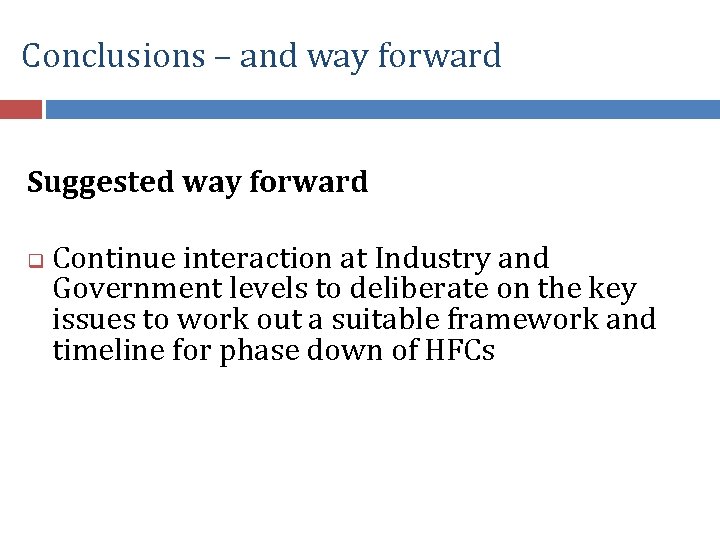
Conclusions – and way forward Suggested way forward q Continue interaction at Industry and Government levels to deliberate on the key issues to work out a suitable framework and timeline for phase down of HFCs
Thank You