
India and SE Asia 1500 BCE 1025 CE
India and SE Asia 1500 BCE – 1025 CE
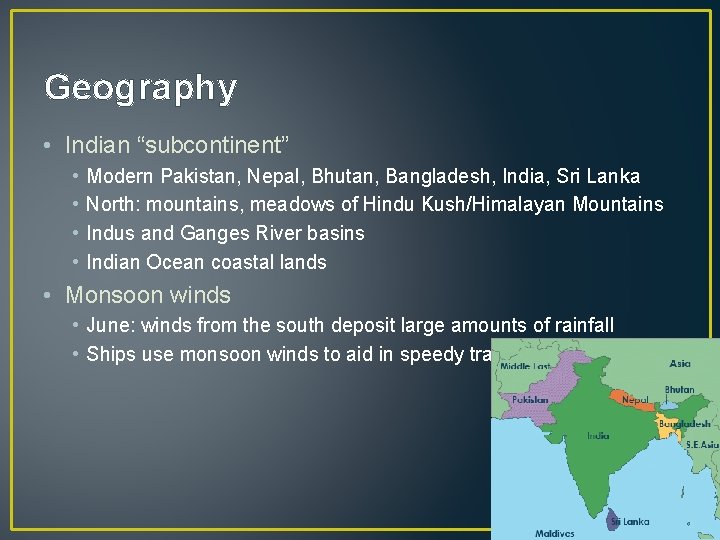
Geography • Indian “subcontinent” • • Modern Pakistan, Nepal, Bhutan, Bangladesh, India, Sri Lanka North: mountains, meadows of Hindu Kush/Himalayan Mountains Indus and Ganges River basins Indian Ocean coastal lands • Monsoon winds • June: winds from the south deposit large amounts of rainfall • Ships use monsoon winds to aid in speedy travel
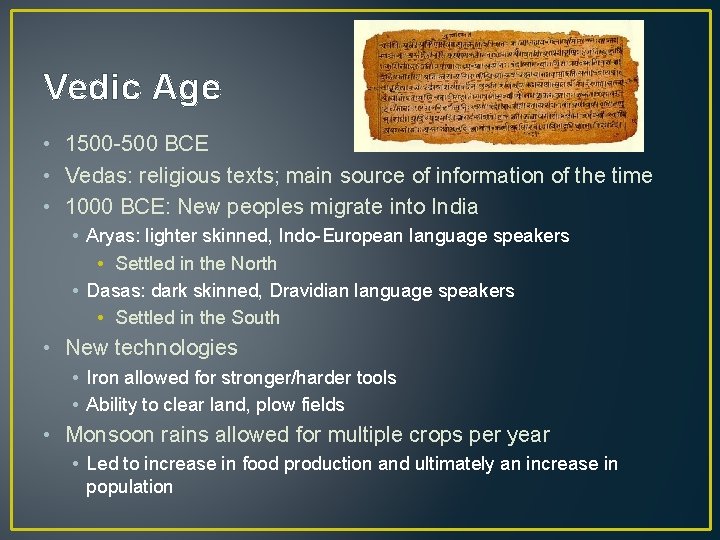
Vedic Age • 1500 -500 BCE • Vedas: religious texts; main source of information of the time • 1000 BCE: New peoples migrate into India • Aryas: lighter skinned, Indo-European language speakers • Settled in the North • Dasas: dark skinned, Dravidian language speakers • Settled in the South • New technologies • Iron allowed for stronger/harder tools • Ability to clear land, plow fields • Monsoon rains allowed for multiple crops per year • Led to increase in food production and ultimately an increase in population
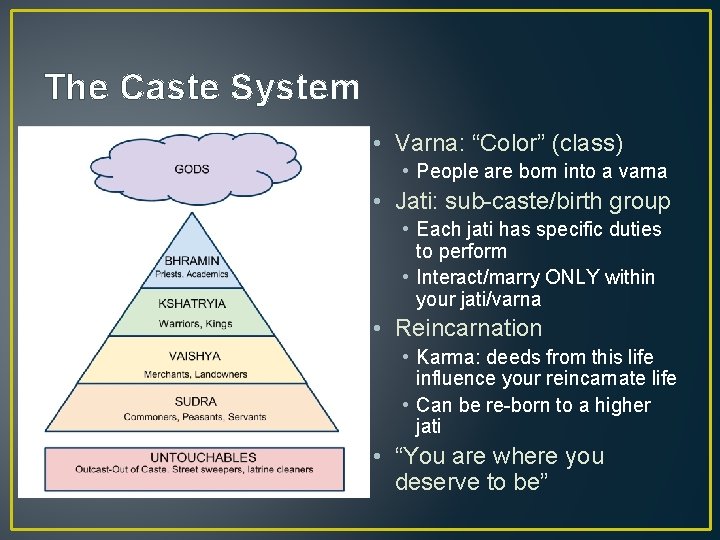
The Caste System • Varna: “Color” (class) • People are born into a varna • Jati: sub-caste/birth group • Each jati has specific duties to perform • Interact/marry ONLY within your jati/varna • Reincarnation • Karma: deeds from this life influence your reincarnate life • Can be re-born to a higher jati • “You are where you deserve to be”

Castes • Brahmin: priests, scholars • Mouth of Purusha • Intellect and knowledge • Kshatriya: warriors, officials • Arms of Purusha • Vaishya: merchants, artisans, landowners • Thighs of Purusha • Shudra: peasants, laborers • Feet of Purusha • Untouchables: excluded from caste system • AKA “pariah” or “harijan” • Leather tanning, cremations, garbage disposal • Touching of dead bodies/animals
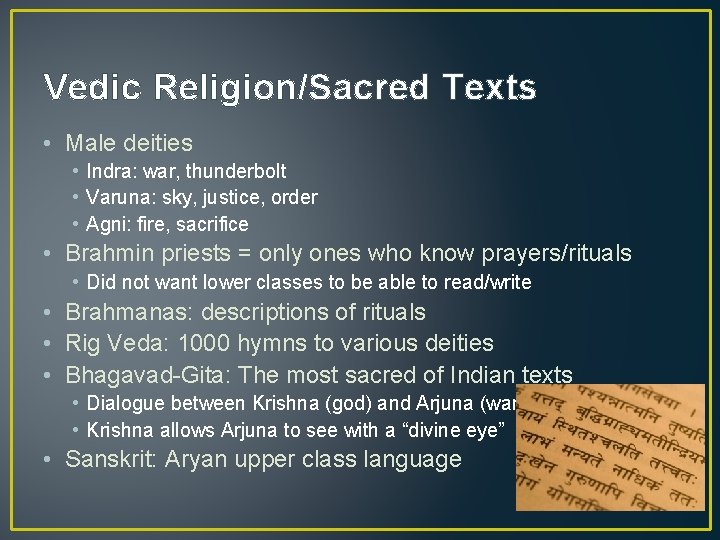
Vedic Religion/Sacred Texts • Male deities • Indra: war, thunderbolt • Varuna: sky, justice, order • Agni: fire, sacrifice • Brahmin priests = only ones who know prayers/rituals • Did not want lower classes to be able to read/write • Brahmanas: descriptions of rituals • Rig Veda: 1000 hymns to various deities • Bhagavad-Gita: The most sacred of Indian texts • Dialogue between Krishna (god) and Arjuna (warrior) • Krishna allows Arjuna to see with a “divine eye” • Sanskrit: Aryan upper class language
Opposition to Vedic Religion • 700 BCE • Reactions against power of the Brahmin • Retreat to wilderness • Individuals attracted “cult” followings • Abandonment of towns and the caste system • Question the exclusivity of the priestly class • Gave alternate paths to salvation • Yoga: pursuit of insight to nature through physical and metal discipline • Special diets • Meditation • Moksha: liberation through distancing oneself from worldly desires • Upanishads • 100+ dialogues between teachers and students • Questioning of the Vedic religion
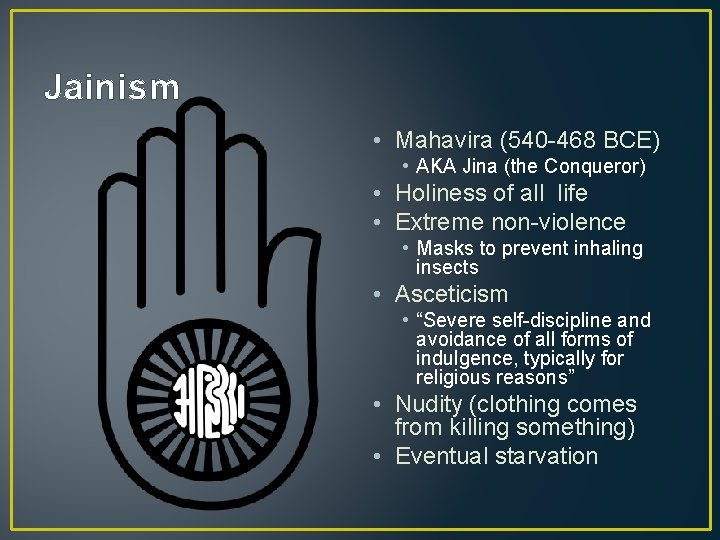
Jainism • Mahavira (540 -468 BCE) • AKA Jina (the Conqueror) • Holiness of all life • Extreme non-violence • Masks to prevent inhaling insects • Asceticism • “Severe self-discipline and avoidance of all forms of indulgence, typically for religious reasons” • Nudity (clothing comes from killing something) • Eventual starvation
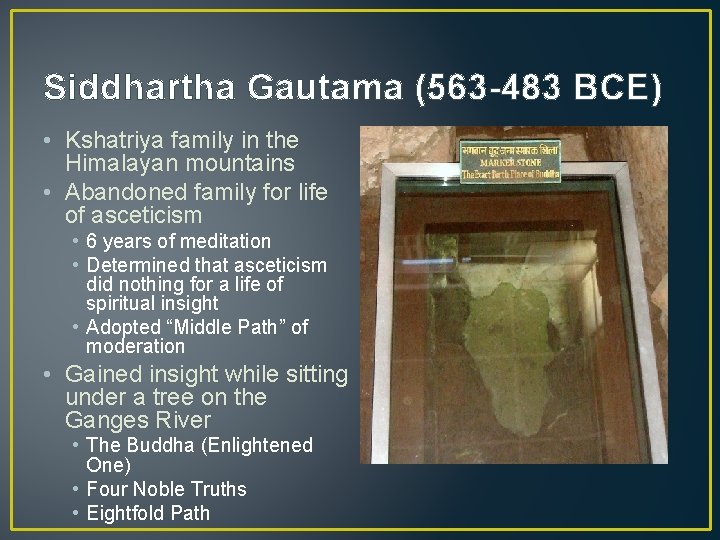
Siddhartha Gautama (563 -483 BCE) • Kshatriya family in the Himalayan mountains • Abandoned family for life of asceticism • 6 years of meditation • Determined that asceticism did nothing for a life of spiritual insight • Adopted “Middle Path” of moderation • Gained insight while sitting under a tree on the Ganges River • The Buddha (Enlightened One) • Four Noble Truths • Eightfold Path
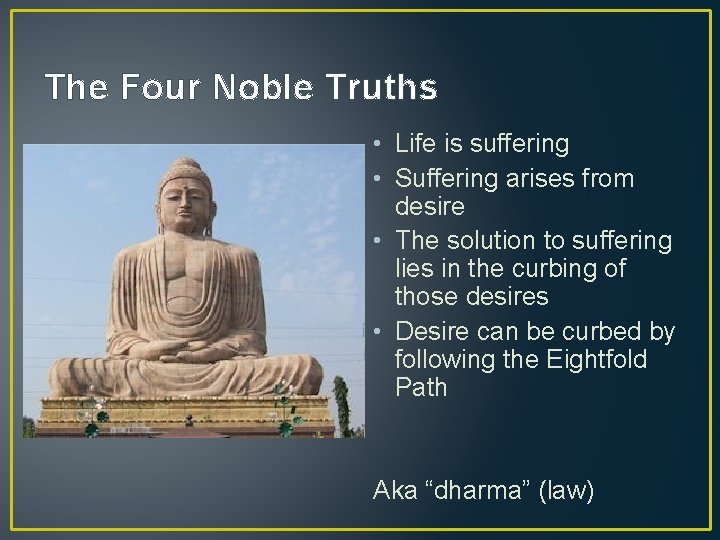
The Four Noble Truths • Life is suffering • Suffering arises from desire • The solution to suffering lies in the curbing of those desires • Desire can be curbed by following the Eightfold Path Aka “dharma” (law)
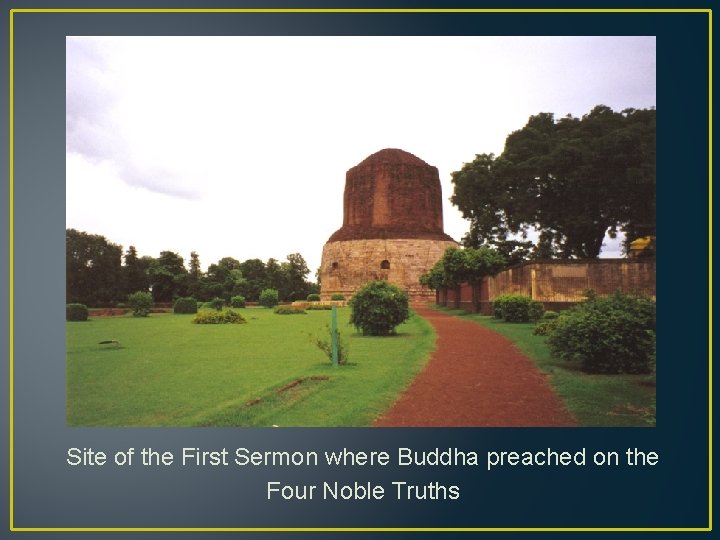
Site of the First Sermon where Buddha preached on the Four Noble Truths
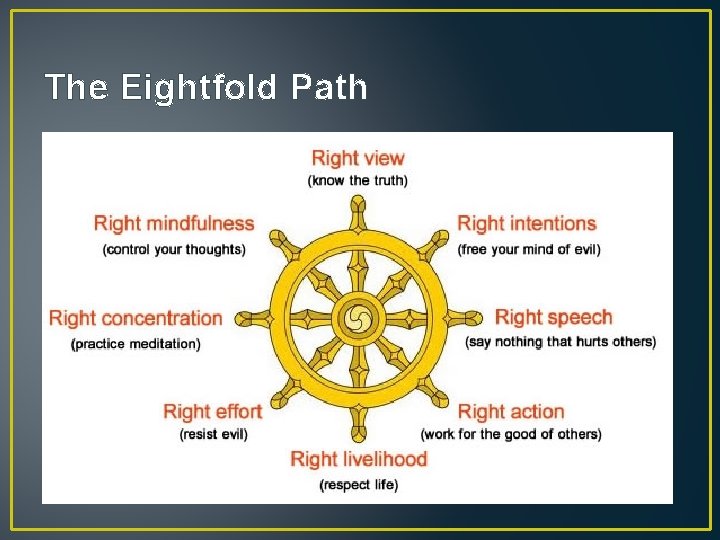
The Eightfold Path
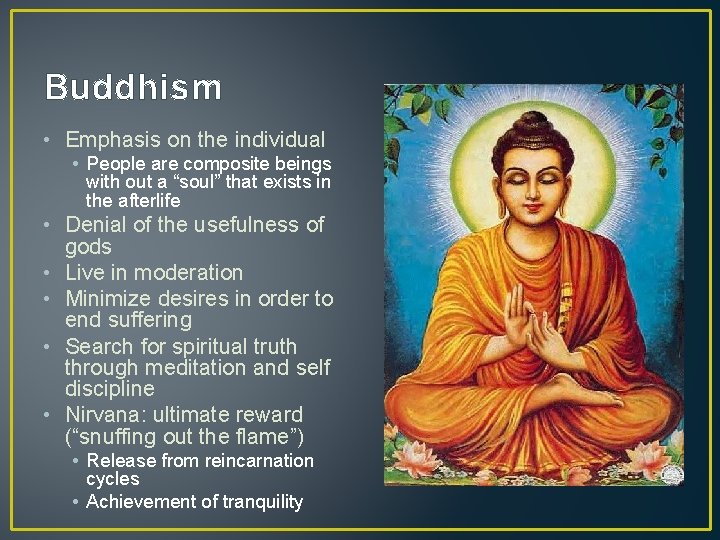
Buddhism • Emphasis on the individual • People are composite beings with out a “soul” that exists in the afterlife • Denial of the usefulness of gods • Live in moderation • Minimize desires in order to end suffering • Search for spiritual truth through meditation and self discipline • Nirvana: ultimate reward (“snuffing out the flame”) • Release from reincarnation cycles • Achievement of tranquility
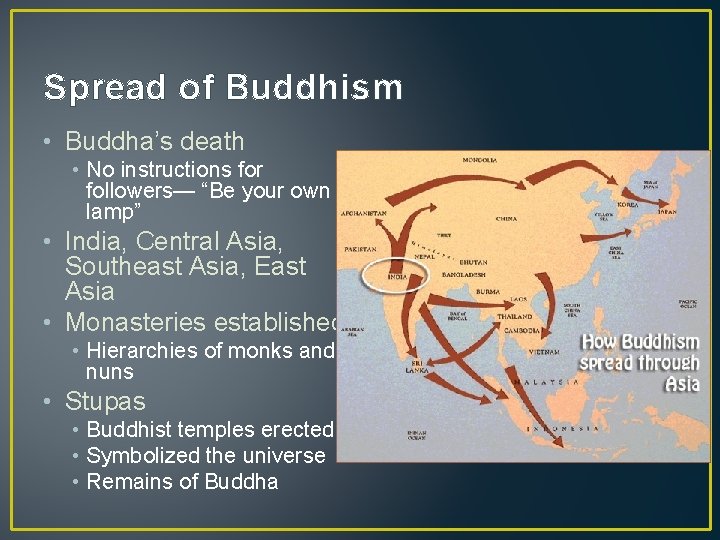
Spread of Buddhism • Buddha’s death • No instructions for followers— “Be your own lamp” • India, Central Asia, Southeast Asia, East Asia • Monasteries established • Hierarchies of monks and nuns • Stupas • Buddhist temples erected • Symbolized the universe • Remains of Buddha
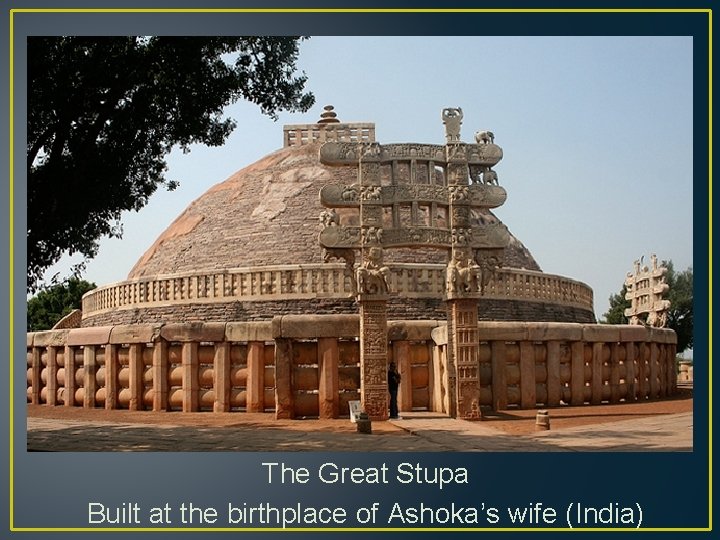
The Great Stupa Built at the birthplace of Ashoka’s wife (India)
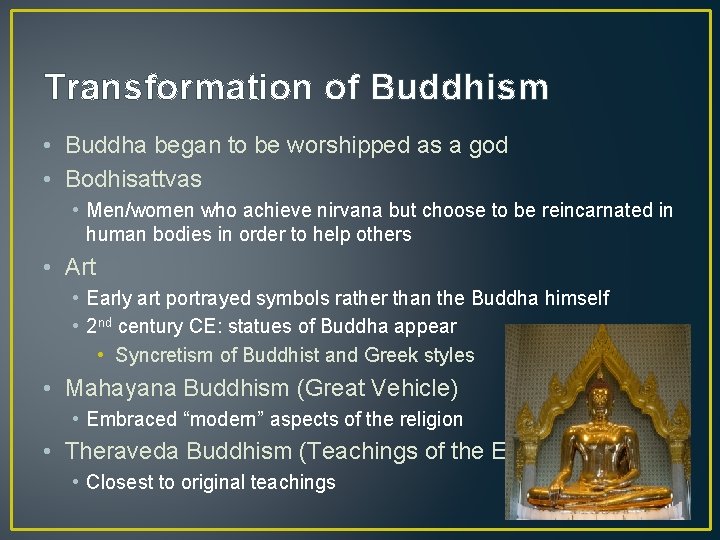
Transformation of Buddhism • Buddha began to be worshipped as a god • Bodhisattvas • Men/women who achieve nirvana but choose to be reincarnated in human bodies in order to help others • Art • Early art portrayed symbols rather than the Buddha himself • 2 nd century CE: statues of Buddha appear • Syncretism of Buddhist and Greek styles • Mahayana Buddhism (Great Vehicle) • Embraced “modern” aspects of the religion • Theraveda Buddhism (Teachings of the Elders) • Closest to original teachings
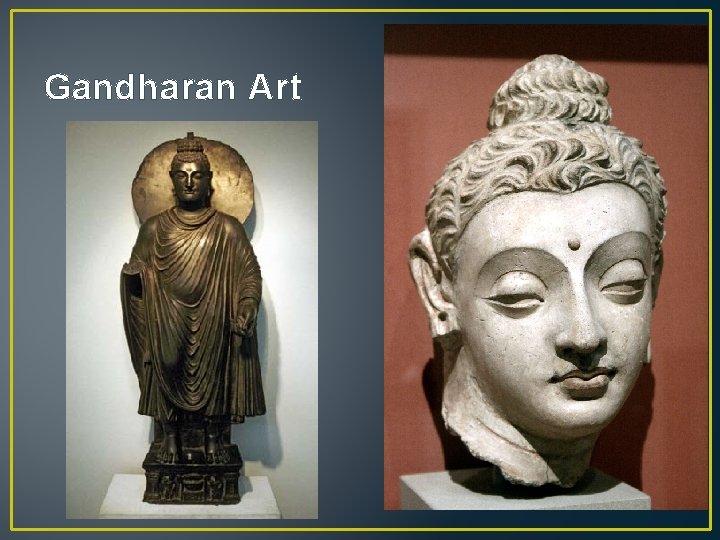
Gandharan Art
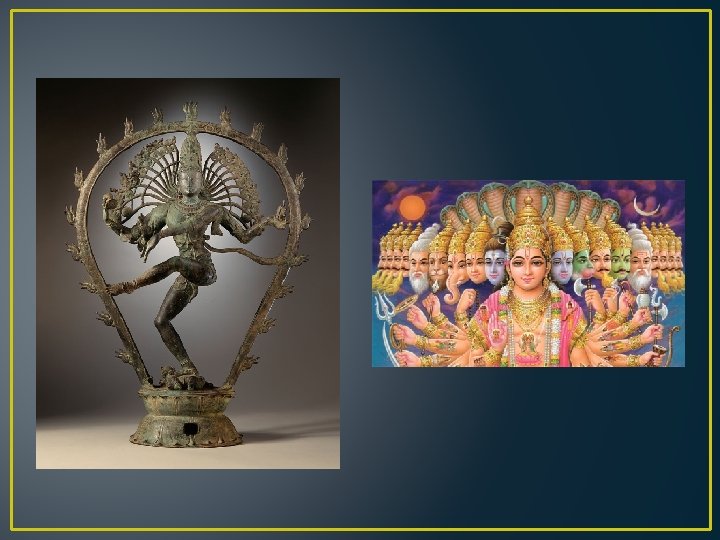
Hinduism • Result of Vedic • 330 million gods (? ) religion adjusting to • All gods are manifestations of a Jainism and Buddhism • Vedic transformed by 4 th century CE • Includes aspects of Buddhism, fertility rituals, other religions • Emphasis of individual devotion to a single god single divine force • Vishnu: the preserver • Appears as avataras (incarnations) • Rama (hero) • Krishna (cow herd god) • Buddha (rival religion) • Shiva: creation and destruction • Devi: fertility
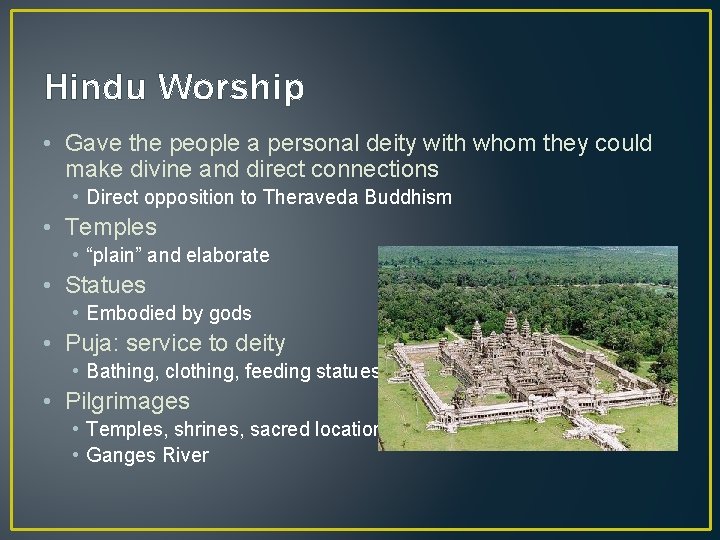
Hindu Worship • Gave the people a personal deity with whom they could make divine and direct connections • Direct opposition to Theraveda Buddhism • Temples • “plain” and elaborate • Statues • Embodied by gods • Puja: service to deity • Bathing, clothing, feeding statues • Pilgrimages • Temples, shrines, sacred locations • Ganges River
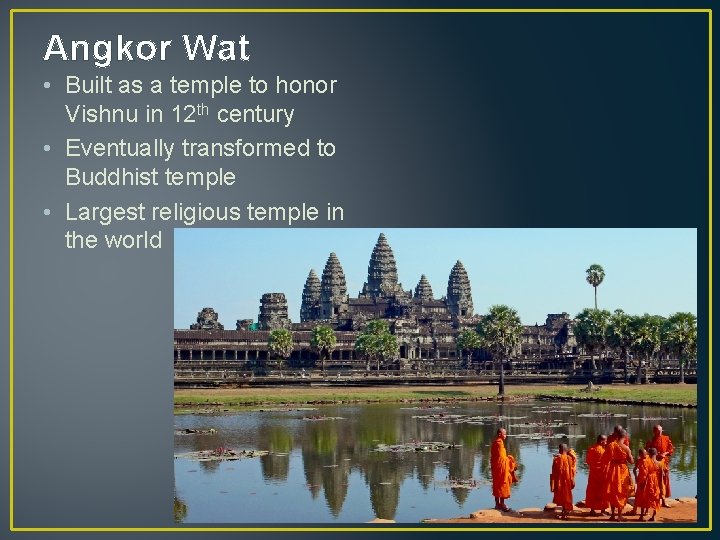
Angkor Wat • Built as a temple to honor Vishnu in 12 th century • Eventually transformed to Buddhist temple • Largest religious temple in the world
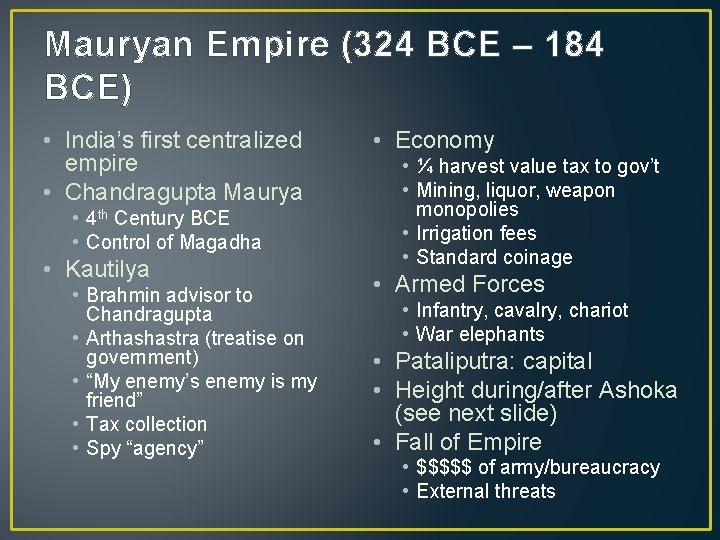
Mauryan Empire (324 BCE – 184 BCE) • India’s first centralized empire • Chandragupta Maurya • 4 th Century BCE • Control of Magadha • Kautilya • Brahmin advisor to Chandragupta • Arthashastra (treatise on government) • “My enemy’s enemy is my friend” • Tax collection • Spy “agency” • Economy • ¼ harvest value tax to gov’t • Mining, liquor, weapon monopolies • Irrigation fees • Standard coinage • Armed Forces • Infantry, cavalry, chariot • War elephants • Pataliputra: capital • Height during/after Ashoka (see next slide) • Fall of Empire • $$$$$ of army/bureaucracy • External threats
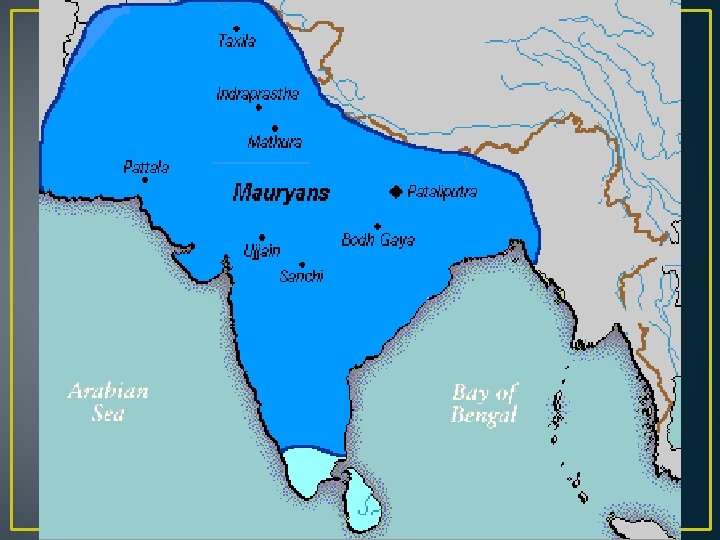
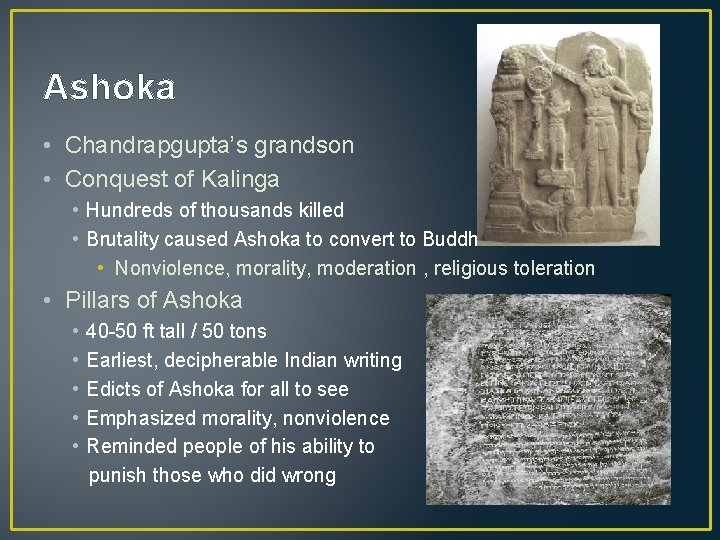
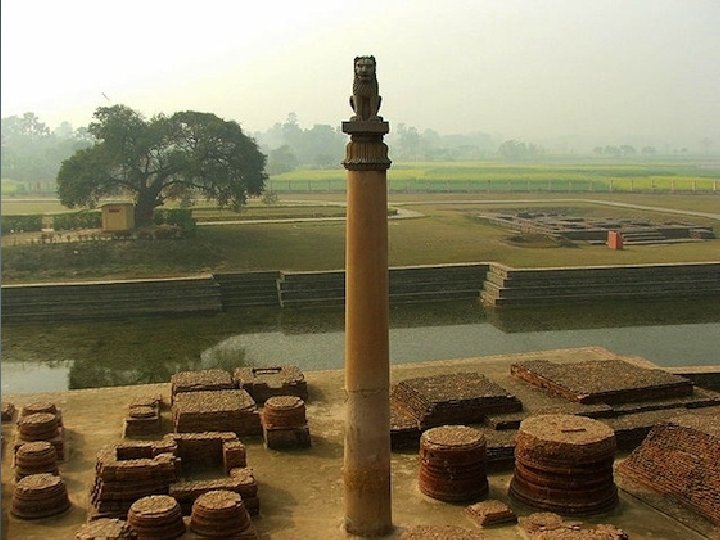
Ashoka • Chandrapgupta’s grandson • Conquest of Kalinga • Hundreds of thousands killed • Brutality caused Ashoka to convert to Buddhism • Nonviolence, morality, moderation , religious toleration • Pillars of Ashoka • • • 40 -50 ft tall / 50 tons Earliest, decipherable Indian writing Edicts of Ashoka for all to see Emphasized morality, nonviolence Reminded people of his ability to punish those who did wrong
Political Fragmentation • 500 years of foreign rule after fall of Mauryan Empire • Greco-Bactrian forces (Alexander the Great) • Central Asian groups • Kushans • Flourishing of economy and culture • India becomes center for international trade • Merchants and artisans become political powers • Ramayana and Mahabharata • Indian epics • Science and Technology • Herbal remedies • Standardization of Sanskrit into administrative language
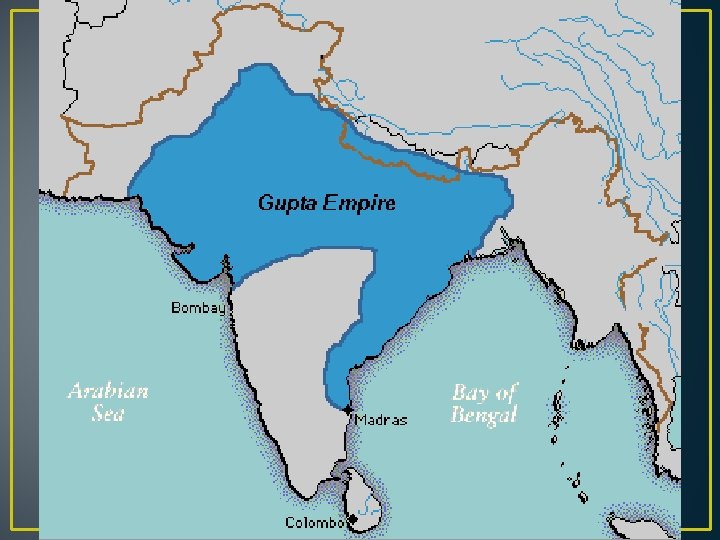
Gupta Empire (320 -550 CE) • Founded by Chandra Gupta • Named after Chandragupta Maurya • Smaller in territory size than Mauryan • Not as centralized as Mauryan • “Theater state” • Full of rituals and ceremonies • Invention of zero • Arabic numerals • Decline in women’s rights • Loss of right to own/inherit property • Barred from (some) religious ceremonies • Treated like the Shudra • Obey father, husband, sons • Sati: widow cremation • Escape to monasteries • Higher social status = more freedom
Religion and Fall of the Empire • Gupta monarchs were Hindu • Reestablishment of caste system • Brahmins receive land • Taxes go to priests • Practiced religious tolerance • Traditional temple style emerges • Raised platform and towers • Trade declines due to failing of Roman Empire • Begin trading with Malay Peninsula and Indonesia • Silk Roads still dangerous • Fall of Empire • 5 th century CE: Invasion of Huns • Exhaustion of treasury
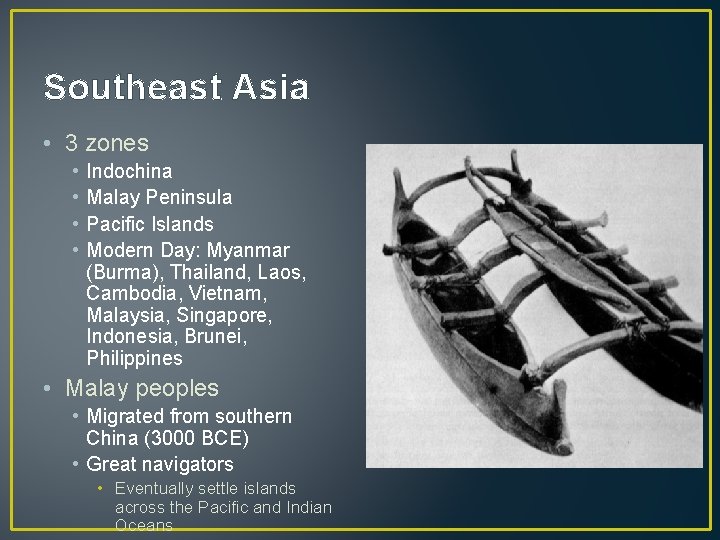
Southeast Asia • 3 zones • • Indochina Malay Peninsula Pacific Islands Modern Day: Myanmar (Burma), Thailand, Laos, Cambodia, Vietnam, Malaysia, Singapore, Indonesia, Brunei, Philippines • Malay peoples • Migrated from southern China (3000 BCE) • Great navigators • Eventually settle islands across the Pacific and Indian Oceans
Cultural Transfusion • SE Asia is located along trade routes • Chinese silk • SE Asian goods: spices (cinnamon, pepper, cloves, nutmeg), wood, religion • Spread of Hinduism/Buddhism • Merchants and sailors • Sanskrit and governmental structures in Malaysia • Maharaja (great king) • Sea Trade • 6 th century CE • India, Sri Lanka, Strait of Malacca
- Slides: 31