
Indexing SPL Data in Clinical Decision Support Systems
- Slides: 13
Indexing SPL Data in Clinical Decision Support Systems Dr. med. A. Leander Fontaine Pharmiceutics LLC Oct 2013
What is indexing? Why is it done? Based on FDA’s 2010 indexing SPL FR notice Indexing: • For a label, providing machine-readable tags that do not appear in actual printed labeling • An SPL “indexing file” will be linked to an SPL “content file”. Purpose: • To enable users with clinical decision support tools and electronic prescribing systems to rapidly search and sort product information. • Contribution to the creation of a fully automated health information exchange system. • Can help prevent prescription errors and enhance the safe use of medical products.
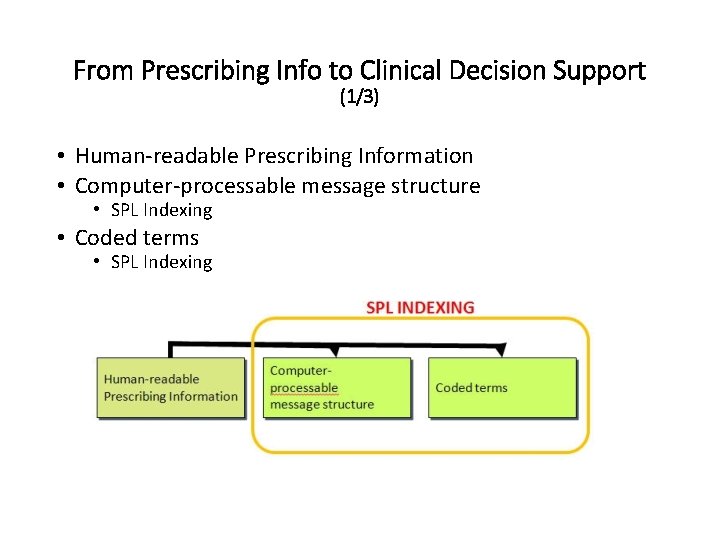
From Prescribing Info to Clinical Decision Support (1/3) • Human-readable Prescribing Information • Computer-processable message structure • SPL Indexing • Coded terms • SPL Indexing
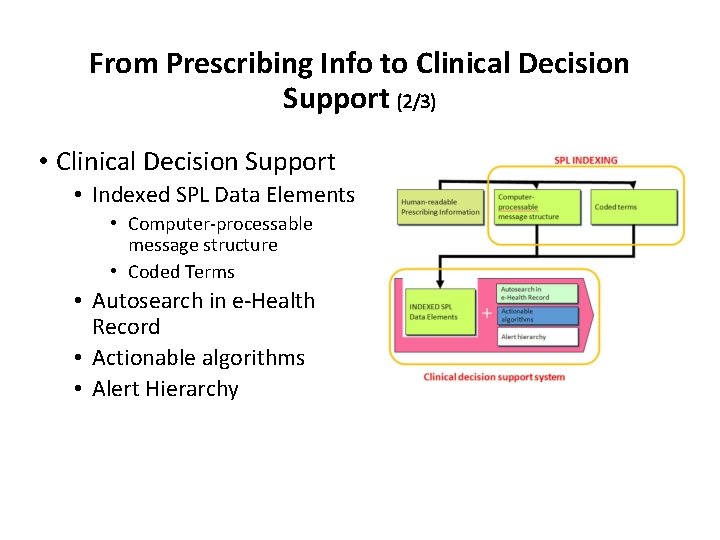
From Prescribing Info to Clinical Decision Support (2/3) • Clinical Decision Support • Indexed SPL Data Elements • Computer-processable message structure • Coded Terms • Autosearch in e-Health Record • Actionable algorithms • Alert Hierarchy
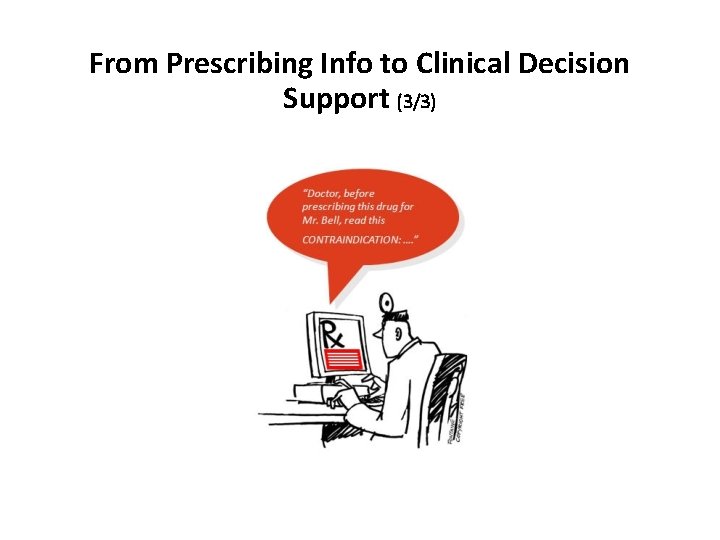
From Prescribing Info to Clinical Decision Support (3/3)
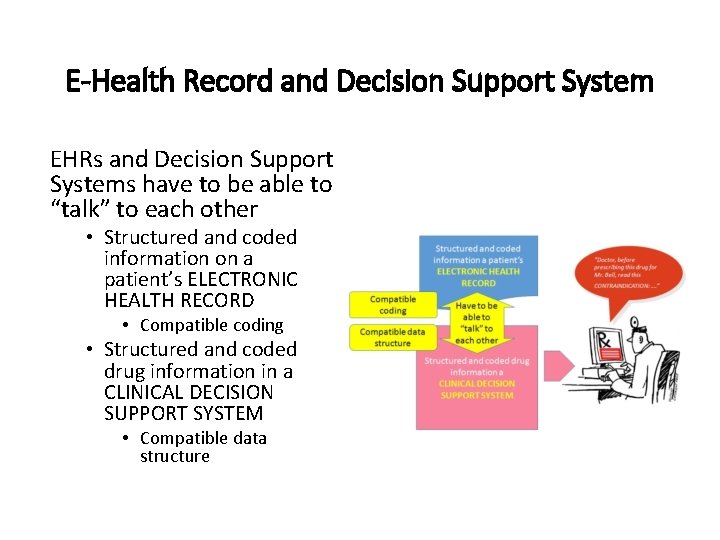
E-Health Record and Decision Support System EHRs and Decision Support Systems have to be able to “talk” to each other • Structured and coded information on a patient’s ELECTRONIC HEALTH RECORD • Compatible coding • Structured and coded drug information in a CLINICAL DECISION SUPPORT SYSTEM • Compatible data structure
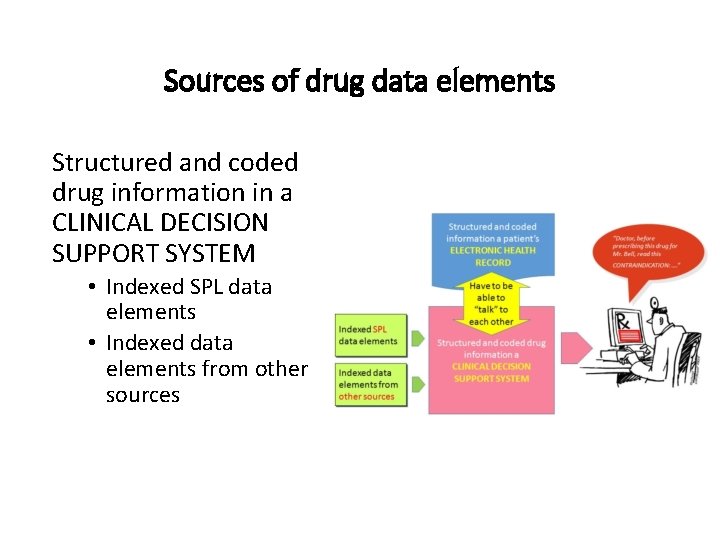
Sources of drug data elements Structured and coded drug information in a CLINICAL DECISION SUPPORT SYSTEM • Indexed SPL data elements • Indexed data elements from other sources
Integrating indexing elements in existing systems Vendors of proprietary systems may have to “translate” indexed SPL data elements • Coding (e. g. , from a SNOMED CT subset used in SPL to “proprietary codes” used in existing systems) • Data structure
Phased implementation of SPL indexing (1/2) Target: All prescription drugs and biologics Step 1: Indexing of pharmacologic class Step 2: Indexing of indications Future steps: TBD
Phased implementation of SPL indexing (2/2) Step 2: Indexing of indications One reason to index indications early on: Later indexed elements (e. g. , contraindications) may be indication-specific.
Prudent restriction of indexing detail (1/3) The SPL clinical information model is extremely powerful and permits a detailed capture of concepts and their relationships. For example, the following could be captured and coded in full: “PRODUCT is indicated for reducing the risk of thrombotic stroke in patients who had stroke precursors or a completed thrombotic stroke. To be reserved for patients with aspirin intolerance or allergy, or who have failed aspirin therapy. ”
Prudent restriction of indexing detail (2/3) From FDA’s 2010 indexing SPL FR notice: • FDA’s current intent is to index the basic indication concepts without the more specific usage and limitations of use information. • Criteria are under development to determine the appropriate level of granularity and consistency in the choice of concepts indexed.
Prudent restriction of indexing detail (3/3) From FDA’s 2010 indexing SPL FR notice “ … first capture the main focus of the indication as a single existing concept using the 01312010 version of the SNOMED CT VA/KP Problem List subset. Additional indication modifiers found in approved product labeling such as disease severity or chronicity will not always be indexed. ”