
INDEX What is interest Types of interest Difference
- Slides: 17
INDEX • • • What is interest? Types of interest Difference b/w gross & net interest Difference in rates of interest Classical theory and loanable funds [elaboration]
What is INTEREST? Interest is the payment made for the use of money/loanable funds. In other words it’s a income derived from lending funds for a lender {who gives the loan}& charge for the borrower {who was in need of money}
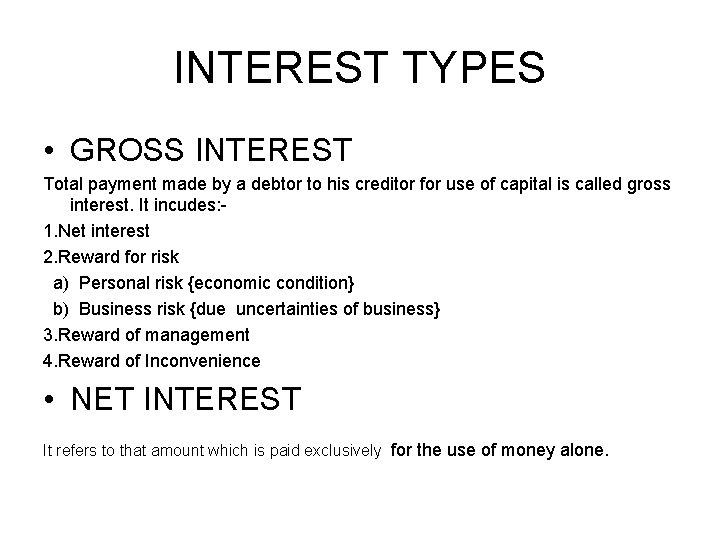
INTEREST TYPES • GROSS INTEREST Total payment made by a debtor to his creditor for use of capital is called gross interest. It incudes: 1. Net interest 2. Reward for risk a) Personal risk {economic condition} b) Business risk {due uncertainties of business} 3. Reward of management 4. Reward of Inconvenience • NET INTEREST It refers to that amount which is paid exclusively for the use of money alone.
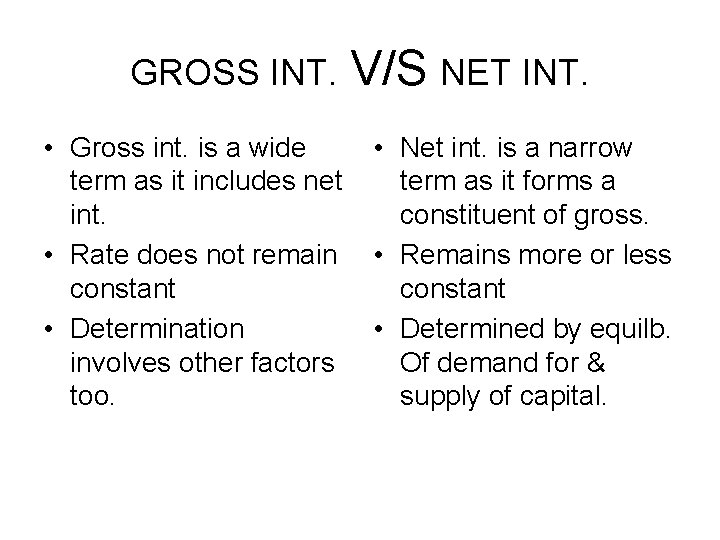
GROSS INT. • Gross int. is a wide term as it includes net int. • Rate does not remain constant • Determination involves other factors too. V/S NET INT. • Net int. is a narrow term as it forms a constituent of gross. • Remains more or less constant • Determined by equilb. Of demand for & supply of capital.
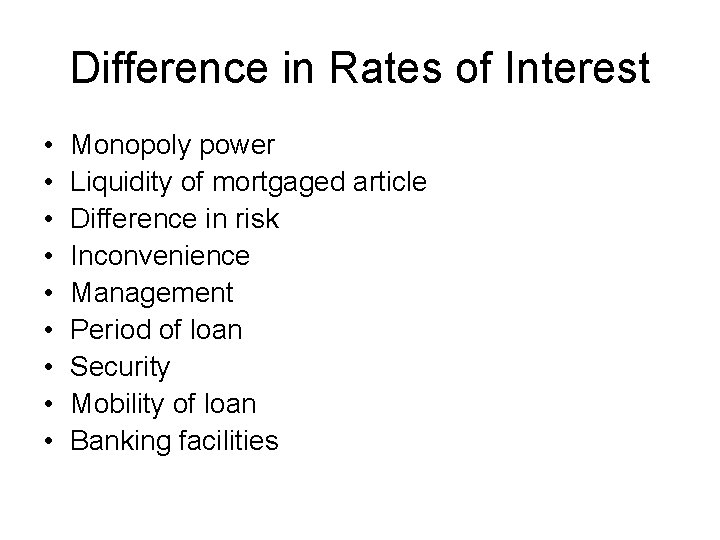
Difference in Rates of Interest • • • Monopoly power Liquidity of mortgaged article Difference in risk Inconvenience Management Period of loan Security Mobility of loan Banking facilities
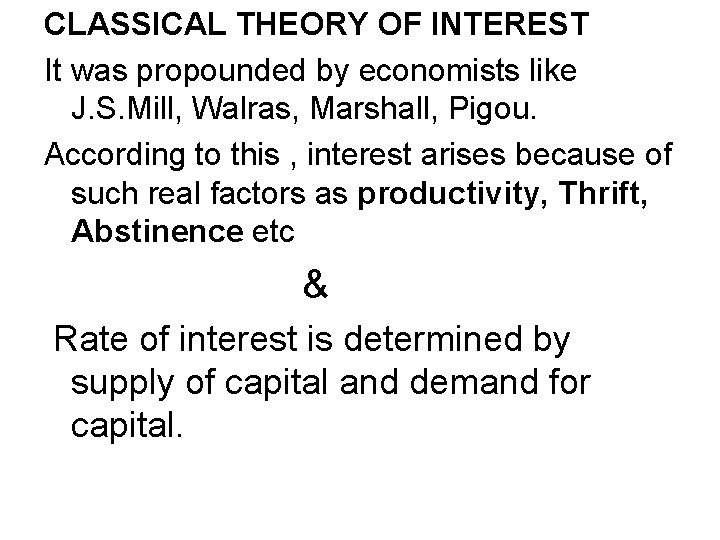
CLASSICAL THEORY OF INTEREST It was propounded by economists like J. S. Mill, Walras, Marshall, Pigou. According to this , interest arises because of such real factors as productivity, Thrift, Abstinence etc & Rate of interest is determined by supply of capital and demand for capital.
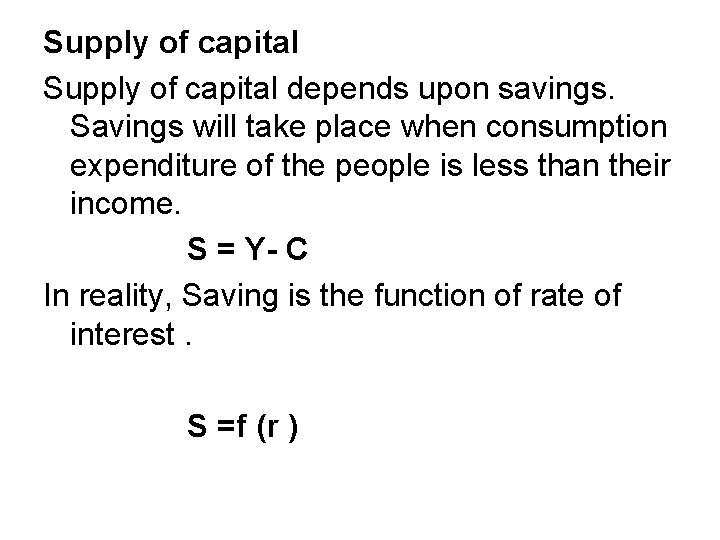
Supply of capital depends upon savings. Savings will take place when consumption expenditure of the people is less than their income. S = Y- C In reality, Saving is the function of rate of interest. S =f (r )
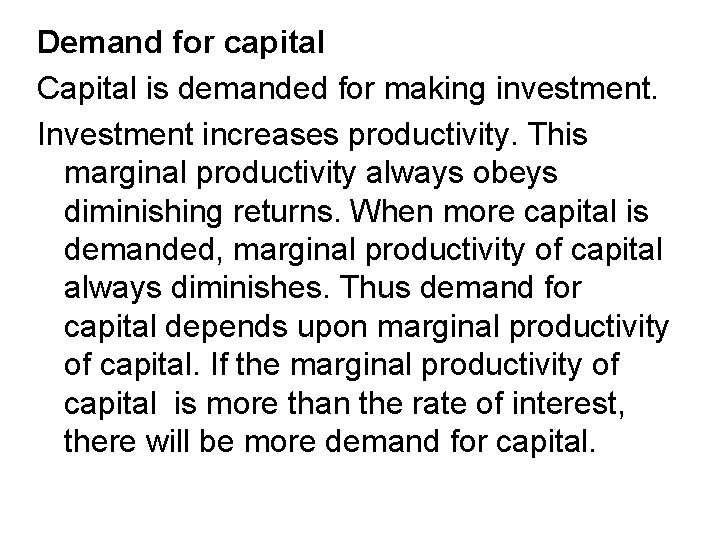
Demand for capital Capital is demanded for making investment. Investment increases productivity. This marginal productivity always obeys diminishing returns. When more capital is demanded, marginal productivity of capital always diminishes. Thus demand for capital depends upon marginal productivity of capital. If the marginal productivity of capital is more than the rate of interest, there will be more demand for capital.
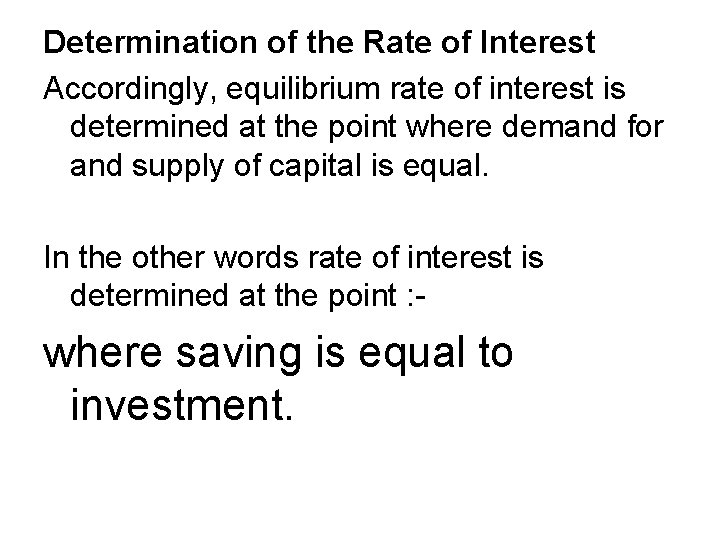
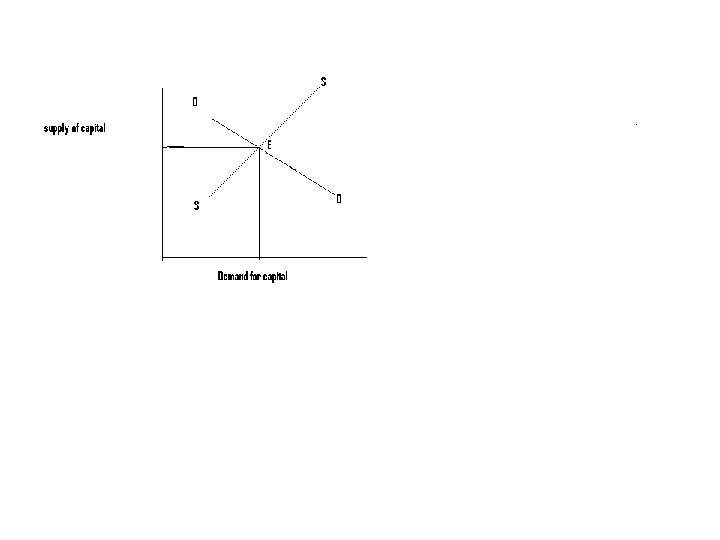
Determination of the Rate of Interest Accordingly, equilibrium rate of interest is determined at the point where demand for and supply of capital is equal. In the other words rate of interest is determined at the point : - where saving is equal to investment.
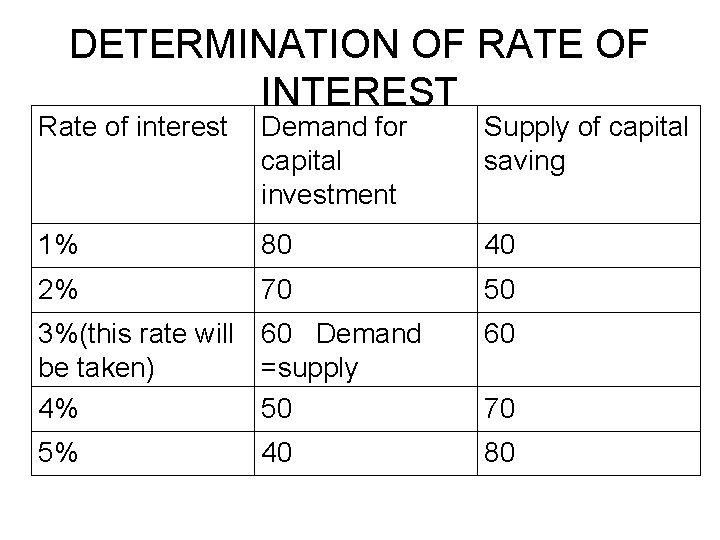
DETERMINATION OF RATE OF INTEREST Rate of interest Demand for capital investment Supply of capital saving 1% 80 40 2% 70 50 3%(this rate will 60 Demand be taken) =supply 4% 50 60 5% 80 40 70
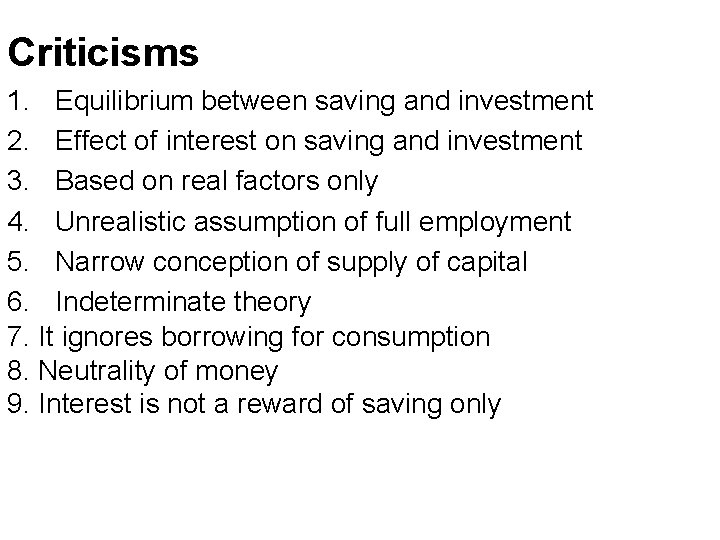
Criticisms 1. Equilibrium between saving and investment 2. Effect of interest on saving and investment 3. Based on real factors only 4. Unrealistic assumption of full employment 5. Narrow conception of supply of capital 6. Indeterminate theory 7. It ignores borrowing for consumption 8. Neutrality of money 9. Interest is not a reward of saving only
Loanable Funds Theory • It was propounded by economists like wicksell, ohlin , mydral. Interest rates are determined in the debt markets by the supply of loanable funds (lending) and demand for loanable funds (borrowing).
1. Supply of loanable funds • • SAVINGS BANK CREDIT DISHOARDING DISINVESTMENT
2. Demand for loanable funds • INVESTMENT DEMAND • CONSUMPTION • HOARDING
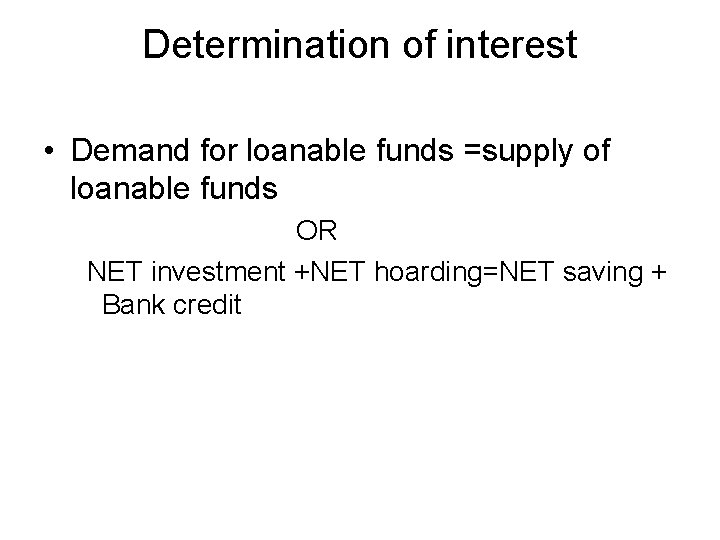
Determination of interest • Demand for loanable funds =supply of loanable funds OR NET investment +NET hoarding=NET saving + Bank credit
Criticisms • • • Dubious concept of hoarding Intermediate Synthesis of different factors Unrealistic assumption of full employment Ignores the effect of investment on income