
INDEX Introduction to honey bees What are pheromones
INDEX Introduction to honey bees What are pheromones Glands of honey bees Types of pheromones Queen pheromones Worker pheromones Drones pheromones Brood pheromones
Introduction to Honey Bees There are over 10, 000 different species of bees. The honey bee colony lives in a hive which is often constructed in a hollow tree. The colony has only one queen whose function is to lay eggs in the hexagonally shaped wax cell in the center of the hive. The workers are all sterile females. Their functions are to feed and care for the larvae. And guard the hive and search for food.
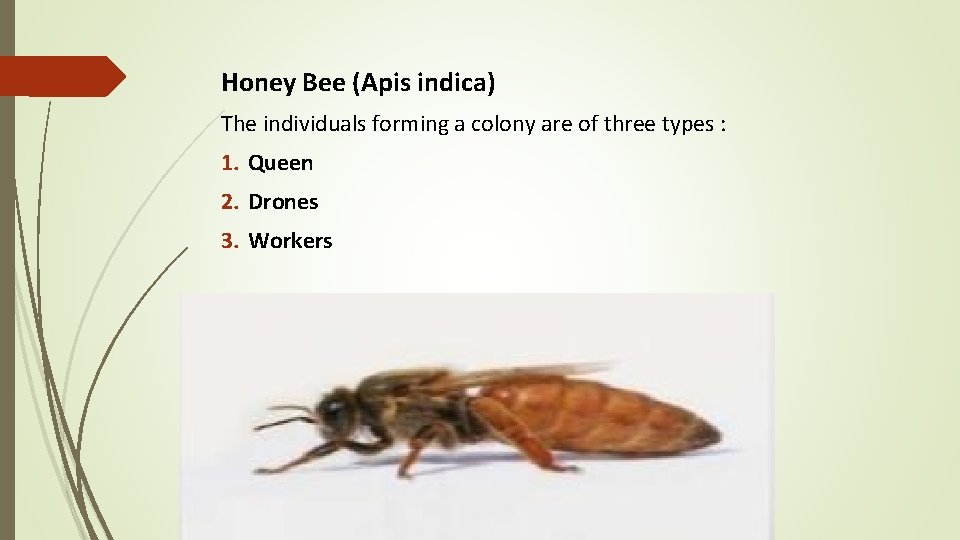
Honey Bee (Apis indica) The individuals forming a colony are of three types : 1. Queen 2. Drones 3. Workers
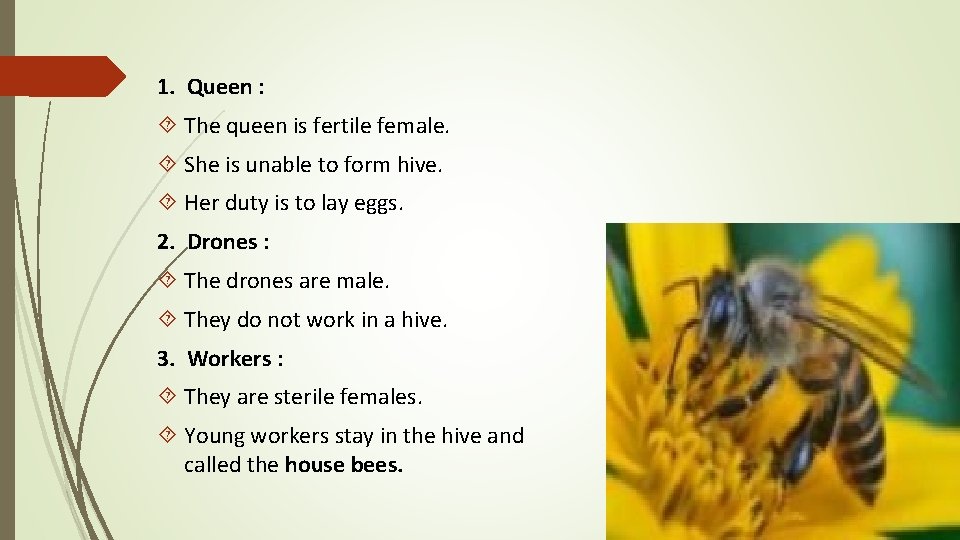
1. Queen : The queen is fertile female. She is unable to form hive. Her duty is to lay eggs. 2. Drones : The drones are male. They do not work in a hive. 3. Workers : They are sterile females. Young workers stay in the hive and called the house bees.

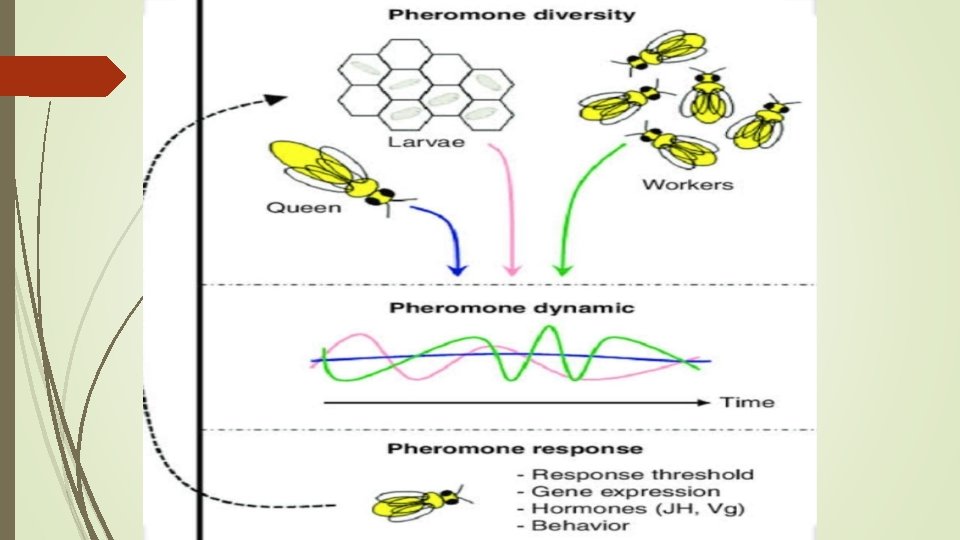
Pheromones The pheromones of the honey bee are mixtures of chemical substances released by individual bees into the hive or environment that cause changes in the physiology and behaviour of other bees. The term was coined by KARLSON and LUSCHER in 1959. A greek word, PHERO – “to transport”, HORMONE – “ stimulate”. In honey bees the targets of pheromonal messages are usually members of the same colony. Pheromones allow communication among all the honey bee castes : queen – workers, workers – workers, queen – drones, and between adult bees and brood.
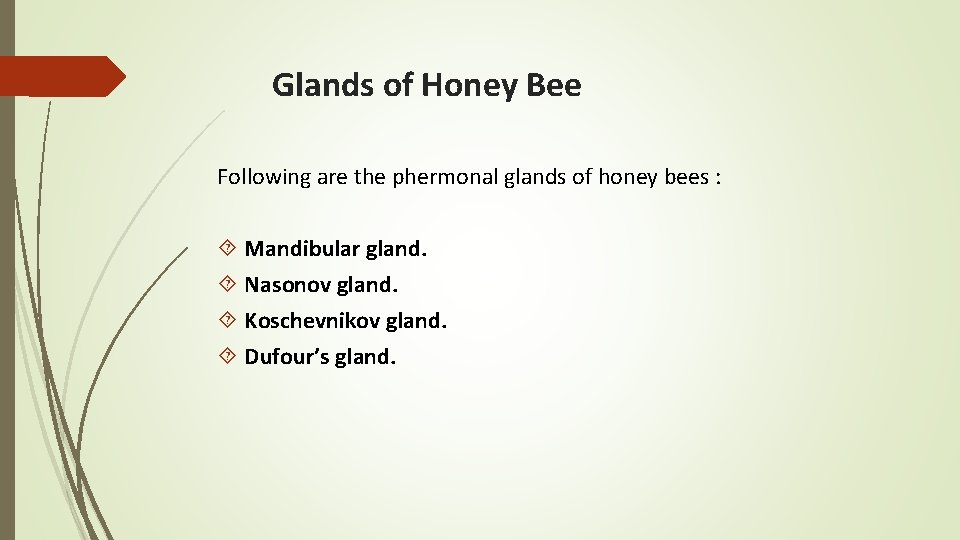
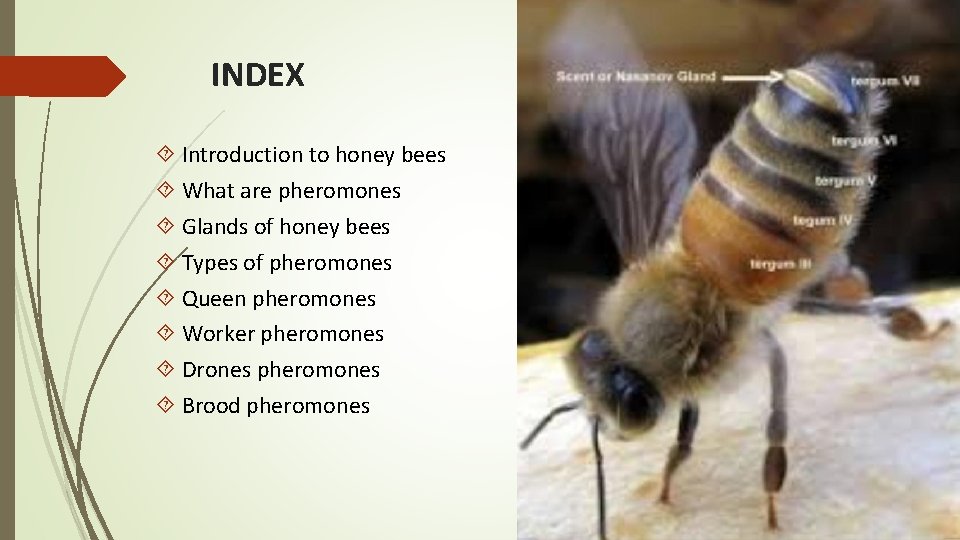
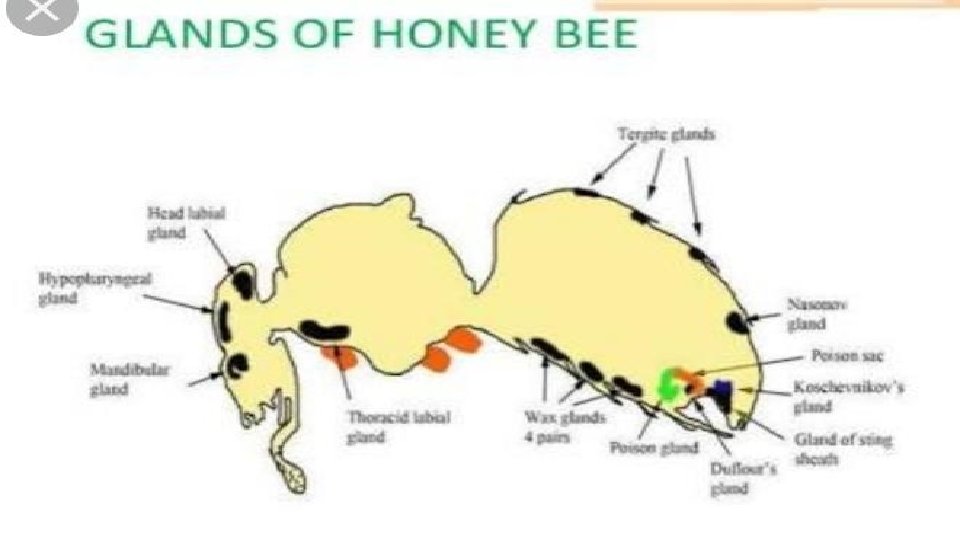
Glands of Honey Bee Following are the phermonal glands of honey bees : Mandibular gland. Nasonov gland. Koschevnikov gland. Dufour’s gland.
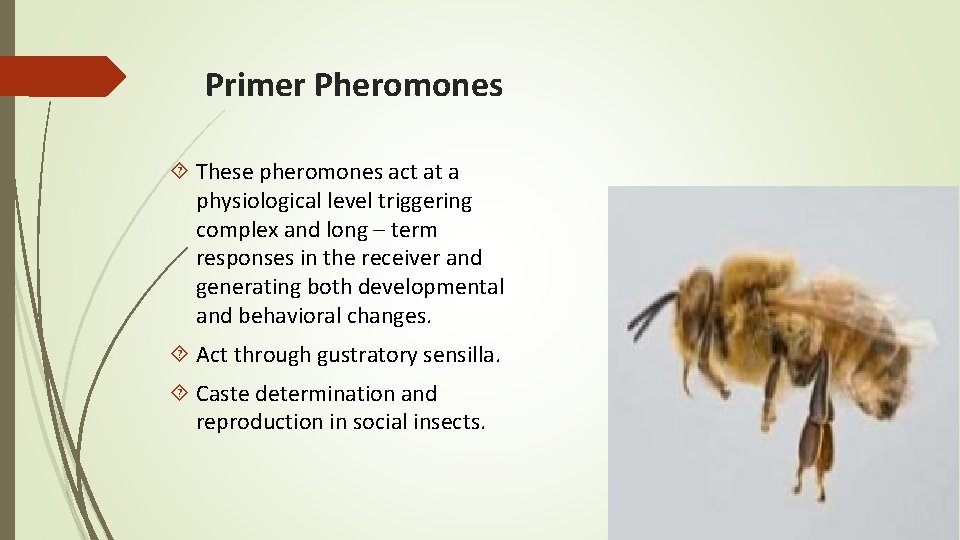
Primer Pheromones These pheromones act at a physiological level triggering complex and long – term responses in the receiver and generating both developmental and behavioral changes. Act through gustratory sensilla. Caste determination and reproduction in social insects.

Releaser Pheromones These pheromones have a weaker effect, generating a simple and transitory response that influences the receiver only at the behavioral level. They include sex phermones, aggregation phermones, alarm phermones, egg-laying phermones, brood-tending phermones, recruitment phermones etc.
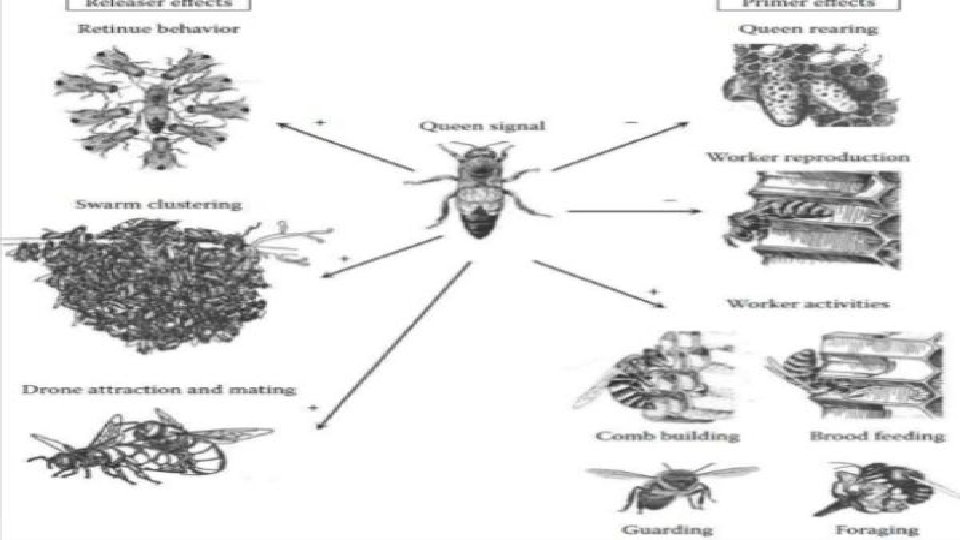
Queen Phermones The honey bee queen represents the main regulating factor of the colony functions. This regulation is largely achieved by means of pheromones, which are produced by different glands and emitted as a complex chemical blend, known as the “queen signal”. EFFECTS: Worker cohesion. Suppression of queen rearing, Inhibition of worker reproduction. Stimulation of worker activities : cleaning, building, guarding, foraging and brood feeding.
Queen Mandibular Gland Phermones The queen mandibular phermone (QMP) is by far the most studied and well-known chemical signal in the honey bee society. Chemically, it is very diverse with at least 17 major components.
Tergal Gland Phermones Tergal glands, also known as Renner and Bumann glands. Queen mandibular gland secretions were more effective than tergal gland secretions in formation of the retinue, but the two secretions together were even more efficient, indicating a releaser function of queen tergal gland pheromone in evoking the worker retinue behaviour.
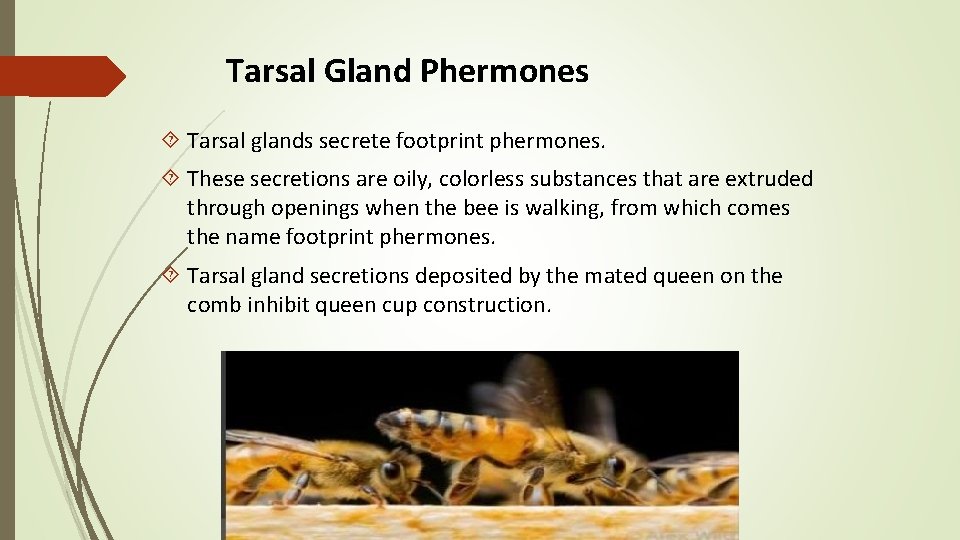
Tarsal Gland Phermones Tarsal glands secrete footprint phermones. These secretions are oily, colorless substances that are extruded through openings when the bee is walking, from which comes the name footprint phermones. Tarsal gland secretions deposited by the mated queen on the comb inhibit queen cup construction.
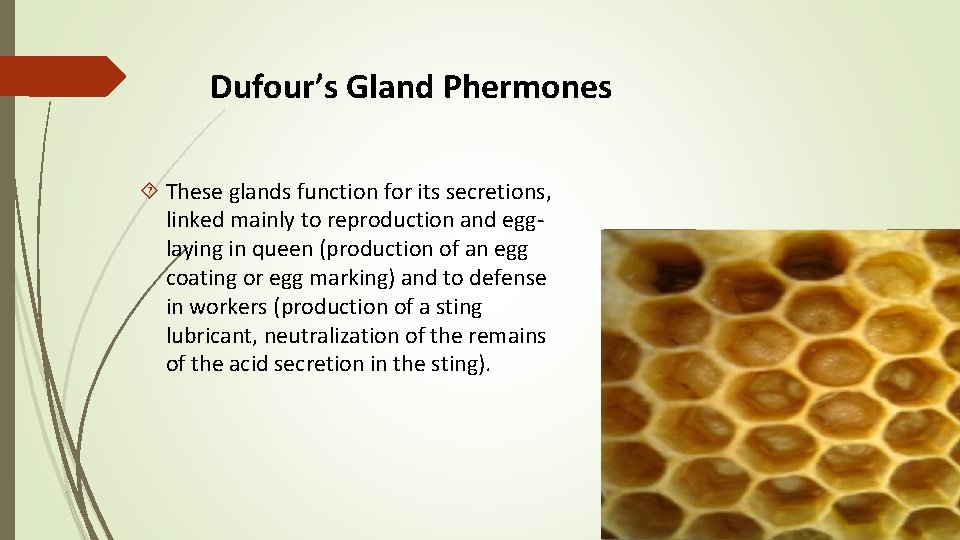
Dufour’s Gland Phermones These glands function for its secretions, linked mainly to reproduction and egglaying in queen (production of an egg coating or egg marking) and to defense in workers (production of a sting lubricant, neutralization of the remains of the acid secretion in the sting).
Koschevnikov Gland Phermones In honey bee workers, the gland produces an alarm phermone that is released when a bee stings and in queen it has different role to play (balling behaviour).
Worker Phermones 1. Regulation of Worker Reproduction : Worker mandibular glands are able to produce a set of chemicals very similar to those of queen glands and with a comparable action. 2. Regulation of Worker Activity : The chemical substance that acts as an inhibiting factor delaying onset of foraging age was identified by Leoncini etal, 2004 as ethyl oleate. This substance was found in high concentrations on the body of adult forager bees.
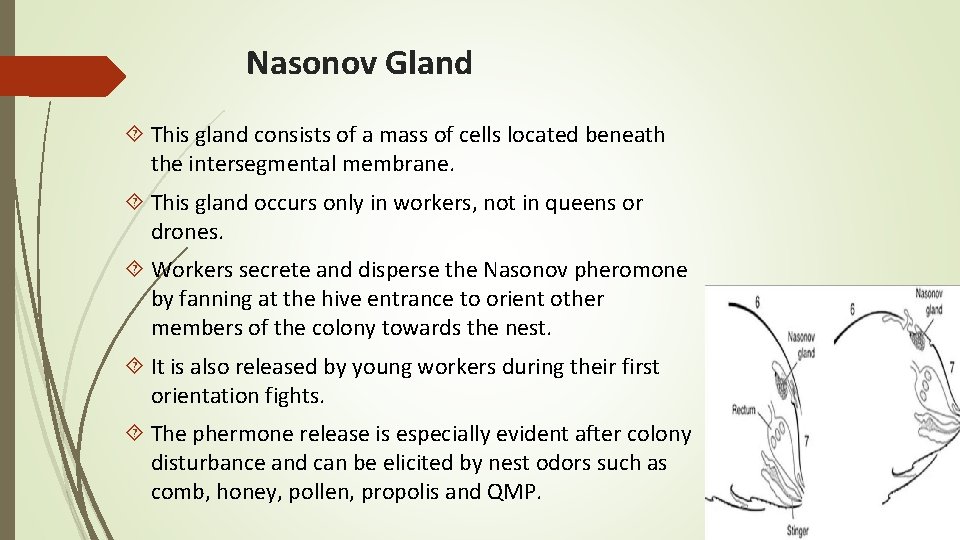
Nasonov Gland This gland consists of a mass of cells located beneath the intersegmental membrane. This gland occurs only in workers, not in queens or drones. Workers secrete and disperse the Nasonov pheromone by fanning at the hive entrance to orient other members of the colony towards the nest. It is also released by young workers during their first orientation fights. The phermone release is especially evident after colony disturbance and can be elicited by nest odors such as comb, honey, pollen, propolis and QMP.
Alarm Phermones Defensive behaviour is the first out-nest task performed by workers and is thus initiated at a younger age than foraging. There are two different kinds of workers involved in the defensive behaviour. 1. Guard Bees : These are workers that patrol the entrance of the hive in search of bees, insects, animals. They also inspect all bees that land at the hive entrance through antennation to recognize nestmates and reject non - nestmates. 2. Defenders : They are also called stingers, that respond to a danger or a disturbance by flying out and stinging.
Drone Phermones Drone mandibular glands are much smaller than those of queens and workers and their size varies according to age. The secretory activity increases from 3 days old to 7 days of age, while after 9 days, the glands were no longer active. The drone tarsal gland secretion also differs chemically from the females, and its biological effects are still obscure.
Drone Acceptance in the Colony Similarly to workers, honey bee drones show features that determine their acceptance or refusal in the colony. This depends on whether they belong to the colony or not and on their age. The mechanism that might be used by the workers to distinguish between drones of different ages could be the perception of chemical signals on the drone surface.
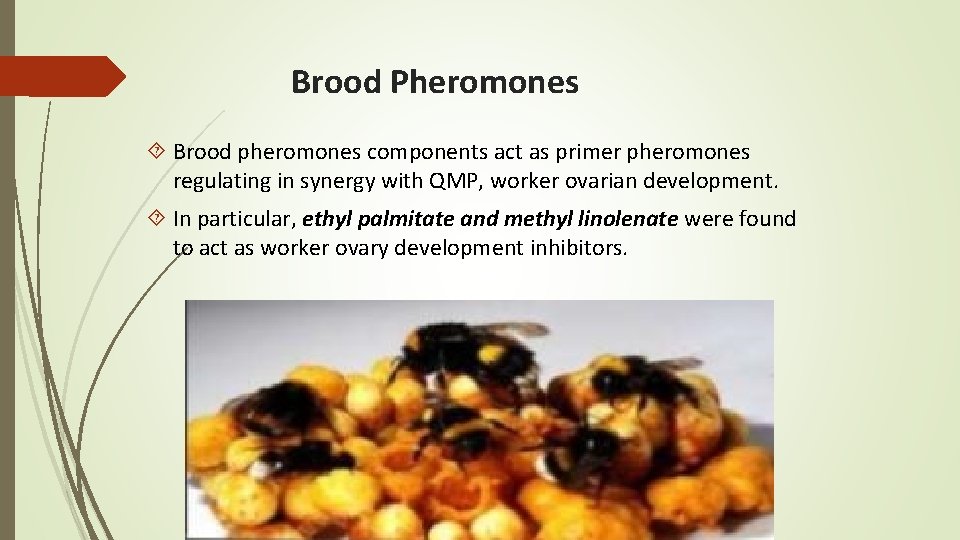
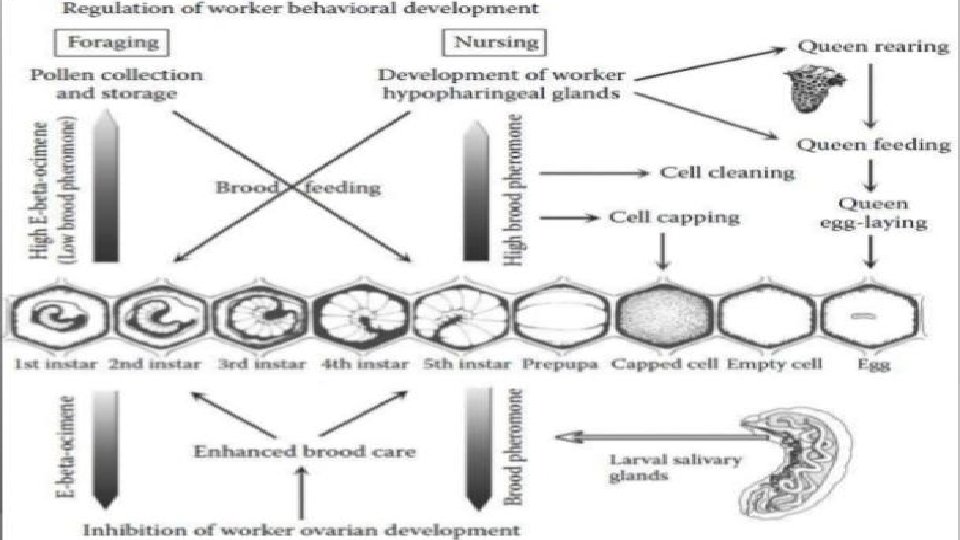
Brood Pheromones Brood pheromones components act as primer pheromones regulating in synergy with QMP, worker ovarian development. In particular, ethyl palmitate and methyl linolenate were found to act as worker ovary development inhibitors.

- Slides: 27