
Independent Retrofit Model Analysis Olivia Wright Erkan Istanbulluoglu

Independent Retrofit Model Analysis Olivia Wright Erkan Istanbulluoglu University of Washington Civil and Environmental Engineering
Project Objectives • Develop a lumped urban ecohydrology model that implements bioretention facilities. • Run model for Newaukum Urban catchment. • Implement various bioretention treatment scenarios to meet flow goals. • Evaluate scenario performance based on hydrologic indicators (HPC and HPR) of model output.
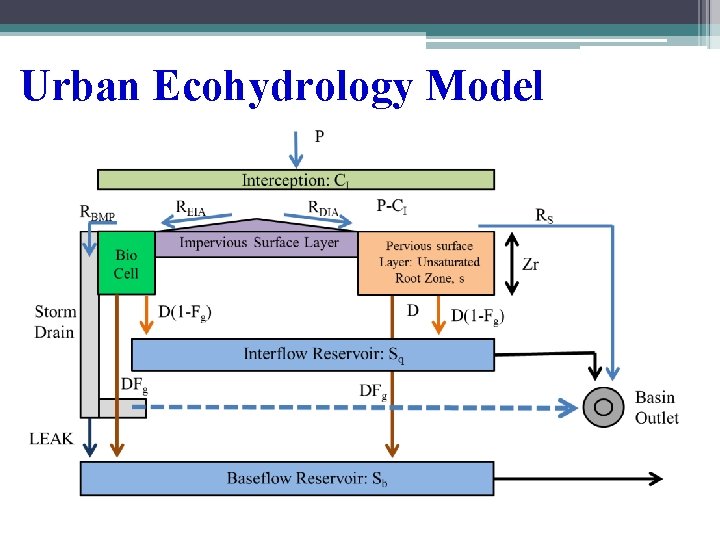
Urban Ecohydrology Model
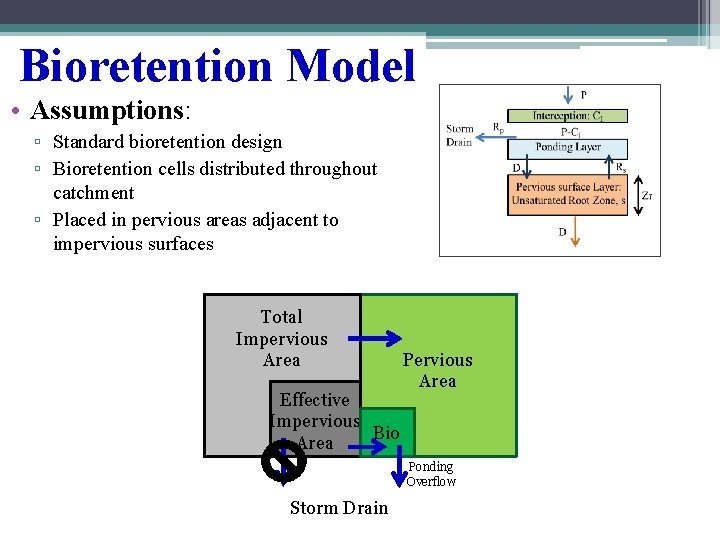
Bioretention Model • Assumptions: ▫ Standard bioretention design ▫ Bioretention cells distributed throughout catchment ▫ Placed in pervious areas adjacent to impervious surfaces Total Impervious Area Effective Impervious Bio Area Pervious Area Ponding Overflow Storm Drain
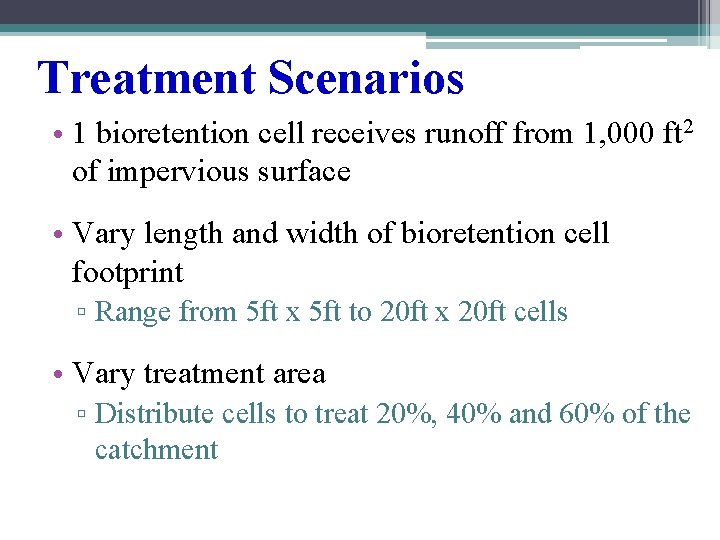
Treatment Scenarios • 1 bioretention cell receives runoff from 1, 000 ft 2 of impervious surface • Vary length and width of bioretention cell footprint ▫ Range from 5 ft x 5 ft to 20 ft x 20 ft cells • Vary treatment area ▫ Distribute cells to treat 20%, 40% and 60% of the catchment
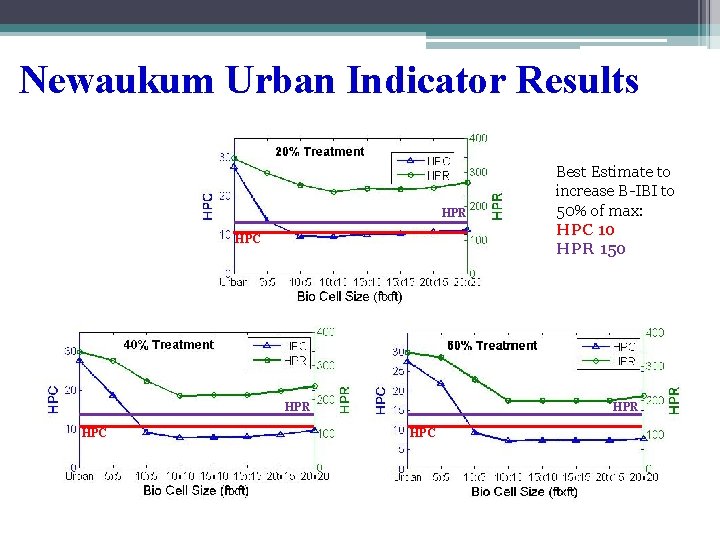
Newaukum Urban Indicator Results HPR HPC Best Estimate to increase B-IBI to 50% of max: HPC 10 HPR 150 HPR HPC
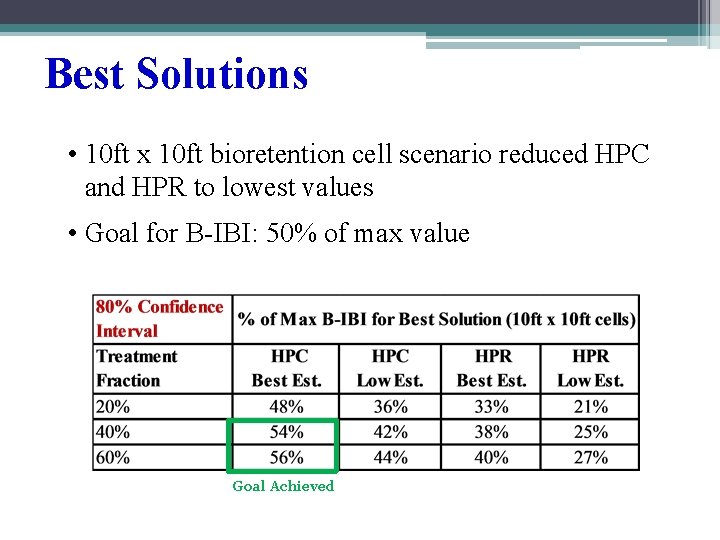
Best Solutions • 10 ft x 10 ft bioretention cell scenario reduced HPC and HPR to lowest values • Goal for B-IBI: 50% of max value Goal Achieved
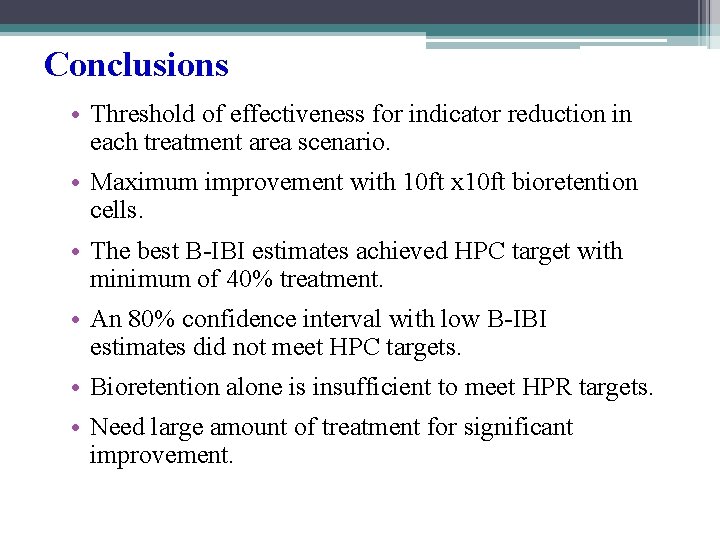
Conclusions • Threshold of effectiveness for indicator reduction in each treatment area scenario. • Maximum improvement with 10 ft x 10 ft bioretention cells. • The best B-IBI estimates achieved HPC target with minimum of 40% treatment. • An 80% confidence interval with low B-IBI estimates did not meet HPC targets. • Bioretention alone is insufficient to meet HPR targets. • Need large amount of treatment for significant improvement.
- Slides: 8