
Independent India Character of New State Parliamentary Democracy
- Slides: 19
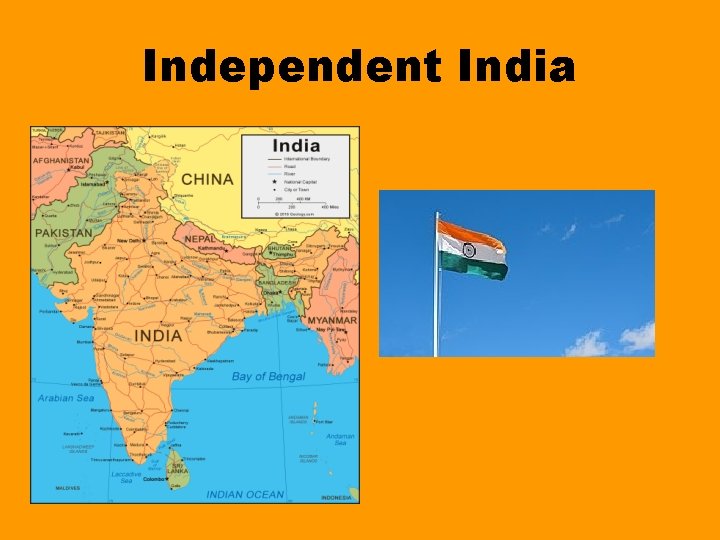
Independent India
Character of New State • Parliamentary Democracy • Federalism – States (also parliamentary systems) – Chief Ministers • Neutrality in Cold War • Experience with Administration • Constitution 1950 – 395 articles
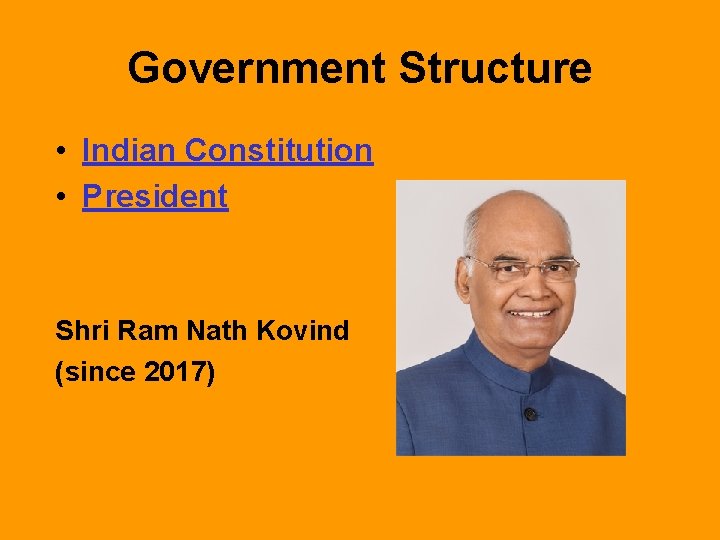
Government Structure • Indian Constitution • President Shri Ram Nath Kovind (since 2017)
Bicameral Parliament Rajya Sabha – 245 members – 233 elected by state parliaments/union territories – 12 appointed by President Lok Sabha • 545 members (originally) • 543 elected in SMD – 2 appointed (until 2020) – 84 seats reserved for scheduled castes – 47 reserved for scheduled tribes
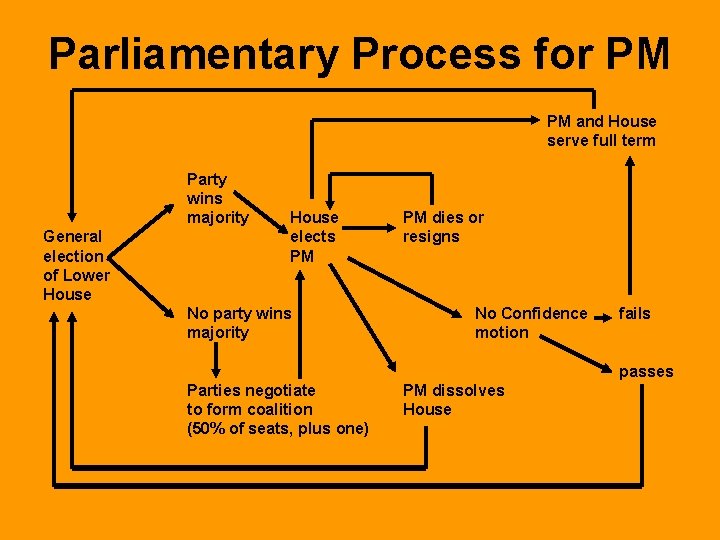
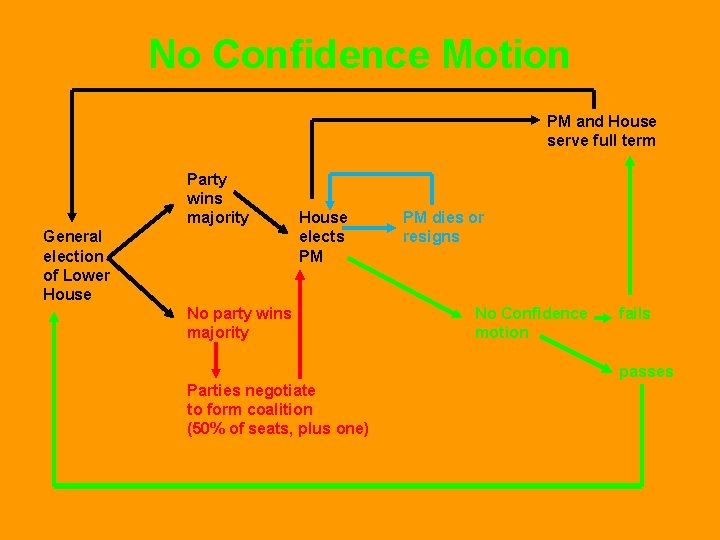
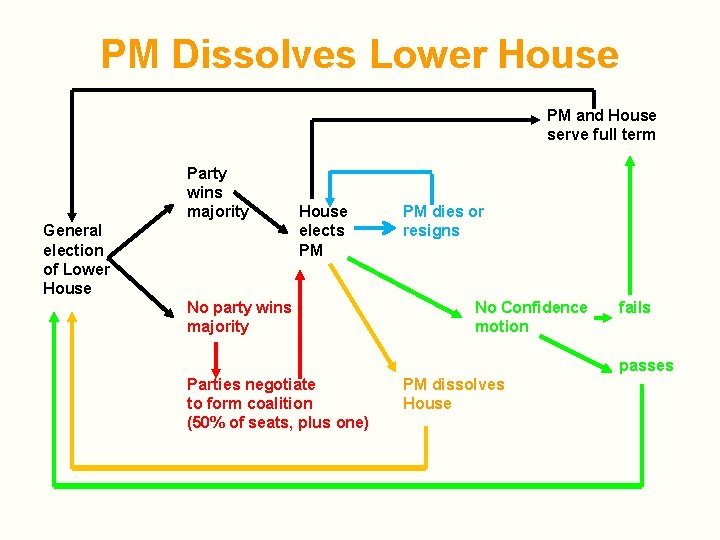
Parliamentary Process for PM PM and House serve full term Party wins majority General election of Lower House elects PM No party wins majority PM dies or resigns No Confidence motion fails passes Parties negotiate to form coalition (50% of seats, plus one) PM dissolves House
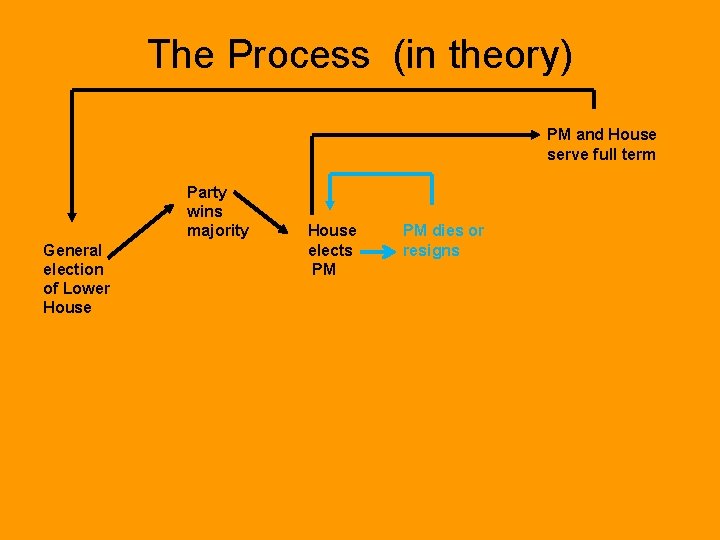
The Process (in theory) PM and House serve full term Party wins majority General election of Lower House elects PM PM dies or resigns
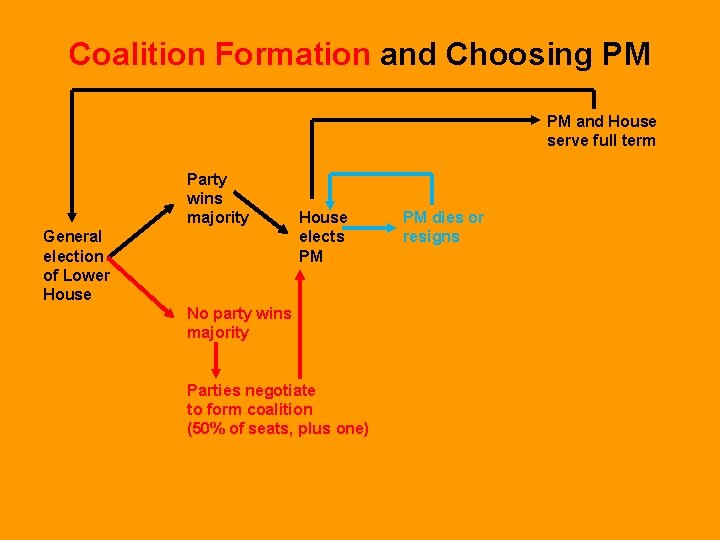
Coalition Formation and Choosing PM PM and House serve full term Party wins majority General election of Lower House elects PM No party wins majority Parties negotiate to form coalition (50% of seats, plus one) PM dies or resigns
No Confidence Motion PM and House serve full term Party wins majority General election of Lower House elects PM No party wins majority PM dies or resigns No Confidence motion fails passes Parties negotiate to form coalition (50% of seats, plus one)
PM Dissolves Lower House PM and House serve full term Party wins majority General election of Lower House elects PM No party wins majority PM dies or resigns No Confidence motion fails passes Parties negotiate to form coalition (50% of seats, plus one) PM dissolves House
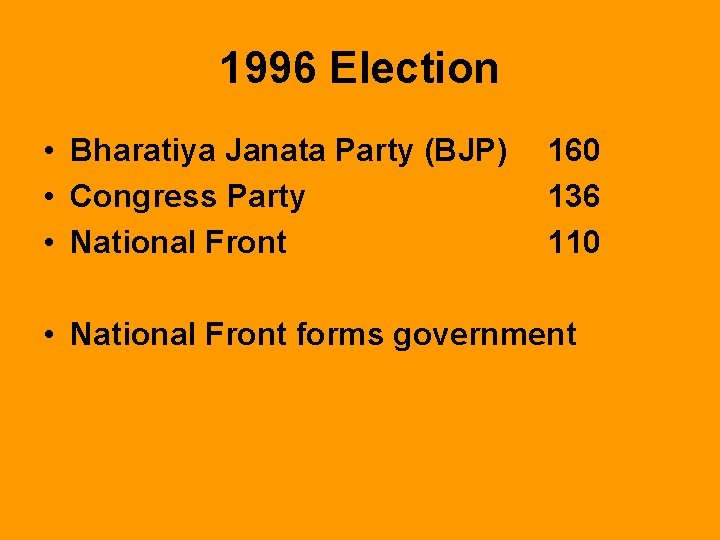
1996 Election • Bharatiya Janata Party (BJP) • Congress Party • National Front 160 136 110 • National Front forms government
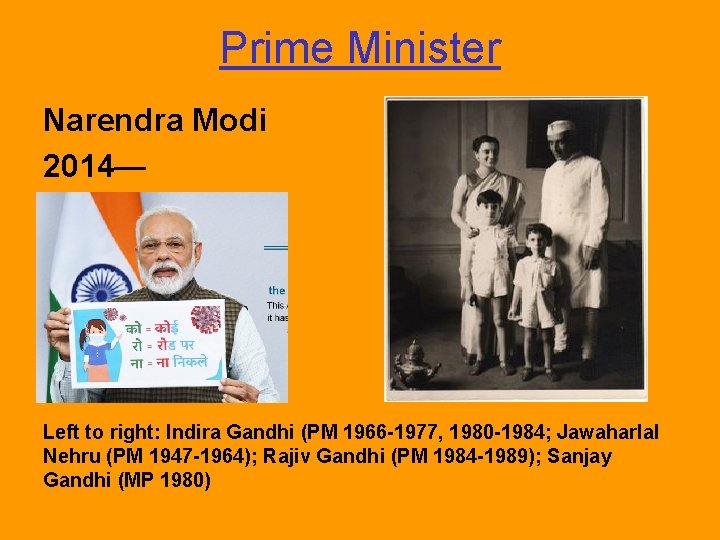
Prime Minister Narendra Modi 2014— Left to right: Indira Gandhi (PM 1966 -1977, 1980 -1984; Jawaharlal Nehru (PM 1947 -1964); Rajiv Gandhi (PM 1984 -1989); Sanjay Gandhi (MP 1980)
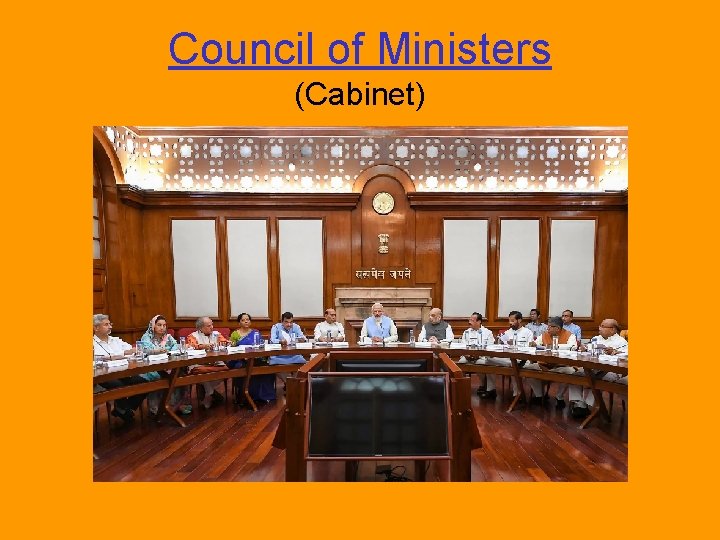
Council of Ministers (Cabinet)
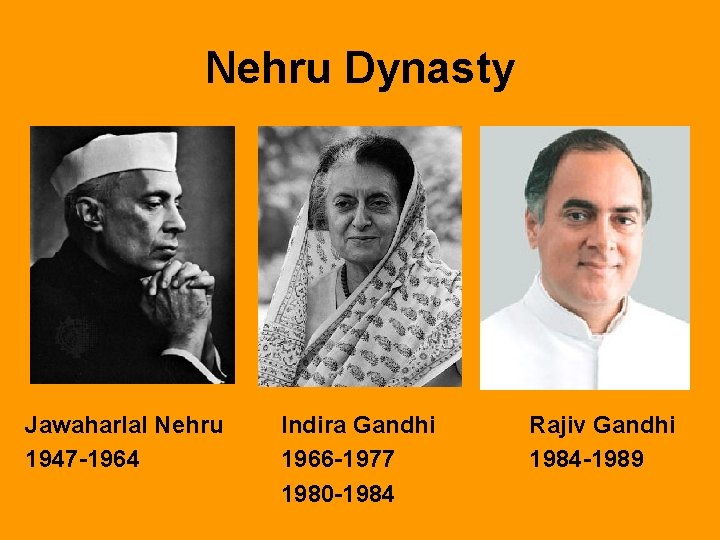
Nehru Dynasty Jawaharlal Nehru 1947 -1964 Indira Gandhi 1966 -1977 1980 -1984 Rajiv Gandhi 1984 -1989
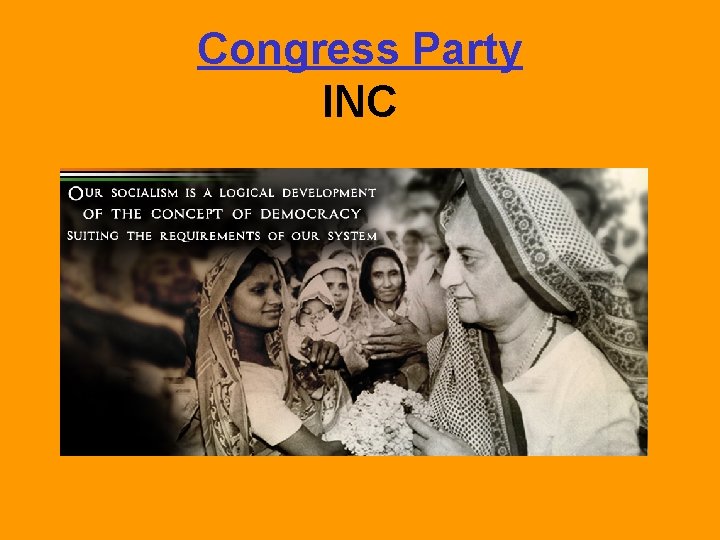
Congress Party INC
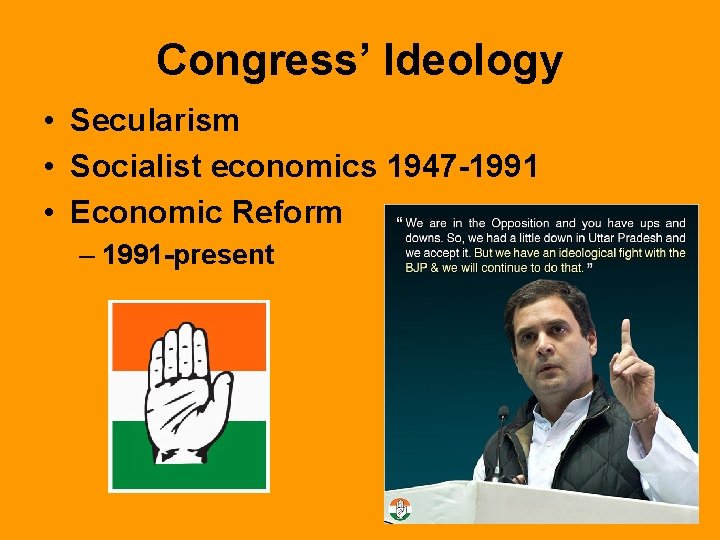
Congress’ Ideology • Secularism • Socialist economics 1947 -1991 • Economic Reform – 1991 -present
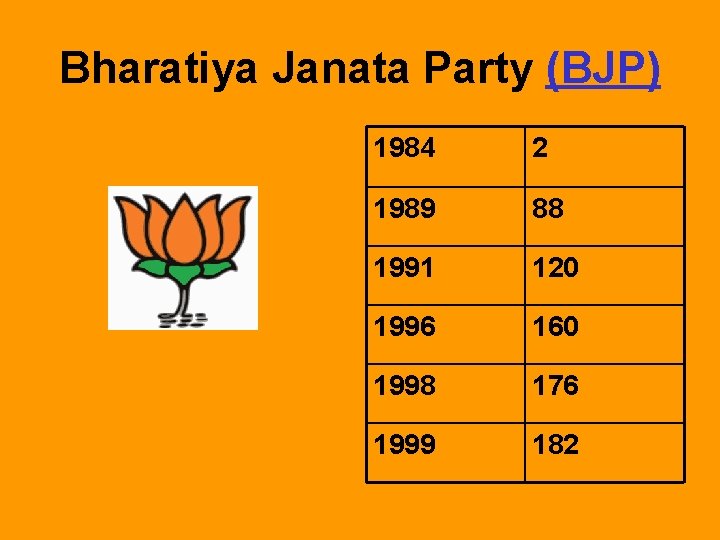
Bharatiya Janata Party (BJP) 1984 2 1989 88 1991 120 1996 160 1998 176 1999 182
BJP Ideology • Hindutva (Hindu Nationalism) • RSS (Rashtriya Swayamsevak Sangh; National Volunteer Organization) • Sangh Parivar (umbrella organization for RSS and allies) • Vishwa Hindu Parishad (VHP)
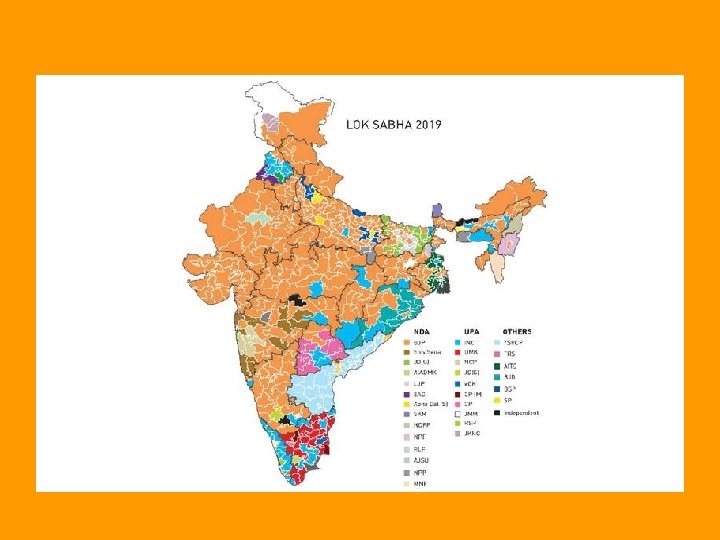
Others • Leftist parties – AITC (All India Trinamool Congress (West Bengal, Manipur, Tripura and Arunachal Pradesh) – Communist Party of India (Marxist) • Regional parties – AIADMK (All India Anna Dravida Munnetra Kazhigam) Tamil Nadu state – Telugu Desam Party (Andrha Pradesh) – Samajwadi Party (Uttar Pradesh) • Caste-based Parties – Bahujan Samaj Party