
Independent Ethics Committee IEC Research Ethics Committee REC


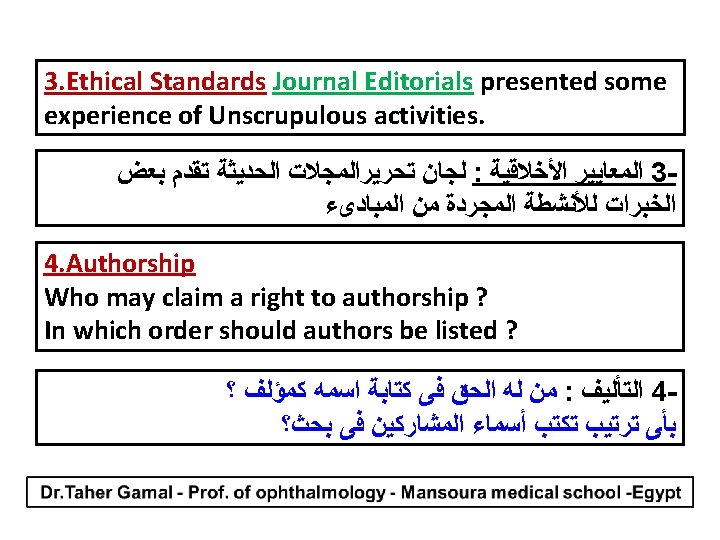
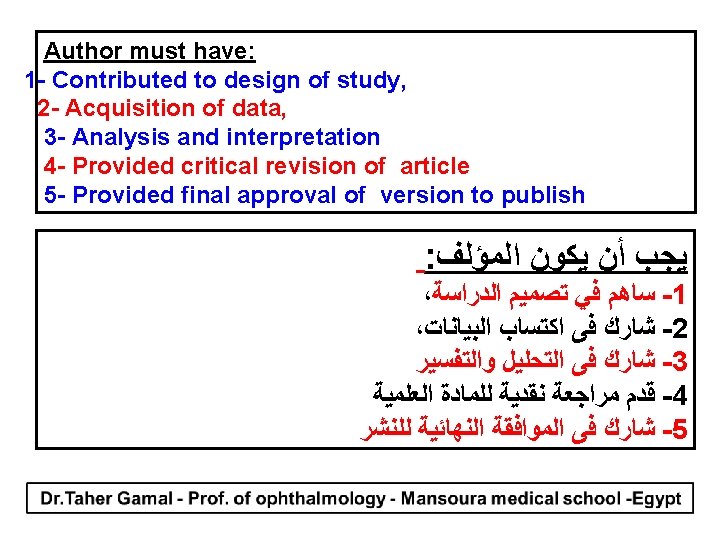
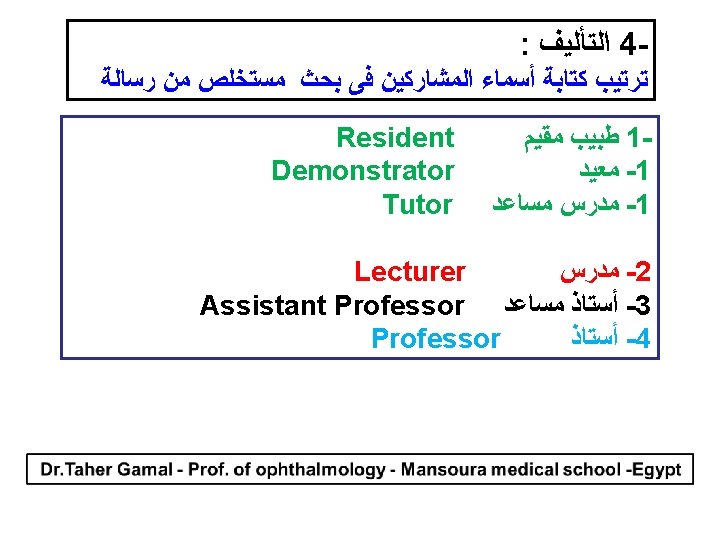
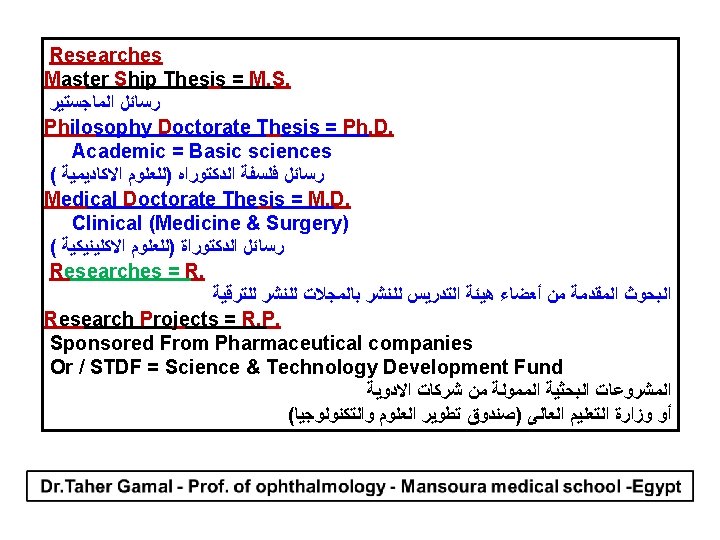
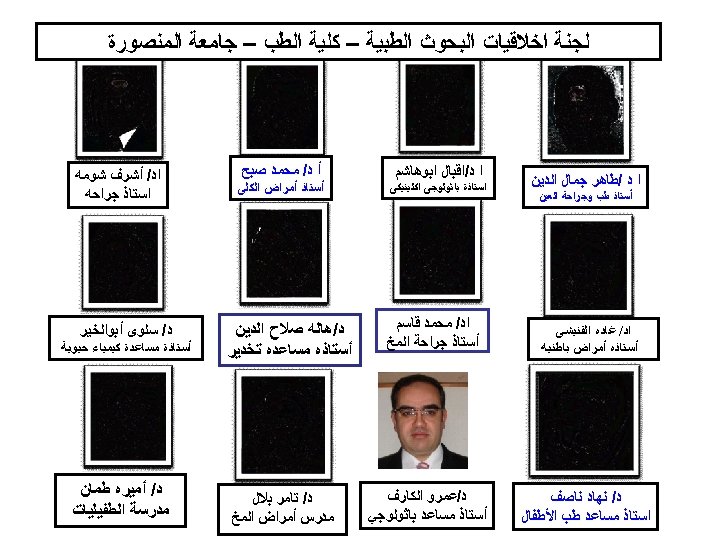

- Slides: 110
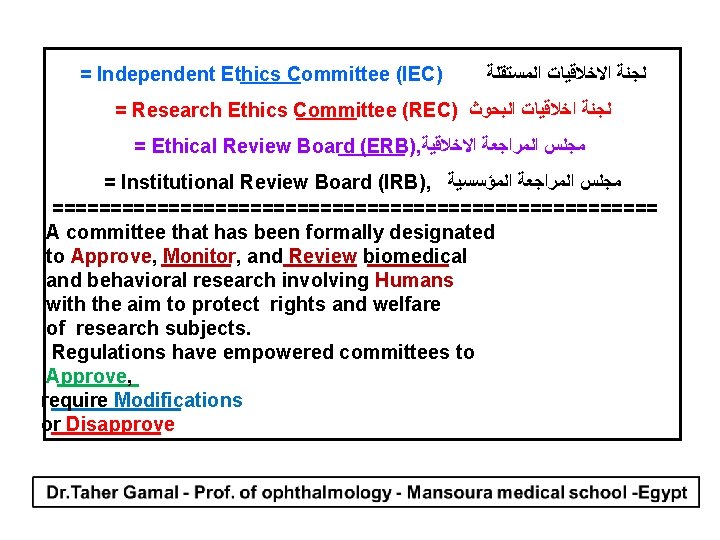
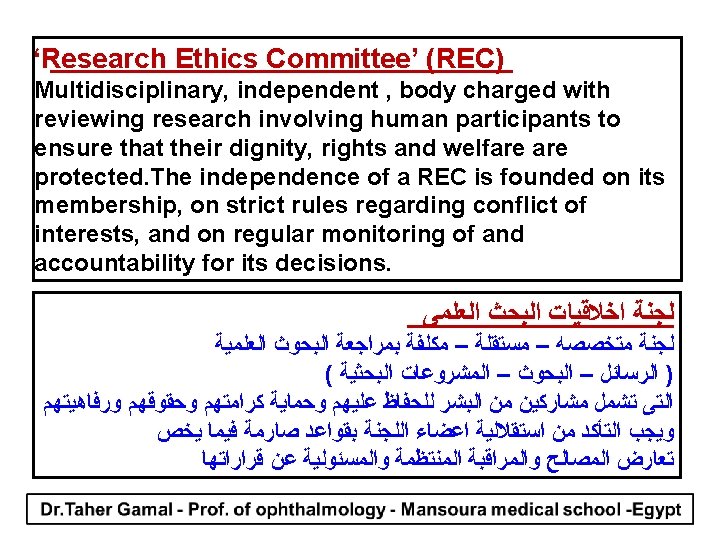
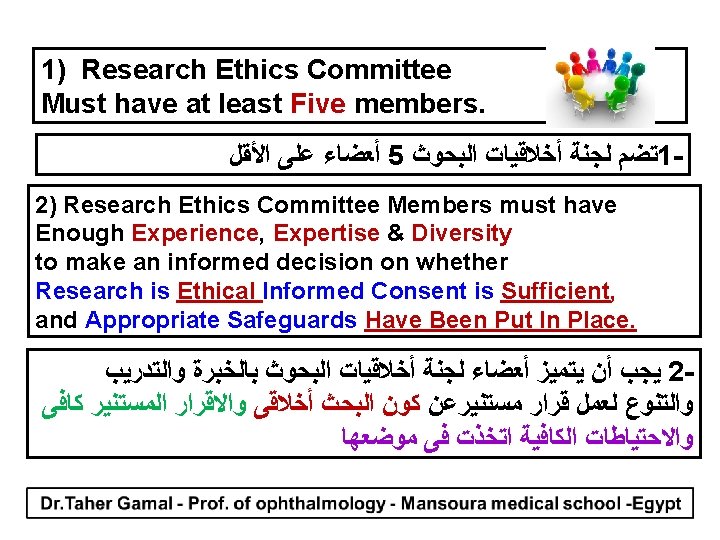
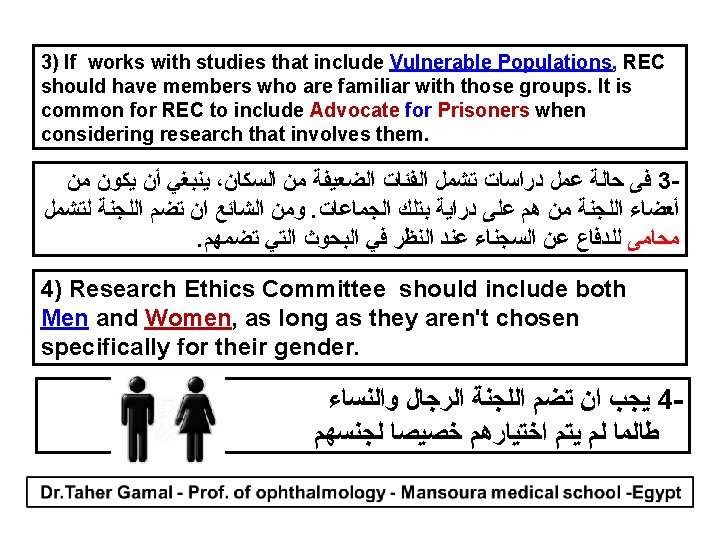
= Independent Ethics Committee (IEC) ﺍﻟﻤﺴﺘﻘﻠﺔ ﺍﻻﺧﻼﻗﻴﺎﺕ ﻟﺠﻨﺔ = Research Ethics Committee (REC) ﺍﻟﺒﺤﻮﺙ ﺍﺧﻼﻗﻴﺎﺕ ﻟﺠﻨﺔ = Ethical Review Board (ERB), ﺍﻻﺧﻼﻗﻴﺔ ﺍﻟﻤﺮﺍﺟﻌﺔ ﻣﺠﻠﺲ = Institutional Review Board (IRB), ﺍﻟﻤﺆﺴﺴﻴﺔ ﺍﻟﻤﺮﺍﺟﻌﺔ ﻣﺠﻠﺲ ========================== A committee that has been formally designated to Approve, Monitor, and Review biomedical and behavioral research involving Humans with the aim to protect rights and welfare of research subjects. Regulations have empowered committees to Approve, require Modifications or Disapprove
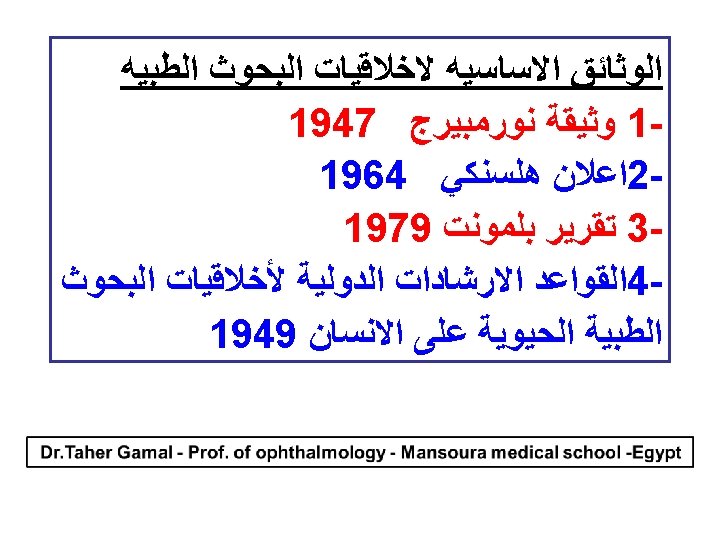
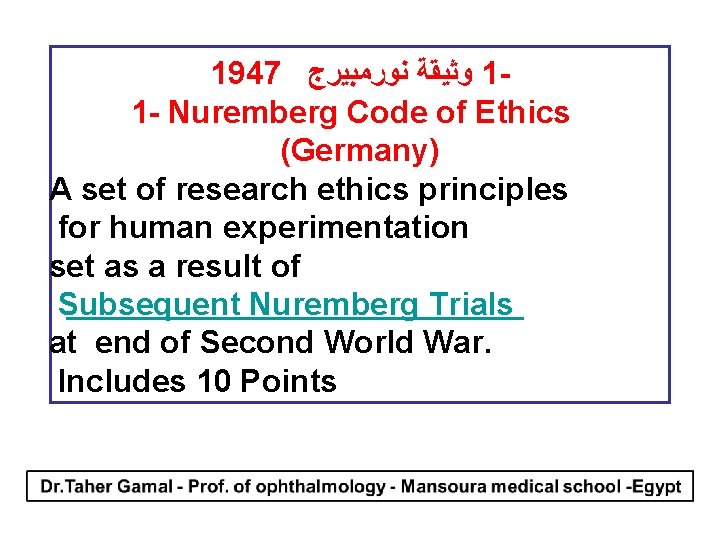
1947 ﻧﻮﺭﻣﺒﻴﺮﺝ ﻭﺛﻴﻘﺔ 11 - Nuremberg Code of Ethics (Germany) A set of research ethics principles for human experimentation set as a result of Subsequent Nuremberg Trials at end of Second World War. Includes 10 Points
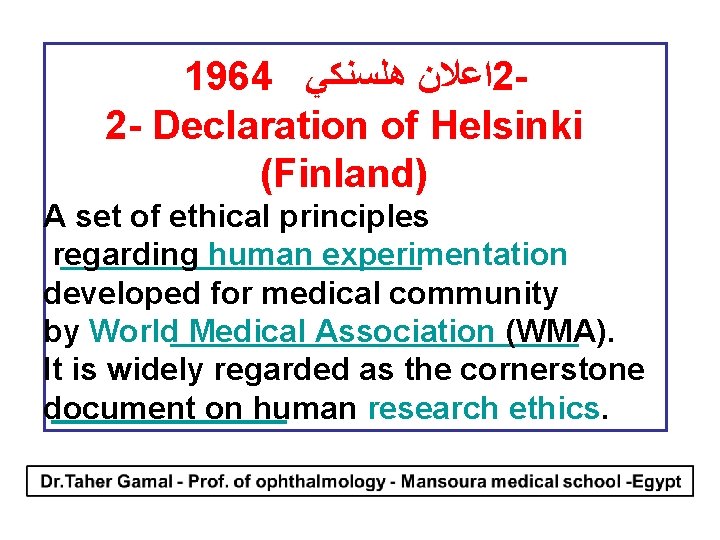
1964 ﻫﻠﺴﻨﻜﻲ ﺍﻋﻼﻥ 22 - Declaration of Helsinki (Finland) A set of ethical principles regarding human experimentation developed for medical community by World Medical Association (WMA). It is widely regarded as the cornerstone document on human research ethics.
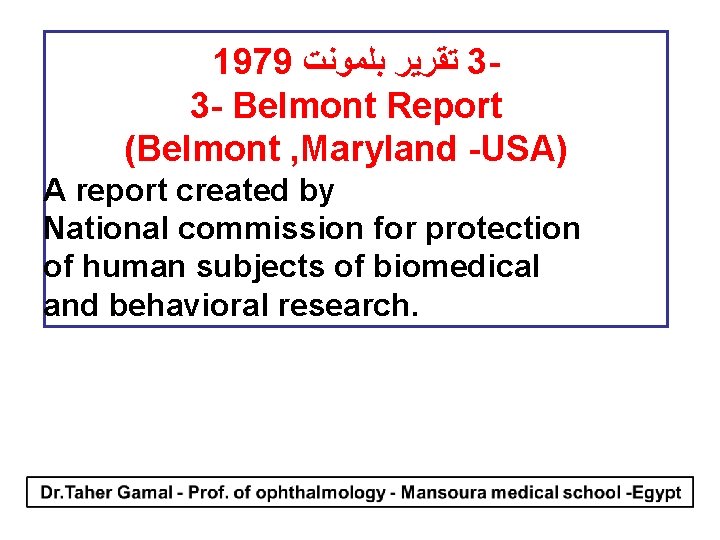
1979 ﺑﻠﻤﻮﻧﺖ ﺗﻘﺮﻳﺮ 33 - Belmont Report (Belmont , Maryland -USA) A report created by National commission for protection of human subjects of biomedical and behavioral research.
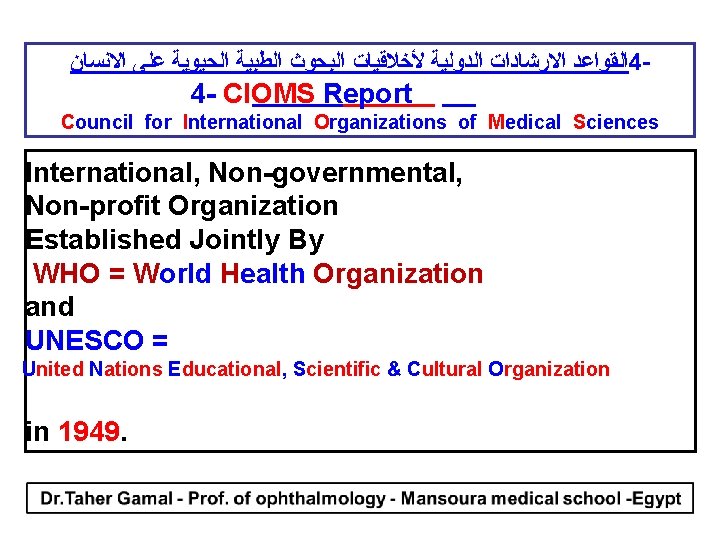
ﺍﻻﻧﺴﺎﻥ ﻋﻠﻰ ﺍﻟﺤﻴﻮﻳﺔ ﺍﻟﻄﺒﻴﺔ ﺍﻟﺒﺤﻮﺙ ﻷﺨﻼﻗﻴﺎﺕ ﺍﻟﺪﻭﻟﻴﺔ ﺍﻻﺭﺷﺎﺩﺍﺕ ﺍﻟﻘﻮﺍﻋﺪ 4 - CIOMS Report Council for International Organizations of Medical Sciences International, Non-governmental, Non-profit Organization Established Jointly By WHO = World Health Organization and UNESCO = United Nations Educational, Scientific & Cultural Organization in 1949.
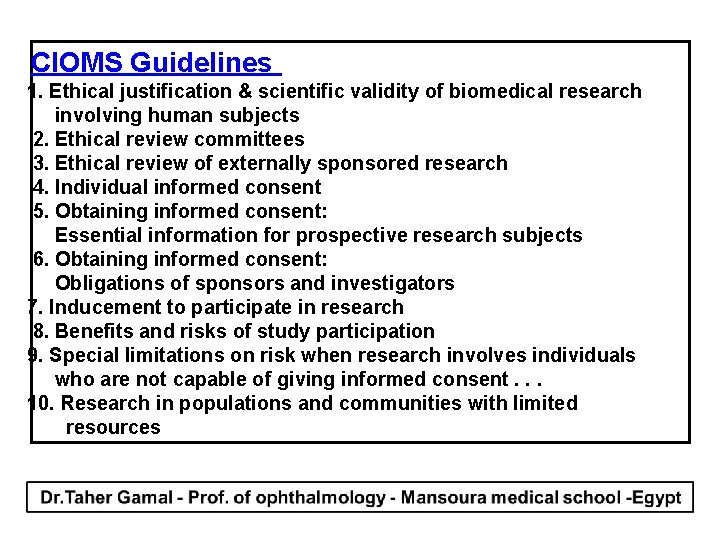
CIOMS Guidelines 1. Ethical justification & scientific validity of biomedical research involving human subjects 2. Ethical review committees 3. Ethical review of externally sponsored research 4. Individual informed consent 5. Obtaining informed consent: Essential information for prospective research subjects 6. Obtaining informed consent: Obligations of sponsors and investigators 7. Inducement to participate in research 8. Benefits and risks of study participation 9. Special limitations on risk when research involves individuals who are not capable of giving informed consent. . . 10. Research in populations and communities with limited resources
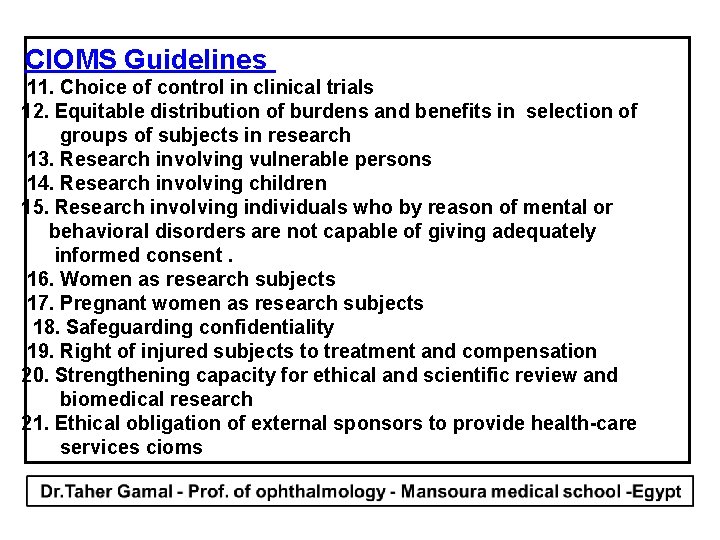
CIOMS Guidelines 11. Choice of control in clinical trials 12. Equitable distribution of burdens and benefits in selection of groups of subjects in research 13. Research involving vulnerable persons 14. Research involving children 15. Research involving individuals who by reason of mental or behavioral disorders are not capable of giving adequately informed consent. 16. Women as research subjects 17. Pregnant women as research subjects 18. Safeguarding confidentiality 19. Right of injured subjects to treatment and compensation 20. Strengthening capacity for ethical and scientific review and biomedical research 21. Ethical obligation of external sponsors to provide health-care services cioms
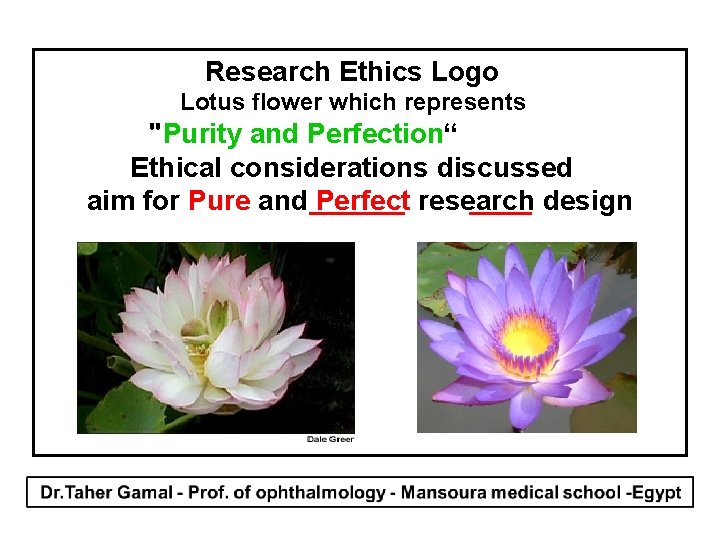
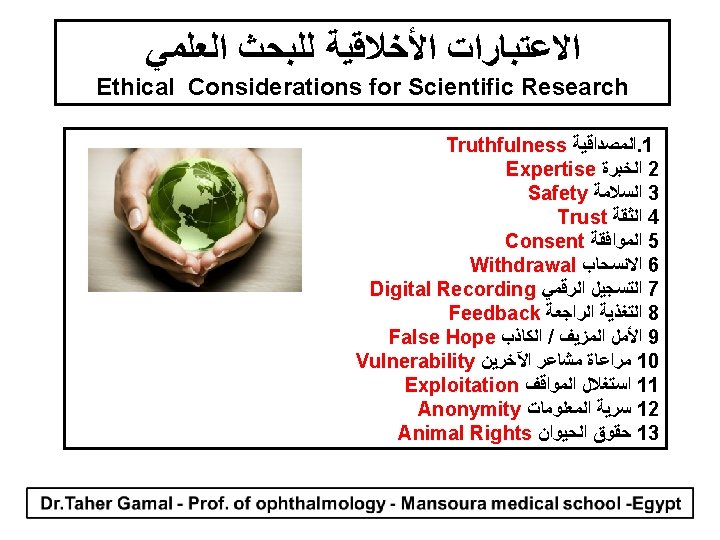
Research Ethics Logo Lotus flower which represents "Purity and Perfection“ Ethical considerations discussed aim for Pure and Perfect research design
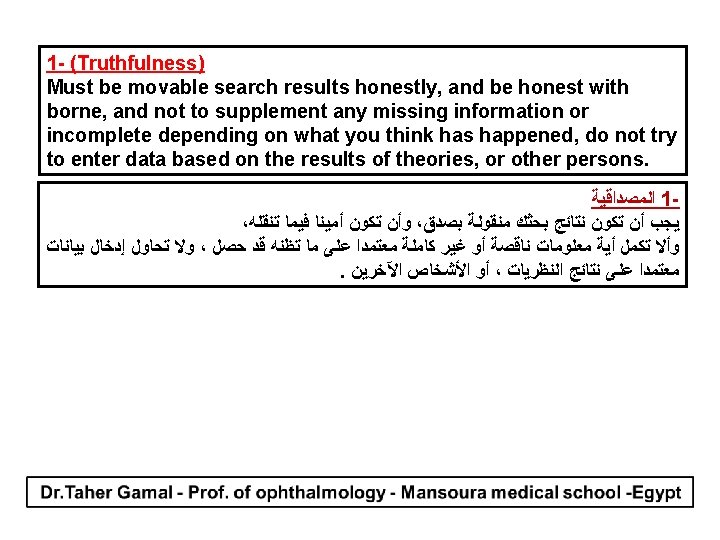
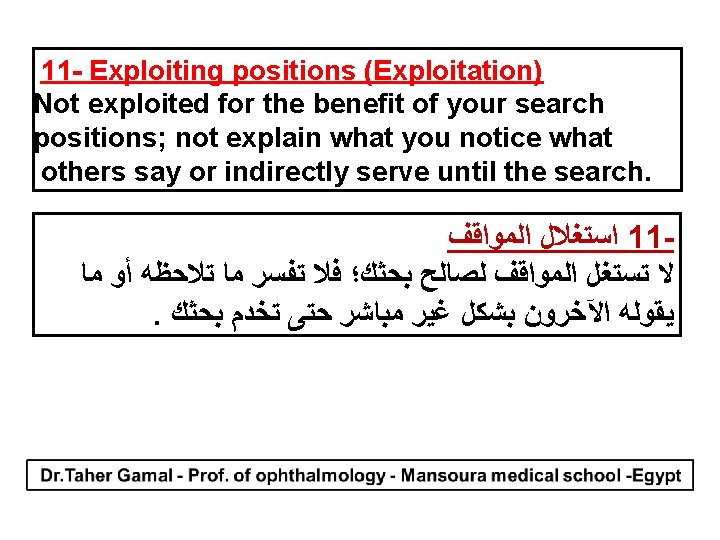
11 - Exploiting positions (Exploitation) Not exploited for the benefit of your search positions; not explain what you notice what others say or indirectly serve until the search. ﺍﻟﻤﻮﺍﻗﻒ ﺍﺳﺘﻐﻼﻝ 11 ﻣﺎ ﺃﻮ ﺗﻼﺣﻈﻪ ﻣﺎ ﺗﻔﺴﺮ ﻓﻼ ﺑﺤﺜﻚ؛ ﻟﺼﺎﻟﺢ ﺍﻟﻤﻮﺍﻗﻒ ﺗﺴﺘﻐﻞ ﻻ . ﺑﺤﺜﻚ ﺗﺨﺪﻡ ﺣﺘﻰ ﻣﺒﺎﺷﺮ ﻏﻴﺮ ﺑﺸﻜﻞ ﺍﻵﺨﺮﻭﻥ ﻳﻘﻮﻟﻪ
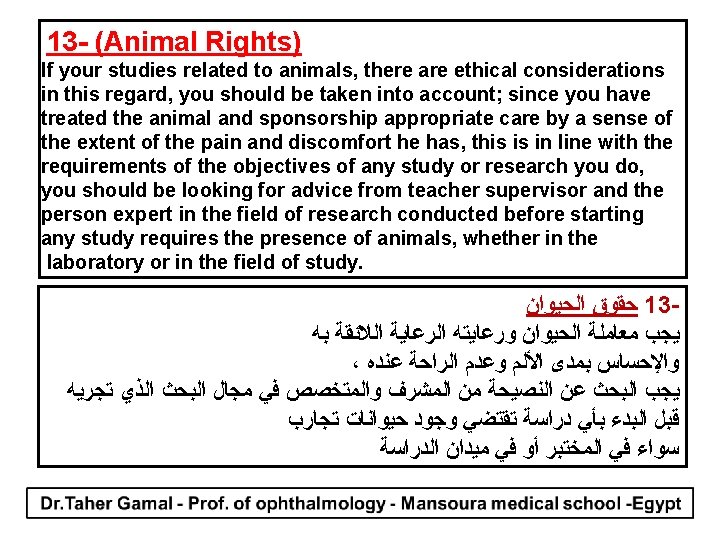
13 - (Animal Rights) If your studies related to animals, there are ethical considerations in this regard, you should be taken into account; since you have treated the animal and sponsorship appropriate care by a sense of the extent of the pain and discomfort he has, this is in line with the requirements of the objectives of any study or research you do, you should be looking for advice from teacher supervisor and the person expert in the field of research conducted before starting any study requires the presence of animals, whether in the laboratory or in the field of study. ﺍﻟﺤﻴﻮﺍﻥ ﺣﻘﻮﻕ 13 ﺑﻪ ﺍﻟﻼﺋﻘﺔ ﺍﻟﺮﻋﺎﻳﺔ ﻭﺭﻋﺎﻳﺘﻪ ﺍﻟﺤﻴﻮﺍﻥ ﻣﻌﺎﻣﻠﺔ ﻳﺠﺐ ، ﻋﻨﺪﻩ ﺍﻟﺮﺍﺣﺔ ﻭﻋﺪﻡ ﺍﻷﻠﻢ ﺑﻤﺪﻯ ﻭﺍﻹﺣﺴﺎﺱ ﺗﺠﺮﻳﻪ ﺍﻟﺬﻱ ﺍﻟﺒﺤﺚ ﻣﺠﺎﻝ ﻓﻲ ﻭﺍﻟﻤﺘﺨﺼﺺ ﺍﻟﻤﺸﺮﻑ ﻣﻦ ﺍﻟﻨﺼﻴﺤﺔ ﻋﻦ ﺍﻟﺒﺤﺚ ﻳﺠﺐ ﺗﺠﺎﺭﺏ ﺣﻴﻮﺍﻧﺎﺕ ﻭﺟﻮﺩ ﺗﻘﺘﻀﻲ ﺩﺭﺍﺳﺔ ﺑﺄﻲ ﺍﻟﺒﺪﺀ ﻗﺒﻞ ﺍﻟﺪﺭﺍﺳﺔ ﻣﻴﺪﺍﻥ ﻓﻲ ﺃﻮ ﺍﻟﻤﺨﺘﺒﺮ ﻓﻲ ﺳﻮﺍﺀ
Principles of Ethical Research
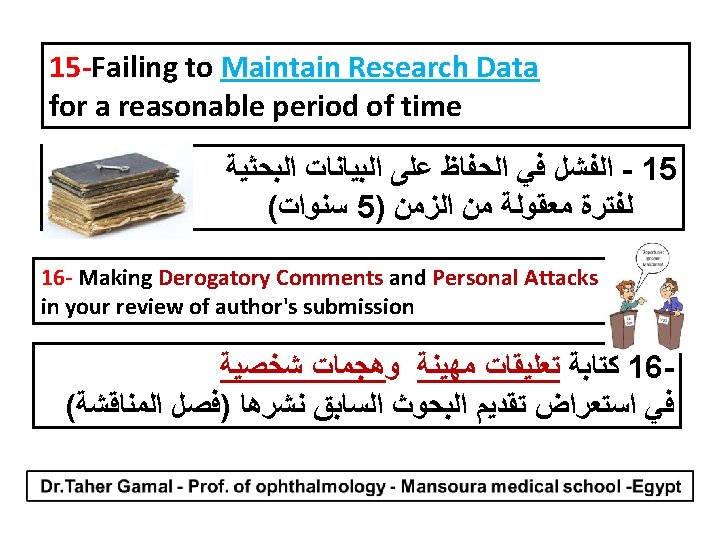
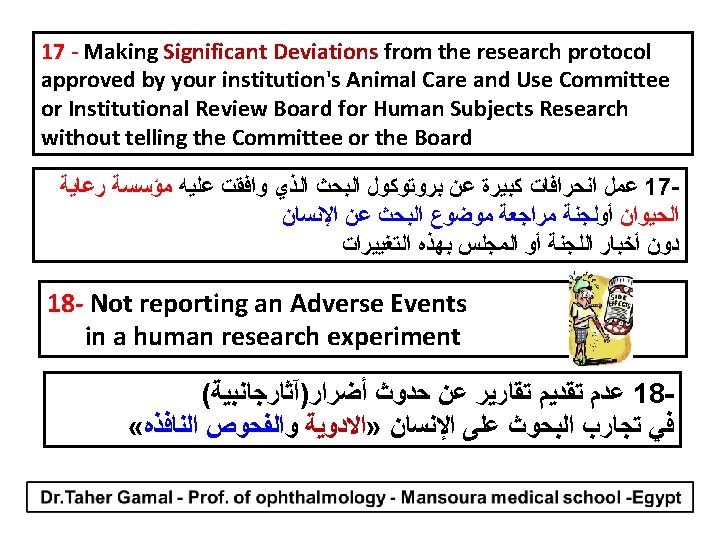
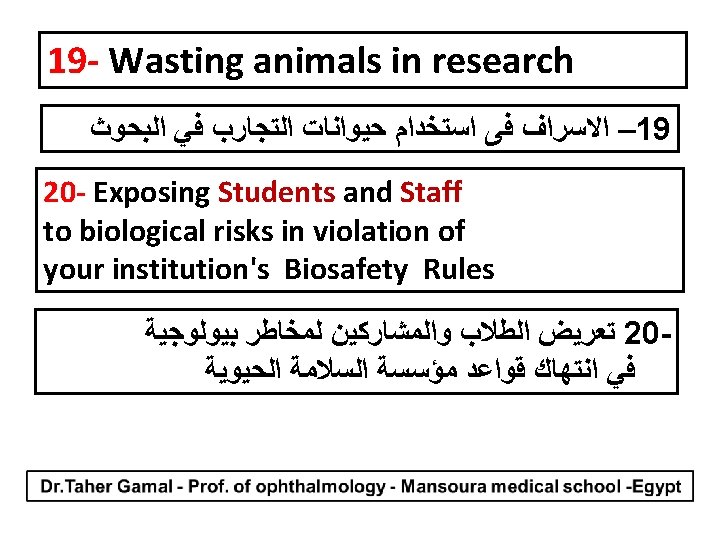
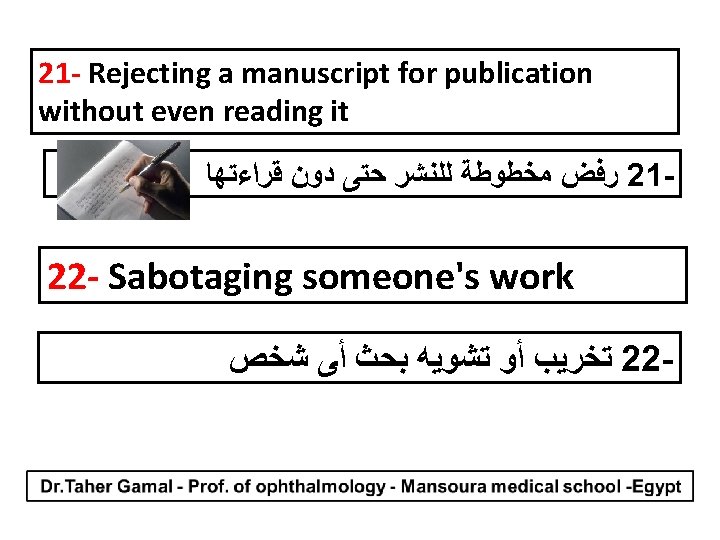
21 - Rejecting a manuscript for publication without even reading it ﻗﺮﺍﺀﺗﻬﺎ ﺩﻭﻥ ﺣﺘﻰ ﻟﻠﻨﺸﺮ ﻣﺨﻄﻮﻃﺔ ﺭﻓﺾ 21 - 22 - Sabotaging someone's work ﺷﺨﺺ ﺃﻰ ﺑﺤﺚ ﺗﺸﻮﻳﻪ ﺃﻮ ﺗﺨﺮﻳﺐ 22 -
Research Publications ﺍﻟﺒﺤﻮﺙ ﻧﺸﺮ
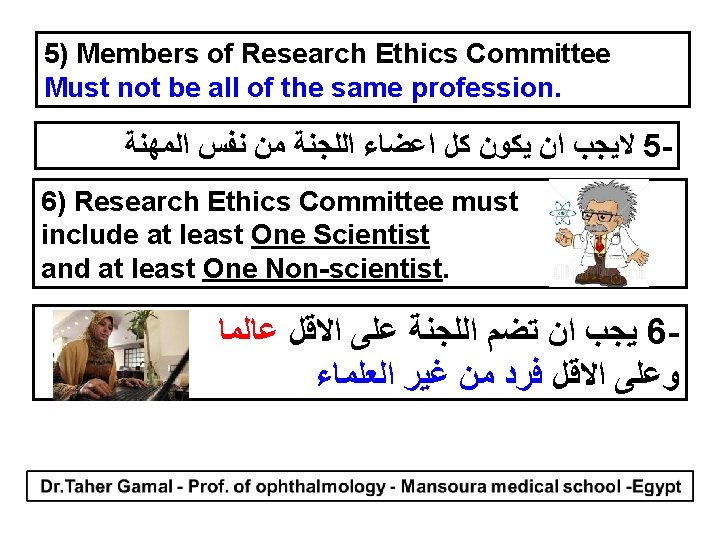
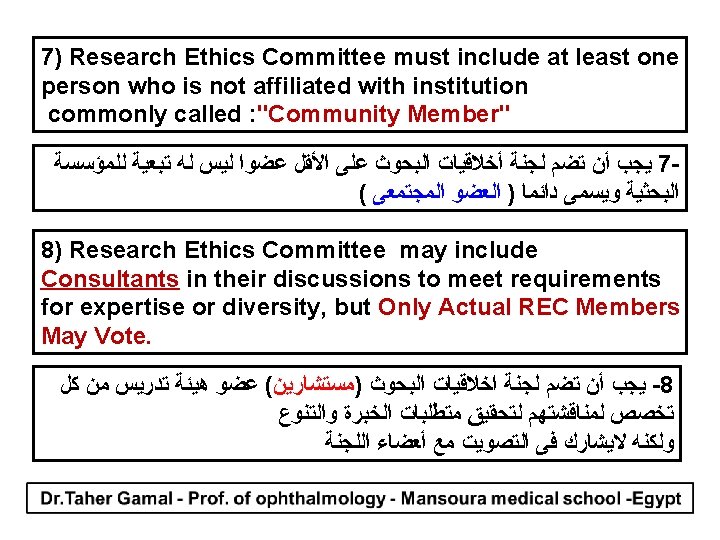
5) Members of Research Ethics Committee Must not be all of the same profession. ﺍﻟﻤﻬﻨﺔ ﻧﻔﺲ ﻣﻦ ﺍﻟﻠﺠﻨﺔ ﺍﻋﻀﺎﺀ ﻛﻞ ﻳﻜﻮﻥ ﺍﻥ ﻻﻳﺠﺐ 56) Research Ethics Committee must include at least One Scientist and at least One Non-scientist. ﻋﺎﻟﻤﺎ ﺍﻻﻗﻞ ﻋﻠﻰ ﺍﻟﻠﺠﻨﺔ ﺗﻀﻢ ﺍﻥ ﻳﺠﺐ 6 ﺍﻟﻌﻠﻤﺎﺀ ﻏﻴﺮ ﻣﻦ ﻓﺮﺩ ﺍﻻﻗﻞ ﻭﻋﻠﻰ
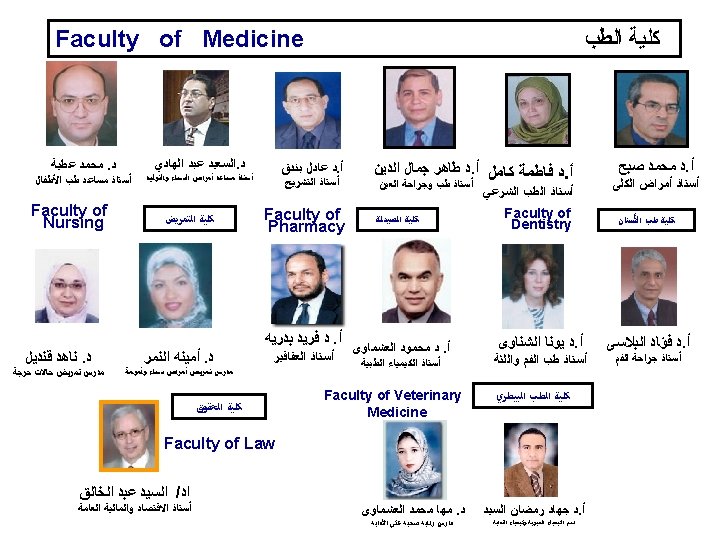
6/6/2006 Medical Schools = Medicine + Dentistry + Pharmacy + Nursing
Mansoura Faculty of Medicine ﺍﻟﻤﻨﺼﻮﺭﺓ ﻃﺐ ﻛﻠﻴﺔ 10/5/2009 School of Medicine MMREC
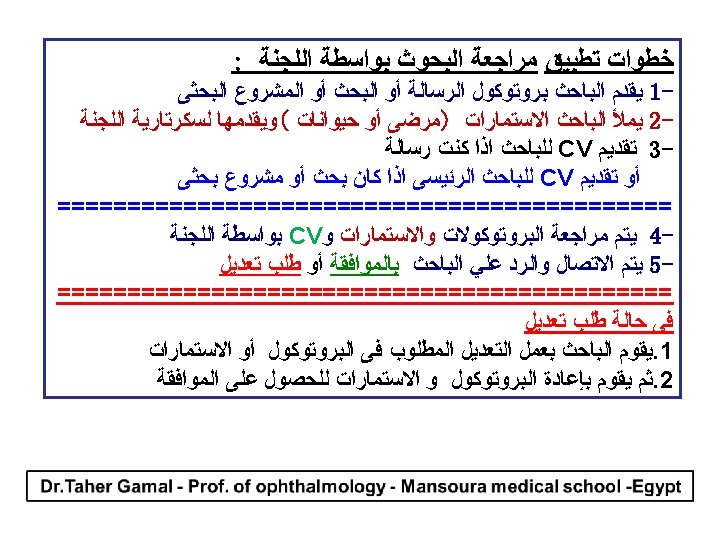
Proposal of Research Protocol
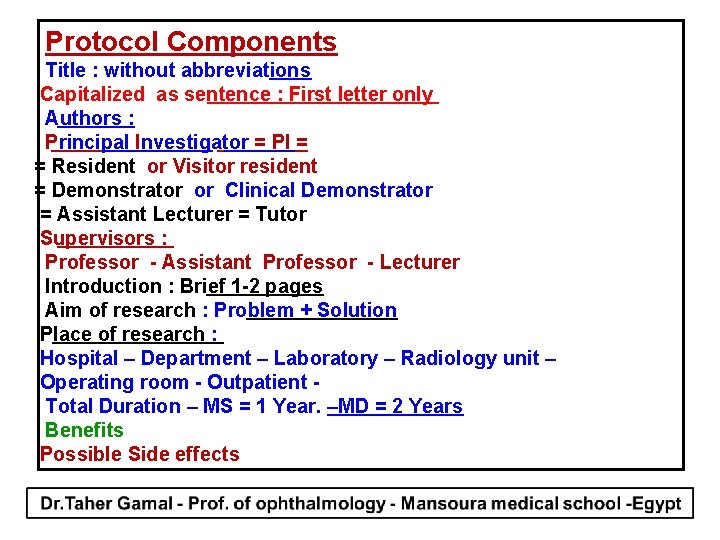
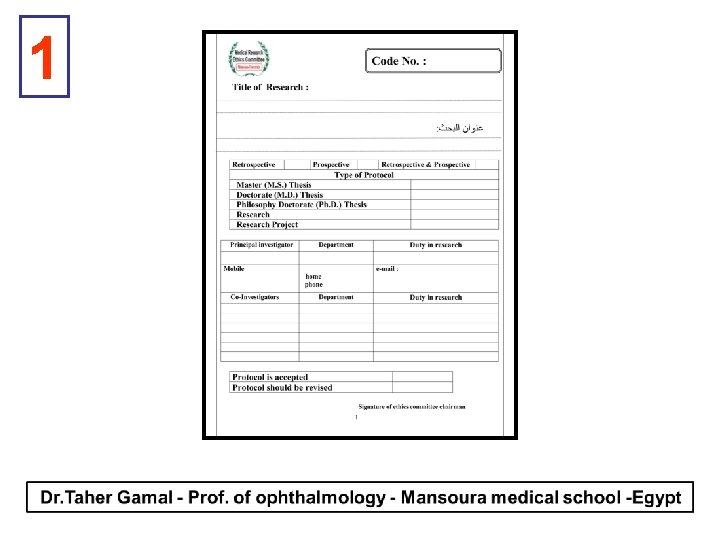
Protocol Components Title : without abbreviations Capitalized as sentence : First letter only Authors : Principal Investigator = PI = = Resident or Visitor resident = Demonstrator or Clinical Demonstrator = Assistant Lecturer = Tutor Supervisors : Professor - Assistant Professor - Lecturer Introduction : Brief 1 -2 pages Aim of research : Problem + Solution Place of research : Hospital – Department – Laboratory – Radiology unit – Operating room - Outpatient - Total Duration – MS = 1 Year. –MD = 2 Years Benefits Possible Side effects
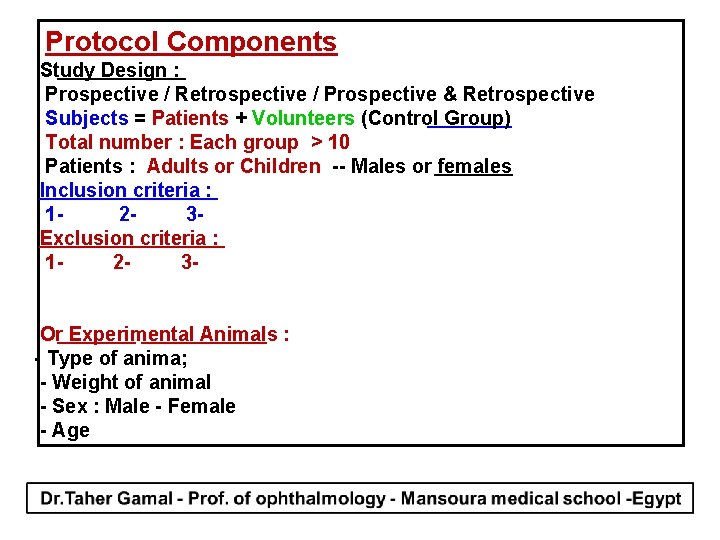
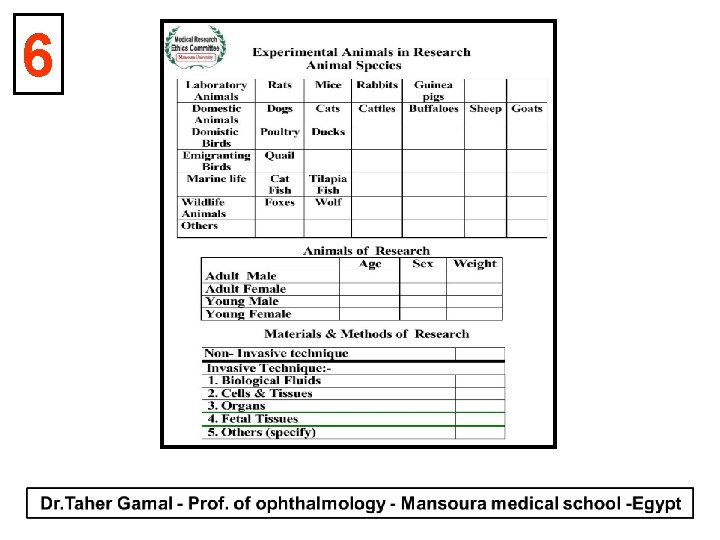
Protocol Components Study Design : Prospective / Retrospective / Prospective & Retrospective Subjects = Patients + Volunteers (Control Group) Total number : Each group > 10 Patients : Adults or Children -- Males or females Inclusion criteria : 1 - 2 - 3 Exclusion criteria : 1 - 2 - 3 Or Experimental Animals : - Type of anima; - Weight of animal - Sex : Male - Female - Age
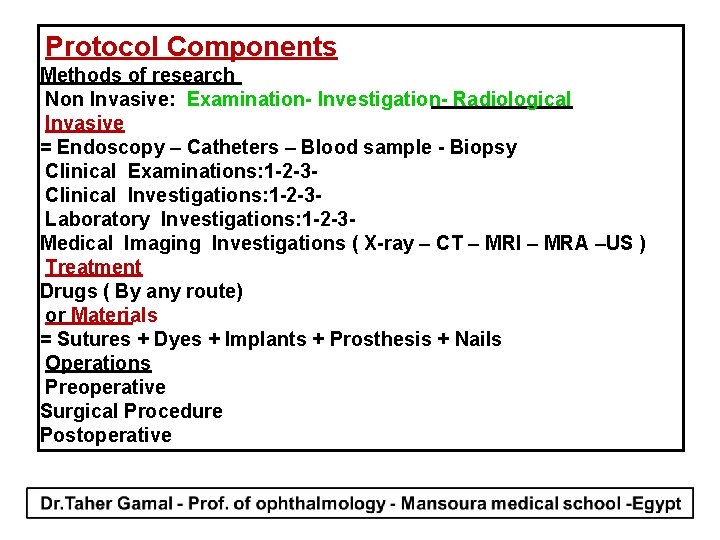
Protocol Components Methods of research Non Invasive: Examination- Investigation- Radiological Invasive = Endoscopy – Catheters – Blood sample - Biopsy Clinical Examinations: 1 -2 -3 Clinical Investigations: 1 -2 -3 Laboratory Investigations: 1 -2 -3 Medical Imaging Investigations ( X-ray – CT – MRI – MRA –US ) Treatment Drugs ( By any route) or Materials = Sutures + Dyes + Implants + Prosthesis + Nails Operations Preoperative Surgical Procedure Postoperative
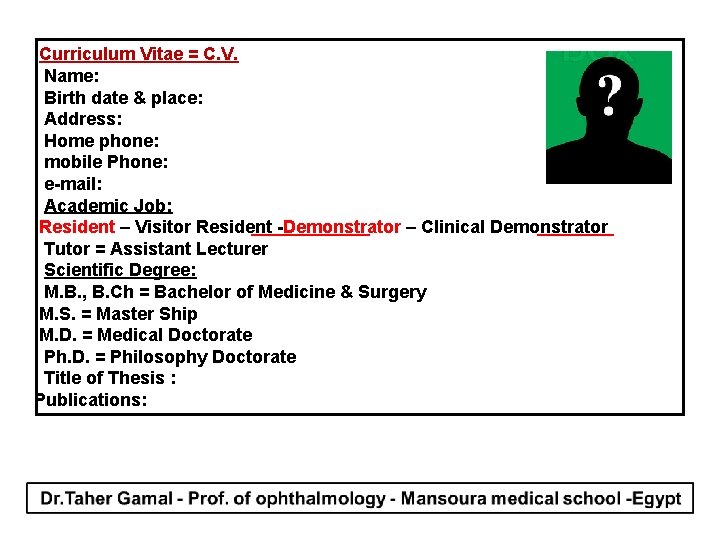
Curriculum Vitae = C. V. Name: Birth date & place: Address: Home phone: mobile Phone: e-mail: Academic Job: Resident – Visitor Resident -Demonstrator – Clinical Demonstrator Tutor = Assistant Lecturer Scientific Degree: M. B. , B. Ch = Bachelor of Medicine & Surgery M. S. = Master Ship M. D. = Medical Doctorate Ph. D. = Philosophy Doctorate Title of Thesis : Publications:
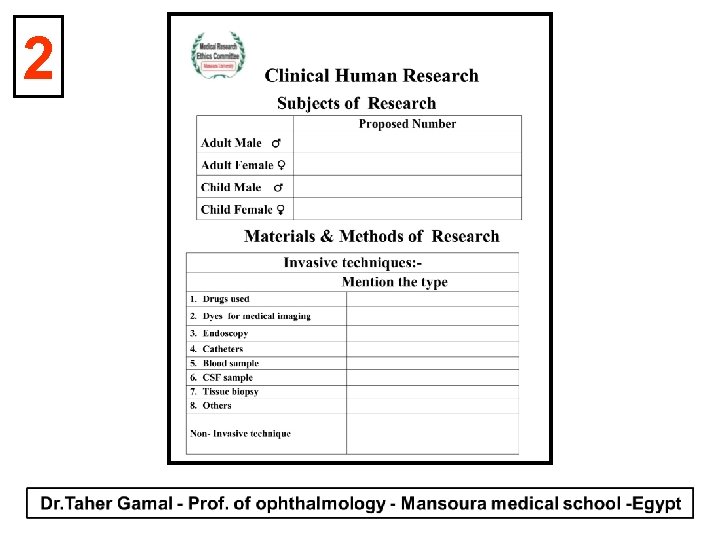
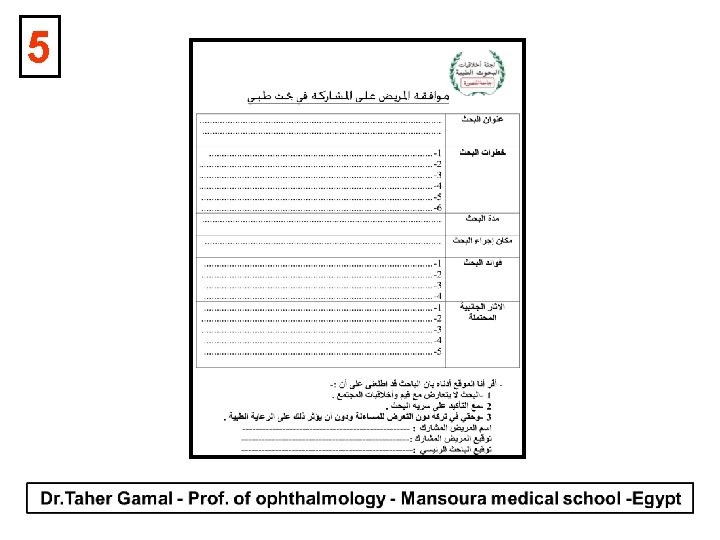
Application Forms Human Research 1 + 2 + 3 + 4 + 5
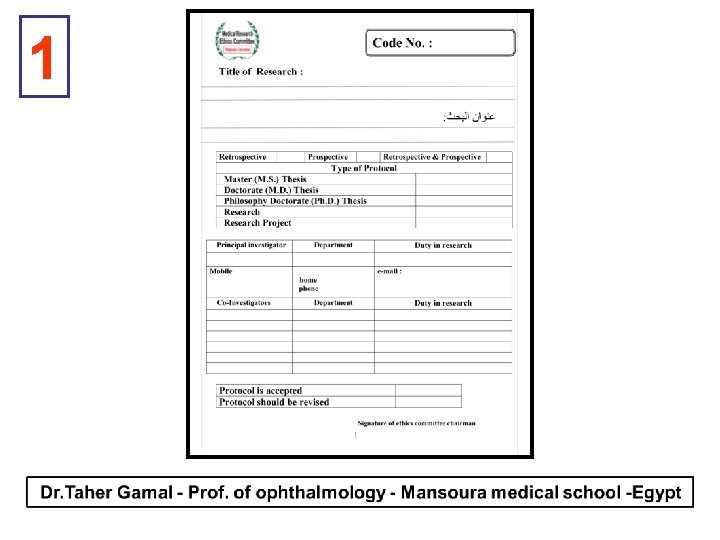
1
2
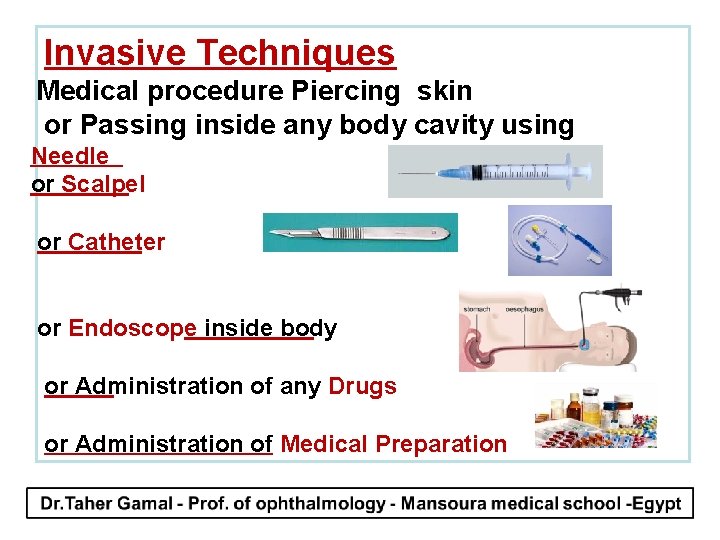
Invasive Techniques Medical procedure Piercing skin or Passing inside any body cavity using Needle or Scalpel or Catheter or Endoscope inside body or Administration of any Drugs or Administration of Medical Preparation
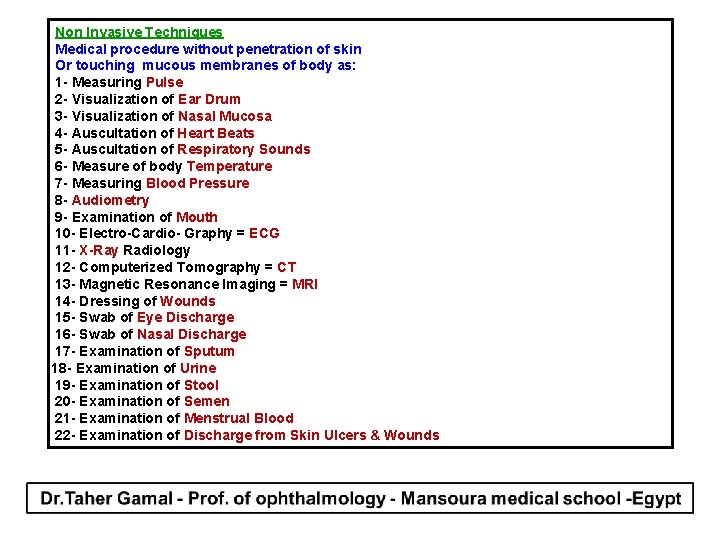
Non Invasive Techniques Medical procedure without penetration of skin Or touching mucous membranes of body as: 1 - Measuring Pulse 2 - Visualization of Ear Drum 3 - Visualization of Nasal Mucosa 4 - Auscultation of Heart Beats 5 - Auscultation of Respiratory Sounds 6 - Measure of body Temperature 7 - Measuring Blood Pressure 8 - Audiometry 9 - Examination of Mouth 10 - Electro-Cardio- Graphy = ECG 11 - X-Ray Radiology 12 - Computerized Tomography = CT 13 - Magnetic Resonance Imaging = MRI 14 - Dressing of Wounds 15 - Swab of Eye Discharge 16 - Swab of Nasal Discharge 17 - Examination of Sputum 18 - Examination of Urine 19 - Examination of Stool 20 - Examination of Semen 21 - Examination of Menstrual Blood 22 - Examination of Discharge from Skin Ulcers & Wounds
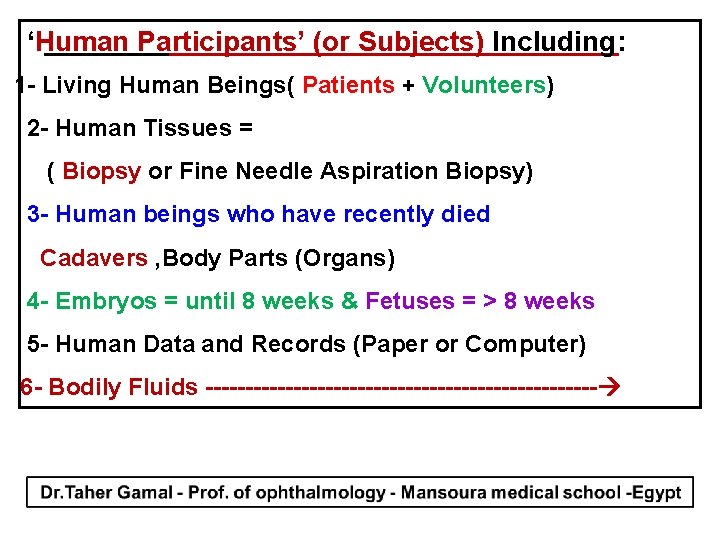
‘Human Participants’ (or Subjects) Including: 1 - Living Human Beings( Patients + Volunteers) 2 - Human Tissues = ( Biopsy or Fine Needle Aspiration Biopsy) 3 - Human beings who have recently died Cadavers , Body Parts (Organs) 4 - Embryos = until 8 weeks & Fetuses = > 8 weeks 5 - Human Data and Records (Paper or Computer) 6 - Bodily Fluids -------------------------
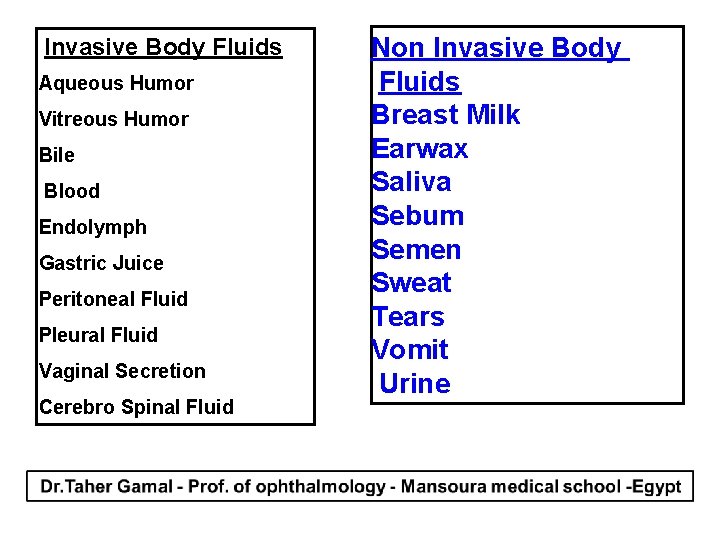
Invasive Body Fluids Aqueous Humor Vitreous Humor Bile Blood Endolymph Gastric Juice Peritoneal Fluid Pleural Fluid Vaginal Secretion Cerebro Spinal Fluid Non Invasive Body Fluids Breast Milk Earwax Saliva Sebum Semen Sweat Tears Vomit Urine
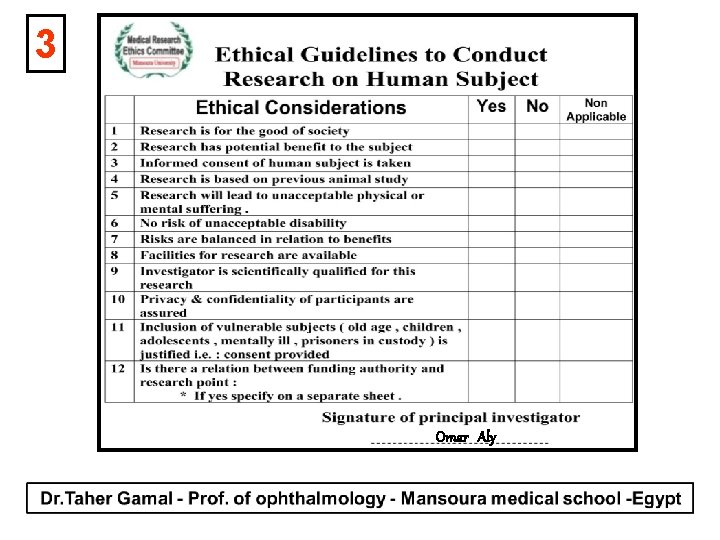
3 Omar Aly
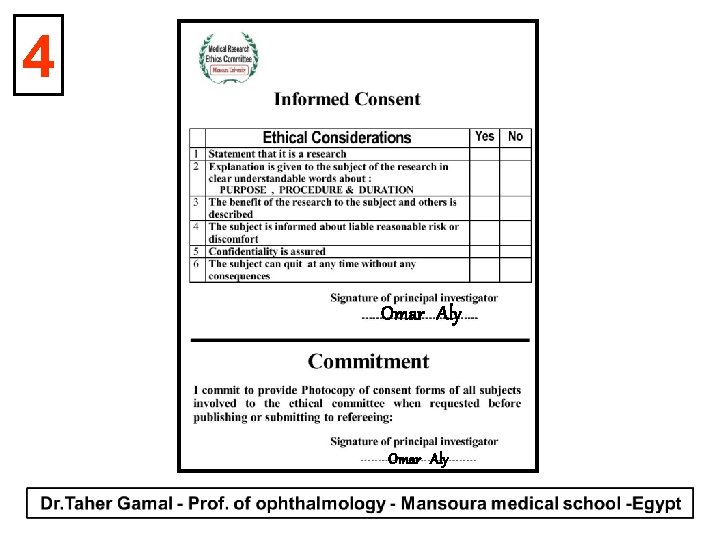
4 Omar Aly
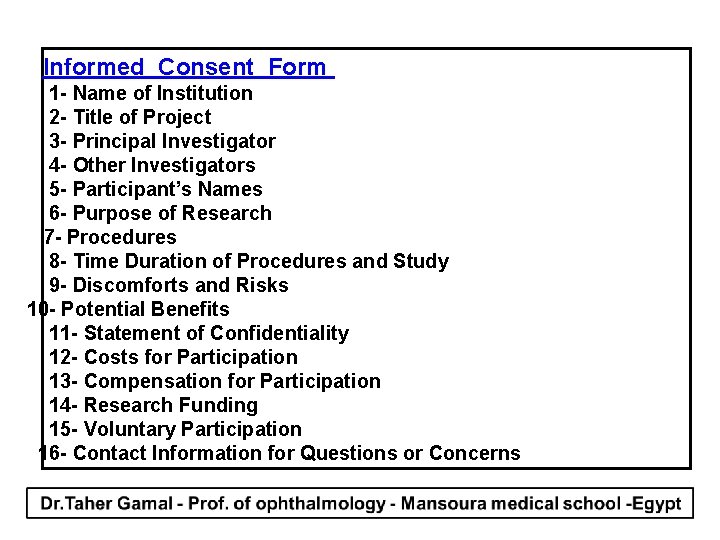
Informed Consent Form 1 - Name of Institution 2 - Title of Project 3 - Principal Investigator 4 - Other Investigators 5 - Participant’s Names 6 - Purpose of Research 7 - Procedures 8 - Time Duration of Procedures and Study 9 - Discomforts and Risks 10 - Potential Benefits 11 - Statement of Confidentiality 12 - Costs for Participation 13 - Compensation for Participation 14 - Research Funding 15 - Voluntary Participation 16 - Contact Information for Questions or Concerns
5
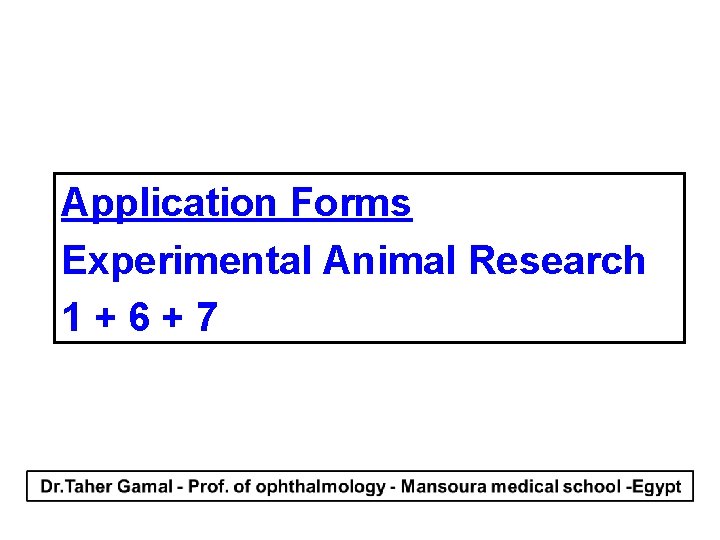
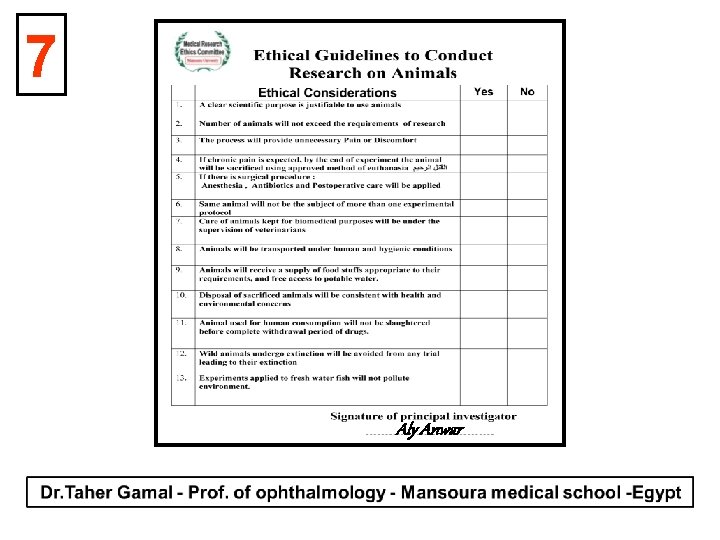
Application Forms Experimental Animal Research 1 + 6 + 7
1
6
7 Aly Anwar
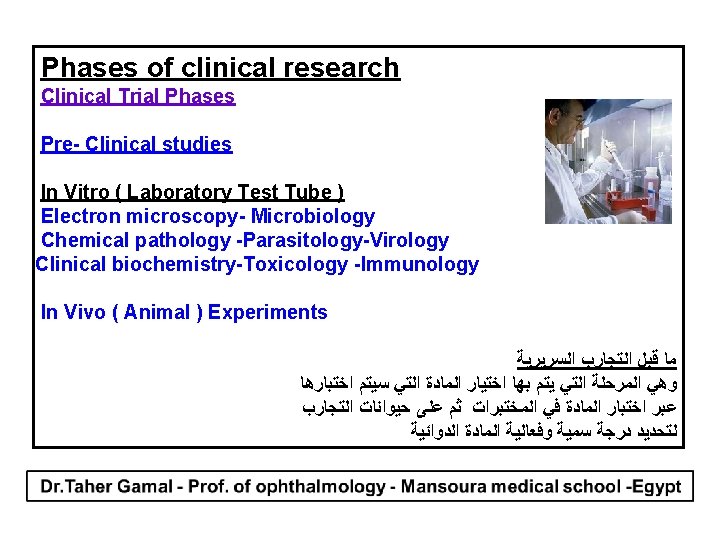
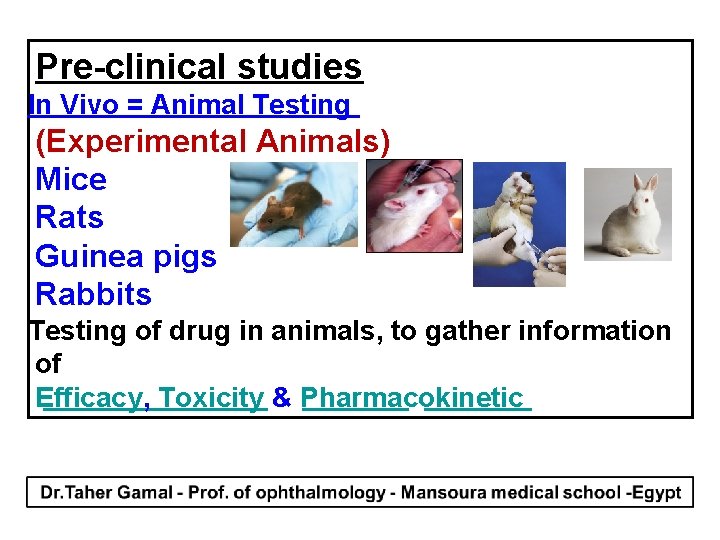
Pre-clinical studies In Vivo = Animal Testing (Experimental Animals) Mice Rats Guinea pigs Rabbits Testing of drug in animals, to gather information of Efficacy, Toxicity & Pharmacokinetic
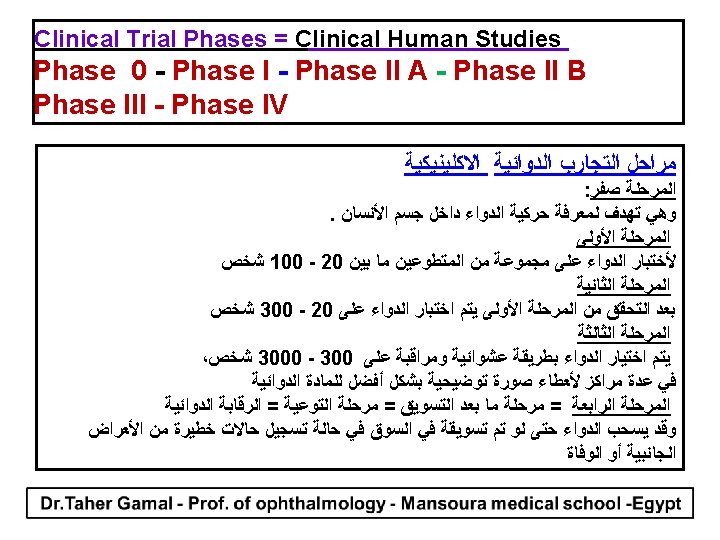
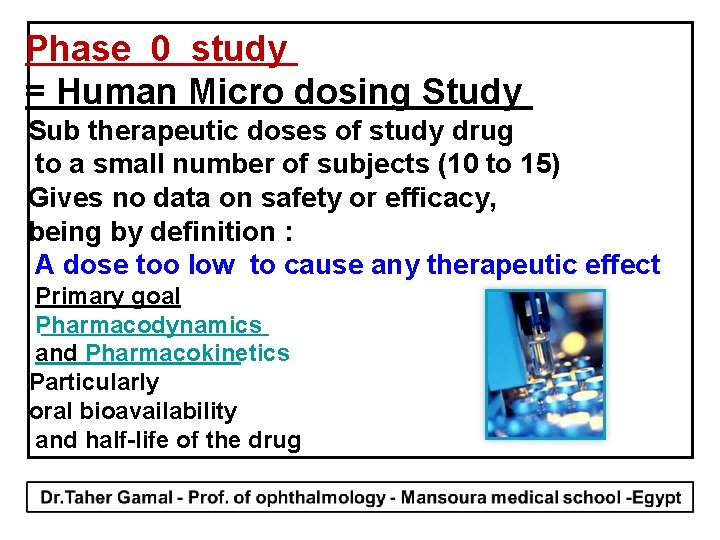
Phase 0 study = Human Micro dosing Study Sub therapeutic doses of study drug to a small number of subjects (10 to 15) Gives no data on safety or efficacy, being by definition : A dose too low to cause any therapeutic effect Primary goal Pharmacodynamics and Pharmacokinetics Particularly oral bioavailability and half-life of the drug
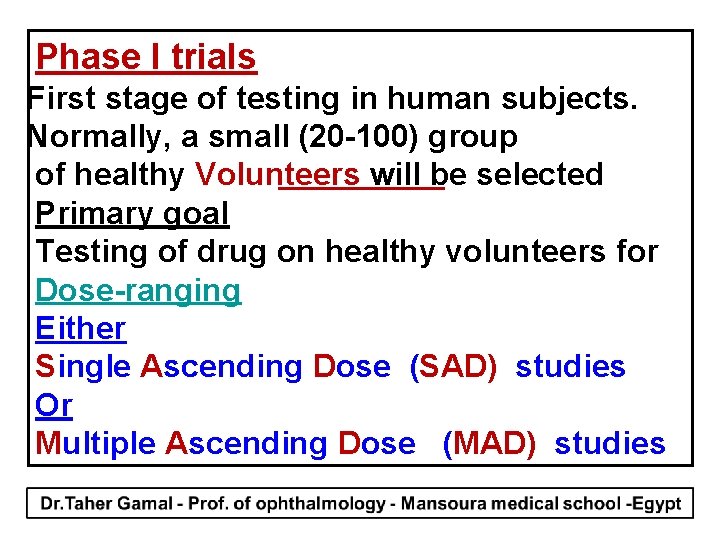
Phase I trials First stage of testing in human subjects. Normally, a small (20 -100) group of healthy Volunteers will be selected Primary goal Testing of drug on healthy volunteers for Dose-ranging Either Single Ascending Dose (SAD) studies Or Multiple Ascending Dose (MAD) studies
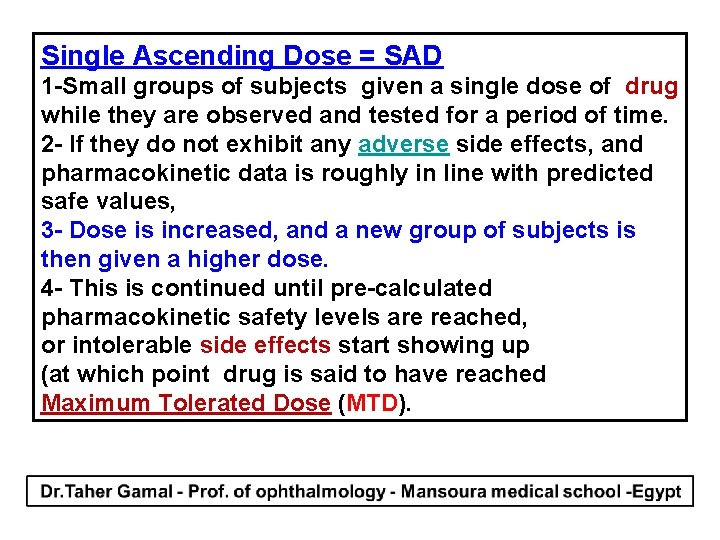
Single Ascending Dose = SAD 1 -Small groups of subjects given a single dose of drug while they are observed and tested for a period of time. 2 - If they do not exhibit any adverse side effects, and pharmacokinetic data is roughly in line with predicted safe values, 3 - Dose is increased, and a new group of subjects is then given a higher dose. 4 - This is continued until pre-calculated pharmacokinetic safety levels are reached, or intolerable side effects start showing up (at which point drug is said to have reached Maximum Tolerated Dose (MTD).
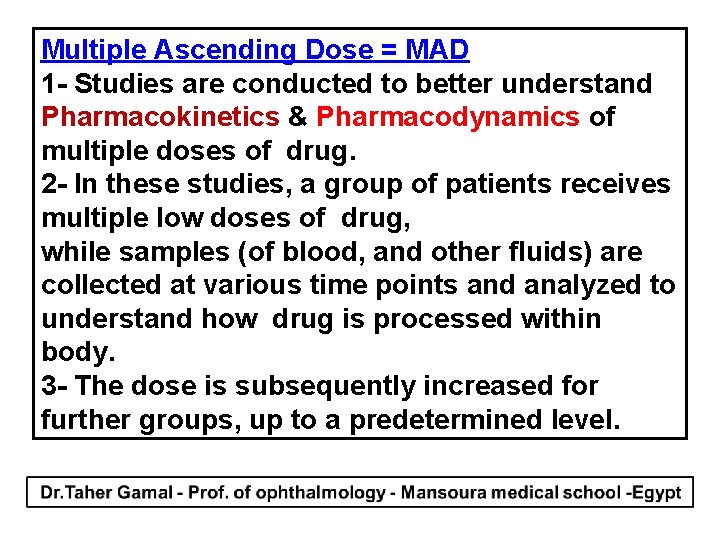
Multiple Ascending Dose = MAD 1 - Studies are conducted to better understand Pharmacokinetics & Pharmacodynamics of multiple doses of drug. 2 - In these studies, a group of patients receives multiple low doses of drug, while samples (of blood, and other fluids) are collected at various time points and analyzed to understand how drug is processed within body. 3 - The dose is subsequently increased for further groups, up to a predetermined level.
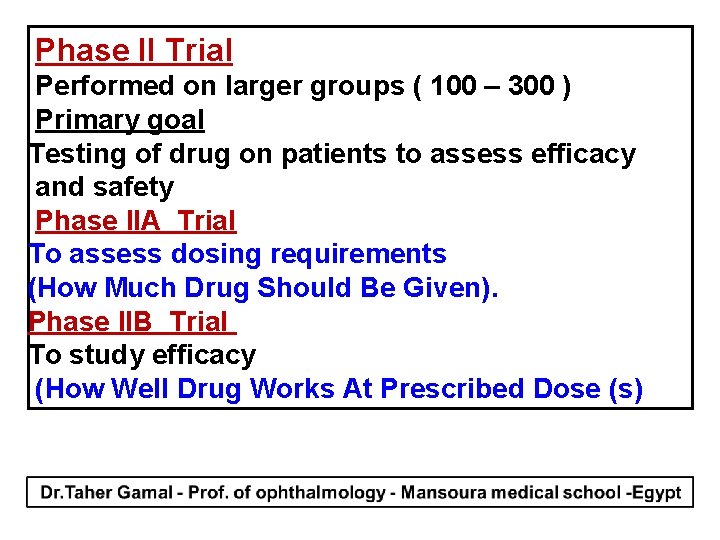
Phase II Trial Performed on larger groups ( 100 – 300 ) Primary goal Testing of drug on patients to assess efficacy and safety Phase IIA Trial To assess dosing requirements (How Much Drug Should Be Given). Phase IIB Trial To study efficacy (How Well Drug Works At Prescribed Dose (s)
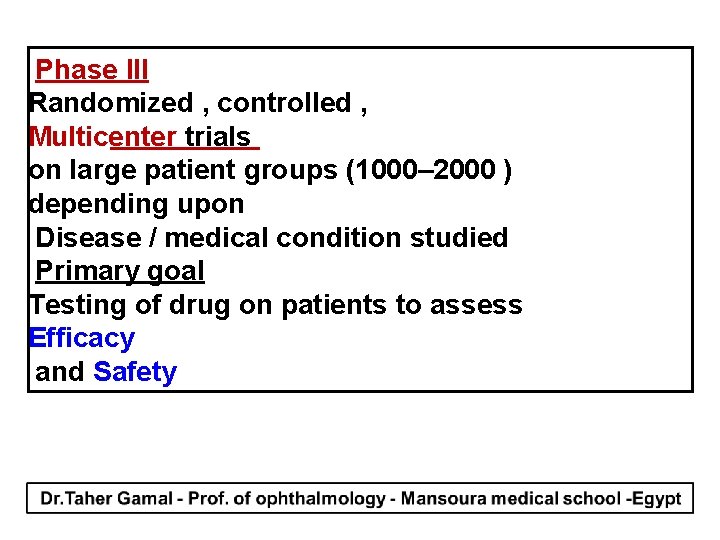
Phase III Randomized , controlled , Multicenter trials on large patient groups (1000– 2000 ) depending upon Disease / medical condition studied Primary goal Testing of drug on patients to assess Efficacy and Safety
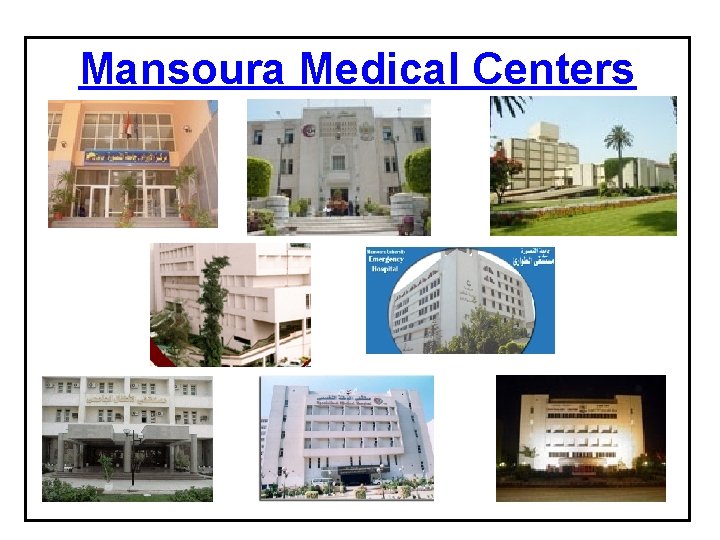
Mansoura Medical Centers
Phase IV Post Marketing Surveillance (PMS) Practice of monitoring safety of Pharmaceutical drug or Medical device after it has been released on market and is an important part of science of Pharmaco vigilance. Post marketing surveillance can further Refine, or Confirm or Deny , safety of a drug after it is used in general population by large numbers of people who have a wide variety of medical conditions. Primary goal watching drug use in public