
Independent Assortment NonMendelian Genetics EQ What are the
- Slides: 43
Independent Assortment & Non-Mendelian Genetics EQ: What are the other outcomes of a cross?
Learning Goal - Genetics 4 – I can predict the offspring of different crosses of parents and explain how the traits were inherited. I can apply monohybrid crosses to a dihybrid cross (Ex: RRYY x rryy) 3 – I can usually find the probability of the offspring and I understand meiosis 2 – I can do basic Punnett squares but still need help setting it up 1 – I need to review genetics
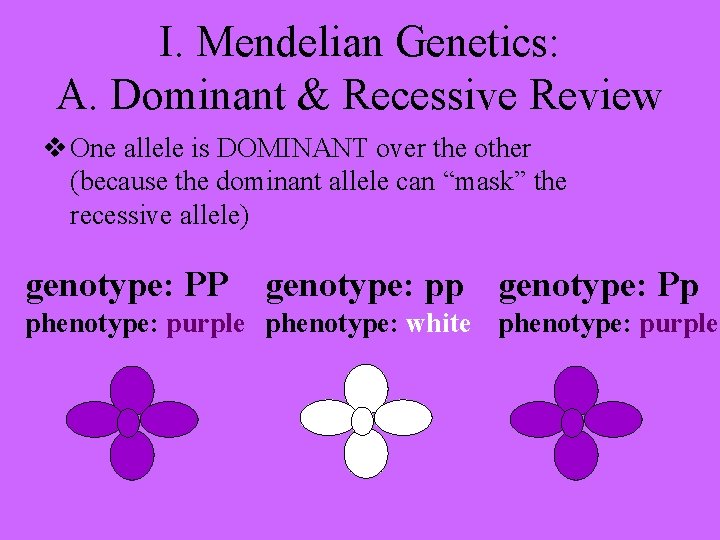
I. Mendelian Genetics: A. Dominant & Recessive Review v One allele is DOMINANT over the other (because the dominant allele can “mask” the recessive allele) genotype: PP genotype: pp genotype: Pp phenotype: purple phenotype: white phenotype: purple
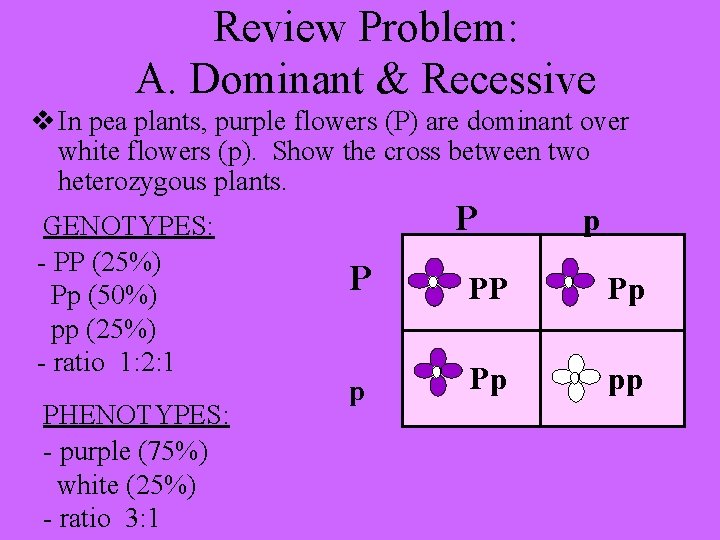
Review Problem: A. Dominant & Recessive v In pea plants, purple flowers (P) are dominant over white flowers (p). Show the cross between two heterozygous plants. GENOTYPES: - PP (25%) Pp (50%) pp (25%) - ratio 1: 2: 1 PHENOTYPES: - purple (75%) white (25%) - ratio 3: 1 P p P PP Pp pp
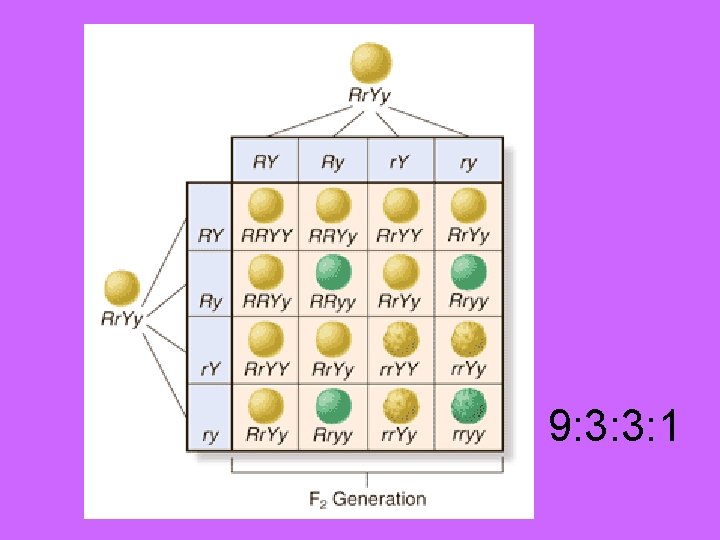
B. Two Cross/Dihybrid Cross • Mendel wondered if one allele for one gene would influence another allele for a separate gene • RRYY x rryy • (R) is round, (r) is wrinkled • (Y) is yellow, (y) is green – He found the two factor/dihybrid cross
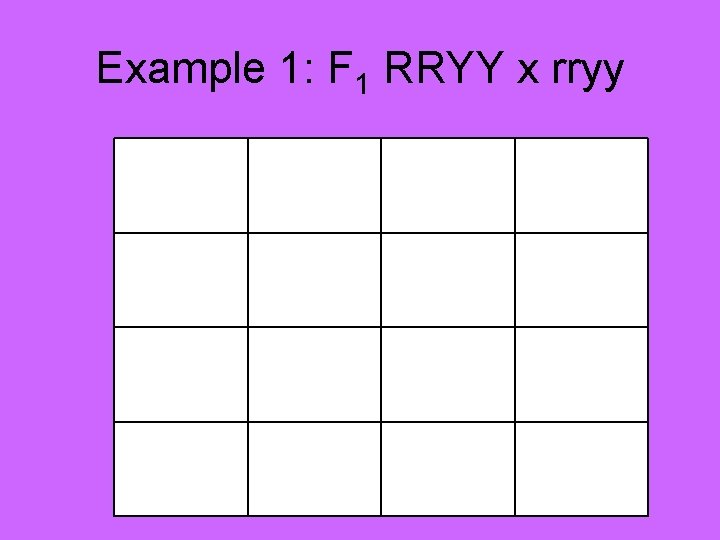
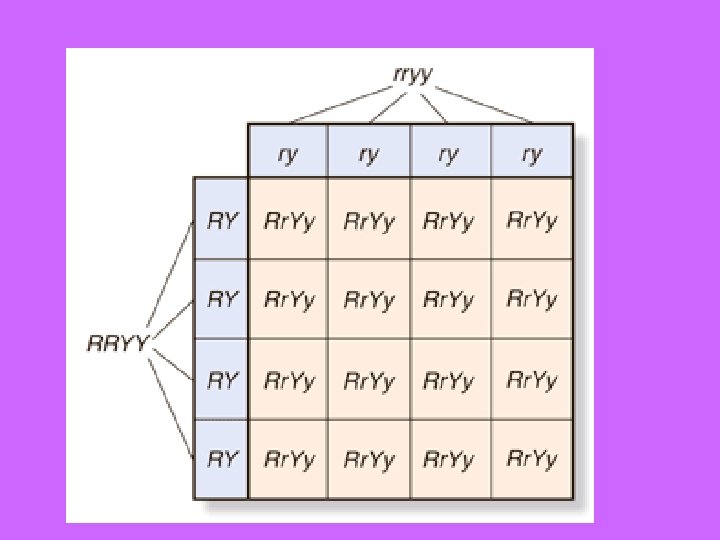
Example 1: F 1 RRYY x rryy
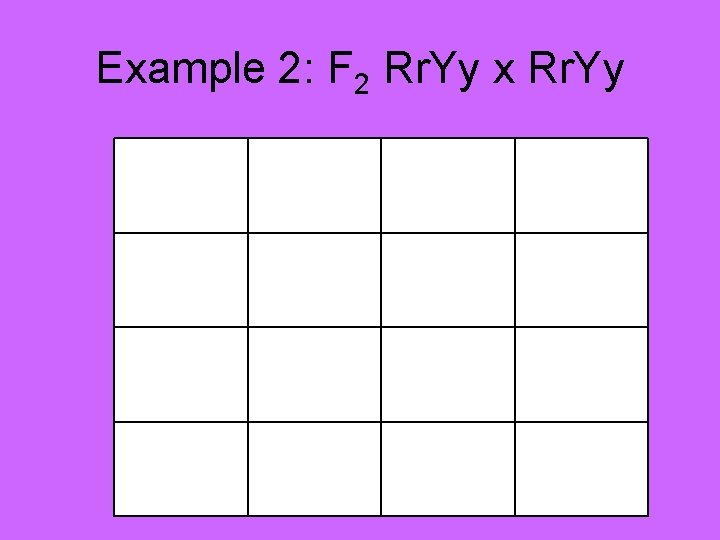
Example 2: F 2 Rr. Yy x Rr. Yy
9: 3: 3: 1
What did Mendel find? In a two factor cross, the alleles would separate independently (not linked). Ratio for the F 2 generation was 9: 3: 3: 1
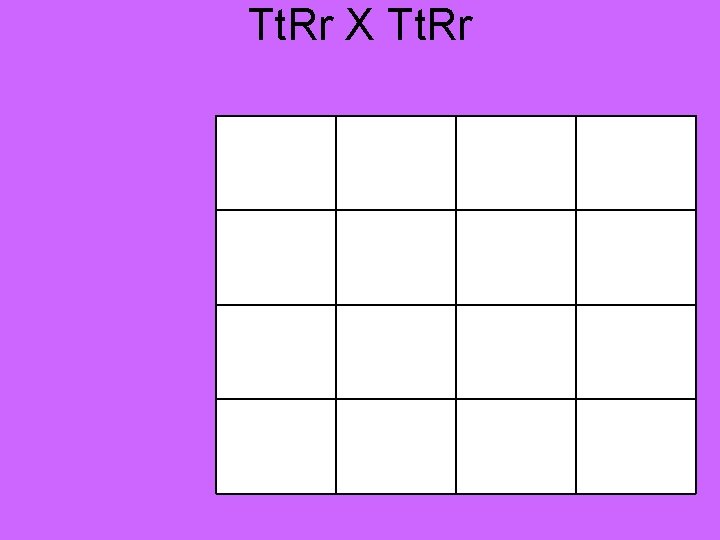
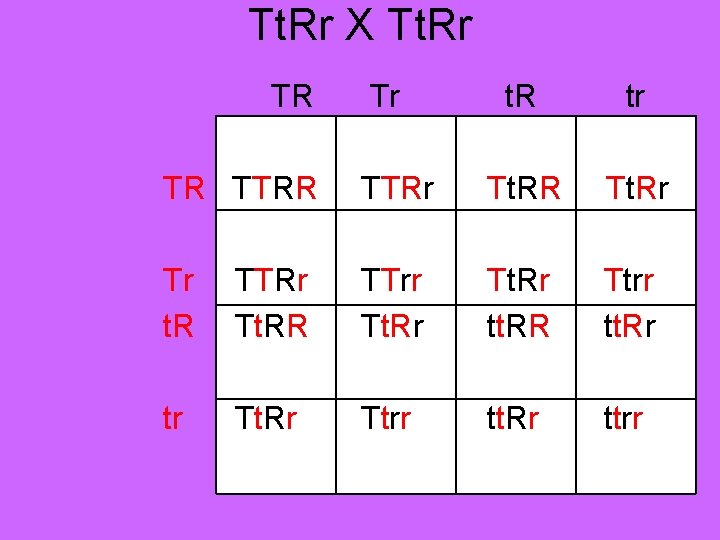
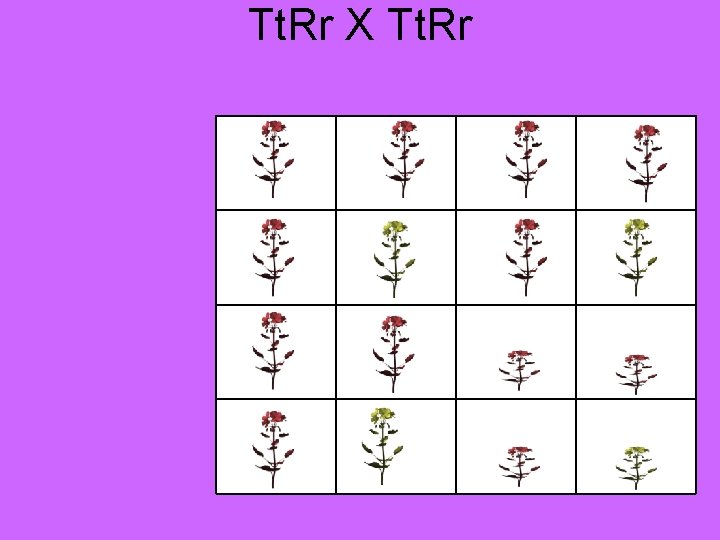
Review Dihybrid Crosses Tall = TT Tall = Tt Short = tt Red = RR Red = Rr Yellow = rr • Cross two heterozygous plants for both traits.
Tt. Rr X Tt. Rr
Tt. Rr X Tt. Rr TR Tr t. R tr TR TTRr Tt. RR Tt. Rr Tr t. R TTRr Tt. RR TTrr Tt. Rr tt. RR Ttrr tt. Rr tr Tt. Rr Ttrr tt. Rr ttrr
Tt. Rr X Tt. Rr
NNDD x Nn. Dd
II. Non-Mendelian Genetics A. Incomplete Dominance B. Codominance C. Multiple Alleles D. Polygenic Traits E. Sex-Linked Traits
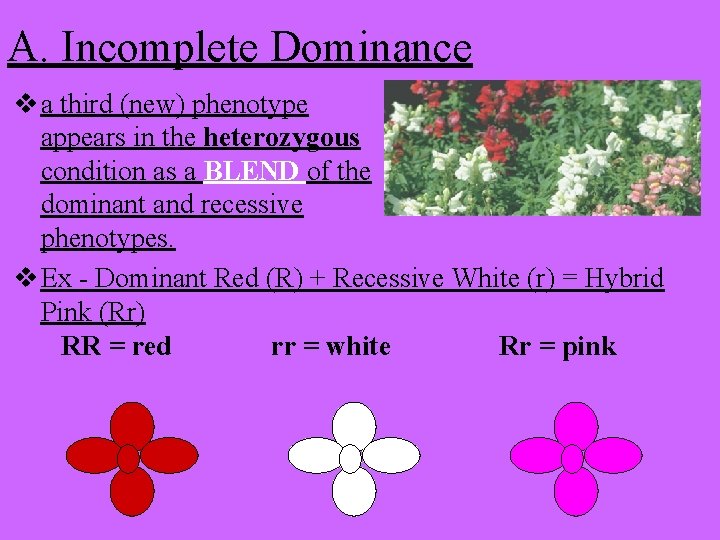
A. Incomplete Dominance v a third (new) phenotype appears in the heterozygous condition as a BLEND of the dominant and recessive phenotypes. v Ex - Dominant Red (R) + Recessive White (r) = Hybrid Pink (Rr) RR = red rr = white Rr = pink
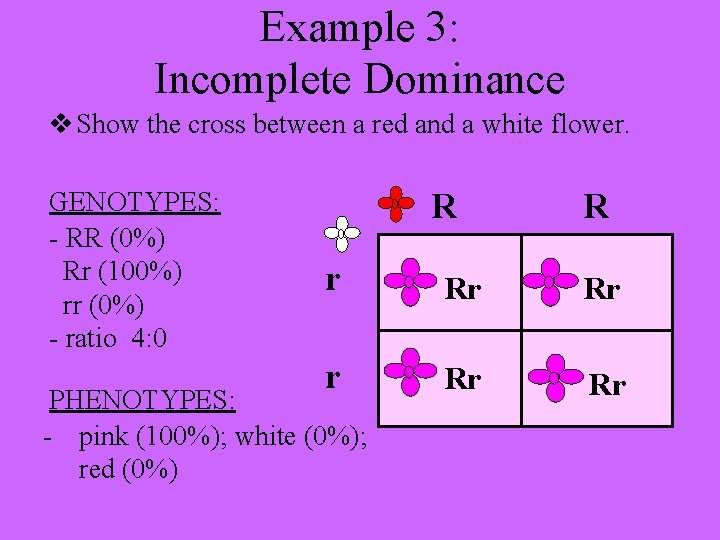
Example 3: Incomplete Dominance v Show the cross between a red and a white flower. GENOTYPES: - RR (0%) Rr (100%) rr (0%) - ratio 4: 0 R R r Rr Rr PHENOTYPES: - pink (100%); white (0%); red (0%)
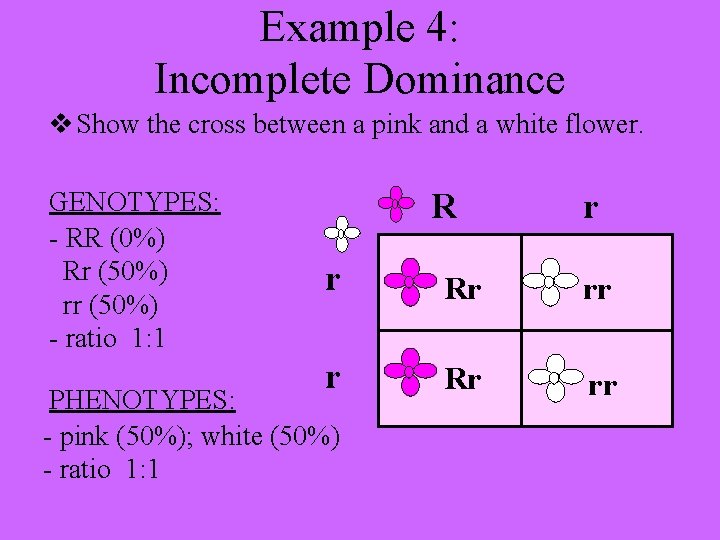
Example 4: Incomplete Dominance v Show the cross between a pink and a white flower. GENOTYPES: - RR (0%) Rr (50%) rr (50%) - ratio 1: 1 R r r Rr rr PHENOTYPES: - pink (50%); white (50%) - ratio 1: 1
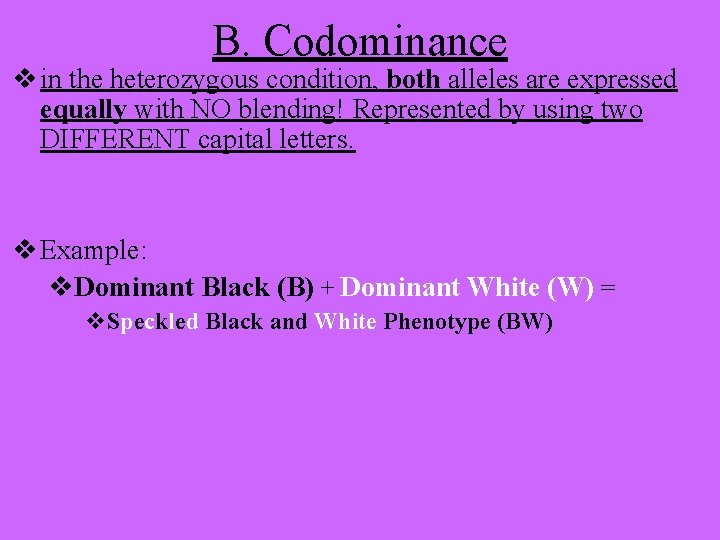
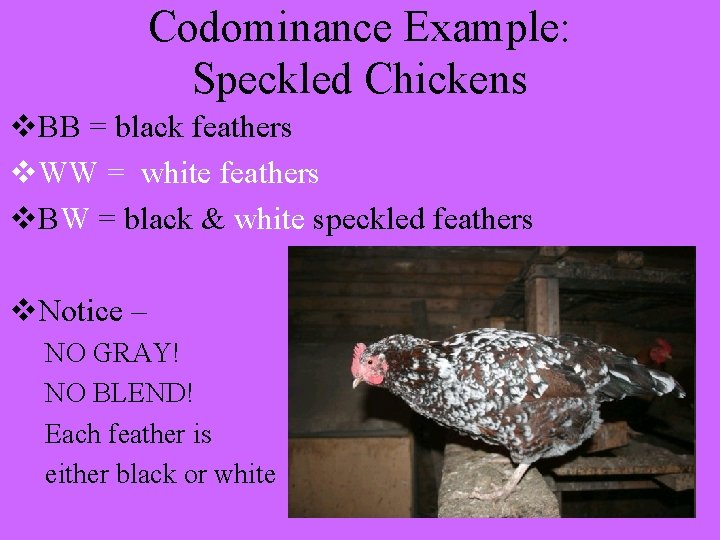
B. Codominance v in the heterozygous condition, both alleles are expressed equally with NO blending! Represented by using two DIFFERENT capital letters. v Example: v. Dominant Black (B) + Dominant White (W) = v. Speckled Black and White Phenotype (BW)
Codominance Example: Speckled Chickens v. BB = black feathers v. WW = white feathers v. BW = black & white speckled feathers v. Notice – NO GRAY! NO BLEND! Each feather is either black or white
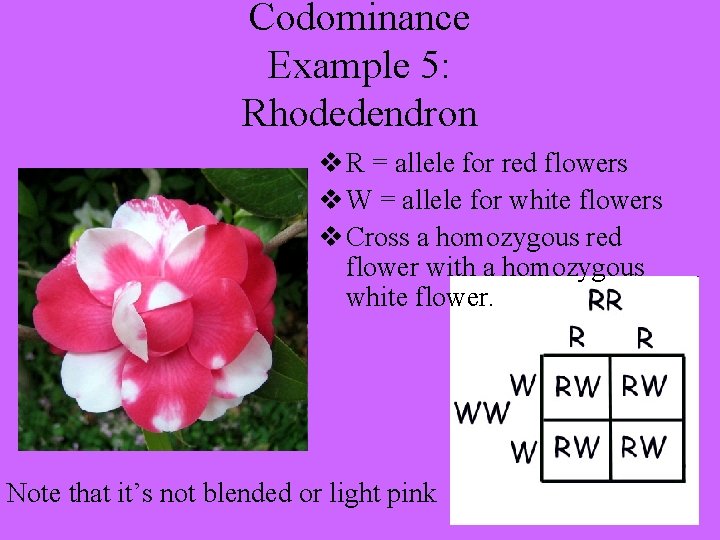
Codominance Example 5: Rhodedendron v R = allele for red flowers v W = allele for white flowers v Cross a homozygous red flower with a homozygous white flower. Note that it’s not blended or light pink
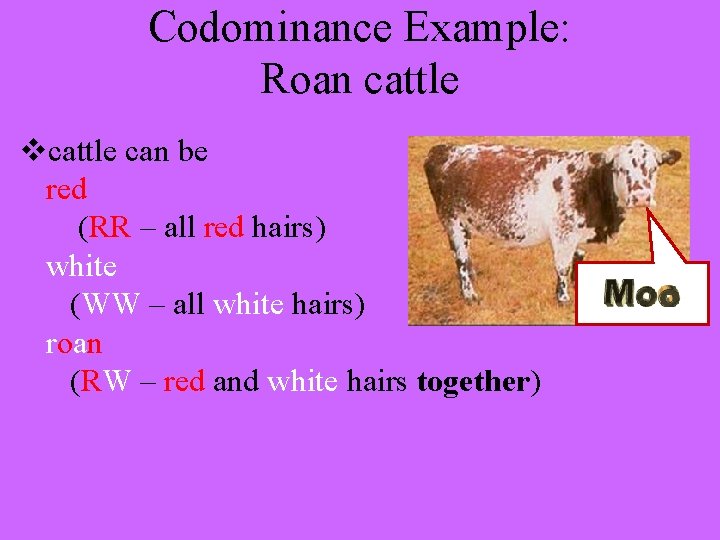
Codominance Example: Roan cattle vcattle can be red (RR – all red hairs) white (WW – all white hairs) roan (RW – red and white hairs together)
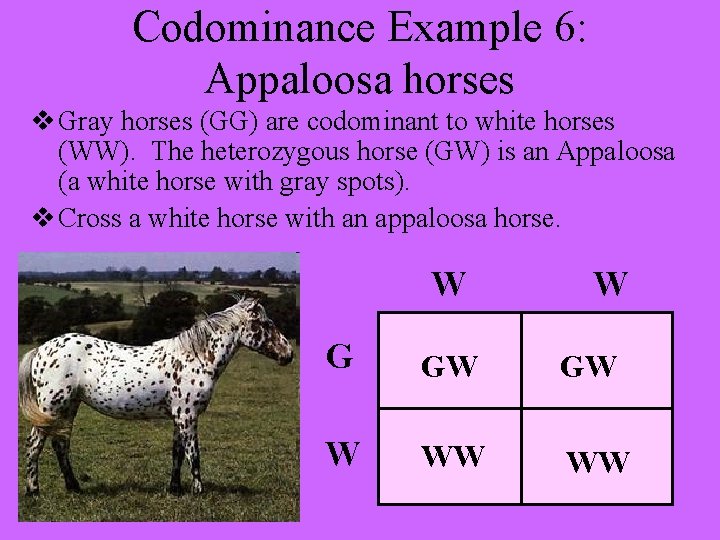
Codominance Example 6: Appaloosa horses v Gray horses (GG) are codominant to white horses (WW). The heterozygous horse (GW) is an Appaloosa (a white horse with gray spots). v Cross a white horse with an appaloosa horse. W W G GW GW W WW WW
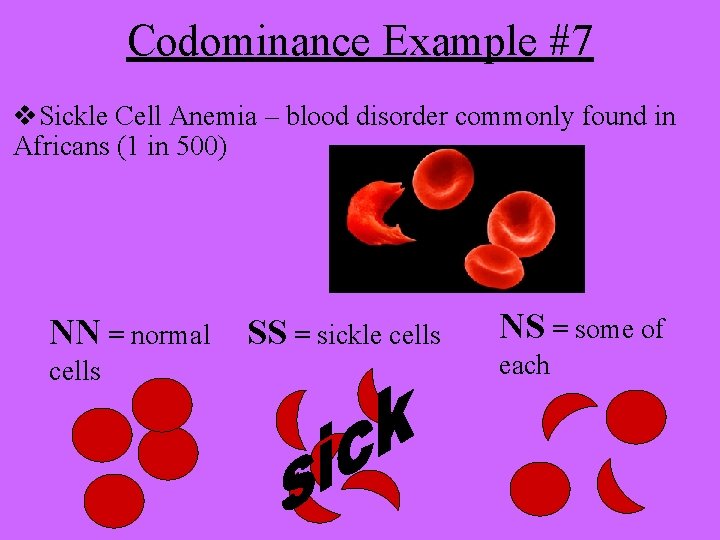
Codominance Example #7 v. Sickle Cell Anemia – blood disorder commonly found in Africans (1 in 500) NN = normal cells SS = sickle cells NS = some of each
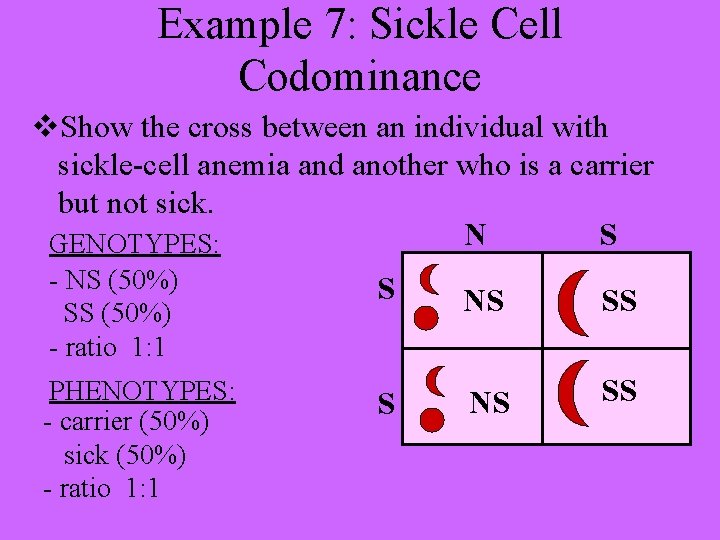
Example 7: Sickle Cell Codominance v. Show the cross between an individual with sickle-cell anemia and another who is a carrier but not sick. N S GENOTYPES: - NS (50%) SS (50%) - ratio 1: 1 S NS SS PHENOTYPES: - carrier (50%) sick (50%) - ratio 1: 1 S NS SS
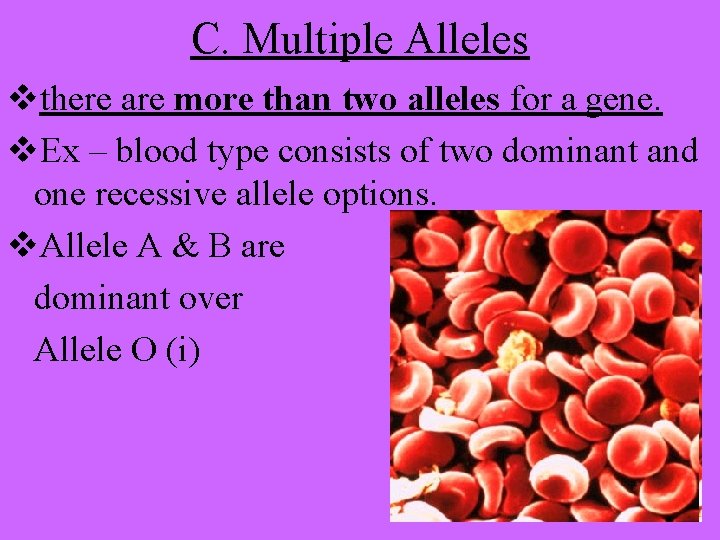
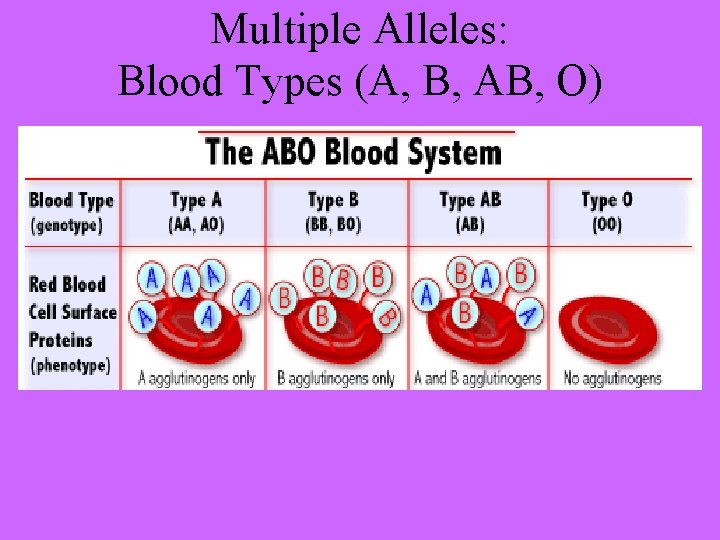
C. Multiple Alleles vthere are more than two alleles for a gene. v. Ex – blood type consists of two dominant and one recessive allele options. v. Allele A & B are dominant over Allele O (i)
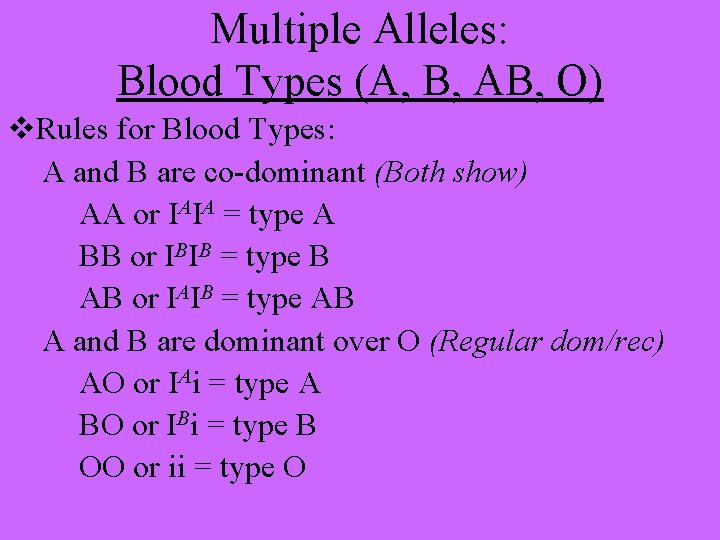
Multiple Alleles: Blood Types (A, B, AB, O) v. Rules for Blood Types: A and B are co-dominant (Both show) AA or IAIA = type A BB or IBIB = type B AB or IAIB = type AB A and B are dominant over O (Regular dom/rec) AO or IAi = type A BO or IBi = type B OO or ii = type O
Multiple Alleles: Blood Types (A, B, AB, O)
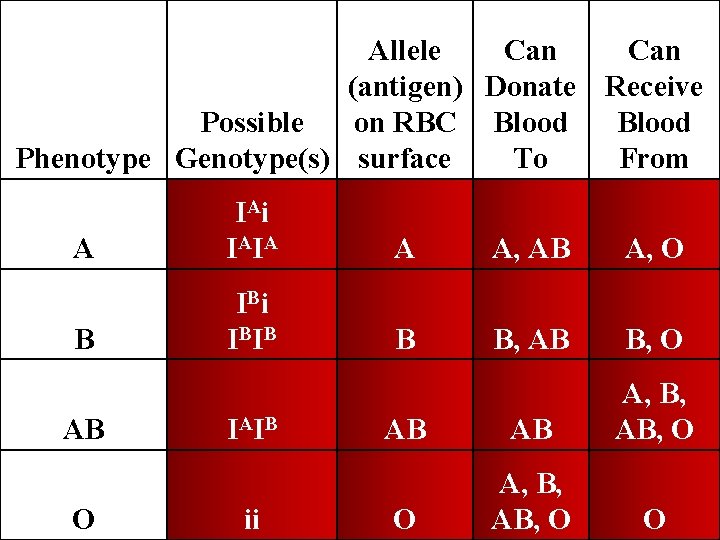
Allele Can (antigen) Donate Receive Possible on RBC Blood Phenotype Genotype(s) surface To From A I Ai I AI A A A, AB A, O B IB i IB IB B B, AB B, O AB AB A, B, AB, O O AB O I AI B ii
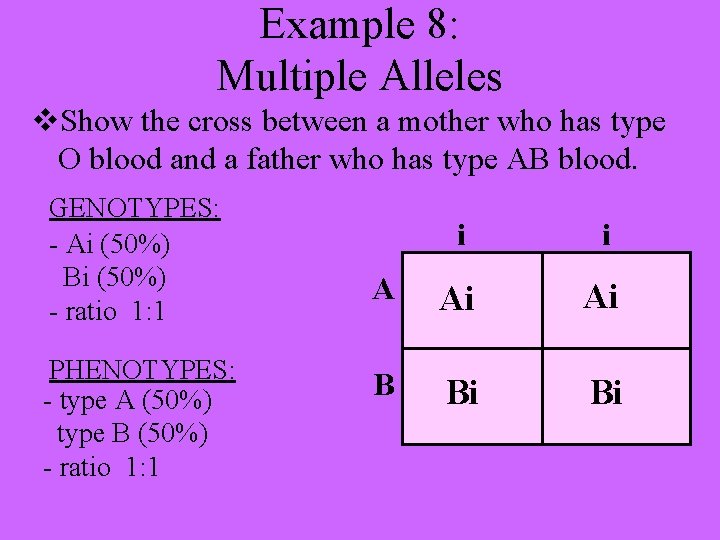
Example 8: Multiple Alleles v. Show the cross between a mother who has type O blood and a father who has type AB blood. GENOTYPES: - Ai (50%) Bi (50%) - ratio 1: 1 PHENOTYPES: - type A (50%) type B (50%) - ratio 1: 1 i i A Ai Ai B Bi Bi
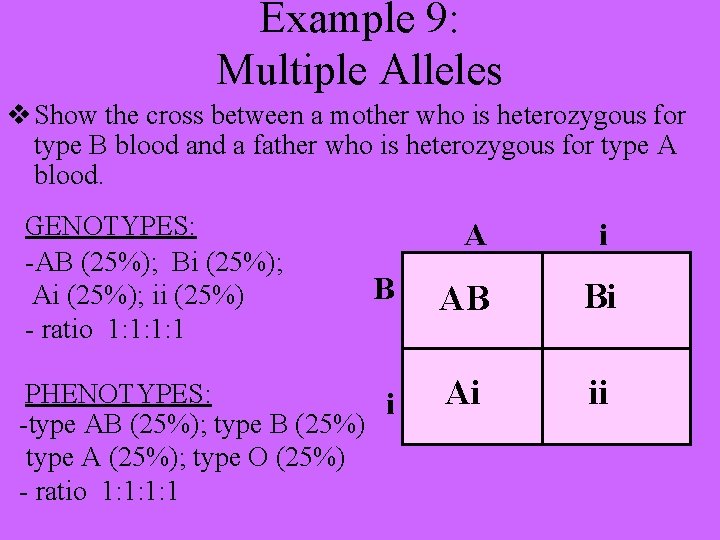
Example 9: Multiple Alleles v Show the cross between a mother who is heterozygous for type B blood and a father who is heterozygous for type A blood. GENOTYPES: -AB (25%); Bi (25%); Ai (25%); ii (25%) - ratio 1: 1: 1: 1 A i B AB Bi PHENOTYPES: i -type AB (25%); type B (25%) type A (25%); type O (25%) - ratio 1: 1: 1: 1 Ai ii
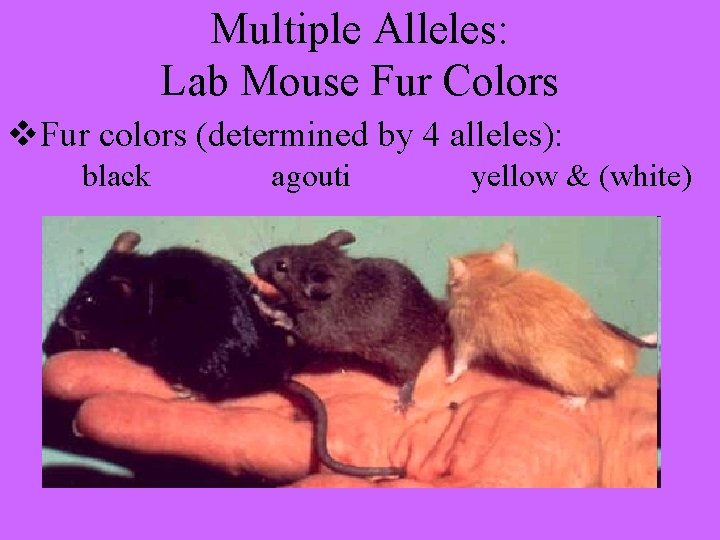
Multiple Alleles: Lab Mouse Fur Colors v. Fur colors (determined by 4 alleles): black agouti yellow & (white)
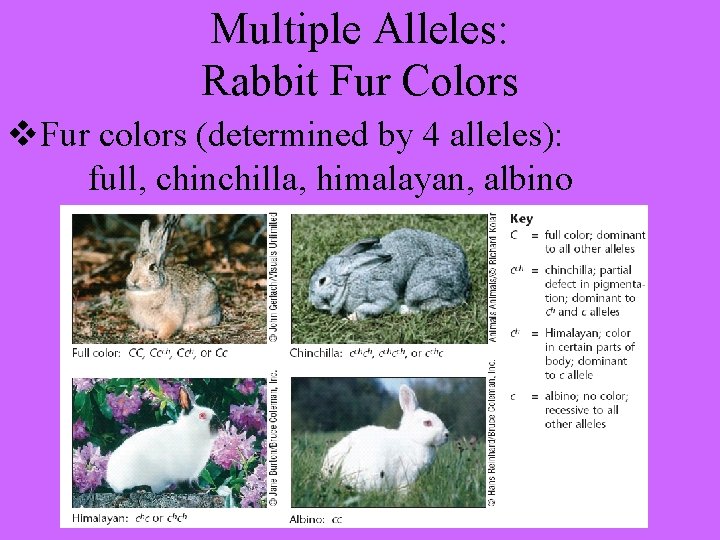
Multiple Alleles: Rabbit Fur Colors v. Fur colors (determined by 4 alleles): full, chinchilla, himalayan, albino
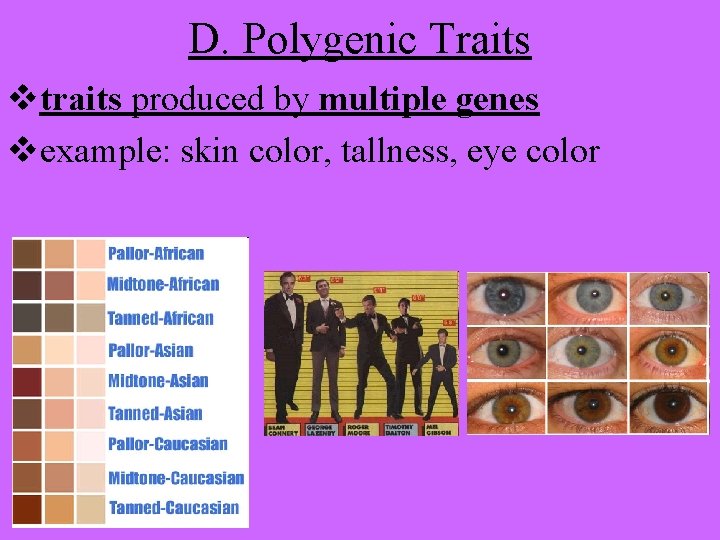
D. Polygenic Traits vtraits produced by multiple genes vexample: skin color, tallness, eye color
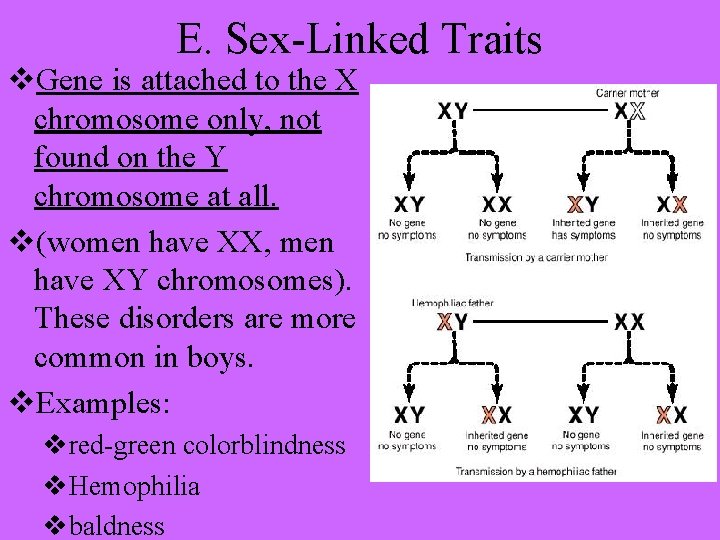
E. Sex-Linked Traits v. Gene is attached to the X chromosome only, not found on the Y chromosome at all. v(women have XX, men have XY chromosomes). These disorders are more common in boys. v. Examples: vred-green colorblindness v. Hemophilia vbaldness
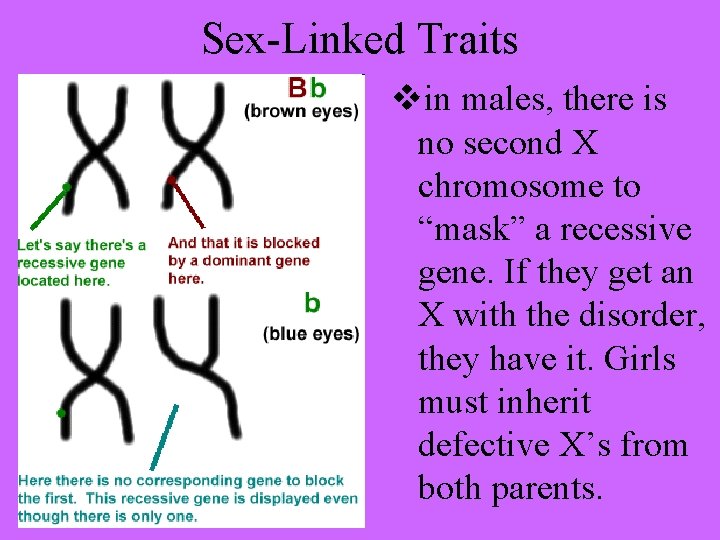
Sex-Linked Traits vin males, there is no second X chromosome to “mask” a recessive gene. If they get an X with the disorder, they have it. Girls must inherit defective X’s from both parents.
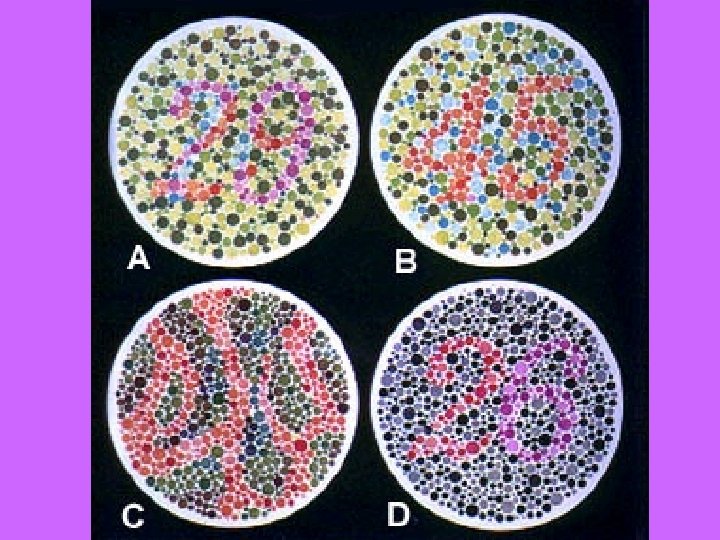
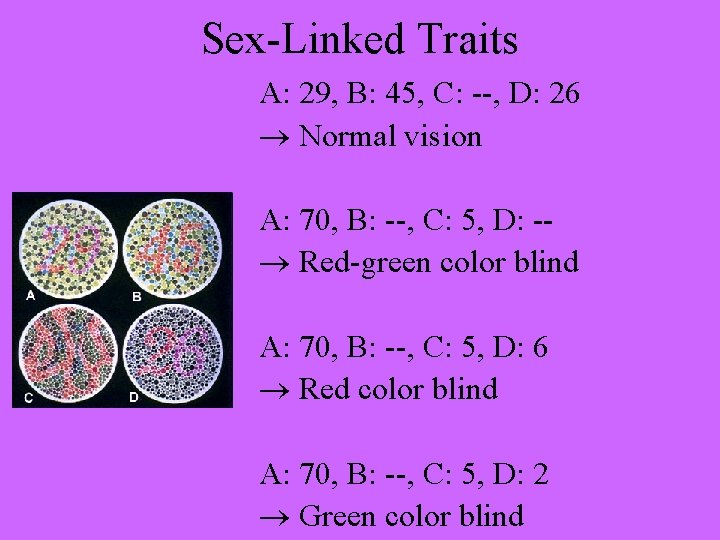
Sex-Linked Traits A: 29, B: 45, C: --, D: 26 Normal vision A: 70, B: --, C: 5, D: - Red-green color blind A: 70, B: --, C: 5, D: 6 Red color blind A: 70, B: --, C: 5, D: 2 Green color blind
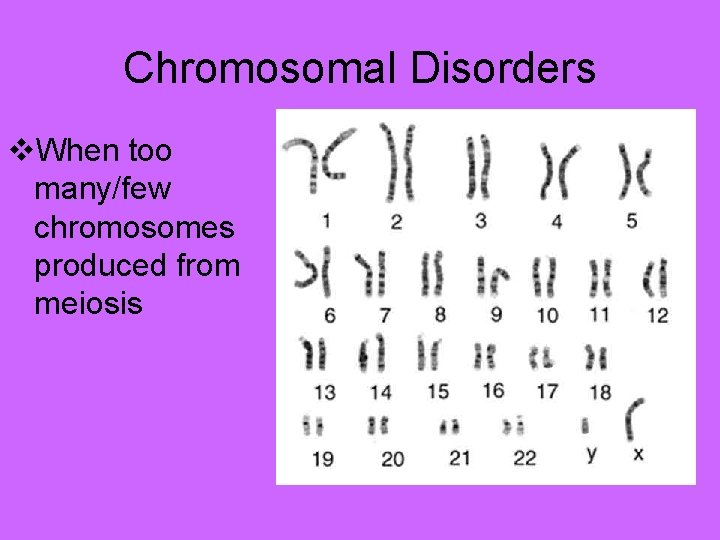
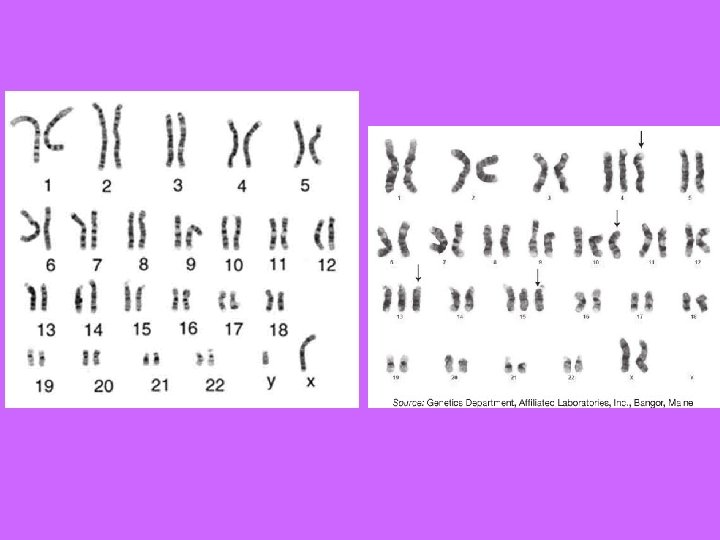
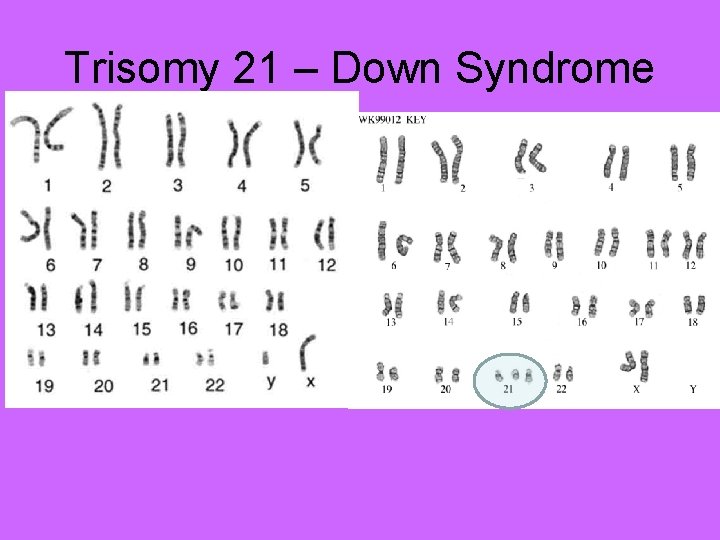
Chromosomal Disorders v. When too many/few chromosomes produced from meiosis
Trisomy 21 – Down Syndrome
Other Chromosomal Abnormalities • http: //learn. genetics. utah. edu/content/disor ders/chromosomal/