
INDEPENDENCE MOVEMENTS IN THE AMERICAS IN 1783 WHAT



- Slides: 36
INDEPENDENCE MOVEMENTS IN THE AMERICAS IN 1783, WHAT BECAME THE USA WON INDEPENDENCE FROM BRITAIN, . BETWEEN 1810 AND 1825 SOUTH AND CENTRAL AMERICA BROKE FREE FROM SPANISH AND PORTUGUESE CONTROL. WHAT CAUSED THE (NORTH) AMERICAN REVOLUTION? WERE THE CAUSES OF UNREST IN LATIN AMERICA SIMILAR TO THOSE IN NORTH AMERICA?
WARM-UP WHAT MADE THE AMERICAN COLONIES UNIQUE? 1. 2. 3. WHAT MADE THE AMERICAN COLONIES LIKE THE “MOTHERLAND”? 1. 2. 3.
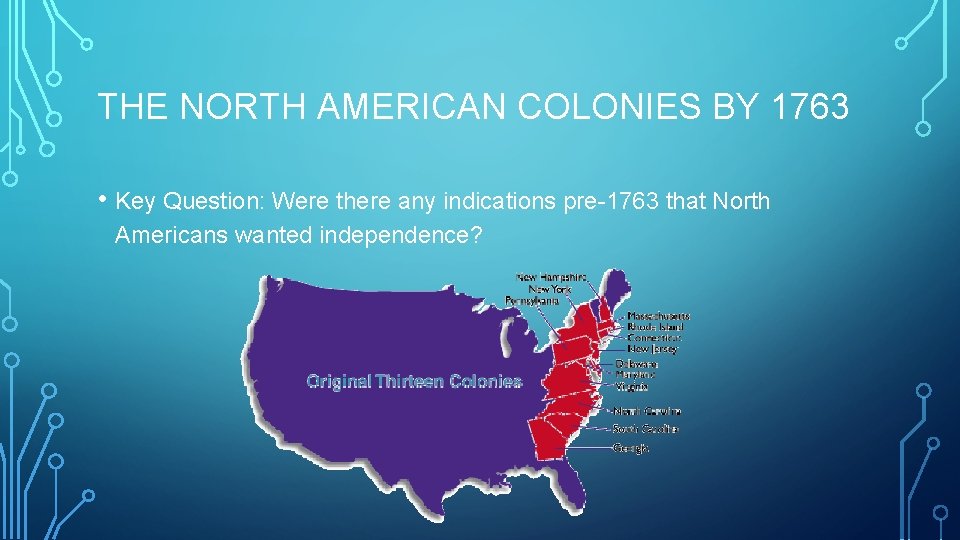
THE NORTH AMERICAN COLONIES BY 1763 • Key Question: Were there any indications pre-1763 that North Americans wanted independence?
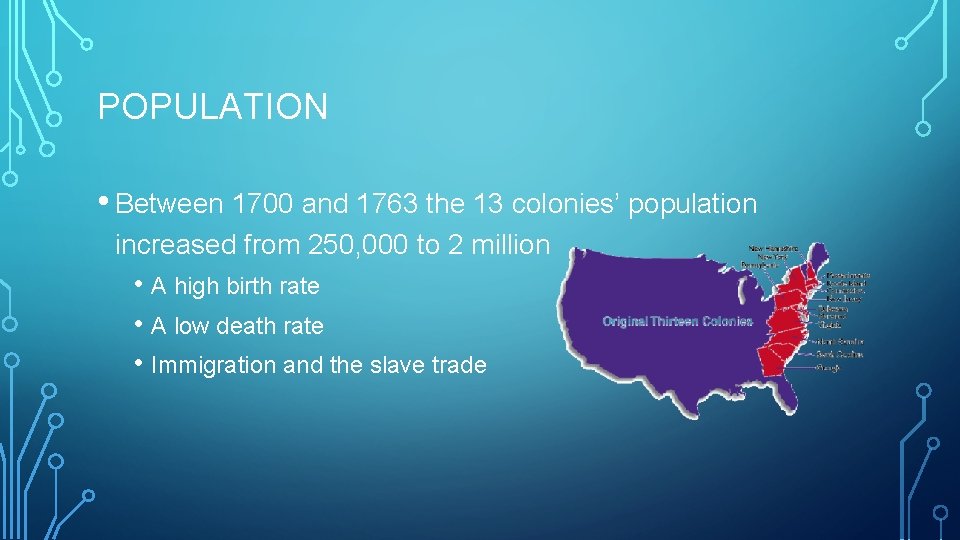
POPULATION • Between 1700 and 1763 the 13 colonies’ population increased from 250, 000 to 2 million • A high birth rate • A low death rate • Immigration and the slave trade
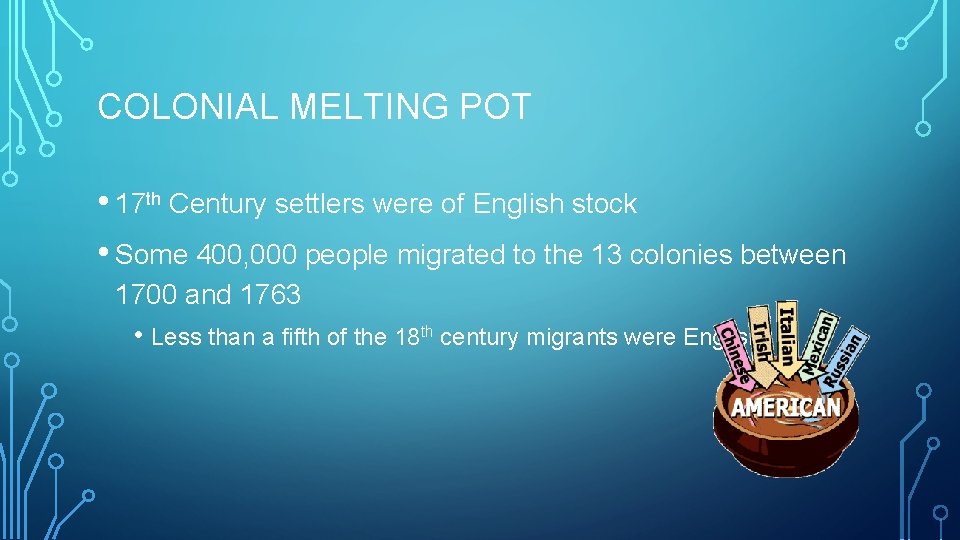
COLONIAL MELTING POT • 17 th Century settlers were of English stock • Some 400, 000 people migrated to the 13 colonies between 1700 and 1763 • Less than a fifth of the 18 th century migrants were English
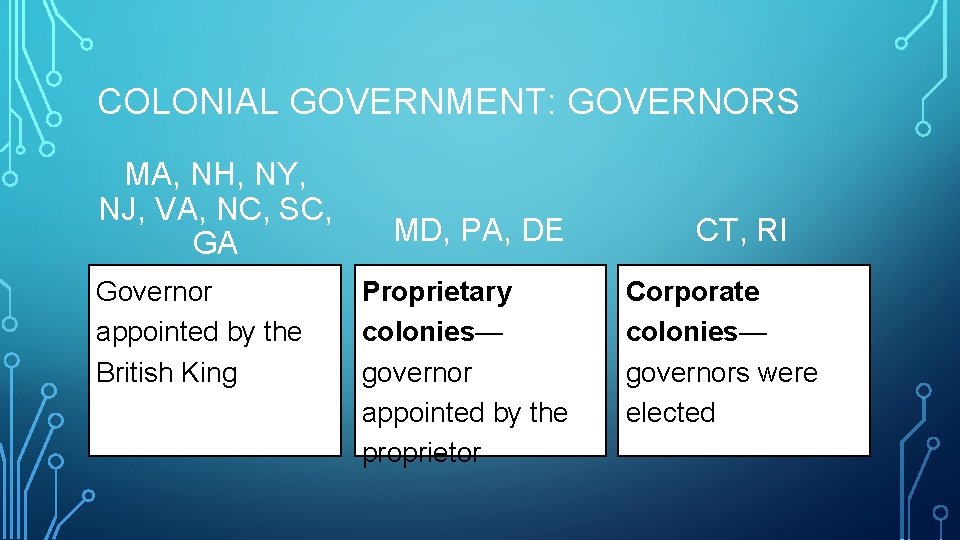
COLONIAL GOVERNMENT: GOVERNORS MA, NH, NY, NJ, VA, NC, SC, GA Governor appointed by the British King MD, PA, DE Proprietary colonies— governor appointed by the proprietor CT, RI Corporate colonies— governors were elected
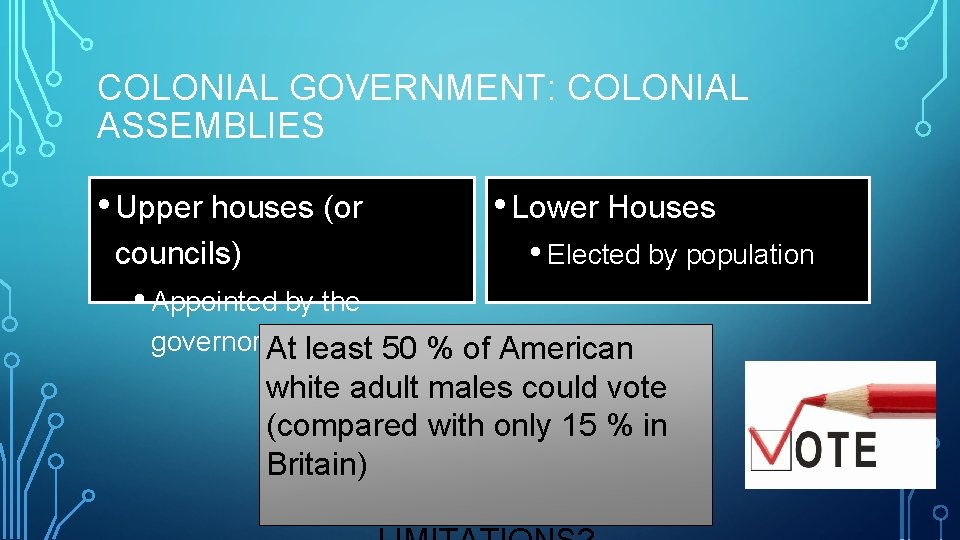
COLONIAL GOVERNMENT: COLONIAL ASSEMBLIES • Upper houses (or • Lower Houses • Elected by population councils) • Appointed by the governor At least 50 % of American white adult males could vote (compared with only 15 % in Britain)
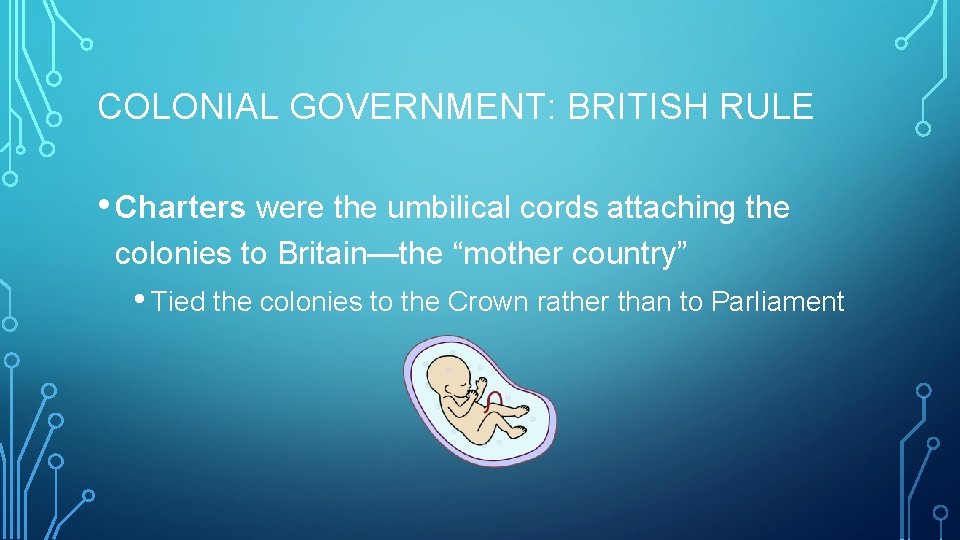
COLONIAL GOVERNMENT: BRITISH RULE • Charters were the umbilical cords attaching the colonies to Britain—the “mother country” • Tied the colonies to the Crown rather than to Parliament
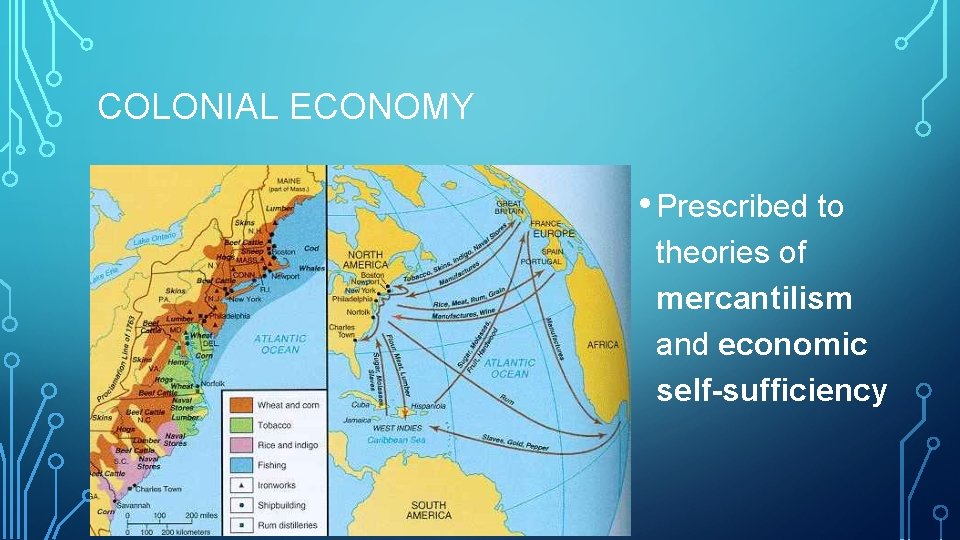
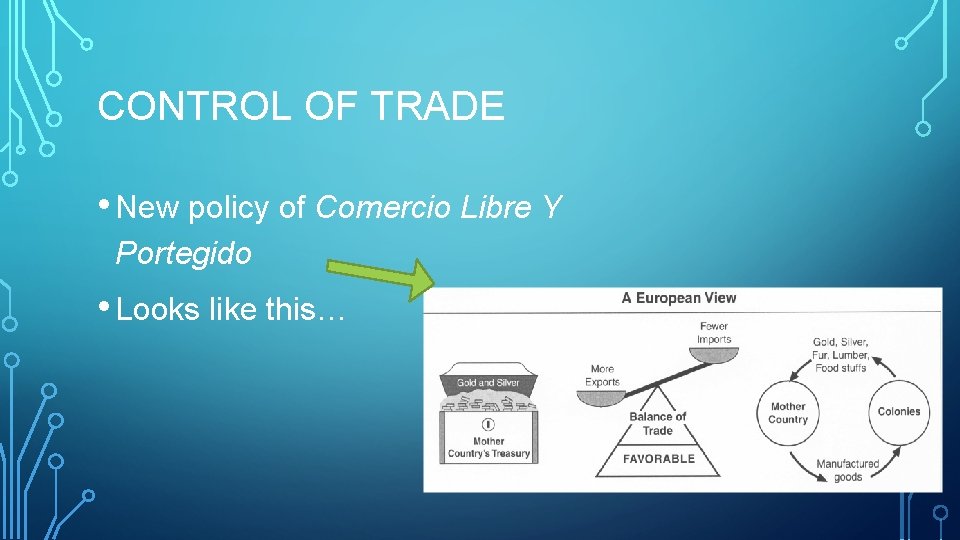
COLONIAL ECONOMY • Prescribed to theories of mercantilism and economic self-sufficiency
PRIMARY SOURCE ANALYSIS • Read The Pattern of Colonial Commerce (1766) [pgs. 98 – 100] • Answer the following question… • What does Achenwall’s analysis, as inspired by Franklin, suggest about the colonists’ situation in the British imperial system?
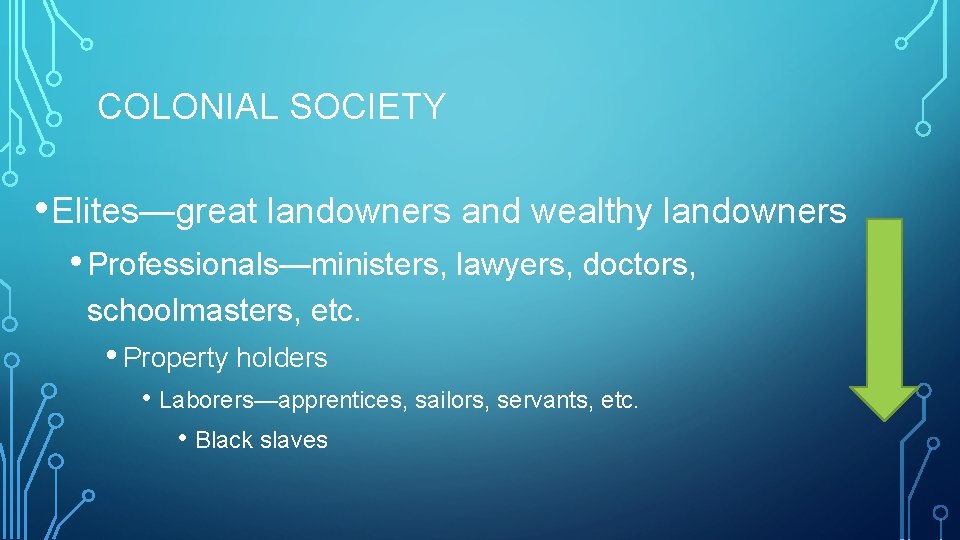
COLONIAL SOCIETY • Elites—great landowners and wealthy landowners • Professionals—ministers, lawyers, doctors, schoolmasters, etc. • Property holders • Laborers—apprentices, sailors, servants, etc. • Black slaves
AMERICAN CULTURE EDUCATION RELIGION • Strongly encouraged in • Majority of Americans were the colonies • ¾ of white male adults were literate • Influenced by the Enlightenment Protestants • Immigration coupled with religious toleration multiplicity of denominations • Great Awakening emphasis on the individual’s personal relationship with God
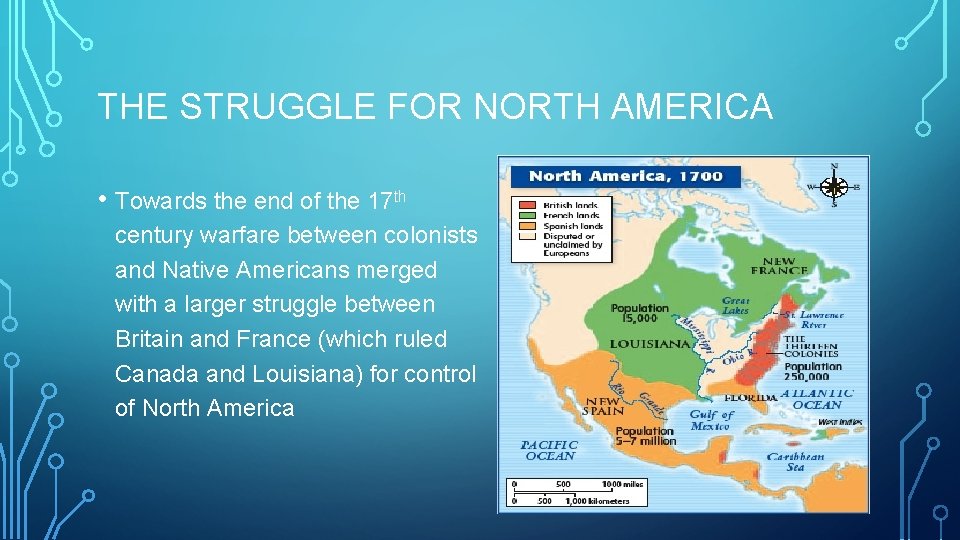
THE STRUGGLE FOR NORTH AMERICA • Towards the end of the 17 th century warfare between colonists and Native Americans merged with a larger struggle between Britain and France (which ruled Canada and Louisiana) for control of North America
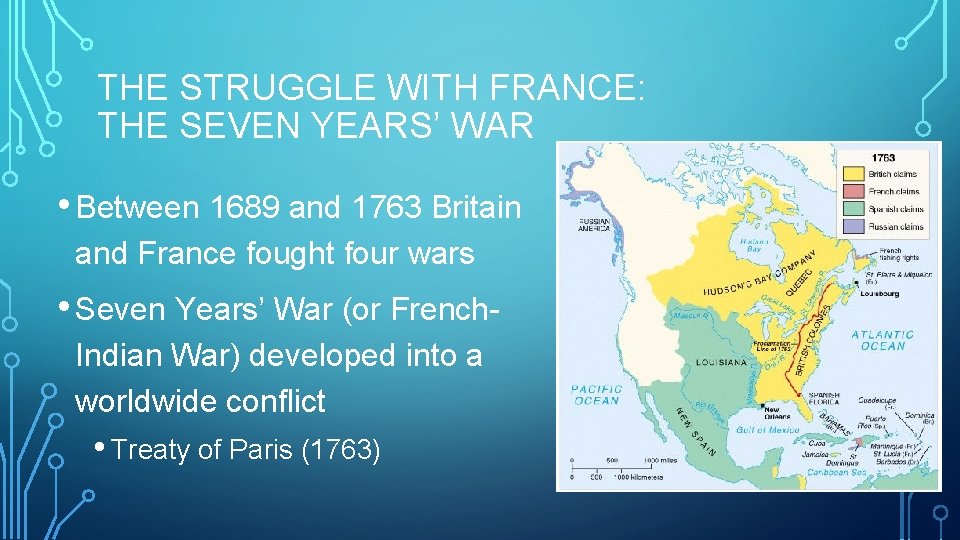
THE STRUGGLE WITH FRANCE: THE SEVEN YEARS’ WAR • Between 1689 and 1763 Britain and France fought four wars • Seven Years’ War (or French. Indian War) developed into a worldwide conflict • Treaty of Paris (1763)
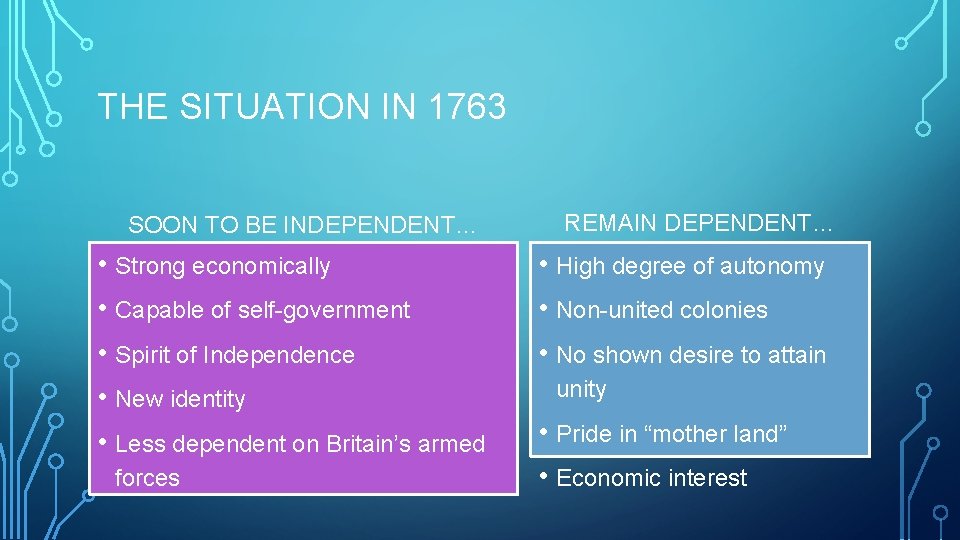
THE SITUATION IN 1763 SOON TO BE INDEPENDENT… • Strong economically • Capable of self-government • Spirit of Independence • New identity • Less dependent on Britain’s armed forces REMAIN DEPENDENT… • High degree of autonomy • Non-united colonies • No shown desire to attain unity • Pride in “mother land” • Economic interest
QUICKWRITE • To what extent did the British-American colonies represent the ideas, values, and worldview of their mother country?
FOR HOMEWORK The People’s History of the United States America’s History
WARM-UP: COMPARING VENN DIAGRAMS 1. Pull out your completed homework: Venn Diagram on the People’s History and American Pageant 2. Find a partner to compare and contrast Venn Diagrams with and answer the following questions… a) From whose perspective were the different accounts of the pre-American Revolution told from? Whose account is more believable? Why? b) Is one account more truthful than the other? Why? c) Do you believe that one account is more purposeful than the other? Why?
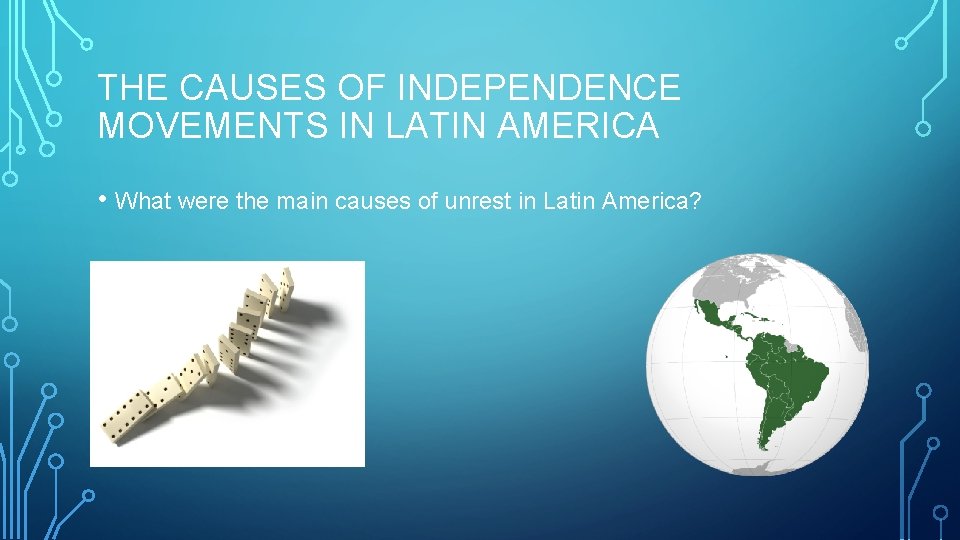
THE CAUSES OF INDEPENDENCE MOVEMENTS IN LATIN AMERICA • What were the main causes of unrest in Latin America?
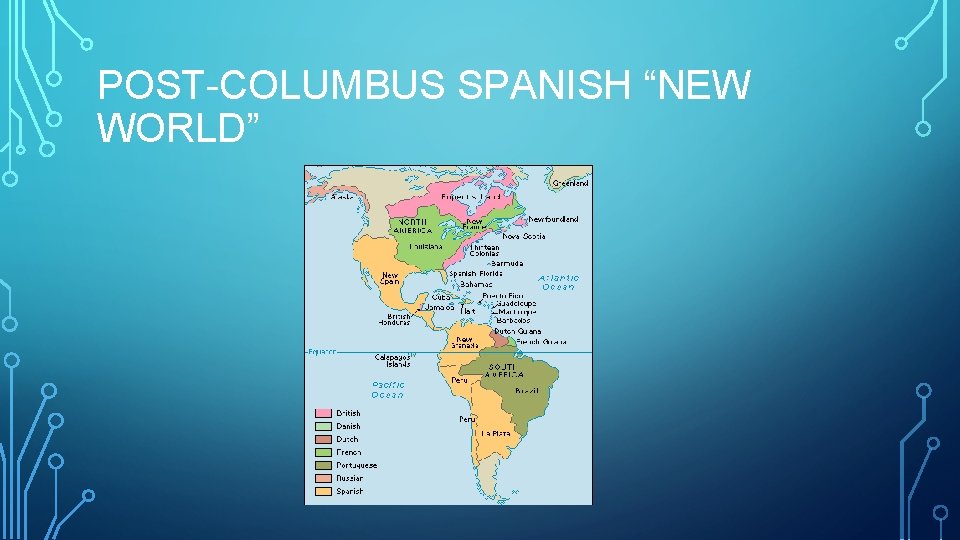
POST-COLUMBUS SPANISH “NEW WORLD”
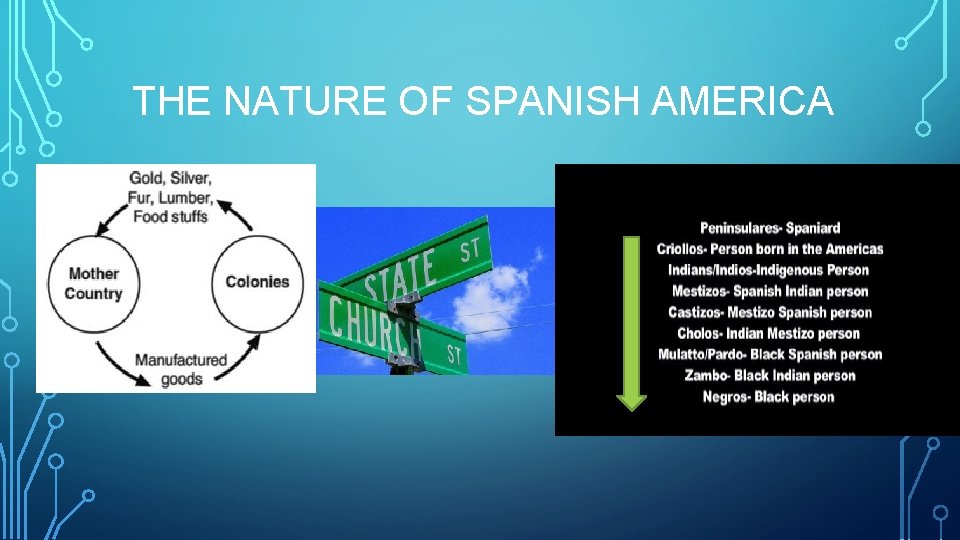
THE NATURE OF SPANISH AMERICA
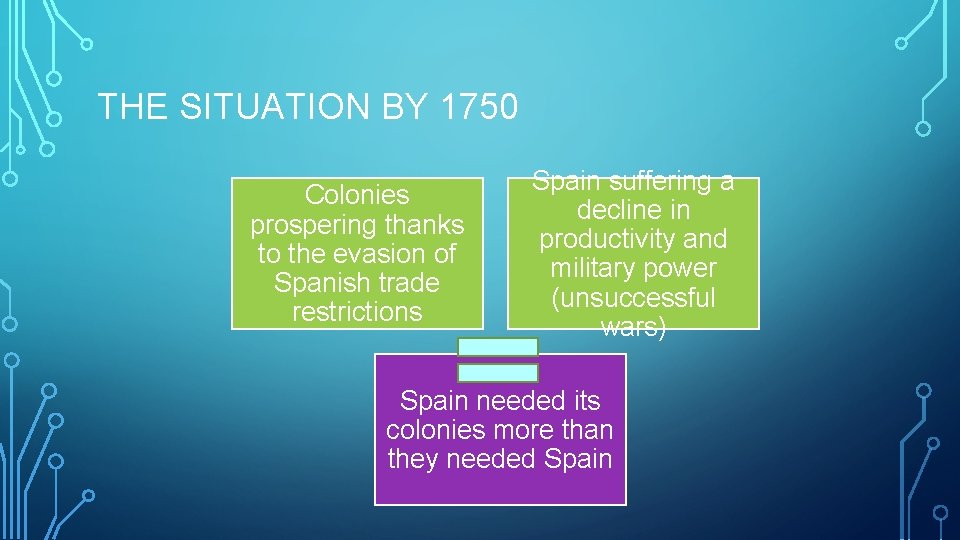
THE SITUATION BY 1750 Colonies prospering thanks to the evasion of Spanish trade restrictions Spain suffering a decline in productivity and military power (unsuccessful wars) Spain needed its colonies more than they needed Spain
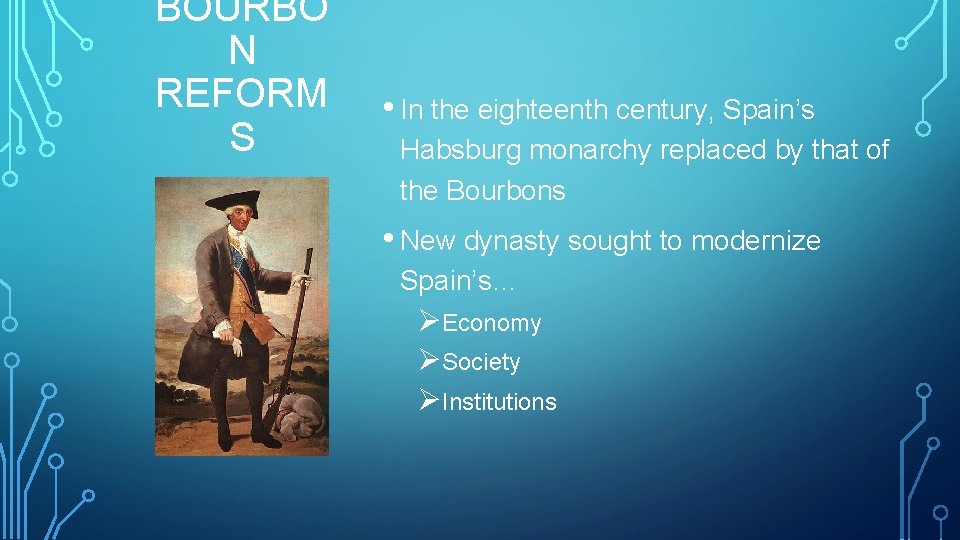
BOURBO N REFORM S • In the eighteenth century, Spain’s Habsburg monarchy replaced by that of the Bourbons • New dynasty sought to modernize Spain’s… ØEconomy ØSociety ØInstitutions
REFORM OF GOVERNME NT • Government seen as too slack • Intendants were appointed • Spanish-born officials replaced creoles
FISCAL MEASURES 1. 2. Imposition of Royal monopolies 3. Alcabala (sales tax) put on all transactions and % often raised 4. Mining sectors pay substantial sums to the crown Government assumed the direct administration of taxes
CONTROL OF TRADE • New policy of Comercio Libre Y Portegido • Looks like this…
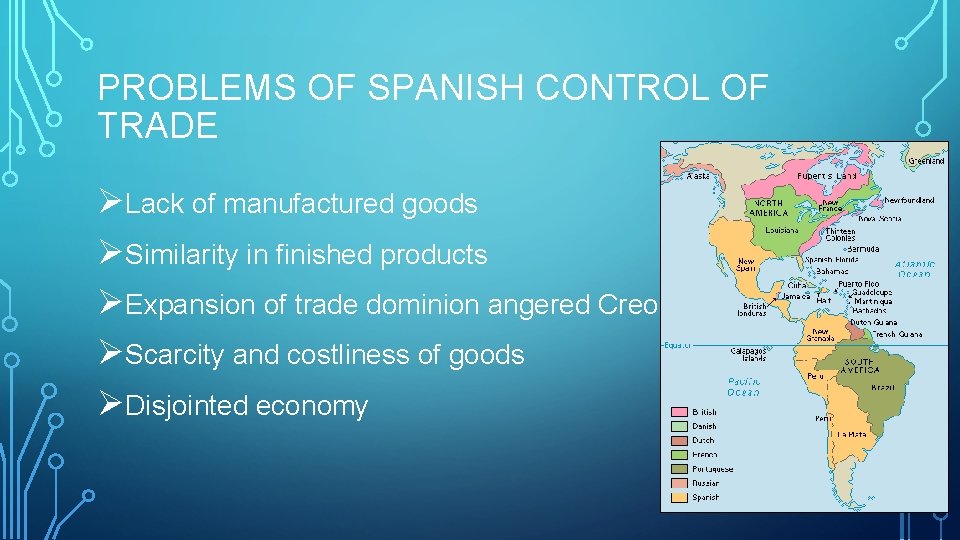
PROBLEMS OF SPANISH CONTROL OF TRADE ØLack of manufactured goods ØSimilarity in finished products ØExpansion of trade dominion angered Creoles ØScarcity and costliness of goods ØDisjointed economy
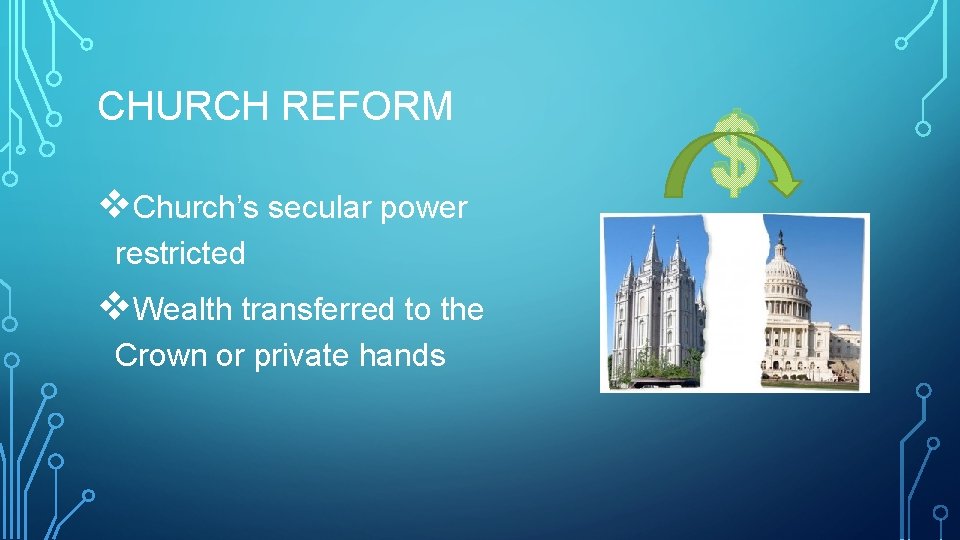
CHURCH REFORM v. Church’s secular power restricted v. Wealth transferred to the Crown or private hands $
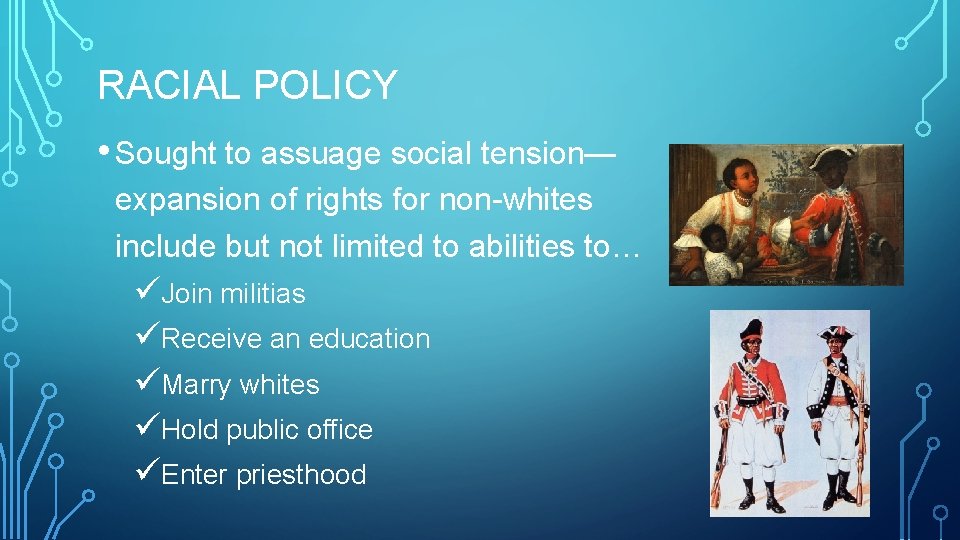
RACIAL POLICY • Sought to assuage social tension— expansion of rights for non-whites include but not limited to abilities to… üJoin militias üReceive an education üMarry whites üHold public office üEnter priesthood
3, 960, 00 0 PENINSULARES VERSUS CREOLES 40, 000
DISCONTENT, REBELLION, AND REVOLUTION • There were scores of minor revolts in Spanish America in the eighteenth century—most were the result of specific grievances • Tyranny of the corregidores (local administrative and judicial officials) • Taxation from the state and church • Forced labor for state benefit
DISCONTENT, REBELLION, AND REVOLUTION • If someone says it better, let them say it… Crash Course World History: The Latin American Revolution Ø While watching, complete the fill-in notes!
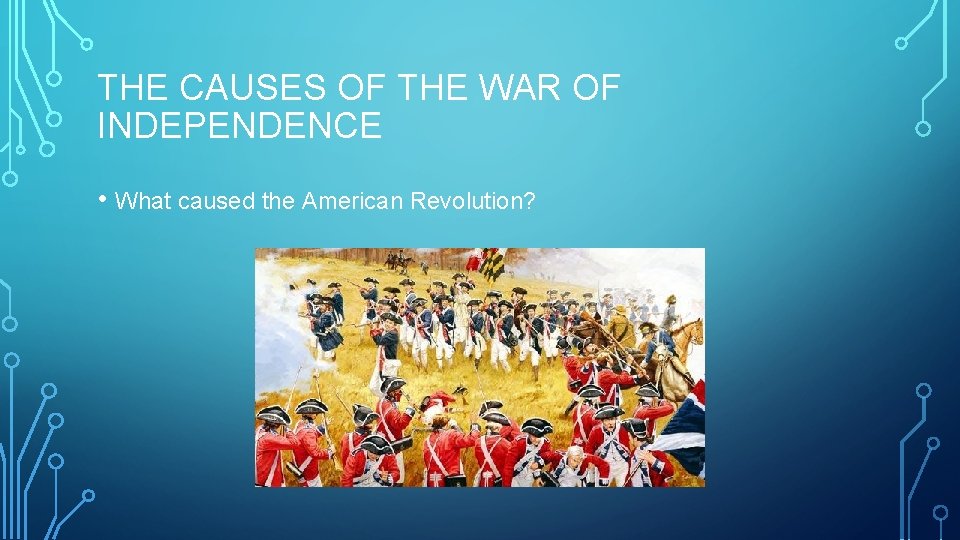
THE CAUSES OF THE WAR OF INDEPENDENCE • What caused the American Revolution?
“POINT OF NO RETURN” • In groups of three, document on a timeline the major events and laws leading up to the signing of the Declaration of Independence • Write a brief synopsis of each event (20 words at the most) or include a pictorial representation • Select one event (make sure it stands out on your timeline) that you believe was the “point of no return” • Explain in a well-formed and supported paragraph why this event was so important *Be prepared to defend your chosen event
“POINT OF NO RETURN” In regards to the American Revolution, the “point of no return” for the non-loyal colonists was…because of reason #1 , reason #2, and reason #3…the end
• Be sure to include at least 10 of the following events… “POINT OF NO RETURN” ? 1. Proclamation of 1763 2. Boston Massacre 3. Colonists burn Gaspee 4. Stamp Act 5. Declaratory Act 6. Sugar Act 7. Battles of Lexington and Concord 8. Tea Act 9. Boston Tea Party 10. Coercive Acts / Intolerable Acts 11. Townshend Acts 12. First Continental Congress 13. Quartering Act *Any other events you find pertinent too!