
Independence Instruction Set Architectures Conventional ISA Instructions execute
![Trace Scheduling Example test = a[i] + 20; If (test > 0) then sum](https://slidetodoc.com/presentation_image_h2/3653a5471559df8f1f971f5132b7ff0d/image-16.jpg "Trace Scheduling Example test = a[i] + 20; If (test > 0) then sum")

![Sequential Execution Model / SISD int a[N]; // N is large for (i =0;](https://slidetodoc.com/presentation_image_h2/3653a5471559df8f1f971f5132b7ff0d/image-20.jpg "Sequential Execution Model / SISD int a[N]; // N is large for (i =0;")
![Data Parallel Execution Model / SIMD int a[N]; // N is large for all](https://slidetodoc.com/presentation_image_h2/3653a5471559df8f1f971f5132b7ff0d/image-21.jpg "Data Parallel Execution Model / SIMD int a[N]; // N is large for all")
![Vector Code Example • • Y[0: 63] = Y[0: 63] + a * X[0:](https://slidetodoc.com/presentation_image_h2/3653a5471559df8f1f971f5132b7ff0d/image-39.jpg "Vector Code Example • • Y[0: 63] = Y[0: 63] + a * X[0:")
- Slides: 39
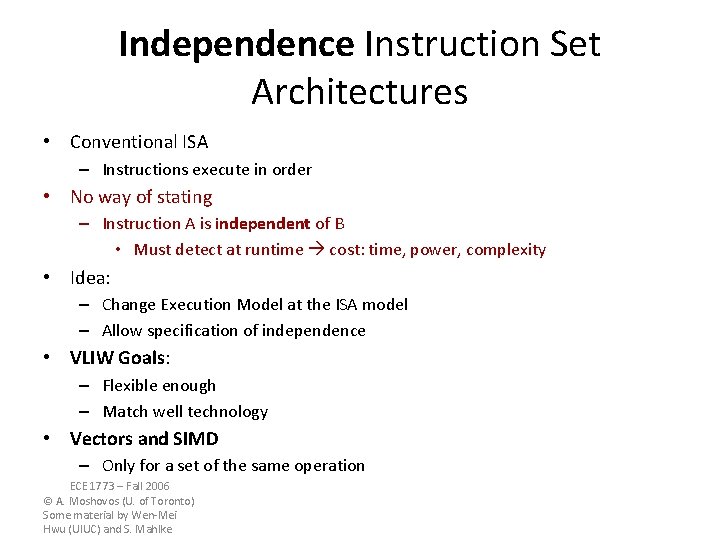
Independence Instruction Set Architectures • Conventional ISA – Instructions execute in order • No way of stating – Instruction A is independent of B • Must detect at runtime cost: time, power, complexity • Idea: – Change Execution Model at the ISA model – Allow specification of independence • VLIW Goals: – Flexible enough – Match well technology • Vectors and SIMD – Only for a set of the same operation ECE 1773 – Fall 2006 © A. Moshovos (U. of Toronto) Some material by Wen-Mei Hwu (UIUC) and S. Mahlke
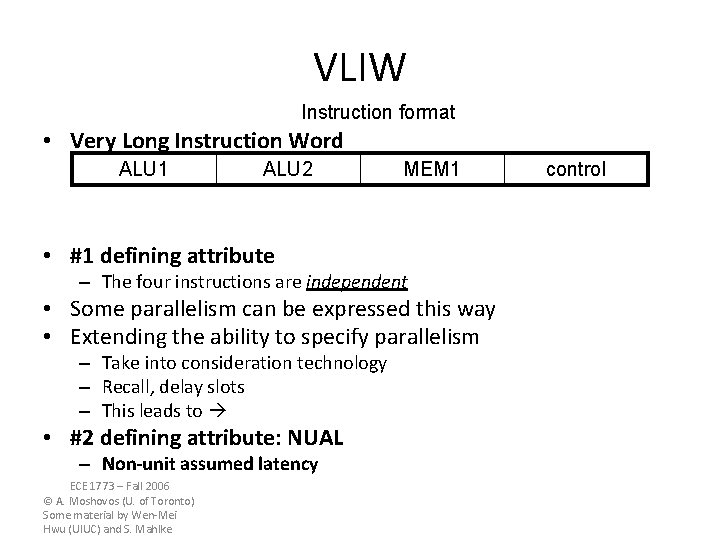
VLIW Instruction format • Very Long Instruction Word ALU 1 ALU 2 MEM 1 • #1 defining attribute – The four instructions are independent • Some parallelism can be expressed this way • Extending the ability to specify parallelism – Take into consideration technology – Recall, delay slots – This leads to • #2 defining attribute: NUAL – Non-unit assumed latency ECE 1773 – Fall 2006 © A. Moshovos (U. of Toronto) Some material by Wen-Mei Hwu (UIUC) and S. Mahlke control
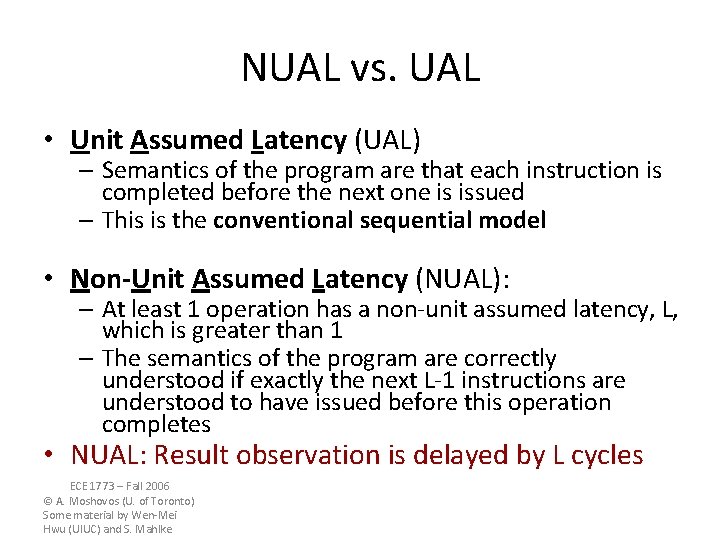
NUAL vs. UAL • Unit Assumed Latency (UAL) – Semantics of the program are that each instruction is completed before the next one is issued – This is the conventional sequential model • Non-Unit Assumed Latency (NUAL): – At least 1 operation has a non-unit assumed latency, L, which is greater than 1 – The semantics of the program are correctly understood if exactly the next L-1 instructions are understood to have issued before this operation completes • NUAL: Result observation is delayed by L cycles ECE 1773 – Fall 2006 © A. Moshovos (U. of Toronto) Some material by Wen-Mei Hwu (UIUC) and S. Mahlke
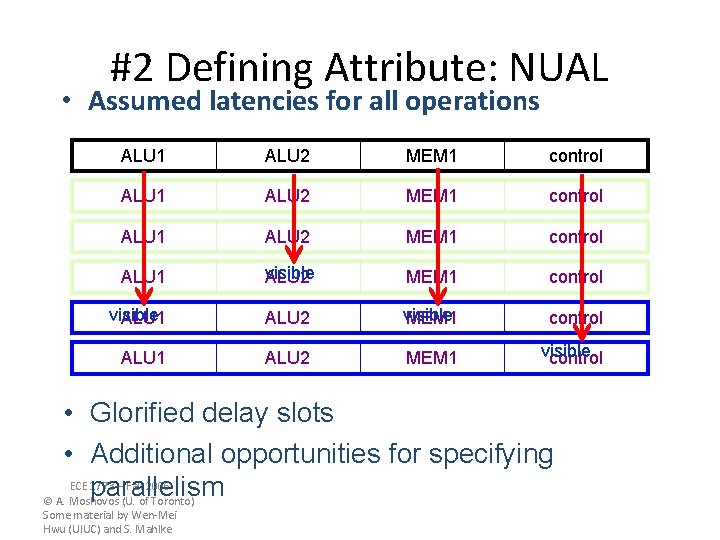
#2 Defining Attribute: NUAL • Assumed latencies for all operations ALU 1 ALU 2 MEM 1 control ALU 1 visible ALU 2 MEM 1 control visible ALU 1 ALU 2 visible MEM 1 control ALU 1 ALU 2 MEM 1 visible control • Glorified delay slots • Additional opportunities for specifying ECE 1773 – Fall 2006 parallelism © A. Moshovos (U. of Toronto) Some material by Wen-Mei Hwu (UIUC) and S. Mahlke
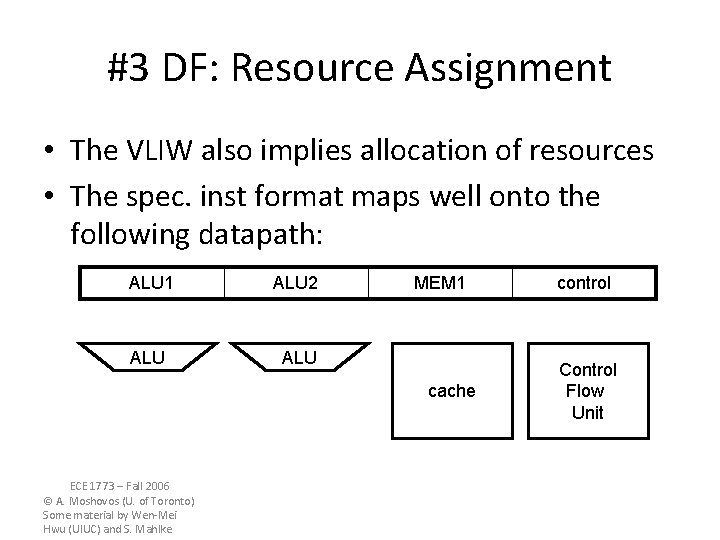
#3 DF: Resource Assignment • The VLIW also implies allocation of resources • The spec. inst format maps well onto the following datapath: ALU 1 ALU 2 ALU MEM 1 cache ECE 1773 – Fall 2006 © A. Moshovos (U. of Toronto) Some material by Wen-Mei Hwu (UIUC) and S. Mahlke control Control Flow Unit
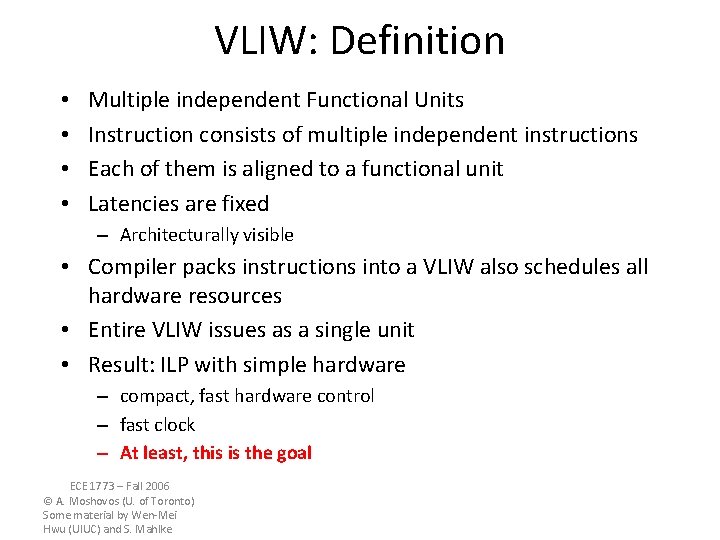
VLIW: Definition • • Multiple independent Functional Units Instruction consists of multiple independent instructions Each of them is aligned to a functional unit Latencies are fixed – Architecturally visible • Compiler packs instructions into a VLIW also schedules all hardware resources • Entire VLIW issues as a single unit • Result: ILP with simple hardware – compact, fast hardware control – fast clock – At least, this is the goal ECE 1773 – Fall 2006 © A. Moshovos (U. of Toronto) Some material by Wen-Mei Hwu (UIUC) and S. Mahlke
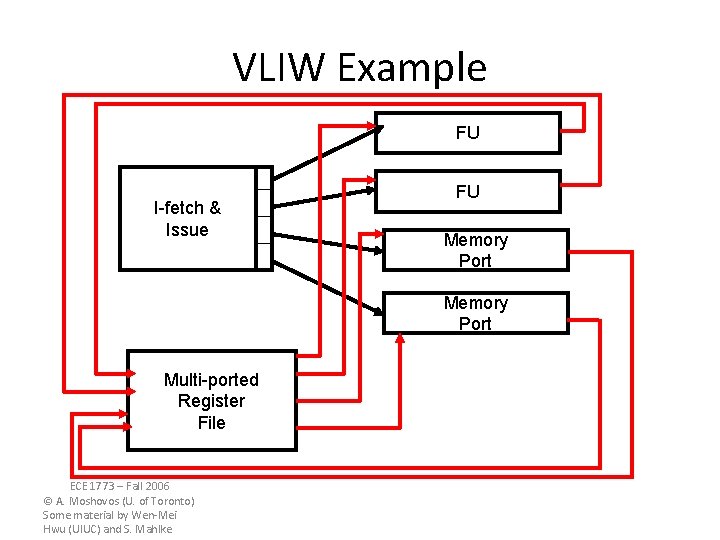
VLIW Example FU I-fetch & Issue FU Memory Port Multi-ported Register File ECE 1773 – Fall 2006 © A. Moshovos (U. of Toronto) Some material by Wen-Mei Hwu (UIUC) and S. Mahlke
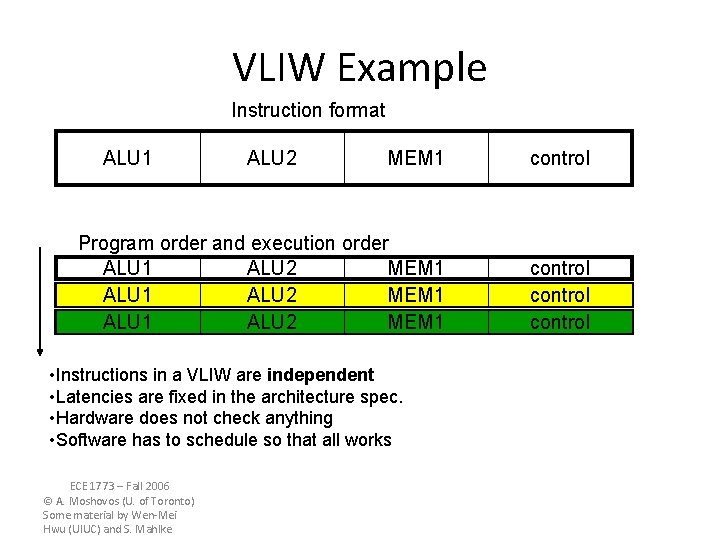
VLIW Example Instruction format ALU 1 ALU 2 MEM 1 control Program order and execution order ALU 1 ALU 2 MEM 1 control • Instructions in a VLIW are independent • Latencies are fixed in the architecture spec. • Hardware does not check anything • Software has to schedule so that all works ECE 1773 – Fall 2006 © A. Moshovos (U. of Toronto) Some material by Wen-Mei Hwu (UIUC) and S. Mahlke
Compilers are King • VLIW philosophy: – “dumb” hardware – “intelligent” compiler • Key technologies – Predicated Execution – Trace Scheduling • If-Conversion – Software Pipelining ECE 1773 – Fall 2006 © A. Moshovos (U. of Toronto) Some material by Wen-Mei Hwu (UIUC) and S. Mahlke
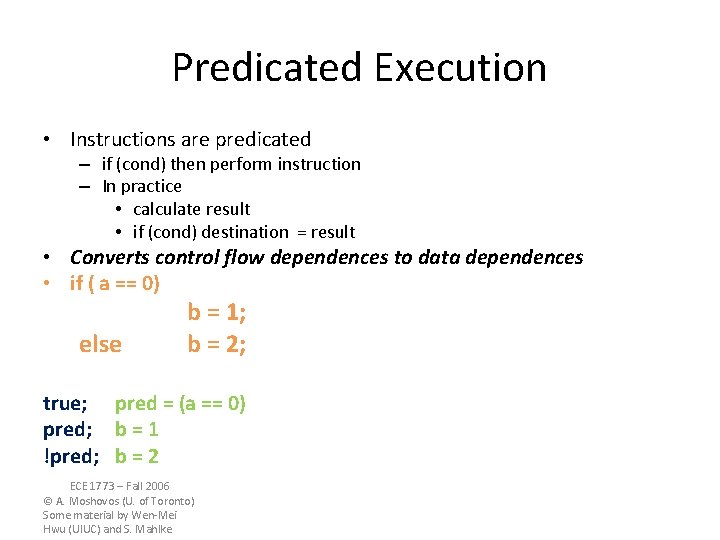
Predicated Execution • Instructions are predicated – if (cond) then perform instruction – In practice • calculate result • if (cond) destination = result • Converts control flow dependences to data dependences • if ( a == 0) else b = 1; b = 2; true; pred = (a == 0) pred; b = 1 !pred; b = 2 ECE 1773 – Fall 2006 © A. Moshovos (U. of Toronto) Some material by Wen-Mei Hwu (UIUC) and S. Mahlke
Predicated Execution: Trade-offs • Is predicated execution always a win? • Is predication meaningful for VLIW only? ECE 1773 – Fall 2006 © A. Moshovos (U. of Toronto) Some material by Wen-Mei Hwu (UIUC) and S. Mahlke
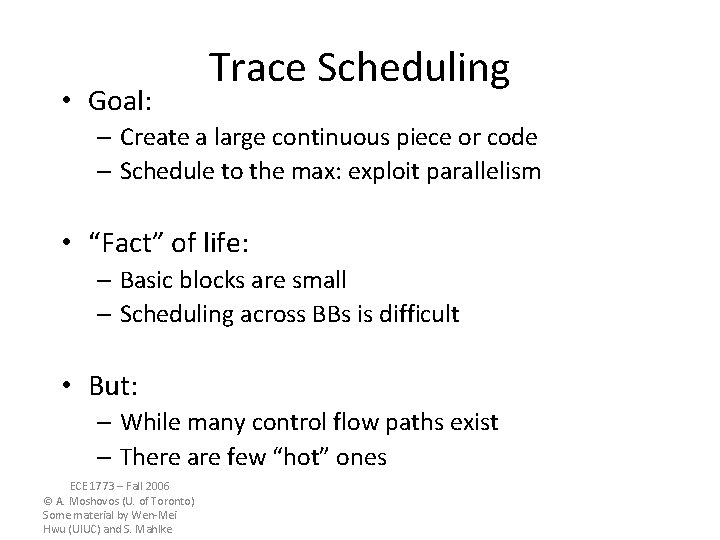
• Goal: Trace Scheduling – Create a large continuous piece or code – Schedule to the max: exploit parallelism • “Fact” of life: – Basic blocks are small – Scheduling across BBs is difficult • But: – While many control flow paths exist – There are few “hot” ones ECE 1773 – Fall 2006 © A. Moshovos (U. of Toronto) Some material by Wen-Mei Hwu (UIUC) and S. Mahlke
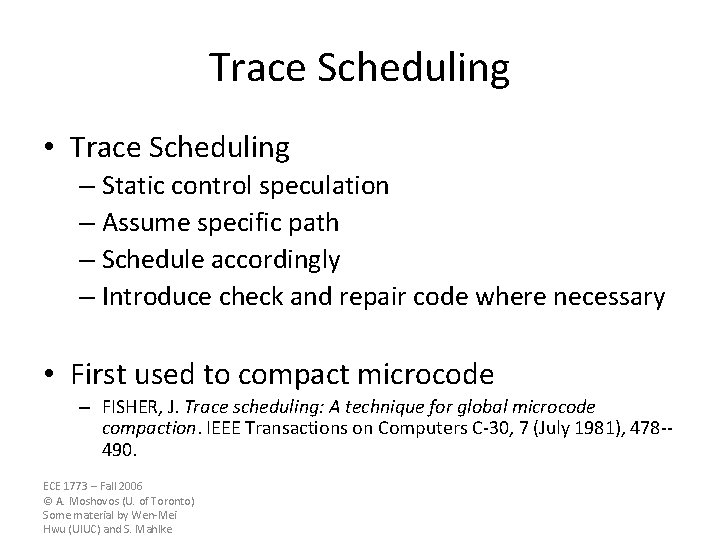
Trace Scheduling • Trace Scheduling – Static control speculation – Assume specific path – Schedule accordingly – Introduce check and repair code where necessary • First used to compact microcode – FISHER, J. Trace scheduling: A technique for global microcode compaction. IEEE Transactions on Computers C-30, 7 (July 1981), 478 -490. ECE 1773 – Fall 2006 © A. Moshovos (U. of Toronto) Some material by Wen-Mei Hwu (UIUC) and S. Mahlke
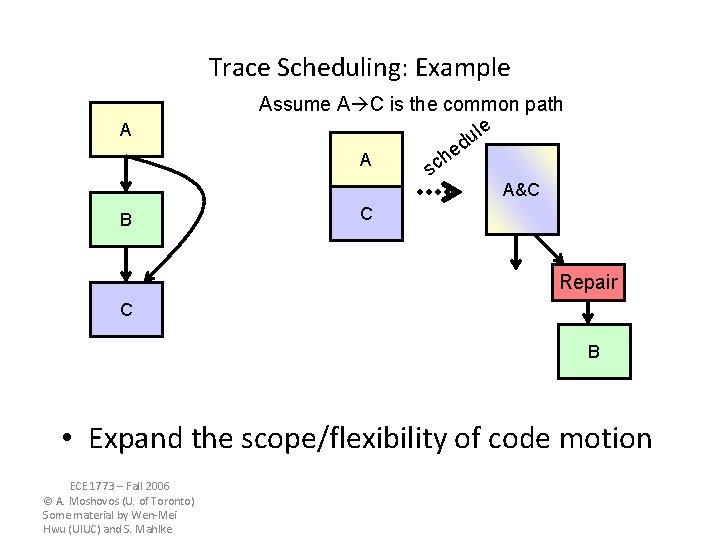
Trace Scheduling: Example A Assume A C is the common path le u d e h A sc A&C B C Repair C B • Expand the scope/flexibility of code motion ECE 1773 – Fall 2006 © A. Moshovos (U. of Toronto) Some material by Wen-Mei Hwu (UIUC) and S. Mahlke
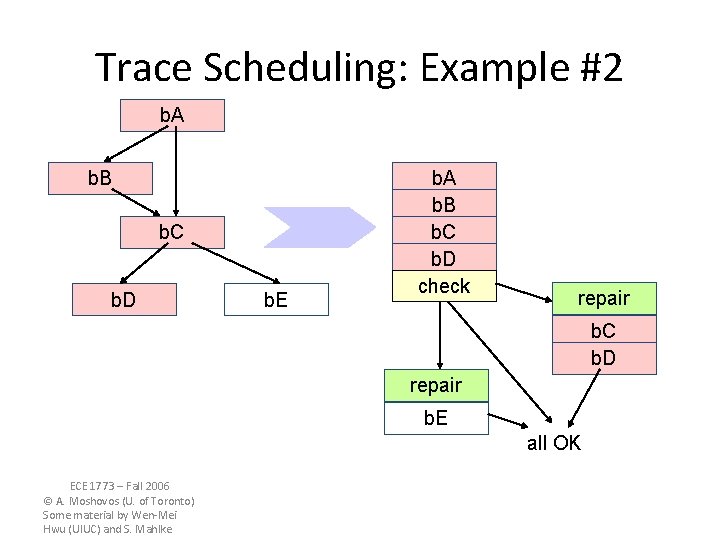
Trace Scheduling: Example #2 b. A b. B b. C b. D b. E b. A b. B b. C b. D check repair b. C b. D repair b. E all OK ECE 1773 – Fall 2006 © A. Moshovos (U. of Toronto) Some material by Wen-Mei Hwu (UIUC) and S. Mahlke
Trace Scheduling Example test = a[i] + 20; If (test > 0) then sum = sum + 10 else sum = sum + c[i] c[x] = c[y] + 10 assume delay Straight code test = a[i] + 20 sum = sum + 10 c[x] = c[y] + 10 if (test <= 0) then goto repair … ECE 1773 – Fall 2006 © A. Moshovos (U. of Toronto) Some material by Wen-Mei Hwu (UIUC) and S. Mahlke repair: sum = sum – 10 sum = sum + c[i]
SIMD • Single Instruction Multiple Data
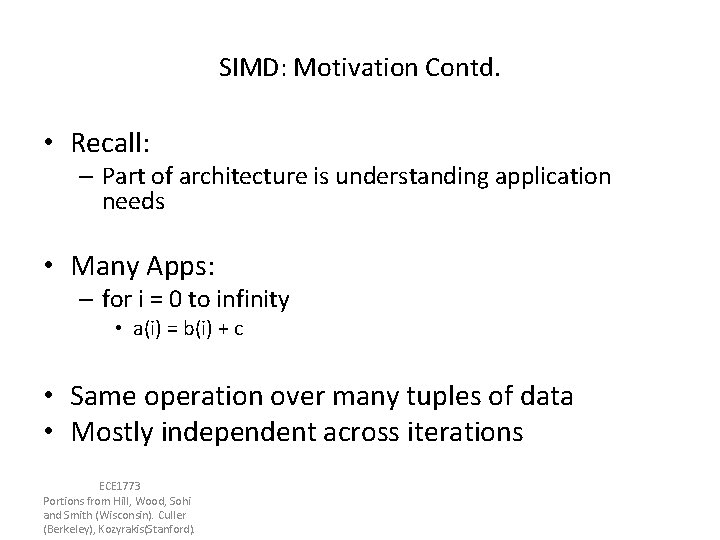
SIMD: Motivation Contd. • Recall: – Part of architecture is understanding application needs • Many Apps: – for i = 0 to infinity • a(i) = b(i) + c • Same operation over many tuples of data • Mostly independent across iterations ECE 1773 Portions from Hill, Wood, Sohi and Smith (Wisconsin). Culler (Berkeley), Kozyrakis(Stanford).
Some things are naturally parallel
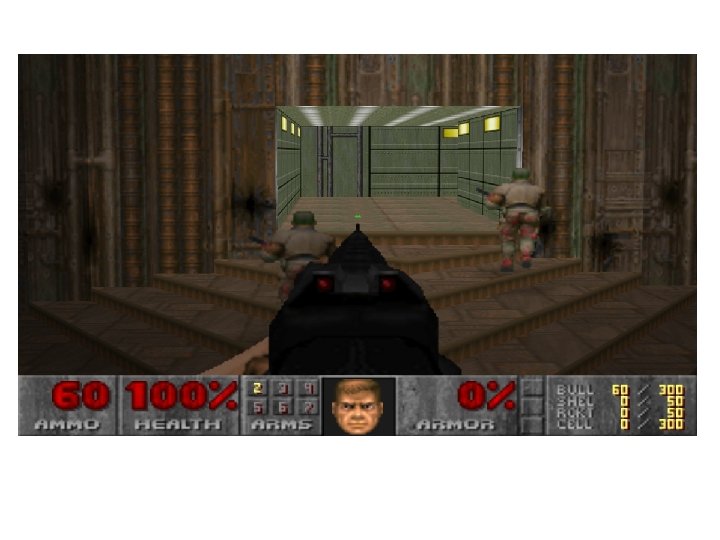
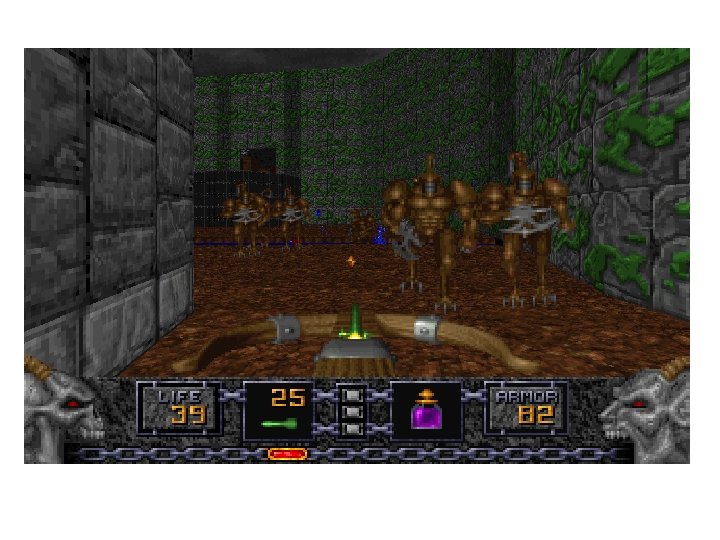
Sequential Execution Model / SISD int a[N]; // N is large for (i =0; i < N; i++) time a[i] = a[i] * fade; Flow of control / Thread One instruction at the time Optimizations possible at the machine level
Data Parallel Execution Model / SIMD int a[N]; // N is large for all elements do in parallel time a[i] = a[i] * fade; This has been tried before: ILLIAC III, UIUC, 1966 http: //ieeexplore. ieee. org/xpls/abs_all. jsp? arnumber=4038028&tag=1 http: //ed-thelen. org/comp-hist/vs-illiac-iv. html
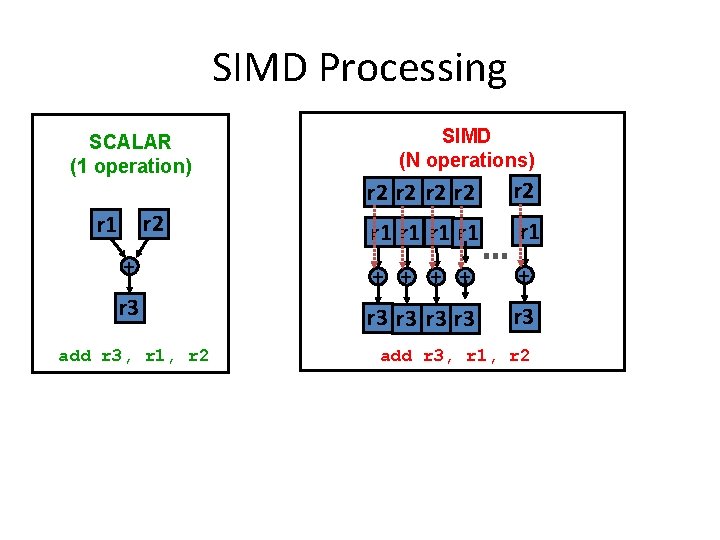
SIMD Processing SCALAR (1 operation) SIMD (N operations) r 2 r 2 r 2 r 1 r 1 r 1 + + + r 3 r 3 r 3 r 2 r 1 add r 3, r 1, r 2
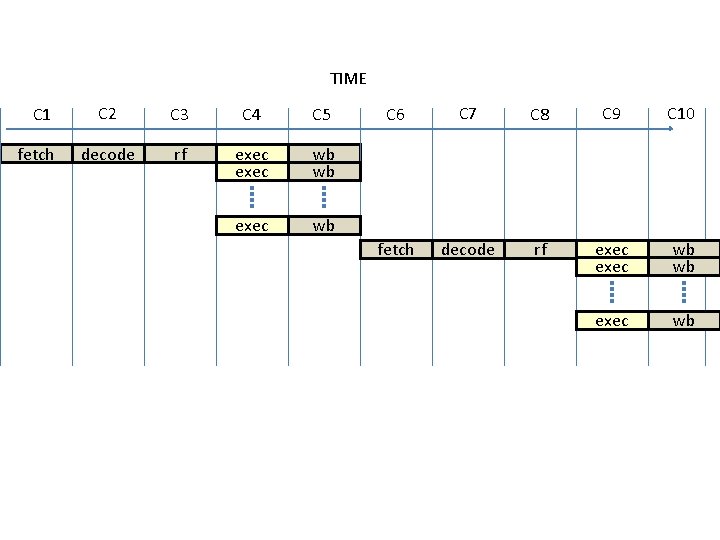
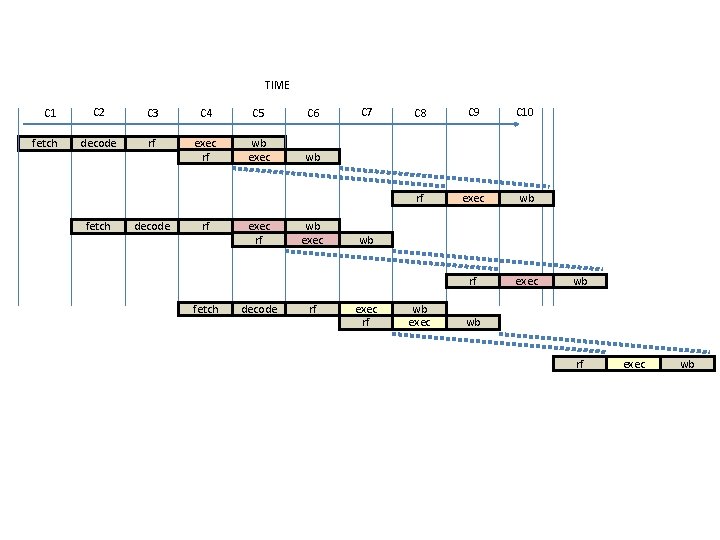
TIME C 1 fetch C 2 C 3 C 4 C 5 decode rf exec wb wb exec wb C 6 C 7 C 8 C 9 C 10 fetch decode rf exec wb wb exec wb
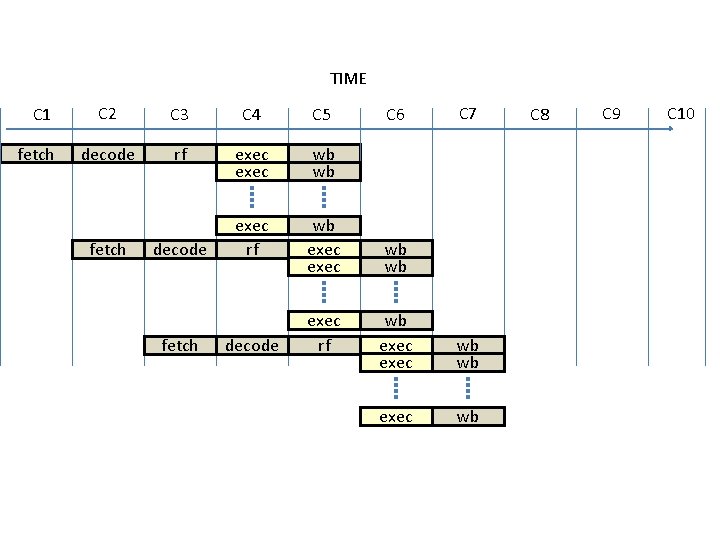
TIME C 1 fetch C 2 C 3 C 4 C 5 decode rf exec wb wb exec rf wb exec fetch decode exec rf C 6 C 7 wb wb wb exec wb C 8 C 9 C 10
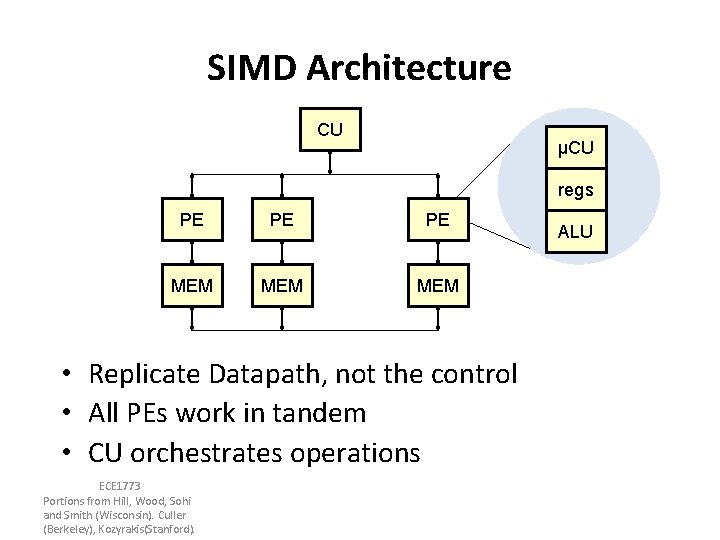
SIMD Architecture CU μCU regs PE PE PE MEM MEM • Replicate Datapath, not the control • All PEs work in tandem • CU orchestrates operations ECE 1773 Portions from Hill, Wood, Sohi and Smith (Wisconsin). Culler (Berkeley), Kozyrakis(Stanford). ALU
Multimedia extensions SIMD in modern CPUs ECE 1773 Portions from Hill, Wood, Sohi and Smith (Wisconsin). Culler (Berkeley), Kozyrakis(Stanford).
MMX: Basics • Multimedia applications are becoming popular • Are current ISAs a good match for them? • Methodology: – Consider a number of “typical” applications – Can we do better? – Cost vs. performance vs. utility tradeoffs • Net Result: Intel’s MMX • Can also be viewed as an attempt to maintain market share – If people are going to use these kind of applications we better support them ECE 1773 Portions from Hill, Wood, Sohi and Smith (Wisconsin). Culler (Berkeley), Kozyrakis(Stanford).
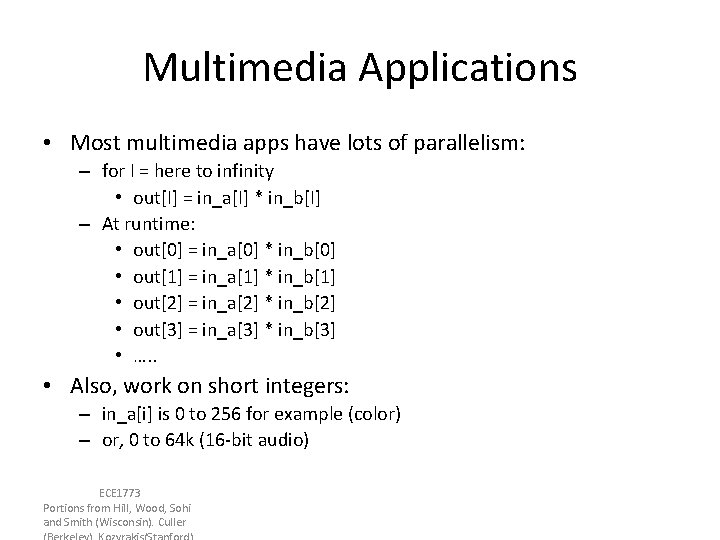
Multimedia Applications • Most multimedia apps have lots of parallelism: – for I = here to infinity • out[I] = in_a[I] * in_b[I] – At runtime: • out[0] = in_a[0] * in_b[0] • out[1] = in_a[1] * in_b[1] • out[2] = in_a[2] * in_b[2] • out[3] = in_a[3] * in_b[3] • …. . • Also, work on short integers: – in_a[i] is 0 to 256 for example (color) – or, 0 to 64 k (16 -bit audio) ECE 1773 Portions from Hill, Wood, Sohi and Smith (Wisconsin). Culler
Observations • 32 -bit registers are wasted – only using part of them and we know – ALUs underutilized and we know • Instruction specification is inefficient – even though we know that a lot of the same operations will be performed still we have to specify each of the individually – Instruction bandwidth – Discovering Parallelism – Memory Ports? • Could read four elements of an array with one 32 -bit load • Same for stores • The hardware will have a hard time discovering this – Coalescing and dependences ECE 1773 Portions from Hill, Wood, Sohi and Smith (Wisconsin). Culler
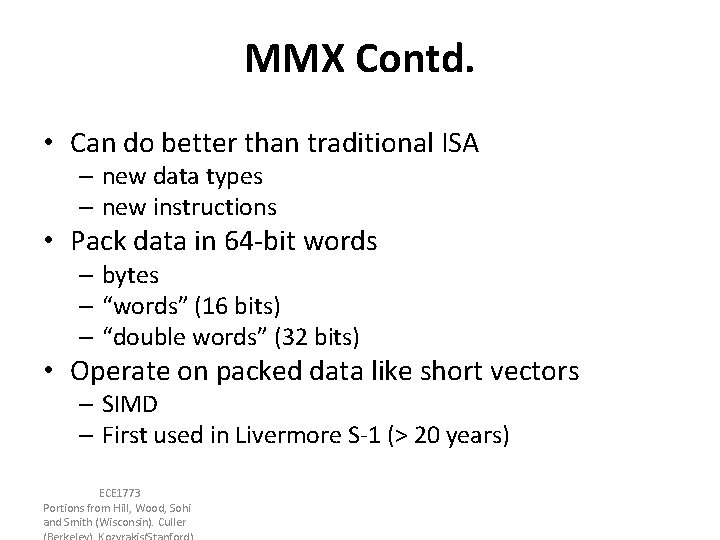
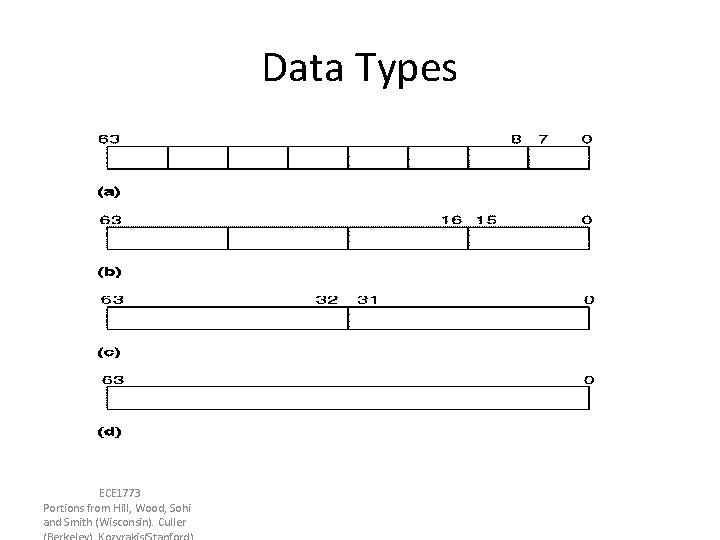
MMX Contd. • Can do better than traditional ISA – new data types – new instructions • Pack data in 64 -bit words – bytes – “words” (16 bits) – “double words” (32 bits) • Operate on packed data like short vectors – SIMD – First used in Livermore S-1 (> 20 years) ECE 1773 Portions from Hill, Wood, Sohi and Smith (Wisconsin). Culler
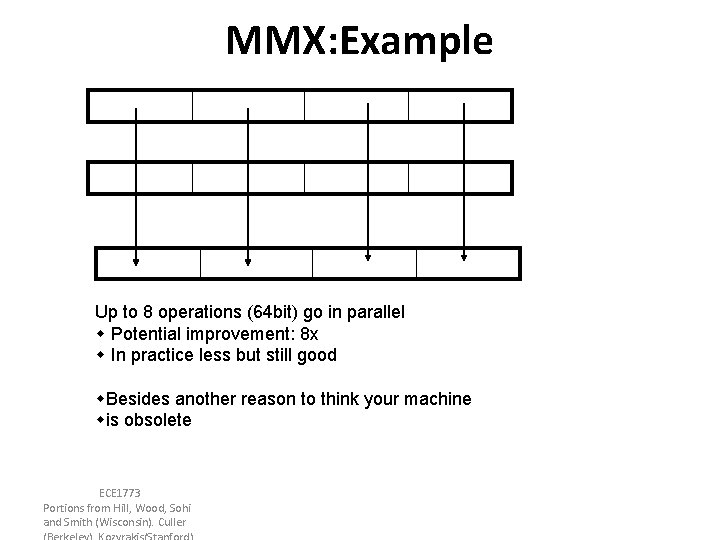
MMX: Example Up to 8 operations (64 bit) go in parallel w Potential improvement: 8 x w In practice less but still good w. Besides another reason to think your machine wis obsolete ECE 1773 Portions from Hill, Wood, Sohi and Smith (Wisconsin). Culler
Data Types ECE 1773 Portions from Hill, Wood, Sohi and Smith (Wisconsin). Culler
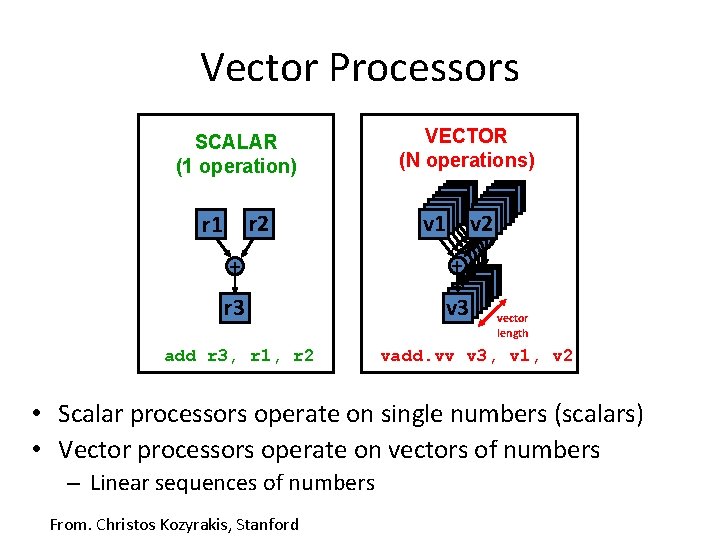
Vector Processors SCALAR (1 operation) r 2 r 1 VECTOR (N operations) v 1 v 2 + + r 3 v 3 add r 3, r 1, r 2 vector length vadd. vv v 3, v 1, v 2 • Scalar processors operate on single numbers (scalars) • Vector processors operate on vectors of numbers – Linear sequences of numbers From. Christos Kozyrakis, Stanford
TIME C 1 fetch C 2 C 3 C 4 C 5 C 6 decode rf exec rf wb exec wb fetch decode rf fetch exec rf decode wb exec rf C 7 C 8 C 9 C 10 rf exec wb exec rf wb exec wb wb rf exec wb
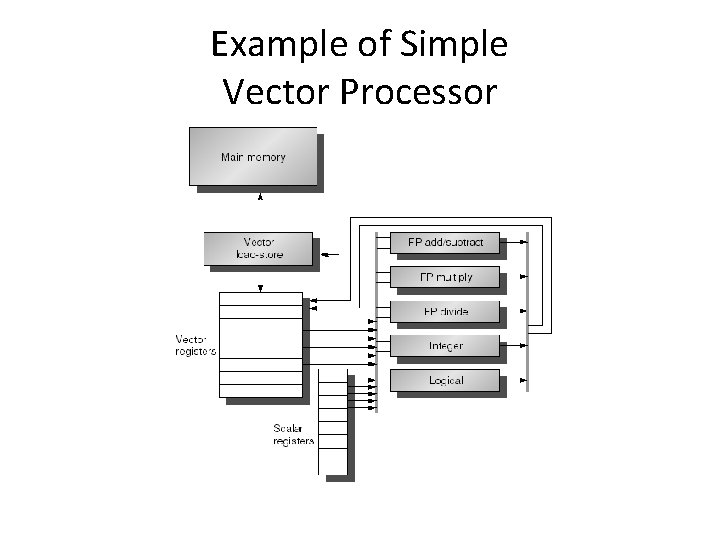
Example of Simple Vector Processor
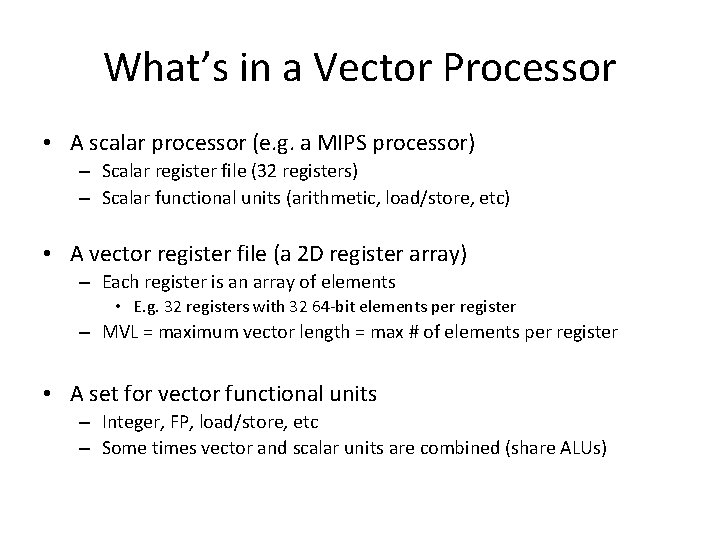
What’s in a Vector Processor • A scalar processor (e. g. a MIPS processor) – Scalar register file (32 registers) – Scalar functional units (arithmetic, load/store, etc) • A vector register file (a 2 D register array) – Each register is an array of elements • E. g. 32 registers with 32 64 -bit elements per register – MVL = maximum vector length = max # of elements per register • A set for vector functional units – Integer, FP, load/store, etc – Some times vector and scalar units are combined (share ALUs)
Vector Code Example • • Y[0: 63] = Y[0: 63] + a * X[0: 63] LD R 0, a VLD V 1, 0(Rx) V 1 = X[] VLD V 2, 0(Ry) V 2 = Y[] VMUL. SV V 3, R 0, V 1 V 3 = X[]*a VADD. VV V 4, V 2, V 3 V 4 = Y[]+V 3 VST V 4, 0(Ry) store in Y[] ECE 1773 Portions from Hill, Wood, Sohi and Smith (Wisconsin). Culler (Berkeley), Kozyrakis(Stanford).