
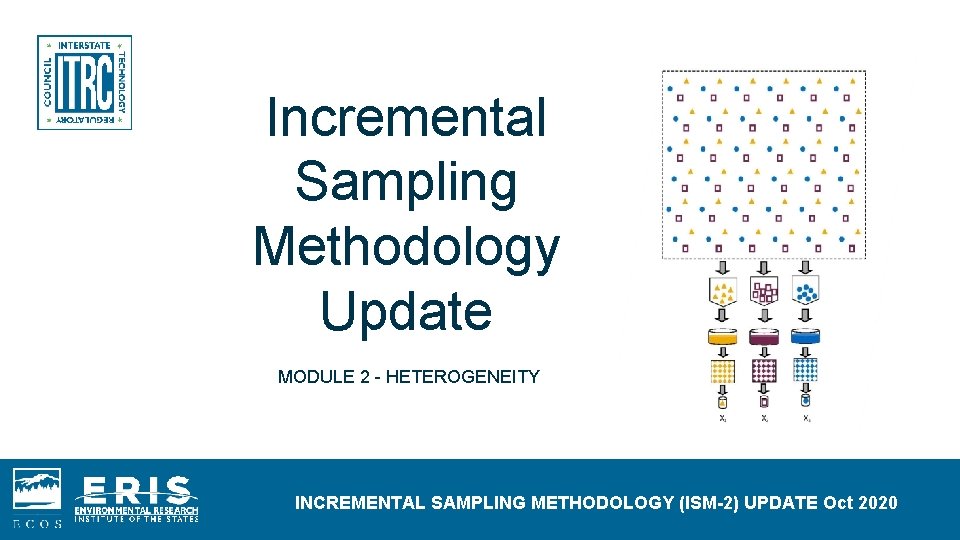
Incremental Sampling Methodology Update MODULE 2 HETEROGENEITY INCREMENTAL


- Slides: 22
Incremental Sampling Methodology Update MODULE 2 - HETEROGENEITY INCREMENTAL SAMPLING METHODOLOGY (ISM-2) UPDATE Oct 2020
Learning Objectives Impacts of soil heterogeneity on characterization of contaminant concentrations in soil How representativeness is critical to understand incorporate into planning and decision-making Data variability is dependent on the mass analyzed and the size of soil particles Proper sampling design using ISM can mitigate common errors and generate more representative data INCREMENTAL SAMPLING METHODOLOGY (ISM-2) UPDATE Oct 2020 2
Why Should We Care? Sampling is to conducted to collect representative data Soil is inherently heterogeneous (variable) Soil heterogeneity is the most significant cause of soil data variability For data to be considered representative, results must be reproducible When soil heterogeneity is not anticipated and controlled by a soil sampling design, an endless cycle of decision errors perpetrated by nonrepresentative data can inflate cleanup cost and project lifecycles. 3
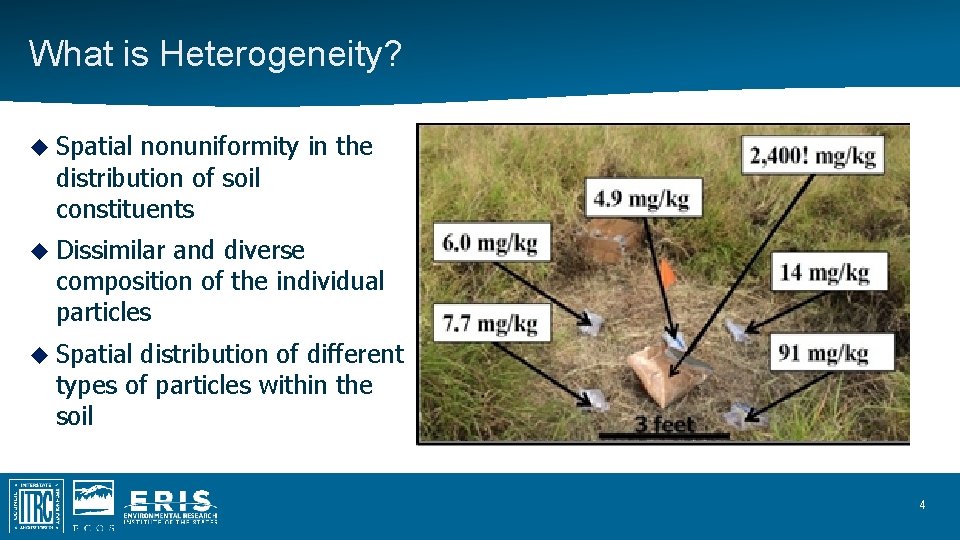
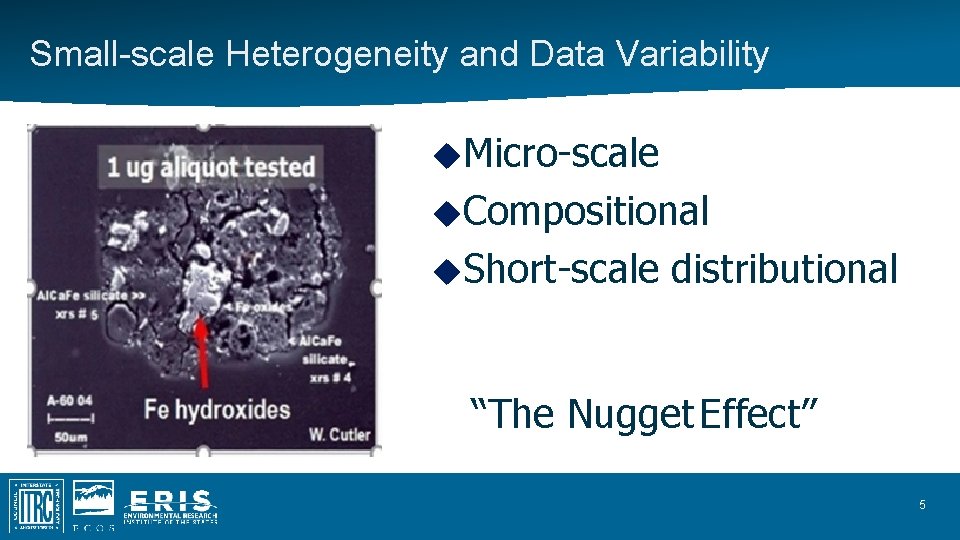
What is Heterogeneity? Spatial nonuniformity in the distribution of soil constituents Dissimilar and diverse composition of the individual particles Spatial distribution of different types of particles within the soil 4
Small-scale Heterogeneity and Data Variability Micro-scale Compositional Short-scale distributional “The Nugget Effect” 5
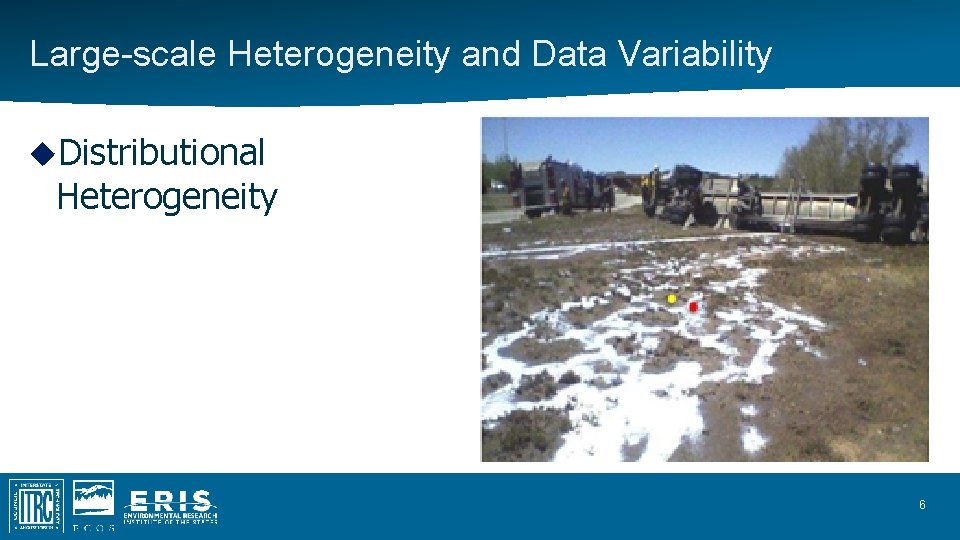
Large-scale Heterogeneity and Data Variability Distributional Heterogeneity 6
Sources of Sampling Error Pierre Gy’s sampling theory Addressed by ISM 1. fundamental error 2. grouping and segregation error 3. delimitation error 4. extraction error 5. preparation error (sample handling) Not addressed by ISM 1. short-range, random heterogeneity fluctuation error (i. e. temporal) 2. long-range, non-random, heterogeneity fluctuation (i. e. temporal) error …these errors are related to industrial processing issues such as mining 7
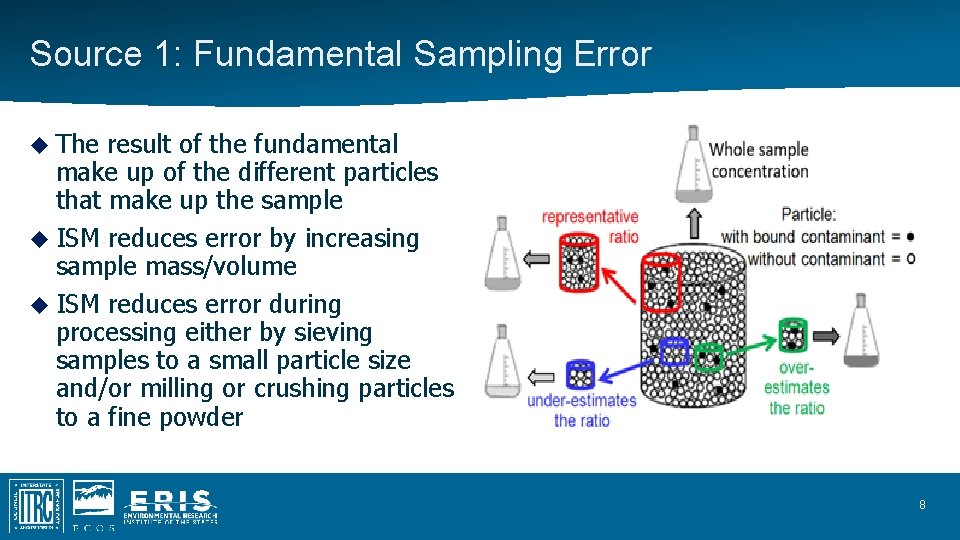
Source 1: Fundamental Sampling Error The result of the fundamental make up of the different particles that make up the sample ISM reduces error by increasing sample mass/volume ISM reduces error during processing either by sieving samples to a small particle size and/or milling or crushing particles to a fine powder 8
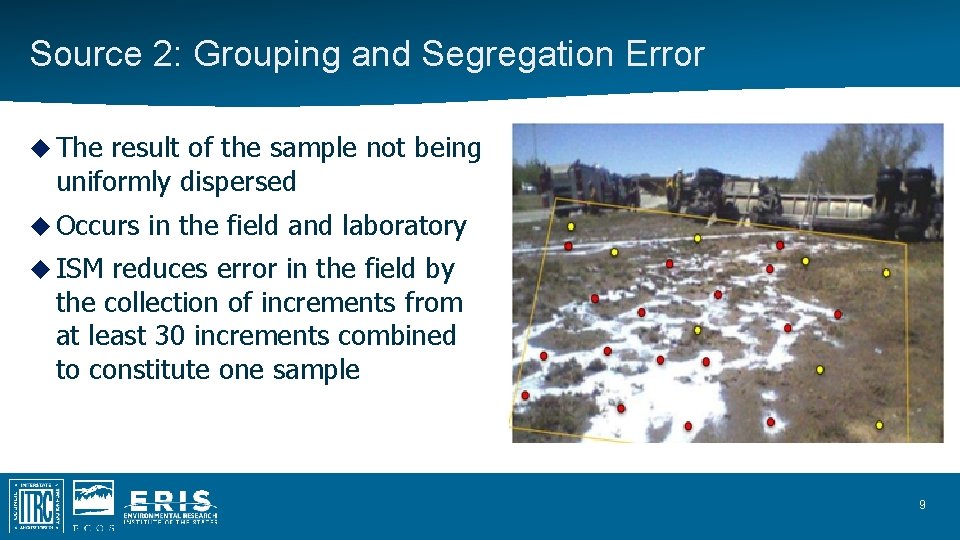
Source 2: Grouping and Segregation Error The result of the sample not being uniformly dispersed Occurs in the field and laboratory ISM reduces error in the field by the collection of increments from at least 30 increments combined to constitute one sample 9
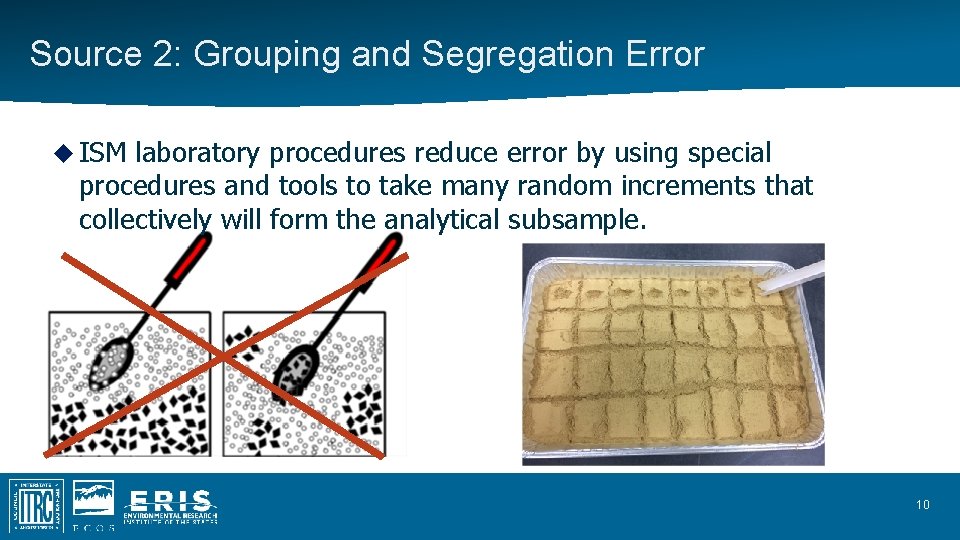
Source 2: Grouping and Segregation Error ISM laboratory procedures reduce error by using special procedures and tools to take many random increments that collectively will form the analytical subsample. 10
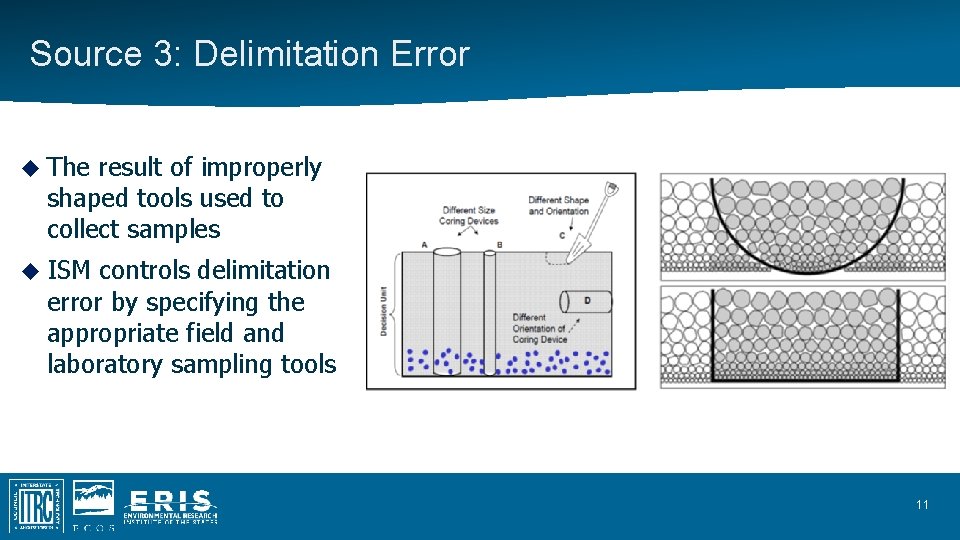
Source 3: Delimitation Error The result of improperly shaped tools used to collect samples ISM controls delimitation error by specifying the appropriate field and laboratory sampling tools 11
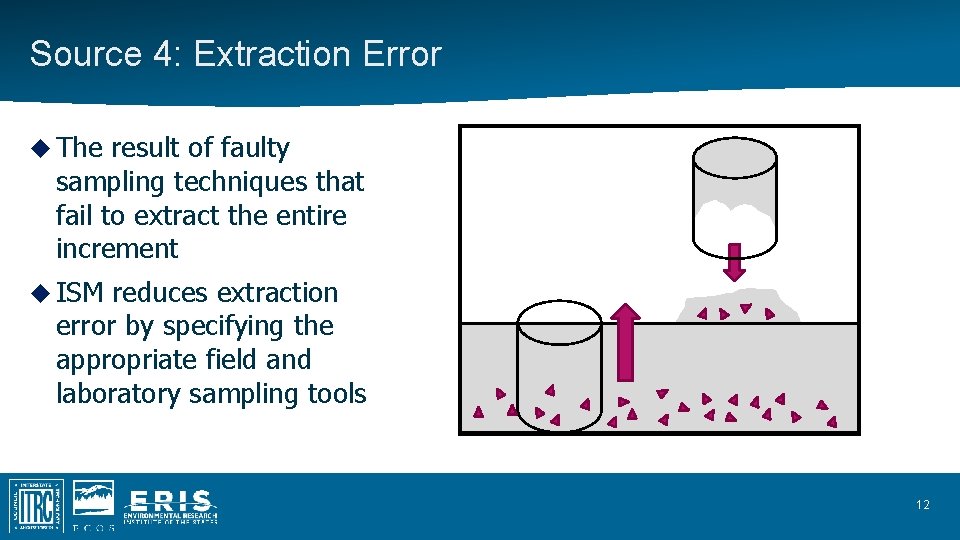
Source 4: Extraction Error The result of faulty sampling techniques that fail to extract the entire increment ISM reduces extraction error by specifying the appropriate field and laboratory sampling tools 12
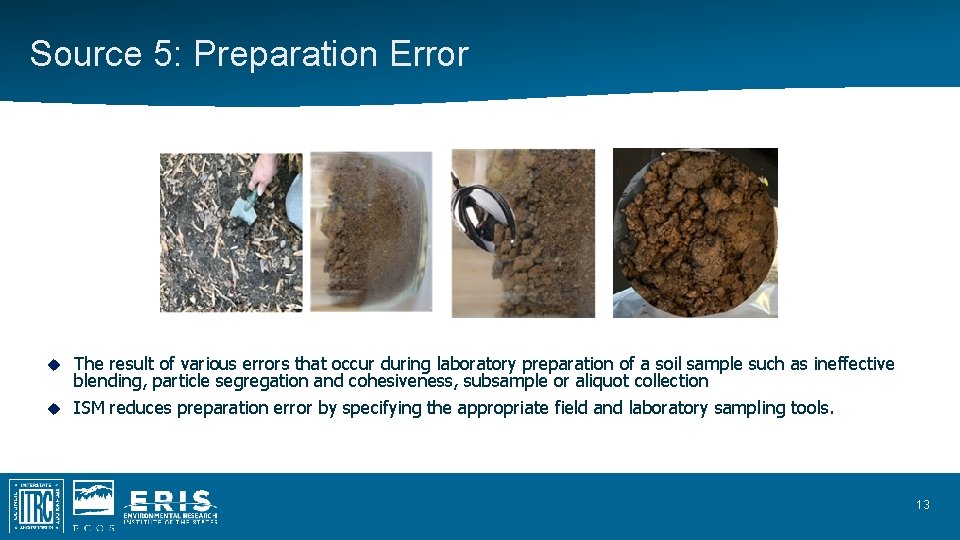
Source 5: Preparation Error The result of various errors that occur during laboratory preparation of a soil sample such as ineffective blending, particle segregation and cohesiveness, subsample or aliquot collection ISM reduces preparation error by specifying the appropriate field and laboratory sampling tools. 13
Representativeness How much resolution is required to make a decision? 14
Importance of Sampling Design There is an extreme mismatch between the scale of measurement (the scale of observation) and the scale of decision-making. The challenge is to generate soil data in a way that makes it representative of the decision, rather than representative of the scale of observation. 15
Decision Units “A volume or mass of material (such as waste or soil) about which a decision will be made” (U. S. EPA, 2002) Core concept of ISM and the determining factor for sampling designs An area from which an average concentration is obtained and is representative of a defined population. The full volume of soil that you would send to the laboratory as a single sample if you could 16
Sampling Units “Volume of soil from which a sample is collected” (U. S. EPA, 2002) The smallest volume of soil for which a concentration value will be obtained, no matter the intended purpose of the data Where the volume of soil is small enough where heterogeneity doesn’t matter An SU can be used to gather information about contaminant spatial patterns or concentration trends to guide placement and sizing of DUs for specific decision-making 17
Decision Units and Sampling Units If ISM samples from only that area are used to make a decision, the area is a DU If ISM samples are used in conjunction with ISM samples from other areas to make a decision, the area is an SU 18
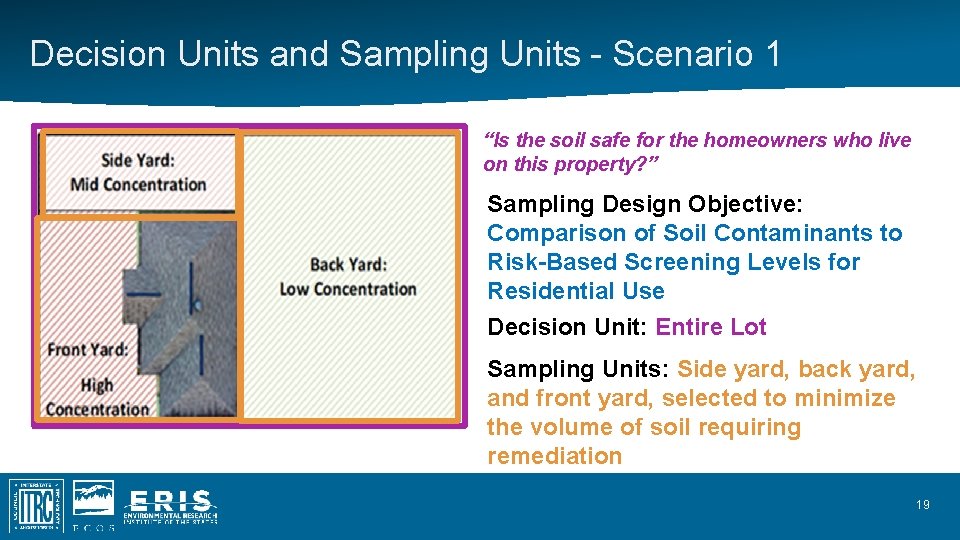
Decision Units and Sampling Units - Scenario 1 “Is the soil safe for the homeowners who live on this property? ” Sampling Design Objective: Comparison of Soil Contaminants to Risk-Based Screening Levels for Residential Use Decision Unit: Entire Lot Sampling Units: Side yard, back yard, and front yard, selected to minimize the volume of soil requiring remediation 19
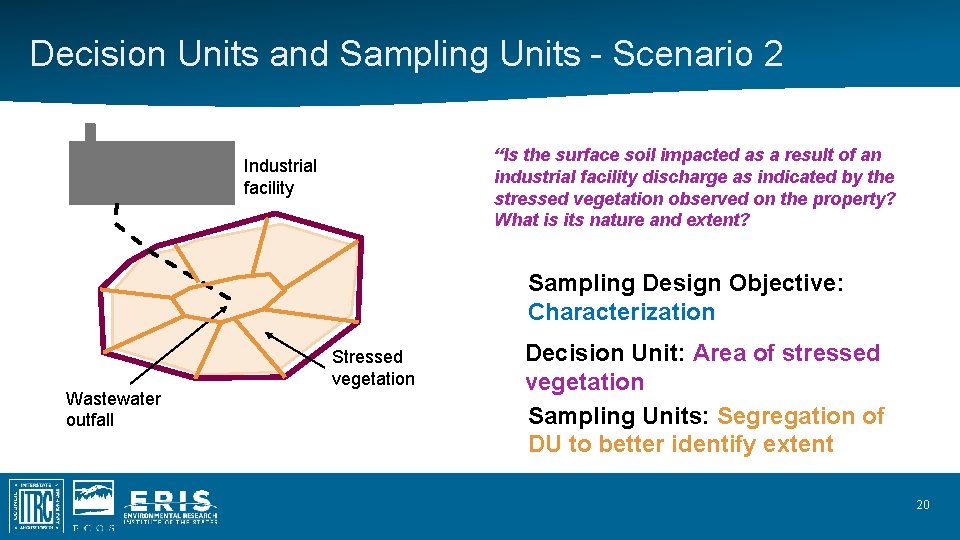
Decision Units and Sampling Units - Scenario 2 “Is the surface soil impacted as a result of an industrial facility discharge as indicated by the stressed vegetation observed on the property? What is its nature and extent? Industrial facility Sampling Design Objective: Characterization Wastewater outfall Stressed vegetation Decision Unit: Area of stressed vegetation Sampling Units: Segregation of DU to better identify extent 20
Key Takeaways Soil is inherently heterogeneous Soil heterogeneity can greatly impact the concentration of contaminants detected in soil samples, leading to decision errors Collection of representative samples is critical to support correct decisions and design of the sampling plan needs to include proper sampling techniques and equipment to control for soil heterogeneity and result in reproducible results. The presence of larger size soil particles requires a larger mass to be analyzed ISM is designed to control error Decision Units are the smallest volume (i. e. , representing the plan area and depth) of soil (or other media) for which a decision will be made based upon ISM sampling. Sampling Unit is the smallest volume of soil for which a concentration value will be obtained, no matter the intended purpose of the data. 21
Thank You! Stay Updated on ITRC’s Activities itrcweb. org facebook. com/itrcweb @ITRCWE B linkedin. com/ company/itrc 22