
INCREMENTAL DETERMINISTIC PUBLICKEY ENCRYPTION Ilya Mironov Omkant Pandey

INCREMENTAL DETERMINISTIC PUBLICKEY ENCRYPTION Ilya Mironov, Omkant Pandey, Omer Reingold, Gil Segev Microsoft Research
Incremental Deterministic Public-Key Encryption
Deterministic Public-Key Encryption
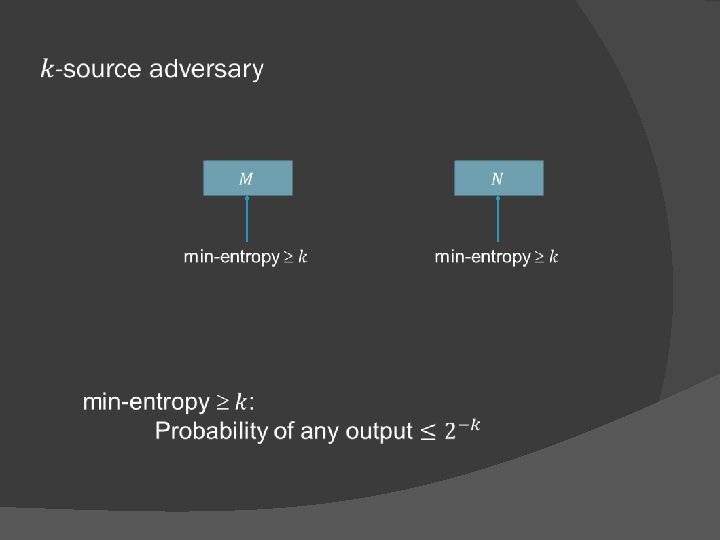
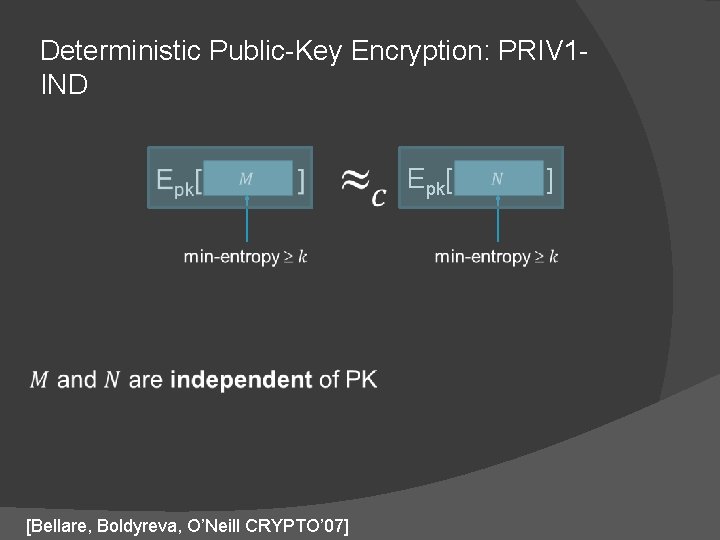
Deterministic Public-Key Encryption: PRIV 1 IND [Bellare, Boldyreva, O’Neill CRYPTO’ 07] Epk[ ]
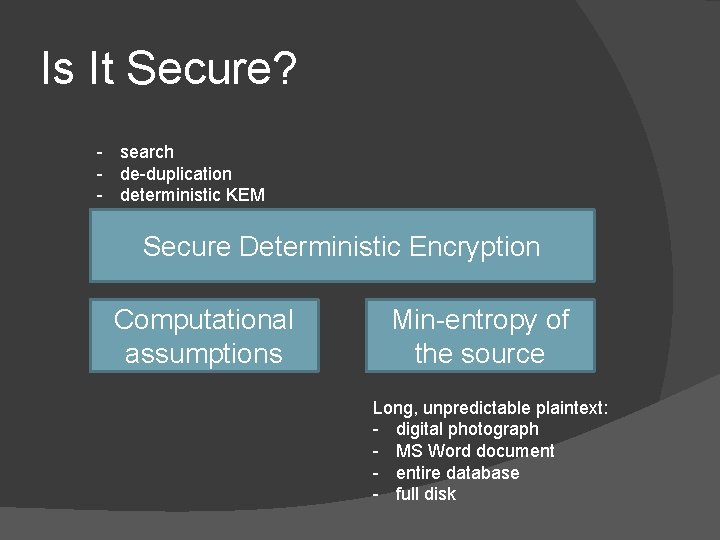
Is It Secure? - search - de-duplication - deterministic KEM Secure Deterministic Encryption Computational assumptions Min-entropy of the source Long, unpredictable plaintext: - digital photograph - MS Word document - entire database - full disk
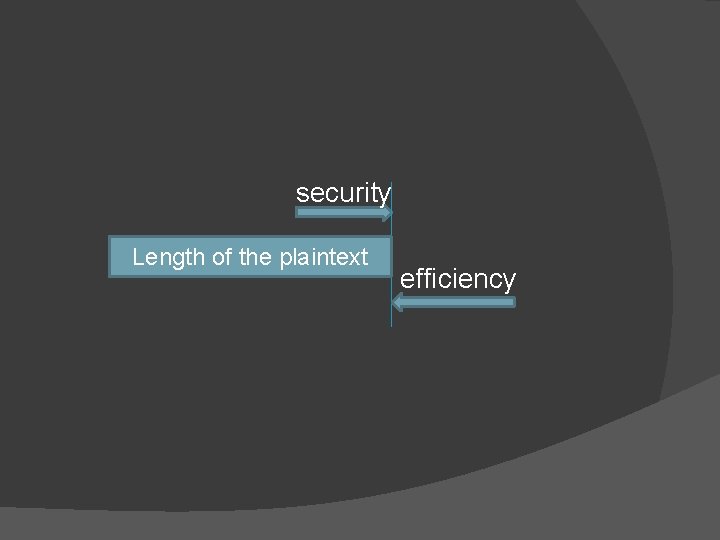
security Length of the plaintext efficiency
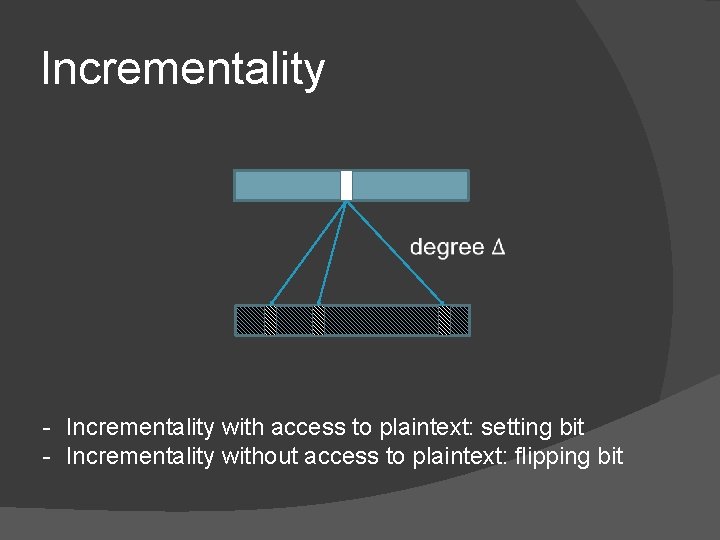
Incrementality - Incrementality with access to plaintext: setting bit - Incrementality without access to plaintext: flipping bit
Incremental Deterministic Public-Key Encryption
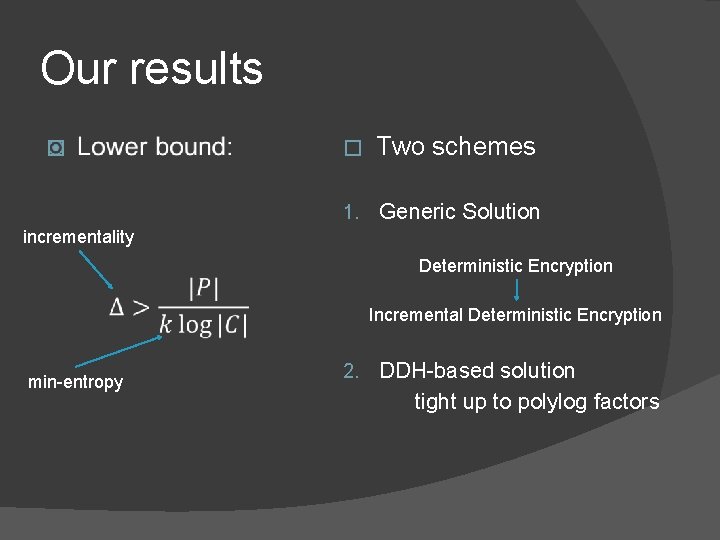
Our results � � Two schemes 1. Generic Solution incrementality Deterministic Encryption Incremental Deterministic Encryption min-entropy 2. DDH-based solution tight up to polylog factors
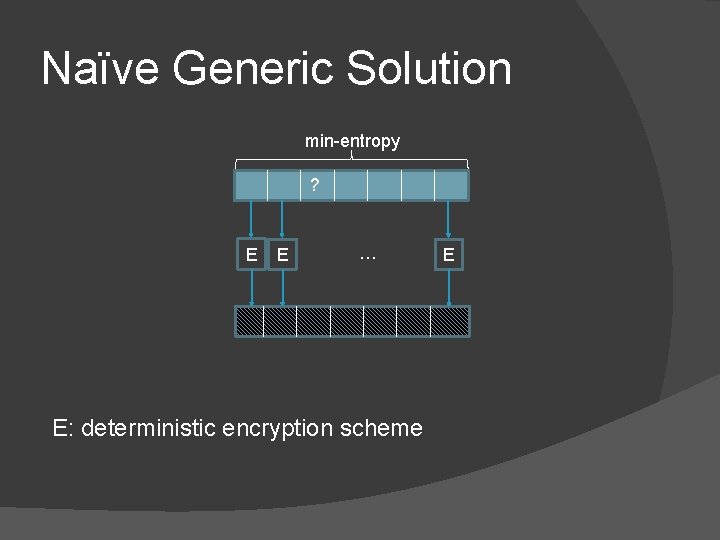
Naïve Generic Solution min-entropy ? E E … E: deterministic encryption scheme E
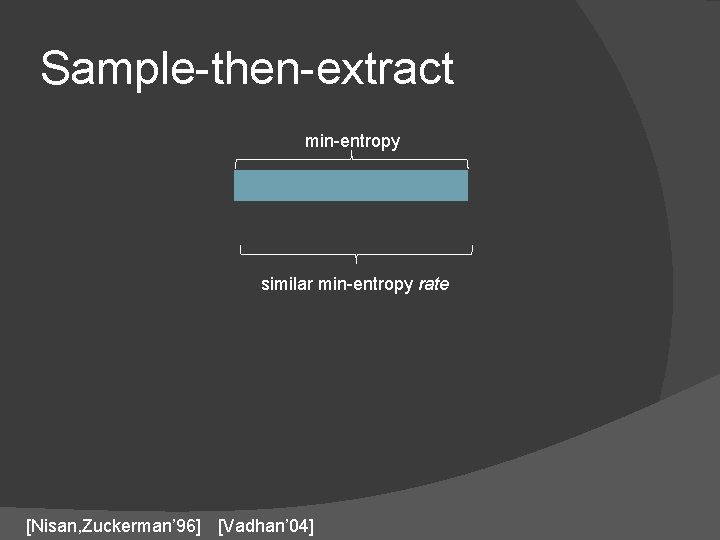
Sample-then-extract min-entropy similar min-entropy rate [Nisan, Zuckerman’ 96] [Vadhan’ 04]
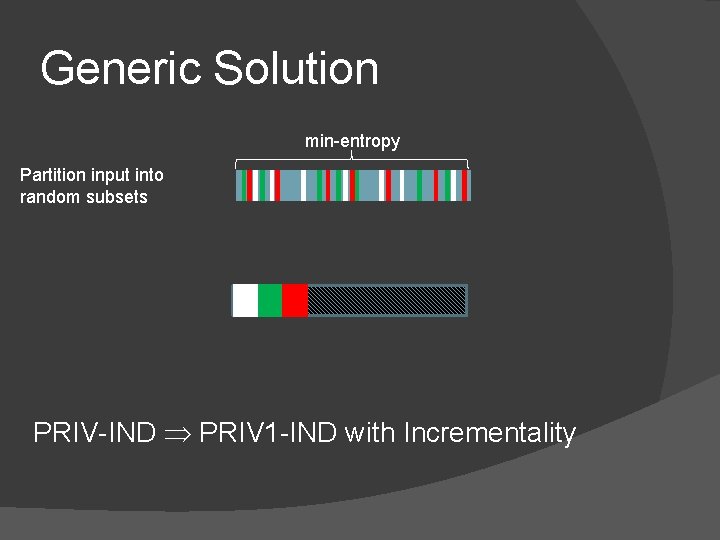
Generic Solution min-entropy Partition input into random subsets PRIV-IND PRIV 1 -IND with Incrementality
Standard Model DDH PRIV 1 -IND with Incrementality
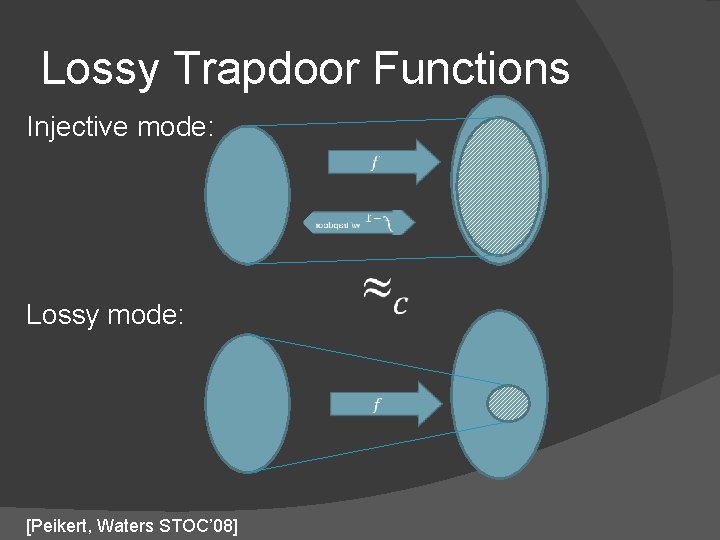
Lossy Trapdoor Functions Injective mode: Lossy mode: [Peikert, Waters STOC’ 08]
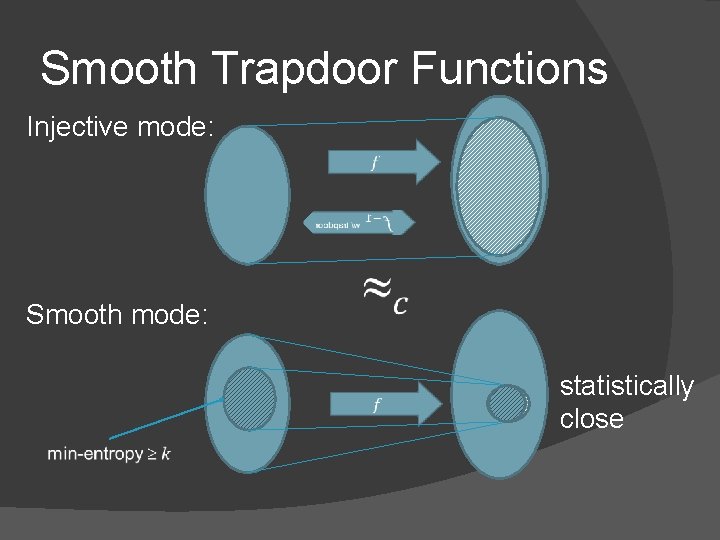
Smooth Trapdoor Functions Injective mode: Smooth mode: statistically close
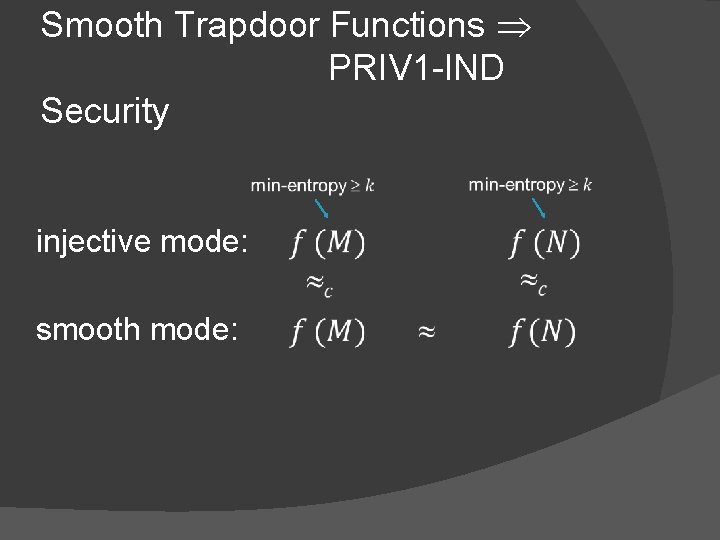
Smooth Trapdoor Functions PRIV 1 -IND Security injective mode: smooth mode:
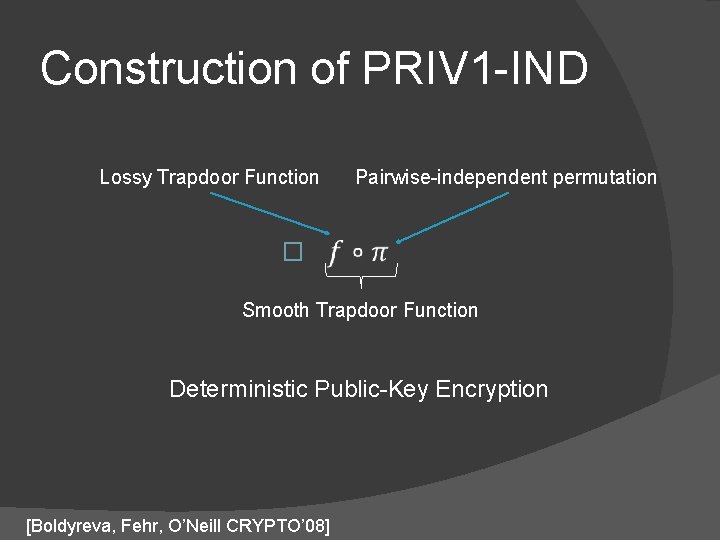
Construction of PRIV 1 -IND Lossy Trapdoor Function Pairwise-independent permutation � Smooth Trapdoor Function Deterministic Public-Key Encryption [Boldyreva, Fehr, O’Neill CRYPTO’ 08]
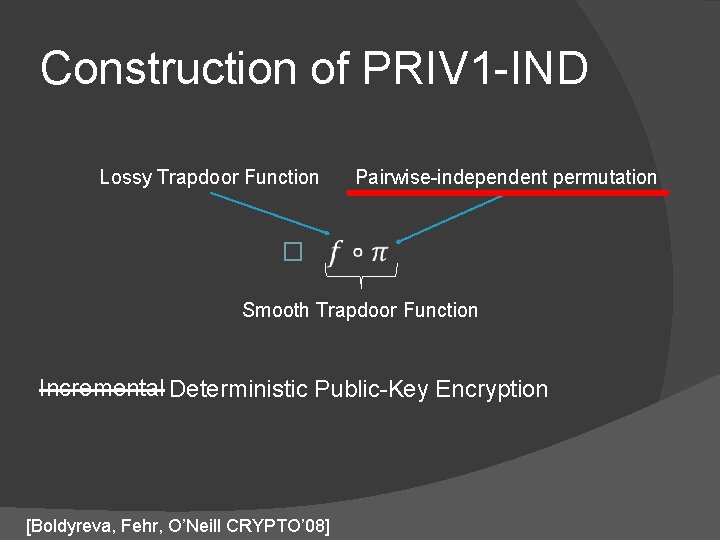
Construction of PRIV 1 -IND Lossy Trapdoor Function Pairwise-independent permutation � Smooth Trapdoor Function Incremental Deterministic Public-Key Encryption [Boldyreva, Fehr, O’Neill CRYPTO’ 08]
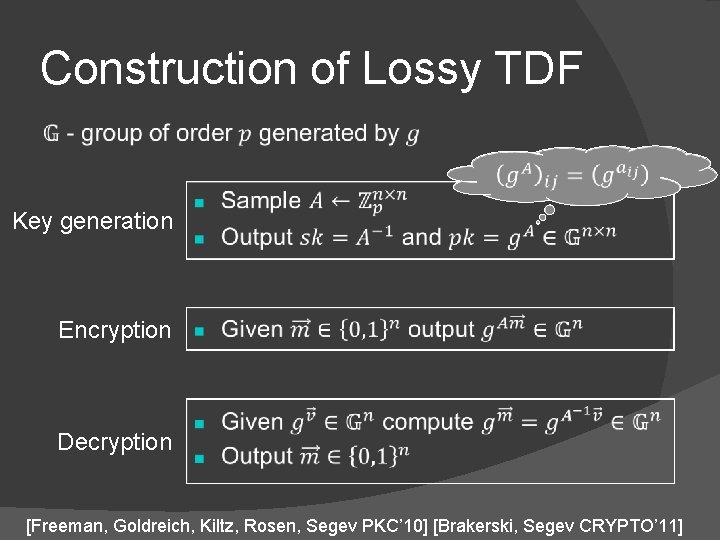
Construction of Lossy TDF Key generation Encryption Decryption [Freeman, Goldreich, Kiltz, Rosen, Segev PKC’ 10] [Brakerski, Segev CRYPTO’ 11]
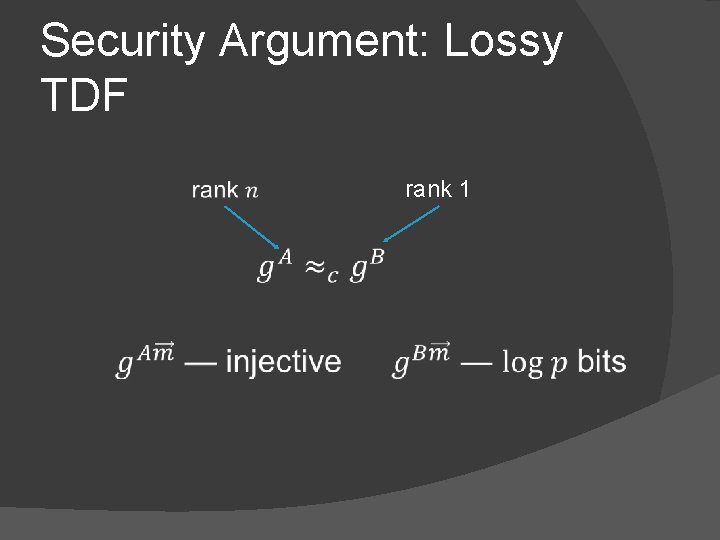
Security Argument: Lossy TDF rank 1
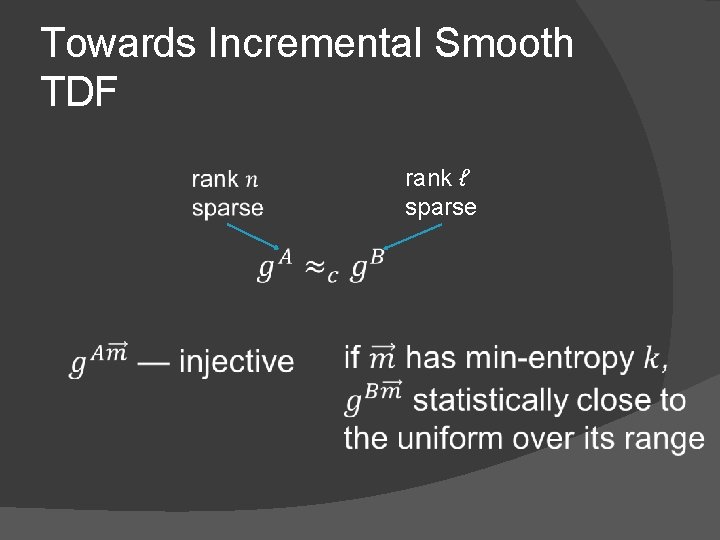
Towards Incremental Smooth TDF rank ℓ sparse
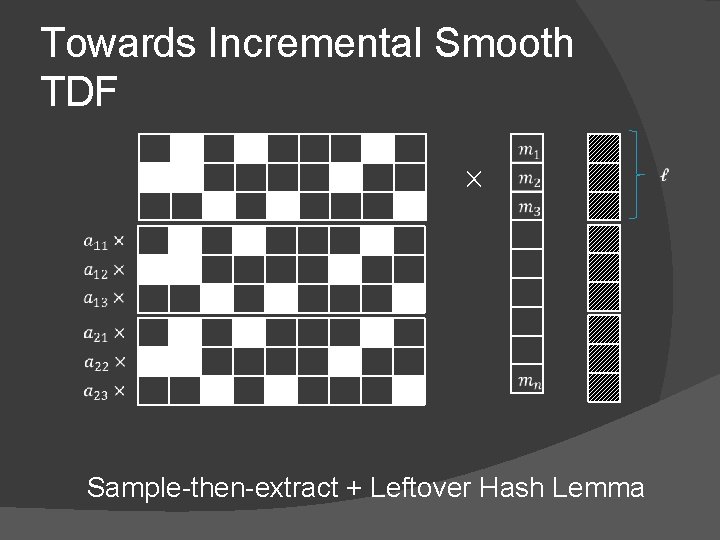
Towards Incremental Smooth TDF Sample-then-extract + Leftover Hash Lemma
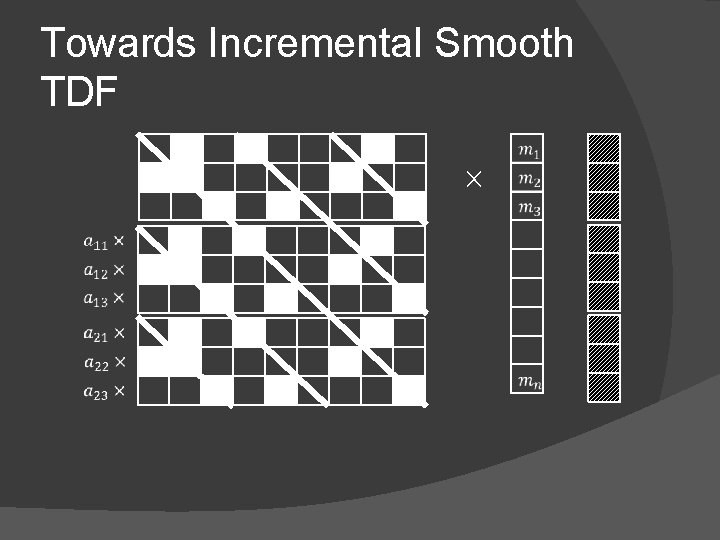
Towards Incremental Smooth TDF
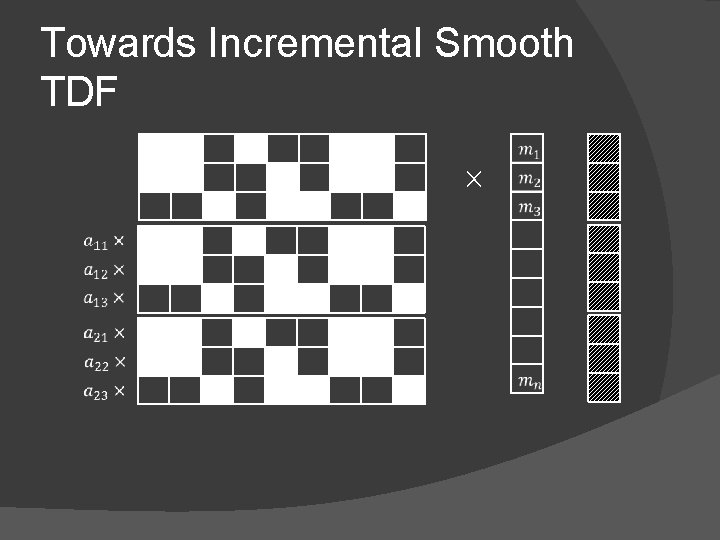
Towards Incremental Smooth TDF
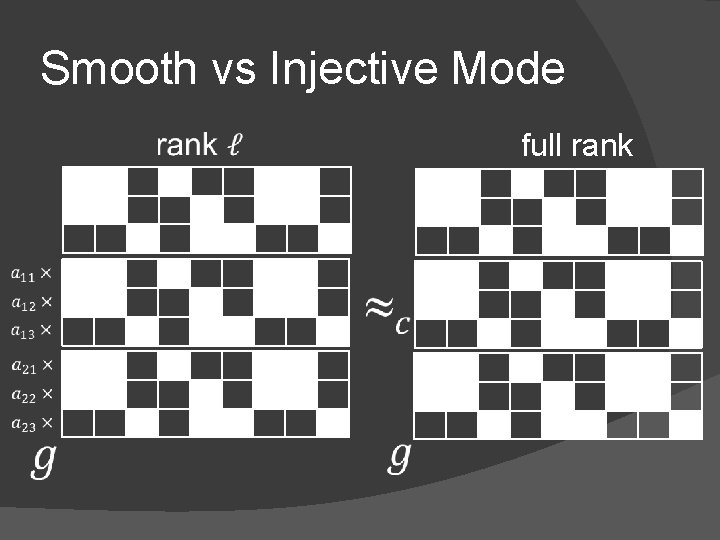
Smooth vs Injective Mode full rank
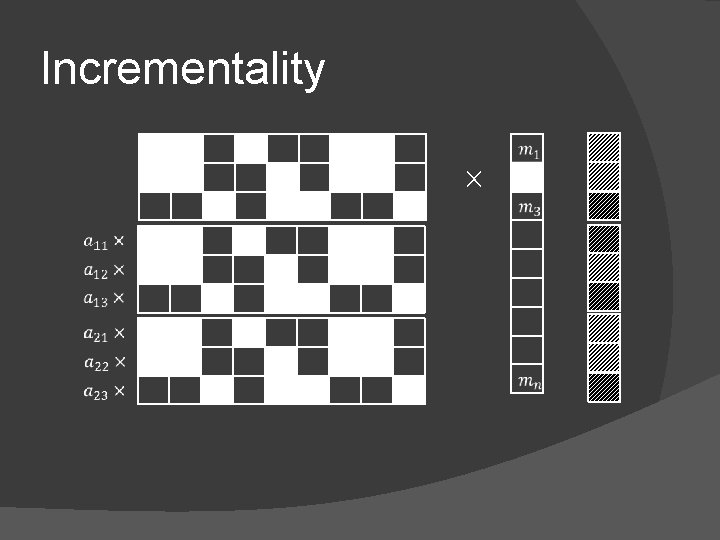
Incrementality
Open Problems Incremental Deterministic Encryption: � Stronger security: PRIV-IND (multiple messages) � Length-preserving in the standard model Deterministic Encryption: � Relaxing the definition to allow dependency on the public key
- Slides: 28