
Increasing My Window of Tolerance Identifying Levels of

- Slides: 34
Increasing My Window of Tolerance: Identifying Levels of Distress and Skills to Manage Them Stephanie A. Rickey, Psy. D Mc. Lean Hospital
What is a Window of Tolerance?
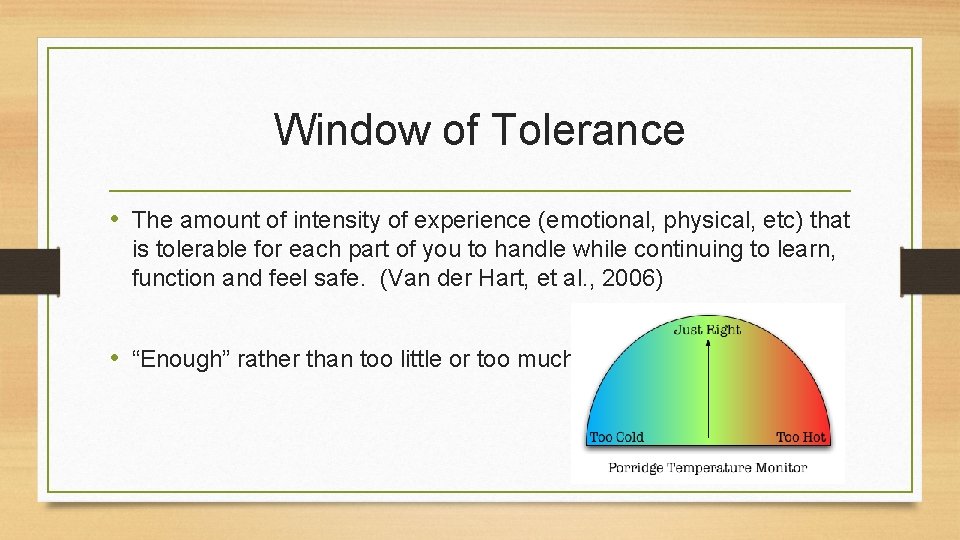
Window of Tolerance • The amount of intensity of experience (emotional, physical, etc) that is tolerable for each part of you to handle while continuing to learn, function and feel safe. (Van der Hart, et al. , 2006) • “Enough” rather than too little or too much
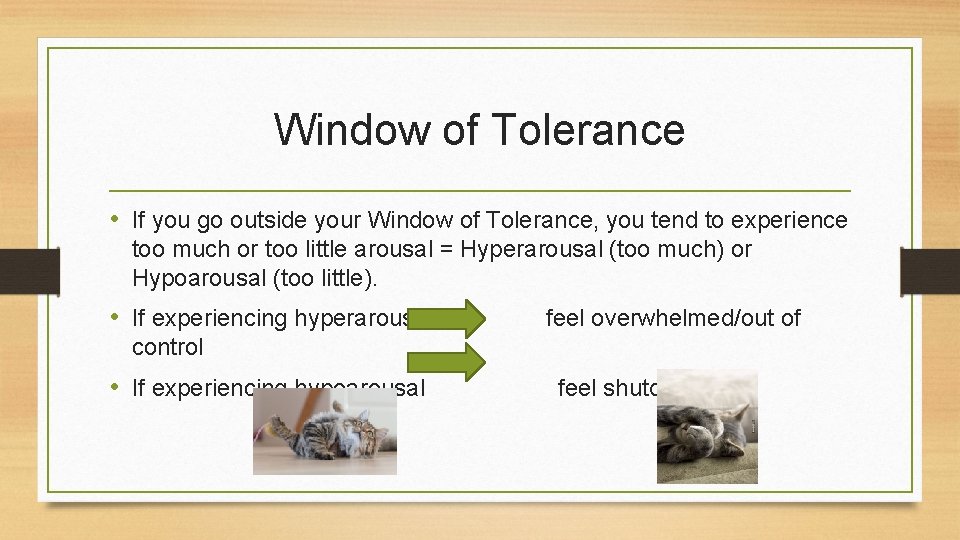
Window of Tolerance • If you go outside your Window of Tolerance, you tend to experience too much or too little arousal = Hyperarousal (too much) or Hypoarousal (too little). • If experiencing hyperarousal feel overwhelmed/out of control • If experiencing hypoarousal feel shutdown
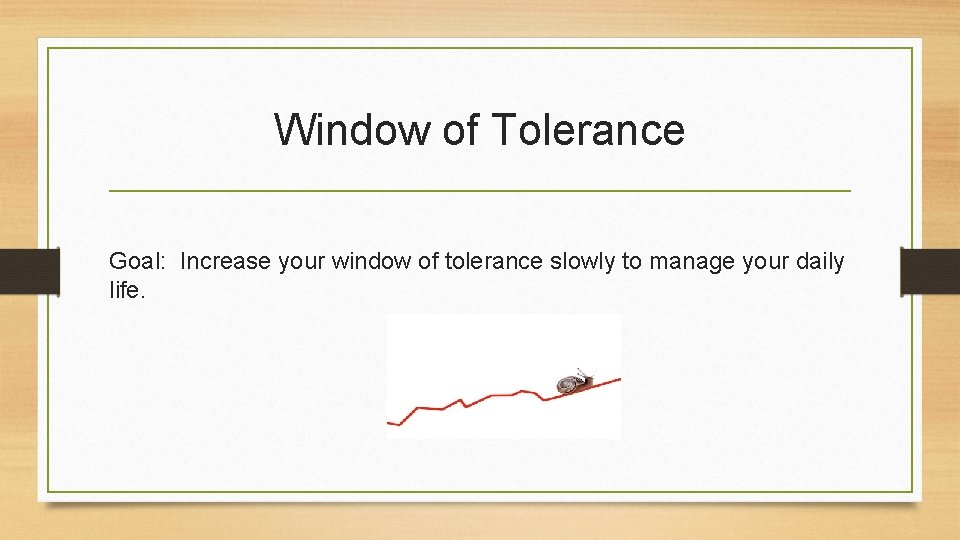
Window of Tolerance Goal: Increase your window of tolerance slowly to manage your daily life.
Window of Tolerance • Everyone has their own width of tolerance. • Created through the temperament style you were born with, individual level of reactivity, and your experiences. • If you have a history of ongoing high arousal, it is likely that you will experience difficulty regulating yourself emotionally.
Hyperarousal • Experiencing “too much” • May occur because parts of yourself may be “stuck” in traumatic experiences • Continue to feel pain, fear, shame, guilt
Hyperarousal • May be due to current factors making you more vulnerable to stress • Small conflicts, changes in plans • Once the escalation in distress starts, it may be difficult to calm yourself down. • With continued focus on the distress, it feels like it will always be like this or “will never end. ”
Hyperarousal • Leads to a more intense urge to stop/end the experience (numb out, act on target behavior) • Impulsive • Emotion Mind • Example: Parts of yourself may become triggered without your awareness.
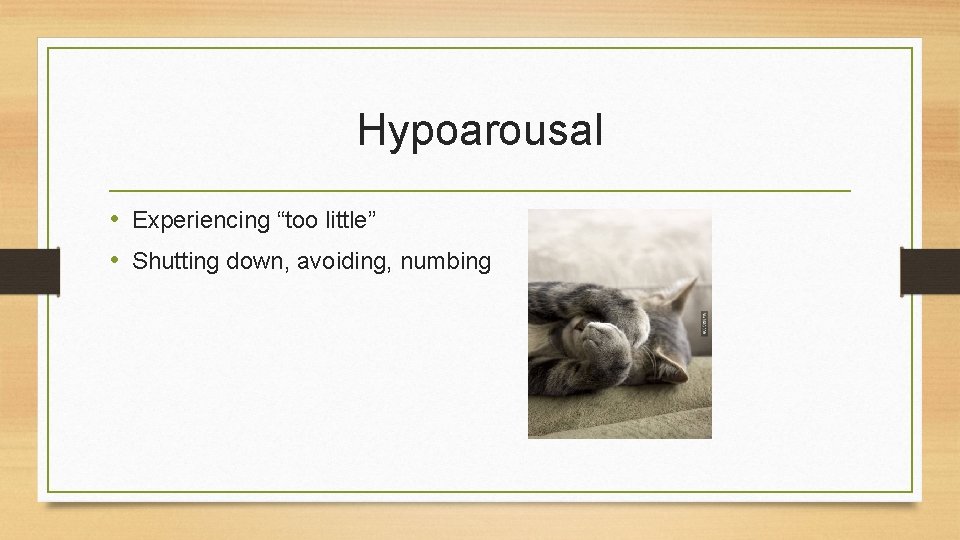
Hypoarousal • Experiencing “too little” • Shutting down, avoiding, numbing
Hypoarousal • Avoidance of situations where you will feel emotion (places, people, etc. ) both positive and negative. • Will not be able to get information you need to make decisions • Feel unsupported/alone • Increase sense of needing to avoid: more we stay away from something, the more we believe we cannot handle it.
Hypoarousal • Going to sleep or becoming “unresponsive” • When these things happen, may experience difficulty feeling empathy for parts of yourself • May label those parts as “bad” which reduce communication and effective functioning • May feel “too numb” leading to acting on target behaviors to “feel something”
Window of Tolerance
Identifying My Level of Distress
Identifying My Level of Distress • Mindfulness • Self Assessment • Charting
Mindfulness • Being in the moment • Being open and aware of all experience, but not getting stuck on any one thing • Not judging any of your experience as “good or bad” • Not trying to “push away” any experience
Mindfulness
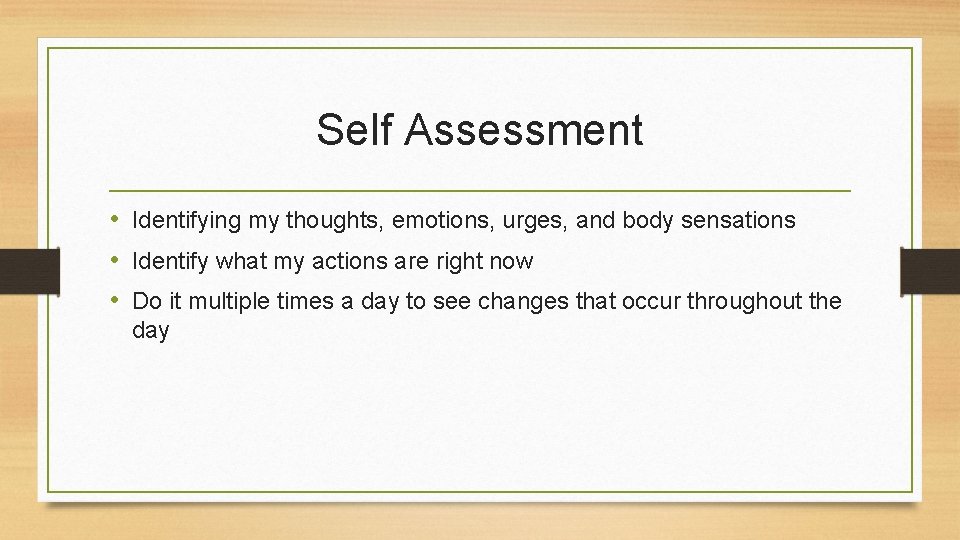
Self Assessment • Identifying my thoughts, emotions, urges, and body sensations • Identify what my actions are right now • Do it multiple times a day to see changes that occur throughout the day
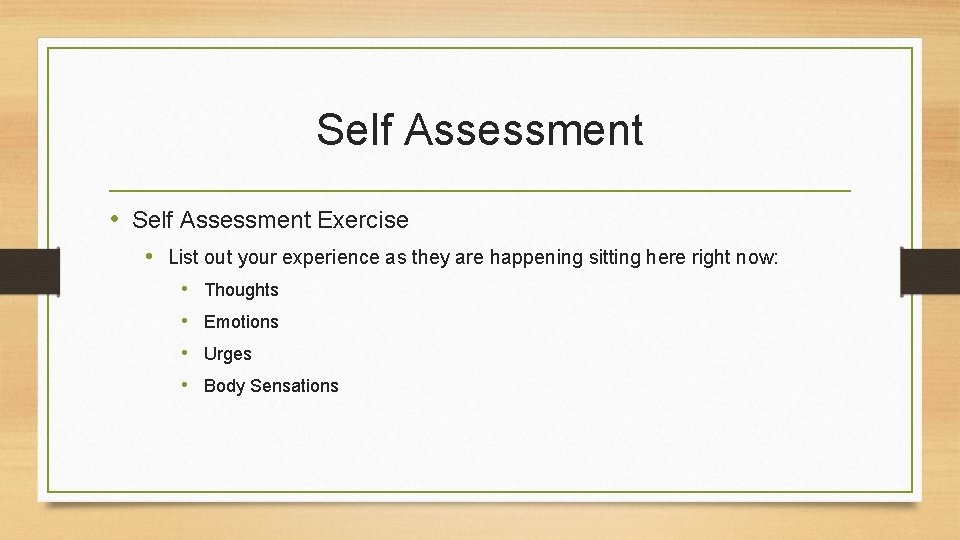
Self Assessment • Self Assessment Exercise • List out your experience as they are happening sitting here right now: • Thoughts • Emotions • Urges • Body Sensations
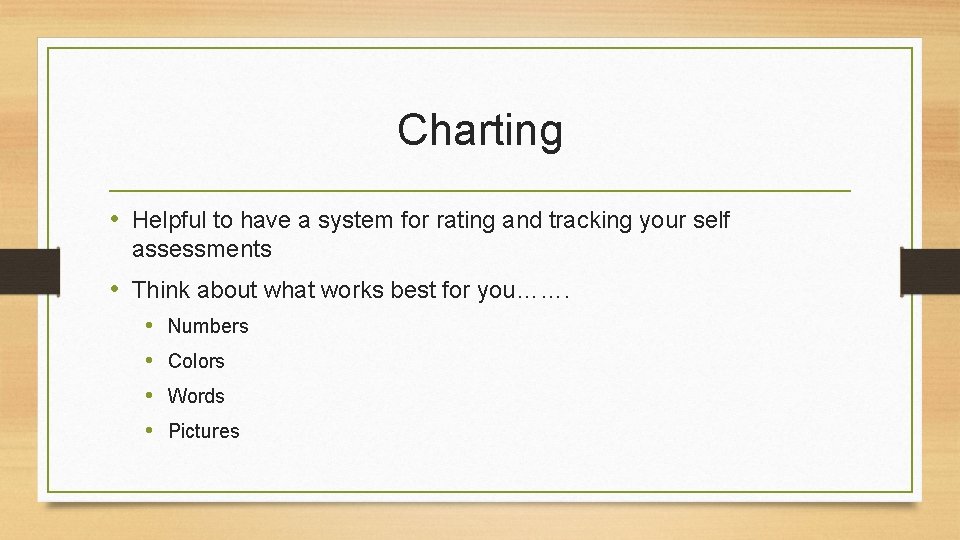
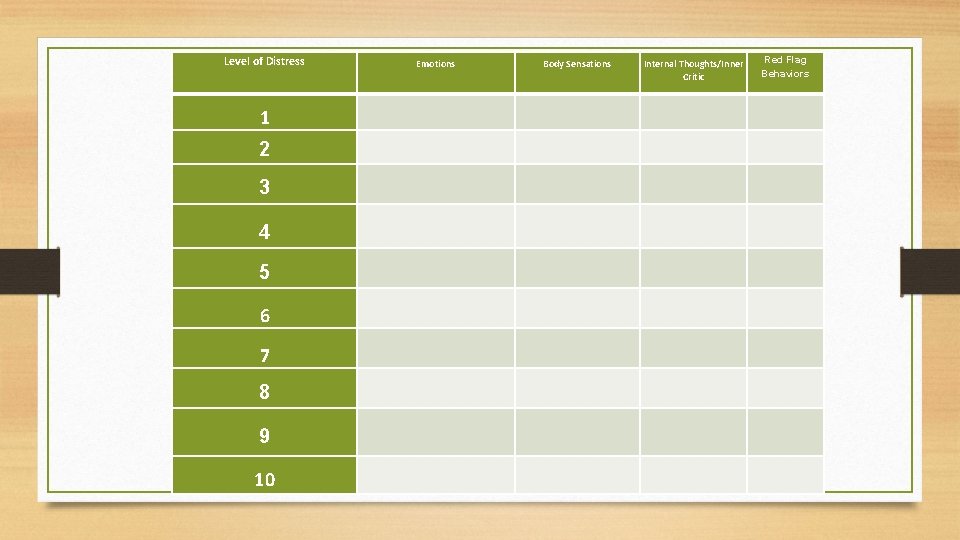
Charting • Helpful to have a system for rating and tracking your self assessments • Think about what works best for you……. • • Numbers Colors Words Pictures
Level of Distress 1 2 3 4 5 6 7 8 9 10 Emotions Body Sensations Internal Thoughts/Inner Critic Red Flag Behaviors
Skills to Use for Managing Emotional Distress
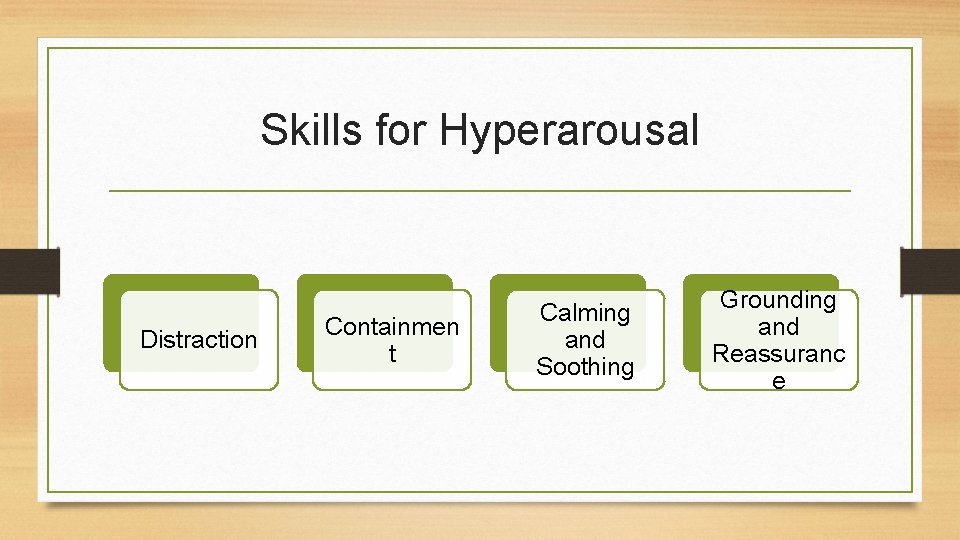
Skills for Hyperarousal Distraction Containmen t Calming and Soothing Grounding and Reassuranc e
Distraction • Distraction is not avoiding! • Temporary • Space before coping with what is going on • Allows for focus to come off of the distress and therefore decrease the intensity of the distress
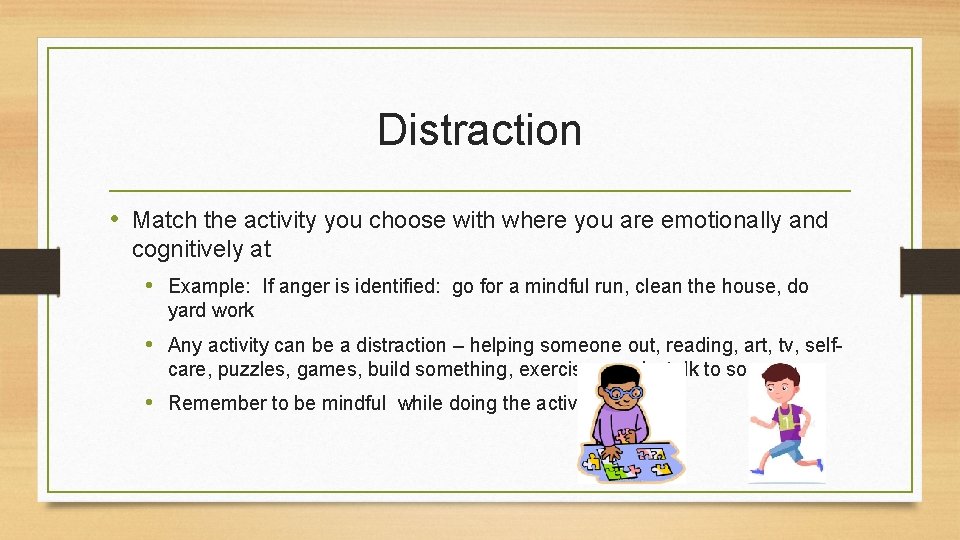
Distraction • Match the activity you choose with where you are emotionally and cognitively at • Example: If anger is identified: go for a mindful run, clean the house, do yard work • Any activity can be a distraction – helping someone out, reading, art, tv, selfcare, puzzles, games, build something, exercise, music, talk to someone • Remember to be mindful while doing the activity!!
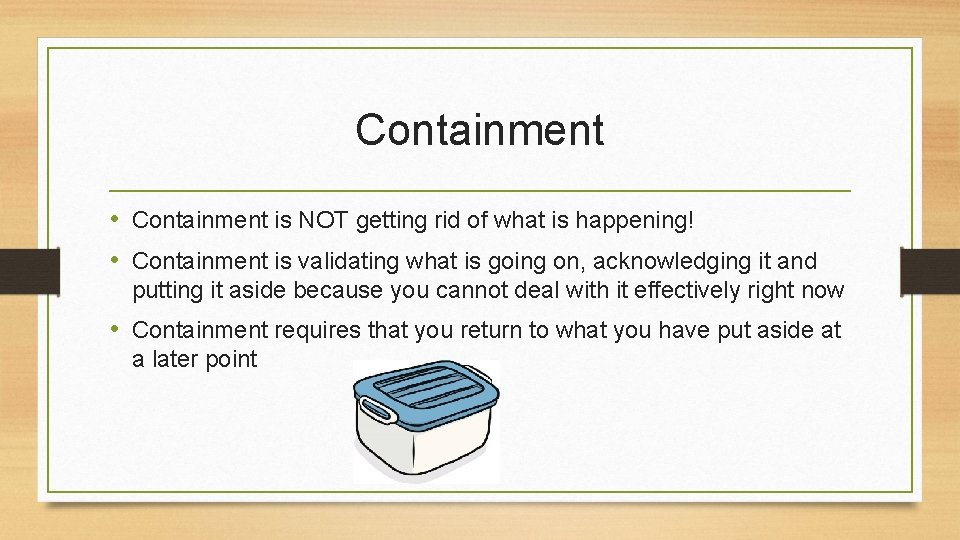
Containment • Containment is NOT getting rid of what is happening! • Containment is validating what is going on, acknowledging it and putting it aside because you cannot deal with it effectively right now • Containment requires that you return to what you have put aside at a later point
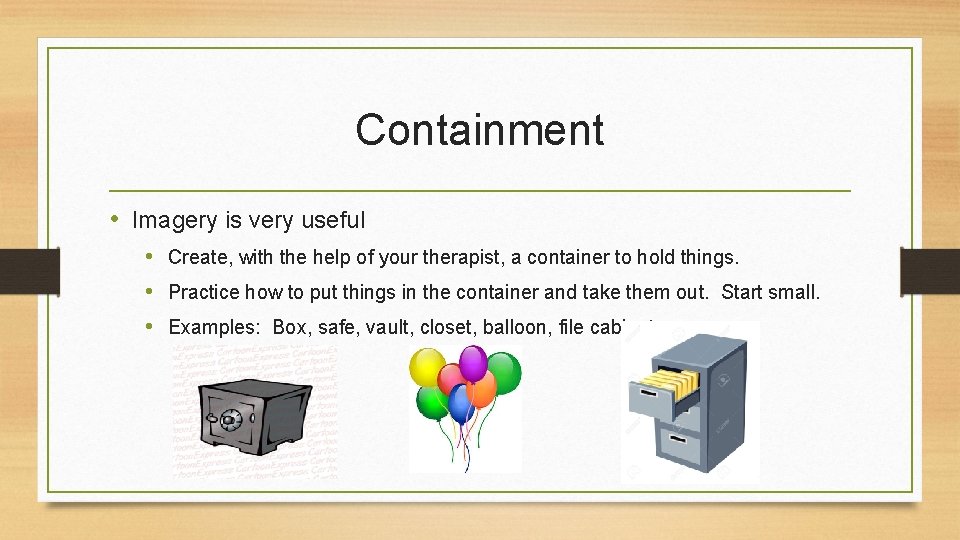
Containment • Imagery is very useful • Create, with the help of your therapist, a container to hold things. • Practice how to put things in the container and take them out. Start small. • Examples: Box, safe, vault, closet, balloon, file cabinet
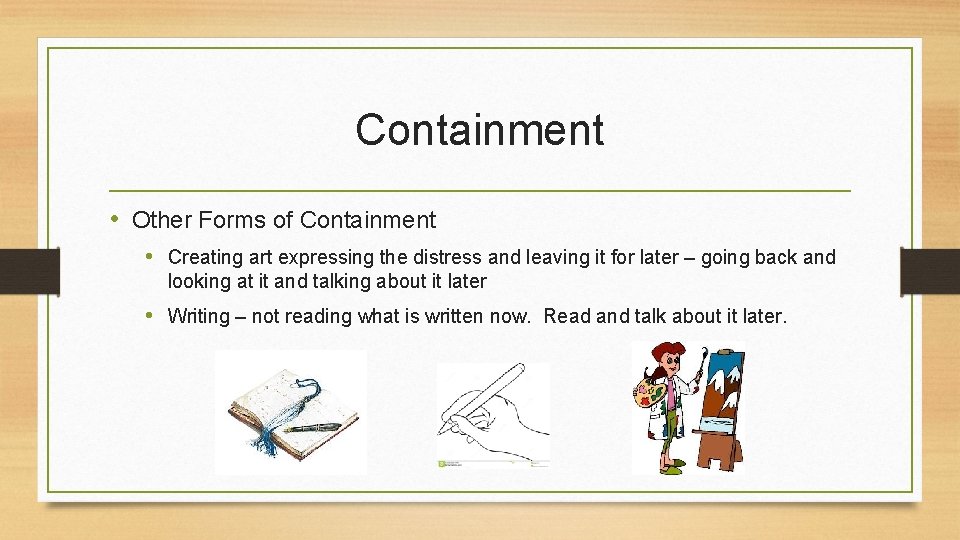
Containment • Other Forms of Containment • Creating art expressing the distress and leaving it for later – going back and looking at it and talking about it later • Writing – not reading what is written now. Read and talk about it later.
Calming and Soothing • Soothing is providing a sense of reassurance to all parts of you • Soothing is taking care of all parts you • Acknowledge what all parts of you are feeling • Listen to what all parts are saying, reassure and comfort parts in need, breathing exercises together, use your safe place, ask internally for parts to support one another, do something that all parts will find calming
Grounding and Reassurance • Grounding is getting yourself into the present moment emotionally, physically and cognitively. • Grounding allows you to be more effective in managing what is going on • Examples: Use your five senses, talk out loud, push your feet into the ground, use a calendar or phone to see the date
Reassurance • Reassurance is saying things to all parts of you that help encourage and support • Remind all parts that emotions and thoughts pass • Remember times when these emotions and thoughts have passed • Remember that emotions are just reactions and that they can help you understand things better • Cheerleading statements! “I believe in you, ” “You can get through this”
Homework • Make a list of skills you are willing to use when you are in distress. Practice them when you do not need them. Practice just looking at the list of skills three times a day. Then, when you do need them, use them!
References • Boon, Steele & Van Der Hart (2011). Coping with trauma-related dissociation. New York: W. W Norton & Company. • Linehan, M. (2015). DBT skills training manual, 2 nd ed. New York: The Guilford Press. • Linehan, M. (2015). DBT skills training handouts and worksheets, 2 nd ed. New York: The Guilford Press.