
Increased Intracranial Pressure Normal ICP 10 to 20


- Slides: 18
Increased Intracranial Pressure
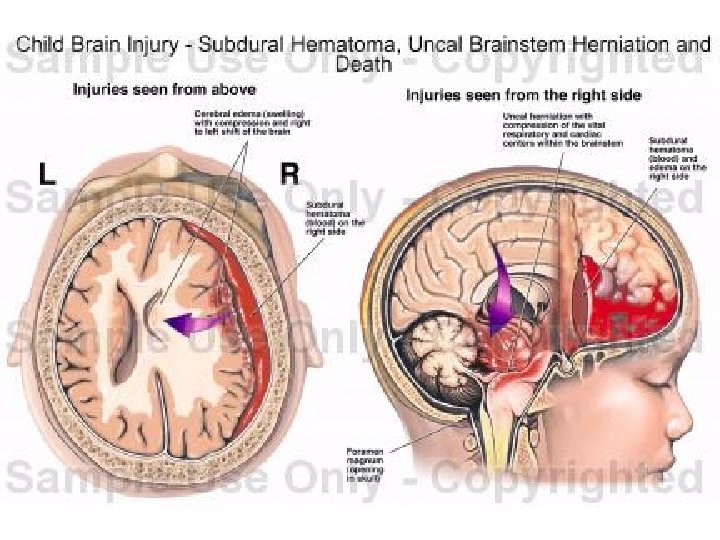
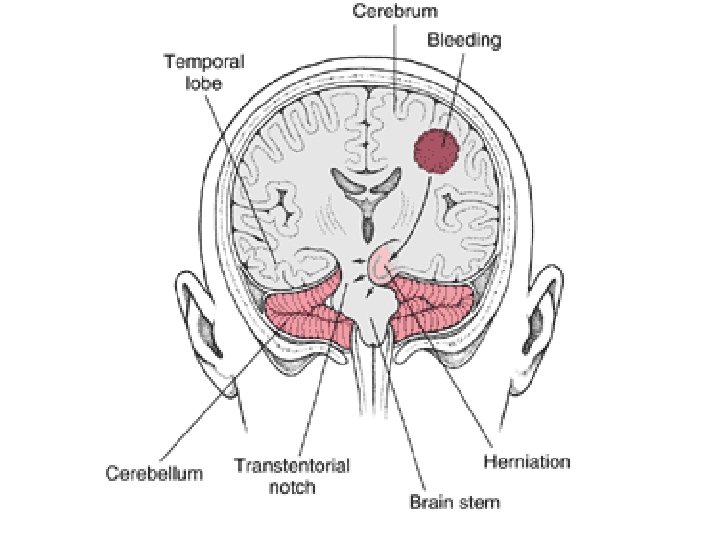
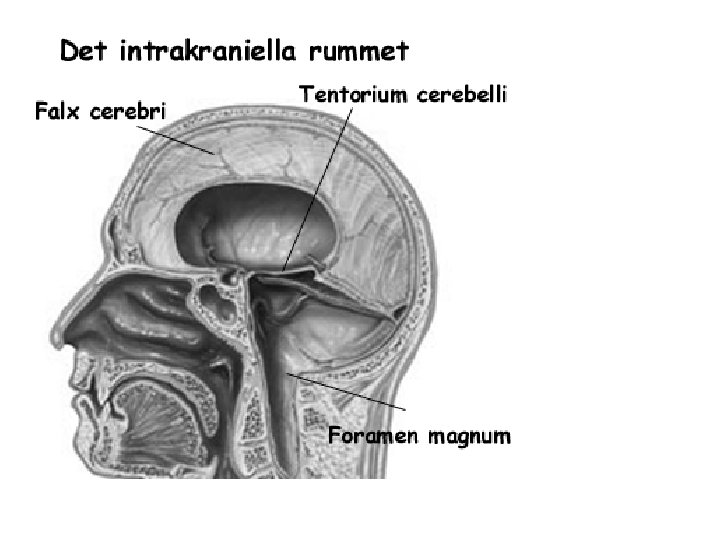
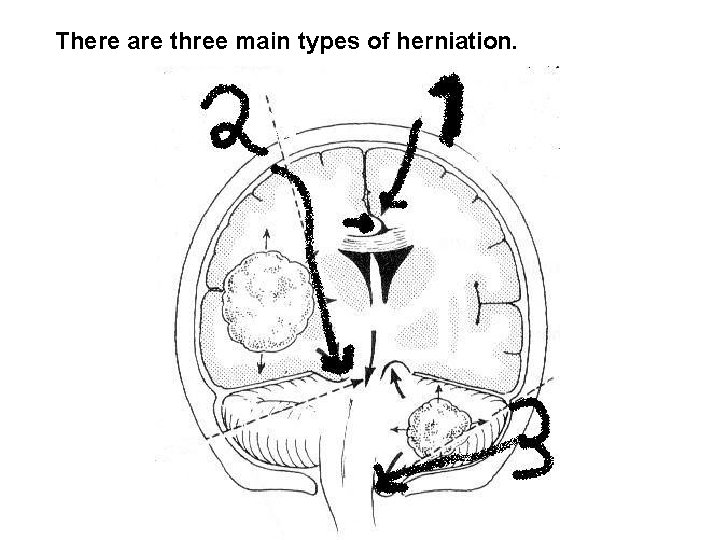
• Normal ICP 10 to 20 mm Hg • Monro – Kellie hypothesis … Causes of ↑ ICP : head injury brain tumours, subarachnoid haemorrhage, and toxic and viral encephalopathies. • Increased ICP decreases cerebral perfusion, stimulates further swelling (oedema), and shifts brain tissue through openings in the rigid dura, resulting in herniation – a serious problem
• Cushing’s response ↑ ICP → decreased perfusion of brain tissue → vasomotor centre increases systolic pressure of blood – heart rate decreases – immediate intervention is needed • At a particular level the ability to autoregulate the perfusion is lost leading to significant changes in mental status and vital signs. • Cushing’s triad The bradycardia, hypertension and bradypnoea asssociated with the deterioration
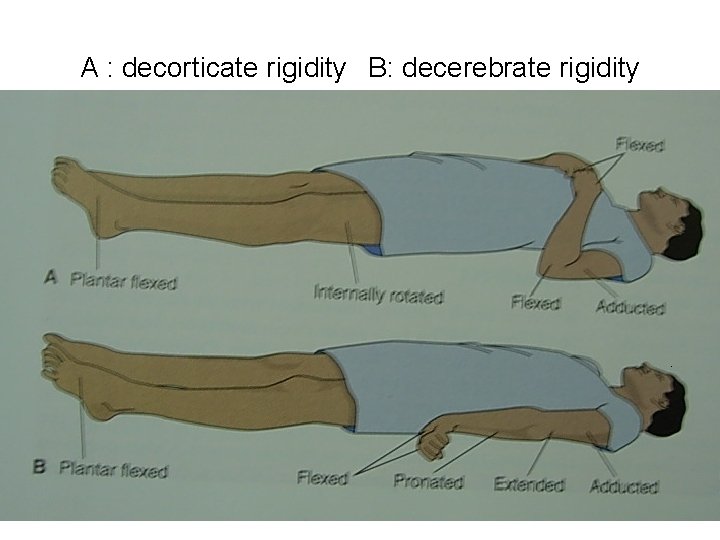
Clinical Manifestations • • Stupor Reacts only to loud auditory or painful stimuli Coma Abnormal motor responses in the form of decortication, decerebration , flaccidity • Pupils dilate, get fixed • Respiration impaired • Death
A : decorticate rigidity B: decerebrate rigidity
Assessment and diagnostic findings • • • Cerebral angiography Computed tomography (CT) scanning Magnetic resonance imaging (MRI) Positron emission tomography Transcranial doppler studies Lumbar puncture is avoided because sudden release of intracranial pressure will cause herniation of the brain.
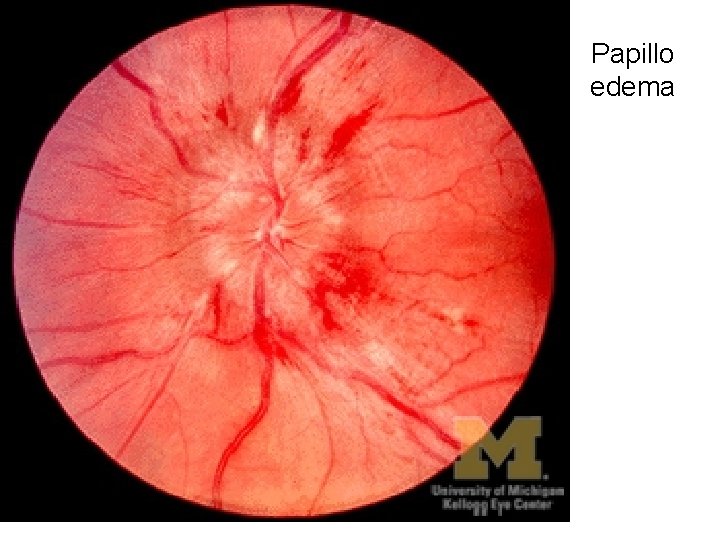
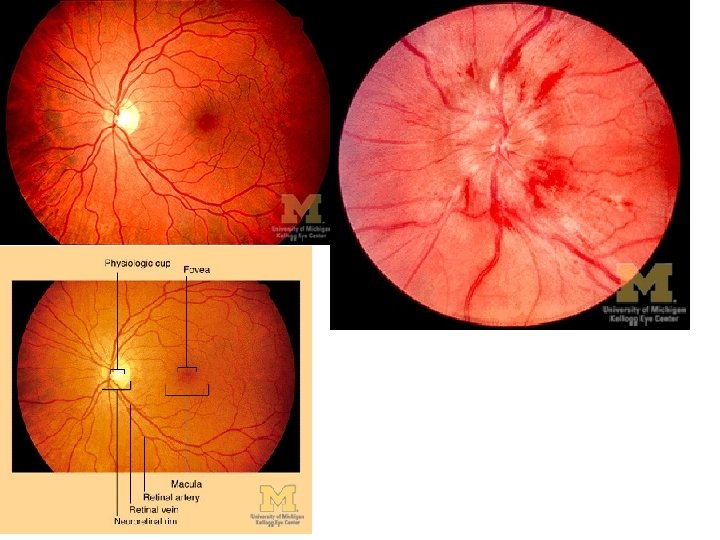
Papillo edema
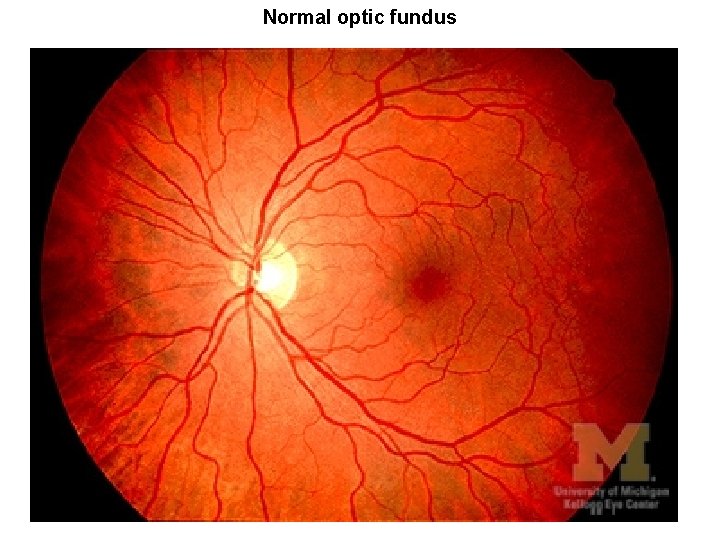
Normal optic fundus
There are three main types of herniation.
• • Maintain a patent airway Achieve an adequate breathing pattern Optimizing cerebral tissue perfusion Maintain negative fluid balance