
Incorporating Traditional and Local Ecological Knowledge into LargeScale
- Slides: 13
Incorporating Traditional and Local Ecological Knowledge into Large-Scale Environmental Monitoring Amy Freitag 1, Suzana Blake 2, Seann Regan 1 1 NCCOS/JHT, 2 NMFS/CIMAS
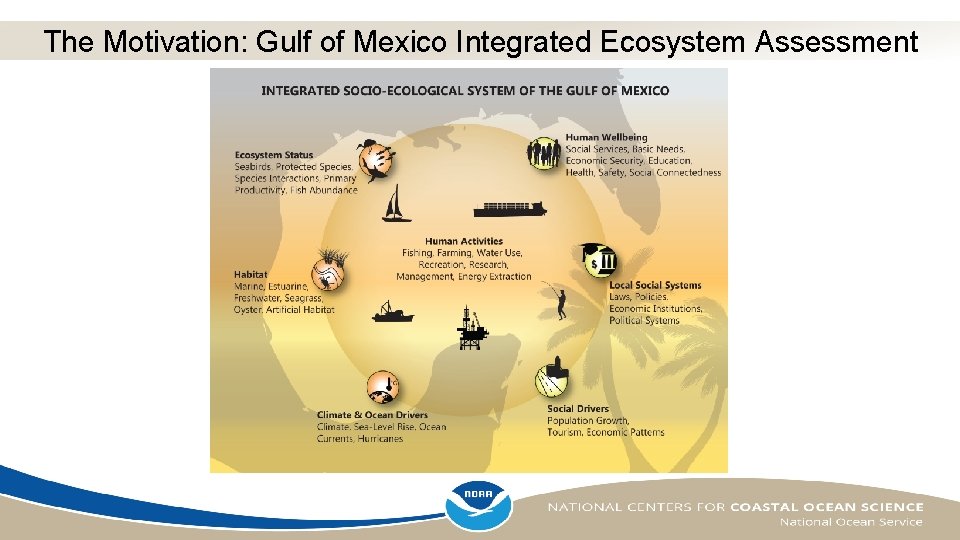
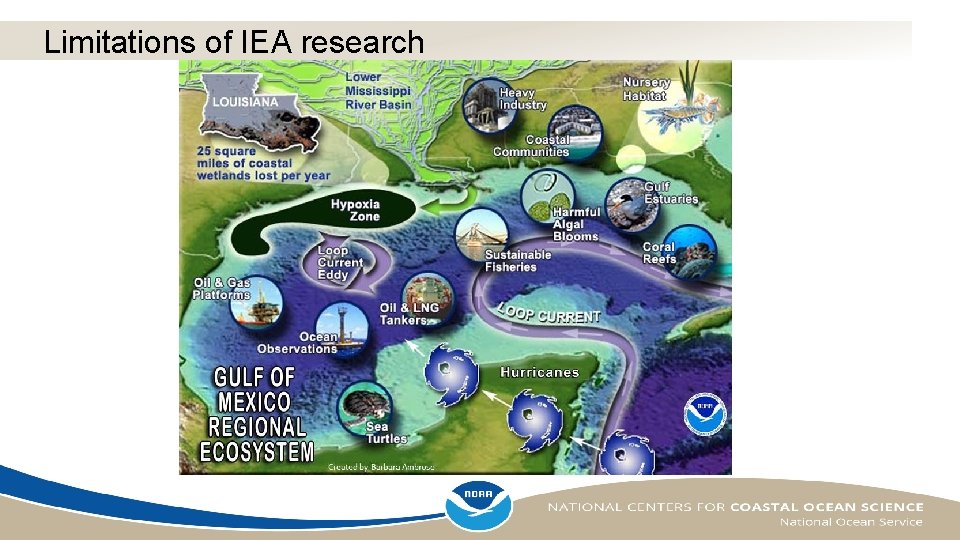
The Motivation: Gulf of Mexico Integrated Ecosystem Assessment
IEA Responsibilities “All knowledge is partial, infinitesimally partial. Reason is a net thrown out into an ocean. What truth it brings in is a fragment, a glimpse, a scintillation of the whole truth” - Ursula le Guin
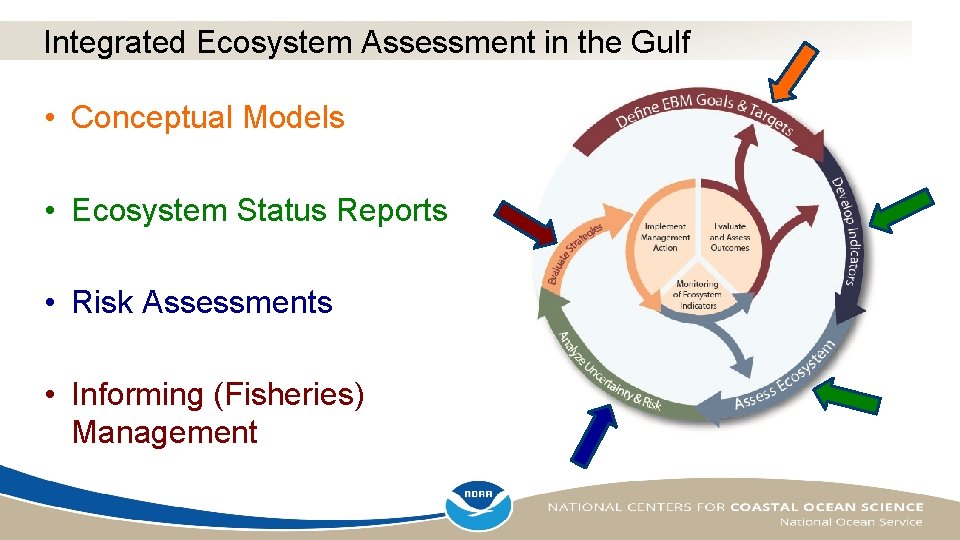
Integrated Ecosystem Assessment in the Gulf • Conceptual Models • Ecosystem Status Reports • Risk Assessments • Informing (Fisheries) Management
Limitations of IEA research
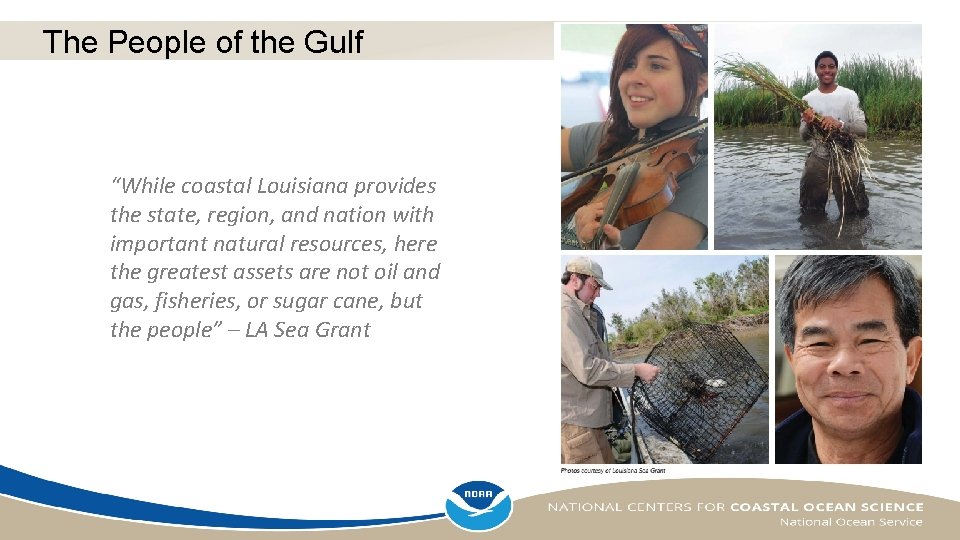
The People of the Gulf “While coastal Louisiana provides the state, region, and nation with important natural resources, here the greatest assets are not oil and gas, fisheries, or sugar cane, but the people” – LA Sea Grant
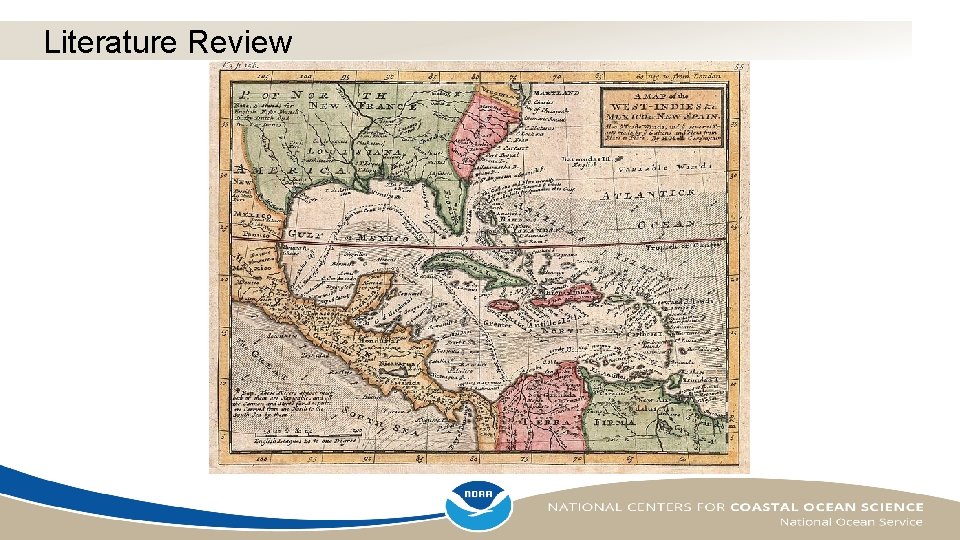
Literature Review
Analyzing the Literature • • • Method Citation Capacity Needed Burden to the Public Potential for Gulf IEA?
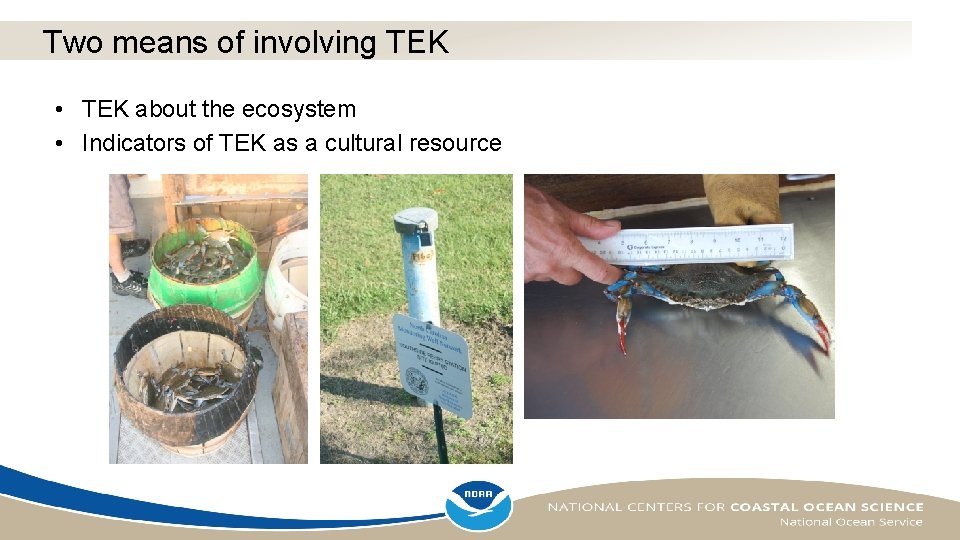
Two means of involving TEK • TEK about the ecosystem • Indicators of TEK as a cultural resource
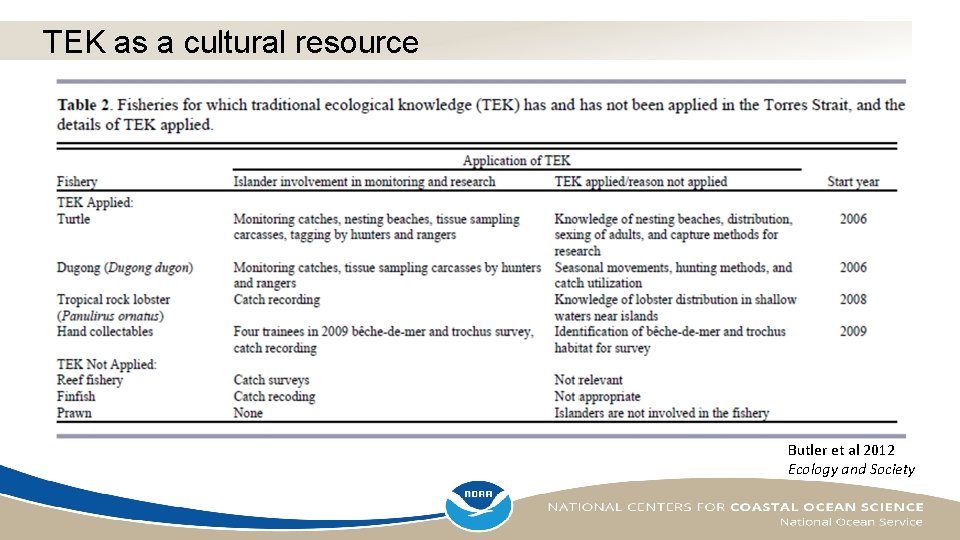
TEK as a cultural resource Butler et al 2012 Ecology and Society
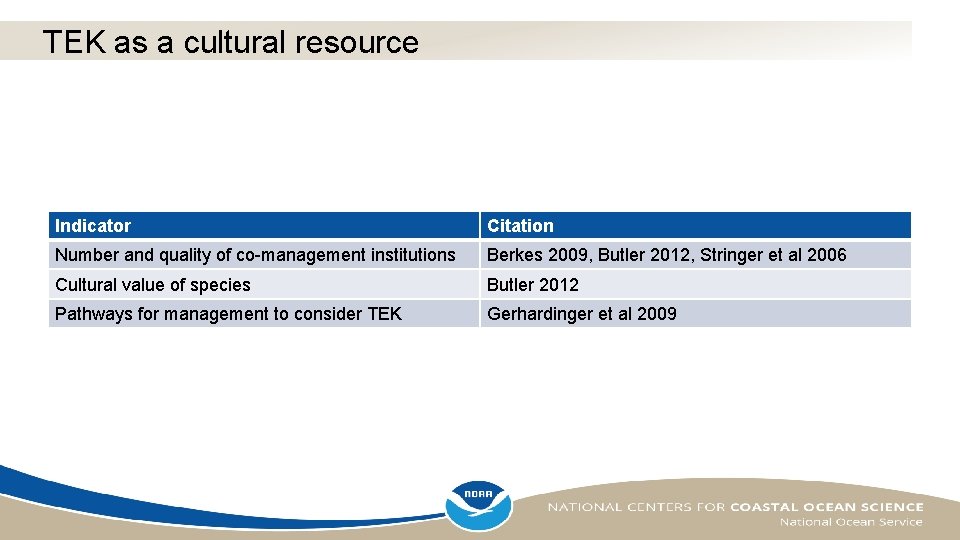
TEK as a cultural resource Indicator Citation Number and quality of co-management institutions Berkes 2009, Butler 2012, Stringer et al 2006 Cultural value of species Butler 2012 Pathways for management to consider TEK Gerhardinger et al 2009
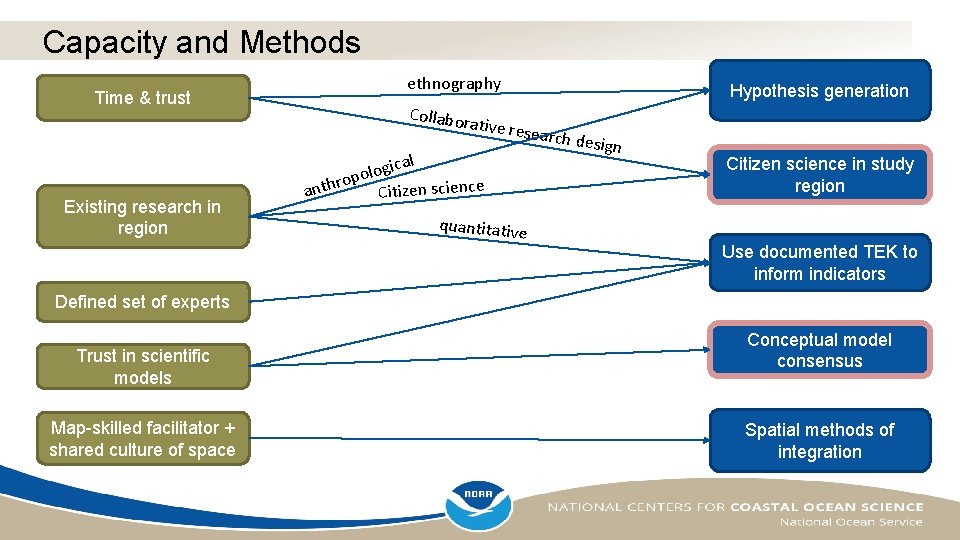
Capacity and Methods Time & trust ethnography Collabor ative res Hypothesis generation Existing research in region cal i g o l ropo h t n a Citizen science quantitative earch de s ign Citizen science in study region Use documented TEK to inform indicators Defined set of experts Trust in scientific models Map-skilled facilitator + shared culture of space Conceptual model consensus Spatial methods of integration
Questions? For more information, contact amy. freitag@noaa. gov