
Inclusive education Hasselt University Daan Romein d m

- Slides: 21
Inclusive education Hasselt University Daan Romein: d. m. romein@iclon. leidenuniv. nl 1
About me • Team leader professional development; educational advisor & trainer; diversity coordinator at ICLON • Chair of board SIG professional development (SOP) • Grew up in The Netherlands, Indonesia, Malaysia and Oman • Worked in The Netherlands, Sweden, Germany, Belgium, Denmark, Lithuania, Kazakhstan, Vietnam, South Africa, Tanzania, Zambia, Chile, Aruba, Indonesia, Poland • Various international groups at Leiden • You? 2
Program • Learning outcomes • Policy and practice in Leiden • The Dutch educational system & IE • Diversity and inclusion? • Blame the student model • Exclusion/ inclusion factors • Tips on how to create an inclusive classroom • (re)developing curricula and courses 3
Learning outcomes • Reflect on expectations towards students; • Check your assumptions; • Interpret students’ diverse needs; • React to students diversity; • Create a safe learning environment. 4
Policy and practice in Leiden • First University Diversity Officer (DO) in The Netherlands since 2014 • Since 2019 new DO • Makes policy for the university • Together with staff, students, work field, research etc • The Diversity Office is now a center of expertise • Discusses with the 7 faculties/ schools • 5 areas - students staff teaching research representation • Each faculty has a diversity coordinator (DC) • At ICLON Daan is the DC 5
Some examples of actions and support • At ICLON I organized a mandatory hidden bias test • There are various support groups and organisations for students (and staff!) - Study advisors - Student psychologists - Disability center - Students with migrant or varying cultural background - Women’s network - LGBT+ network - Leiden University Diversity and Equality Network (LUDEN) • More effort needed for full chain approach 6
• Four key objectives: - Stimulation of gender balance by means of a gender-conscious appointment policy - Stimulation of study success for all students, in particular bicultural and firstgeneration students - A visible balanced position of women in research - Expertise on diversity is available throughout the university community • At ICLON teacher training program discussions about: - Diversity among staff and students - How inclusive is teaching staff - How are students prepared for diverse secondary school pupils 7
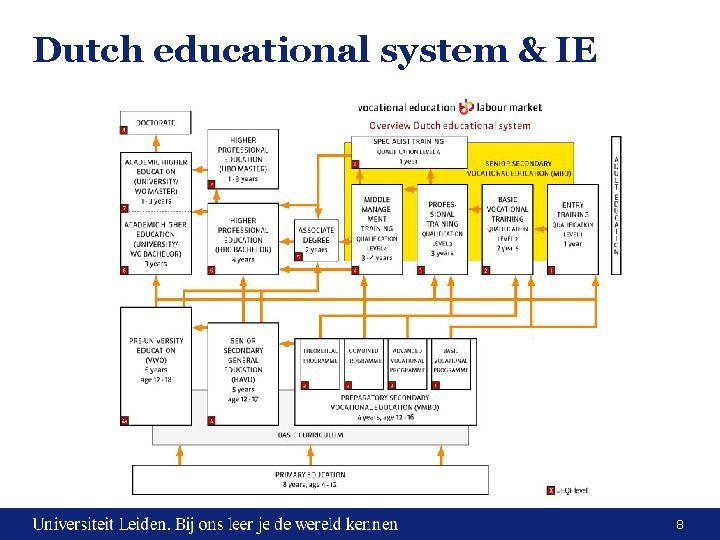
Dutch educational system & IE 8
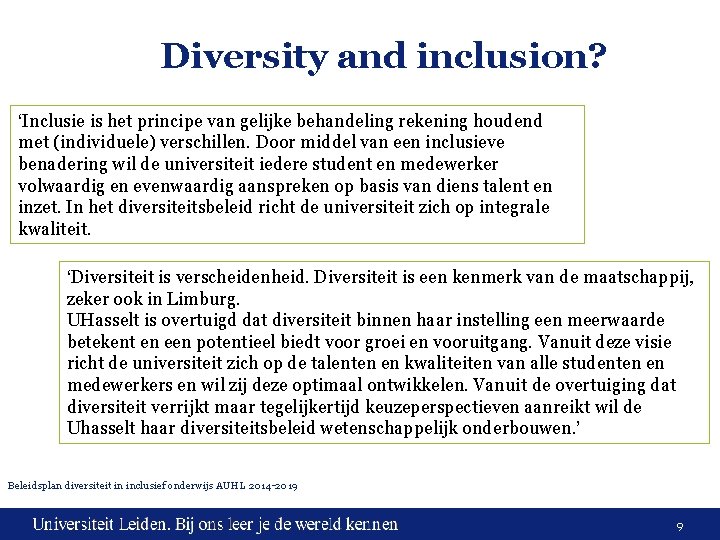
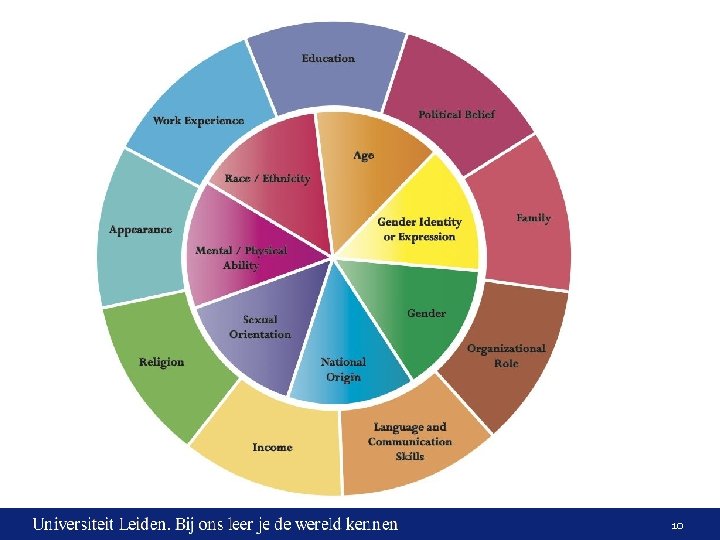
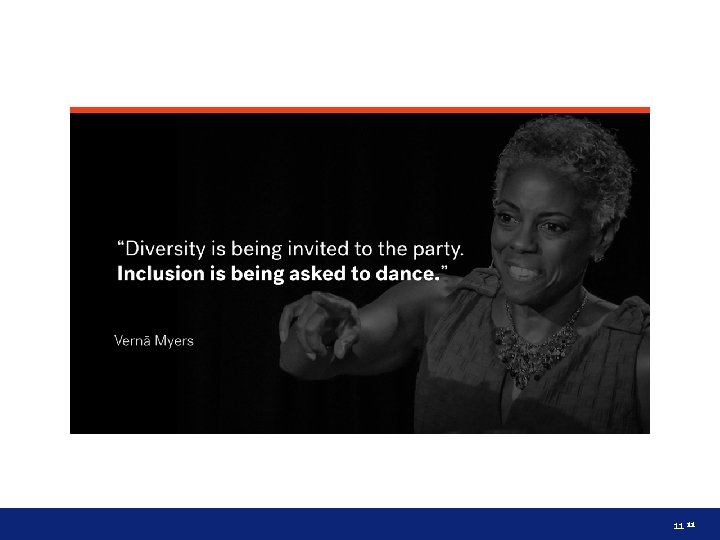
Diversity and inclusion? ‘Inclusie is het principe van gelijke behandeling rekening houdend met (individuele) verschillen. Door middel van een inclusieve benadering wil de universiteit iedere student en medewerker volwaardig en evenwaardig aanspreken op basis van diens talent en inzet. In het diversiteitsbeleid richt de universiteit zich op integrale kwaliteit. ‘Diversiteit is verscheidenheid. Diversiteit is een kenmerk van de maatschappij, zeker ook in Limburg. UHasselt is overtuigd dat diversiteit binnen haar instelling een meerwaarde betekent en een potentieel biedt voor groei en vooruitgang. Vanuit deze visie richt de universiteit zich op de talenten en kwaliteiten van alle studenten en medewerkers en wil zij deze optimaal ontwikkelen. Vanuit de overtuiging dat diversiteit verrijkt maar tegelijkertijd keuzeperspectieven aanreikt wil de Uhasselt haar diversiteitsbeleid wetenschappelijk onderbouwen. ’ Beleidsplan diversiteit in inclusief onderwijs AUHL 2014 -2019 9
10
11 11
Why do some students not succeed? 12 12
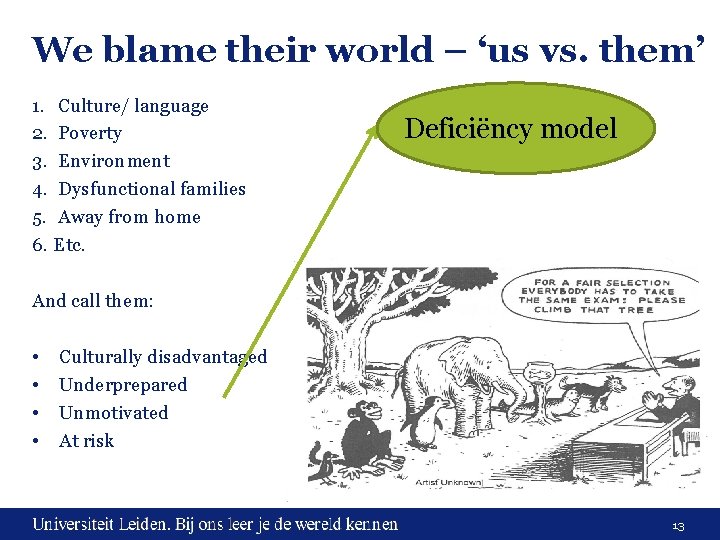
We blame their world – ‘us vs. them’ 1. Culture/ language 2. Poverty 3. Environment 4. Dysfunctional families 5. Away from home 6. Etc. Deficiëncy model And call them: • • Culturally disadvantaged Underprepared Unmotivated At risk 13
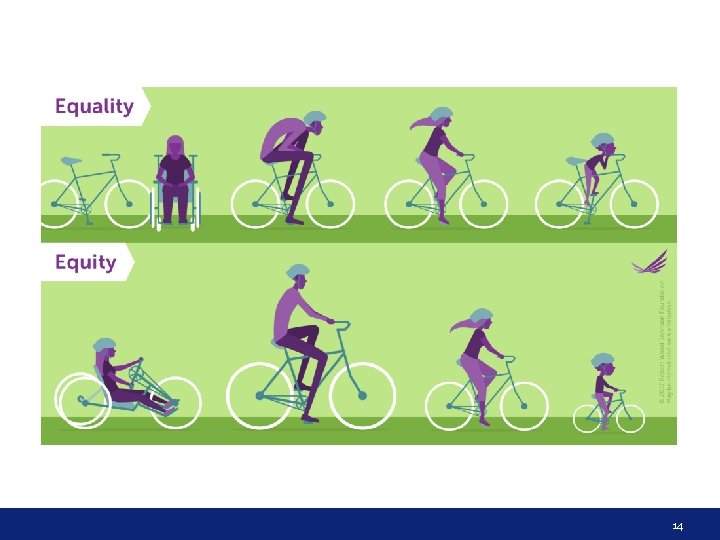
14
We also play a role in this! A father and son have a car accident and are both badly hurt. They are both taken to separate hospitals. When the boy is taken in for an operation, the surgeon (doctor) says 'I can not do the surgery because this is my son'. How is this possible? Daniel Kahneman 15
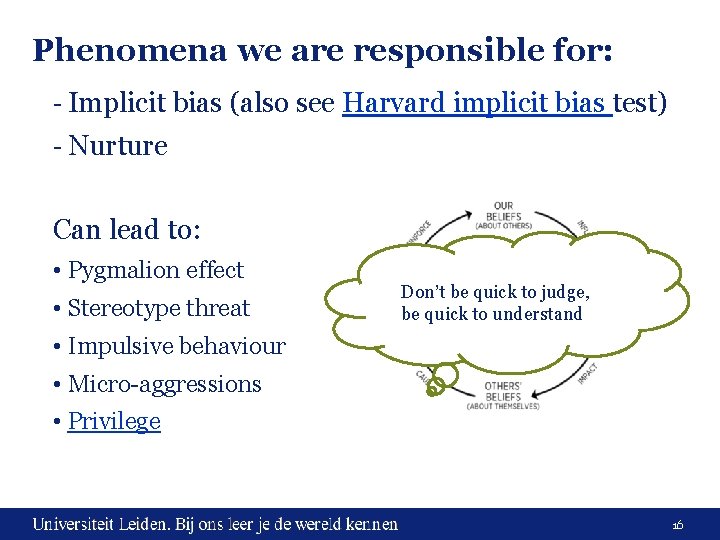
Phenomena we are responsible for: - Implicit bias (also see Harvard implicit bias test) - Nurture Can lead to: • Pygmalion effect • Stereotype threat Don’t be quick to judge, be quick to understand • Impulsive behaviour • Micro-aggressions • Privilege 16
Exclusioncreatedby 1. One size fits all approach 2. Terminology and examples used 3. Limitations of literature and resources 4. Little time for getting to know students 5. Assumptions/ implicit expectations 6. Uncertainty about responsibility 7. Lack of information & knowledge 8. Pressure on students 9. (hidden) curriculum 10. Image of program/ university 11. No reference or recognition 12. Transition issues 17
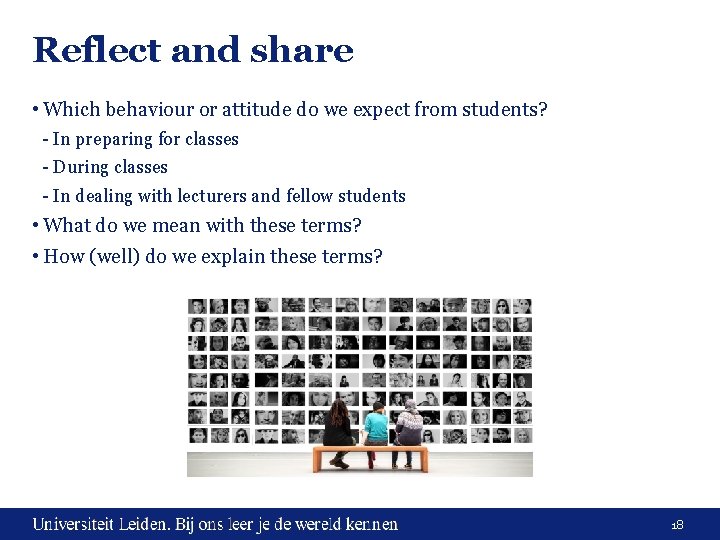
Reflect and share • Which behaviour or attitude do we expect from students? - In preparing for classes - During classes - In dealing with lecturers and fellow students • What do we mean with these terms? • How (well) do we explain these terms? 18
Practical tips • Form a statement on inclusive teaching • Be explicit: explain what, why and how • Check your assumptions • Analyse your literature and sources • Ensure structure and clarity in teaching • Take time to get (students) to know your students • Beware of context specific examples • Greet your students • Be available during classes/ walk around • Set ground rules • Give space for different opinions and experiences 19
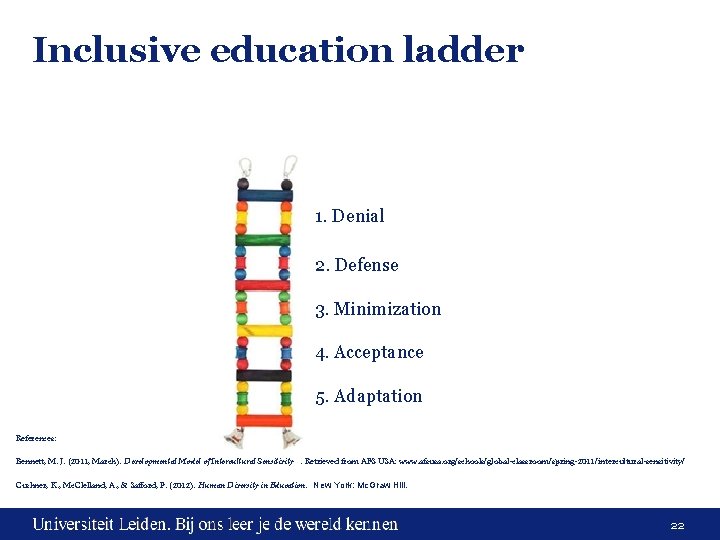
Inclusive education ladder 1. Denial 2. Defense 3. Minimization 4. Acceptance 5. Adaptation References: Bennett, M. J. (2011, March). Developmental Model of Intercultural Sensitivity. Retrieved from AFS USA: www. afsusa. org/schools/global-classroom/spring-2011/intercultural-sensitivity/ Cushner, K. , Mc. Clelland, A. , & Safford, P. (2012). Human Diversity in Education. New York: Mc. Graw Hill. 22
(re) developing curricula and courses • What should students ‘be’ when they have finished your university? • How and when do students develop skills and knowledge about diversity and inclusion? • Can this be found in the exit qualifications? • Is this discussed in courses? - Learning goals - Content - Assignments - Assessments • How do the courses connect to the exit qualifications? • Describe issues to improve with colleague • 10 minutes 23