
Inclusive Agribusiness Jelaskan tentang Inclusive Agribusiness model pada
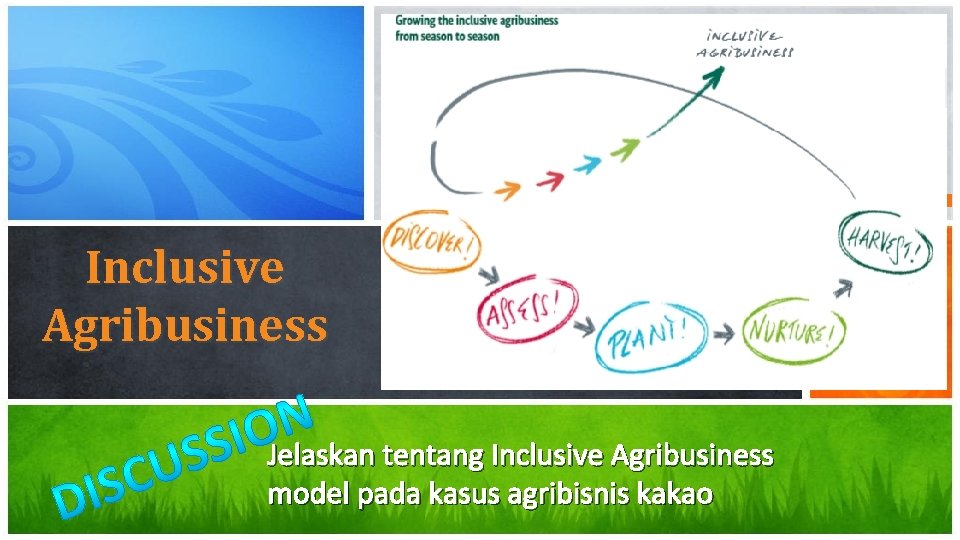
Inclusive Agribusiness Jelaskan tentang Inclusive Agribusiness model pada kasus agribisnis kakao
Value Chain Michael Porter mengemukakan bahwa aktivitas dalam organisasi memberikan nilai tambah jasa dan produk pada proses organisasi dan seharusnya semua aktivitas berjalan pada level optimum jika organisasi mendapatkan keunggulan bersaing yang riil. Jika organisasi dijalankan dengan efisien maka nilai yang diperoleh akan melebihi biaya yang dikeluarkan. Inclusive Agribusiness menggunakan konsep Value Chain
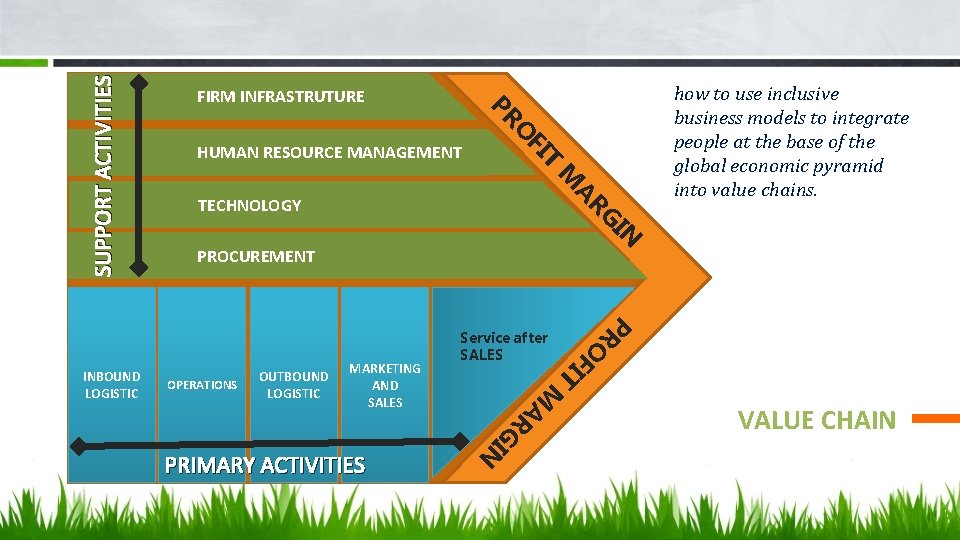
A M TECHNOLOGY RG IN PROCUREMENT T A M RG IN PRIMARY ACTIVITIES FI MARKETING AND SALES O OPERATIONS OUTBOUND LOGISTIC Service after SALES PR SUPPORT ACTIVITIES T FI HUMAN RESOURCE MANAGEMENT how to use inclusive business models to integrate people at the base of the global economic pyramid into value chains. O PR INBOUND LOGISTIC FIRM INFRASTRUTURE VALUE CHAIN

The inclusive agribusiness opportunity Discover!
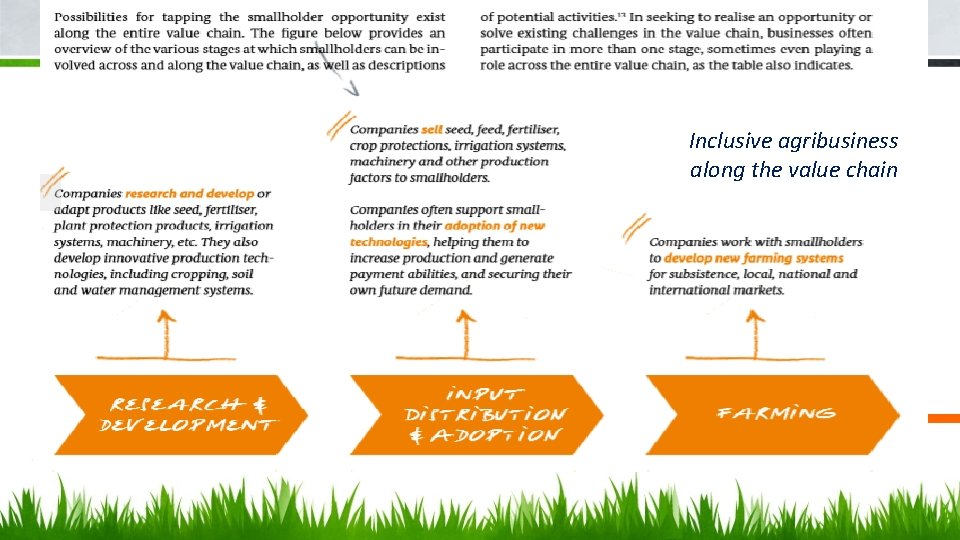
Inclusive agribusiness along the value chain
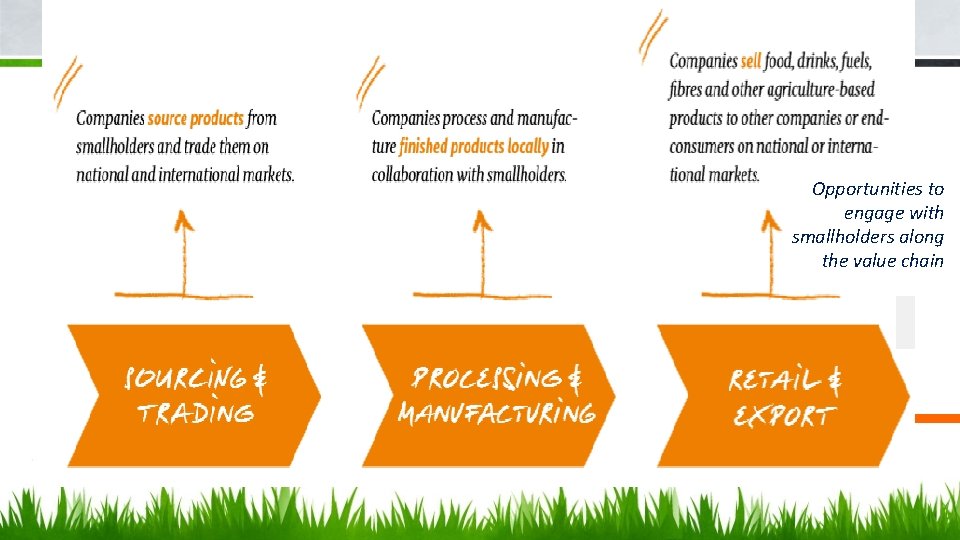
Opportunities to engage with smallholders along the value chain
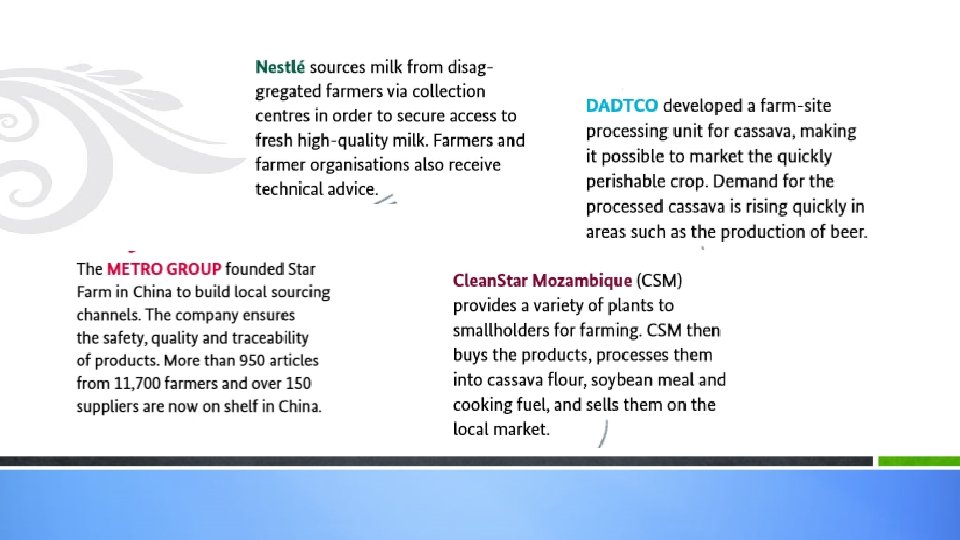

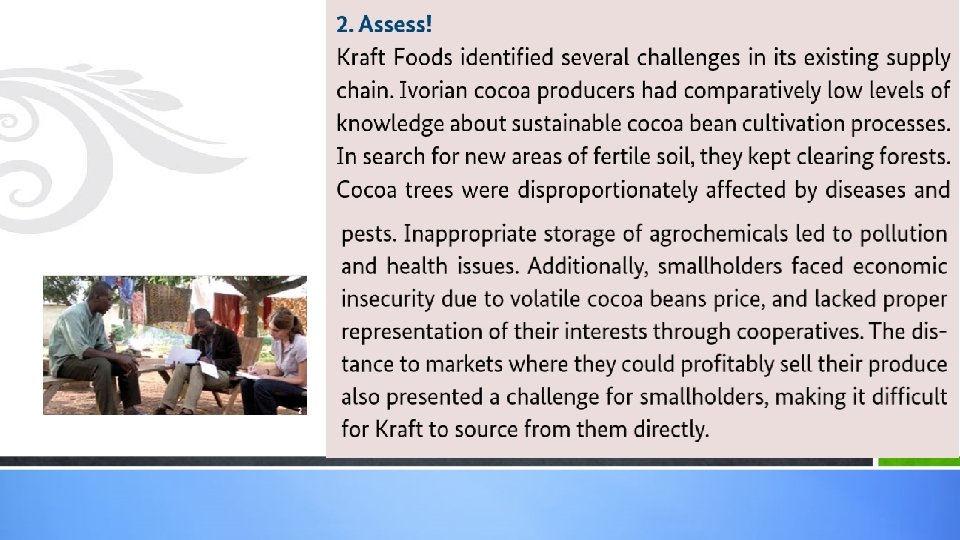
The smallholder context and its challenges Assess!
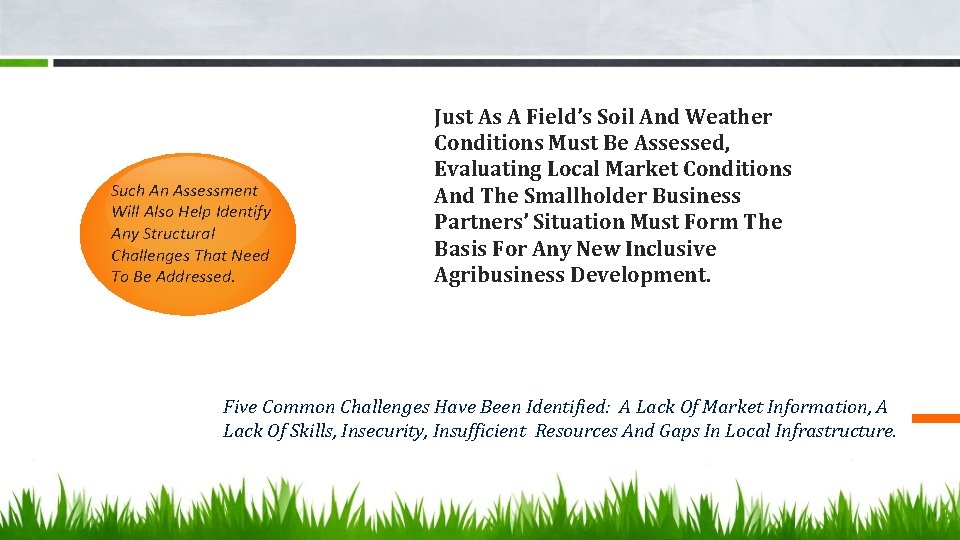
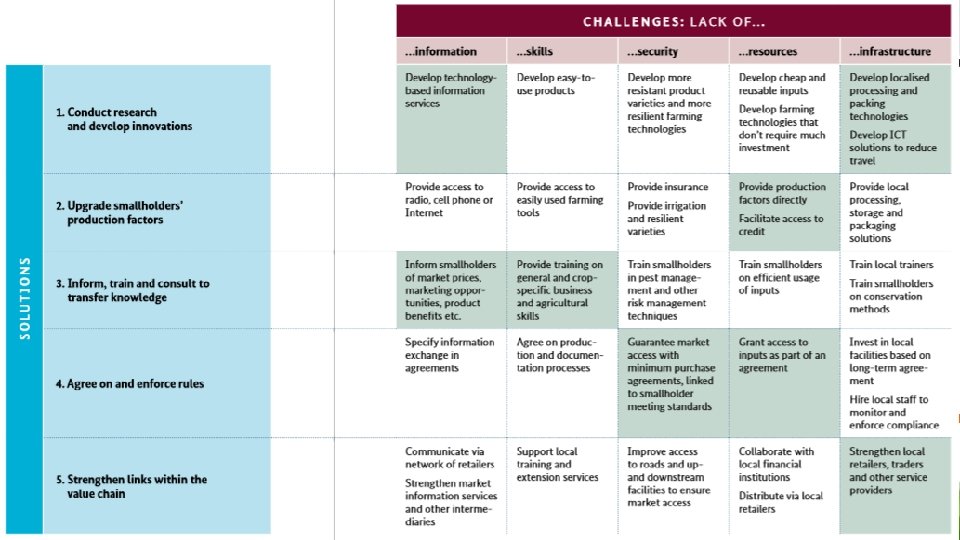
Such An Assessment Will Also Help Identify Any Structural Challenges That Need To Be Addressed. Just As A Field’s Soil And Weather Conditions Must Be Assessed, Evaluating Local Market Conditions And The Smallholder Business Partners’ Situation Must Form The Basis For Any New Inclusive Agribusiness Development. Five Common Challenges Have Been Identified: A Lack Of Market Information, A Lack Of Skills, Insecurity, Insufficient Resources And Gaps In Local Infrastructure.
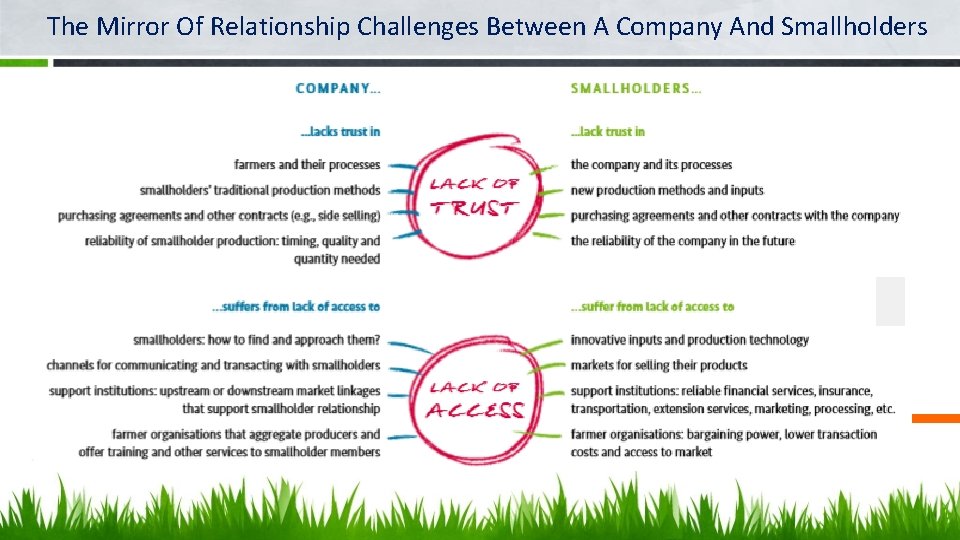
The Mirror Of Relationship Challenges Between A Company And Smallholders
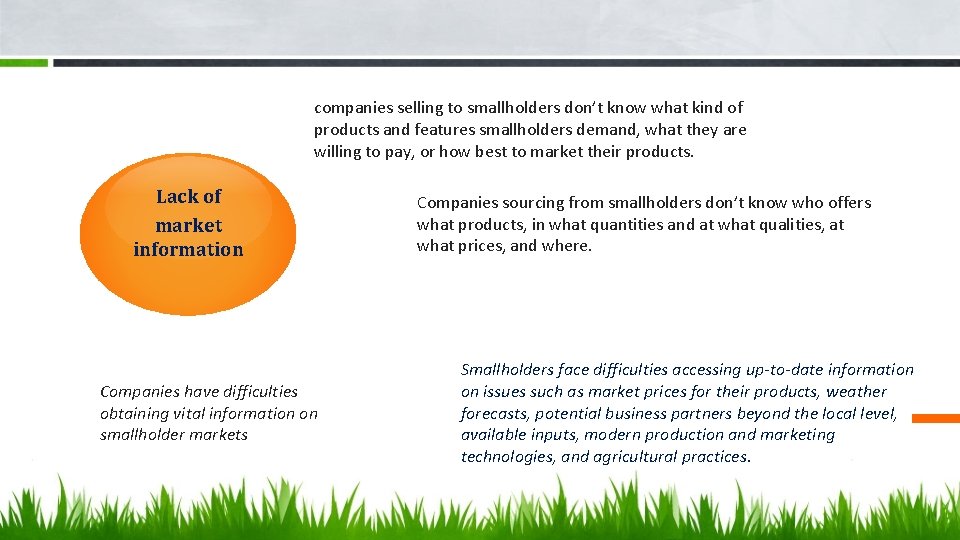
companies selling to smallholders don’t know what kind of products and features smallholders demand, what they are willing to pay, or how best to market their products. Lack of market information Companies have difficulties obtaining vital information on smallholder markets Companies sourcing from smallholders don’t know who offers what products, in what quantities and at what qualities, at what prices, and where. Smallholders face difficulties accessing up-to-date information on issues such as market prices for their products, weather forecasts, potential business partners beyond the local level, available inputs, modern production and marketing technologies, and agricultural practices.
Smallholders Are Generally Unaware Of Up-to-date Agricultural Practices And Post-harvest Management Techniques, A Condition Reflecting Their Additional Lack Of Access To Information. Lack of skills They Often Lack Basic Business Skills Such As Accounting, Cash-flow Management, And The Ability To Engage In Medium-term Strategy Development.
Smallholders Face Considerable Levels Of Daily Insecurity, Making It Difficult For Them To Plan For The Future, Enter Long-term Commitments, Invest And Take Additional Risks. First, Smallholder Incomes Are Not Only Low, But Also Irregular And Insecure, Especially When Opportunities To Diversify Income Sources Are Scarce Insecurity Second, Most Developing Countries Offer Very Limited Access To Social Safety Nets Or Insurance Coverage Able To Absorb Losses If Harvests Fail Or Prices Are Unexpectedly Low. Third, Other Farm Risk-management Tools Such As Savings, Resilient Crops, Or Irrigation Systems Are Often Either Similarly Unavailable Or Too Costly. Fourth, Markets In The Rural Areas Of Developing Countries Are Usually Mostly Informal. Contract-enforcement Support Systems Such As Courts Or The Police Are Out Of Reach, Unreliable, Or Too Costly And Time-consuming To Be Of Practical Effect.
Insufficient resources Smallholders Generally Lack Productive Assets And Financial Resources. Lacking Access To Adequate Savings And Credit Services, It Is Consequently Difficult For Smallholders To Improve Their Already Poor Resource Base.
Gaps in infrastructure Many rural areas are difficult to reach, as roads are absent or in poor condition. Long transport times affect the quality of fresh products. Ports often have limited capacity and are outdated, and railway lines are often poorly maintained.

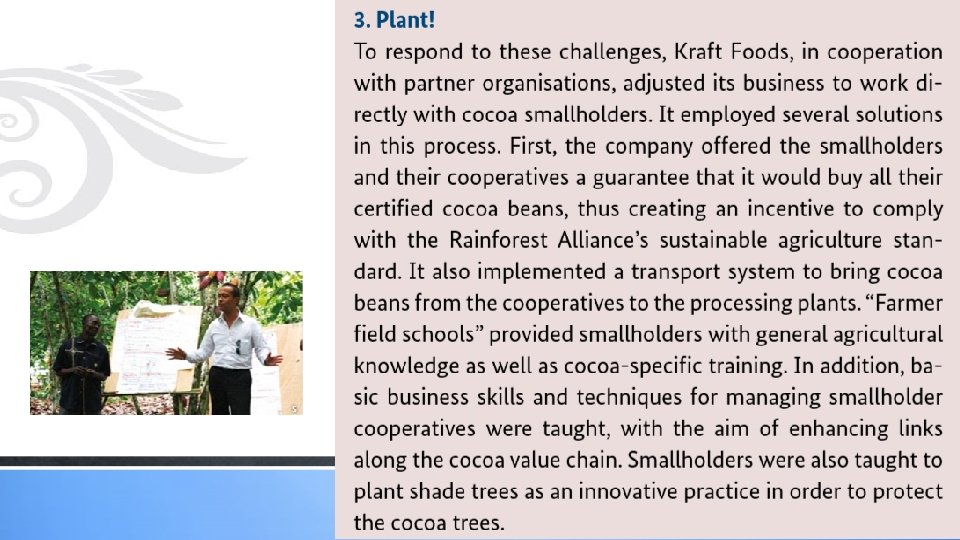
Plant!
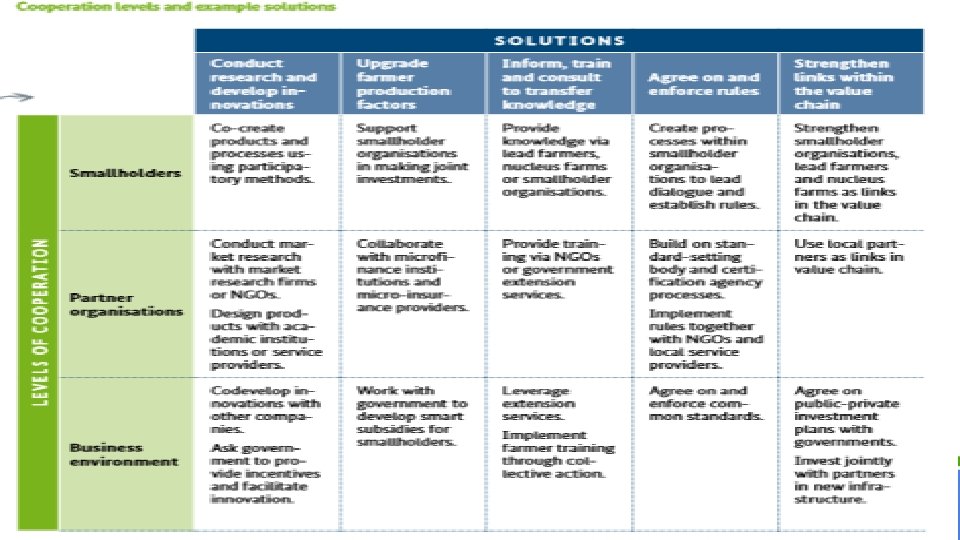
When planting, farmers select the strongest seeds available to make sure their field will produce high yields and can deal with adverse environmental conditions. For inclusive agribusinesses, Five core solutions have been identified that relate to innovations, production factors, knowledge, rules and value chain links.
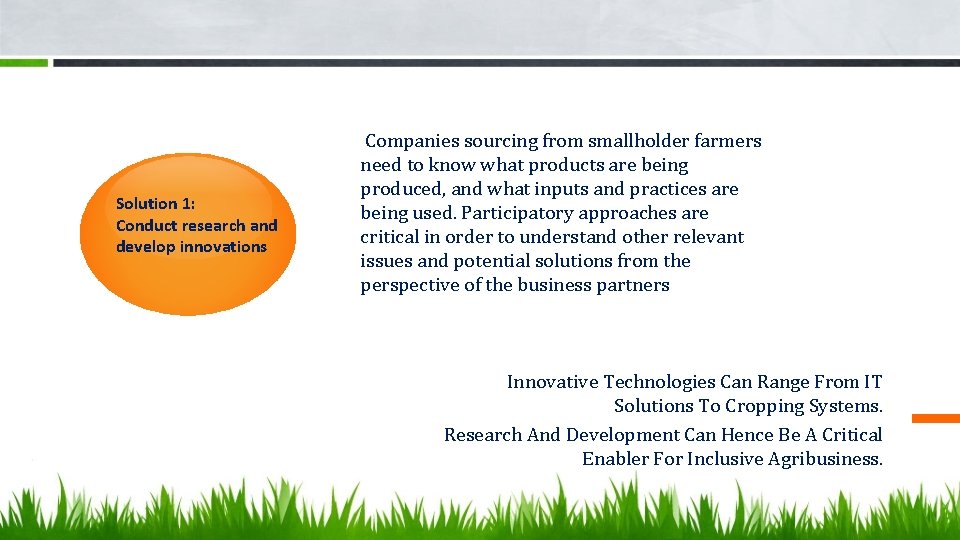
Solution 1: Conduct research and develop innovations Companies sourcing from smallholder farmers need to know what products are being produced, and what inputs and practices are being used. Participatory approaches are critical in order to understand other relevant issues and potential solutions from the perspective of the business partners Innovative Technologies Can Range From IT Solutions To Cropping Systems. Research And Development Can Hence Be A Critical Enabler For Inclusive Agribusiness.
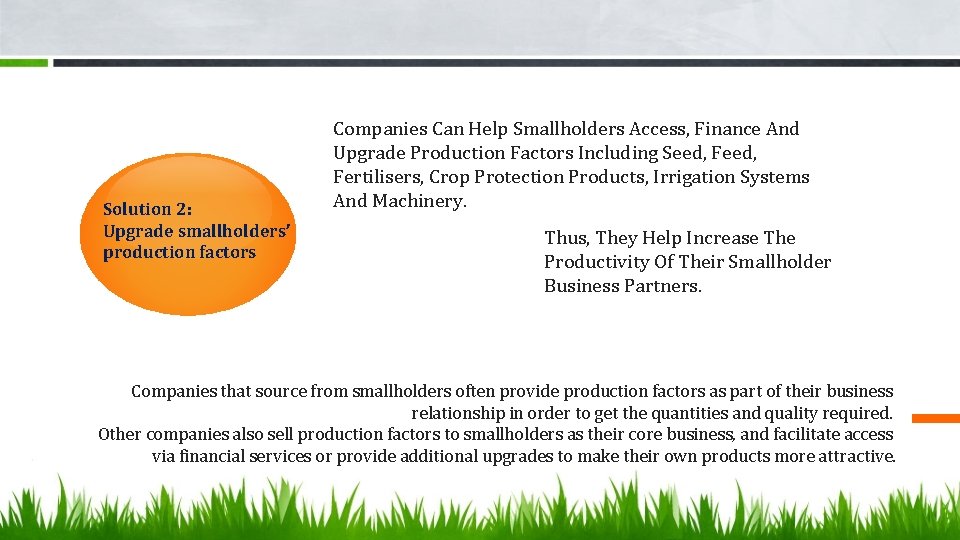
Solution 2: Upgrade smallholders’ production factors Companies Can Help Smallholders Access, Finance And Upgrade Production Factors Including Seed, Fertilisers, Crop Protection Products, Irrigation Systems And Machinery. Thus, They Help Increase The Productivity Of Their Smallholder Business Partners. Companies that source from smallholders often provide production factors as part of their business relationship in order to get the quantities and quality required. Other companies also sell production factors to smallholders as their core business, and facilitate access via financial services or provide additional upgrades to make their own products more attractive.
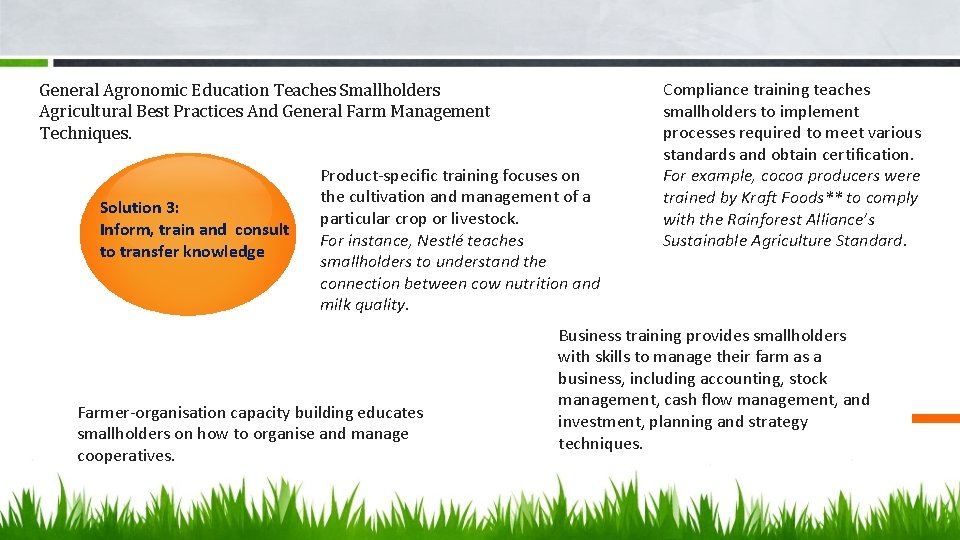
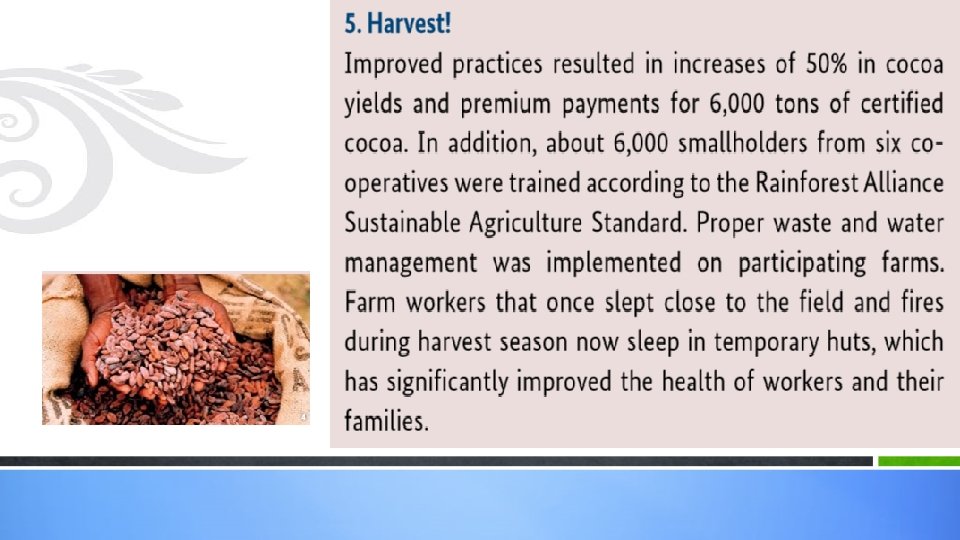
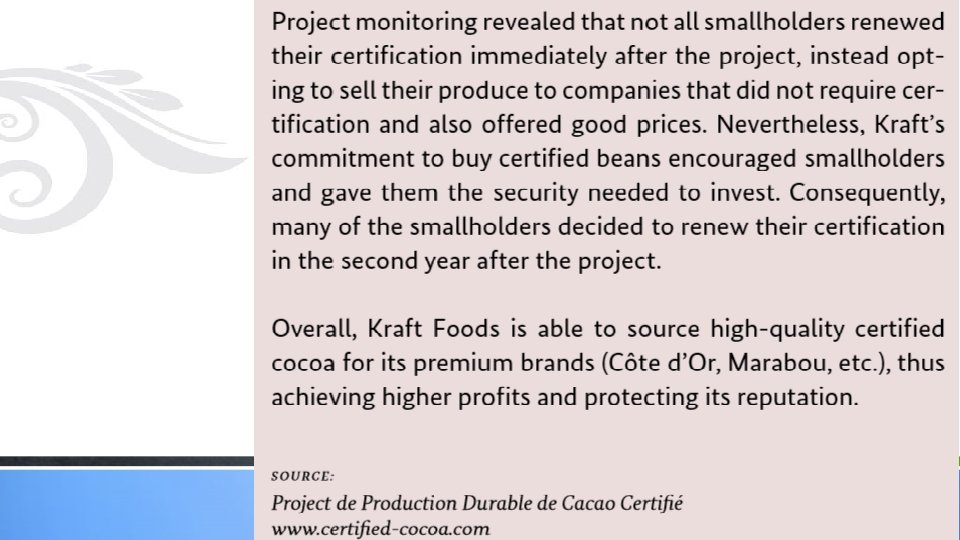
General Agronomic Education Teaches Smallholders Agricultural Best Practices And General Farm Management Techniques. Solution 3: Inform, train and consult to transfer knowledge Product-specific training focuses on the cultivation and management of a particular crop or livestock. For instance, Nestlé teaches smallholders to understand the connection between cow nutrition and milk quality. Farmer-organisation capacity building educates smallholders on how to organise and manage cooperatives. Compliance training teaches smallholders to implement processes required to meet various standards and obtain certification. For example, cocoa producers were trained by Kraft Foods** to comply with the Rainforest Alliance’s Sustainable Agriculture Standard. Business training provides smallholders with skills to manage their farm as a business, including accounting, stock management, cash flow management, and investment, planning and strategy techniques.
Solution 4: Agree on and enforce rules Clear rules are an important part of establishing common ground between the company and its smallholder business partners. These rules need to provide both sides with strong incentives to comply with commitments, especially in informal markets where contracts are not easily enforced. Meeting
Forging new and stronger connections between the various elements of a value chain will help inclusive agribusiness processes become more reliable and efficient. Solution 5: Strengthen links within the value chain Companies can strengthen these links either by building new facilities or by upgrading existing local systems and enterprises. This may involve upgrading local shops, constructing new collection points, or implementing selfrun logistics and distribution systems. Strengthening these links helps bring the company and its smallholder business partners closer together.

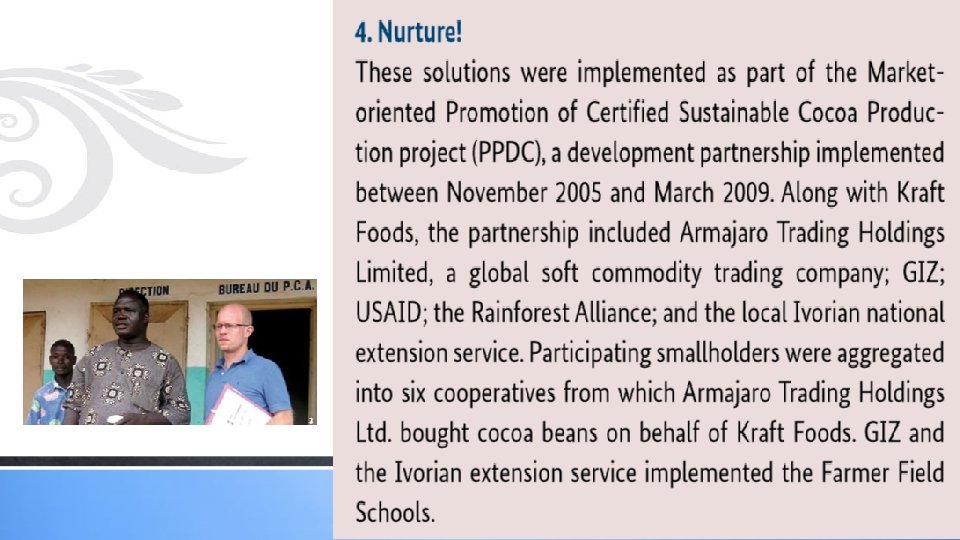
Three levels of collaboration Nurture! Like fertiliser, collaborating with other actors nurtures solutions and helps inclusive agribusinesses to grow.
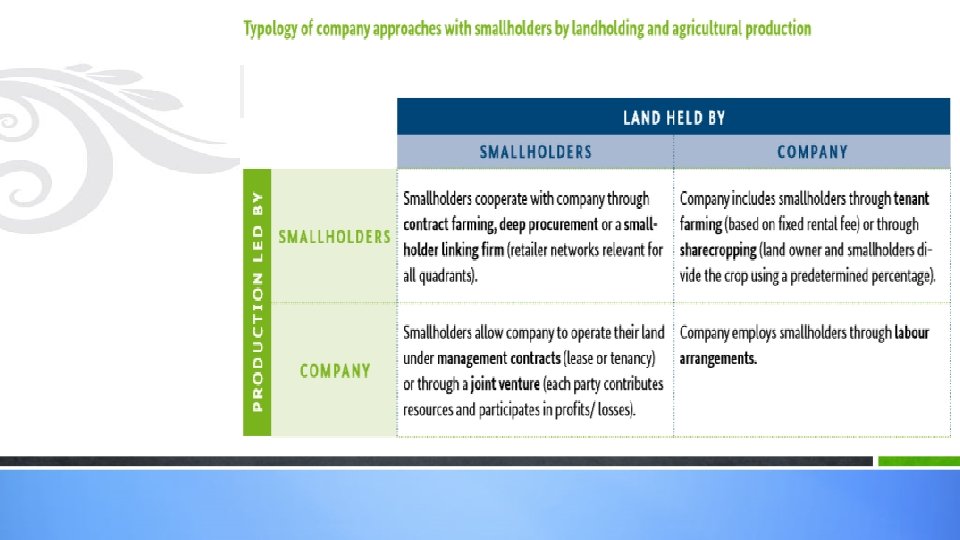
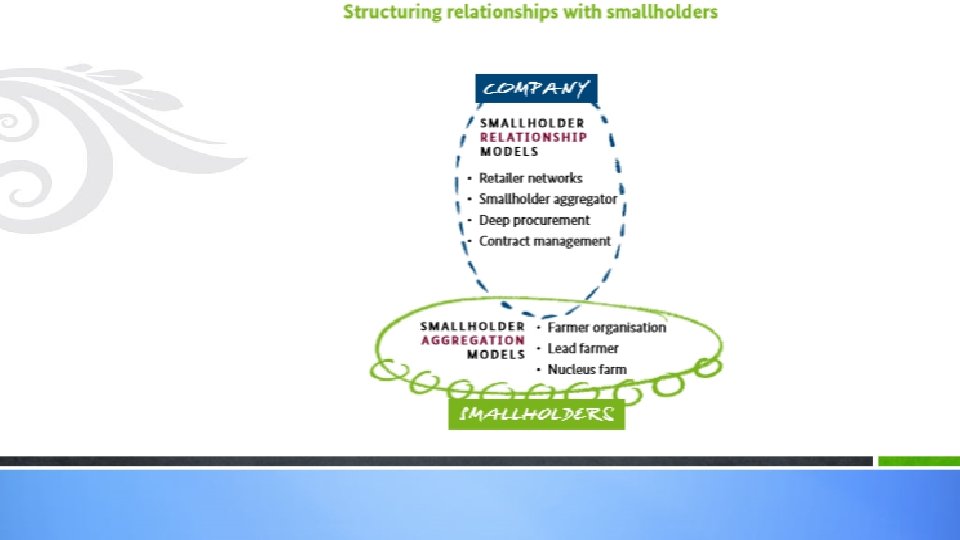

Share the benefits and review results Harvest! At the end of the season, farmers harvest the fruits of their labour, assess the results, and share benefits among the family and other participants.
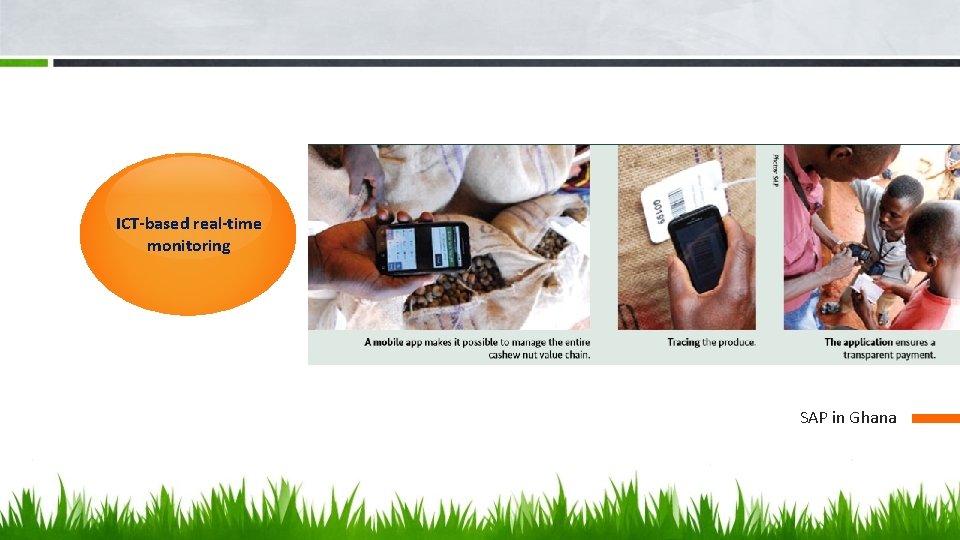
ICT-based real-time monitoring SAP in Ghana
4 dimensions should be considered in sharing the harvest: Sharing benefits Ownership: Who owns the business and production factors? Voice: Who takes business decisions? Who can influence decisions? Risks: How are commercial, political and reputational risks shared, managed and mitigated? Rewards: How are economic costs and benefits shared?
- Slides: 37