
Inclusion and Diversity Stephanie Bland Program Specialist The
Inclusion and Diversity Stephanie Bland Program Specialist The Office of Education, Training and Assessments
Inclusion and Diversity National Staff has attended four formal training sessions The Office of Education, Training and Assessment has offered sessions for: • 2009 - 2010 National Officers • 2010 - 2011 National Officers • State Officer 101/201 and Advisor Training • Alumni
Inclusion and Diversity Committee Members • Stephanie Bland-Chairperson Office of Education, Training and Assessments • Niki Clausen Office of Education, Training and Assessments • Tim Lawrence Office of the Executive Director • Sarah Morton Office of Administration and Finance • Chris Powell Office of Business and Industry Partnerships • Ann Schreiber Office of Publications • Jane Short Office of Communications and Government Relations
Committee mission statement Skills. USA’s inclusion and diversity committee strives to impact leadership at all levels to create an inclusive culture throughout Skills. USA
Organization Statement In keeping with a tradition of respect for the individuality of our members and our role in work force development, Skills. USA strives to ensure inclusive participation in all of our programs, partnerships and employment opportunities
Why is Inclusion and Diversity important ? Our mission is to contribute to Skills. USA’s success by helping students to be able to live and work in the 21 st-century work force.
What does inclusion and diversity mean? DIVERSITY represents a large group comprised of different people with different experiences. These differences include race, color, religion, gender, national origin, sexual orientation, age, disability, veteran status or citizenship. INCLUSION enables us to strive to have all people represented and included in the Skills. USA family, and make all members, partners and employees feel welcomed and valued, not only for their abilities, but also for their unique qualities and perspectives.
Why? • Students can’t be leaders in today’s work force without awareness in inclusion and diversity. • We must understand the diversity of the global work force and the changing demographics of the United States
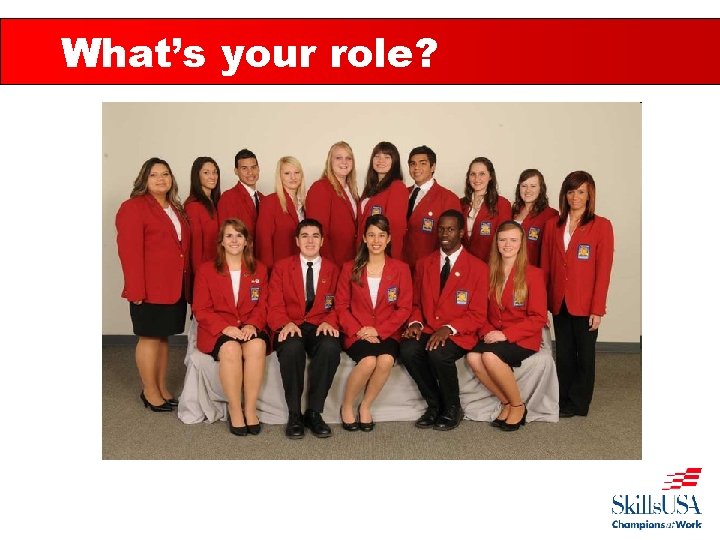
What’s your role?
National Officers are role models As a role model you are responsible for empowering Skills. USA members
Behavior reflects core values As a _____ (fill in the blank State Association Director, National Officer, Alumni), you are an ambassador of Skills. USA and should espouse leadership and encourage behavior that exemplifies Skills. USA’s core values.
It’s about Leadership and the Skills. USA Brand The Skills. USA mission is built upon — and its success depends on — the commitment of our members and partners to the following values: • Integrity • Respect • Responsibility • Citizenship • Service
Communication • Small gatherings – Be engaging with fairness and respect – Be aware – Be encouraging – Be inviting – Be mindful of body language – Don’t be offensive, derogatory, demeaning
Communication • Invocations – Use language that includes all faiths – Avoid references to religious deities – Invocations/prayers/thoughts for the day/meditations may address or acknowledge a divine presence where appropriate, give thanks or seek inspiration • Be careful not to preach, not to condemn, not to persuade or not to testify
Communication • Web pages: Myspace; Facebook; Twitter; e-mail addresses; voice message greetings – As a representative of Skills. USA avoid political, racial, sexual views • Be sensitive to your audience • Be aware that you don’t know who your audience is • Be respectful to yourself, your team, school, administration, family, mentors and Skills. USA • Be mindful, during your volunteering time, Skills. USA is renting your behavior. Always represent Skills. USA’s core values
Types of Behavior • Avoiders – avoid conflict • Perpetuators – look for authority before telling a joke they know is wrong • Change agents – want harmony • Fighters – are always looking for a fight • Naive people – don’t know any better and don’t know what they don’t know
PAUSE • Put yourself in the other person’s shoes. • Analyze the various perspectives involved. • Understand validate by listening carefully and summarizing what you’ve heard to validate that you understand. • Select the best solution based on the various perspectives involved. Make sure all parties understand the options before proceeding. • Engage others with fairness and respect not just tolerance.
Let’s talk about it Marshmallows on sweet potatoes?
Let’s talk about it Have you experienced any incidences with inclusion and diversity? How would you handle being the only minority when attending a Skills. USA event? What do you do when you encounter someone who isn’t being inclusive?
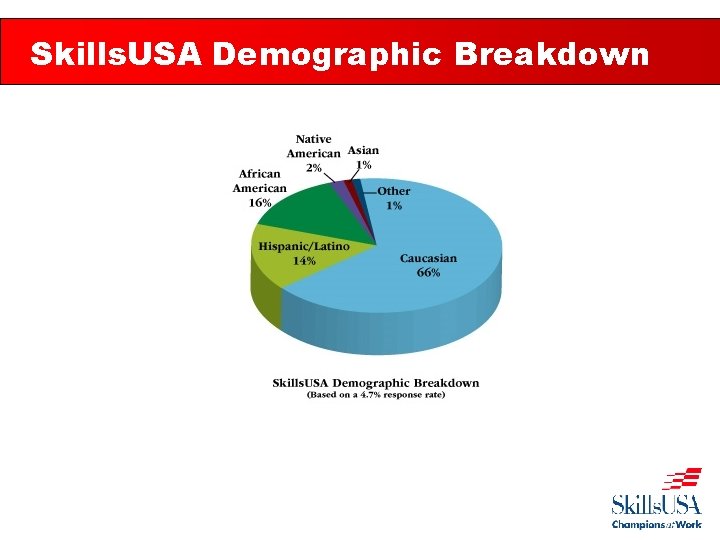
Skills. USA Demographic Breakdown
Skills. USA Demographic Breakdown Why are demographics needed? • We can better serve our members • Business and Industry partners inquire • To have an accurate picture of what we look like • Potentially more members and funding
- Slides: 21