
include systypes h include unistd h include syswait



- Slides: 14
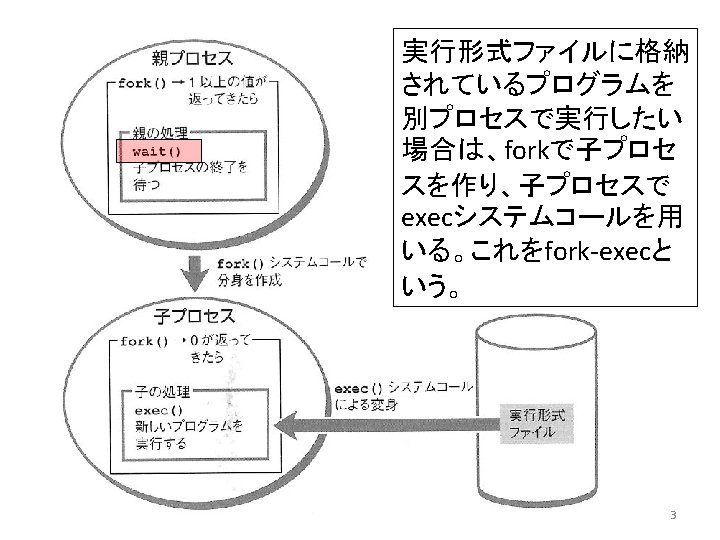
例(打ち込んで確認) #include <sys/types. h> #include <unistd. h> #include <sys/wait. h> #include <stdlib. h> #include <stdio. h> int main (void) { int pid, status; char * argv [2] = {"/bin/ps", NULL}; if ((pid = fork()) == 0) { execv("/bin/ps", argv); } else if (pid >= 1) { wait (&status); } else { perror ("fork"); exit(1); } exit (0); } 子プロセスでpsコマン ドを実行する例
ゾンビプロセス(打ち込んで確認) #include <unistd. h> #include <sys/wait. h> #include <stdio. h> #include <stdlib. h> int main (void) { int pid; int status; if ((pid = fork()) == 0) { } else if (pid >= 1) { sleep (5); wait (&status); } else { perror ("fork"); exit(1); } exit (0); } このプログラムを実行し、5秒 以内にCtrl-zでsuspendする。 そのときにpsコマンドを実行す ると、以下のように、 <defunct>と書かれたプロセス があるはずである。これがゾ ンビプロセスである。 19570 pts/0 00: 00 a. out 19571 pts/0 00: 00 a. out <defunct>
例:コマンドの引数に与えられたプロ グラムを実行(打ち込んで確認) #include <unistd. h> #include <stdio. h> #include <stdlib. h> int main (int argc, char * argv []) { if (argc < 2) { fprintf (stderr, "Usage: %s command [option]n", argv[0]); exit(1); } if (execv (argv[1], &argv[1]) == -1) { perror ("execv"); exit(1); } return 0; /* ここには来ない */ } $. /a. out /bin/ps –ef のようにして実行する。 この場合、 $ /bin/ps –ef と打ったのと同じ結果が 表示される。
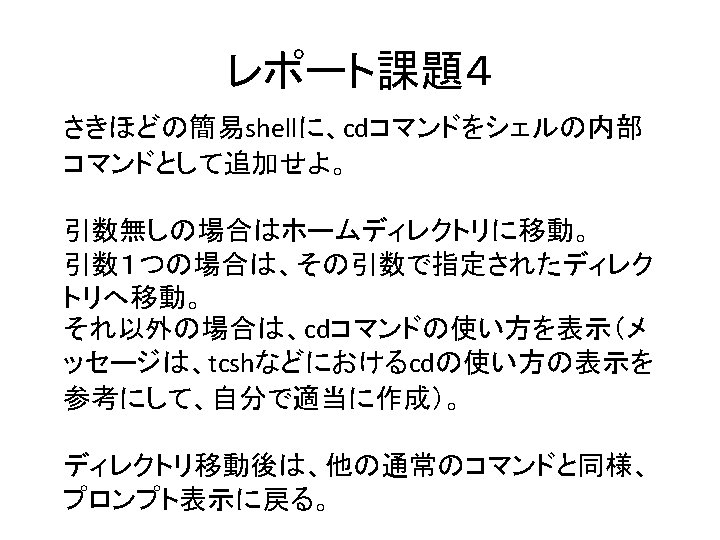
簡易shell(打ち込んで確認) #include <stdio. h> #include <sys/wait. h> #include <unistd. h> #include <stdlib. h> #define ARG_NUMBER 16 #define PARAM_SIZE 128 int getcomln (char * argvline[]) { int i, j, k; char linebuf [ARG_NUMBER * PARAM_SIZE]; for (i=0; (linebuf [i] = getchar()) != EOF; i++) { if (linebuf[i] == 'n') { linebuf[i] = ''; break; } } if (linebuf[i] == EOF) return EOF; for (i=j=k=0; (argvline[i][j] = linebuf[k]) != ''; j++, k++) { switch (argvline[i][j]) { case ' ': if (j>0) { argvline[i][j] = ''; i++; } j=-1; } } argvline[i][j] = ''; if (i==0 && j==0) return 0; else return i+1; }
簡易shellの続き int main (void) { int argcline, i, pid, status; char * argvline [ARG_NUMBER]; char line [ARG_NUMBER] [PARAM_SIZE]; for (i=0; i<ARG_NUMBER; i++) argvline[i] = line[i]; while (printf ("> "), (argcline = getcomln (argvline)) != EOF) { if (argcline == 0) continue; if ((pid = fork()) == 0) { argvline [argcline] = NULL; if (execvp (argvline[0], argvline) == -1) { perror ("execvp"); exit(1); } } else if (pid >= 1) wait (&status); else { perror ("fork"); exit(1); } } putchar ('n'); exit(0); }