
Inclined Planes An inclined plane is a surface
- Slides: 19
Inclined Planes • An inclined plane is a surface set at an angle against a horizontal surface. • Some examples of an inclined plane are ramps and sloping roads
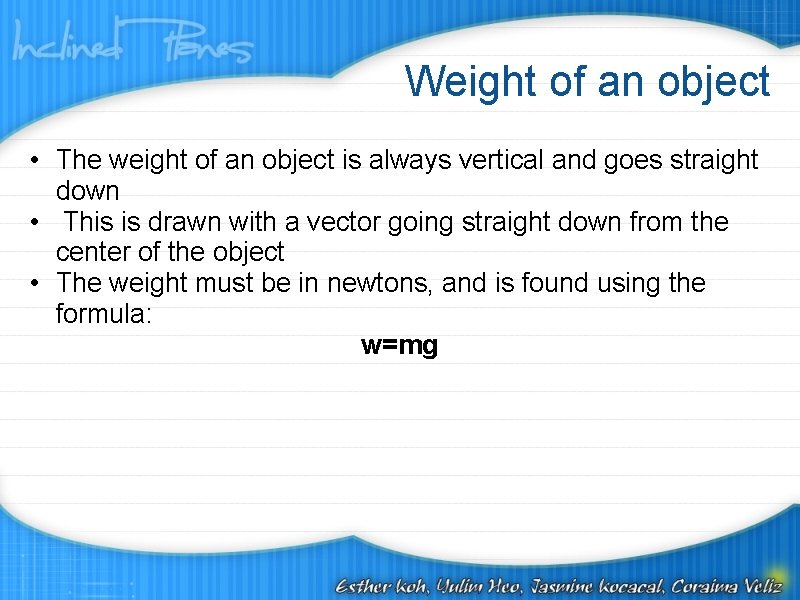
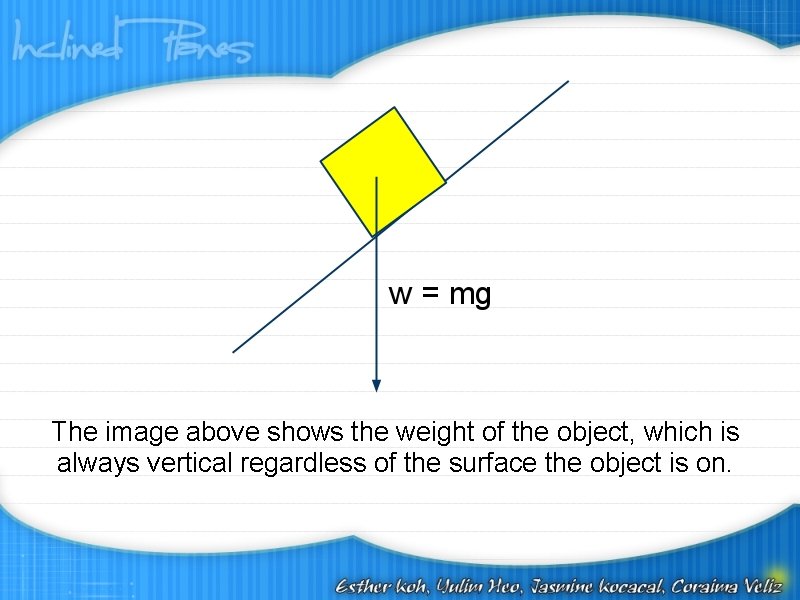
Weight of an object • The weight of an object is always vertical and goes straight down • This is drawn with a vector going straight down from the center of the object • The weight must be in newtons, and is found using the formula: w=mg
The image above shows the weight of the object, which is always vertical regardless of the surface the object is on.
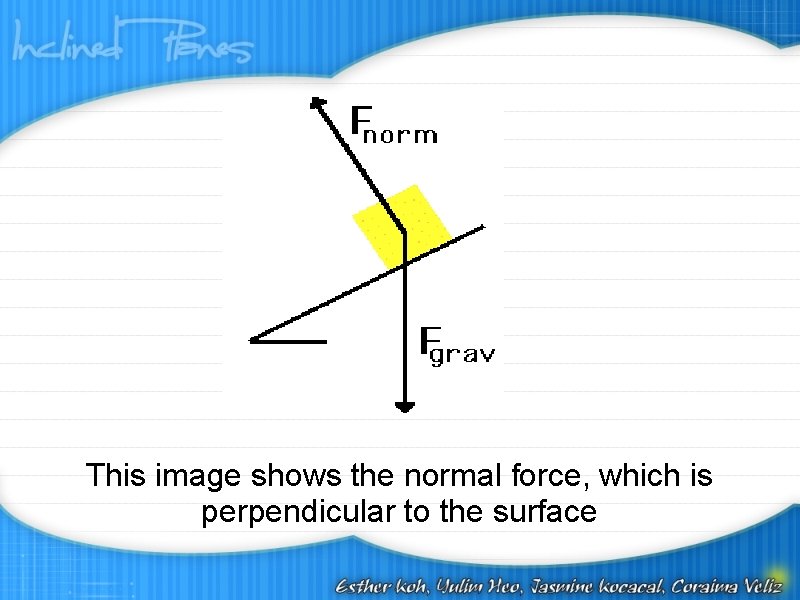
The Normal Force • The normal force is not directly upward like on a horizontal surface • Instead, the normal force will be at an angle because it has to be perpendicular to the surface that the object is on • The normal force is equal to the perpendicular force
This image shows the normal force, which is perpendicular to the surface
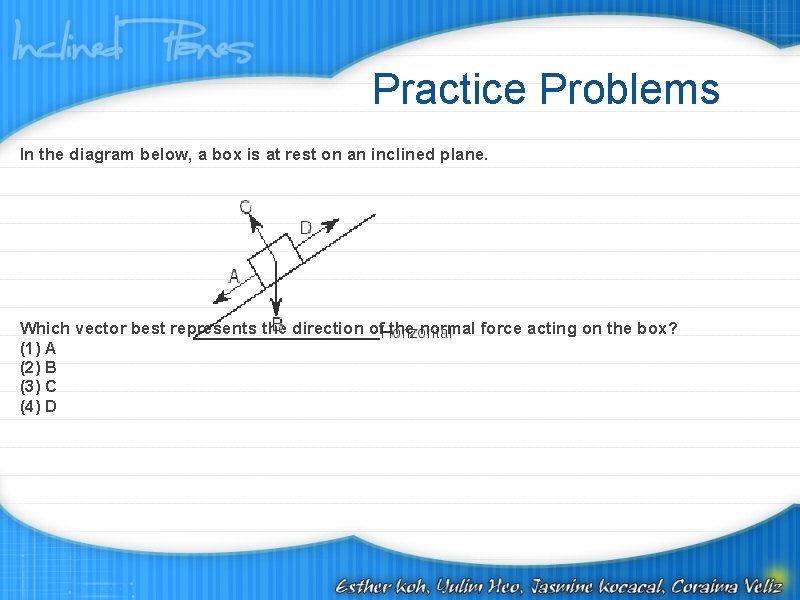
Practice Problems In the diagram below, a box is at rest on an inclined plane. Which vector best represents the direction of the normal force acting on the box? (1) A (2) B (3) C (4) D
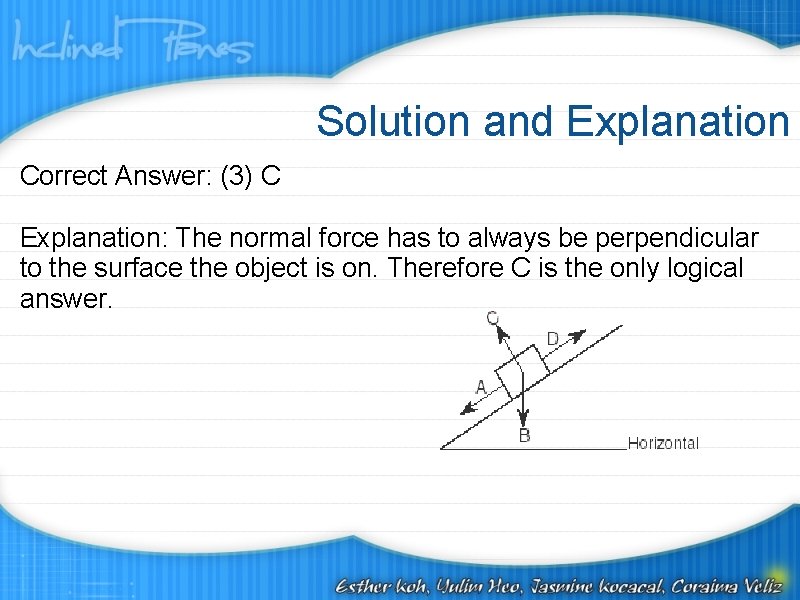
Solution and Explanation Correct Answer: (3) C Explanation: The normal force has to always be perpendicular to the surface the object is on. Therefore C is the only logical answer.
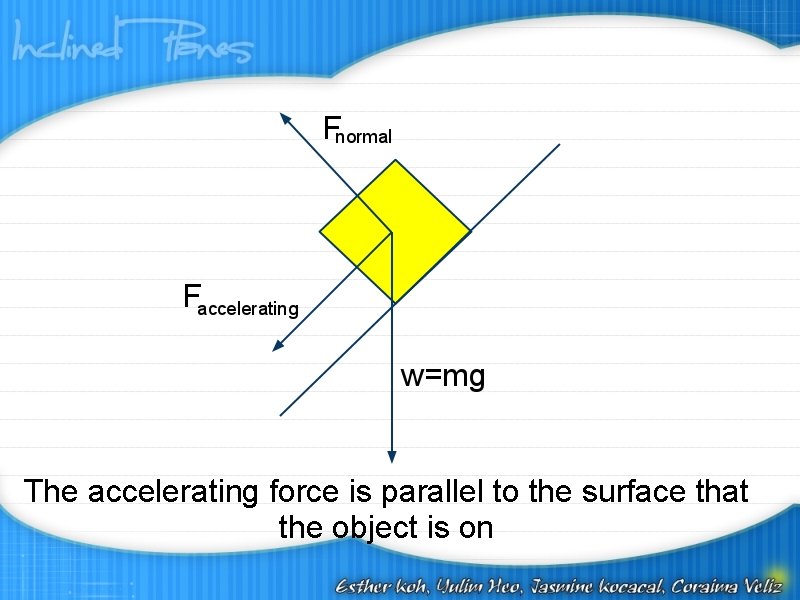
The Accelerating Force • On a horizontal plane, the accelerating force would be horizontal • However, on an inclined plane, the accelerating force is parallel to the surface that the object is on • The force points in the same direction as where the object is moving • The accelerating force is equal to the parallel force
The accelerating force is parallel to the surface that the object is on
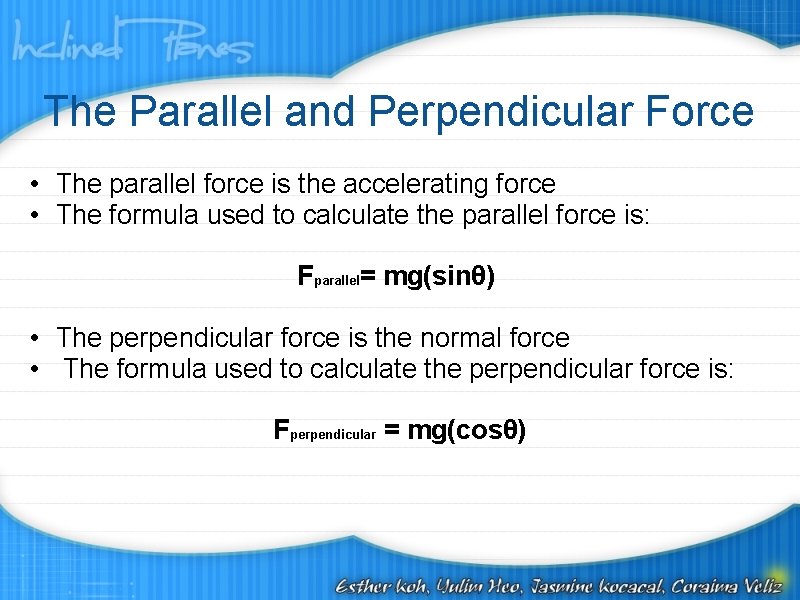
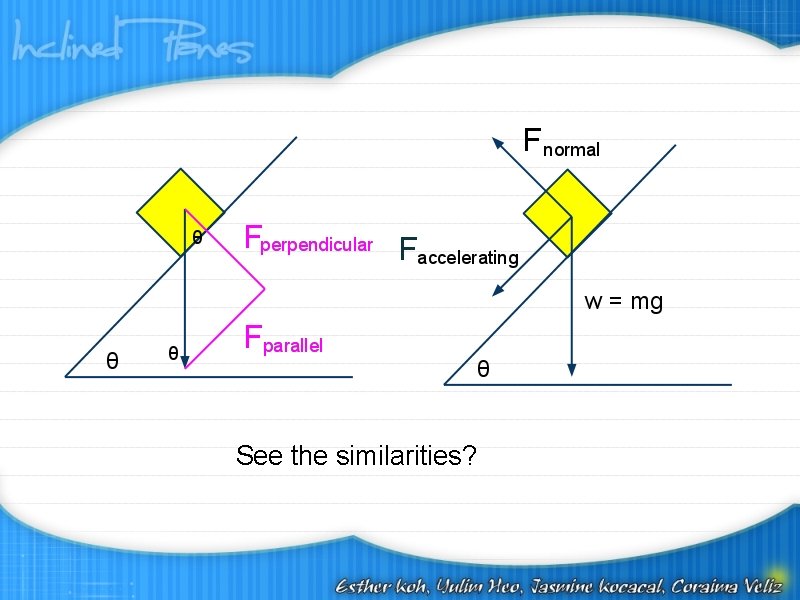
The Parallel and Perpendicular Force • The parallel force is the accelerating force • The formula used to calculate the parallel force is: Fparallel= mg(sinθ) • The perpendicular force is the normal force • The formula used to calculate the perpendicular force is: Fperpendicular = mg(cosθ)
See the similarities?
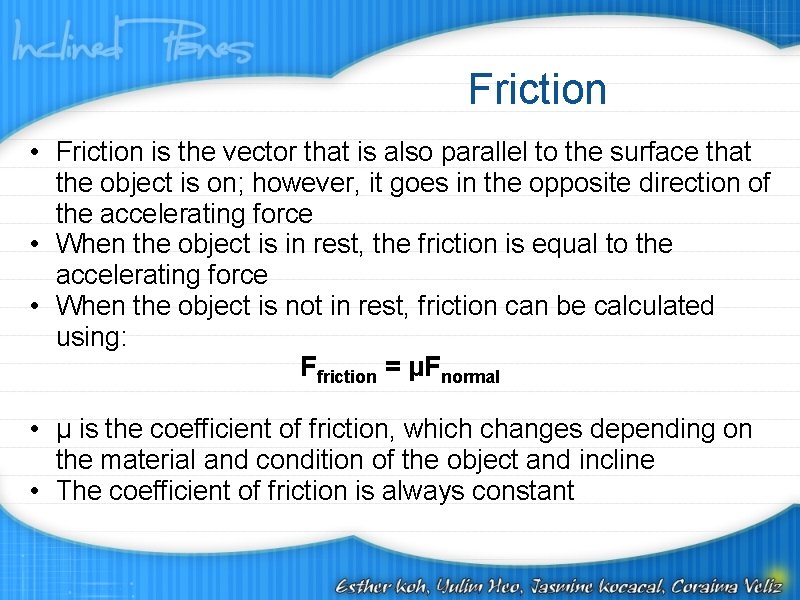
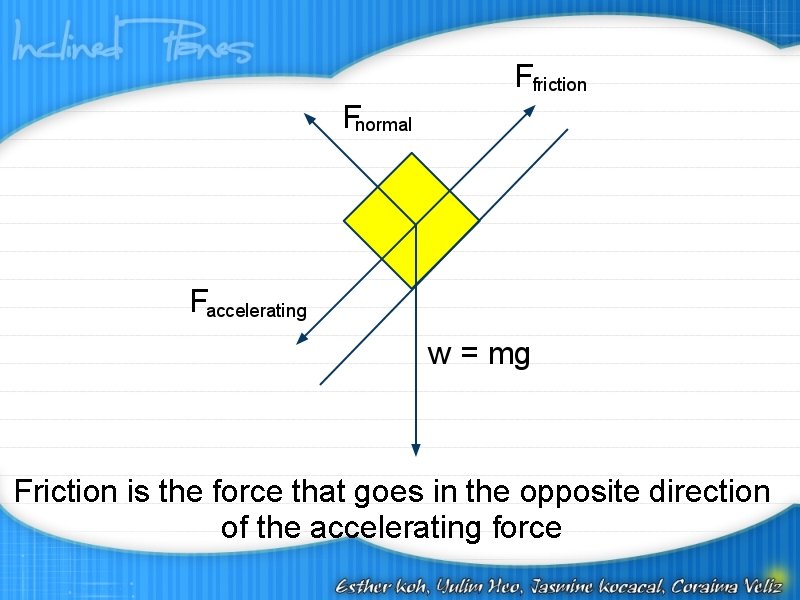
Friction • Friction is the vector that is also parallel to the surface that the object is on; however, it goes in the opposite direction of the accelerating force • When the object is in rest, the friction is equal to the accelerating force • When the object is not in rest, friction can be calculated using: Ffriction = μFnormal • μ is the coefficient of friction, which changes depending on the material and condition of the object and incline • The coefficient of friction is always constant
Friction is the force that goes in the opposite direction of the accelerating force
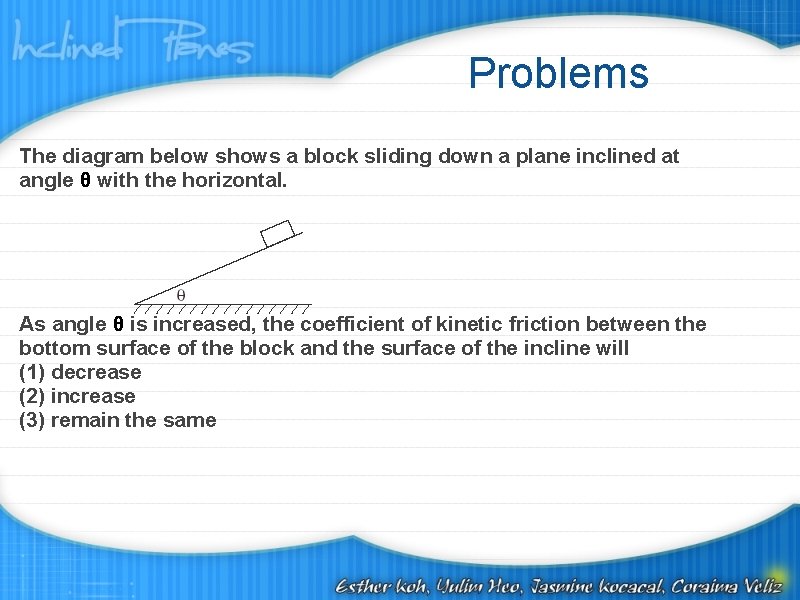
Problems The diagram below shows a block sliding down a plane inclined at angle θ with the horizontal. As angle θ is increased, the coefficient of kinetic friction between the bottom surface of the block and the surface of the incline will (1) decrease (2) increase (3) remain the same
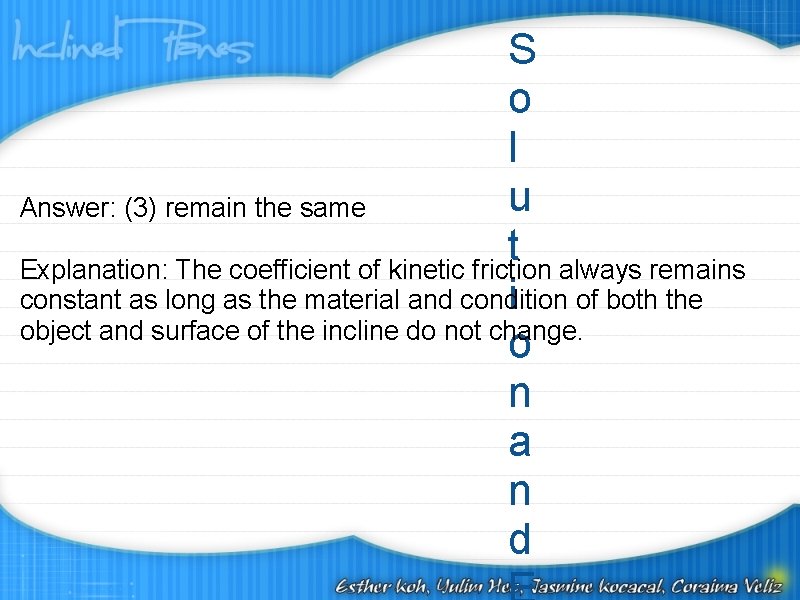
S o l u Answer: (3) remain the same t Explanation: The coefficient of kinetic friction always remains i constant as long as the material and condition of both the object and surface of the incline do not change. o n a n d
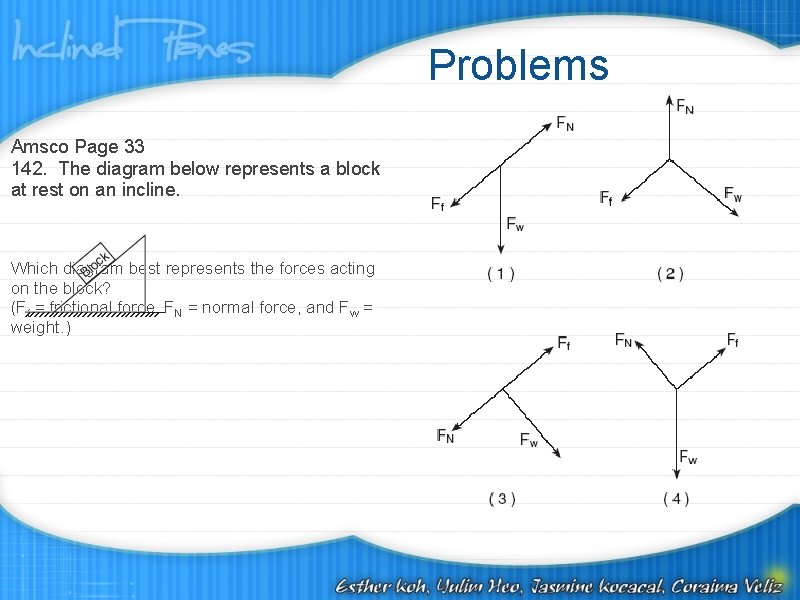
Problems Amsco Page 33 142. The diagram below represents a block at rest on an incline. Which diagram best represents the forces acting on the block? (Ff = frictional force, FN = normal force, and Fw = weight. )
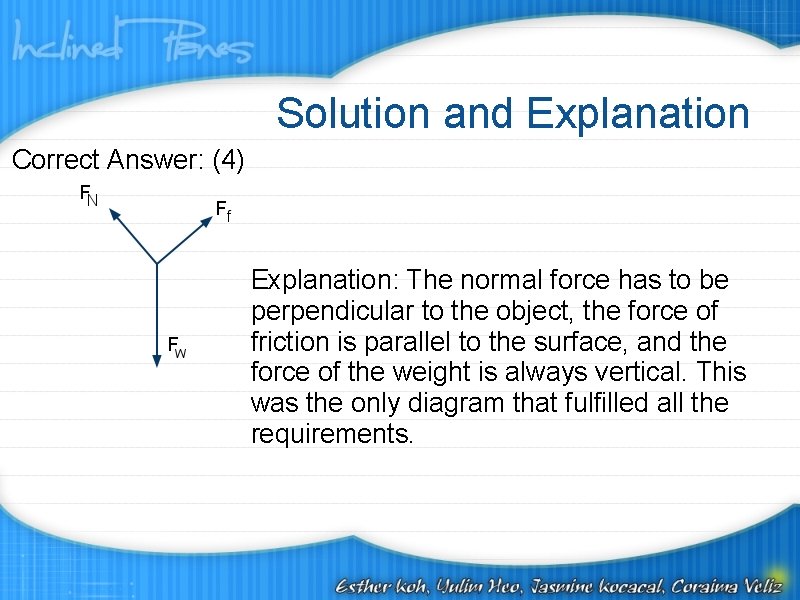
Solution and Explanation Correct Answer: (4) Explanation: The normal force has to be perpendicular to the object, the force of friction is parallel to the surface, and the force of the weight is always vertical. This was the only diagram that fulfilled all the requirements.
Homework AMSCO: pg. 47 #19 pg. 32 #128 pg. 48 #24