
Incised wounds It is clean cut wound produced
- Slides: 14
Incised wounds Ú It is clean cut wound produced by sharp cutting edged weapon/instruments in which length is its maximum dimension [ cf. stab wound] e. g. - knife, razor, blade, swords etc.
Features: Ø Margins: clean cut Note--[margin of wound may be irregular when skin is loose] Ú Edges: usually everted [except in scrotum & neck- edges are inverted] Ú Abrasion & contusion not seen on margin. Ú Shape: Spindle shaped [crescent if blade is curve]
Ú Spindle due to gaping of edge: if an incised wound occurs parallel to Langer’s line Ú Length is greater than the breadth. Ú Breadth is greater than the thickness of the cutting blade Ú Hemorrhage is excessive due to the clean division of blood vessels Ú Edges of wound may be irregular when skin is loose and if cutting edge is blunt.
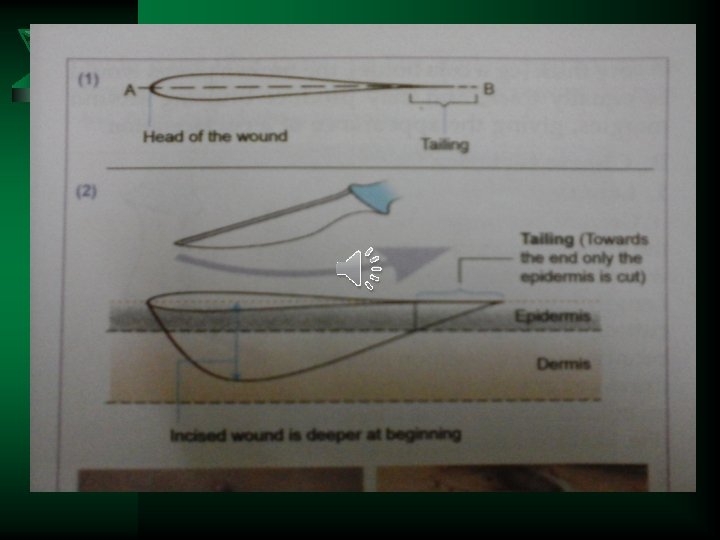
Ú By nature of the incised wound, weapon used can be identified. Ú Light sharp cutting weapons-razor blades, knife an produce incised wounds by striking, drawing or by sawing. Ú Direction: [Drawing cuts]- Deeper at start, gradually become shallow and at the end only skin is cut with scratch “Tailing of the wound”
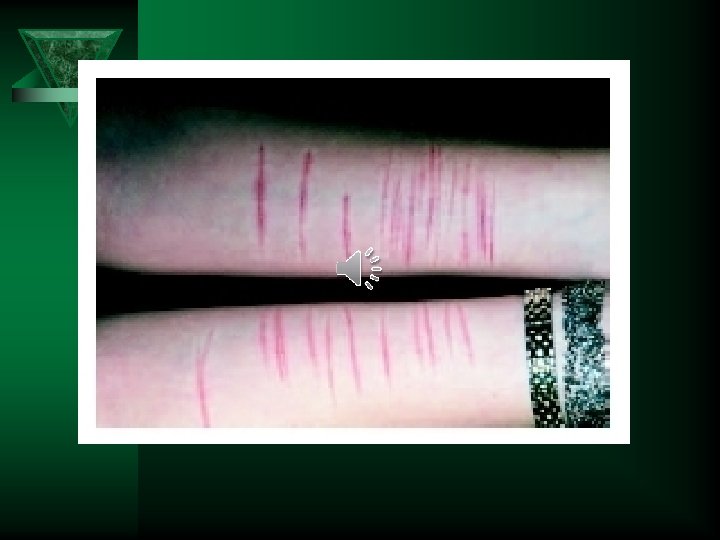
Ú The position of the accused and victim can be identified in homicidal cases, and suicidal cases which hand has been used. ÚSawing cuts-Multiple at the beginning and only one deep cut wound called “Tentative or Hesitation cuts” ÚBevelling cuts-When weapon is used oblique or tangential way over the body.
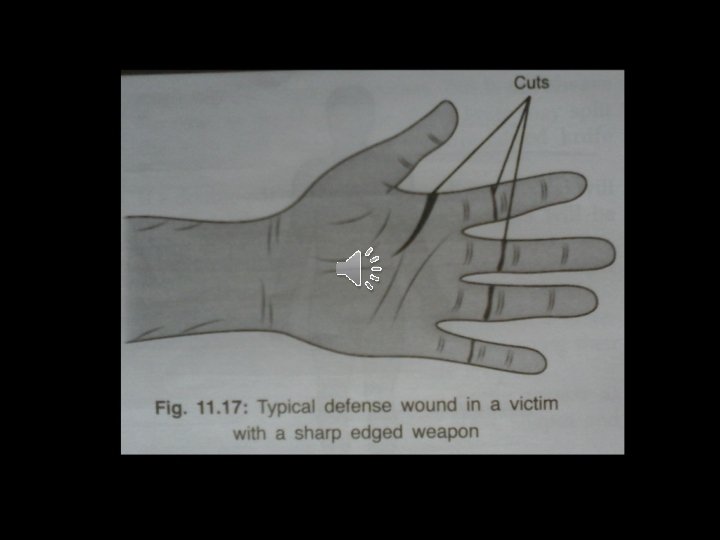
Medico-Legal importance § Types of Weapon § Direction of force § Position of victim & accused § Homicidal-Any part of the body, commonly on the neck, head and trunk, § Also be found on the inner side of forearm or hand of victim while defending or protecting. ‘Defense Wounds’. § Suicidal-Found in the accessible parts by light weapons on the throat (cut throat wounds). Tail end of the wound indicates which hand has been used.
Manner of use of weapon Ú Deep chop wounds and beveling suggests striking by the weapon. Ú Tailing and hesitation cuts indicate drawing of the weapon. Ú Multiple superimposed or overlapping injuries are indicated by saw like movement of the weapon.
Direction of application of force Ú From the tailing and beveling, the direction of application of force can be known. Ú The relative position of the victim and the assailant can also be known, by the direction of application of force.
Defense wounds Ø Defense wounds result from the immediate and instinctive reaction of the victim to save himself, either by raising the arm to prevent the attack or by grasping the weapon. Ø If the weapon is blunt, bruises and abrasions produced on the forearms or backs of the hand. Ú If the weapon is sharp the injuries will depend upon the type of attack, whether stabbing or slashing [incised wound]. Ú If the weapon is single edged and grasped-single wound. Double edged-double wound.
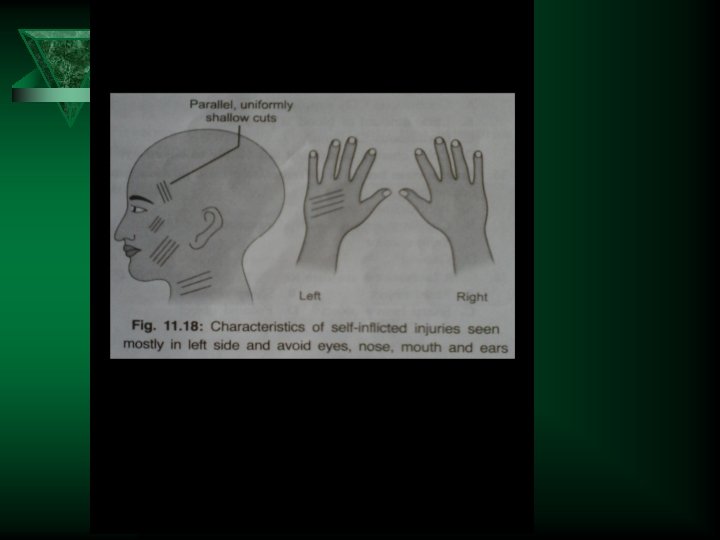
Fabricated & Self-inflicted wounds Ú They are the wounds inflicted by a person on his own body. Ú Fabricated wounds-produced by a person on his own body or others body with consent. (fictitious, forged or invented)