
Incidentolomas Evaluation and Management of Incidental Liver Lesions

- Slides: 37
Incidentolomas - Evaluation and Management of Incidental Liver Lesions Patrick M. Horne, MSN, ARNP, FNP-BC Assistant Director of Hepatology Clinical Research Division of Gastroenterology, Hepatology and Nutrition University of Florida Health
Disclosures • Financial relationships to disclose within the past 12 months: • Grant support with Bayer/Onyx
Objectives • Discuss natural history of benign liver lesions. • Discuss Evaluation and management of FNH, Hemangioma, Liver Cyst, Adenoma
Background • Causes of focal liver lesions are diverse and can range widely. • Typically are clinically silent and detected incidentally while undergoing evaluation for unrelated symptoms. • Understanding the clinical circumstances surrounding the presence of liver lesions aids in better diagnosis.
Differential diagnosis • Common benign liver lesions include: – Hepatic hemangioma – Focal nodular hyperplasia (FNH) – Hepatic adenoma – Hepatic cyst – Idiopathic noncirrhotic portal hypertension • Focal nodular hyperplasia – Regenerative nodules Bonder A & Afdhal N. Clin. Liver Dis. 2012
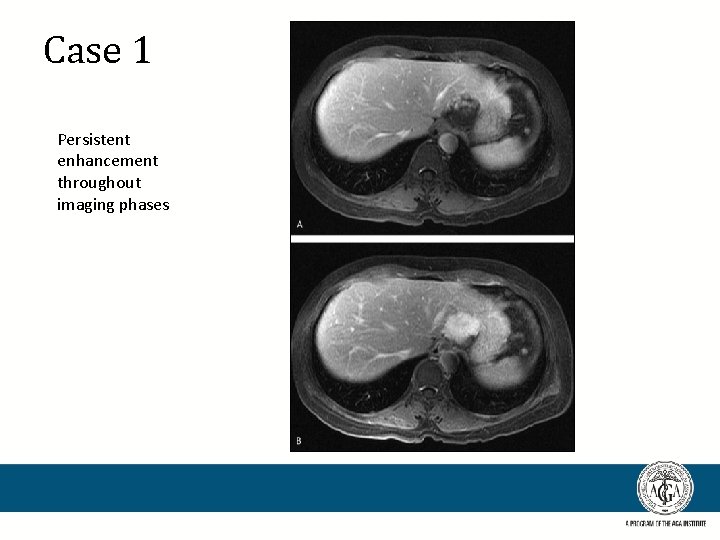
Case 1 • 40 year old Caucasian female presents to her PCP’s office intermittent nonspecific abdominal pain and nausea. • Physical exam negative but abdominal ultrasound ordered which notes a possible lesion. • Follow up imaging obtained
Case 1 Persistent enhancement throughout imaging phases
Hemangioma • Most common benign hepatic tumor • 60 -80% diagnosed in people between the ages of 30 -50. • Ratio of occurrence in women to men, 3: 1. – More common in young women Choi BY & Nguyen MH. J Clin Gastroenterol. 2005
Hemangioma-Diagnosis • On ultrasound appear well-defined, lobulated, homogeneous hyperechoic mass. • The accuracy of US is reported to be 70% to 80%. • CT and/or MRI was best options – With MRI having sensitivity and specificity around 85 -95%. Descottes B et al. Surg. Endosc. 2003. Unai O et al. Clin Imaging. 2002.
Hemangioma-Management • Treatment is usually not indicated in the setting of no symptoms with a firm diagnosis and confirmed stability on imaging at least 6 months apart. – Lesions less than 5 cm • Larger lesions may require closer monitoring and if symptoms develop may need to treatment. Blecker E et al. Z. Gastroenterol. 2003
Hemangioma-Management • Treatment options include – Surgery • Resection – Hepatic irradiation or transarterial catheter chemoembolization
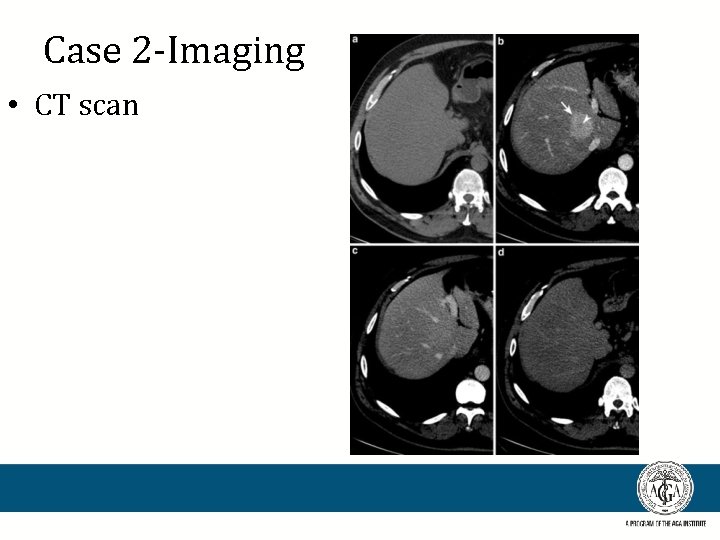
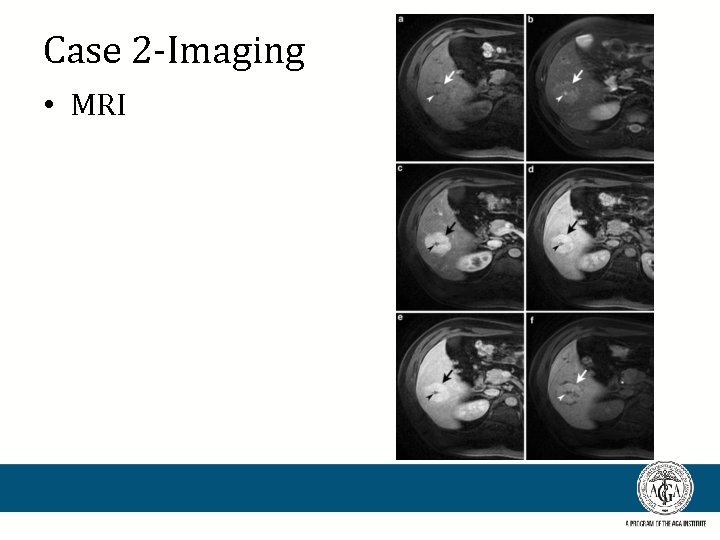
Case 2 • 25 year old Hispanic female undergoing work up for elevated liver function tests (LFTs). • Noted to have multiple liver lesions on abdominal ultrasound, the largest measuring 13 cm in diameter. • Follow up imaging including CT and MRI completed.
Case 2 -Imaging • CT scan
Case 2 -Imaging • MRI
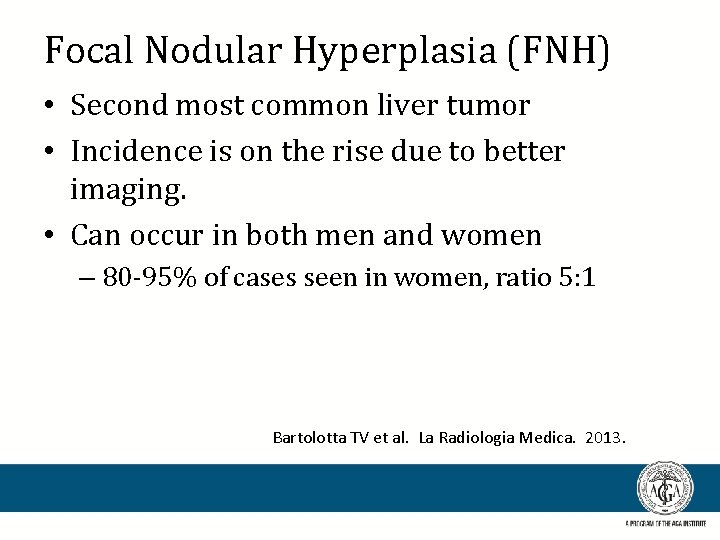
Focal Nodular Hyperplasia (FNH) • Second most common liver tumor • Incidence is on the rise due to better imaging. • Can occur in both men and women – 80 -95% of cases seen in women, ratio 5: 1 Bartolotta TV et al. La Radiologia Medica. 2013.
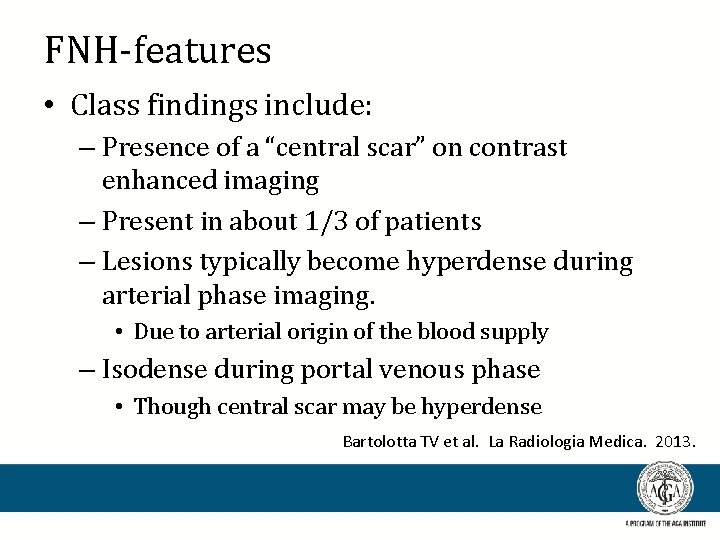
FNH-features • Class findings include: – Presence of a “central scar” on contrast enhanced imaging – Present in about 1/3 of patients – Lesions typically become hyperdense during arterial phase imaging. • Due to arterial origin of the blood supply – Isodense during portal venous phase • Though central scar may be hyperdense Bartolotta TV et al. La Radiologia Medica. 2013.
FNH-Diagnosis • Sulfur colloid scanning – Due to prevalence of Kupffer cells, 80% of FNHs will show active uptake
FNH-Management • Typically conservative. • Typically stable lesions and do not change over time • No evidence to suggest malignant transformation • Enlargement and/or development in the setting of OCP?
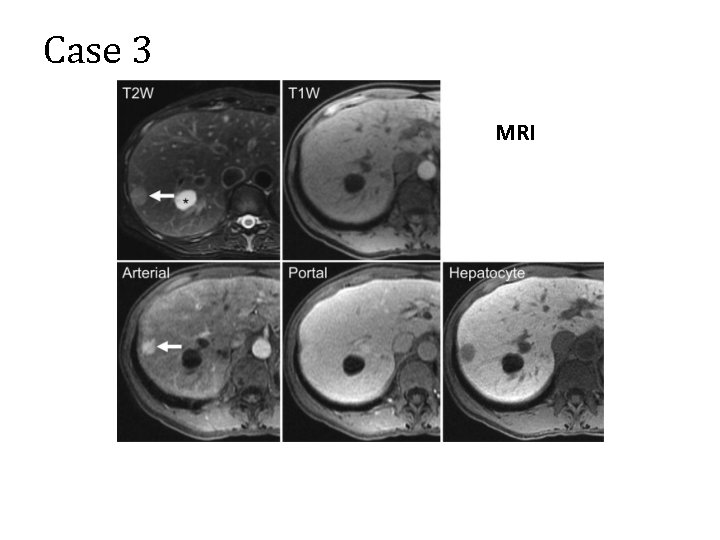
Case 3 • 30 year old Caucasian female presents with chronic abdominal pain. • Has been on oral contraception therapy for 5 years • Otherwise healthy, no significant medical history.
Case 3 MRI
Hepatic adenoma • Uncommon lesions • Mostly in young women (22 -40) • Commonly in the right lobe of the liver Grazioli L. Radiographics. 2001
Hepatic adenoma • Strong association with: – Oral contraceptives and hormones – Anabolic steroids – Glycogen storage disease • Less common association: – Pregnancy – Diabetes mellitus
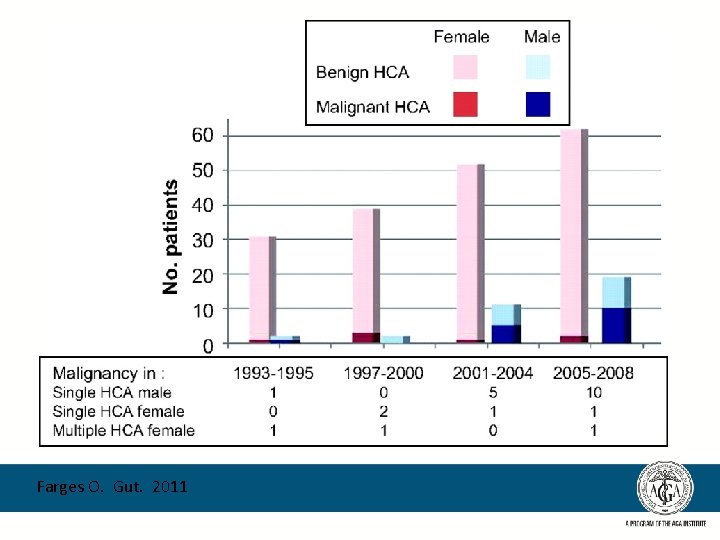
Farges O. Gut. 2011
Hepatic adenoma • Prognosis not well established • There is an association with: – Malignant transformation – Spontaneous hemorrhage – Rupture
Hepatic adenoma-Diagnosis • Typically made clinically with imaging. • Biopsy of the lesion is not indicated or recommended due to risk of bleeding. • Imaging techniques: – US-limited – CT and/or MRI
Hepatic adenoma-Diagnosis • CT: Well demarcated and have low attenuation or are isodense on noncontrast imaging and show peripheral enhancement early with centipedal flow during portal venous. • MRI: usually well demarcated and typically hyperintense on T 1. Enhancement on T 2 images that enhance further with gadolinium administration is highly Grazioli L. Radiographics. 2001 suggestive. Chung. KY AJR. 1995
Hepatic adenoma-Management • Dependent on size of lesion and symptoms • If asymptomatic and lesion is small (less than 5 cm) – Stop OCP if taking – Can monitor with imaging and possibly AFP • If symptomatic and/or lesion is large (greater than 5 cm) – Surgical resection is recommended. – Liver transplantation rare Dokmak S. et al. Gastroenterology. 2009
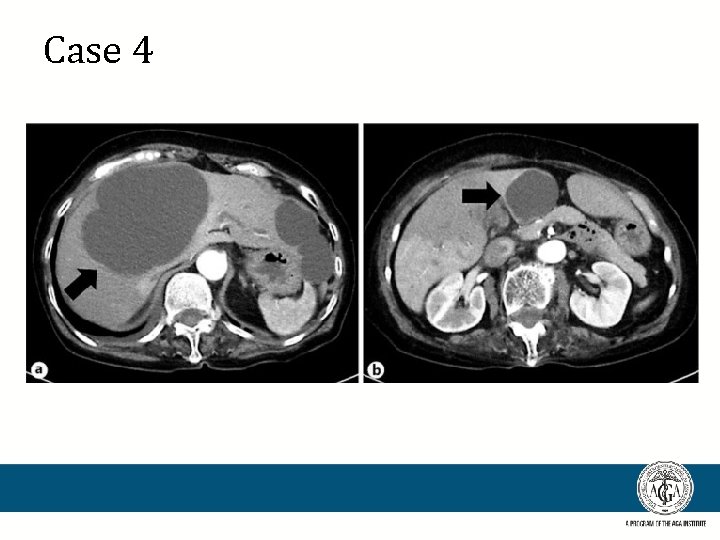
Case 4 • 60 year old female presents to a local ER with severe abdominal pain with a palpable mass on physical examination. • No known history of liver disease or GI symptoms
Case 4
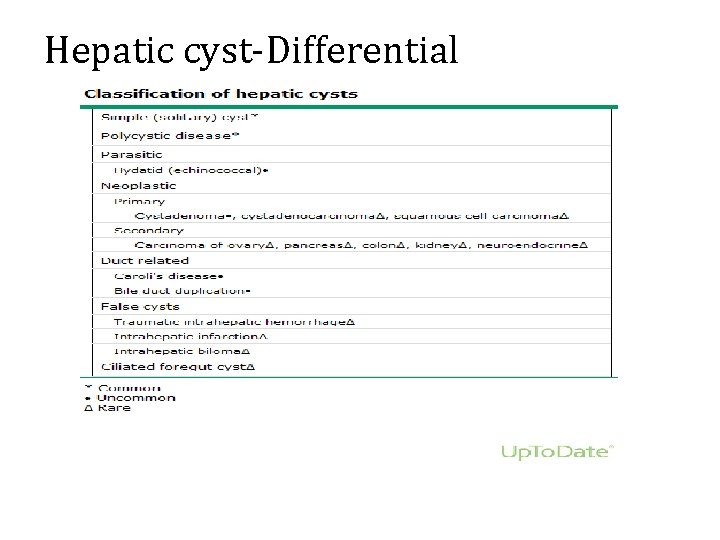
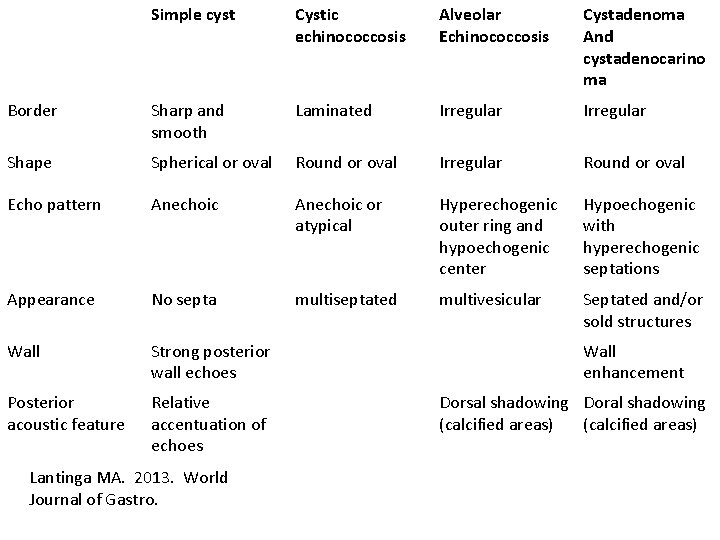
Hepatic cyst-Differential
Hepatic cyst-Prevalence • Dependent on origin – Simple: • More common in right lobe. • More in women, ratio of 1. 5: 1. • Distinction between simple and other types of cysts is difficult to make but very important for management. – Huge cysts found often in women over age 50.
Hepatic cyst-Diagnosis • Ultrasound: – Good at distinguishing between simple and other cystic lesions • CT scan: – Well demarcated lesion with no enhancement after administration of IV contrast. • MRI: – No enhancement with contrast. T 1 -weighted images the cyst shows a low signal, whereas a very high intensity signal is shown on T 2 -weighted images.
Simple cyst Cystic echinococcosis Alveolar Echinococcosis Cystadenoma And cystadenocarino ma Border Sharp and smooth Laminated Irregular Shape Spherical or oval Round or oval Irregular Round or oval Echo pattern Anechoic or atypical Hyperechogenic outer ring and hypoechogenic center Hypoechogenic with hyperechogenic septations Appearance No septa multiseptated multivesicular Septated and/or sold structures Wall Strong posterior wall echoes Posterior acoustic feature Relative accentuation of echoes Lantinga MA. 2013. World Journal of Gastro. Wall enhancement Dorsal shadowing Doral shadowing (calcified areas)
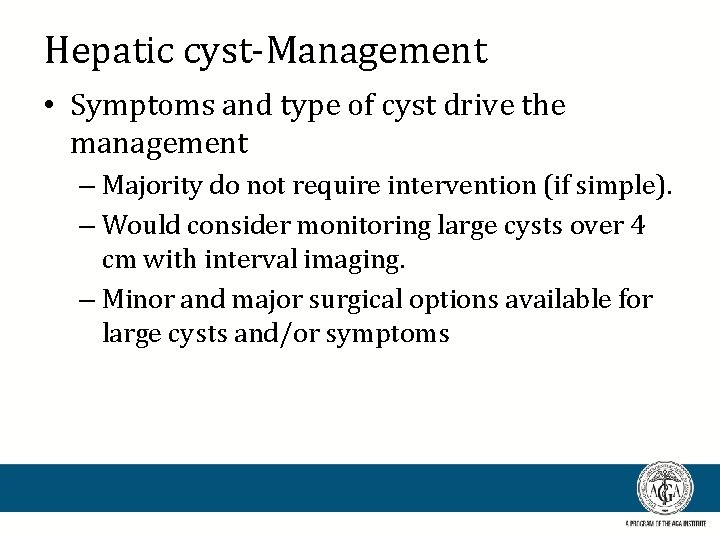
Hepatic cyst-Management • Symptoms and type of cyst drive the management – Majority do not require intervention (if simple). – Would consider monitoring large cysts over 4 cm with interval imaging. – Minor and major surgical options available for large cysts and/or symptoms
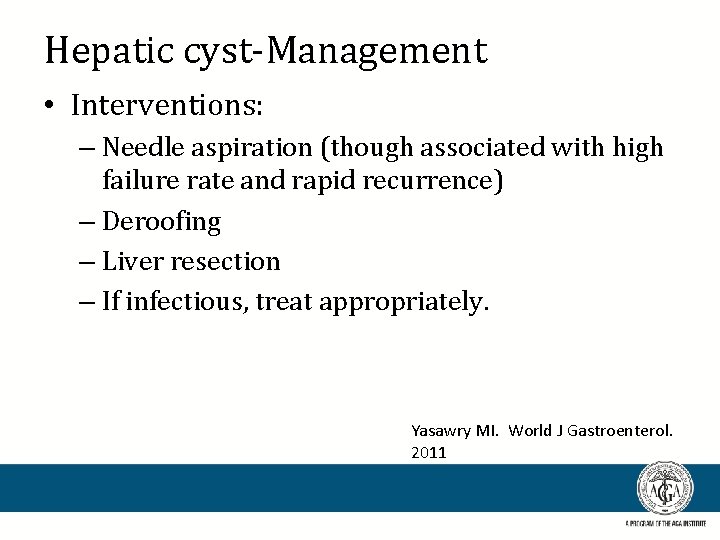
Hepatic cyst-Management • Interventions: – Needle aspiration (though associated with high failure rate and rapid recurrence) – Deroofing – Liver resection – If infectious, treat appropriately. Yasawry MI. World J Gastroenterol. 2011
Conclusion • Liver lesions are common and proper diagnosis is important. • A combination of medical history as well as appropriate imaging is essential. • Most liver lesions are benign but in certain situations must be addressed or treated.
Thank you