
Inca c 1350 1550 Geography Western coast of
- Slides: 15
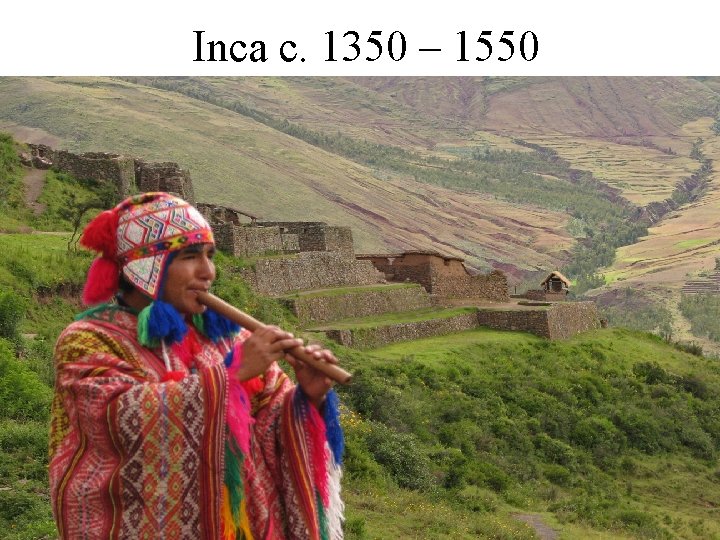
Inca c. 1350 – 1550
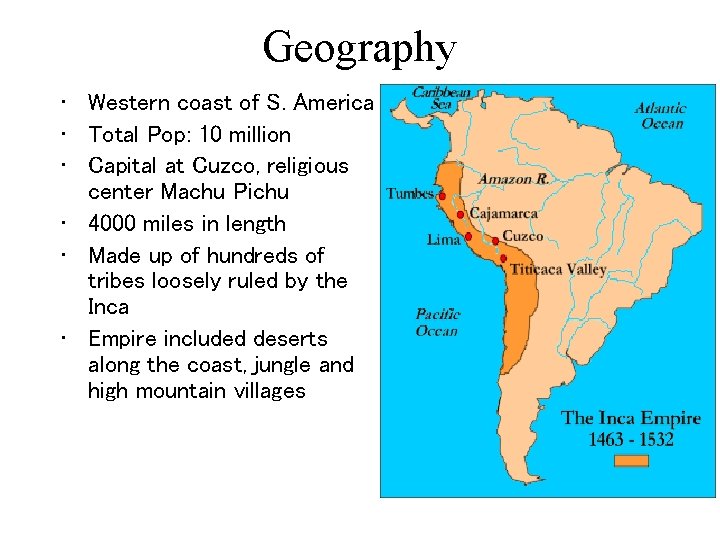
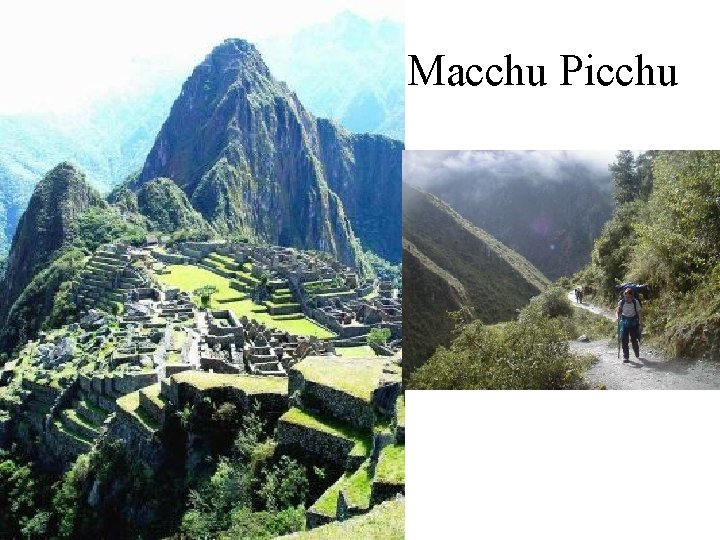
Geography • Western coast of S. America • Total Pop: 10 million • Capital at Cuzco, religious center Machu Pichu • 4000 miles in length • Made up of hundreds of tribes loosely ruled by the Inca • Empire included deserts along the coast, jungle and high mountain villages
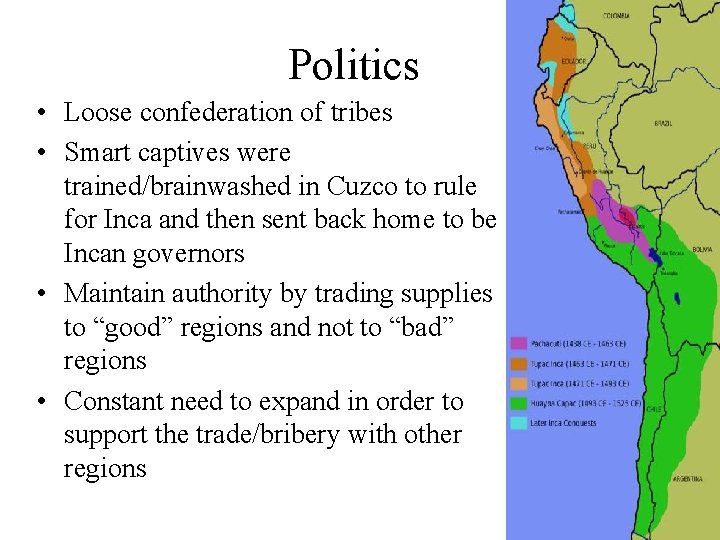
Politics • Loose confederation of tribes • Smart captives were trained/brainwashed in Cuzco to rule for Inca and then sent back home to be Incan governors • Maintain authority by trading supplies to “good” regions and not to “bad” regions • Constant need to expand in order to support the trade/bribery with other regions
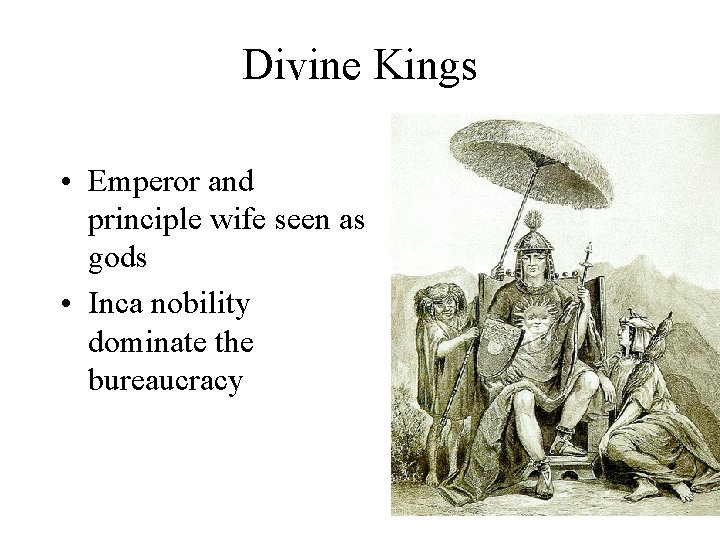
Divine Kings • Emperor and principle wife seen as gods • Inca nobility dominate the bureaucracy
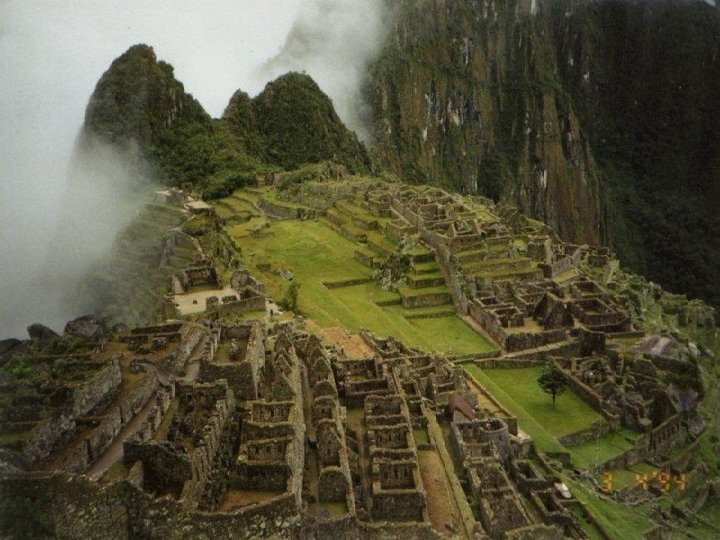
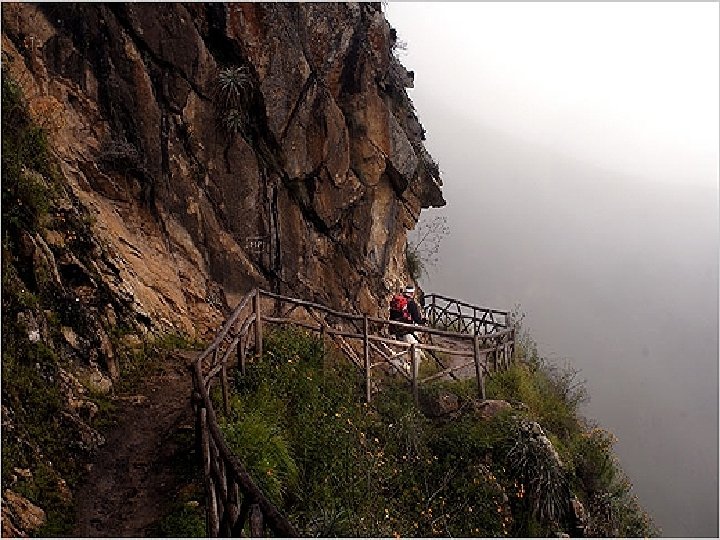
Macchu Picchu
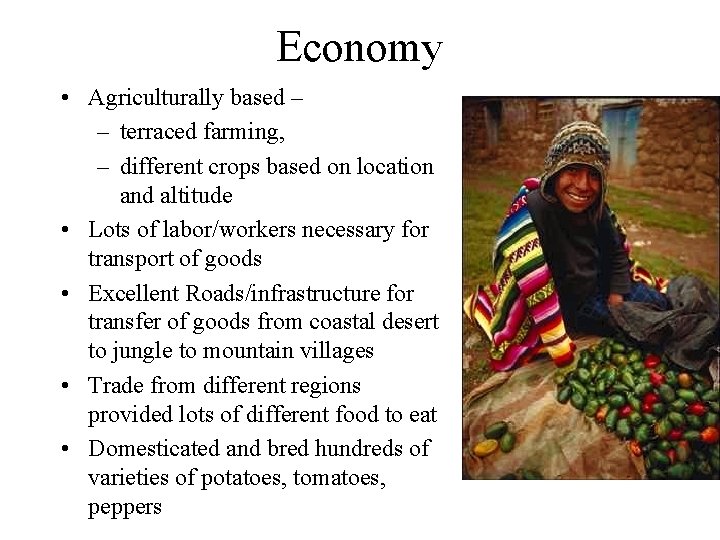
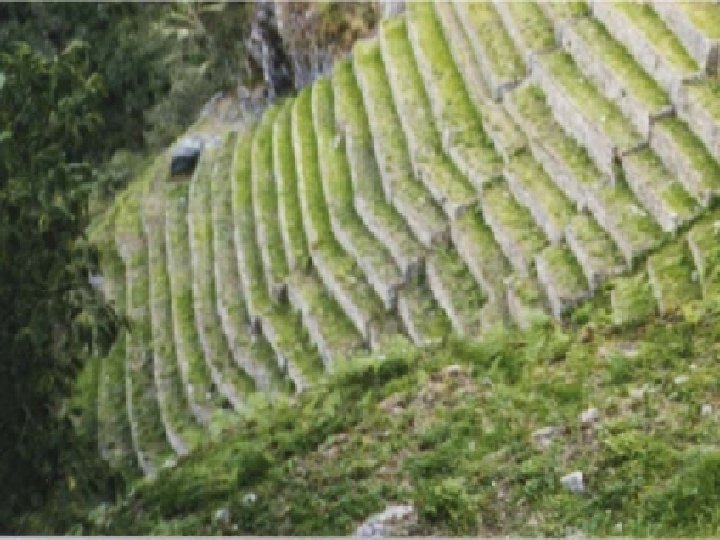
Economy • Agriculturally based – – terraced farming, – different crops based on location and altitude • Lots of labor/workers necessary for transport of goods • Excellent Roads/infrastructure for transfer of goods from coastal desert to jungle to mountain villages • Trade from different regions provided lots of different food to eat • Domesticated and bred hundreds of varieties of potatoes, tomatoes, peppers
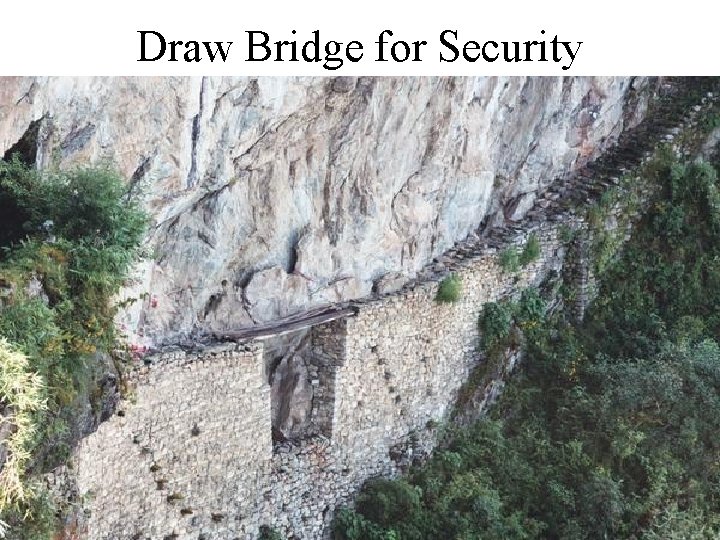
Draw Bridge for Security
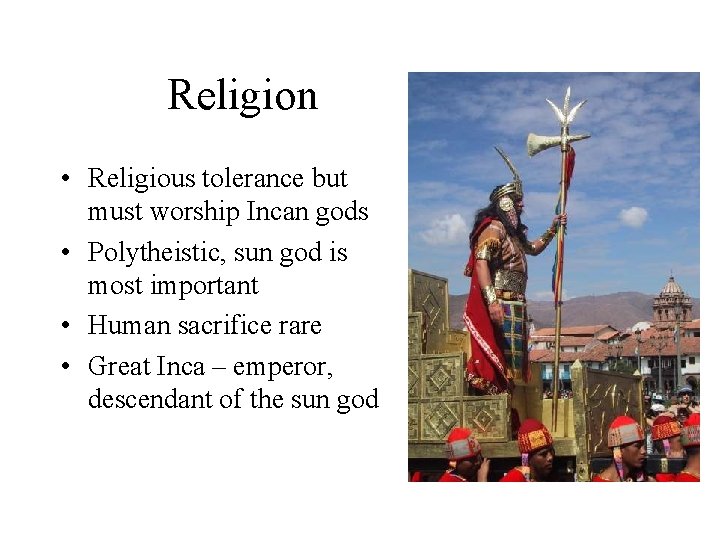
Religion • Religious tolerance but must worship Incan gods • Polytheistic, sun god is most important • Human sacrifice rare • Great Inca – emperor, descendant of the sun god
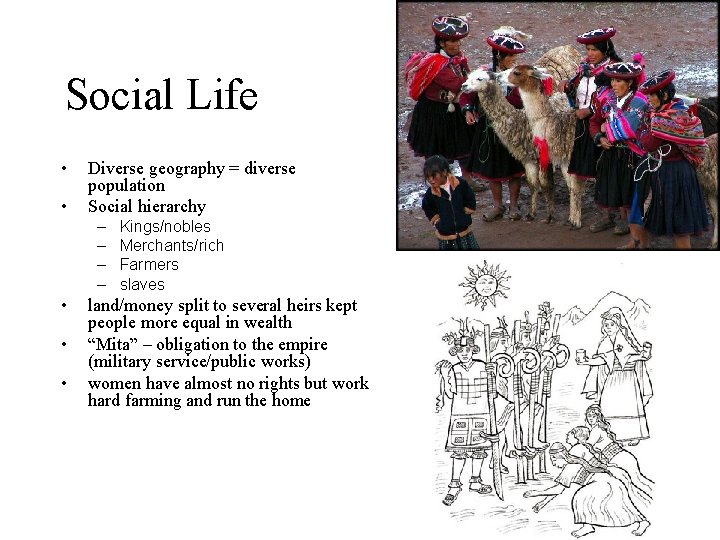
Social Life • • Diverse geography = diverse population Social hierarchy – – • • • Kings/nobles Merchants/rich Farmers slaves land/money split to several heirs kept people more equal in wealth “Mita” – obligation to the empire (military service/public works) women have almost no rights but work hard farming and run the home
Intellectual life and Art • No writing! • Incan Knots (Quipu) used to keep records of taxes, population, trade and names • Mummies are common • Nazca lines in the desert sand form animal shapes (possibly festival dancing patterns? )
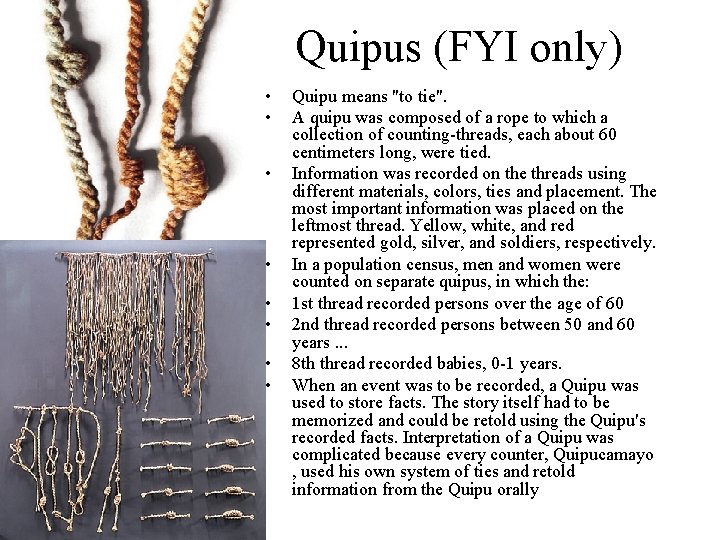
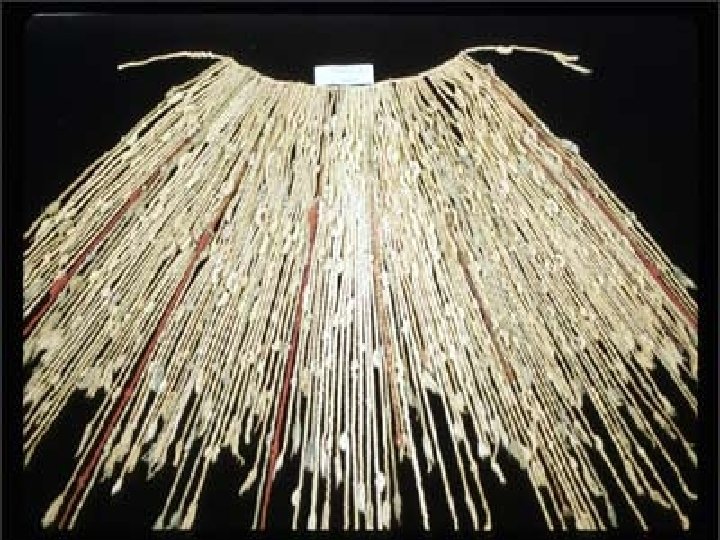
Quipus (FYI only) • • Quipu means "to tie". A quipu was composed of a rope to which a collection of counting-threads, each about 60 centimeters long, were tied. Information was recorded on the threads using different materials, colors, ties and placement. The most important information was placed on the leftmost thread. Yellow, white, and represented gold, silver, and soldiers, respectively. In a population census, men and women were counted on separate quipus, in which the: 1 st thread recorded persons over the age of 60 2 nd thread recorded persons between 50 and 60 years. . . 8 th thread recorded babies, 0 -1 years. When an event was to be recorded, a Quipu was used to store facts. The story itself had to be memorized and could be retold using the Quipu's recorded facts. Interpretation of a Quipu was complicated because every counter, Quipucamayo , used his own system of ties and retold information from the Quipu orally