
INBORN ERRORS OF AMINO ACIDS METABOLISM PHENYLALANINE METABOLISM
INBORN ERRORS OF AMINO ACIDS METABOLISM PHENYLALANINE METABOLISM

THE NORMAL METABOLISM OF PHENYLALANINE (pathways a and b) BREAKDOWN Dietry sources, particularly plant proteins PHENYLALANINE HYDROXYLASE PHENYLALANINE (a) TYROSINE (b) BODY PROTEINS © 2008 Paul Billiet ODWS
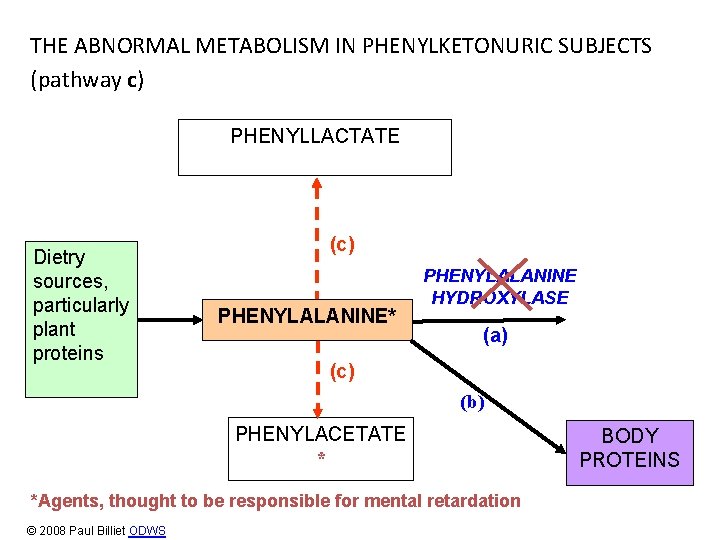
THE ABNORMAL METABOLISM IN PHENYLKETONURIC SUBJECTS (pathway c) PHENYLLACTATE Dietry sources, particularly plant proteins (c) PHENYLALANINE* PHENYLALANINE HYDROXYLASE (a) (c) (b) PHENYLACETATE * *Agents, thought to be responsible for mental retardation © 2008 Paul Billiet ODWS BODY PROTEINS
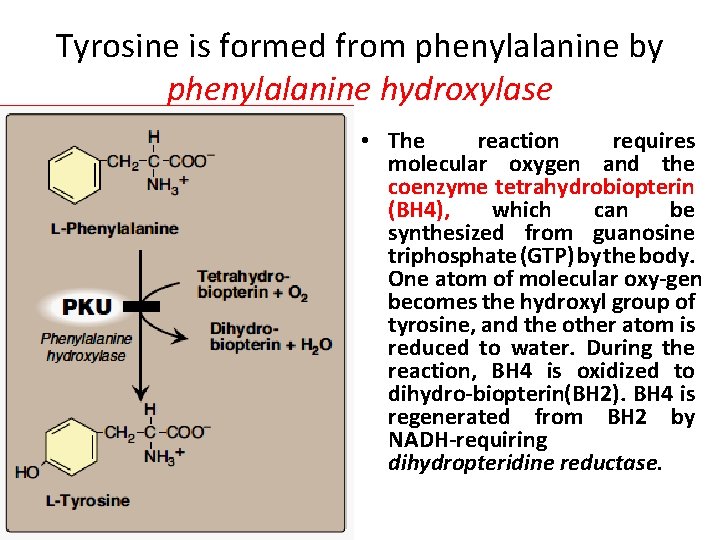
Tyrosine is formed from phenylalanine by phenylalanine hydroxylase • The reaction requires molecular oxygen and the coenzyme tetrahydrobiopterin (BH 4), which can be synthesized from guanosine triphosphate (GTP) by the body. One atom of molecular oxy gen becomes the hydroxyl group of tyrosine, and the other atom is reduced to water. During the reaction, BH 4 is oxidized to dihydro biopterin(BH 2). BH 4 is regenerated from BH 2 by NADH requiring dihydropteridine reductase.
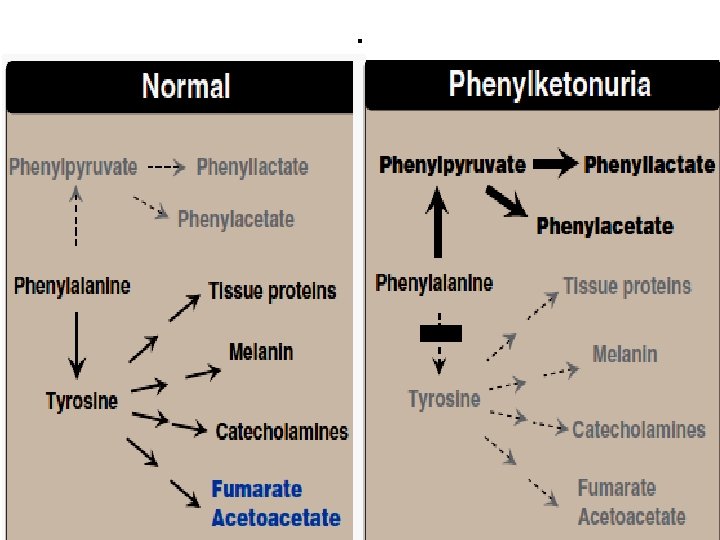
ENZYMATIC ACTIVITY • In cases of PKU, the enzyme that breaks down phenylalanine, phenylalanine hydroxylase, or of its tetrahydrobiopterin cofactor which may be completely or nearly completely deficient. • This enzyme normally converts phenylalanine to another amino acid, tyrosine, which is utilized by the body. • When this enzyme, is absent or deficient, phenylalanine and its breakdown chemicals from other enzyme routes, accumulate in the blood and body tissues.
PHENYLKETONURIA (PKU)
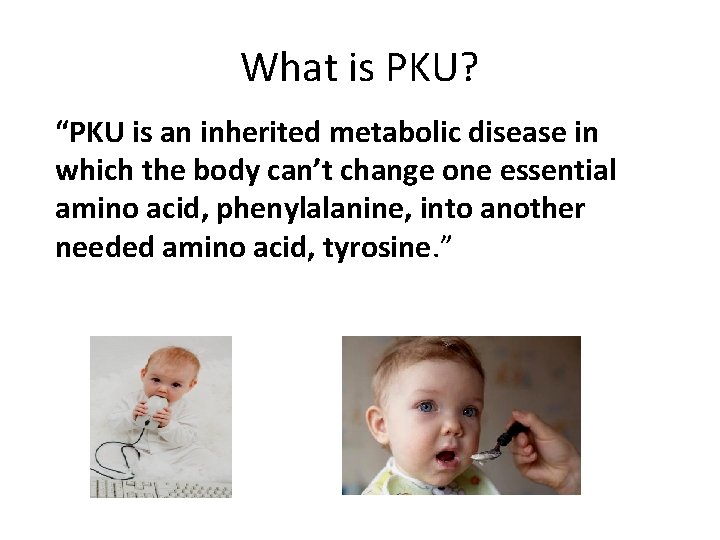
What is PKU? “PKU is an inherited metabolic disease in which the body can’t change one essential amino acid, phenylalanine, into another needed amino acid, tyrosine. ”
PHENYLKETONURIA PKU is caused by genetic defects in the hepatic enzyme phenylalanine hydroxylase. Phenylalanine accumulates and is further metabolised to the phenylketones. The natural history of phenylketonuria, PKU is severe and sustained damage to the developing infantile brain resulting in profound mental retardation, seizures and spasticity. However, the foetal brain is protected by maternal metabolism. Early detection, through neonatal screening, and the institution of dietary therapy in the first two or three weeks of life results in near normal development.
PHENYLKETONURIA PKU can also be caused by defects in the metabolism of tetrahydrobiopterin (BH 4), an essential cofactor for phenylalanine hydroxylase. It is vital to identify these biopterin deficient patients when a new case of hyperphenylalaninaemia is found because the treatment is quite different. The treatment of patients with ‘classical’ PKU is through dietary restriction of phenylalanine. The success of the diet is determined by monitoring plasma phenylalanine concentrations. Patients with BH 4 deficient disorders have a more variable clinical course. They require biopterin supplements but don’t benefit from a phenylalanine restricted diet.
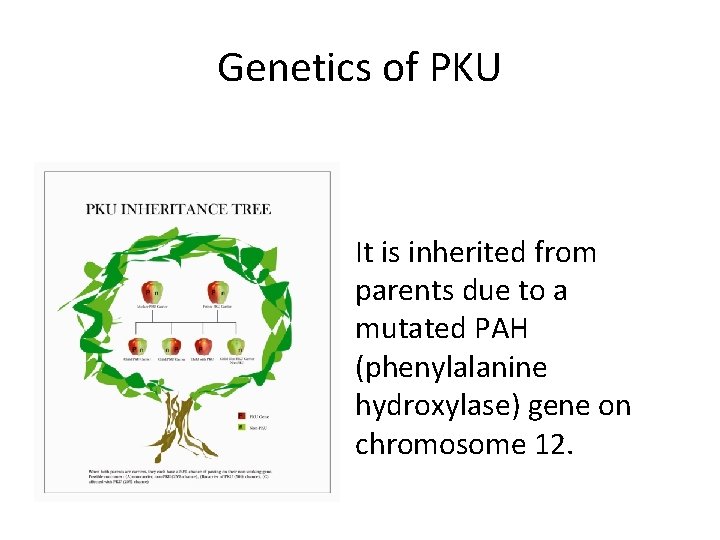
Genetics of PKU It is inherited from parents due to a mutated PAH (phenylalanine hydroxylase) gene on chromosome 12.
WHO DOES PKU EFFECT? PKU is inherited as an autosomal recessive trait.
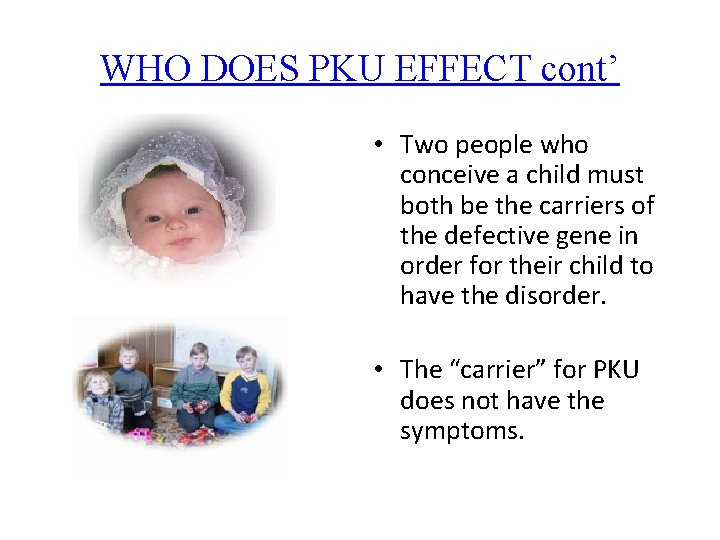
WHO DOES PKU EFFECT cont’ • Two people who conceive a child must both be the carriers of the defective gene in order for their child to have the disorder. • The “carrier” for PKU does not have the symptoms.
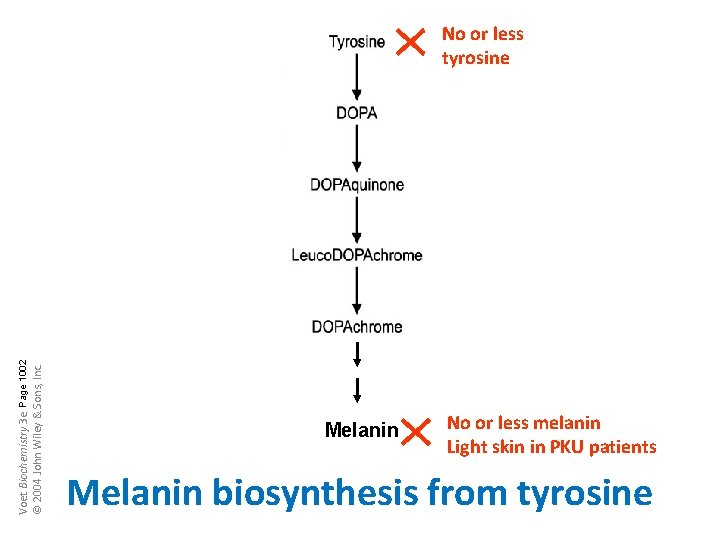
Voet Biochemistry 3 e Page 1002 © 2004 John Wiley & Sons, Inc. No or less tyrosine Melanin No or less melanin Light skin in PKU patients Melanin biosynthesis from tyrosine
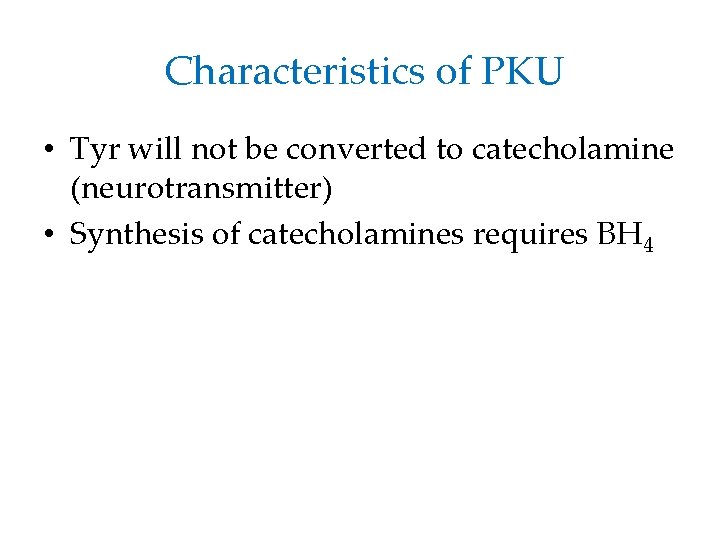
Characteristics of PKU • Tyr will not be converted to catecholamine (neurotransmitter) • Synthesis of catecholamines requires BH 4
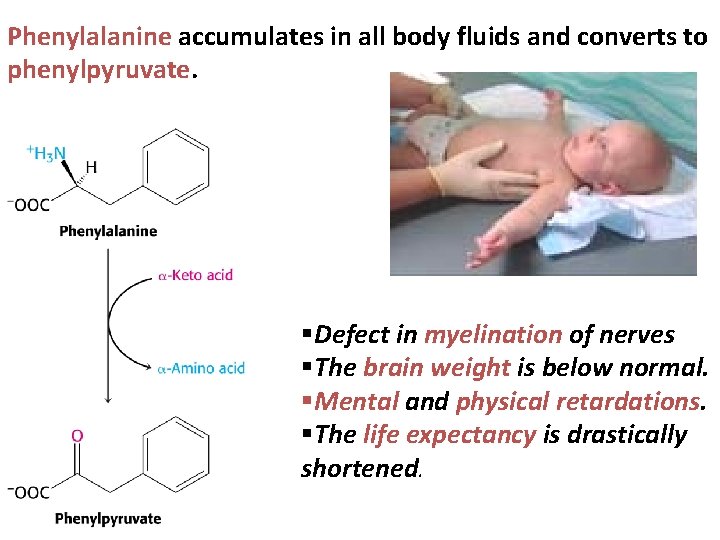
Phenylalanine accumulates in all body fluids and converts to phenylpyruvate. §Defect in myelination of nerves §The brain weight is below normal. §Mental and physical retardations. §The life expectancy is drastically shortened.

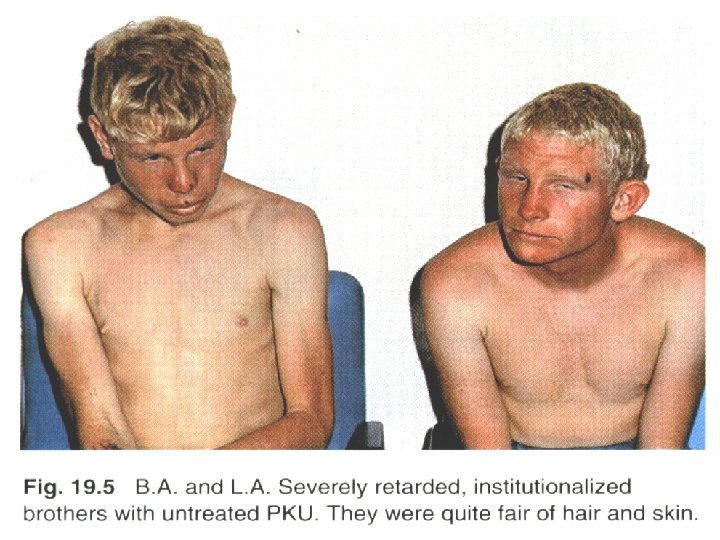
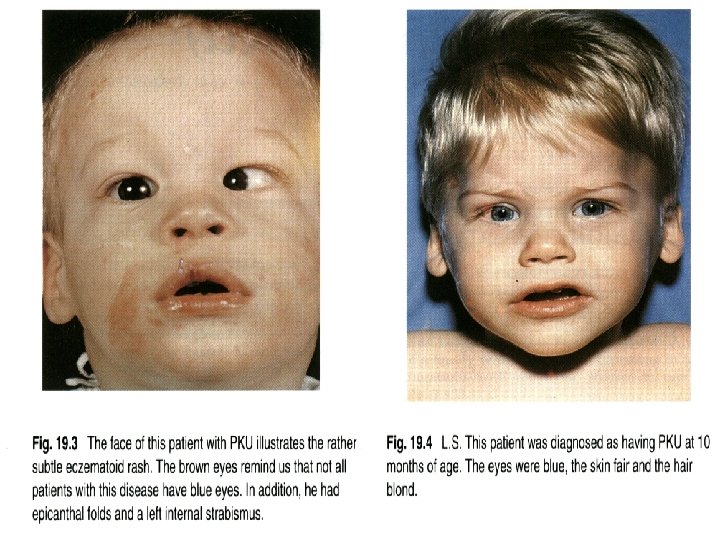
Symptoms of PKU Light hair, eyes, and skin Eczema-like rash Seizures Hyperactivity Unpleasant musty/ mousy body odor • Mental retardation • • •
DIAGNOSTIC CRITERIA: § phenylalanine level in the blood § DNA probes (prenatal)
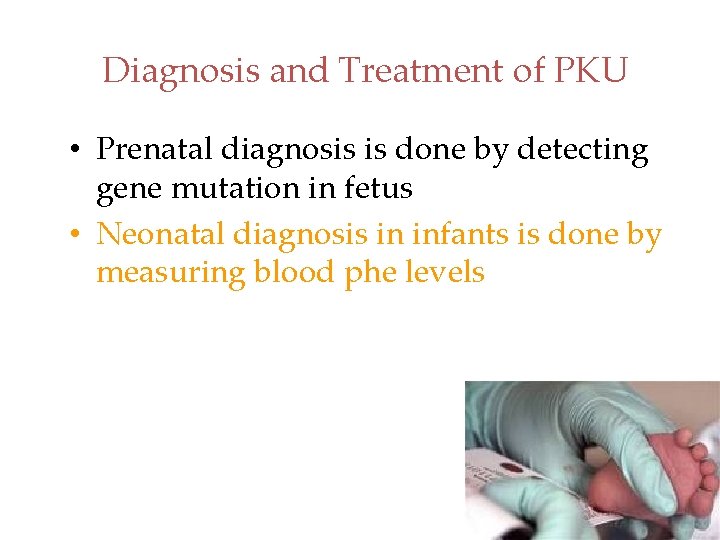
Diagnosis and Treatment of PKU • Prenatal diagnosis is done by detecting gene mutation in fetus • Neonatal diagnosis in infants is done by measuring blood phe levels
LEVELS OF BLOOD PHENYLALANINE • A normal blood phenylalanine level is about 1 mg/dl. • In cases of PKU, levels may range from 680 mg/dl, but are usually greater than 30 mg/dl.
Treatment • A strictly controlled phenylalanine free diet • up to the age of about 14 years old • phenylalanine is itself an essential amino acid small doses must be supplied • After this age the growth and development of the brain is not affected by high levels of phenylalanine in the body • Life long phe-restricted diet © 2008 Paul Billiet ODWS
WHAT HAPPENS WHEN THERE IS TOO LITTLE BLOOD PHENYLALANINE? It is important to remember that some phenylalanine is needed to maintain normal body function. Insufficient phenylalanine intake may cause mental and physical sluggishness, loss of appetite, anemia, rashes, and diarrhea.
WHAT TYPE OF DIET IS APPROPRIATE FOR SOMEONE WITH PKU? • The goal of PKU treatment is to maintain the blood levels of pheylalanine between 2 and 10 mg/dl. • Treatment for PKU consists of a diet low in phenylalanine, which is maintained in infants with special formulas and in individuals by eliminating meat and using low protein grain products. Measured amounts of cereals, starches, fruit, and vegetables, along with a milk substitute are recommended instead.
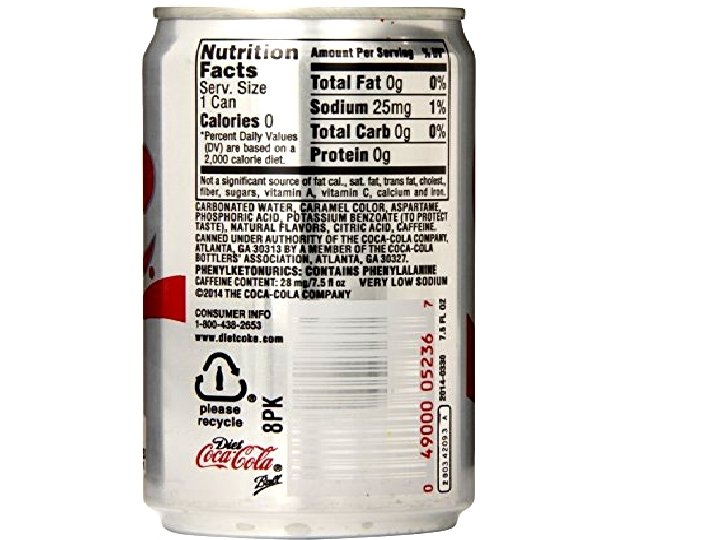
OTHER THINGS TO STAY AWAY FROM • Individuals with PKU must be alert for food sweetened with aspartame. • Nutra. Sweet in particular, should be avoided because it is a derivative of phenylalanine.
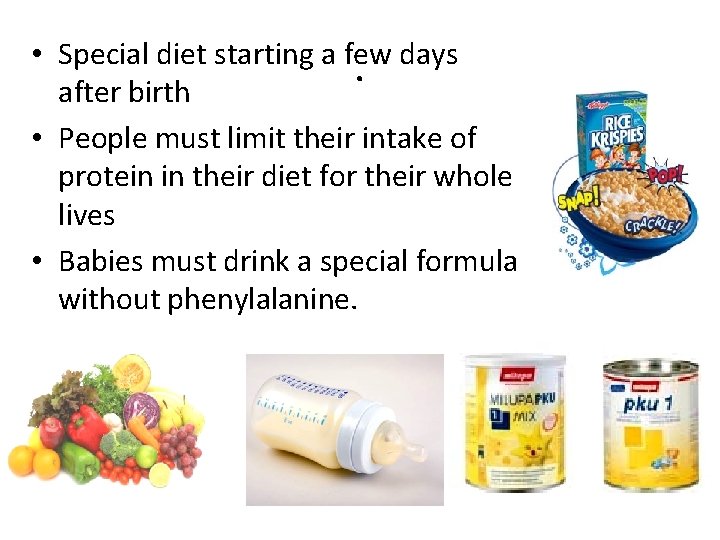
• Special diet starting a few days. after birth • People must limit their intake of protein in their diet for their whole lives • Babies must drink a special formula without phenylalanine.
MATERNAL PKU It is recommended that women with PKU who are of child bearing age, closely adhere to the lowphenlyalanine levels before conception and throughout pregnancy. MATERNAL PKU SYNDROME High Phenylalanine level increases the risk of miscarriage, mental retardation, microcephaly, and congenital heart disease in the child.

THANKS
- Slides: 31