
Inborn Errors of Amino Acid Metabolism Renal Block
Inborn Errors of Amino Acid Metabolism (Renal Block) 1 Lecture Dr. Sumbul Fatma Biochemistry of: • Phenylketonuria (PKU) • Maple Syrup Urine Disease (MSUD) • Albinism • Homocyteinuria • Alkaptonuria
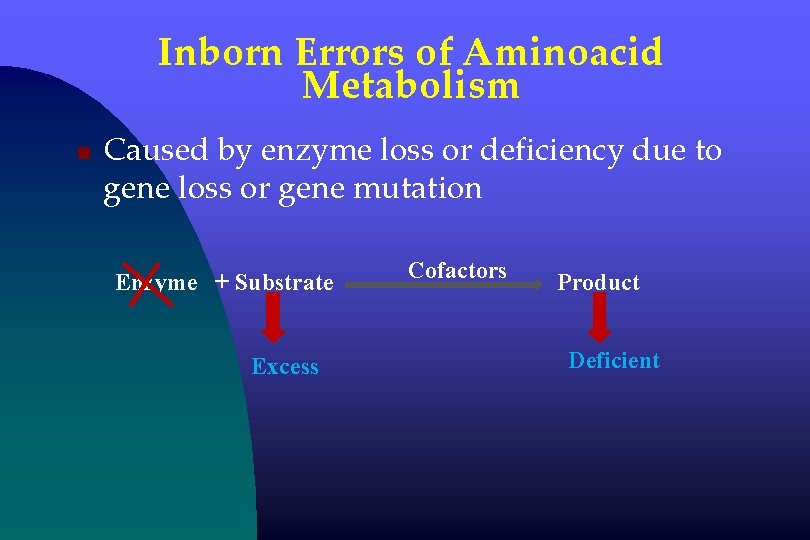
Inborn Errors of Aminoacid Metabolism n Caused by enzyme loss or deficiency due to gene loss or gene mutation Enzyme + Substrate Excess Cofactors Product Deficient
Phenylketonuria (PKU) n n n Due to deficiency of phenylalanine hydroxylase enzyme Most common disease of amino acid metabolism Results in hyperphenylalaninemia

Phenylketonuria (PKU) n Classic PKU: u Due to deficiency of phenylalanine hydroxylase u Hence Phe is accumulated
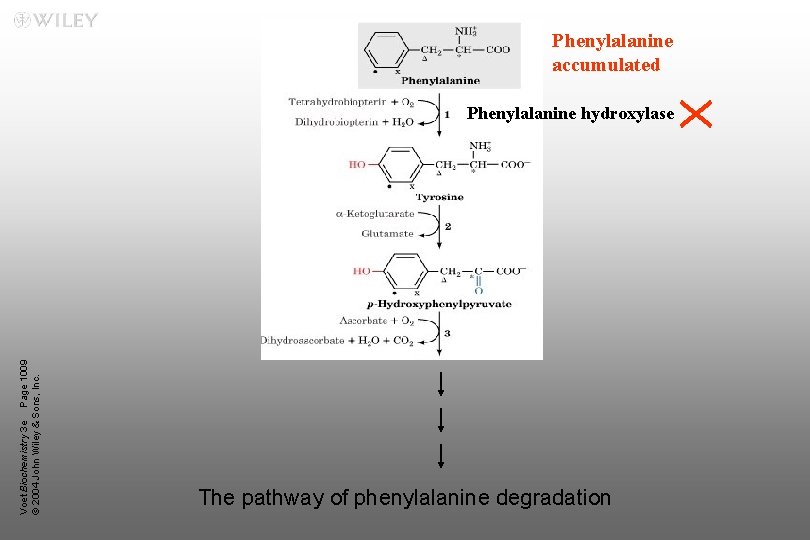
Phenylalanine accumulated Voet Biochemistry 3 e Page 1009 © 2004 John Wiley & Sons, Inc. Phenylalanine hydroxylase The pathway of phenylalanine degradation
Phenylketonuria (PKU) n n n Atypical hyperphenylalaninemia: Due to deficiency of BH 4 Conversion of Phe to Tyr requires tetrahydrobiopterin (BH 4) Even if phenylalanine hydroxylase level is normal, the enzyme will not function without BH 4 u Caused by the deficiency of: « Dihydropteridine reductase « Dihydrobiopterin synthetase « Carbinolamine dehydratase
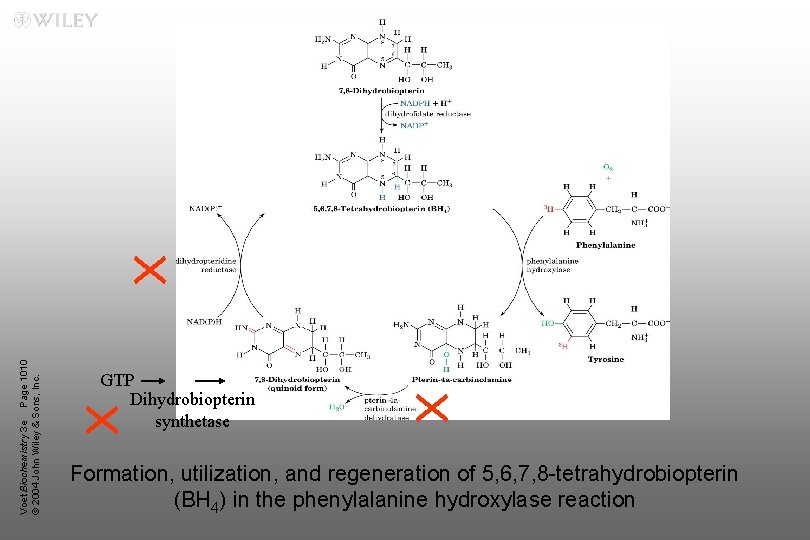
Voet Biochemistry 3 e Page 1010 © 2004 John Wiley & Sons, Inc. GTP Dihydrobiopterin synthetase Formation, utilization, and regeneration of 5, 6, 7, 8 -tetrahydrobiopterin (BH 4) in the phenylalanine hydroxylase reaction
Characteristics of PKU n In the absence of BH 4, Phe will not be converted to Tyr
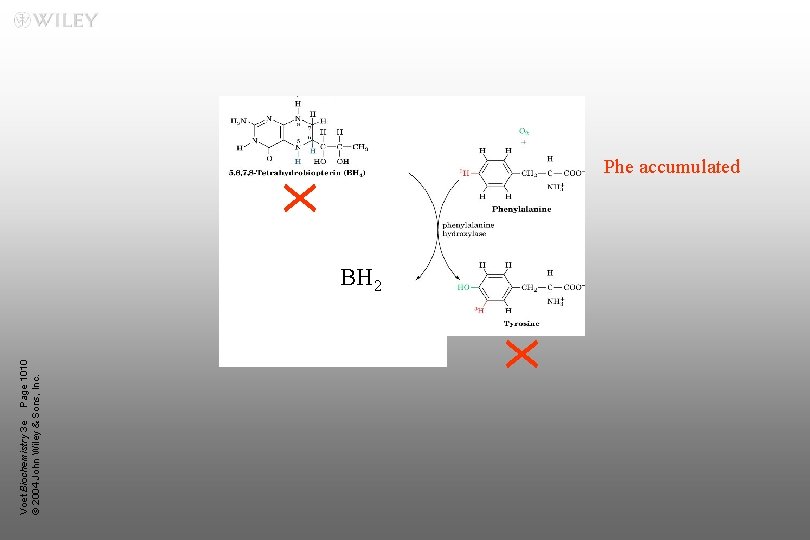
Voet Biochemistry 3 e Page 1010 © 2004 John Wiley & Sons, Inc. Phe accumulated BH 2
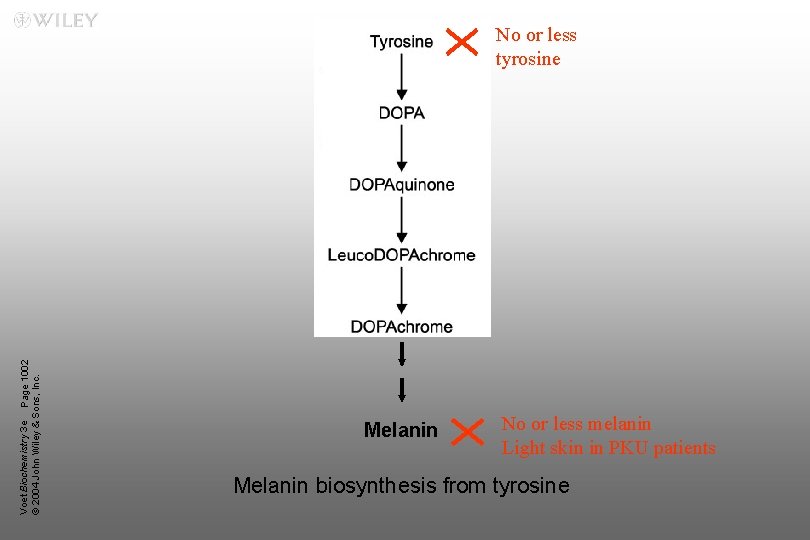
Voet Biochemistry 3 e Page 1002 © 2004 John Wiley & Sons, Inc. No or less tyrosine Melanin No or less melanin Light skin in PKU patients Melanin biosynthesis from tyrosine
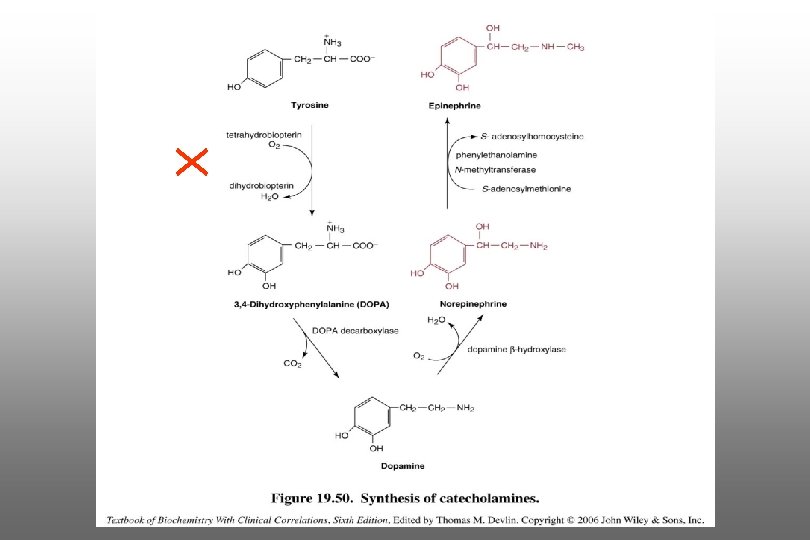
Characteristics of PKU n n Tyr will not be converted to catecholamine (neurotransmitter) Synthesis of catecholamines requires BH 4
Characteristics of PKU n Trp will not be converted to serotonin (a neurotransmitter) as it requires BH 4
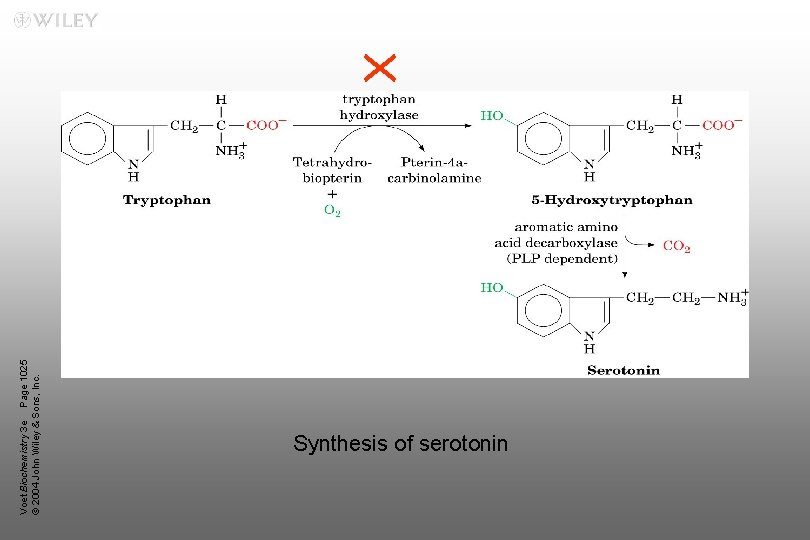
Voet Biochemistry 3 e Page 1025 © 2004 John Wiley & Sons, Inc. Synthesis of serotonin
Characteristics of PKU n n Elevated phenylalanine in tissues, plasma, urine Phe is degraded to phenyllactate, phenylacetate, and phenylpyruvate u Gives urine a mousy odor
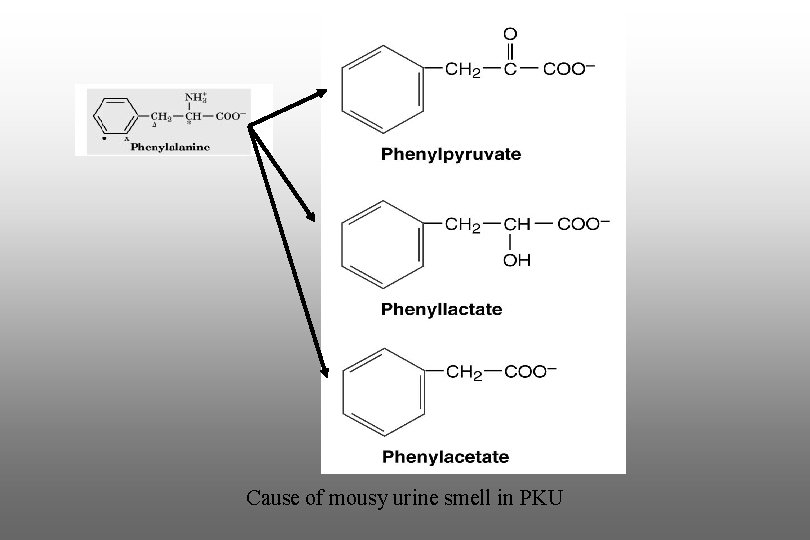
Cause of mousy urine smell in PKU
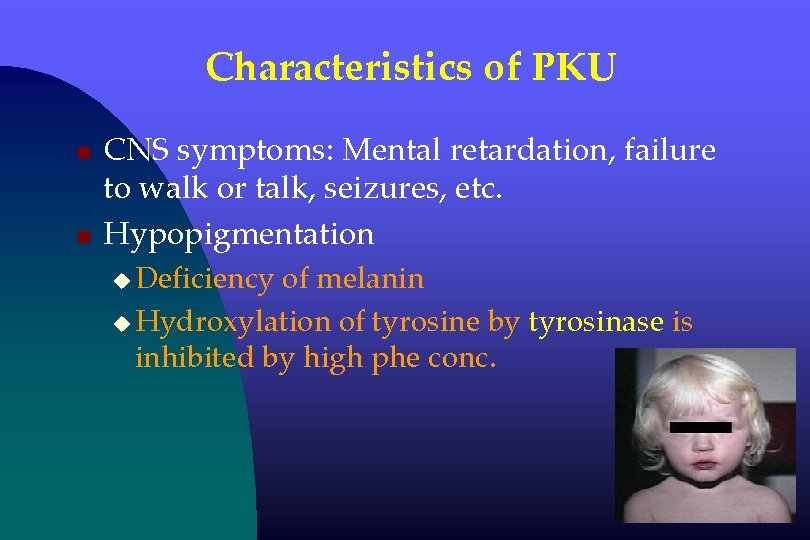
Characteristics of PKU n n CNS symptoms: Mental retardation, failure to walk or talk, seizures, etc. Hypopigmentation u Deficiency of melanin u Hydroxylation of tyrosine by tyrosinase is inhibited by high phe conc.
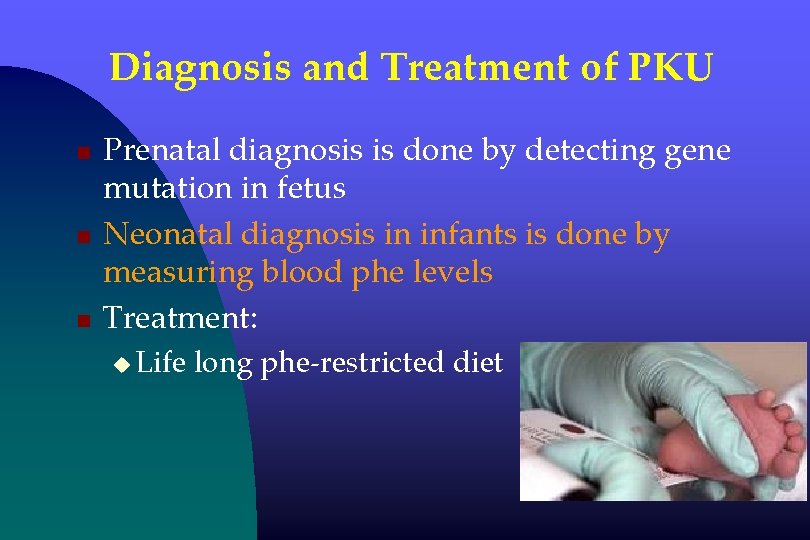
Diagnosis and Treatment of PKU n n n Prenatal diagnosis is done by detecting gene mutation in fetus Neonatal diagnosis in infants is done by measuring blood phe levels Treatment: u Life long phe-restricted diet
Maple Syrup Urine Disease n n n Due to deficiency of branched chain aketoacid dehydrogenase The enzyme complex decarboxylates leucine, isoleucine and valine These amino acids accumulate in blood Symptoms: mental retardation, physical disability, metabolic acidosis, etc. Maple syrup odor of urine
Maple Syrup Urine Disease n Types: u Classic type: Most common, due to little or no activity of a-ketoacid dehydrogenase u Intermediate and intermittent forms: Some enzyme activity, symptoms are milder u Thiamin-responsive form: High doses of thiamin increases a-ketoacid dehydrogenase activity
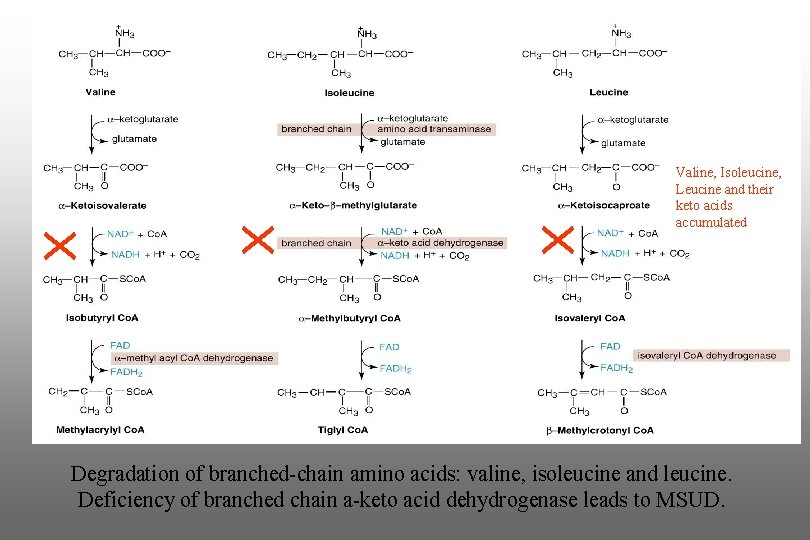
Valine, Isoleucine, Leucine and their keto acids accumulated Degradation of branched-chain amino acids: valine, isoleucine and leucine. Deficiency of branched chain a-keto acid dehydrogenase leads to MSUD.
Maple Syrup Urine Disease Treatment: n Limited intake of leucine, isoleucine and valine
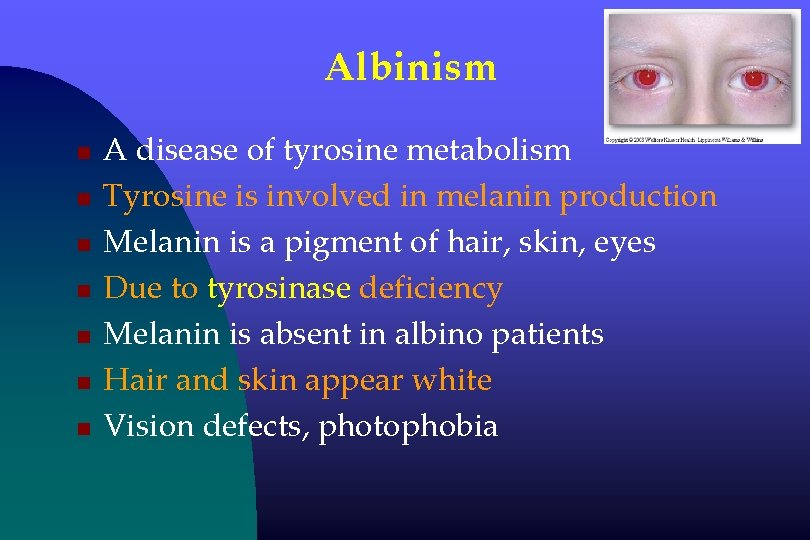
Albinism n n n n A disease of tyrosine metabolism Tyrosine is involved in melanin production Melanin is a pigment of hair, skin, eyes Due to tyrosinase deficiency Melanin is absent in albino patients Hair and skin appear white Vision defects, photophobia
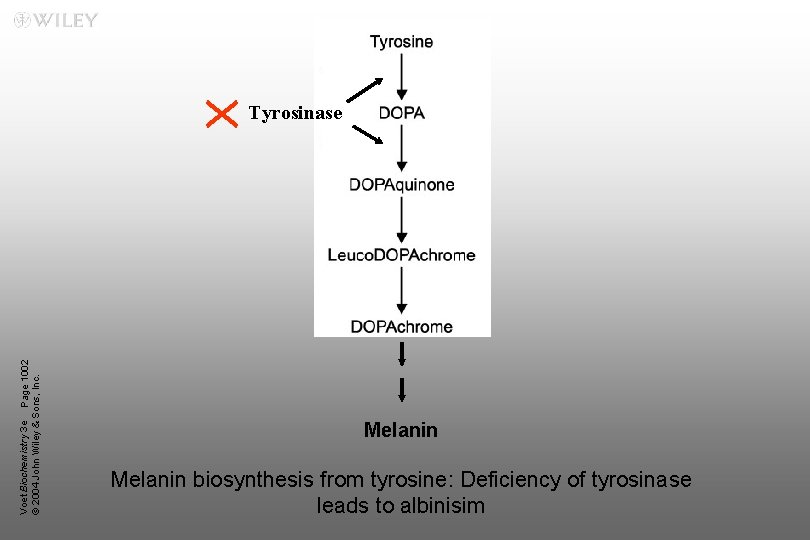
Voet Biochemistry 3 e Page 1002 © 2004 John Wiley & Sons, Inc. Tyrosinase Melanin biosynthesis from tyrosine: Deficiency of tyrosinase leads to albinisim
Homocystinuria n n n Due to defects in homocysteine metabolism Deficiency of cystathionine b-synthase u Converts homocysteine to cystathione High plasma and urine levels of homocysteine Homocysteine is a risk factor for atherosclerosis and heart disease Skeletal abnormalities, osteoporosis, mental retardation, displacement of eye lens
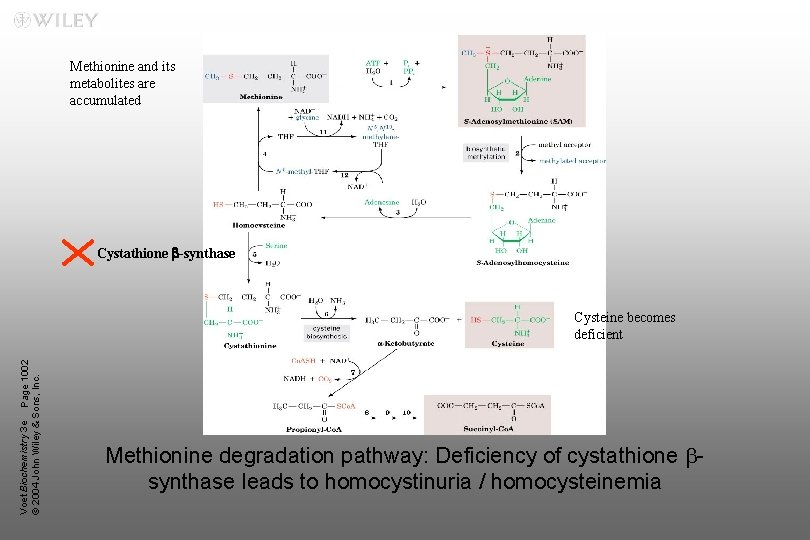
Methionine and its metabolites are accumulated Cystathione b-synthase Voet Biochemistry 3 e Page 1002 © 2004 John Wiley & Sons, Inc. Cysteine becomes deficient Methionine degradation pathway: Deficiency of cystathione bsynthase leads to homocystinuria / homocysteinemia
Homocystinuria Treatment: u Oral administration of vitamins B 6, B 12 and folate u Vitamin B 6 is a cofactor for cystathionine b -synthase u Methionine-restricted diet
Homocystinuria Hyperhomocysteinemia is also associated with: n n n Neural tube defect (spina bifida) Vascular disease (atherosclerosis) Heart disease
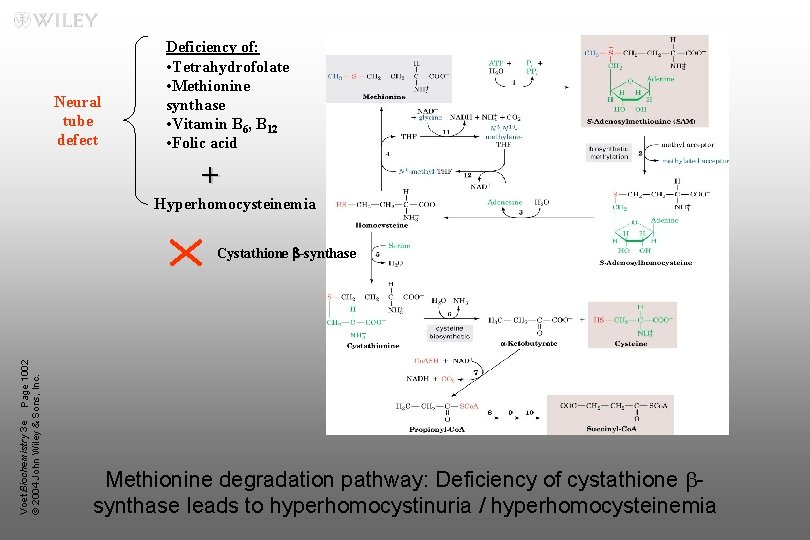
Neural tube defect Deficiency of: • Tetrahydrofolate • Methionine synthase • Vitamin B 6, B 12 • Folic acid + Hyperhomocysteinemia Voet Biochemistry 3 e Page 1002 © 2004 John Wiley & Sons, Inc. Cystathione b-synthase Methionine degradation pathway: Deficiency of cystathione bsynthase leads to hyperhomocystinuria / hyperhomocysteinemia

Alkaptonuria n n A rare disease of tyrosine degradation Due to deficiency of homogentisic acid oxidase Homogentisic acid is accumulated in tissue and cartilage Homogentisic aciduria: elevated homogentisic acid in urine

Degradation of tyrosine Deficiency of homogentisic acid oxidase leads to alkaptonuria Homogentisate oxidase

Characteristics of Alkaptonuria n n Homogentisic aciduria: elevated homogentisic acid in urine which is oxidized to dark pigment over time Arthritis Black pigmentation of cartilage, tissue Usually asymptomatic until adulthood
Treatment of alkaptonuria n Restricted intake of tyrosine and phenylalanine reduces homogentisic acid and dark pigmentation
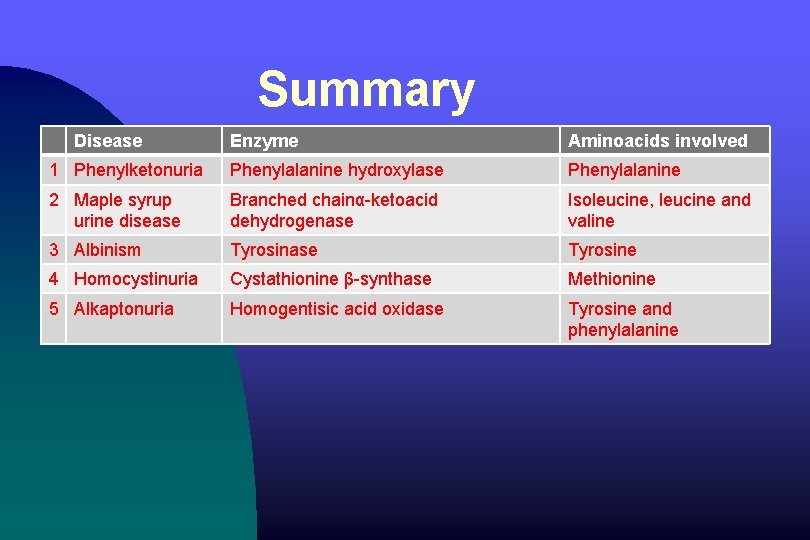
Summary Disease Enzyme Aminoacids involved 1 Phenylketonuria Phenylalanine hydroxylase Phenylalanine 2 Maple syrup urine disease Branched chainα-ketoacid dehydrogenase Isoleucine, leucine and valine 3 Albinism Tyrosinase Tyrosine 4 Homocystinuria Cystathionine β-synthase Methionine 5 Alkaptonuria Homogentisic acid oxidase Tyrosine and phenylalanine
Reference n Lippincott’s Illustrated Reviews in Biochemistry 4 th Edition, Chapter 20
- Slides: 35